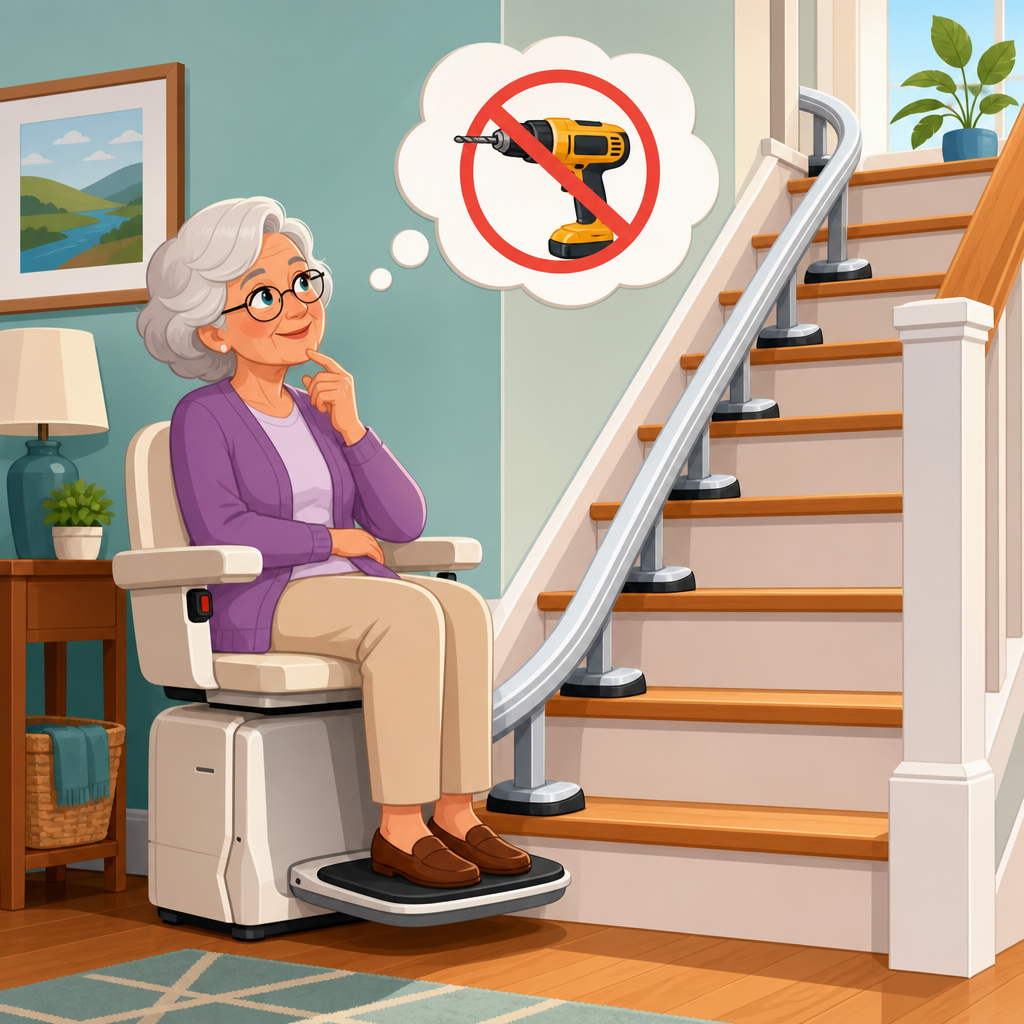
Many homeowners ask the same urgent question before buying mobility equipment: can you install a chair lift without drilling into stairs? The short answer is usually no, at least not in the way most people hope. In nearly every residential stair lift installation, the rail must be mechanically fastened to the stair treads with brackets and lag screws. That does not mean the staircase is being structurally damaged, and it does not mean the process is invasive like remodeling. It means the lift needs a secure mounting system that can safely carry the user, the chair, and the drive system over repeated daily trips.
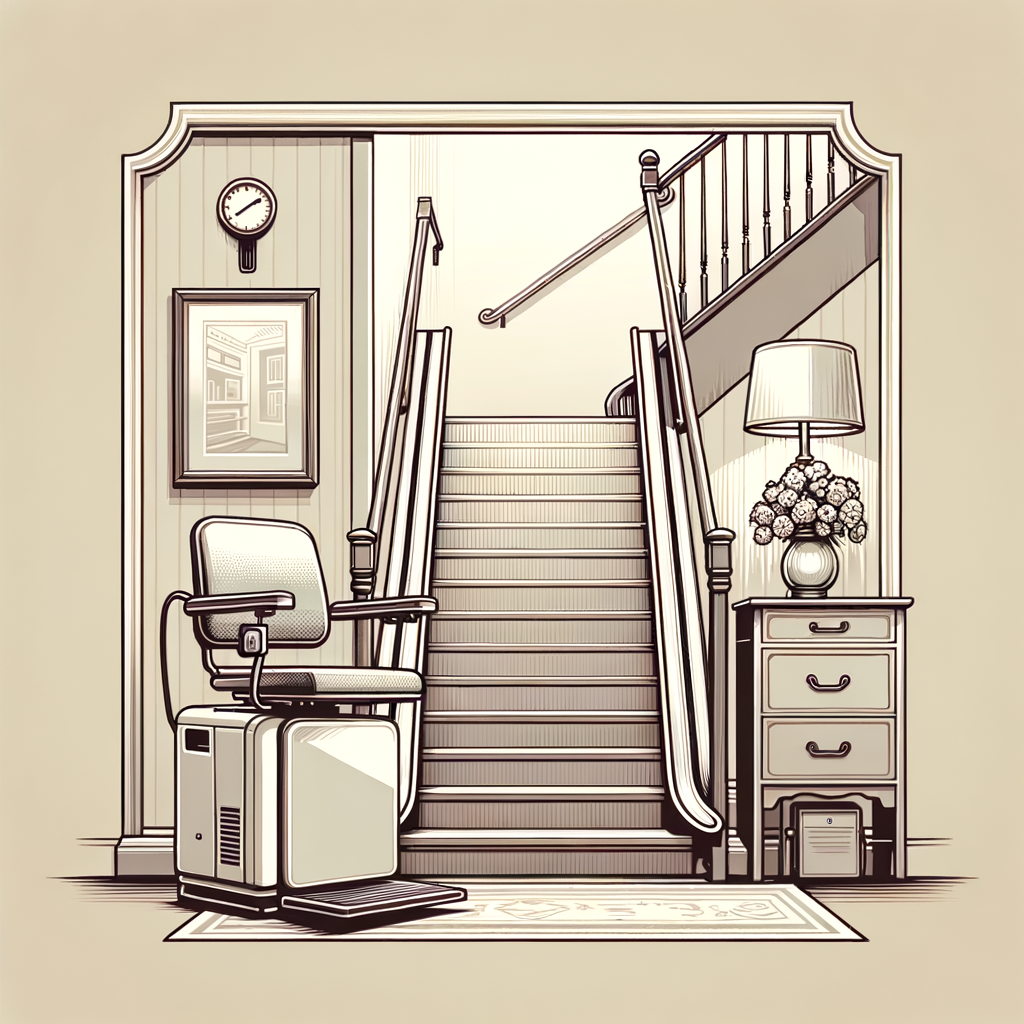
A chair lift, also called a stair lift, is a motorized seat that travels along a rail mounted on a staircase. The key design distinction is where the load goes. Standard residential stair lifts are mounted to the stairs, not the wall. That surprises many buyers who assume a wall-mounted approach would avoid drilling into wood treads or carpeted steps. In practice, stair mounting is the accepted engineering standard because it provides predictable support, better alignment, and less dependence on wall framing conditions. In homes where I have evaluated installations, this stair-mounted approach has consistently been the safest and most practical method.
This matters because buyers are usually balancing safety, home appearance, landlord rules, resale concerns, and installation speed. Some are caring for an aging parent after a hospital discharge. Others are planning ahead for arthritis, balance loss, or recovery from joint replacement. In those situations, people need direct answers: how much drilling is involved, can holes be repaired, are there rental options, and are there any true no-drill alternatives? Understanding those practical realities helps you choose the right chair lift design, avoid misleading marketing claims, and plan an installation that works for both mobility and property needs.
Why stair lifts are normally drilled into the stairs
A residential stair lift creates concentrated loads at multiple points along the staircase. The user’s body weight, the chair frame, the motor, the gearbox, and the rail all transfer force into the mounting brackets. During starting, stopping, and reversing, the system also introduces dynamic loads, not just static weight. For that reason, manufacturers such as Bruno, Harmar, and Stannah specify bracket spacing and fastener requirements that anchor the rail to the treads. Installers follow manufacturer instructions and local code expectations so the lift performs as tested and warranted.
The amount of drilling is usually modest. On a straight stair lift, brackets are commonly mounted every few steps, not at every single tread. Each bracket may require two or more screws depending on the rail system and staircase material. The holes are typically small and located in the horizontal tread rather than in the visible riser or side trim. On carpeted stairs, the installer drills through the carpet into the tread below. If the lift is later removed, the remaining holes can usually be filled with wood filler, wax sticks, or matched repair compounds, and carpet fibers often conceal minor marks surprisingly well.
There is also an important safety reason manufacturers do not rely on adhesive mounting, compression mounting, or freestanding rail systems for standard homes. Stair lifts must remain stable over thousands of cycles. A typical unit may carry 300 to 400 pounds, while heavy-duty models can exceed that. A secure mechanical connection is the most reliable way to manage that load. Any claim that a conventional stair lift can be installed with no drilling at all should be treated cautiously unless the seller can show the exact product design, engineering documentation, and applicable use limitations.
Are there any true no-drill chair lift options?
For a standard seated stair lift used in a home, true no-drill options are extremely rare. Most products advertised as easy-install or damage-free still require some form of mechanical fastening to the stairs. What varies is not whether drilling happens, but how much, where the brackets sit, and whether removal leaves visible evidence. In the field, the phrase no-drill often turns out to mean no wall drilling, not no stair drilling.
There are adjacent accessibility products that may reduce or avoid stair drilling in certain situations, but they are not direct substitutes for a conventional chair lift. A vertical platform lift, for example, may be used to overcome a few exterior steps, yet it usually requires a concrete pad and substantial anchoring. A home elevator avoids stair attachment entirely, but it involves major construction, hoistway requirements, permits, and far higher cost. Portable stair climbing devices used by caregivers also avoid permanent installation, but they require an attendant and are not the same as an independently operated stair lift.
If drilling is your main concern, the better question is not can I avoid drilling completely, but what is the least invasive safe option for my staircase and mobility needs? In many homes, a professionally installed straight stair lift is less disruptive than buyers expect. Installation can often be completed in a few hours, power is usually supplied from a standard outlet for the charger, and the rail mounting holes are repairable if the lift is removed later.
What gets drilled, how visible it is, and how removal works
The rail brackets generally fasten into the horizontal stair treads. Installers measure tread depth, pitch, nosing projection, and clear width before laying out bracket positions. On wood stairs, screws bite into solid timber or engineered tread material. On carpeted stairs, the bracket base sits over the carpet, and the fastener passes through into the wood underneath. On steel or concrete stairs, specialized hardware may be required, and some residential products may not be suitable without manufacturer approval.
Visibility depends on the staircase finish and the lift layout. Straight lifts are usually cleaner visually because the rail is a simple run. Curved lifts, which are custom fabricated for turns, landings, and intermediate bends, may use more complex bracket placement. A hinged rail or folding rail at the bottom can reduce trip hazards near a doorway, but it may add components that draw more attention. In most living spaces, however, the rail itself is far more noticeable than the screw locations. Once installed, the chair, rail, and charging points become the dominant visual elements.
When a stair lift is removed, a technician disconnects power, detaches the chair and rail, and extracts the mounting hardware. Small holes in wood treads can be filled, sanded lightly, and color matched. Carpeted stairs may show compression where brackets sat, but that often lifts over time with brushing or steam treatment. If the staircase finish is premium hardwood with a dark stain or historic detailing, ask in advance what a removal and touch-up would realistically look like. High-end finishes can be repaired, but exact invisibility is never guaranteed.
How installers handle common homeowner concerns
Most practical questions fall into a few predictable categories: safety, landlord approval, historic homes, narrow staircases, and resale. Installers should address each directly during a home assessment. In my experience, the best consultations include a tape-measure walkthrough, seat-fit discussion, transfer positioning at the top and bottom landings, and a clear explanation of where every bracket will go. If a salesperson cannot describe the mounting method in detail, that is a warning sign.
Landlord and condominium approval often hinge on reversibility. Because stair lifts typically mount to the treads rather than structural walls, they can be more reversible than tenants expect. Still, written permission matters. For historic homes, preservation concerns may influence bracket placement, finish choices, or the decision to use a particular side of the staircase. Narrow stairs require careful measurement because local expectations for egress clearance differ, and the folded chair, footrest, and rail must not create an unreasonable obstruction. This is especially important in multi-story homes where the staircase is the primary path of travel.
Resale concerns are usually manageable. A stair lift does not permanently stigmatize a property, and in some markets it can even help a short-term sale to buyers needing accessibility. More commonly, sellers remove the lift before listing. Because the rail mounts to stair treads, removal is straightforward compared with larger accessibility renovations. Buyers should focus less on whether any hole will exist and more on whether the lift solves the mobility problem safely right now.
Comparing installation realities by chair lift type
Different chair lift designs change the complexity of the work, but not the basic need for secure fastening. Straight stair lifts are the simplest, fastest, and least expensive to install because the rail is standardized. Curved stair lifts are custom built from a template or digital measurement system, and they require more planning because every bend, park position, and overrun is engineered to the staircase. Outdoor stair lifts add weatherproofing, corrosion-resistant finishes, and power considerations, but they still require solid anchoring to the stair structure.
| Chair lift type | Typical drilling location | Installation complexity | Removal impact | Best use case |
|---|---|---|---|---|
| Straight stair lift | Stair treads | Low | Usually minor, easy to repair | Single uninterrupted flight |
| Curved stair lift | Stair treads at custom bracket points | High | Minor to moderate depending on layout | Turns, landings, or spiral-like paths |
| Outdoor stair lift | Exterior stair structure | Moderate | Varies by material and exposure | Porch or deck access |
| Heavy-duty stair lift | Stair treads with reinforced spacing | Moderate | Similar to straight or curved models | Higher capacity or wider seat needs |
This comparison helps answer another common question: does a heavier or more complex lift mean more damage? Not necessarily damage, but it may mean more hardware, more exact placement, and more visible equipment. The right choice depends on staircase geometry, user size, transfer needs, and whether the family expects the lift to be temporary or long term.
Key questions to ask before you schedule installation
Start with the staircase itself. Ask whether the lift will mount only to the treads, how many brackets are expected, whether any part of the system attaches to the wall, and what minimum clear width will remain when the chair is folded. Confirm the weight capacity, seat height, arm width, swivel function, obstruction sensors, and battery backup. A modern battery-powered unit should continue operating during a power outage for a limited number of trips because the batteries drive the carriage while the charger maintains them at the rail.
Next, ask about removal and restoration. Request a written explanation of what holes will remain, whether the installer offers patching, and what is excluded. If you are in a rental or managed property, ask for a spec sheet showing reversibility and electrical needs. If appearance matters, request photos of previous installations on similar stairs, including carpet, oak, painted wood, and narrow staircases. Reputable dealers usually have these examples.
Finally, ask about standards, warranty, and service. The lift should be installed according to the manufacturer’s instructions, and the dealer should explain maintenance intervals, battery replacement expectations, and emergency service response. If a provider dismisses your drilling concerns without specifics, keep shopping. A trustworthy installer answers plainly: yes, standard stair lifts are drilled into the stairs; here is where, here is why, and here is how we minimize and repair the impact.
So, can you install a chair lift without drilling into stairs? In most homes, no. A conventional residential stair lift almost always requires drilling into the stair treads so the rail can be anchored safely. That is not a design flaw; it is the reason the equipment remains stable under real daily use. The good news is that the drilling is usually limited, the installation is far less disruptive than most buyers expect, and removal is typically straightforward with repairable holes.
The practical takeaway is simple. If you need safe stair access, do not let the idea of a few fastener holes stop you from evaluating a lift that could prevent falls and preserve independence. Instead, focus on the factors that matter most: the right lift type, a precise home assessment, clear approval from your landlord or HOA if needed, and a dealer who explains the mounting process honestly. Straight lifts, curved lifts, outdoor models, and heavy-duty units all have different planning requirements, but they share the same core principle of secure attachment.
This page should serve as your hub for chair lift installation questions, especially if you are comparing designs, worried about property impact, or planning for a parent, spouse, or your own future mobility. The next step is practical: schedule an in-home assessment, ask exactly where the brackets will go, and get removal expectations in writing. With the right product and installer, a stair lift can be a safe, reversible, and highly effective accessibility upgrade.
Frequently Asked Questions
Can you install a chair lift without drilling into the stairs?
In most cases, no. A residential stair lift almost always needs to be mechanically fastened to the stair treads using brackets and lag screws. That is the standard installation method because the rail has to stay rigid and secure while carrying a person up and down the staircase. Many homeowners initially hope the system can simply clamp in place or attach to the wall, but that is usually not how stair lifts are designed. The lift rail bears the operating load, so it needs a stable, permanent connection to the stairs themselves.
That said, drilling into the stairs does not mean the staircase is being ruined or heavily altered. The fasteners go into the treads, not typically into the wall, and the number of attachment points is limited to what is needed for safety and proper support. This is considered a routine, low-impact installation rather than a remodeling project. If the lift is removed later, the remaining holes are generally small and can often be filled or repaired much more easily than homeowners expect.
Why are stair lifts attached to the stairs instead of the wall?
Stair lifts are usually mounted to the staircase because the stairs provide the most reliable and direct structural support for the rail system. The rail must remain aligned and stable over the full travel path of the lift, and stair treads offer consistent spacing and strength for mounting brackets. By contrast, walls vary widely in construction. Some are drywall over studs, some include trim or obstructions, and many are simply not positioned in a way that would support the exact rail geometry needed for a safe ride.
Attaching the system to the stairs also helps installers avoid unnecessary wall damage. Many people assume a wall-mounted setup would be less invasive, but in reality, securing a lift safely to a wall could require extensive reinforcement, opening finished surfaces, or dealing with handrails, windows, molding, and uneven framing. Stair mounting is typically the cleaner, more predictable, and safer solution. It is the industry standard because it works consistently across a wide range of homes while keeping the lift properly supported.
Will drilling into stair treads damage the staircase or reduce its strength?
Under normal professional installation, no, the staircase is not considered structurally damaged by the small number of holes used to mount a stair lift. Installers place brackets strategically and use hardware sized specifically for the application. The goal is to secure the rail firmly without compromising the integrity of the treads. A properly built staircase is designed to handle far greater everyday loads than the localized fasteners used for a lift system.
It is also important to distinguish between cosmetic impact and structural harm. A stair lift installation does leave small fastener holes, so there is a visible alteration at the mounting points if the system is ever removed. However, those holes are generally repairable. Wood stairs can often be filled, sanded, and refinished, while carpeted stairs may show little evidence once patched. For most homeowners, the installation is best understood as a practical modification rather than permanent damage, especially when compared with the safety and accessibility benefits the lift provides.
Are there any no-drill or temporary chair lift options for homes?
For most residential stair lifts, true no-drill installation is not a realistic option. Because the equipment transports a person and must operate safely on an incline, manufacturers and installers rely on fixed mechanical anchoring. Temporary, adhesive, pressure-fit, or clamp-only solutions are generally not appropriate for standard chair lifts because they do not provide the level of stability required for daily use. Safety codes, manufacturer requirements, and liability standards all push the industry toward securely mounted systems.
In some situations, homeowners exploring alternatives may be better served by considering other mobility solutions rather than trying to force a no-drill stair lift concept. Depending on the home layout and the user’s needs, that could mean a vertical platform lift, a threshold ramp, first-floor room conversion, or other accessibility modifications. The best next step is usually an in-home assessment with a qualified stair lift provider. They can explain what is actually possible, identify any special conditions with the staircase, and set realistic expectations about installation methods and any required fastening.
What should homeowners expect during and after a stair lift installation?
Homeowners should expect a fairly straightforward installation process, not a major construction project. In a typical residential setup, technicians measure the staircase, position the rail, attach support brackets to the stair treads, and test the lift thoroughly for smooth operation and safety. Most installations are completed in a matter of hours rather than days, although curved staircases or custom rail systems can take longer due to design and fitting requirements. In many homes, there is little disruption beyond the work area itself.
After installation, the staircase should remain fully functional, although the available walking space may be somewhat reduced depending on the width of the stairs and the model selected. The lift seat, footrest, and arms often fold up to preserve space when not in use. If the lift is removed in the future, the main issue is usually cosmetic cleanup at the mounting points, not major structural repair. For homeowners worried about resale or appearance, this is reassuring: the process is generally reversible, and the staircase is not being demolished or rebuilt. The key is to work with an experienced installer who uses the correct hardware, follows manufacturer guidelines, and prioritizes both safety and clean workmanship.