Chair lifts work by moving a motorized seat along a rail fixed to a staircase, giving people with limited mobility a safe way to travel between floors without climbing steps. In practical terms, a chair lift combines mechanical drive components, electrical controls, safety sensors, and a fitted seat assembly into one system designed for predictable, repeatable movement. I have worked with homeowners comparing models, installers measuring staircases, and family caregivers learning daily operation, and the same questions come up every time: how does the lift actually move, what powers it, what safety features matter, and which design fits a specific home? Understanding those basics matters because a chair lift is not just a convenience product. It is a piece of home accessibility equipment that affects independence, fall risk, caregiver strain, and long-term housing decisions. This guide explains how chair lifts work step by step, defines the parts, and answers the practical questions most buyers and users have before installation, during daily use, and over years of ownership.
Main Parts of a Chair Lift System
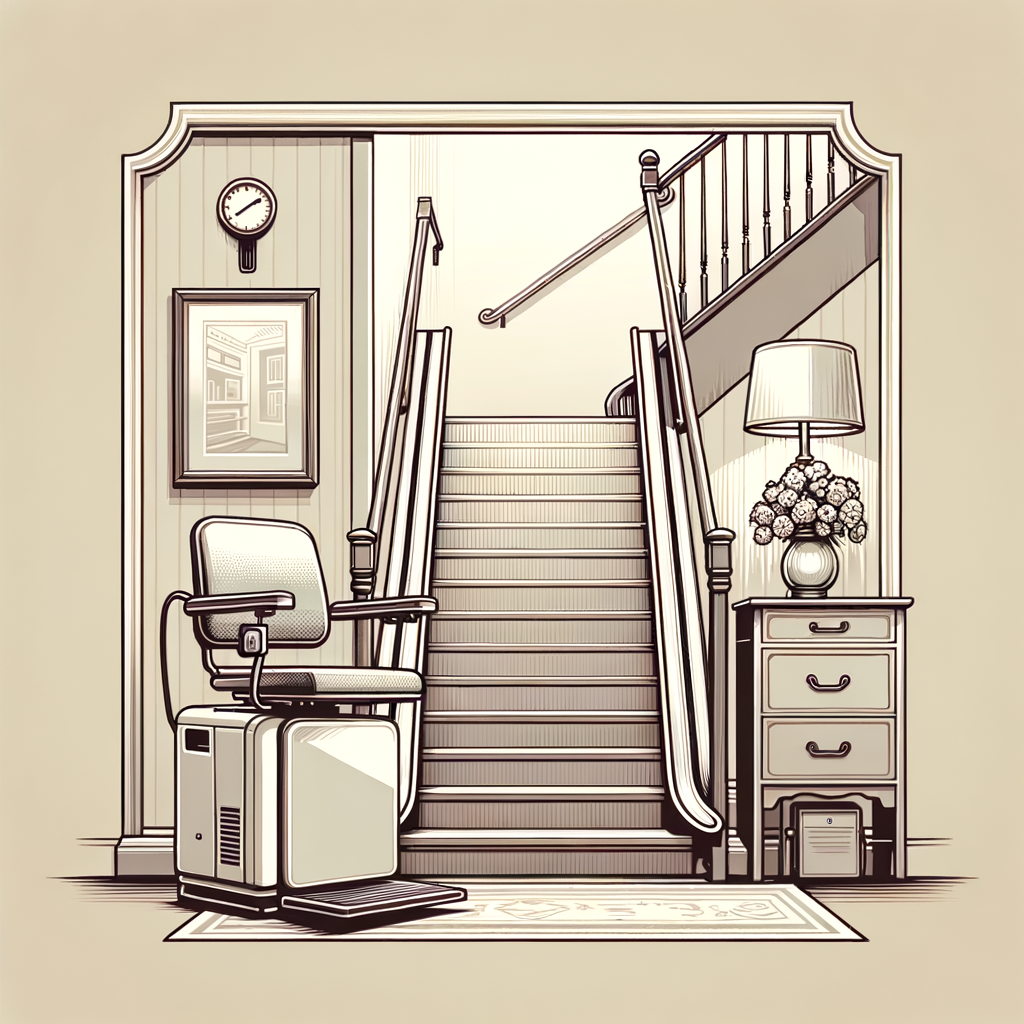
A chair lift system has five core elements: the rail, the carriage, the seat, the power system, and the controls. The rail is mounted to stair treads rather than the wall in most residential systems. It guides the unit up and down the staircase and may be straight or custom curved. Inside or attached to the carriage is the motor, gearbox, braking components, and drive mechanism. The seat assembly includes the chair, armrests, footrest, seat belt, and often a swivel function that helps the rider get on and off safely at the top landing.
The power system is usually battery based even though the unit plugs into household electricity. In most modern lifts, the batteries sit inside the carriage and charge automatically when the chair is parked at a charging point. That design allows the lift to keep operating during a power outage for several trips, depending on battery condition and rider weight. Controls include armrest buttons or a joystick for the rider and call-send remotes mounted on a wall or kept handheld. Better models also include status lights and fault indicators to simplify troubleshooting.
Different brands use different drive methods, but the principle is consistent. A motor turns energy into movement, the drive system transfers that motion to the rail, and the controls manage speed, starts, stops, and safety inputs. This combination is why a chair lift feels smooth rather than abrupt when it starts moving.
Step by Step: What Happens During a Ride
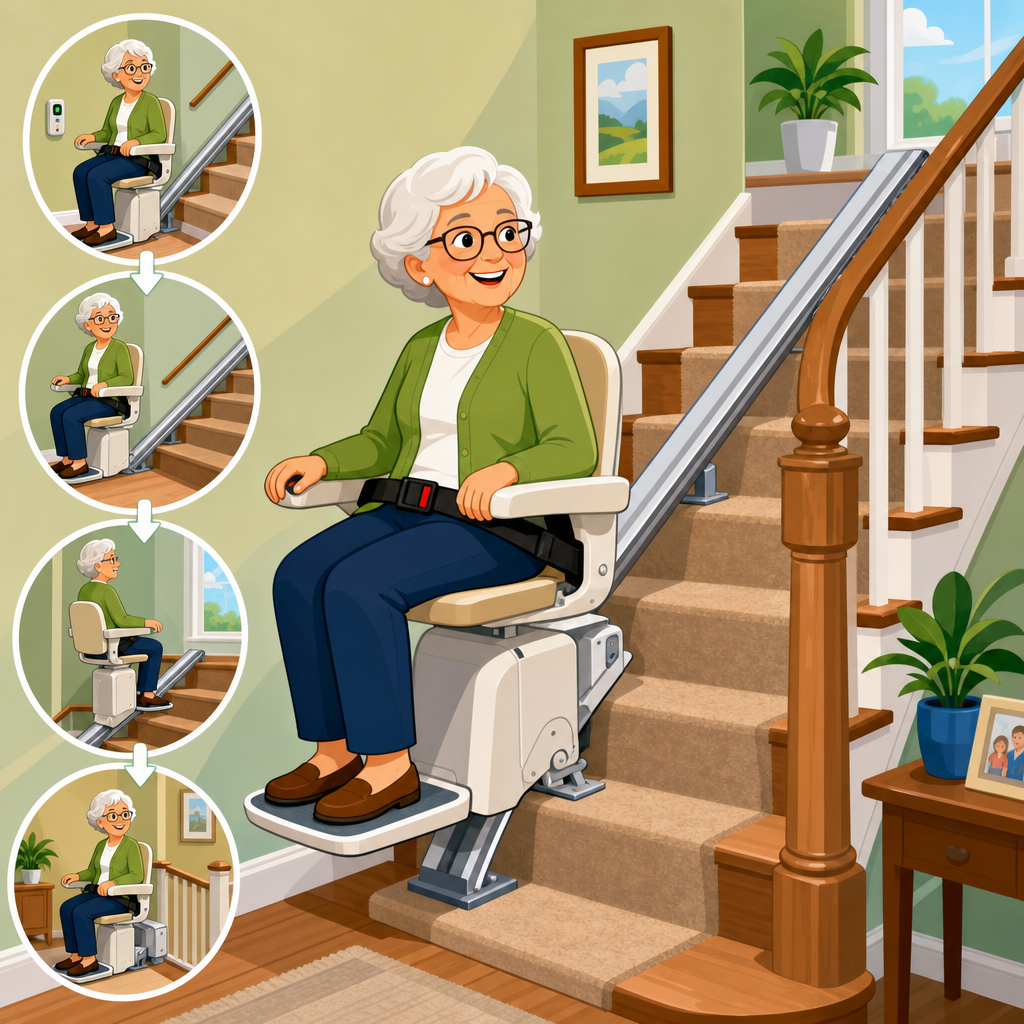
The first step is parking and charging. When not in use, the chair lift usually rests at the top or bottom landing on a charge point. The user lowers the seat, armrests, and footrest if they were folded up to save space. Next, the rider sits down, fastens the seat belt, and places both feet securely on the footrest. Keeping feet on the footrest matters because the lift is designed around that position, and the footplate often houses obstruction sensors that stop the unit if it touches an object on the stairs.
Once seated, the user presses and holds the travel control in the direction of movement. Most lifts are constant-pressure systems, meaning the button must remain pressed for the chair to keep moving. This is a deliberate safety feature. If the user releases the control, the lift stops. The control signal goes to the carriage electronics, which confirm that safety circuits are clear, such as seat position, swivel lock status, and sensor readiness. The motor then starts, usually through a soft-start programming sequence that reduces jerky movement.
As the carriage moves, the motor drives a transmission that reduces speed and increases torque. That is necessary because chair lifts need controlled force, not high speed. Residential lifts typically travel around 15 to 20 feet per minute, depending on the model. During travel, the braking system remains ready, and the carriage follows the rail profile. On a straight stair lift, the motion is linear. On a curved stair lift, the system adjusts through bends, landings, and changes in angle because the rail was fabricated specifically for that staircase.
At the destination, limit switches or electronic positioning controls slow and stop the lift in the correct place. The rider then unlocks and swivels the seat, usually at the top landing, so they can stand up facing away from the stairs. This reduces the chance of a misstep near the stair edge. After dismounting, the user can fold the seat up and send the chair away with a remote if they want to keep the landing clear.
How the Drive Mechanism Moves the Chair
The question many buyers ask most directly is: what physically makes the chair go up the stairs? In most residential designs, the motor turns a gear or friction drive linked to the rail. A common setup is rack-and-pinion. In that system, a toothed strip runs along the rail and a drive gear in the carriage meshes with it. As the gear rotates, the carriage climbs or descends the rail in a controlled way. Rack-and-pinion systems are widely used because they are reliable, precise, and well suited to the stop-start demands of home use.
Some models use cable drum or winding systems, while others use worm gear or traction-based approaches. In my experience, homeowners do not need to memorize each engineering variation, but they should know that the drive system affects ride feel, maintenance needs, and noise levels. A well-designed gearbox is crucial because it converts fast motor rotation into slower, stronger movement suitable for carrying a rider uphill. Without that gear reduction, a compact motor would not deliver enough climbing force.
Braking is equally important. Chair lifts typically have electromagnetic or mechanical braking that engages automatically when needed, including if power is interrupted. This fail-safe design prevents uncontrolled descent. Reputable manufacturers engineer the system so the chair cannot freewheel down the stairs. When installers describe a lift as self-locking or fail-safe, they mean the drive and brake arrangement is built to default toward stopping rather than moving if a fault occurs.
Power Supply, Batteries, and What Happens in an Outage
Most modern chair lifts are battery powered units with continuous charging. The lift plugs into a standard outlet, and a charger keeps onboard batteries topped up. This is the setup I usually recommend because it provides smoother operation and backup capability during an outage. Direct-powered older systems exist, but battery-driven residential lifts now dominate the market because home users value reliability during storms and utility interruptions.
Battery capacity varies by manufacturer and usage conditions, but many lifts can complete multiple trips after the home loses power. Exact performance depends on rider weight, stair length, temperature, battery age, and whether the chair was fully charged before the outage. Sealed lead-acid batteries are common, though some newer systems use alternative battery chemistries. In normal use, batteries often last several years before replacement. A weak battery usually shows up as slower travel, warning beeps, or failure to complete repeated trips between charging points.
One practical point often missed is that a chair lift must be parked correctly to recharge. If the carriage stops slightly off the charging contacts, the batteries may drain over time. That is why service calls sometimes reveal no major mechanical issue at all, just a unit left away from its charge point. Good user training prevents this problem.
Essential Safety Features Every User Should Understand
Safety features are the reason a properly installed chair lift is much safer than trying to climb stairs with poor balance, leg weakness, or joint pain. Every user should understand the basics before the first ride. The seat belt prevents sliding or shifting during travel. Obstruction sensors on the footrest and carriage stop the lift if it meets an object such as a dropped shoe, pet toy, or item left on the stairs. Overspeed protection monitors travel speed and stops the unit if movement falls outside safe limits. Limit switches ensure the chair stops in the intended boarding area.
The swivel seat is a major safety feature, not a luxury. At the top landing, it rotates to position the rider away from the open staircase. Locking the swivel in place matters because the lift should not travel while the seat is turned. Folding arms and footrests also help reduce trip hazards for other stair users when the lift is parked. Many systems include a key switch that prevents unauthorized use, especially in homes with children.
| Feature | What It Does | Why It Matters |
|---|---|---|
| Seat belt | Secures the rider during movement | Reduces slipping or leaning risk |
| Footrest sensors | Stop the lift if the footplate hits an obstruction | Helps prevent collisions on the stairs |
| Swivel seat lock | Keeps the seat fixed for boarding and exit | Improves safety at the top landing |
| Limit switches | Control stopping points | Ensures accurate parking position |
| Battery backup | Allows operation during an outage | Maintains access between floors |
No safety feature replaces proper use. Riders should sit fully back, keep elbows and clothing inside the armrests, and never exceed the rated capacity. Typical residential capacities range from about 250 to 400 pounds, with heavy-duty models going higher. Weight limits are engineering limits, not suggestions.
Straight, Curved, and Outdoor Chair Lift Designs
The way a chair lift works is similar across designs, but the rail and installation method vary by staircase layout. Straight chair lifts fit staircases with no turns or intermediate landings. Because the rail can be manufactured in standard lengths and trimmed on site, straight lifts are faster to install and usually less expensive. They are the most common residential option and often the easiest entry point for buyers.
Curved chair lifts are built for stairs with bends, pie-shaped steps, intermediate landings, or spiral-like geometry. These systems require a detailed survey, often using digital photo measurement or 3D mapping, because the rail is custom fabricated to the staircase. They cost more because customization is significant, but they solve layouts a straight lift cannot. In many multi-level homes, a curved rail allows continuous travel around corners without transfers.
Outdoor chair lifts use weather-resistant materials, sealed components, and protective covers. They are designed for porch steps, decks, and exterior entry stairs, not just interior use moved outside. Exposure to moisture, temperature swings, and debris affects operation, so outdoor models need appropriate ingress protection and routine cleaning. If a homeowner asks whether any chair lift can be installed outside, the answer is no: the unit must be rated for outdoor conditions.
Installation, Stair Measurements, and Home Fit Questions
Installation starts with a site assessment, not with choosing upholstery color. The installer measures overall stair length, angle, number of steps, width, landing clearances, and obstructions such as radiators, doors, molding, or low headroom. Many straight stair lifts require roughly 27 to 30 inches of staircase width for practical use, though exact clearance depends on the folded profile and user needs. Curved models often need more planning because parking positions, overrun sections, and transfer space matter as much as stair width.
The rail is usually fixed to stair treads with brackets. That means structural wall modifications are often unnecessary, a point that reassures many homeowners. Installation of a straight lift can often be completed in a few hours once the unit is available. Curved systems take longer because manufacturing lead time comes first, followed by installation and testing.
Users should ask practical fit questions early: Can doors near the staircase still open fully? Is there safe room to get on and off at both landings? Will the folded chair leave enough walking space for others? Can the power supply reach a dedicated or appropriate outlet as specified by the manufacturer? These details determine whether a chair lift is merely possible or genuinely usable day after day.
Maintenance, Common Problems, and Everyday User Tips
Chair lifts are durable, but they are not maintenance free. Manufacturers typically recommend periodic service to inspect batteries, charge contacts, rollers, gear engagement, seat swivel locks, footrest sensors, and rail condition. Dust, pet hair, and debris on the rail or charge points can cause avoidable faults. In homes with heavy use, preventive maintenance is far cheaper than emergency repair after a breakdown.
The most common user issues are simple: the seat is not fully locked in travel position, the footrest or armrest is misaligned, the key switch is off, the unit is not on its charge point, or an obstruction sensor has been triggered. I have seen many service calls resolved by repositioning the swivel seat correctly. When a lift beeps or refuses to move, users should first check the manual’s fault guide, then look for these basic causes before assuming major failure.
Battery replacement is a normal ownership cost. So is occasional remote replacement, charger service, or upholstery repair after years of use. The best everyday habits are straightforward: keep the rail clean, park the unit on charge, do not overload it, test remotes occasionally, and schedule annual service if the manufacturer or dealer recommends it. For households relying on the lift as primary access, a maintenance plan is often a sensible safeguard.
Frequently Asked Questions Before Buying a Chair Lift
Most buyers want direct answers. How long does installation take? Straight models are often installed in one visit, while curved systems require custom manufacturing first. Can a chair lift be removed later? Yes. In most cases, the rail and brackets can be removed, and stair tread repairs are modest compared with major remodeling. Is it safe for an older adult living alone? Yes, if the lift is properly fitted, maintained, and matched to the user’s transfer ability. If a person cannot safely sit, fasten a belt, or stand at the landing, additional support or another accessibility solution may be more appropriate.
What if several people use the stairs? Folding seats, arms, and footrests help preserve walking space, and call-send controls allow the chair to be parked away. Can a chair lift be installed on narrow stairs? Sometimes, but narrow width is a real constraint. A site survey is the only reliable answer. How much weight can it carry? Standard models commonly support around 300 pounds, while heavy-duty lifts may support 400 pounds or more, but capacity varies by rail design and seat configuration.
Another common question is whether renting or buying makes more sense. For short-term recovery on a straight staircase, rental can be cost effective where available. For long-term use, ownership usually makes more financial sense. Curved lifts are less commonly rented because the rail is custom made. The practical decision depends on duration of need, staircase type, and whether the user’s mobility is expected to improve, remain stable, or decline.
Chair lifts work through a straightforward but carefully engineered process: a powered carriage travels on a rail, safety systems monitor movement, and the user rides seated between landings with controlled starts and stops. Once you understand the rail, motor, batteries, controls, and sensors, the equipment becomes much less mysterious and much easier to evaluate. The biggest takeaways are simple. First, the right chair lift depends on staircase shape, user ability, and landing space, not just price. Second, battery-powered systems with charging points provide reliable day-to-day operation and useful backup during outages. Third, safe use depends on correct installation, proper fit, and routine maintenance just as much as the hardware itself.
For households comparing chair lift types and designs, this practical knowledge helps you ask better questions and avoid mismatches. Measure carefully, request a professional assessment, compare straight, curved, and outdoor options based on actual use, and review service support before you buy. If you are building out an accessibility plan for a home, use this guide as your starting point, then explore model-specific resources, installation details, and maintenance guidance for the exact staircase and mobility needs involved.
Frequently Asked Questions
How does a chair lift actually move up and down the stairs?
A chair lift travels along a rail that is mounted to the staircase, not usually to the wall. The user sits on the seat, fastens the seat belt, and presses a control on the armrest or a wall-mounted call/send button. Once activated, a motor inside the chair lift base drives the unit along the rail at a controlled speed. Depending on the model, the system may use a rack-and-pinion drive, a cable system, or another geared mechanism, but the goal is the same: smooth, predictable travel from one landing to the other.
Inside the lift, the motor works together with a transmission to provide enough torque to carry the rider safely up or down the staircase. Most modern chair lifts are battery-powered during operation, which means the batteries supply power to the motor while a charging system keeps them topped up when the lift is parked at designated charging points. This setup allows the lift to keep working even during many household power outages. From the rider’s perspective, the process feels simple, but behind that simplicity is a coordinated system of electrical controls, mechanical drive parts, braking components, and safety sensors all working together to manage movement with consistency.
What are the main parts of a chair lift system?
A chair lift is made up of several key components that each play a specific role. The rail is the track attached to the stair treads and acts as the path the lift follows. The carriage, sometimes called the drive unit, is the mechanical housing that contains the motor, gears, brakes, and electronics that move the chair along the rail. Attached to that is the seat assembly, which includes the chair, armrests, footrest, and seat belt. Many seats swivel at the top landing to help the user get on and off more safely without standing too close to the stair edge.
Electrical controls are another major part of the system. These include the operating toggle or joystick on the armrest, call/send remotes, charging contacts, and the control board that manages lift behavior. Safety features are built throughout the unit, including obstruction sensors on the footrest and carriage, overspeed protection, limit switches that stop the lift at the correct positions, and locking mechanisms that keep the seat secure during use. In homes with curved or multi-landing staircases, the rail is custom-fabricated to match the exact shape of the stairs. In straight-stair installations, the rail is simpler but still carefully measured to ensure proper fit and safe clearance.
Do chair lifts work during a power outage?
Most modern residential chair lifts are designed to keep operating during a power outage because they typically run on rechargeable batteries housed inside the lift. Even though the unit plugs into household electricity, that power is often used primarily to charge the batteries rather than to drive the lift directly. When the power goes out, the stored battery power allows the chair lift to continue making trips for a period of time, depending on battery condition, lift model, rider weight, and how often the lift is used during the outage.
This battery-backed design is one of the reasons chair lifts are considered practical for daily living. It gives users a level of reliability that is especially important in homes where the bedroom or bathroom is on a different floor. That said, battery performance is not unlimited. Over time, batteries wear down and need replacement as part of normal maintenance. If a chair lift is not parked on its charging point regularly, the batteries may discharge faster and lose overall life. Homeowners and caregivers should understand where the charging stations are located and make it a habit to park the lift correctly so it stays ready for use.
How do the safety features on a chair lift protect the user?
Chair lifts are built with multiple layers of safety so the ride remains controlled and secure. The most visible safety feature is the seat belt, which helps keep the user properly positioned while the lift is moving. The footrest supports the rider’s feet and often contains obstruction sensors that stop the lift if it comes into contact with an object on the stairs. Similar sensors may be located on the carriage and along key edges of the unit so the lift can stop if it detects something in its path.
Other safety systems work in the background. Limit switches ensure the lift stops at the correct top and bottom landing points instead of traveling too far. Swivel-seat locks help prevent the chair from moving unless the seat is in the proper travel position. Braking systems are designed to hold the lift securely on the rail, and overspeed controls can stop the unit if it moves faster than intended. Many models also include soft-start and soft-stop programming to reduce jerking at the beginning and end of a trip. In real-world use, safe operation also depends on proper installation, correct staircase measurement, regular servicing, and user training, especially for family members or caregivers who may be assisting someone with transfers.
What happens during chair lift installation, and how do installers make sure it fits the staircase?
Chair lift installation starts with a detailed assessment of the staircase and the user’s mobility needs. Installers measure the full stair run, check the number of steps, evaluate landing space, note any doorways or obstructions, and determine whether a straight or curved rail is required. They also consider seat height, folding clearance, power supply location, and whether the user needs options such as a powered swivel seat, folding footrest, or hinged rail near a doorway. This planning stage is critical because a chair lift has to fit the staircase precisely while still leaving as much walking space as possible.
For straight staircases, the rail can often be cut and adjusted to fit on site or ordered to standard specifications based on measurements. For curved staircases, the rail is usually custom-made to follow turns, intermediate landings, or changes in angle. During installation, the rail is secured to the stair treads with brackets, the carriage and seat are assembled, and the charging system is connected. The installer then tests travel speed, stopping positions, swivel locks, sensors, remotes, and charging contact points. Before leaving, a good installer will walk the homeowner and caregivers through everyday operation, show how to fold the chair when not in use, explain basic troubleshooting, and review maintenance recommendations. That hands-on instruction is often what gives families confidence that the lift will be easy and safe to use day after day.