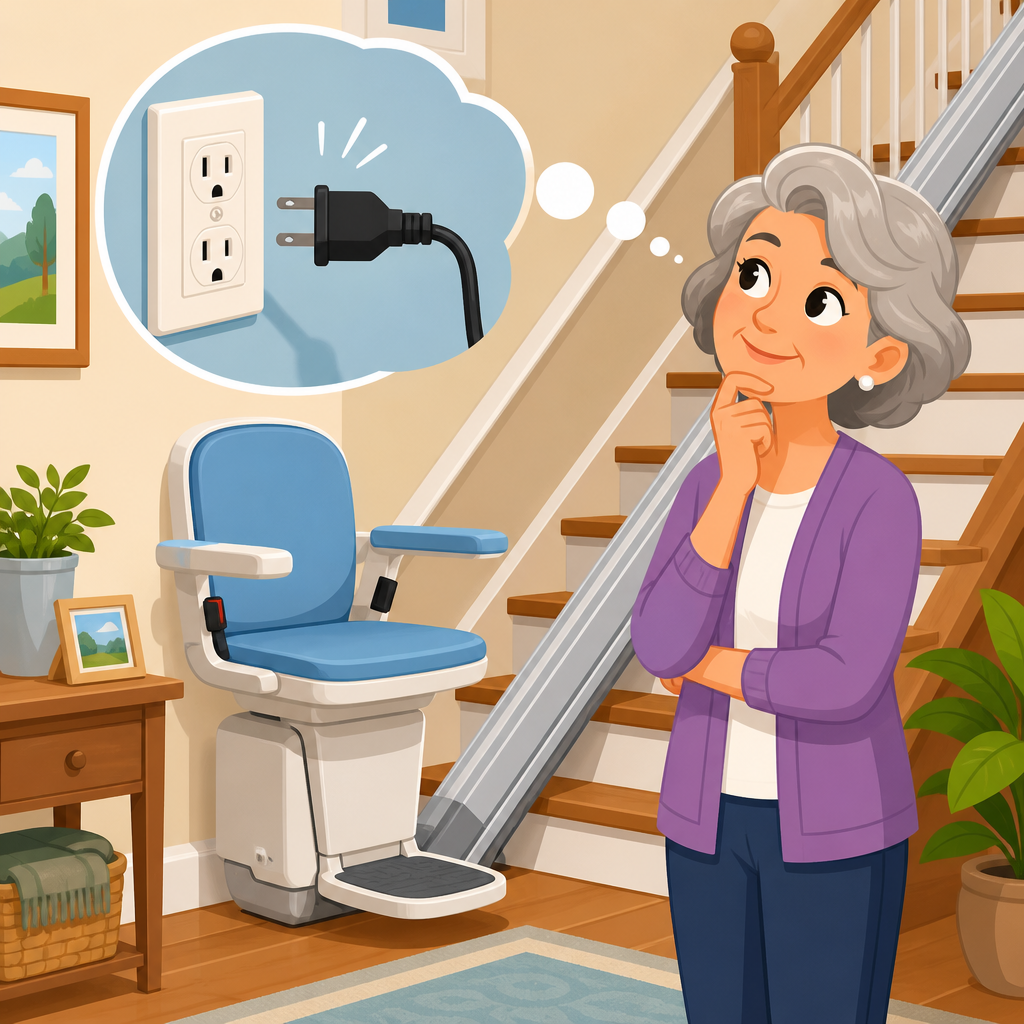
Can you leave a stair lift unplugged for weeks or months? In most cases, no—at least not without preparation. Most modern stair lifts use rechargeable batteries that depend on continuous charging whenever the chair is parked at a charging point. If the lift stays unplugged for an extended period, the batteries slowly discharge, sulfation can set in, and capacity may drop enough that the unit will not run reliably when you need it again.
This matters because stair lift battery care affects more than convenience. It affects safety, service life, and total ownership cost. In homes I have worked in, the most common “sudden failure” after a vacation, a vacant property period, or a remodeling project was not a bad motor or failed track. It was neglected batteries. Owners assumed unplugging the lift was harmless because the chair was not moving. In reality, the charger and battery system are designed to maintain readiness continuously, much like an uninterruptible power supply or mobility scooter charger.
To answer the core question directly: a stair lift can sometimes be left unplugged briefly, but leaving it unplugged for weeks or months is usually a bad idea unless the manufacturer explicitly approves a storage procedure. “Unplugged” means the charger has no mains power. “Charging point” refers to the place on the rail where charging contacts meet. “Battery care” includes charging habits, storage, testing, cleaning contacts, and replacement timing. This article serves as the central guide to battery care and replacement within stair lift maintenance, troubleshooting, and safety.
Most residential stair lifts from brands such as Bruno, Stannah, Handicare, Harmar, Acorn, and Access BDD use sealed lead-acid batteries, often 12-volt units wired in pairs to provide 24 volts. A charger keeps them topped up whenever the chair is correctly parked. Some older or specialized units differ, but the maintenance principle is consistent: rechargeable batteries last longest when kept within the charging routine specified by the manufacturer. Deep discharge shortens life. Heat shortens life. Corroded contacts reduce charging efficiency. Ignoring low-battery beeps almost always turns a simple maintenance issue into a service call.
How stair lift batteries and chargers actually work
A stair lift does not usually run directly from household electricity while traveling on the rail. Instead, wall power feeds a charger, and the charger maintains onboard batteries. Those batteries provide the high current needed for starts, stops, and operation during a power outage. That design is intentional. It gives the user a way to continue using the lift if the house loses power and avoids requiring a moving high-voltage power cable along the rail.
In practice, the charger sends a controlled maintenance charge when the chair is parked at the charging station. Depending on the model, charging may occur only at the top and bottom, or at an intermediate park position. If the chair stops a few inches away from the contact points, it may not charge even though it appears parked. I have seen this happen after someone manually swivelled the seat, nudged the carriage, or switched off the unit and left it between endpoints. The result was a dead battery blamed on age when the real issue was parking position.
Sealed lead-acid batteries are common because they are reliable, proven, and relatively affordable. Their weakness is deep discharge. If voltage falls too low and stays low, lead sulfate crystals harden on the plates, reducing capacity. Once that happens, charging may restore only part of the original runtime. That is why a stair lift left unplugged for months may come back to life briefly yet fail under load halfway up the stairs.
What happens if a stair lift is left unplugged for weeks or months
When a stair lift is unplugged, the batteries continue to lose charge through self-discharge and small standby loads from control boards, diagnostics, and call/send circuits. The rate varies by model, battery age, and temperature, but the pattern is predictable: the longer it sits without charging, the harder the batteries are to recover. A newer battery pair might tolerate a short unplugged period better than an older set, but no battery benefits from neglect.
For a period of several days, many units will be fine if the batteries were fully charged first. After a few weeks, risk rises sharply. After a few months, expect reduced capacity, nuisance beeping, fault codes, slow travel, failure to complete a trip, or complete non-operation. In vacant homes, I have also seen chargers unplugged at the wall during cleaning or decorating, then forgotten. By the time the homeowner returned, the batteries had dropped below recoverable voltage and needed replacement.
There is also a safety dimension. A weakened battery may let the chair start but not finish a journey, especially on a long staircase or a heavier load. Users can become stranded. During a power outage, old batteries may offer only one or two short trips instead of the reserve people expect. That is why battery condition should be treated as a safety item, not a minor convenience issue.
Best practices for battery care during everyday use and long absences
The best day-to-day rule is simple: keep the stair lift powered on, plugged in, and parked on its charging point whenever it is not in use. Do not unplug it to “save electricity.” Chargers are low-draw devices, and the cost of replacing batteries early is far higher than any trivial energy savings. If your home has a switched outlet near the lift, label it clearly so nobody turns it off by mistake.
For travel or a vacant property, confirm the chair is fully parked on the correct charge contacts, verify the outlet has power, and leave the system connected unless the manufacturer directs otherwise. If you must disconnect power because of electrical work or a property shutdown, consult the owner’s manual or dealer for the approved storage procedure. Some manufacturers recommend periodic recharging intervals during storage. Others advise battery disconnection by a technician if the unit will be out of service for a long period. Guessing is what ruins batteries.
| Situation | Recommended action | Why it matters |
|---|---|---|
| Daily use | Leave plugged in and parked on charge point | Maintains full battery capacity and outage readiness |
| Weekend away | Confirm outlet power and correct parking position | Prevents unnecessary discharge |
| Several weeks away | Keep charger energized; ask someone to verify status if possible | Reduces risk of charger trip, unplugging, or fault |
| Months in vacant home | Follow manufacturer storage guidance or arrange periodic inspection | Avoids sulfation, flat batteries, and surprise failure |
| After remodeling or cleaning | Check charger plug, switch, breaker, and parking position | These are common causes of accidental discharge |
Temperature also matters. Batteries age faster in heat, and cold can reduce immediate performance. If a stair lift is installed in a garage, porch enclosure, or seasonal property, storage conditions deserve extra attention. A battery that survives months unplugged in a mild indoor hallway might fail much sooner in a hot environment.
How to tell when stair lift batteries are weak or failing
The most common warning signs are persistent beeping, a low-battery indicator, slower travel, stopping mid-ride, failing to move after sitting unused, or operation only when parked and charged for a long period first. Some units display diagnostic codes on the armrest or carriage. Others communicate trouble through beep patterns. The manual is the first place to decode those alerts accurately.
Do not assume every battery symptom means the batteries are bad. I have diagnosed many service calls where the real fault was dirty charge contacts, a dead wall outlet, a tripped breaker, a switched receptacle turned off, misaligned charging strips, or a failed charger. A proper check includes confirming incoming power, measuring charger output, inspecting contact cleanliness, and load-testing the batteries. Voltage alone is not enough. A battery can show acceptable resting voltage and still collapse under load.
Age is a useful clue. In normal residential service, sealed lead-acid stair lift batteries often last about three to five years, though heavy use, poor charging habits, long rails, user weight, and heat can reduce that. If a lift is on its original batteries after five years and shows intermittent weakness, replacement is usually more practical than repeated troubleshooting.
Battery replacement: what owners should expect
Battery replacement is routine maintenance, but it should be done with the correct specifications. Stair lifts typically require the exact voltage, amp-hour range, terminal type, and physical size approved for the model. Installing a physically similar battery with the wrong characteristics can shorten runtime, confuse charging behavior, or damage components. Brand matters less than specification and freshness of stock. Reputable technicians use matched batteries from the same production batch whenever possible.
Replacement normally involves isolating power, safely accessing the battery compartment, documenting cable polarity, swapping both batteries as a pair, testing charger output, and running multiple travel cycles under load. Replacing just one battery in a pair is rarely wise because the older battery drags down the new one. After installation, the technician should confirm the lift parks correctly on charge and should explain any reset or calibration steps specific to the model.
Owners often ask whether battery replacement is a do-it-yourself job. Technically, some handy homeowners can do it, but I usually recommend professional service unless the manual explicitly supports owner replacement. Access panels, carriage covers, seat wiring, and safety circuits vary. An error with polarity, routing, or connector seating can create a larger repair. If the lift is a critical accessibility device, reliability matters more than saving a service fee.
Maintenance habits that extend battery life and reduce breakdowns
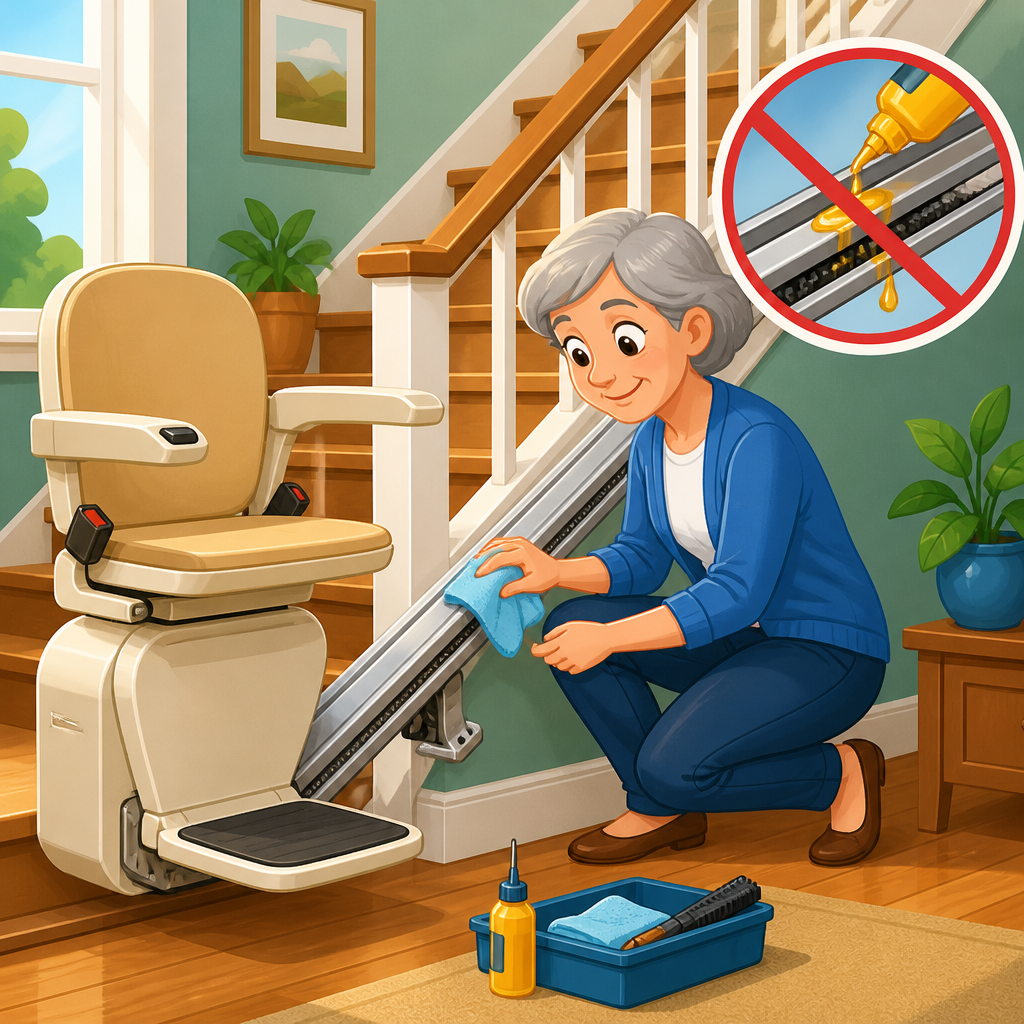
Battery care is tied to overall stair lift maintenance. Keep the rail clean and dry, but never grease it unless the manufacturer specifies lubrication points. Excess dirt around charge contacts can interfere with charging. Wipe charging strips or contact points with a dry or lightly damp cloth only if the manual permits it, and never sand them aggressively. Check that seat, footrest, and armrest mechanisms fold and lock properly so the chair parks exactly where it should.
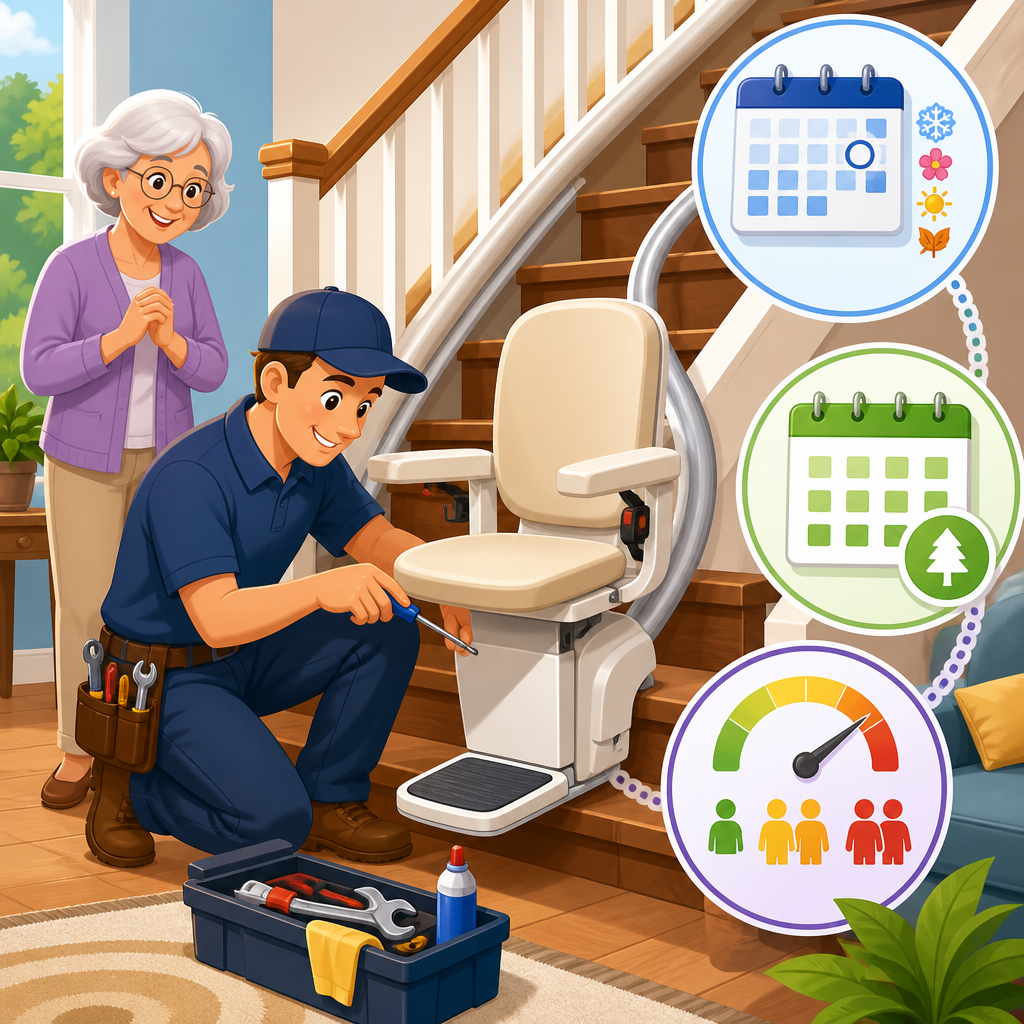
Schedule routine service according to the manufacturer or dealer recommendation, especially if the lift is used multiple times a day. A good preventive visit includes contact inspection, charger verification, battery assessment, safety edge testing, seat swivel interlock testing, and ride-quality checks. This kind of maintenance catches small charging issues before they become no-start complaints.
If your lift starts beeping, do not mute the problem by switching it off and forgetting it. Investigate promptly. Most battery failures announce themselves early. Addressing them while the batteries still hold some charge can prevent a stranded-user incident and may preserve the charger and control system from stress caused by chronic low voltage.
Common questions about unplugged stair lifts, storage, and battery replacement
How long can a stair lift stay unplugged? There is no single safe number for every model, but think in days, not months, unless you have written storage instructions from the manufacturer. Can an unplugged stair lift battery recover? Sometimes, if discharge was brief and not severe. If it sat flat for an extended period, recovery is unlikely to restore full service capacity. Should you unplug a stair lift during a storm? Usually no; surge protection at the household electrical level is the better strategy, and the unit needs charging power. Will using the lift during a power outage damage it? No, not if the batteries are healthy; that is exactly what the battery system is designed to handle.
For the best results, treat this page as your battery care and replacement hub. From here, your next maintenance priorities are charger troubleshooting, low-battery alarms, diagnosing charging contact issues, understanding fault codes, and planning replacement intervals before failure occurs. A stair lift is most dependable when its batteries are never allowed to drift into a deeply discharged state.
The bottom line is straightforward. You should not leave a stair lift unplugged for weeks or months unless the manufacturer provides a specific storage procedure and you follow it exactly. Most stair lifts rely on constant charging to preserve sealed lead-acid batteries, maintain outage protection, and ensure the chair is ready every time. Neglect leads to sulfation, lost capacity, nuisance faults, and expensive replacements that could have been avoided.
The practical habits are simple: keep the lift plugged in, park it on its charging point, verify the outlet stays live, respond quickly to warning beeps, and replace batteries in matched pairs when performance declines. If the property will be vacant, plan ahead instead of assuming the system can sit untouched indefinitely. That one decision makes the difference between returning to a working accessibility device and returning to a no-start service call.
Battery care is the center of reliable stair lift ownership because nearly every other electrical symptom connects back to charging, storage, or battery condition. If you want fewer breakdowns, safer operation, and lower long-term maintenance costs, start with the batteries. Review your owner’s manual, schedule a preventive inspection if the lift is older or heavily used, and make battery health part of your regular stair lift safety routine.
Frequently Asked Questions
Can you leave a stair lift unplugged for weeks or months?
In most cases, no—not without taking specific steps first. Most modern stair lifts are powered by rechargeable batteries, and those batteries are designed to stay topped up whenever the chair is parked on its charging contacts. Even though the lift may still operate for a short time after being unplugged, the batteries continue to slowly discharge while sitting idle. Over the course of weeks or months, that discharge can become deep enough to reduce battery capacity, shorten battery life, or leave the lift unable to run when it is needed.
The main issue is that stair lift batteries are not meant to sit in a low-charge state for extended periods. When they do, battery deterioration can accelerate, and in some cases sulfation can occur, which permanently reduces performance. That means a lift that seemed fine before storage may later move more slowly, beep or display low-battery warnings, stop partway on the rail, or fail to operate at all. If a stair lift will not be used for an extended period, the safest approach is to follow the manufacturer’s storage guidance or arrange for a qualified technician to prepare it properly.
What happens to a stair lift battery if the unit stays unplugged too long?
When a stair lift remains unplugged too long, the batteries gradually lose charge until they drop below the level needed for healthy storage. At first, there may be no obvious sign of trouble. However, as voltage continues to fall, the batteries can begin to lose usable capacity. In practical terms, that means the stair lift may no longer complete multiple trips, may struggle under normal load, or may not power up at all after sitting unused.
Over longer periods, the damage can become more than temporary discharge. Lead-acid batteries, which are common in many stair lifts, can develop sulfation when left undercharged. Sulfation creates crystal buildup on the battery plates, making it harder for the battery to accept and hold a full charge again. Even if the stair lift is plugged back in later, the charger may not be able to restore full performance. That can lead to expensive battery replacement and unreliable operation. Because stair lifts are mobility devices that people depend on for daily safety, avoiding preventable battery damage is especially important.
Is it safe to unplug a stair lift if you are going away for vacation or leaving the home seasonally?
For a short trip, it is usually better to leave the stair lift plugged in and parked correctly on its charging point rather than unplugging it. Stair lifts are generally built to maintain their batteries automatically, and keeping the unit connected allows the charger to replace the small amount of energy the batteries naturally lose over time. That is typically the safest setup for preserving battery health while the home is unoccupied for days or even a few weeks.
If you will be away for a much longer period, such as several months in a seasonal home, do not assume unplugging the lift is harmless. Long-term inactivity without charging can damage the batteries and create operational problems when you return. In those situations, the best course is to check the owner’s manual or contact the manufacturer or stair lift dealer for model-specific instructions. Some lifts may have recommended storage procedures, service shutoff steps, or maintenance checks before extended downtime. If the home’s power will also be shut off, it is especially important to get professional guidance so the lift is not left in a state that harms the batteries or compromises safe operation later.
How should you prepare a stair lift for long-term non-use?
The first step is to identify the exact model and follow the manufacturer’s recommendations, because charging methods and battery types can vary. In general, the chair should be parked at its designated charging station so the batteries can remain fully maintained. Make sure household power to the lift is active, the charger is functioning, and any switches or breakers associated with the unit are left in the correct position. If the lift has key controls, remote call stations, or diagnostic indicators, it is helpful to verify those are working before leaving it unused for an extended time.
If the property will be vacant for months, if utilities may be disconnected, or if you are uncertain whether the charger will remain powered, arranging a service visit is a smart precaution. A trained technician can inspect battery condition, confirm the charging system is operating properly, and advise whether any components should be shut down, monitored, or replaced before storage. They can also tell you whether periodic testing is recommended. Long-term preparation is not just about battery preservation—it is also about making sure the lift is ready to operate safely and reliably when someone needs it again.
How can you tell if leaving a stair lift unplugged has already damaged the batteries?
Common warning signs include the stair lift not responding when called, moving more slowly than normal, stopping before completing a trip, sounding warning beeps, or showing a fault or low-battery indicator. In some cases, the chair may seem to recharge after being plugged back in but then lose power quickly during use. That pattern often suggests the batteries are no longer holding a full charge. Another clue is if the lift only works after sitting on the charger for a long time, yet still performs weakly under normal operation.
The most reliable way to confirm battery condition is through professional testing. A stair lift technician can check charger output, battery voltage, and battery performance under load to determine whether the issue is simple discharge or permanent battery deterioration. This matters because problems that appear to be battery-related can sometimes involve the charging contacts, power supply, or another electrical component. If the lift has been unplugged for weeks or months and is now acting inconsistently, it is best not to guess. Prompt inspection helps restore dependable service and reduces the risk of the lift failing when it is needed most.