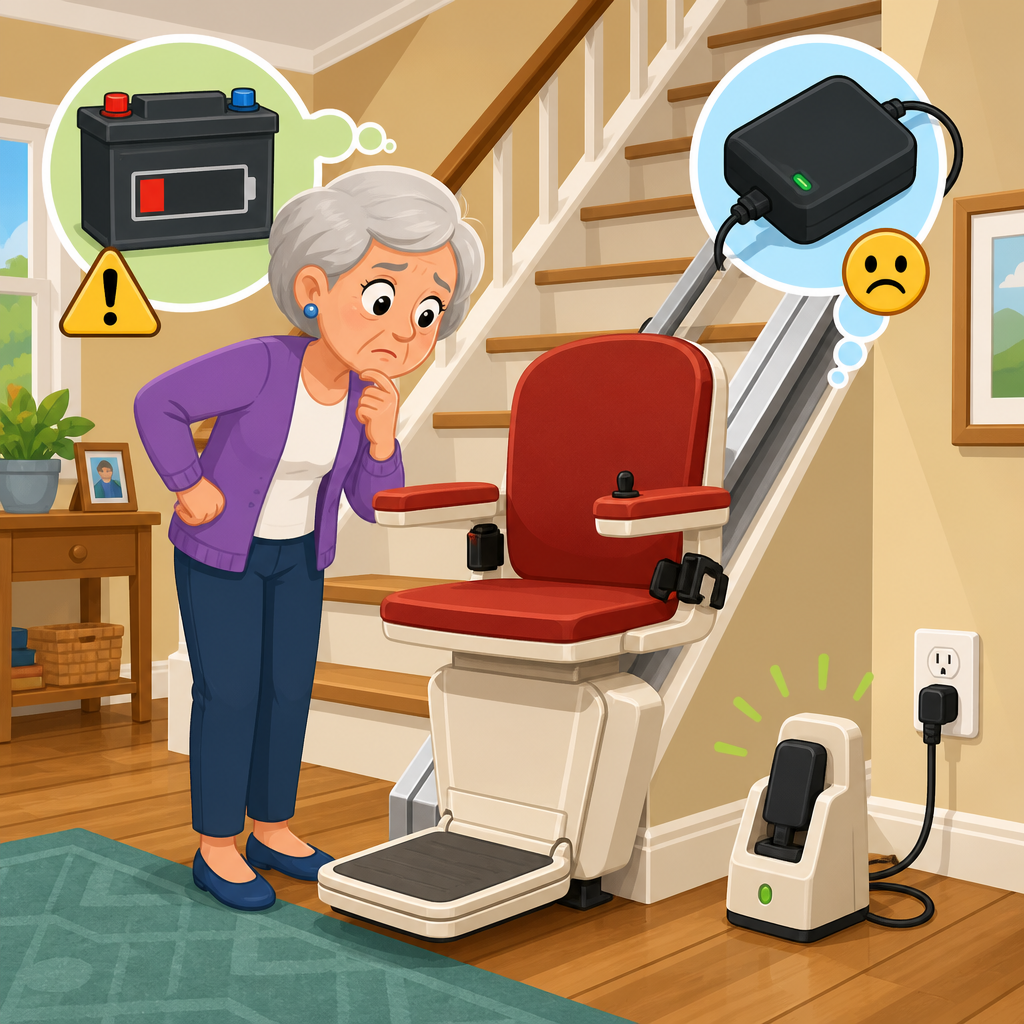
A stair lift that stops midway, beeps unexpectedly, or struggles to complete a trip often points to one of two power problems: a failing battery or a failing charger. Knowing which component is at fault matters because the symptoms can overlap, yet the fix, cost, and urgency are different. In practical maintenance work, I have seen homeowners replace a battery when the charger was the real issue, and I have also seen a weak battery blamed on household wiring. A clear diagnostic approach prevents wasted money and reduces the risk of a lift becoming unreliable when it is needed most.
Most modern stair lifts use rechargeable batteries housed in the carriage, usually sealed lead-acid units, though some newer models use different chemistries. The charger keeps those batteries topped up whenever the lift is parked at a charging point. The batteries provide the immediate power for travel, while the charger restores that energy between trips. If the battery degrades, the lift may still appear normal while parked but lose strength under load. If the charger fails, the lift may run well for a while, then slowly weaken as the battery is no longer replenished.
This distinction matters for safety, planning, and service life. Battery care and replacement are central to stair lift reliability because batteries are consumable parts with a predictable lifespan, commonly around three to five years depending on usage, temperature, and charging quality. Chargers often last longer, but when they fail, they can mimic battery failure or even shorten battery life by undercharging or overcharging. For anyone responsible for a stair lift in a home, assisted living setting, or family property, understanding the signs of battery and charger problems makes troubleshooting faster and helps you speak more effectively with a service technician.
This guide explains how to tell whether a stair lift battery or charger is failing, what symptoms are most reliable, how to perform safe basic checks, and when replacement is the right step. It also serves as a hub for battery care and replacement decisions within the wider maintenance, troubleshooting, and safety topic. The goal is simple: identify the fault accurately, protect the user, and keep the lift dependable every day.
How a stair lift battery and charger work together
A stair lift battery system is straightforward once you separate storage from supply. The charger converts household alternating current into the direct current needed to maintain the lift batteries. Those batteries sit inside the lift base or carriage and power the motor, controls, seat swivel interlocks, and safety circuits during travel. On many units, the lift charges only when parked at specific contact points at the top, bottom, or a mid-park station. On others, a charging strip provides more continuous contact. If the lift is not parked correctly, charging may not occur even when the charger itself is fine.
In service calls, the first question I ask is whether the lift is used normally but parked slightly away from its charge point. That single habit can create symptoms that look like a bad battery or bad charger. Manufacturers such as Bruno, Stannah, Handicare, Harmar, and Acorn all rely on proper charging contact, though details differ by model. This is why the owner’s manual, fault beeps, and indicator lights matter during diagnosis.
Battery failure usually shows up as reduced capacity. The lift may start moving and then slow, stop, or alarm, especially on a long staircase or with a heavier user. Charger failure usually shows up as a battery that keeps getting weaker over days because replenishment has stopped. A charger can also partially fail, delivering low output that maintains the display but never fully restores battery charge. That is why good troubleshooting looks at behavior over time, not just one event.
Common signs the stair lift battery is failing
The most reliable sign of a failing stair lift battery is poor performance under load. A battery can show normal voltage at rest and still fail when the motor demands current. In plain terms, the lift may seem ready, lights may be on, and yet the chair hesitates, moves slowly, or stops during travel. This pattern is classic battery wear because aging sealed lead-acid batteries lose capacity and their voltage sags when current draw rises.
Another common sign is shorter reserve time during a power outage. A healthy battery often allows multiple trips when household power is off, though exact performance depends on model, stair length, and user weight. If a lift once handled several runs during outages and now manages only one or none, the batteries are likely near end of life. Frequent low-battery beeps after normal use also point in this direction.
Age matters. In real maintenance planning, once a battery set reaches about three years, I treat unexplained reliability issues as battery suspects even before hard failure occurs. Heat accelerates degradation, so lifts installed near sunny entryways, poorly insulated stairwells, or hot mechanical spaces tend to need batteries sooner. Corrosion at terminals is less common with sealed units but still possible, especially if a battery has vented or if moisture is present.
Battery failure can also be intermittent. A user may report the lift works fine in the morning but struggles later, or it fails only on the uphill run. Uphill travel demands more torque, so weak batteries reveal themselves there first. If performance improves after the lift sits on charge for hours but deteriorates again after a few trips, that usually indicates battery capacity loss rather than a charger that is completely dead.
Common signs the stair lift charger is failing
A failing stair lift charger usually reveals itself through charging inconsistency rather than immediate motion problems. The most direct sign is a lift that works normally after a battery replacement or full charge but gradually weakens over several days. If the batteries are known to be good yet keep discharging, the charger, charge contacts, power supply, or outlet circuit should move to the top of the suspect list.
Many chargers have indicator lights showing power and charging status. If the power light is off, start with the basics: tripped breaker, switched outlet, loose plug, damaged transformer, or a failed surge protector. If mains power is present but the charger does not show normal output, the charger itself may be defective. On some models, a charger that feels unusually hot, emits a buzzing sound, or shows visible case discoloration is failing internally.
Another charger clue is chronically undercharged batteries that are not very old. Batteries less than two years old should not usually lose capacity dramatically unless charging has been poor, ambient temperature has been extreme, or the lift has been left off charge for long periods. I have replaced batteries only to see the new set deteriorate within months because a weak charger never brought them to full state of charge. Undercharging causes sulfation in sealed lead-acid batteries, and sulfation permanently reduces capacity.
Do not overlook misalignment. Dirty charge strips, bent contacts, worn parking cams, or slight track obstruction can prevent the chair from settling into the exact charging position. In those cases, the charger is not defective, but the system still fails to charge. Functionally, the symptom matches charger failure, so inspection must include the entire charging path.
Battery failure vs charger failure: the fastest way to separate them
The quickest reliable distinction is this: if the lift performs poorly immediately after confirmed full charging, suspect the battery; if it performs well after charging but worsens over time, suspect the charger or charging path. That simple rule is not perfect, but it is highly useful.
| Symptom | More likely battery issue | More likely charger or charging path issue |
|---|---|---|
| Lift slows or stops under load even after long charge | Yes | Less likely |
| Lift works well after charging, then fades over days | Possible | Yes |
| Batteries are over 3 to 5 years old | Yes | Possible secondary issue |
| New batteries also drain quickly | Less likely | Yes |
| Charger light is off or abnormal with power present | No | Yes |
| Problem appears only when chair is parked slightly off station | No | Yes, charging contact issue |
If you have a multimeter and the manufacturer’s specifications, voltage testing can sharpen the diagnosis, but voltage alone is not enough. A battery can read near nominal voltage with no load and still collapse when the motor starts. A proper load test or observing voltage drop during operation is much more meaningful. Technicians often pair meter readings with service diagnostics and fault codes because modern stair lifts can log low-voltage or charging errors.
Safe checks homeowners can do before calling for service
Start with the simplest variables. Confirm the stair lift is parked fully on its charging point. Look for indicator lights or listen for the normal confirmation beep, if your model has one. Check that the outlet feeding the charger is live by testing it with another device. Inspect the charger plug, transformer, and visible wiring for looseness or damage. If the charger is connected through a power strip, remove that variable and plug directly into a known-good outlet if the manual permits it.
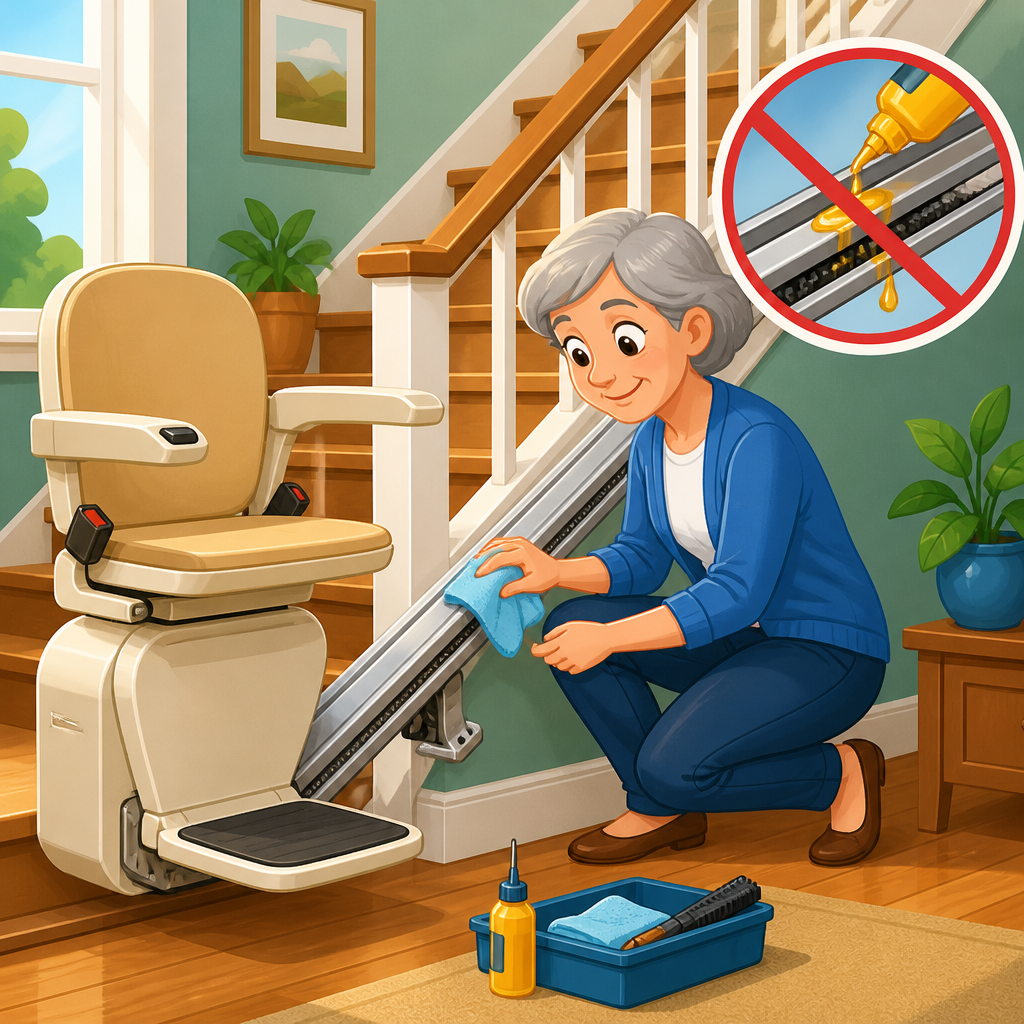
Next, clean accessible charging contacts only as directed by the manufacturer. Dust, pet hair, and oxidation can interrupt charging. Use a dry cloth or approved contact-cleaning method rather than abrasive tools that can damage plating. Also make sure the seat, footrest, and swivel are locked in their travel positions because interlocks can sometimes be mistaken for low-power faults.
Pay attention to pattern and timing. Did the issue start after a power outage, electrical work, or the lift being left at the opposite end of the rail for several days? Did beeping begin gradually over months, or did it happen suddenly? Gradual decline favors battery aging. Sudden change after an electrical event favors charger, fuse, or power-supply issues. Writing down these details helps a technician diagnose faster and can reduce service time.
Avoid opening the carriage or handling batteries unless you are trained and the manual supports owner maintenance. Even low-voltage systems can spark, and incorrect polarity or replacement with the wrong battery type can damage the lift. If you smell burning, see swelling, or notice fluid leakage, stop using the lift and arrange service immediately.
When battery replacement is the right fix
Battery replacement is the right fix when the batteries are at or beyond typical service life, the lift loses power under load, reserve performance during outages is poor, and the charger has been verified as operational. In most stair lifts, batteries should be replaced as a matched set, not one at a time. Mixing an old battery with a new one leads to imbalance, shortened life, and unreliable charging behavior.
Use the exact battery specification recommended by the manufacturer or an approved equivalent: same chemistry, voltage, terminal type, and amp-hour rating. A physically similar battery with a different discharge profile can create subtle performance issues. After replacement, many lifts benefit from a full charging period before heavy use. A post-installation test should include several full trips, parking verification, and confirmation that fault indicators have cleared.
This is also the point to review battery care. The best battery life comes from constant proper charging, clean contacts, normal room temperature, and avoiding long periods off the charger. Repeated deep discharge shortens sealed lead-acid life significantly. If your household experiences frequent outages, consider discussing backup planning during service, because emergency use patterns can expose already weak batteries quickly.
When charger replacement or adjustment is the right fix
Charger replacement is appropriate when input power is present, charge contacts are aligned and clean, wiring is intact, and output is absent or outside specification. Sometimes the charger itself is fine but the mounting, park position, or contact assembly needs adjustment. On several models, a small misalignment is enough to prevent charging overnight. Technicians usually verify this by checking output at the charger, then continuity through the charging contacts, then battery voltage trend over time.
If batteries have been deeply discharged for too long, replacing only the charger may not restore normal performance because the batteries may have already sulfated. In practice, charger and battery replacement often occur together when diagnosis is delayed. That is not upselling; it reflects how these components affect each other. A bad charger damages batteries, and weak batteries can make a charger run hotter or appear ineffective.
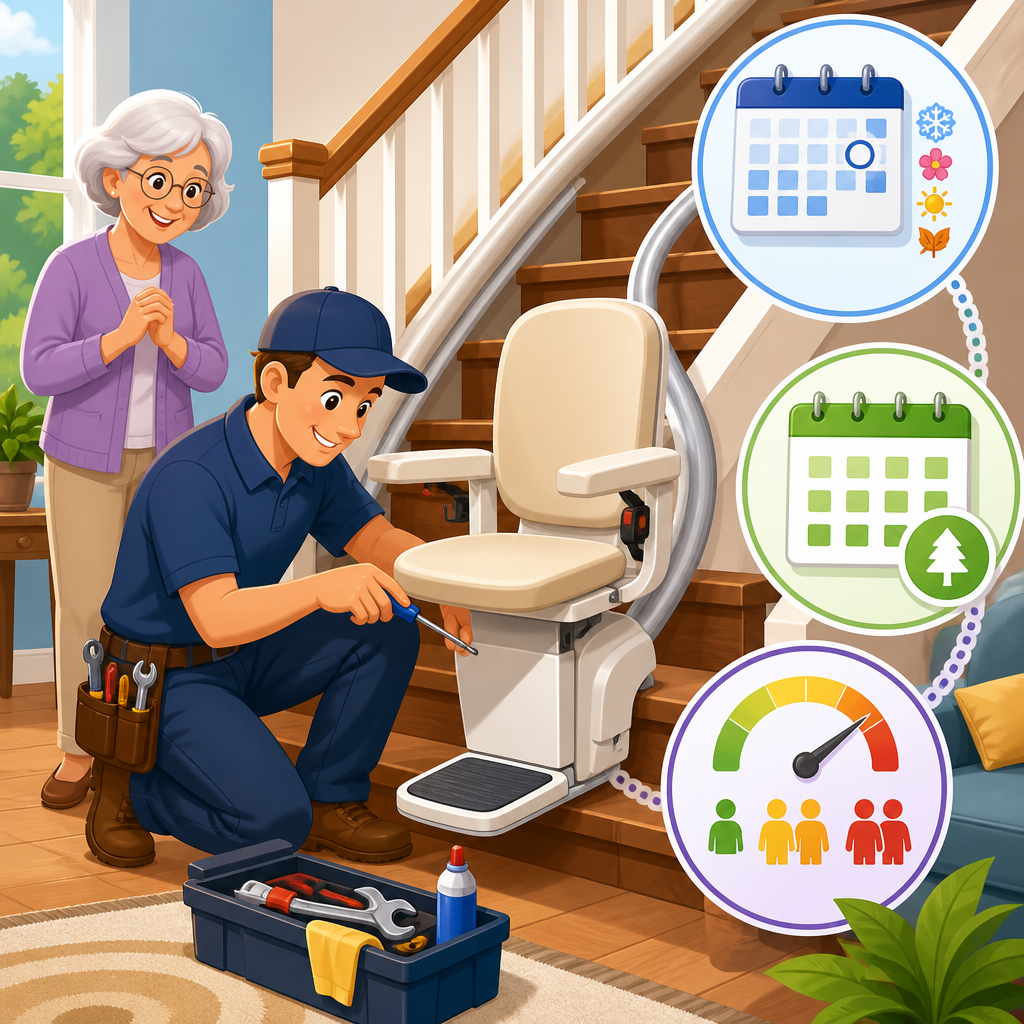
For ongoing reliability, schedule periodic inspection as part of broader stair lift maintenance. A competent service visit should include rail cleanliness, charging contact condition, battery age review, diagnostic code check, and ride testing under load. If you manage this proactively, battery care and replacement become predictable maintenance tasks rather than emergency failures.
The difference between a failing stair lift battery and a failing charger comes down to power storage versus power replenishment. Weak performance during travel, especially after a confirmed full charge, usually points to batteries that have lost capacity. Good performance that fades over days, abnormal charger lights, or evidence that the lift is not consistently charging usually points to the charger or charging path. Age, usage pattern, parking position, and outage history provide important clues.
For most owners, the practical rule is simple: verify charging first, then judge battery performance under load. Check the outlet, charger indicators, and parking alignment. If the lift is charging correctly but still struggles, battery replacement is often the answer. If new or healthy batteries keep going flat, the charger, contacts, or related wiring need attention. Because stair lifts are safety devices, accurate diagnosis matters more than guesswork.
As the central guide for battery care and replacement within maintenance, troubleshooting, and safety, this article gives you the framework to spot the problem early, reduce downtime, and make informed service decisions. Review your lift’s manual, note the battery age, and schedule inspection at the first sign of reduced reliability. A well-maintained charging system keeps the stair lift ready when it matters most.
Frequently Asked Questions
What are the most common signs that a stair lift battery is failing instead of the charger?
A failing stair lift battery usually shows up as reduced performance under load. In plain terms, the lift may seem normal when parked but struggle once someone is riding it. Common battery-related symptoms include the stair lift slowing down, stopping midway, moving in short bursts, or failing to complete a trip even though it still powers on. You may also hear warning beeps after use or notice that the unit works better after sitting on the charge for a while, only to weaken again quickly. That pattern often points to batteries that can no longer hold enough reserve power.
Another clue is age. Most stair lift batteries are sealed rechargeable batteries with a limited service life, often around three to five years depending on use, charging habits, temperature, and the model of lift. As batteries age, they lose capacity gradually. The charger may still be doing its job properly, but the batteries themselves cannot store enough energy to support normal travel. If the lift operates briefly during a power outage but dies sooner than it used to, that is another strong sign the batteries are nearing the end of their life.
By contrast, battery problems are often most obvious when the motor is working hardest. A weak battery might still allow lights, controls, or beeps to function, which can mislead homeowners into thinking the power system is fine. In reality, electronics require far less power than moving a person up the stairs. That is why a battery can appear “alive” but still be too weak to run the lift reliably. If the lift repeatedly loses strength during trips, especially after years of service, the batteries deserve close attention.
How can I tell if the stair lift charger is failing rather than the battery?
A charger problem usually shows up as a charging failure pattern rather than simple battery weakness. For example, the stair lift may work normally for a short time, then become weak because the batteries are not being replenished between trips. If both batteries were recently replaced and the same symptoms return quickly, the charger or charging circuit becomes a likely suspect. In many cases, the lift will gradually lose performance over hours or days because it is running only on stored battery power with no effective recharge.
One practical sign is whether the chair is parked correctly on its charging points. Many stair lifts must rest in a specific position at the top or bottom landing to make contact with the charger. If the contacts are dirty, misaligned, or not engaging, the batteries may drain even though nothing is technically wrong with them. Some lifts have indicator lights that show charging status. If that light is off, blinking abnormally, or showing a fault condition when the chair is parked properly, the charger system may not be delivering power.
Charger failure can also be linked to outside electrical issues. A tripped outlet, switched receptacle, loose plug, failed power supply, or household circuit problem can all make it seem like the battery is bad. This is one reason careful diagnosis matters. Homeowners sometimes replace batteries only to discover the charger was never receiving wall power in the first place. If the stair lift has growing power problems and there is no sign that the batteries are actively charging when parked, the charger, power supply, outlet, and charging contacts should all be checked before assuming the batteries are to blame.
Why does a stair lift beep unexpectedly, and does that mean the battery or charger is bad?
Unexpected beeping often means the stair lift is trying to warn you about a power-related issue, but beeping alone does not automatically identify whether the battery or charger is at fault. Many stair lifts beep when they are not parked on a charging point, when battery voltage is low, or when the unit detects a fault in the charging system. In everyday use, one of the most common reasons for random beeping is that the chair was left slightly off the charge position, so the batteries are slowly draining instead of charging.
If the beeping happens after the lift has been sitting unused, that often suggests the batteries have lost charge while parked. The cause could be weak batteries that cannot hold energy, or it could be a charger problem that prevented normal charging in the first place. If the beeping tends to happen after trips, especially under heavier use, that may point more toward battery weakness because the batteries are being stressed and voltage is dropping during operation. Still, overlapping symptoms are common, which is why beeping should be treated as a clue rather than a final diagnosis.
The best approach is to notice the pattern. Does the beeping stop once the chair is parked correctly? Does the lift regain normal operation after sitting on charge for several hours? Are there indicator lights showing a charging issue? Has there been a recent power outage or unplugged charger? These details help separate a battery capacity problem from a charger or charging-contact issue. Beeping is the stair lift’s way of telling you not to ignore the problem, because continued use without proper charging can leave the unit stranded on the stairs.
Can I test whether the battery or charger is failing before calling for service?
Yes, there are several basic checks you can do safely before scheduling professional service, and they can help narrow down the cause. First, make sure the stair lift is fully parked in its designated charging position. Then confirm that the charger is plugged in, the outlet has power, and any power switch controlling that outlet is on. If possible, test the outlet with another device. Also inspect the charging contacts for visible dirt, corrosion, or misalignment. A simple contact issue can mimic a battery or charger failure.
Next, pay attention to how the lift behaves after being left on charge for a few hours. If it performs normally for one or two trips and then weakens quickly, the batteries may no longer be holding a charge. If it does not seem to recover at all while parked, the charger may not be delivering power. If your stair lift has a charging indicator light or diagnostic display, compare what you see to the owner’s manual. Some models provide specific fault codes or charging-status signals that are very helpful.
What you should avoid is opening electrical components, bypassing safety features, or replacing parts by guesswork. Stair lifts contain moving mechanical parts and electrical systems that should be handled carefully. A technician can test actual battery voltage under load, charger output, and charge-path continuity in ways that provide a much more reliable answer than symptoms alone. Basic homeowner checks are useful, but if the lift is stopping mid-trip, repeatedly beeping, or losing function despite proper parking and wall power, a service call is the safest next step.
Is it urgent to fix a failing stair lift battery or charger, and what happens if I wait?
Yes, it is usually best to address either problem promptly because both can turn into a reliability and safety issue. A weak battery can leave the stair lift unable to complete a trip, which is especially concerning for anyone who depends on the unit daily. A failing charger can create the same outcome by allowing good batteries to discharge over time. In both cases, what starts as occasional slowing, beeping, or incomplete travel can progress to a full no-run condition with little warning.
Waiting can also increase cost and confusion. If a charger fault is ignored, the batteries may be repeatedly drained too deeply, which can shorten their life and create a second repair need. On the other hand, if old batteries are left in place too long, they may place additional strain on the charging system and make diagnostics less straightforward. This is one reason accurate troubleshooting matters: replacing the wrong part does not solve the issue and may let the real problem get worse.
There is also the practical concern of being stranded. Stair lifts are often installed because stairs are already difficult or unsafe for the user. If the lift stops midway or fails when it is needed most, that becomes more than a convenience issue. The good news is that battery and charger problems are usually very manageable once correctly identified. Acting early tends to mean a simpler repair, less downtime, and a lower chance of emergency service. If the lift has started showing power-related symptoms, it is wise to treat them as early warnings rather than waiting for complete failure.