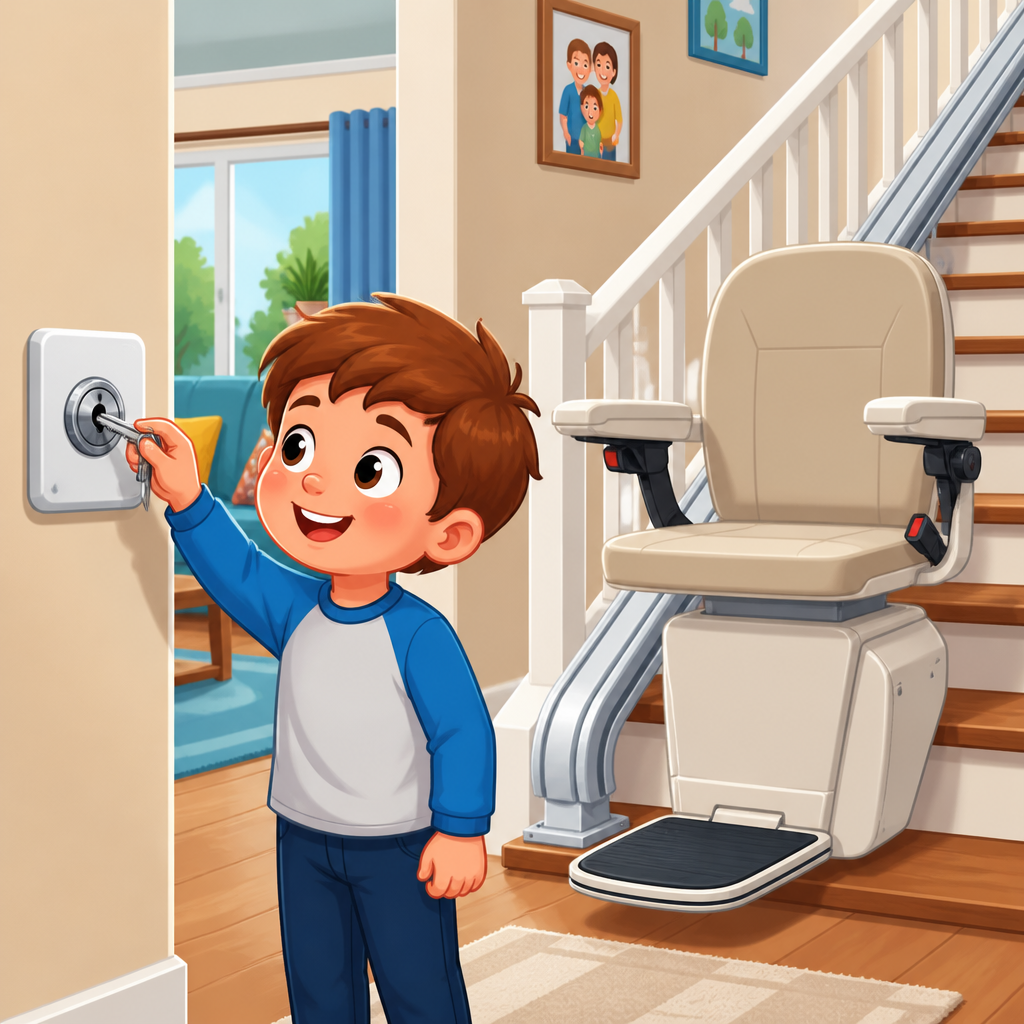
Stair lift key switches are small components with an outsized safety role, especially in homes where children live, visit, or play. A stair lift key switch is a lockable control that allows an owner or caregiver to enable or disable lift operation with a removable key. In practical terms, it functions much like an ignition: when the key is removed, the chair cannot be started from the armrest controls, and on many models it also prevents call and send use. I have walked families through this feature during installations and service visits, and the pattern is consistent. Parents often focus first on seat belts, swivel seats, and obstruction sensors, but the key switch is the feature that most directly limits unsupervised use.
That matters because a stair lift is not a toy. It is a motorized mobility device carrying a seated rider along a rail, often across steep stairs and around landings. Children are naturally curious about buttons, moving seats, folding footrests, and remote controls. A child may try to ride alone, send the chair up or down as a game, or place toys on the track. Even if modern lifts include pressure-sensitive edges, overspeed governors, and battery backup, those safeguards do not replace supervised access control. The key switch adds a basic but essential layer: it decides who can activate the system in the first place.
For a home safety plan, that distinction is critical. Passive features protect users during operation; access control reduces the chance of unsafe operation starting at all. In risk management terms, preventing unauthorized use is better than relying only on downstream protections. This article explains how stair lift key switches work, why they matter in homes with children, how they fit with other stair lift safety features, and what owners should check during routine maintenance. Because this page serves as a hub for safety features explained, it also frames where related topics such as seat belts, swivel locks, footrest sensors, remotes, battery systems, and diagnostic alerts fit into the broader safety picture.
What a stair lift key switch does and how it works
A stair lift key switch is usually mounted on the armrest control panel, side shroud, or carriage housing. On some premium models it is integrated near the joystick or directional rocker; on others it sits below the seat or near the charging indicator. Turning the key to the on position completes the control circuit and allows the lift to accept user input. Turning it off and removing the key isolates that input. Manufacturers implement the logic differently, but the purpose is consistent: restrict operation to authorized users.
In the field, I explain it as a simple gatekeeper. The drive system may still have power from the batteries, and the charger may still be connected at the upper or lower charge point, yet the lift remains inactive until the key is present. This is especially useful in family homes where grandparents rely on the lift daily but grandchildren visit after school or during holidays. Instead of unplugging the charger or switching off a breaker, the owner uses a control designed for regular secure shutdown.
Key switches are generally low-tech by design, and that is an advantage. Unlike app-based locks or software settings, a mechanical key switch is intuitive, fast, and less vulnerable to user error. It also supports emergency routines. A caregiver can disable the unit during cleaning, toy pickup, or moving furniture, then re-enable it immediately. On outdoor stair lifts, key switches also deter tampering by visitors or neighborhood children. Weather-resistant models from brands such as Bruno, Harmar, and Stannah often include lockable controls for that reason.
Why key switches matter more in homes with children
Children interact with risk differently than adults. They test buttons, repeat actions to see what happens, and often do not recognize pinch points, entrapment zones, or the consequences of sending a chair away from a charging point. A stair lift presents all of those temptations. The seat moves. The rail is visible and accessible. Remotes may sit on a wall or armrest. If a child stands on the footrest, kneels on the seat, or leans out while the chair travels, the injury risk rises sharply.
The key switch reduces those opportunities by controlling access at the most direct point of use. It does not depend on a child remembering rules. It does not assume an adult is always in the room. It does not require a physical barrier around the stairs. Instead, it turns the lift from an available moving device into an inactive mobility aid until a responsible person decides otherwise. For households with frequent visitors, that matters just as much as for households with resident children. Many incidents happen during gatherings, when adults are distracted and children explore unfamiliar equipment.
There is also a behavioral benefit. Families who consistently remove the key create a visible routine. Children learn that the stair lift is controlled equipment, not household furniture. In my experience, routines prevent near misses better than one-time warnings. A child who sees the key stored on a high hook beside medication, hearing aids, or other adult-only items understands that the lift falls into the same category: useful, important, and off-limits without help.
How the key switch fits with other stair lift safety features
To understand the value of the key switch, it helps to place it within the larger system of stair lift safety features. Modern lifts typically combine access control, user restraint, motion control, obstacle detection, and safe boarding features. No single component does everything. Effective safety comes from layers working together.
| Safety feature | What it does | Why it matters around children |
|---|---|---|
| Key switch | Disables operation when the key is removed | Prevents unsupervised riding or button pressing |
| Seat belt | Secures the rider during travel | Reduces fall risk if a child or frail adult shifts position |
| Swivel seat lock | Locks the seat for safe transfers at the landing | Helps prevent side exits onto stairs |
| Footrest and carriage sensors | Stop travel when the lift contacts an obstruction | Can detect toys, shoes, or small objects on the stairs |
| Overspeed governor and brake | Stops the lift if travel speed exceeds safe limits | Adds protection if a mechanical fault occurs |
| Call/send controls | Moves the lift without a seated rider | Convenient, but should be secured or supervised around children |
| Battery backup | Allows operation during a power outage | Maintains mobility, though the lift still needs supervision |
The key point is that these features solve different problems. Obstruction sensors can stop a lift when it meets a toy truck on the stair tread, but they do not stop a child from repeatedly sending the chair up and down. A seat belt can hold a rider in place, but it cannot determine whether the rider should be there in the first place. That is why access control deserves equal attention in any safety discussion.
Common misconceptions about stair lift child safety
One common misconception is that a stair lift becomes child-safe simply because it has sensors. Sensors are important, but they are not magic. Pressure edges are designed to detect contact in defined locations, and they operate within specific force thresholds. They are not substitutes for supervision or locked controls. Small fingers, loose clothing, or creative misuse can still create hazards that sensors were not intended to manage.
Another misconception is that folding the seat, arms, and footrest is enough. Folding reduces trip risk on the staircase and makes the lift less inviting, but it does not fully prevent operation. If the model can be unfolded easily or if the remote remains accessible, a child can still engage with it. Likewise, some owners assume the parking position solves everything. Parking the chair at the top or bottom keeps stairs clearer, yet a curious child may still press a call station and bring the unit within reach.
I also hear people say that because the grandchild is careful, the key is unnecessary. That logic fails because safety planning should account for normal child behavior, visiting friends, and distracted moments. The best home safety systems are not based on perfect judgment from children. They are based on design that limits mistakes.
Choosing, using, and storing the key safely
Good safety practice depends on consistent use. The key should be removed whenever the lift is not needed immediately, especially in homes with toddlers, preschoolers, or frequent child visitors. Store it in a predictable place that adults can access quickly but children cannot. A wall-mounted key holder placed high near the top landing works well if all authorized users can reach it. In some homes, a labeled drawer or lockbox is better, particularly if there are multiple caregivers.
Keep at least one spare key, and confirm that family members know where it is. During service appointments, I recommend testing both the primary and spare key. Worn keys, bent blades, or sticky cylinders should be replaced before they fail. If the switch feels loose, intermittent, or rough when turning, schedule service. A key switch is a safety component, not a cosmetic extra, so minor problems deserve attention.
Households should also review how the key affects emergency access. If the stair lift is essential for a user who cannot manage stairs on foot, the key cannot be hidden so effectively that the user is stranded. The right balance is restricted child access without compromising timely adult use. In some cases, that means one key on the primary landing and another on the caregiver’s person. Families with memory concerns should build the key into a simple checklist: charge position confirmed, seat folded if needed, key removed, stairs clear.
Maintenance checks that support key switch safety
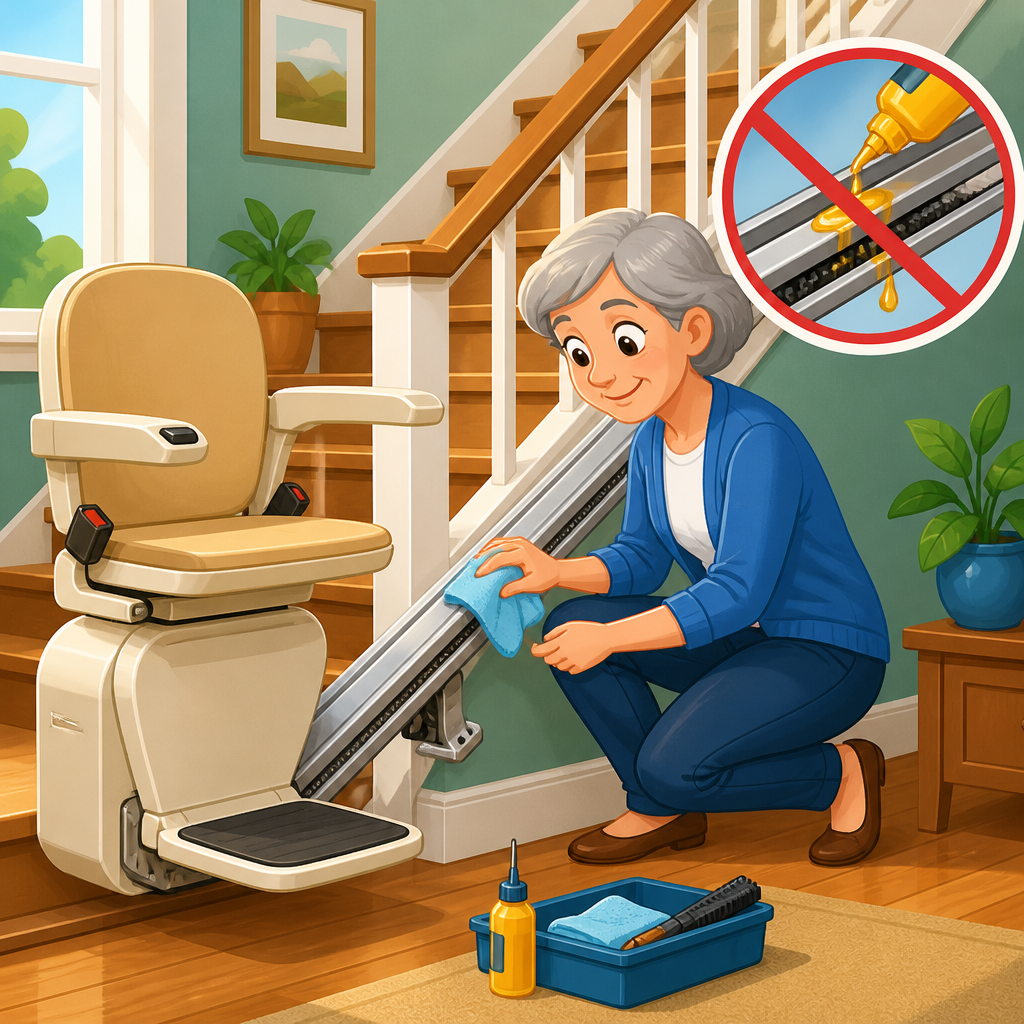
As the hub page for safety features explained, this topic belongs within regular stair lift maintenance rather than as an afterthought. During routine checks, confirm that the lift does not respond when the key is removed and that it powers on normally when the key is inserted. Test armrest controls and, if applicable, call/send stations, because some systems disable all user inputs while others only disable onboard controls. The owner’s manual will specify the intended behavior, and that behavior should be verified, not assumed.
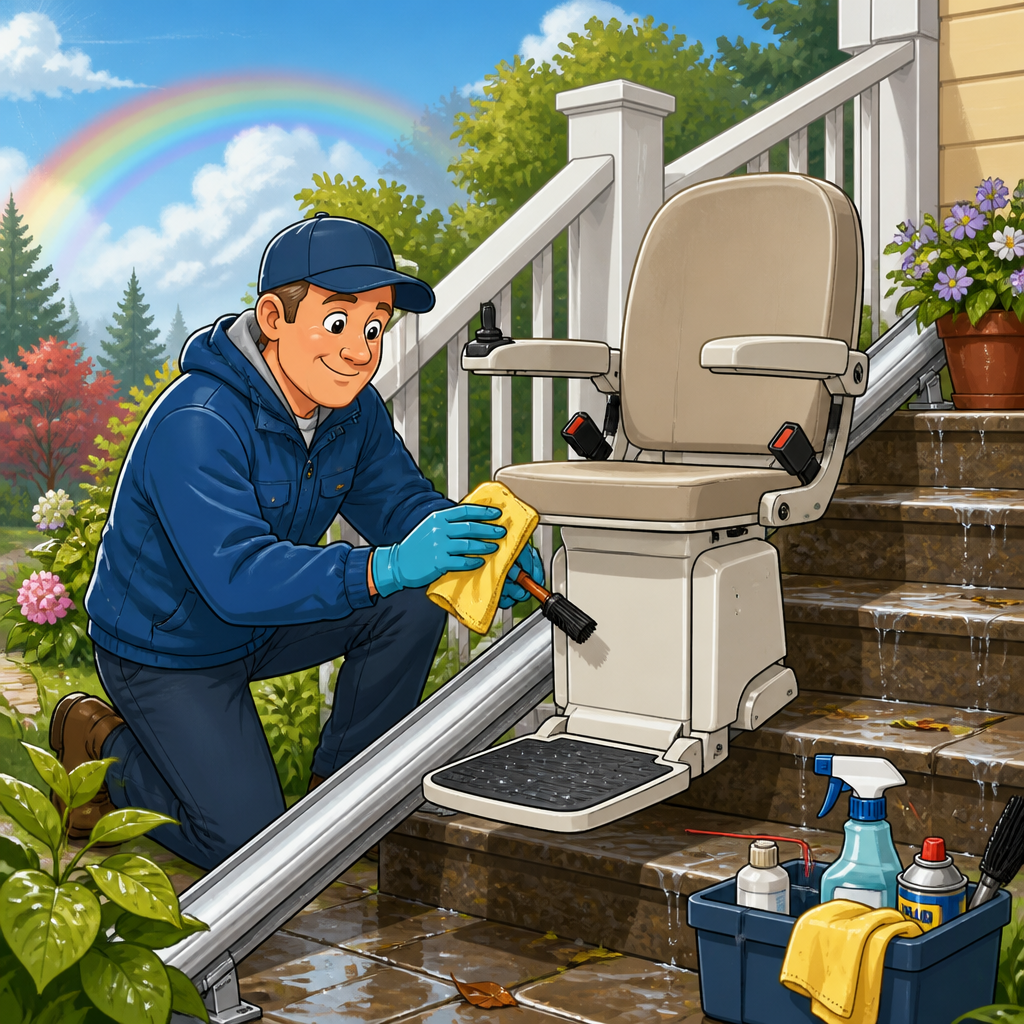
Inspect the area around the switch for cracked plastic, corrosion, or signs of impact. On outdoor units, moisture and temperature swings can accelerate wear, so weather seals deserve particular attention. If children have access to the staircase, also examine remote placement, seat belt latch function, swivel lock engagement, footrest sensor response, and charge contacts at both ends of the rail. A safe stair lift is a system, and systems fail at weak points that seem unrelated until they combine.
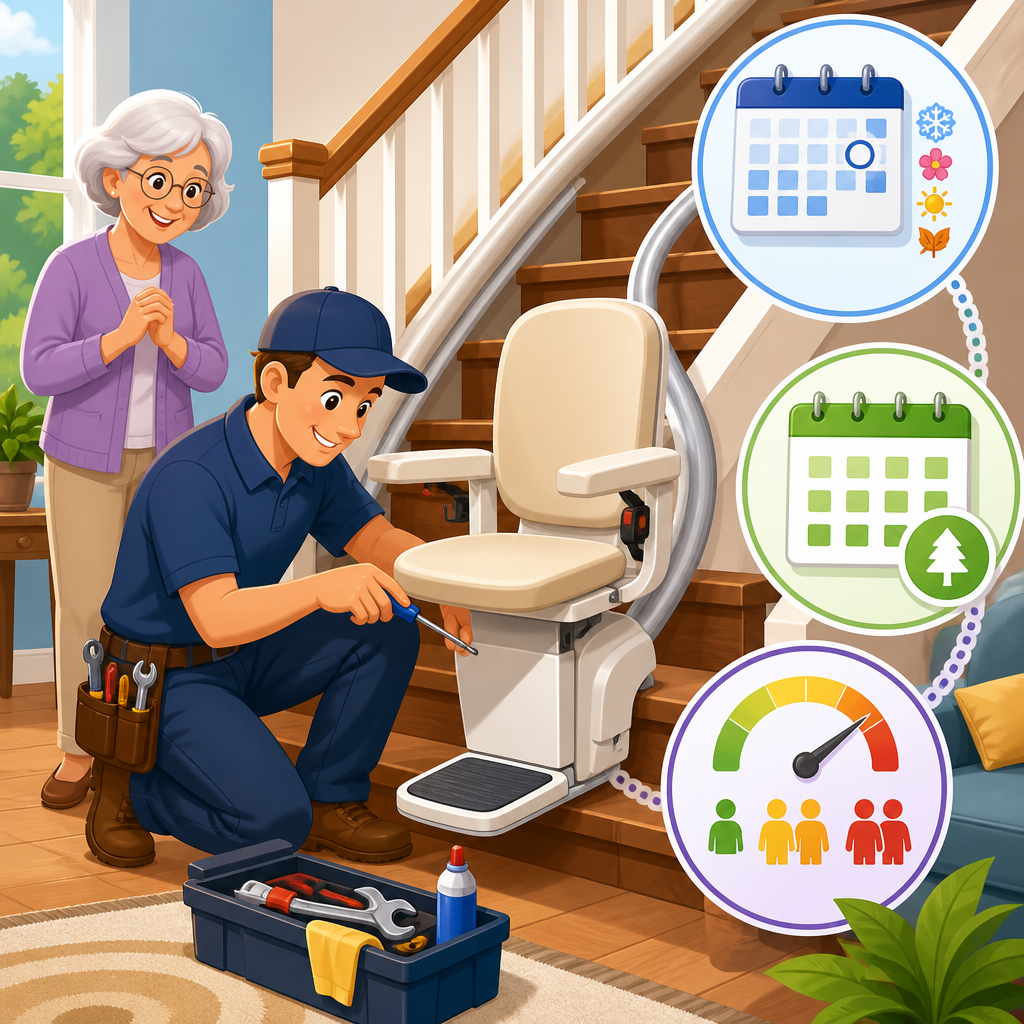
Professional service intervals vary by manufacturer and usage, but an annual inspection is a reasonable baseline, with more frequent checks for high-use households. Reputable technicians will test safety circuits, battery condition, charging output, gear rack engagement, and diagnostic codes where available. If your model logs faults through onboard LEDs or a digital display, record recurring errors rather than clearing them and moving on. Small electrical or control issues often surface first as intermittent behavior around power-up or command acceptance.
When a key switch is not enough on its own
Some homes need more than a key switch. If a child has significant behavioral or sensory challenges, repeatedly seeks moving equipment, or can climb to retrieve stored items, additional controls may be warranted. Depending on the home layout, that could include relocating wall remotes, using locking covers for call stations, improving stair gate strategy where compatible with egress needs, or selecting a model with more restrictive control options. Families should discuss these details during purchase, not after an unsafe incident.
There are also accessibility tradeoffs. A very small key can be difficult for users with arthritis, tremor, neuropathy, or reduced grip strength. In those cases, ask the dealer about key shape, larger fobs, or alternative lockout approaches supported by the manufacturer. Safety should not create a new usability barrier for the person the lift is meant to help. The best configuration is the one that the intended user can operate reliably every day while still limiting access for children.
Finally, remember that a stair lift key switch complements supervision; it does not replace it. Teach children that the lift is medical mobility equipment. Keep the stairs free of toys and laundry. Do not allow play on folded seats, footrests, or rails. If a child is old enough to assist a grandparent, teach them the safe rules clearly: no riding together unless the manufacturer specifically permits it, hands inside the chair area, and no pressing buttons without an adult’s direction.
Stair lift key switches matter in homes with children because they solve the first safety question: who is allowed to operate the lift. That may sound basic, but in day-to-day home use it is one of the most effective protections available. By disabling the chair when it is not actively needed, the key switch reduces unsupervised rides, casual button pressing, repeated call/send play, and risky curiosity around a moving mobility device. It works best when families treat it as part of a full safety system that includes seat belts, swivel locks, obstruction sensors, battery reliability, clear stairs, and regular maintenance.
If you manage a home where a stair lift and children share the same space, make the key switch part of your standard routine today. Check where the key is stored, test whether the lift truly disables when the key is removed, and review the rest of the safety features with the owner’s manual in hand. Then schedule service if anything feels inconsistent, worn, or unclear. A small control can prevent large problems, and for most families, that is exactly what good stair lift safety should do every single day.
Frequently Asked Questions
What is a stair lift key switch, and how does it work?
A stair lift key switch is a simple but important safety feature that lets the owner control when the lift can and cannot be used. It works much like the ignition in a car. When the key is inserted and turned to the operating position, the stair lift can typically be used from the armrest controls and, on many models, from the call/send stations as well. When the key is removed, the lift is disabled, which means a child cannot casually press buttons and send the chair moving.
This matters because children are naturally curious. A stair lift has moving parts, folding components, and powered travel along a rail, all of which can become tempting to explore. The key switch creates a straightforward way to stop unauthorized use without needing to unplug the unit or shut off power to the entire system. In day-to-day use, many families simply remove the key whenever the lift is not needed. That small habit can add a meaningful layer of control and peace of mind in a home where kids live, visit, or play.
Why are key switches especially important in homes with children?
In homes with children, stair lift key switches matter because they help prevent operation by anyone who should not be using the lift unsupervised. Young children may view a stair lift as a ride or a toy, especially if they see it move up and down the staircase. Even older children may be tempted to test the controls out of curiosity. A key switch reduces that risk by allowing parents, grandparents, or caregivers to disable the unit when it is not actively needed.
The value of this feature is not just about preventing movement. It also supports safer household routines. If a child cannot activate the chair, there is less chance of unexpected travel on the stairs, less chance of fingers playing with controls, and less chance of repeated button pressing that could create wear or confusion. For families caring for an older adult, the key switch also helps keep the lift available for its intended user instead of becoming a point of distraction. It is a small component, but in a child-aware safety plan, it plays an outsized role.
Does removing the key make a stair lift completely childproof?
Removing the key is a strong safety step, but it should not be thought of as the only safeguard or a complete childproofing solution. A key switch is designed to prevent normal operation, which is exactly what most families need in everyday life. However, true home safety usually comes from combining several protections: supervision, clear household rules, proper maintenance, and using all built-in safety features on the lift itself.
Most stair lifts also include seat belts, obstruction sensors, swivel seat locks, and folding arms, seats, and footrests to reduce hazards when the unit is parked. Families with young children should treat the key switch as one part of a larger safety routine. Keep the key out of reach, teach children that the lift is medical mobility equipment rather than a play item, and make sure adults know how and when to lock the unit. If your model has remote call/send controls, ask your dealer whether the key switch disables those functions as well, since that can vary by manufacturer. The goal is layered protection, and the key switch is one of the easiest and most effective layers to use consistently.
When should the stair lift be locked with the key removed?
As a general rule, the stair lift should be locked whenever the authorized user is not actively using it or does not need immediate access to it. In homes with children, that often means removing the key after every trip, especially during the day when children are moving around the house, when grandchildren are visiting, or when playtime is happening near the staircase. This routine helps prevent spur-of-the-moment button pressing and casual experimentation.
There are also specific moments when locking the lift is especially wise: during family gatherings, while babysitting, when multiple children are in the home, or any time the primary user is resting and the lift is not needed right away. Some families prefer to leave the key in place only during certain hours and remove it the rest of the time. The best approach is the one that fits the household’s rhythm while keeping safety consistent. If fast access is important for the stair lift user, designate a secure but convenient place for the key that adults can reach quickly but children cannot. The key switch works best when using it becomes second nature.
Can a stair lift key switch be added, replaced, or upgraded if one is missing or damaged?
In many cases, yes. If a key switch is damaged, missing, worn out, or simply inconvenient to use, a stair lift dealer or qualified technician can often replace it with the correct part for that make and model. If you have lost the key, the first step should be contacting the manufacturer or local service provider rather than trying to force the switch or bypass it. Stair lifts are safety devices, and repairs should be handled with the same care as any other mobility equipment.
Whether a key switch can be added to a unit that did not originally include one depends on the design of the stair lift. Some models are built with integrated keyed controls, while others may not support a retrofit in the same way. A professional can tell you what is possible, how the switch would affect armrest and call/send functions, and whether there are newer safety options available. If children are regularly in the home, it is worth asking specifically about features that improve access control. A working key switch is inexpensive compared with the value of preventing misuse, and keeping it in good condition is part of responsible stair lift ownership.