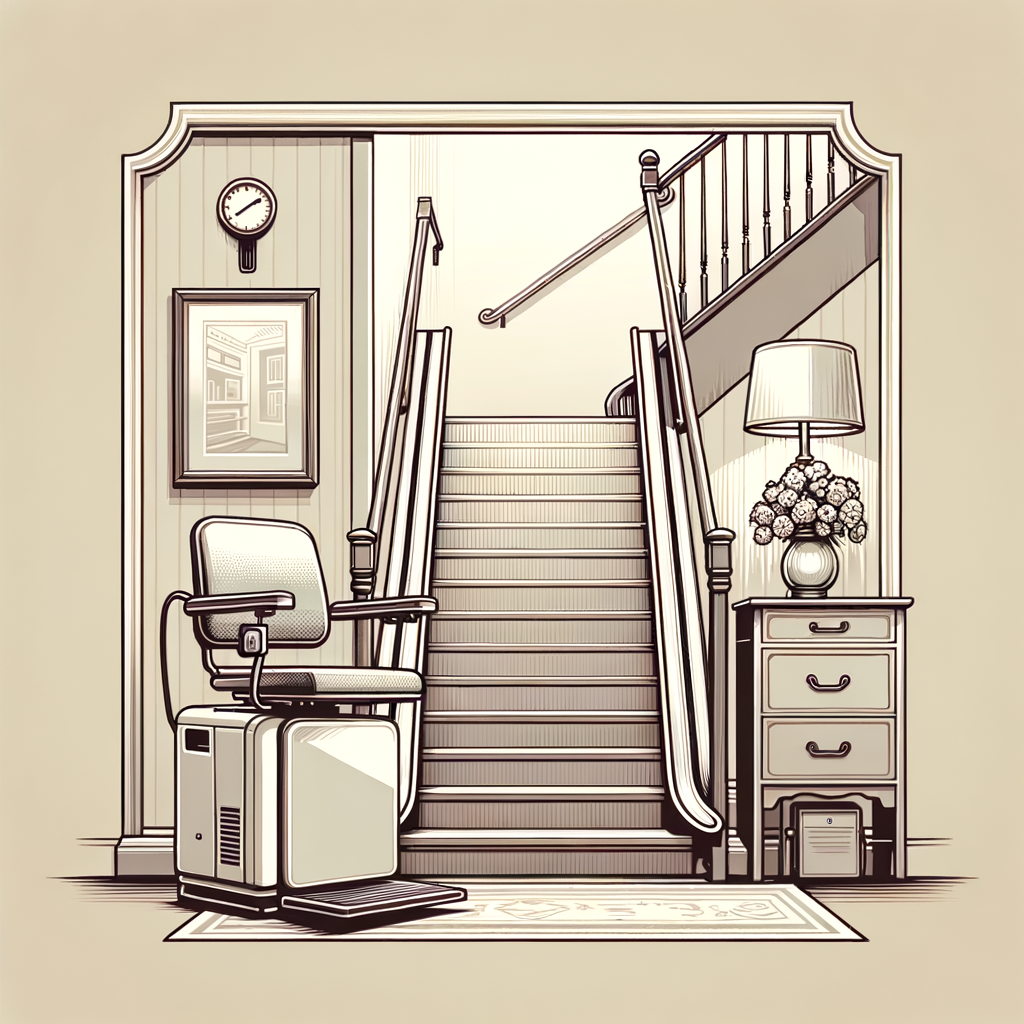
Choosing between chair lift types is easier when you understand how each design works, who it serves best, and what tradeoffs come with installation, comfort, maintenance, and long-term value. A chair lift, sometimes called a stair lift, is a motorized seat that travels along a rail fixed to the staircase, helping people move safely between floors without climbing steps. In practice, I have seen the right lift restore independence almost immediately, while the wrong model creates daily frustration because it ignores the user’s body size, transfer ability, home layout, or future mobility needs. That is why comparing all chair lift types matters.
This hub article covers the main chair lift categories within the broader Chair Lift Types and Designs topic: straight stair lifts, curved stair lifts, outdoor models, standing or perch lifts, heavy-duty lifts, and platform-style alternatives often considered when a seated lift is not ideal. It also explains the design details buyers usually overlook, including rail placement, seat swivel mechanisms, folding dimensions, battery backup, charging systems, controls, and safety sensors. These details determine whether a lift feels smooth and practical every day or becomes one more obstacle in the home.
The stakes are high because stair falls are common among older adults and people with limited mobility, yet moving out of a familiar home is expensive and emotionally difficult. A properly matched chair lift can support aging in place, reduce caregiver strain, and postpone larger renovation costs. Still, no single model fits everyone. The best choice depends on staircase geometry, user weight, joint range of motion, transfer technique, household traffic, budget, and how long the lift is likely to be needed. This guide compares the options clearly so you can narrow the field with confidence.
Straight Chair Lifts: The Simplest and Most Common Option
Straight chair lifts are designed for staircases that run in one uninterrupted line, without turns, landings, or curved sections. They are the most common residential option because the rail is standardized, easier to manufacture, and faster to install than custom systems. In most homes, installation can be completed in a few hours, and the rail mounts to stair treads rather than the wall, which surprises many buyers. That mounting method usually minimizes structural work and keeps the project relatively clean.
From a comparison standpoint, straight lifts are usually the best value. They tend to cost less than curved lifts, have shorter lead times, and offer a wide range of seat sizes and upholstery styles. Brands such as Bruno, Harmar, Stannah, and Handicare all offer straight models with folding footrests, swivel seats, obstruction sensors, seat belts, and battery-powered operation that continues during a power outage. Because the rail path is simple, ride quality is often predictable and maintenance is straightforward.
Straight lifts fit users who need reliable seated travel on a standard staircase and who can safely get on and off at the top and bottom. Their main limitation is obvious: they do not handle corners. If the staircase has even a small intermediate landing with a turn, a straight model alone will not provide continuous travel. Some households solve this with two separate straight lifts, but that requires a transfer at the landing, which can be unsafe for users with poor balance or significant weakness.
Curved Chair Lifts: Custom Design for Complex Staircases
Curved chair lifts are built for staircases with turns, pie-shaped steps, switchbacks, spiral sections, or multiple landings. Unlike straight lifts, these systems use a custom rail fabricated to follow the exact path of the stairs. The rail may bend around one or more corners and can include special parking positions that move the seat away from a doorway or central hallway. In homes with architectural constraints, this customization is what makes a lift possible without major remodeling.
The benefit of a curved lift is continuity. The user stays seated for the entire trip, which is critical for people with limited standing tolerance, Parkinsonian freezing, severe arthritis, stroke effects, or advanced frailty. In my experience, curved lifts often serve households that have already tried simpler solutions and discovered that a landing transfer is not realistic. The custom fit also allows better rail positioning on narrow or visually prominent stairs, though space planning is still essential.
The tradeoff is cost and lead time. Every rail must be measured carefully, often with photo mapping or digital stair measurement tools, then manufactured to specification. Because of that, curved lifts are significantly more expensive than straight lifts and usually cannot be installed the same week. Repairs and rail modifications can also be more complex. Still, for users who need one continuous ride on a non-straight staircase, a curved chair lift is not a luxury purchase; it is the correct engineering solution.
Outdoor Chair Lifts: Built for Weather, Steps, and Access Points
Outdoor chair lifts are purpose-built for exterior stairways such as porch steps, garage entries, deck access, and garden approaches. They are not simply indoor lifts placed outside. A true outdoor model uses weather-resistant components, sealed electronics, durable upholstery, and protective covers designed to withstand rain, humidity, sun exposure, and temperature swings. In coastal or freeze-thaw climates, material quality matters because corrosion and moisture intrusion can shorten service life quickly.
These lifts are especially useful when the biggest barrier is not inside the home but at the front or back entrance. A person may manage indoor movement reasonably well yet be unable to climb the last six or eight exterior steps safely. In that case, an outdoor straight chair lift can preserve independent entry and reduce reliance on caregivers. For many households, it is a practical alternative to a ramp when there is limited yard space or when local slope conditions would require an excessively long ramp to meet accessibility guidelines.
Buyers should compare outdoor models on rail finish, cover design, operating temperature range, battery charging reliability, and dealer service capacity in their climate. Snow and leaves must still be cleared, and severe weather can affect operation. Outdoor lifts also need regular inspection because exposure accelerates wear. They solve a specific access problem extremely well, but they require more environmental planning than indoor systems.
Perch, Standing, and Heavy-Duty Chair Lifts
Not every user can sit comfortably in a standard chair lift seat. Perch and standing lifts are designed for people who have difficulty bending the knees or hips enough to sit, or whose staircase is too narrow for a typical seated profile. These lifts support the rider in a near-standing or perched position, using a smaller seat pad, grab handles, and safety features that stabilize the body during travel. They are often considered for users with limited hip flexion after surgery, severe joint stiffness, or narrow staircases in older homes.
The main advantage is compactness. A perch lift generally takes less space on the stairs and can make an otherwise impossible installation feasible. The downside is that the rider must tolerate weight-bearing and maintain a stable upright posture throughout the trip. For users with poor balance, dizziness, or weak legs, that can be a serious limitation. A standing lift is never automatically “better” just because it is smaller; it only works when the rider’s physical abilities match the design.
Heavy-duty chair lifts address a different need. These models offer wider seats, higher weight capacities, stronger drivetrains, and more generous arm and footrest dimensions. Depending on manufacturer, capacities may range well above the common 300 to 350 pound class, sometimes reaching 400, 600, or more. The right heavy-duty lift is not only about weight rating. It is also about torso width, thigh support, transfer space, and ride comfort. A user can fall within a published capacity limit and still fit poorly in a standard seat, which is why in-home assessment matters.
Platform Lifts and Other Alternatives When a Chair Lift Is Not Ideal
Some people shopping for chair lift types actually need a different accessibility device. If the rider uses a wheelchair full time, cannot transfer safely, or expects mobility to decline, a platform lift may be more appropriate than a seated stair lift. Platform systems carry the user while seated in a wheelchair or standing on a large platform, reducing the need for manual transfer. They are common in commercial settings but can also be installed in residential environments when space and budget allow.
Vertical platform lifts, inclined platform lifts, home elevators, ramps, and first-floor room conversions are also part of a realistic comparison. I have worked with families who were focused on finding the best chair lift, only to realize that the real question was whether a transfer-based solution would still work six or twelve months later. If a person has progressive neurologic disease, frequent falls, or minimal caregiver support, selecting a device with a longer functional lifespan can prevent a second expensive installation.
That said, chair lifts remain the most practical answer for many homes because they require less space, less construction, and lower upfront investment than elevators or major remodeling. The key is not to force a chair lift into a situation it does not fit. A good dealer or occupational therapist should discuss transfer safety, wheelchair use, prognosis, and emergency evacuation before recommending a model.
How to Compare Chair Lift Types by Home Layout, User Needs, and Cost
The best way to compare chair lift types is to match the design to the staircase first, then to the user, then to the budget. Staircase shape determines whether you need a straight or curved rail. User ability determines whether a standard seated, perch, heavy-duty, or platform solution makes sense. Budget shapes brand selection, optional features, and whether new or reconditioned equipment is realistic. Problems happen when buyers reverse that order and shop by price alone.
| Chair lift type | Best for | Main advantage | Main limitation |
|---|---|---|---|
| Straight | Single-run stairs with no turns | Lowest cost and fastest installation | Cannot navigate corners or curved landings |
| Curved | Stairs with turns, switchbacks, or multiple landings | Continuous ride without transfers | Higher price and custom manufacturing time |
| Outdoor | Porches, decks, garage or garden steps | Improves exterior home access | Weather exposure increases maintenance demands |
| Perch/standing | Narrow stairs or limited knee and hip flexion | Works in tighter spaces | Requires balance and weight-bearing ability |
| Heavy-duty | Larger users needing more seat room and capacity | Greater comfort and higher load rating | May require more staircase clearance |
Cost varies by region, staircase complexity, and brand, but straight lifts are typically the entry point, while curved lifts represent the premium category because of custom fabrication. Beyond purchase price, compare warranty terms, local service response, battery replacement intervals, and whether the rail includes powered swivel or powered folding footrest options. These features matter for users with hand weakness or back pain. Also ask about parking points and call-send controls, especially in two-person households where one user may want the lift stored out of view.
Safety should be part of every comparison. Modern lifts commonly include overspeed governors, obstruction sensors, seat belts, swivel locks, and battery backup. However, no safety feature compensates for poor user fit or rushed transfers. The most successful installations I have seen include a full stair survey, a transfer demonstration, and honest discussion about future mobility changes. If you treat this article as the starting point for deeper pages on straight, curved, outdoor, and specialty models, you will make a much better buying decision.
Comparing all chair lift types comes down to one principle: the best model is the one that fits the staircase, the user’s body and abilities, and the household’s long-term plan. Straight chair lifts offer simplicity, lower cost, and quick installation for standard stairs. Curved lifts solve complex layouts with one uninterrupted ride. Outdoor lifts restore access at entrances where steps create a daily barrier. Perch, standing, and heavy-duty designs address body mechanics and fit issues that standard seats cannot. And when transfers are unsafe or wheelchair use is central, platform lifts or other accessibility options may be the better path.
If you remember only one thing, remember this: chair lift design is not just about moving up and down stairs. It is about safe transfers, consistent daily use, and preserving independence without creating new hazards. Measure the staircase carefully, assess current and likely future mobility, and compare dealers as closely as you compare equipment. Ask for an in-home evaluation, a clear explanation of safety features, and a written quote that covers installation, warranty, and service. Start with the chair lift type that matches your home, then move deeper into the individual model guides in this hub to find the right fit for your life today and tomorrow.
Frequently Asked Questions
What are the main types of chair lifts, and how do I know which one is right for my staircase?
The most common chair lift types are straight stair lifts, curved stair lifts, outdoor stair lifts, standing or perch lifts, and heavy-duty models. A straight stair lift is designed for a staircase that runs in one uninterrupted line with no turns, landings, or changes in direction. These are usually the fastest and most affordable to install because the rail is standardized and does not need custom bending. A curved stair lift is made for staircases with turns, intermediate landings, spiral sections, or unusual layouts. Because the rail is custom-built to match the exact shape of the stairs, curved models usually cost more and take longer to manufacture, but they are often the only practical solution for complex homes.
Outdoor stair lifts are specifically engineered for exterior steps, such as porch entries, deck stairs, or garage access. They include weather-resistant materials, sealed components, and protective covers to handle moisture, temperature swings, and sun exposure. Standing or perch lifts are designed for users who have trouble bending their knees fully or who find it uncomfortable to sit down and stand back up from a standard seat. Heavy-duty lifts are built with wider seats, higher weight capacities, and more robust rails or drivetrains for users who need additional space, stability, or carrying power.
The best match depends on three things: your staircase layout, your physical needs, and how you plan to use the lift every day. In many homes, the decision starts with the staircase itself. If your stairs are straight, a standard straight lift may be ideal. If they curve or split, a custom curved lift is often necessary. After that, comfort and usability matter just as much. Seat height, swivel function, footrest size, controls, and transfer ease can make the difference between a lift that feels natural and one that becomes frustrating over time. The right choice is usually the one that fits both the home and the person without forcing daily compromises.
Is a straight chair lift always better because it costs less?
Not necessarily. A straight chair lift is often the best value when it truly fits the staircase and the user’s needs, but lower cost does not automatically make it the better long-term choice. Straight lifts are popular because they are simpler, quicker to install, easier to service, and generally more affordable than curved models. If your staircase is a single straight run and your mobility needs are straightforward, a straight lift can be an excellent solution that restores safe access between floors with minimal disruption.
However, problems arise when people try to make a straight lift work in a home where it is not the right fit. For example, if the stairs have a turn, split landing, or tight geometry, a straight lift may only cover part of the route, leaving the user to navigate a landing or additional steps independently. That can defeat the entire purpose of installing the lift in the first place. In those situations, a curved lift may cost more upfront but provide far better safety, convenience, and independence every single day.
It is also important to think beyond the purchase price. A less expensive lift that is awkward to transfer onto, blocks the stairs too much, or feels uncomfortable in regular use can become poor value over time. Long-term value comes from dependable operation, ease of use, appropriate features, and a setup that truly solves the access problem. The best investment is usually the lift that matches the staircase correctly and serves the user comfortably for years, not simply the one with the lowest initial quote.
What comfort and safety features should I compare when choosing between chair lift types?
Comfort and safety features deserve close attention because they shape the user’s experience every day. Start with the seat itself. Compare seat width, back support, cushioning, armrest design, and seat height. A well-designed seat should feel secure without being hard to get into or out of. Many people also benefit from a swivel seat at the top landing, which turns the user away from the staircase and allows a safer, more stable exit. Some lifts offer powered swivel or powered footrests, which can be especially helpful for users with limited flexibility or reduced hand strength.
Safety features typically include a seat belt, obstruction sensors on the footrest or carriage, soft start and stop technology, overspeed controls, lockable controls, and battery backup. Obstruction sensors are particularly important because they stop the lift if something is on the stairs or rail. Soft start and stop reduces jolting, which improves both comfort and confidence, especially for older users or anyone dealing with pain, weakness, or balance concerns. Battery backup is another major factor because it allows the lift to continue operating during a power outage, which can be essential in emergencies or in homes with unreliable electricity.
You should also compare how the lift folds when not in use, how much space it leaves on the staircase, and how easy the controls are to operate. Some people prefer simple rocker switches on the armrest, while others need larger buttons or remote call-send controls. If the lift will be used by more than one person, parking and sending functions can be very useful. The best chair lift is not just technically safe; it should also feel reassuring, intuitive, and comfortable enough that the user wants to rely on it rather than avoid it.
How much maintenance do different chair lift types require, and what should I expect over time?
Most chair lifts are designed to be reliable and relatively low maintenance, but maintenance needs can vary by model, location, and complexity. Straight lifts typically have the simplest maintenance profile because they use standardized rails and fewer custom components. Curved lifts, while also dependable when properly installed, may involve more specialized parts and can require more model-specific service knowledge. Outdoor lifts usually need the most attention simply because they face rain, dust, temperature changes, and seasonal wear, even when they are built for exterior use.
In normal use, maintenance often includes keeping the rail clean, checking that the charging points are unobstructed, making sure the seat, footrest, and controls fold and move properly, and scheduling periodic professional inspections. The batteries in many stair lifts are rechargeable and will eventually need replacement after several years, depending on usage patterns and environmental conditions. This is a routine ownership cost and not usually a sign of a major problem. What matters more is whether service is available quickly and whether replacement parts are easy to obtain for the brand and model you choose.
Over time, the ownership experience is strongly influenced by installation quality and ongoing support. A properly measured, properly fitted lift tends to perform better and need fewer adjustments. Before choosing a model, it is wise to ask about the service schedule, warranty coverage, battery lifespan, emergency support, and whether local technicians are trained on that specific type of lift. A chair lift is a mobility device, not just a household convenience, so dependable maintenance and prompt repairs should be treated as part of the buying decision from the beginning.
Should I choose a chair lift based only on my current mobility needs, or also plan for the future?
It is smart to think about both current and future needs. Many people shop for a chair lift when a recent injury, surgery, or health change makes stairs difficult, but mobility needs often evolve over time. A lift that works well today may become less comfortable or less practical if balance declines, joint stiffness increases, or transferring from standing to sitting becomes harder. Planning ahead can help you avoid replacing the system sooner than expected and can make the home safer for longer.
Future-focused planning means looking at seat size, weight capacity, ease of transfer, powered features, and overall usability. For example, someone who currently manages a manual swivel seat may later benefit from a powered swivel. A user with mild knee pain today might eventually prefer a perch model or a seat with a different height and posture. If two models both fit the staircase, the better choice is often the one that provides a little more flexibility, comfort, and support than you immediately need. That extra margin can make a significant difference over the life of the lift.
It is also worth considering who else may use the lift and how long you expect to remain in the home. If aging in place is the goal, choose a system that supports long-term independence rather than a bare-minimum solution. In practice, the most successful installations are the ones that reduce risk now while still accommodating reasonable future changes. A chair lift should not just solve today’s stair problem; it should continue fitting your life as your needs, routines, and priorities develop.