Modern chair lift designs no longer force homeowners to choose between accessibility and a well-finished interior. Today’s best systems are engineered to support safe movement between floors while visually receding into the background, using slimmer rails, quieter drives, tailored upholstery, and smarter parking positions than the bulky models many people remember. In practical terms, a chair lift is a motorized seat that travels along a rail fixed to the stair treads, carrying one person up or down stairs with controlled starts, stops, and safety sensors. Design, in this context, means more than appearance: it includes rail profile, seat geometry, materials, controls, folding dimensions, power system, noise level, and how the lift interacts with the architecture of the staircase and nearby rooms.
I have worked with homeowners who began the process assuming every chair lift would look clinical, only to discover that current models can be matched to painted woodwork, contemporary metal balustrades, and compact townhome staircases without dominating the space. That shift matters because the decision is rarely only medical or mechanical. It affects resale conversations, family acceptance, daily convenience, and whether a user feels confident rather than singled out. For many households, the most successful installation is the one that disappears when not in use, remains intuitive for every user, and integrates with the home as deliberately as a custom cabinet or appliance. This guide covers the key design categories, compares common options, and explains how to evaluate modern chair lift designs that blend into your home while still meeting safety, comfort, and budget requirements.
What Makes a Chair Lift Look Modern
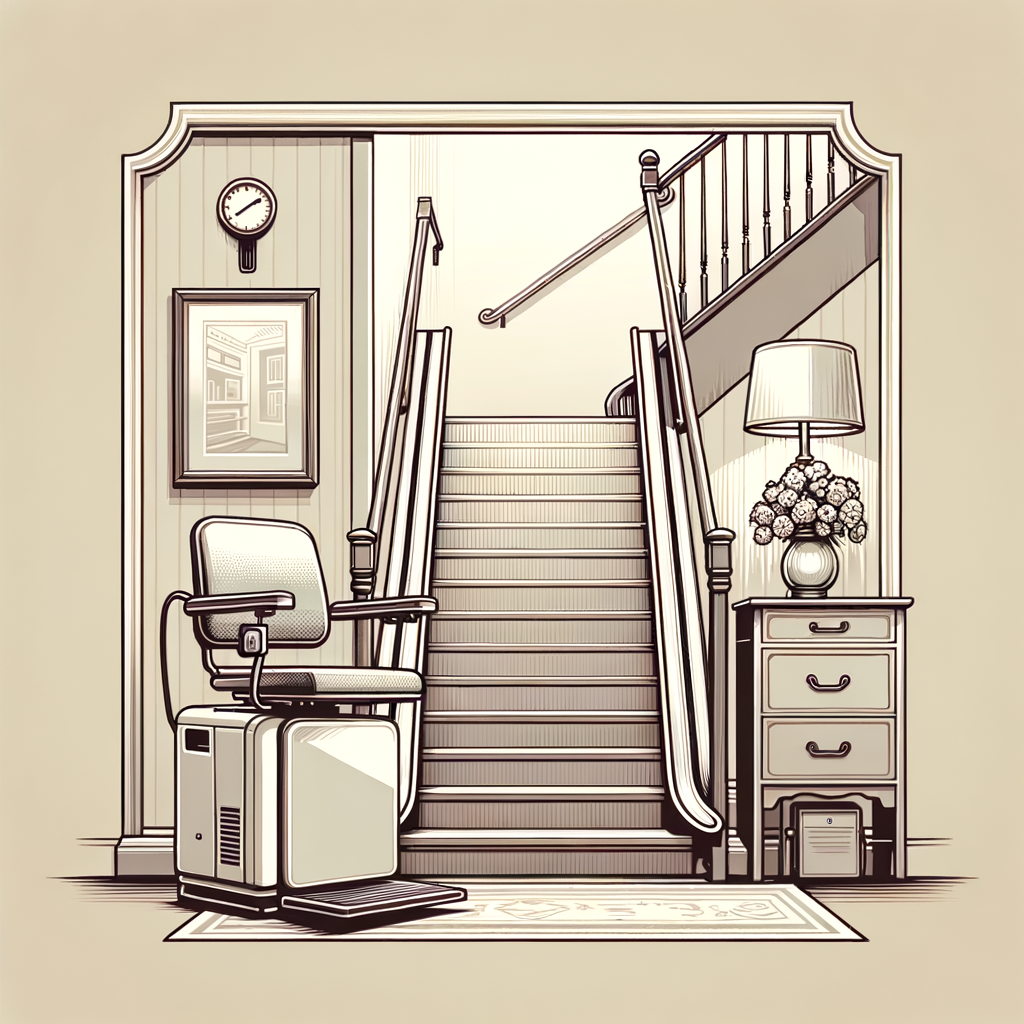
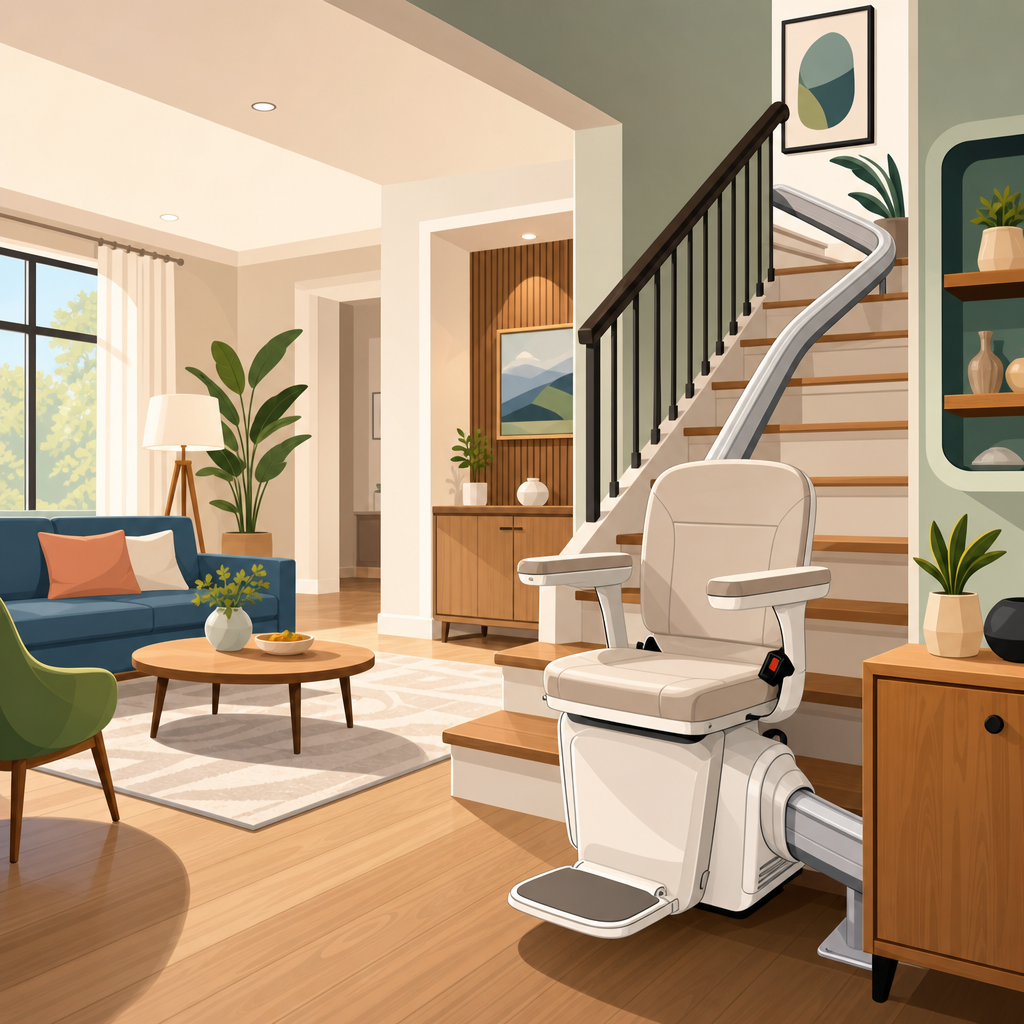
A modern chair lift typically combines a narrow rail, compact folded seat, clean upholstery lines, hidden wiring, and a neutral finish that coordinates with the staircase. Earlier designs often used heavier-looking carriage housings, exposed mechanical components, and seat cushions that prioritized durability over visual restraint. Current products from established manufacturers such as Stannah, Handicare, Acorn, Bruno, and Harmar generally aim for a smaller visual footprint, especially when folded. In many cases, the armrests, seat, and footrest collapse inward to preserve walking space for other users. On a standard straight staircase, that folded profile can be the difference between a lift that constantly draws attention and one that is hardly noticed.
The most visible design element is the rail. Because the rail mounts to stair treads rather than the wall in most residential installations, it becomes a continuous line across the stair run. Modern rails are slimmer and more refined, with powder-coated finishes in beige, brown, gray, or black rather than only institutional metallic tones. Some systems use a tube-style rail, while others use an extruded track with a more architectural appearance. The goal is not to make the lift invisible, which is unrealistic, but to reduce contrast with surrounding finishes so the eye reads it as part of the staircase rather than as equipment imposed on it.
Seat design also shapes whether a chair lift feels residential. Better models offer contoured seats, flatter backrests, and upholstery choices that resemble dining chair or automotive materials more than hospital furniture. Many manufacturers now provide wipe-clean vinyl in understated colors, and a few offer upgraded textiles or leather-look finishes. Swivel seats, retractable seat belts, integrated footrest linkages, and flush charging points all contribute to a cleaner presentation. When these elements are considered together, modern design is really about disciplined engineering: every visible part is reduced, simplified, or concealed without compromising dependable daily use.
Straight, Curved, and Standing Models: Design Differences That Matter
The first comparison most homeowners need is between straight and curved chair lifts, because the staircase geometry determines both appearance and cost. A straight chair lift is designed for stairs with no turns, intermediate landings, or changes in angle. Its rail is manufactured in standardized sections, which makes it faster to install and easier to keep visually minimal. Straight lifts often look cleaner because the rail line is simple and the carriage does not need to navigate multiple bends. They also tend to be the most budget-friendly option, frequently costing far less than custom curved systems.
A curved chair lift is built for staircases with corners, winder steps, split landings, or spiral-like transitions. The rail is custom fabricated from a detailed survey, often using photo measurement or digital mapping. Done well, a curved rail can hug the inside or outside edge of the stairs and preserve more walking width than homeowners expect. Design quality is critical here. A poorly planned route can create a visually busy rail with awkward parking positions, while an expertly designed one can follow the stair architecture so closely that it reads like a planned built-in feature. In homes with prominent foyers, this customization is often what allows accessibility equipment to coexist with visible design standards.
Standing or perched stair lifts occupy a smaller seated footprint and can be useful where the staircase is too narrow for a traditional seated model. These designs use a small platform or saddle-style support rather than a full chair. Visually, they can seem less bulky when parked, but they are not ideal for every user. They require better balance, stronger leg support, and tolerance for a more upright travel posture. In my experience, homeowners sometimes ask for a standing model primarily to reduce visual impact, then realize a compact seated lift with a folding footrest is both safer and more practical. The right choice balances aesthetics with the user’s actual mobility pattern, not just room appearance.
| Type | Best use case | Design advantage | Main limitation |
|---|---|---|---|
| Straight chair lift | Single uninterrupted stair run | Slimmest, simplest rail appearance | Cannot handle turns or landings |
| Curved chair lift | Stairs with corners, bends, or multiple levels | Custom fit can closely follow architecture | Higher cost and longer lead time |
| Standing/perch lift | Narrow stairs and users with limited sitting tolerance | Smaller parked footprint | Requires more balance and stability |
Space-Saving Features That Help a Lift Disappear
If the goal is a chair lift that blends into your home, folding geometry matters as much as color. Manufacturers publish folded dimensions for a reason: the space left for other stair users, measured from the wall or rail edge, directly affects both safety and visual bulk. On narrower staircases, a model with tightly folding arms and seat can preserve critical clearance. Linked footrests are especially useful because they remove the need to bend down and manually flip the platform, improving convenience while keeping the system neatly stowed after every trip. In households where multiple people use the stairs, this feature is often worth prioritizing.
Parking and charging positions are another overlooked design factor. A chair lift can usually be parked at the top or bottom landing, but many modern systems add intermediate or offset parking options through overruns. A hinged rail at the bottom can fold away to prevent the track from extending into a hallway or across a doorway. Powered hinges are particularly helpful for users who cannot lift a rail section manually. On the top landing, a rail overrun can move the user away from the stair edge before they stand, improving safety and reducing the visual impression of a chair perched over the stairs. These details affect how the lift looks when idle, which is most of the time.
Call-send controls also support visual integration and household flexibility. Wall-mounted remotes or armrest controls let one user send the chair away after use, clearing a formal entry staircase or central living area. In design-sensitive homes, that ability is significant. Rather than leaving the seat in the most visible location, the family can store it where it interferes least with sightlines. The result is not only a tidier look but a more natural daily routine. A lift that can be folded, parked, and summoned easily is far more likely to blend in than one left permanently at the foot of the stairs.
Materials, Colors, and Finishes That Match Interior Style
Most homeowners start by asking what colors are available, but finish selection should begin with the staircase itself. The strongest visual match usually comes from aligning the rail and seat tones with existing architectural elements: painted trim, wood stain depth, baluster color, wall tone, or flooring. Beige and light gray rails often disappear against painted walls and pale carpets, while darker brown or black rails can align better with iron balusters or stained oak stairs. A close match is not always necessary. Sometimes contrast works better, especially in modern interiors where black metal details already frame the space. The key is consistency rather than trying to imitate every surrounding material.
Seat upholstery deserves equal attention because it is the part people notice first. Durable vinyl remains common because it is easy to clean, resists spills, and holds up under repeated transfers. However, not all vinyl looks the same. Better options have finer grain, tighter seams, and tailored edges that feel residential rather than medical. Neutral charcoal, sand, taupe, and cream tend to age better visually than trend-driven colors. If a manufacturer offers sample swatches, request them and compare in daylight and evening light. I have seen a gray that looked sophisticated online read blue against warm wall paint in person, making the lift stand out far more than intended.
Hardware finish and plastic quality also separate premium-looking lifts from entry-level ones. Pay attention to gloss level, visible fasteners, arm cap texture, and whether the carriage casing feels integrated or pieced together. Small details matter because the lift sits at eye level on a staircase, where people repeatedly notice inconsistencies. In homes with traditional millwork, softer profiles and warm neutrals often blend best. In contemporary spaces, sharper seat forms, darker rails, and matte finishes usually look more intentional. The principle is simple: choose a lift that belongs to the design language already present in the home instead of treating accessibility as a separate visual category.
Quiet Operation, Safety Engineering, and Everyday Usability
A chair lift that looks refined but sounds harsh will still feel intrusive. Quiet operation is one of the clearest signs of modern engineering, and it depends on the drive system, rail precision, and installation quality. Most residential models use battery-powered DC motors charged at designated points on the rail, allowing operation during a power outage and generally smoother starts and stops than older direct-power setups. Gear rack quality, transmission design, and carriage alignment all influence noise. During a demonstration, listen for grinding, rattling, or abrupt engagement. A well-installed lift should produce a controlled mechanical hum, not a jolt that echoes through the stairwell.
Safety features are equally central to good design because they shape how confidently a user interacts with the lift. Standard components should include a seat belt, obstruction sensors on the footrest or carriage, overspeed protection, swivel seat locking at the landing, and reliable charging contacts. On the upper floor, a powered swivel or easy manual swivel can make exit safer by turning the user away from the stair edge. The best systems integrate these protections discreetly so they do not clutter the chair with bulky attachments. Good design in accessibility products always means safety expressed cleanly, not safety stripped away for the sake of looks.
Usability depends on matching the lift to the person, not just the staircase. Seat height, armrest width, footrest depth, and control style should all support the user’s strength and range of motion. Some people need a larger seat; others need a narrower perch to stand up safely. Joystick, rocker, or toggle controls may each be easier depending on dexterity. Weight capacity is another practical design variable, with many standard models rated around 250 to 350 pounds and heavy-duty versions going higher. A lift blends into the home most successfully when it also fits seamlessly into the user’s routine, because equipment that is awkward or tiring tends to remain unfolded, parked poorly, or avoided altogether.
How to Compare Brands, Costs, and Installation Quality
Brand comparison should focus less on advertising claims and more on measurable factors: rail design, folded width, customization options, service network, warranty terms, and installer competence. Reputable manufacturers typically provide clear specifications and have established dealer support. In the field, installation quality is often more important than the logo on the seat back. A precisely mounted rail, properly set charging points, and carefully adjusted swivel seat will make even a basic model feel better integrated. By contrast, a premium chair lift installed without attention to trim, alignment, or user training will look and perform poorly.
Cost varies widely by type and customization. Straight lifts are commonly the least expensive because their rails are standardized and installation is faster. Curved lifts cost more due to custom surveying, fabrication, and more complex routing. Additional features such as powered folding rails, powered swivel seats, upgraded upholstery, outdoor-rated materials, or heavy-duty capacity also affect price. Homeowners should ask for itemized quotes that separate equipment, customization, installation, electrical needs if any, and service plans. A lower quote may exclude a hinge rail or overrun that materially improves both appearance and safety.
Before buying, request an in-home assessment, sit in the actual model if possible, and ask where the chair will park when not in use. Review folded measurements on your specific staircase, not a brochure diagram. Ask how the rail will interact with door swings, handrails, radiators, and baseboards. Clarify lead times for custom rails and the response process for service calls. If you are building a broader accessibility plan, connect this page with related guidance on straight stair lifts, curved stair lifts, outdoor models, heavy-duty options, and rental or reconditioned units. The best modern chair lift design is the one that solves the access problem, fits the user precisely, and remains visually calm in the everyday life of the home.
Modern chair lift designs that blend into your home succeed because they treat accessibility as part of residential design, not an afterthought. The core principles are straightforward: choose the correct lift type for the staircase, prioritize slim folded dimensions, use parking positions that clear sightlines, select finishes that align with the home’s materials, and insist on quiet, safe, well-fitted operation. Straight models usually offer the cleanest visual simplicity, curved lifts deliver the best architectural fit on complex stairs, and standing or perch models can help in narrow spaces when the user is suitable for them. Across every category, details such as rail color, upholstery quality, hinge rails, swivel seats, and call-send controls make the difference between a lift that dominates a room and one that settles into it.
The biggest mistake homeowners make is evaluating appearance in isolation. A chair lift only truly blends in when it also matches the user’s strength, transfer ability, and daily habits. That is why measurements, live demonstrations, and installer expertise matter as much as finish samples. If you are comparing options under the broader Chair Lift Types & Designs topic, use this hub as your starting point, then move deeper into the specific lift categories most relevant to your staircase and mobility needs. Schedule an in-home assessment, ask precise design questions, and choose the model that makes your home both easier to live in and more comfortably your own.
Frequently Asked Questions
How do modern chair lift designs blend into a home more effectively than older models?
Modern chair lifts are designed with a much stronger focus on appearance, scale, and customization than many older systems. Earlier models were often associated with bulky seats, more visible mechanical components, and rails that stood out sharply against the staircase. Today, manufacturers have refined nearly every part of the system to make it feel more integrated with the home. Rails are typically slimmer and more streamlined, with cleaner profiles that follow the line of the stairs more discreetly. Many seats fold up compactly, along with the armrests and footrest, so the lift takes up significantly less visual and physical space when it is not in use.
Another major difference is the range of finish options now available. Homeowners can often choose from upholstery colors, seat materials, and rail finishes that coordinate with flooring, wall colors, wood tones, or trim details already in the home. Some lifts are intentionally styled with a more minimal, furniture-like appearance so they do not look overly medical or industrial. In addition, improved parking options allow the chair to be positioned away from the main living area or at the top or bottom landing where it is less noticeable. Taken together, these upgrades mean homeowners no longer have to sacrifice a polished interior to improve accessibility.
What design features should homeowners look for if they want a chair lift that is both stylish and unobtrusive?
If the goal is to keep the stair lift as discreet as possible, several design features matter more than people often realize. A slim rail is usually one of the first priorities, because the rail is the most permanent visible element on the staircase. A narrower, low-profile rail can help preserve the open feel of the stairway and reduce the sense that a large device has been added to the home. Homeowners should also pay attention to folding dimensions. Seats, armrests, and footrests that fold tightly can make a major difference in maintaining clear stair access for other household members.
Parking and swivel functions are also important. Many modern lifts can be parked at a landing or moved to a less prominent location when not in use, and some models offer a hinged rail to prevent the track from extending into a hallway or doorway. Upholstery and finish options should not be overlooked either. Neutral fabrics, refined stitching, and coordinated metal or painted components can help the lift complement surrounding décor. Quiet operation is another subtle but valuable design feature. A lift that moves smoothly and quietly feels more sophisticated and less intrusive in daily life. Finally, homeowners should consider how the lift integrates with the specific architecture of the staircase, including whether a straight or curved model will create the most natural and least noticeable installation.
Can a chair lift be customized to match existing décor and staircase style?
Yes, in many cases a modern chair lift can be customized to work much more harmoniously with the existing style of the home than people expect. While customization options vary by brand and model, many of today’s premium lifts allow homeowners to select upholstery colors, seat textures, rail colors, and trim details that better align with their interior design. This matters because a chair lift is not just a mobility product; it becomes part of the visual landscape of the home. A well-chosen finish can help it blend with painted balusters, wood stair treads, carpeting, wall tones, or nearby furnishings rather than standing out as an obvious add-on.
Customization also extends beyond color and fabric. The shape and profile of the seat, the style of the armrests, and the overall silhouette of the unit can influence whether it feels contemporary, traditional, or purely utilitarian. For homes with distinctive staircase layouts, curved chair lifts can be custom-built to follow turns, intermediate landings, or spiral transitions more precisely, resulting in a cleaner and more intentional appearance. In some situations, installers can also recommend rail placement and parking positions that minimize visual disruption. The key is to think about the lift as part of a broader home design plan and work with a provider who understands both accessibility needs and aesthetics.
Will installing a chair lift make the staircase feel cramped or difficult for others to use?
Not necessarily. One of the biggest improvements in modern chair lift design is how efficiently these systems use space. Because the rail is mounted to the stair treads rather than the wall, installation is generally straightforward and does not require the staircase to be structurally rebuilt. More importantly for everyday use, many contemporary lifts are designed to preserve as much walking space as possible. Slimmer rails, narrower seat profiles, and folding components help reduce the footprint of the lift when parked. In many homes, this allows other family members to continue using the stairs comfortably.
That said, the answer depends on the width and configuration of the staircase. A very narrow staircase may require more careful planning than a wider one, especially if multiple people use the stairs frequently. This is why an in-home assessment is so important. A qualified professional can measure the staircase, evaluate landing space, and recommend a model that balances safety, usability, and appearance. They can also advise on features such as a folding footrest or a hinged rail if there are concerns about clearance at the bottom of the stairs. When properly selected and installed, a chair lift usually improves mobility for the person who needs it without making the staircase impractical for everyone else.
Are modern chair lifts only about appearance, or have they improved in comfort and safety too?
Modern chair lifts have improved substantially in comfort, safety, and ease of use, not just appearance. The visual upgrades are important because they help accessibility solutions feel more natural in a finished home, but the engineering advances behind the scenes are equally significant. Many current models offer smoother starts and stops, quieter drive systems, and more supportive seating, which makes the ride feel stable and comfortable rather than abrupt or mechanical. Padded seats, ergonomic armrests, and better footrest design all contribute to a more secure experience, especially for users who may already feel unsteady on stairs.
Safety features have also advanced. Depending on the model, homeowners may find seat belts, obstruction sensors, swivel seats for safer entry and exit at the landing, lockable controls, battery backup in case of power outages, and easy-to-use call/send controls that let the chair be moved without anyone sitting in it. These features help make the system safer in everyday use while also keeping it more discreet when parked out of sight. In other words, today’s best chair lifts are not simply prettier versions of older equipment. They represent a more complete approach to aging in place and home accessibility, combining dependable safety performance with design choices that respect the look and feel of the home.