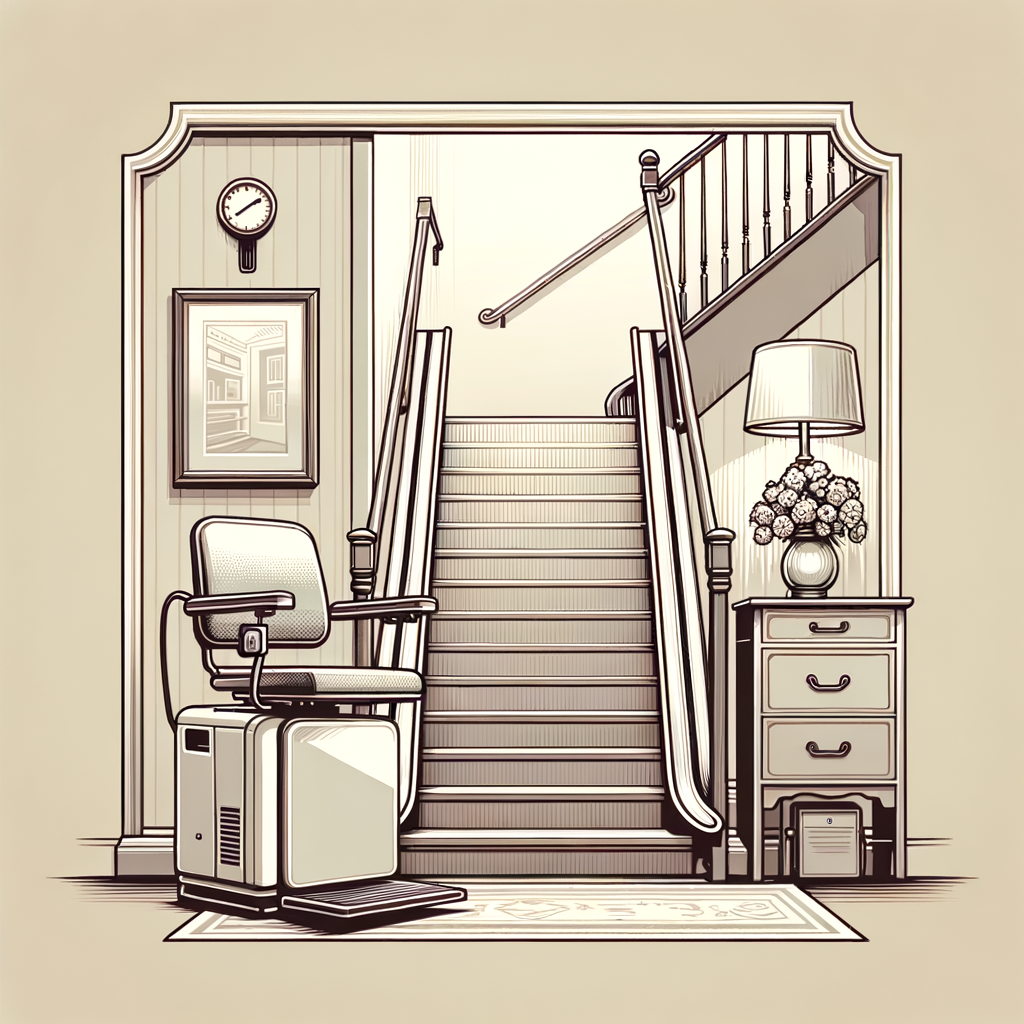
Comparing chair lift noise levels by brand matters more than many buyers expect, because sound affects comfort, sleep, privacy, and long-term satisfaction just as much as price or weight capacity. In homes where a stair lift sits near a bedroom, living room, or open-plan kitchen, even a small difference in motor whine, rail vibration, or start-stop clicking becomes noticeable within days. When families ask me which chair lift is quietest, they are usually not asking for a laboratory decibel number alone. They want to know what the lift sounds like in a real home, why one model hums while another rattles, and whether premium brands truly deliver a quieter ride.
A chair lift, often called a stair lift, is a motorized seat that travels along a rail mounted to the staircase. Noise level refers to the total sound produced during operation, including motor output, gearbox engagement, roller contact, track joints, seat movement, and charging beeps. Brand differences matter because manufacturers use different drive systems, rail designs, batteries, gear materials, and installation tolerances. Two lifts can carry the same user safely yet sound completely different.
This hub article covers comparative and ranking questions across the category, so readers can understand not only which brands tend to be quieter, but also how straight and curved rail designs, indoor and outdoor applications, maintenance condition, and installer skill shape the final result. It also connects the broader Chair Lift Types & Designs topic by showing how engineering choices influence user experience. Quiet operation is not just a luxury feature. For seniors with sensory sensitivity, for caregivers monitoring nighttime movement, and for households trying to preserve a calm environment, it is a practical buying criterion that deserves side-by-side evaluation.
How chair lift noise should be evaluated
The most useful way to compare chair lift noise levels by brand is to separate sound into four categories: steady travel noise, startup and stopping noise, vibration transmitted into the stairs or wall, and incidental sounds such as swivel clicks or charging alerts. In field visits, I have found that homeowners often describe all of this as “motor noise,” even when the true culprit is a loose rail bracket, worn carriage roller, or seat component. A reliable comparison therefore starts with consistent conditions: similar stair length, similar user weight, fresh batteries, proper lubrication where specified, and a trained installer.
Decibel readings help, but they can be misleading if taken inconsistently. A lift measured one meter away on a carpeted staircase will usually seem quieter than the same lift on exposed hardwood with hollow treads. Frequency also matters. A low mechanical hum at 50 to 60 decibels is often less annoying than a higher-pitched gear whine at the same measured level. That is why buyer reports frequently disagree with brochure claims. The best comparisons combine manufacturer design details, installer observations, and real-home listening tests.
In general, modern battery-powered stair lifts are quieter than older AC-driven systems because the motor and gearbox are optimized for smoother starts and because battery operation reduces some electrical noise characteristics. Straight lifts also tend to be quieter than curved lifts because the rail is simpler, the carriage path is more uniform, and there are fewer directional transitions. However, premium curved lifts from top brands can still outperform budget straight lifts if the engineering and installation quality are better.
Brand-by-brand noise comparison
Among mainstream brands in North America and Europe, Stannah, Bruno, Handicare, Harmar, Access BDD, and Acorn appear most often in homeowner research. Their sound profiles are different enough that broad rankings are possible, even though exact results vary by model and installation. Stannah generally earns strong marks for smooth travel and restrained mechanical noise, especially on its newer straight and curved units. The company’s rail finishing, carriage fit, and ride tuning tend to reduce chatter over the length of travel. In occupied homes, Stannah units often register as a muted hum rather than a sharp whine.
Bruno is another consistently quiet brand, particularly on straight stair lifts such as the Elan and Elite lines. Installers often praise Bruno for solid rail construction and reliable fit, which helps limit rattles over time. In side-by-side residential impressions, Bruno lifts typically sound slightly more mechanical than the softest Stannah examples, but they remain comfortably quiet for most users and are often perceived as stable and refined. That matters because vibration can make a lift seem louder than a decibel meter suggests.
Handicare models vary more by specific unit and rail design, but many are competitive on noise when properly installed. The company’s Freecurve and straight-lift systems can deliver smooth performance, though some users report more audible roller or gearbox character than top-tier rivals. Harmar lifts are widely available and can perform well, yet buyer feedback more often mentions operational sound, especially on older or heavily used units. Acorn lifts are popular and accessible in many markets, but they are also frequently described as more noticeable in operation, with track interaction and carriage sound standing out more clearly in quiet homes.
| Brand | Typical noise impression | Where it performs well | Common noise complaint |
|---|---|---|---|
| Stannah | Low, smooth hum | Straight and premium curved installations | Minor seat or rail noise if installation is out of tolerance |
| Bruno | Quiet and solid | Straight indoor lifts with precise rail mounting | Mechanical hum more noticeable on long runs |
| Handicare | Moderate, model-dependent | Well-fitted custom configurations | Roller or gearbox character on some units |
| Harmar | Moderate to noticeable | Value-focused residential use | Operational noise increasing with wear |
| Acorn | Noticeable but serviceable | Fast-turnaround straight lift projects | Track and carriage noise in very quiet homes |
Why one brand sounds quieter than another
The quietest chair lift brands are not simply using a “better motor.” Noise is shaped by the entire system. Drive type is one factor: rack-and-pinion systems can be durable and predictable, but the tooth engagement can create a distinctive mechanical signature. Cable or traction-based approaches may sound different, though they are less common in standard residential stair lifts. Gearbox quality matters because cheap or loosely toleranced gear sets create whine under load. Rail rigidity matters because flex amplifies vibration and can turn small mechanical sounds into resonant household noise.
Battery design also plays a role. Most modern lifts charge at points on the rail and run from onboard batteries, which supports smoother operation during travel. When batteries weaken, the lift may not become dramatically louder immediately, but motor strain can alter the sound profile. I have heard lifts that developed a rougher tone weeks before battery performance caused a fault code. Seat frame construction matters too. If armrests, footrests, or swivel locks are lightly built, they can buzz even when the drive system is performing normally.
Brand engineering culture is the hidden differentiator. Manufacturers that invest in tighter machining tolerances, better roller materials, and well-designed carriage isolation usually deliver lower perceived noise. They also tend to age more gracefully. A lift that sounds quiet on installation day but develops rattles within two years is not truly a quiet product category leader.
Straight, curved, indoor, and outdoor lifts
Noise comparisons by brand make the most sense when matched within the same lift type. Straight stair lifts generally produce the least noise because the rail is linear and easier to align. Curved stair lifts must navigate bends, changes in incline, and custom-fabricated sections, all of which create more opportunities for wheel contact noise and minor transitions in pitch. A quiet straight unit from a midrange brand may therefore sound better than a curved unit from a premium brand, even though the premium brand is objectively better engineered.
Indoor lifts are usually quieter than outdoor lifts. Outdoor models need weather-resistant covers, sealed components, and sturdier materials to withstand moisture and temperature swings. Those design choices can slightly increase operating sound. In cold weather, grease viscosity and material contraction can also make a lift sound different than it does in mild conditions. Buyers comparing brands for porches or exterior staircases should expect more variation throughout the year.
Heavy-duty lifts can be louder as well. Higher capacity often requires more robust drive components and larger chassis assemblies. That does not make them unpleasant, but it changes the sound character. If noise is the top priority, the best path is to compare brands within the exact category needed: straight indoor, curved indoor, outdoor, or heavy-duty.
Installation and maintenance often matter more than the badge
A well-installed chair lift from a mid-tier brand will often run quieter than a premium unit installed poorly. This is one of the most important lessons in comparative reviews. Rail brackets must be tightened correctly, spaced appropriately, and anchored to stable stair structure. If the rail is slightly twisted or unsupported at a stress point, the carriage may produce ticking, rubbing, or harmonic vibration during travel. Homeowners then blame the brand when the real issue is setup.
Maintenance has the same effect. Dirt in the rail, worn rollers, loose seat hardware, and aging batteries all change the acoustic profile. Some manufacturers specify lubrication points while others use components designed to stay dry; using the wrong lubricant can attract debris or create noise rather than eliminate it. Annual service is not just about safety. It preserves ride quality and prevents small sounds from becoming large mechanical problems.
If a lift suddenly becomes louder, the cause is usually diagnosable. Clicking may indicate a rail joint issue, buzzing may come from seat hardware, grinding may suggest drivetrain wear, and a repeated beep may simply mean the unit is not parked on its charge points. For that reason, any serious brand comparison should include dealer support quality and parts availability, not just the sound of a new unit.
Best-use rankings and how to choose
For buyers prioritizing the quietest overall residential experience, Stannah and Bruno usually lead the conversation, with Stannah often favored for refined ride quality and Bruno for durable, quiet straight-lift performance. For custom staircases, Handicare can be a strong contender when the dealer has deep experience with complex installations. For value-focused projects, Harmar and Acorn remain relevant, but buyers should ask more questions about expected noise in their specific home layout and insist on a live demonstration if possible.
The smartest buying process is simple. First, identify the lift type required. Second, ask each dealer for the exact model, drive system, and expected service intervals. Third, request an in-home or showroom ride and listen during startup, travel, and stop. Fourth, ask what noises are normal and what noises indicate service is needed. Fifth, compare warranty support, because a quiet lift that cannot be serviced quickly will not stay quiet for long.
This comparative hub should guide every related ranking post in the Chair Lift Types & Designs cluster: quietest straight stair lifts, quietest curved stair lifts, best stair lift brands for bedrooms nearby, and brands ranked by smoothness versus value. The core takeaway is consistent across all of them. Brand matters, but design fit, installation precision, and ongoing maintenance determine whether a chair lift remains unobtrusive in daily life.
When you compare chair lift noise levels by brand, listen for the whole system, not a marketing promise. Focus on ride smoothness, vibration, service support, and model-specific performance in the exact type of staircase you have. In most homes, the quietest results come from proven brands, experienced installers, and regular maintenance rather than from the lowest price or the most aggressive sales pitch. Start by shortlisting two or three brands, arrange a demonstration, and judge the sound where it matters most: in a real home like yours.
Frequently Asked Questions
Which chair lift brands are usually considered the quietest?
The quietest chair lift brands are typically the ones that combine smooth drive systems, well-machined rails, quality gearboxes, and careful installation standards rather than relying on marketing claims alone. In real homes, premium and established brands often sound quieter because they manage vibration better during startup, travel, and stopping. That matters because most buyers do not notice noise as a single “volume” issue. They notice the type of sound: a soft mechanical hum is usually much easier to live with than a sharp click, rattling rail, or high-pitched motor whine. Some brands are known for refined ride quality and lower perceived noise because their carriage design, motor housing, and rail fitment reduce resonance. Others may be perfectly functional but produce more audible gear noise or more noticeable transition sounds at the beginning and end of a trip.
It is also important to understand that brand reputation for quiet operation can vary by model. A straight stair lift from one brand may be very quiet, while that same manufacturer’s curved unit may produce more noticeable sound because curved systems have more complex track geometry and more moving parts. In practical terms, buyers comparing brands should ask for an in-home demonstration, listen for startup noise, listen again while the lift travels under load, and pay close attention to the stop at the top and bottom. If one brand sounds smoother but another is slightly cheaper, the quieter unit often delivers better long-term satisfaction, especially when the lift is installed near bedrooms, living rooms, or other shared spaces where repeated use can become disruptive.
Why do two chair lifts with similar specifications sound so different in actual use?
Two chair lifts can look nearly identical on paper and still sound very different because published specifications rarely capture the full acoustic experience. Weight capacity, speed, and power source do not tell you much about how a lift will sound in a hallway at night or in an open-plan home where sound travels easily. Noise is shaped by the drive system, the precision of the rail, the quality of the rollers, the housing around the motor, and how smoothly the lift accelerates and decelerates. One brand may produce a low, steady hum, while another may generate intermittent clicking, rattling, or a sharper mechanical tone that feels louder even if actual decibel levels are similar.
Installation quality is another major factor. A well-built chair lift can become annoyingly noisy if the rail is not mounted properly, if fasteners are overtightened or loose, or if the staircase itself amplifies vibration. Wood stairs, hollow walls, and open stairwells can all make a lift sound louder than it really is. Battery condition, rail cleanliness, and normal wear over time also influence sound. This is why experienced buyers and installers do not compare brands by brochure language alone. They evaluate the character of the noise, how consistently the unit runs, and whether the sound remains controlled after repeated daily use. In many homes, that practical difference matters far more than minor specification differences.
What types of chair lift noise should buyers listen for when comparing brands?
When comparing brands, buyers should listen for more than simple loudness. The most useful approach is to break noise into categories: startup sound, travel sound, stopping sound, and background vibration. Startup sound tells you a lot about engineering quality. A smooth lift usually begins moving with a controlled, muted engagement, while a rougher unit may jerk slightly or make an obvious clunk. During travel, listen for steady humming versus uneven motor pitch, gear chatter, or rail vibration. A consistent, low mechanical sound is generally a good sign. Repetitive clicking, buzzing, or metallic rattling often indicates either a noisier design or a system that is more sensitive to installation variables.
Stopping sound matters just as much. Some lifts finish a trip with a quiet, damped stop, while others create a noticeable click or abrupt settling noise that can be surprisingly intrusive, particularly late at night. Also pay attention to vibration through the staircase or adjacent wall. A chair lift that seems acceptable at first can become bothersome if the rail transmits resonance into nearby rooms. If possible, stand both near the lift and in an adjoining room while it operates. That gives a much more realistic sense of how the brand will sound in daily life. Buyers should also ask whether folding arms, footrests, swivel seats, or charging contacts create extra noise, since these smaller details can affect comfort and convenience over time.
Are curved chair lifts noisier than straight chair lifts, regardless of brand?
In many cases, yes. Curved chair lifts are often somewhat noisier than straight chair lifts because they are mechanically more complex. A straight lift moves along a simpler path, which usually allows for smoother motion and fewer opportunities for sound changes along the rail. Curved lifts, by contrast, must navigate bends, transitions, and sometimes variable inclines. That added complexity can create more audible changes in motor tone, more gear engagement noise, and more noticeable movement at certain points in the track. Even top-tier brands that build excellent curved systems may not sound quite as quiet as their straight models in the same home.
That said, brand quality still makes a major difference. A well-engineered curved lift from a reputable manufacturer can be far quieter and smoother than a lower-cost straight lift from a brand with less refined design or weaker installation support. Buyers should not assume that all curved lifts are noisy, only that they deserve closer listening during the evaluation stage. If the staircase is near a bedroom or frequently used living area, ask the dealer to explain how the brand manages transitions, rail joints, and speed control on curves. Also ask whether the rail is custom-built and how precisely it is fitted to the staircase. With curved lifts especially, small differences in engineering and installation can have a big impact on everyday sound levels.
How can buyers choose the best chair lift brand for low noise in a real home, not just on paper?
The best way to choose a low-noise chair lift brand is to evaluate real-world performance in conditions that match your home as closely as possible. Start by asking dealers direct questions: How would you describe the sound profile of this model? Is it a low hum, a noticeable whine, or does it have audible clicks at startup and stopping? Has this model been installed near bedrooms or living spaces, and what feedback have customers given about noise? Dealers who know their products well should be able to answer clearly and specifically. General statements like “all our lifts are quiet” are far less helpful than detailed explanations of how the unit behaves during normal operation.
Next, request a live demonstration or video recorded in a residential setting, not just a showroom. If possible, compare multiple brands side by side. Listen from several positions: next to the stairs, one room away, and upstairs or downstairs where family members are likely to hear it. Ask about maintenance needs too, because some lifts become noisier when rails are dirty, batteries weaken, or components wear. A quieter brand is not just one that sounds good on day one, but one that stays smooth over years of use with routine service. Finally, weigh noise alongside reliability, service support, and installation quality. The quietest lift on paper is not the best choice if local support is poor. In most cases, the ideal brand is the one that combines refined acoustics, proper fitting, dependable performance, and strong after-sales service so the lift remains unobtrusive and comfortable in daily life.