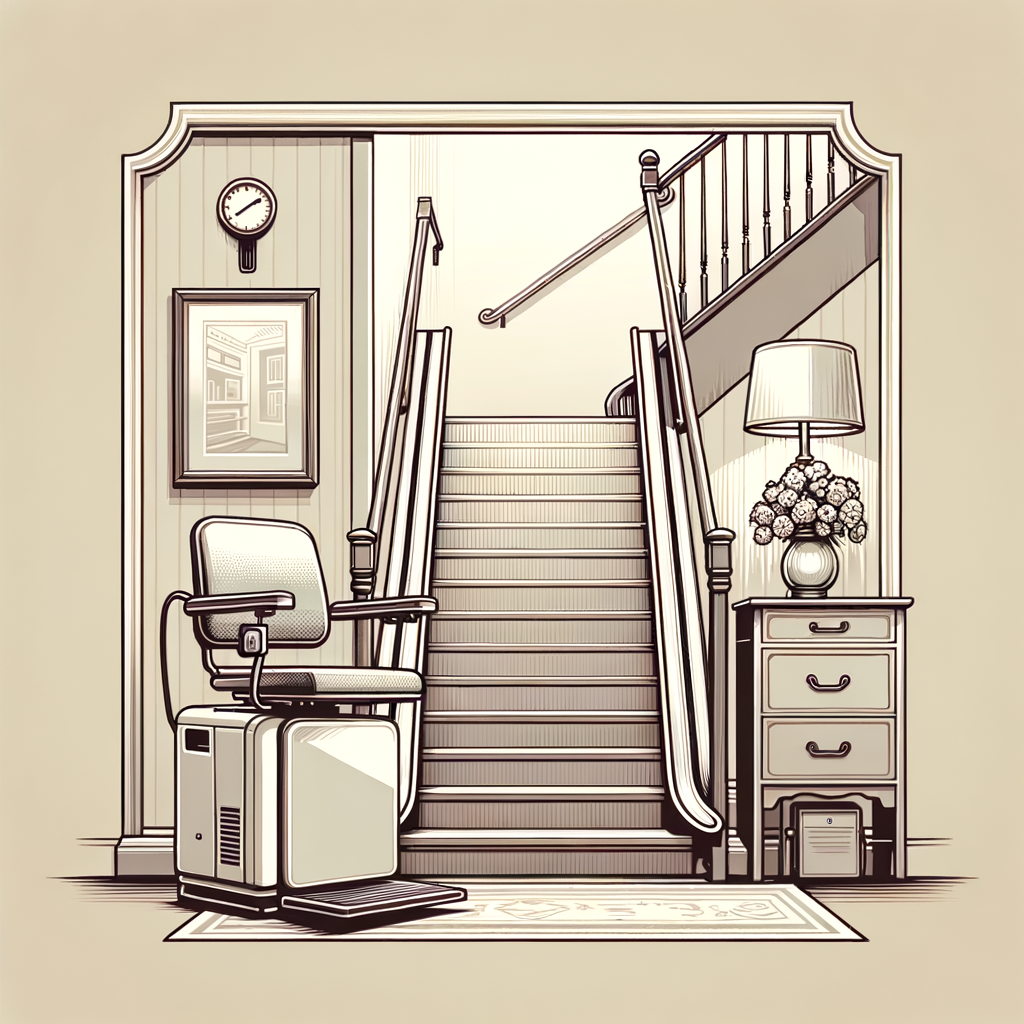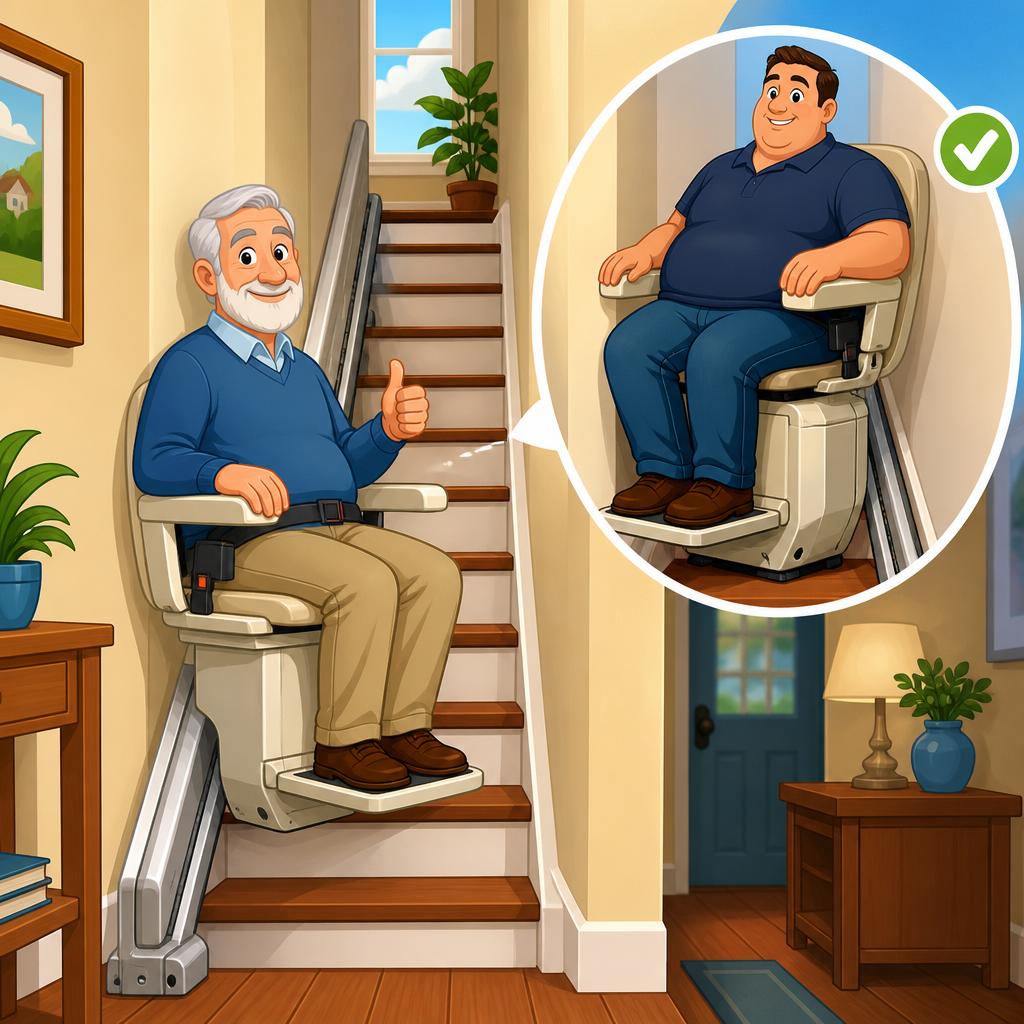
Heavy-duty stair lifts for narrow staircases solve one of the hardest mobility problems in residential access: how to carry a larger user safely on stairs that offer very little clearance. A heavy-duty stair lift is a model engineered for higher weight capacities, wider seats, stronger drive systems, and more robust chassis components than standard units. A narrow staircase, by contrast, is any stairway where rail placement, seat projection, footrest depth, or building-code clearance becomes a limiting factor for everyday passage. Homeowners often assume these two requirements cancel each other out. In practice, they can be balanced, but only through careful measurement, product selection, and realistic expectations about space, capacity, and customization.
I have worked with families comparing models after a hospitalization, a progressive mobility decline, or a failed attempt to make do with a walker on stairs. The same question comes up repeatedly: can a stair lift support a heavier user without turning a tight staircase into a daily hazard for everyone else? The answer is often yes, but not with every staircase and not with every lift. Heavy-duty design affects seat width, arm spacing, motor torque, rail loads, and transfer posture. Narrow-stair design affects folded dimensions, swivel requirements, parking positions, and whether the rail can hug the wall closely enough to preserve walking space.
This matters because the wrong choice creates two kinds of risk. First, an undersized lift can compromise comfort, stability, and manufacturer-rated safety. Second, an oversized lift on a cramped stairway can obstruct egress, frustrate other household members, and sometimes fail code or installer approval. For buyers, clinicians, and adult children researching options, the goal is not simply finding the highest weight capacity. The real goal is matching user body dimensions, transfer ability, and home geometry to a lift that remains safe in everyday use. This heavy-duty stair lift hub explains how that match is made, where the limits are, and what alternatives should be considered when the staircase cannot accommodate a conventional solution.
What makes a stair lift truly heavy-duty
Heavy-duty stair lifts differ from standard models in more than a larger advertised capacity. Most standard straight stair lifts support roughly 250 to 350 pounds, while heavy-duty models commonly start around 400 pounds and can reach 600 pounds depending on rail type and installation conditions. That increase usually requires a reinforced carriage, stronger transmission, higher-output motor, upgraded seat frame, and a rail system engineered for greater static and dynamic loads. Manufacturers may also widen the seat and increase the distance between armrests to improve fit and pressure distribution.
In field evaluations, I pay less attention to marketing language like “bariatric friendly” and more attention to measurable specifications: maximum capacity, usable seat width, seat-to-footrest relationship, folded width, and whether the capacity changes on a curved rail. Some brands offer 400-pound capacity only on straight rails, while curved versions may be lower because the carriage negotiates bends differently. Others list a high capacity but require a minimum staircase width that disqualifies many older homes. These details matter because a heavy-duty stair lift must work not only under load, but also during entry, travel, and exit without forcing awkward body mechanics.
Battery-powered systems dominate the market, including heavy-duty units, because they continue operating during a power outage and deliver smoother starts and stops through onboard DC drive systems. Charger placement, rail overrun options, and call/send controls also affect usability. If the rider relies on a cane, walker, or caregiver assist at the landing, the transfer zone may matter more than raw capacity. A well-designed heavy-duty lift is therefore a system, not just a seat on a rail.
Can heavy-duty lifts work on narrow staircases
Yes, but only when the staircase dimensions, user size, and selected model align. Narrow staircases challenge heavy-duty installations because the very features that make the lift supportive often take up more room. A wider seat usually means greater projection from the wall. Larger armrests can reduce usable passage width when the lift is parked. A bigger footrest can interfere with descending feet on steep stairs. On paper, a lift may fit; in daily life, it may still feel cramped if folded clearances are marginal.
The key concept is not stair width alone but total envelope. Installers measure from the nose of the tread to the wall or opposite obstruction, but they also evaluate handrails, window trim, radiators, newel posts, door swing, and landing depth. In many houses, the narrowest pinch point is not the full run of stairs but the bottom approach, where the user must step onto the seat without twisting excessively. A heavy-duty model with a powered swivel seat can help at the top landing, yet that same seat may need more side clearance at the bottom.
Many successful projects depend on compact engineering rather than brute force. Some premium heavy-duty lifts fold more tightly than older standard models. Others use offset arms, slim rails, or vertical rail orientation to reduce obstruction. Straight staircases are generally easier because the rail can track close to the edge of the treads with fewer carriage constraints. Curved heavy-duty lifts are possible, but they require precise surveying and often cost substantially more. The takeaway is simple: both needs can be met, but only after a site-specific assessment by an experienced dealer or accessibility specialist.
Measurements that determine whether the fit is realistic
Accurate measurement is the difference between a workable installation and a costly dead end. The starting point is staircase width, but the assessment should go further: tread depth, riser height, overall run length, top and bottom landing space, headroom, and obstructions. Installers typically measure from the wall to the stair edge, then identify the tightest point. They also account for the folded seat, folded footrest, and rail projection. A staircase that seems “wide enough” at 36 inches can still be problematic if a handrail or trim reduces effective clearance to 31 inches at one point.
Body dimensions matter just as much as stair dimensions. Weight capacity does not tell you whether the rider can sit centered with arms supported and feet safely placed. Hip width, shoulder breadth, knee flexion, trunk control, and transfer style all influence fit. I have seen users under a model’s weight limit struggle because the seat pan was too narrow or the arm spacing too tight for a safe seated posture. Conversely, some larger users fit securely on a compact heavy-duty seat because their transfer ability is strong and they do not require extensive lateral support.
| Measurement or Factor | Why It Matters | Typical Impact on Heavy-Duty Narrow-Stair Fit |
|---|---|---|
| Clear stair width | Determines basic passage and folded clearance | Below about 30 to 32 inches often limits model choices sharply |
| Landing depth | Affects safe entry and exit | Shallow landings may require overruns or alternative parking |
| Seat width and arm spacing | Determines user fit and pressure comfort | Wider seats improve support but may reduce open walking space |
| Folded footrest depth | Influences trip risk for other stair users | Large footrests can become the deciding constraint |
| User transfer ability | Affects required swivel and landing setup | Limited rotation tolerance increases need for more clearance |
| Straight versus curved rail | Changes engineering and capacity options | Straight rails usually offer simpler, stronger narrow-stair solutions |
Professional surveys increasingly use photo documentation, digital levels, and manufacturer-specific forms because small errors can derail the entire project. If you are researching heavy-duty stair lifts for narrow stairs, ask every dealer for the minimum stair width for that exact model, the folded width, and whether the stated capacity changes with rail configuration. Those three questions eliminate much confusion early.
Design features that help preserve space without sacrificing support
The best heavy-duty stair lifts for narrow staircases use design details that minimize intrusion while maintaining stability. A slim-profile rail is one of the biggest advantages. Because stair lift rails mount to the treads rather than the wall, rail geometry can often be optimized to sit close to the stair edge. On some systems, a vertical rail profile reduces the visual and physical footprint compared with bulkier tube designs. That can preserve enough shoe space for ambulatory household members to continue using the stairs.
Folding components are equally important. A seat that flips up compactly, armrests that rise smoothly, and a footrest that folds with minimal projection all improve stair access when the lift is parked. Powered folding footrests can help users who cannot bend safely, but they do not automatically save space; what matters is the folded depth. Seat height and depth also deserve scrutiny. A seat that is too deep may support a larger rider poorly, while one that is too high can make transfers unstable, especially for shorter users. Adjustable seat-to-footrest geometry is a meaningful feature, not a luxury.
Swivel seats, track overruns, and park positions affect narrow-stair usability more than many buyers expect. A manual or powered swivel can reduce fall risk at the upper landing by turning the rider away from the stair edge before standing. A hinged rail at the bottom can clear a doorway or hallway, though hinge mechanisms add complexity and require maintenance. Some homes benefit from sending the chair to the top landing when not in use, preserving the main passage below. In shared households, these operational details often determine whether everyone accepts the lift long term.
Straight, curved, and modular options in heavy-duty applications
Straight heavy-duty stair lifts are usually the first and best option for narrow staircases because they are mechanically simpler, faster to install, and more likely to offer higher weight ratings at lower cost. The rail is cut to length, mounted to the treads, and tested under manufacturer standards. If the staircase runs in one uninterrupted line, a straight heavy-duty model can often be installed in a day. This category should anchor any heavy-duty lift buying guide because it covers the largest share of successful narrow-stair projects.
Curved heavy-duty stair lifts serve homes with turns, intermediate landings, or spiral geometry. These systems require a custom survey and made-to-order rail. They can absolutely solve access problems in tight architectural layouts, but tradeoffs are real. Pricing is much higher, lead times are longer, and not every manufacturer supports the same weight capacities on custom rails. In my experience, curved installations succeed when the survey is meticulous and the user’s transfer needs are considered from the start, not added later as an afterthought.
Modular curved systems occupy a middle ground. They use pre-engineered rail segments to adapt to common turns, which can shorten lead times and sometimes control costs. However, modular does not mean universally compact. On very tight stairs, the carriage path through a bend can require extra clearances. Buyers should therefore avoid assumptions based on brochure photos. Ask how the chair behaves at each turn, where the knees align, and whether the user’s shoulders or elbows will contact the wall or banister through the curve.
Safety, codes, and installation realities homeowners should understand
Heavy-duty stair lift safety starts with proper installation and manufacturer adherence, not aftermarket improvisation. In North America, reputable products are commonly designed and tested to standards such as ASME A18.1 for platform lifts and stairway chairlifts, while listed electrical components and battery systems add another layer of reliability. Local code enforcement varies because private residences are treated differently from public buildings, but a professional installer should still discuss egress, rail placement, and service access honestly. If an installer is willing to “make it work” without discussing clearances or transfer safety, that is a warning sign.
Weight capacity should never be interpreted loosely. A 400-pound rating is an engineering limit under specified conditions, not a suggestion. Exceeding it stresses the drivetrain, seat frame, and mounting system. Just as important, a user near the rated limit may still need a larger seat or different arm configuration to ride safely. Seat belts, obstruction sensors, overspeed governors, and final limit switches are standard safety features worth confirming. For users with limited trunk control, ask whether optional lateral support, retractable seat belts, or specialized upholstery are available.
Maintenance also matters more in heavy-duty service. Heavier loading increases wear on rollers, gearboxes, and seat pivots over time. Regular service visits, battery checks, and rail cleaning are not sales extras; they protect reliability. I advise households to ask about parts availability, technician coverage, and average response time before purchase. A premium chair with poor local support is a risky choice for someone who depends on it daily.
Costs, buying criteria, and when alternatives make more sense
Heavy-duty stair lift cost varies widely by rail type, capacity, and customization. Straight heavy-duty models often start in the mid-thousands, while curved heavy-duty systems can reach into the low five figures or beyond once surveying, custom rail fabrication, powered options, and installation are included. Used or rental inventory is more common for standard straight lifts than for heavy-duty or curved models, so bargain hunting has limits in this category. Total value depends on fit, service support, warranty terms, and whether the installation solves the mobility problem without creating a circulation problem for the rest of the home.
As a hub within chair lift types and designs, this page should guide readers to related topics they may need next: straight stair lifts, curved stair lifts, stair lift weight capacity, stair lift measurements, stair lift installation, and stair lift alternatives. Those subjects become especially relevant when a narrow staircase rules out the first model considered. In some houses, a vertical platform lift, limited-use/limited-application lift, or first-floor bedroom conversion is the better answer. For ambulatory users with only mild difficulty, a second handrail or short-term rehabilitation plan may delay the need for a lift altogether.
The best buying process is methodical. Start with a professional in-home assessment. Compare exact model dimensions, not generic category claims. Confirm whether the user fits the seat comfortably, whether others can still pass safely, and whether top and bottom transfers are controlled and dignified. Heavy-duty stair lifts for narrow staircases can meet both needs, but only when engineering, measurements, and real-life use are considered together. If you are building your shortlist now, schedule two qualified assessments and compare the proposed clearances line by line before you decide.
Frequently Asked Questions
Can a heavy-duty stair lift really be installed on a narrow staircase?
Yes, in many cases it can, but the answer depends on the exact stair dimensions, layout, and user requirements rather than the label “heavy-duty” alone. Heavy-duty stair lifts are designed for higher weight capacities, larger seat frames, reinforced rails, and more powerful drive systems. Narrow staircases create the opposite condition: limited clearance for the rail, chair, footrest, and rider during travel. Whether both needs can be met comes down to engineering, measurements, and safe operating clearances.
A professional assessment typically looks at staircase width, tread depth, headroom, landing space, handrail placement, wall obstructions, door swings, and the amount of clearance left for others using the stairs. In some homes, a manufacturer may offer a compact heavy-duty model, a folding seat and footrest, or a rail position that preserves more walking space. In other homes, the staircase may simply be too tight to support a larger-capacity unit safely. The most important point is that “narrow” does not automatically mean “impossible,” but it does mean the installation must be customized and safety standards cannot be compromised.
What makes a stair lift “heavy-duty,” and why does that matter on tight stairs?
A heavy-duty stair lift is more than just a standard chair with a higher number on the spec sheet. These models are typically built with stronger chassis components, upgraded motors or transmission systems, wider and deeper seating, reinforced armrests, and rails engineered to support higher loads over time. They are intended to provide safe, stable transportation for users who need more capacity and often more seating support than a standard lift can provide.
That matters on narrow stairs because every added inch of seat width, armrest size, and footrest projection affects usable clearance. A standard stair lift may fit where a heavy-duty model does not, simply because the larger unit occupies more space both when folded and when in use. In addition, a heavier-capacity system may require stricter installation parameters to maintain stability and proper balance on the rail. This is why buyers should not assume all heavy-duty lifts are interchangeable. The design details vary significantly by brand and model, and in a narrow staircase situation, those details can determine whether the lift is practical, code-conscious, and comfortable to use day after day.
How do installers determine whether a narrow staircase is suitable for a heavy-duty stair lift?
Installers rely on a detailed site survey rather than rough estimates. They measure the staircase from top landing to bottom landing, record the narrowest clear width, evaluate the angle of the stairs, check for turns or intermediate landings, and note obstacles such as radiators, trim, door casings, newel posts, and handrails. They also assess how much room is available at both landings for getting on and off the chair safely, because boarding space can be just as important as the width of the steps themselves.
For heavy-duty applications, the survey also focuses on the intended user. Installers need to know the required weight capacity, the user’s seated dimensions, hip width, transfer needs, balance level, and whether the person uses a cane, walker, or other mobility aid. A staircase may technically accommodate the rail, but still fail to provide safe transfer space or sufficient knee and shoulder clearance for the rider. Reputable companies often compare multiple models during this process, because one heavy-duty lift may have a slimmer folded profile or a more compact seat base than another. The result is a practical yes-or-no decision based on safety, function, and real daily use—not guesswork.
If a heavy-duty stair lift will fit, what design features help it work better on a narrow staircase?
Several design features can make a major difference. Folding seats, armrests, and footrests help minimize how much of the staircase the lift occupies when parked. A more compact seat base or a carefully contoured backrest may reduce the chair’s overall projection into the stairway. Some systems allow parking at the top or bottom away from the main walking path, while others use rail overruns or parking options that improve transfer safety and reduce obstruction on the stairs.
Rail placement is another critical factor. In many homes, a rail can be mounted in a position that preserves more usable stair width, though that depends on the staircase shape and surrounding obstructions. For curved or multi-landing stairs, custom rail fabrication can sometimes create a better travel path than a one-size-fits-all approach. Seat height, swivel features, and armrest geometry also matter, especially for larger users who need secure support without feeling cramped. The key is that success usually comes from selecting a model built for higher capacity while still prioritizing compactness, folding functionality, and safe boarding angles. The best outcomes come from balancing user comfort with the physical realities of the stairway.
What if my staircase is too narrow for a heavy-duty stair lift?
If the staircase is too narrow, a trustworthy provider should say so clearly. Forcing a large-capacity unit into a staircase that cannot safely support it can create serious hazards, including inadequate walking clearance, unsafe transfers, or poor rider positioning on the chair. When a heavy-duty lift is not feasible, the next step is to explore alternatives rather than settle for an unsafe installation.
Depending on the home and the user’s needs, alternatives may include a different stair lift model with a better space profile, a vertical platform lift, a home elevator, a ramp for a small number of exterior steps, or relocating essential living spaces to the main floor. In some cases, modest remodeling—such as changing a handrail, trimming a nonstructural obstruction, or reworking a landing area—can make installation possible. In others, the staircase geometry simply cannot accommodate the required capacity and clearances. The right decision is the one that protects the user while preserving safe access for everyone in the home. A professional recommendation should always prioritize long-term safety, not just whether a sale can be made.