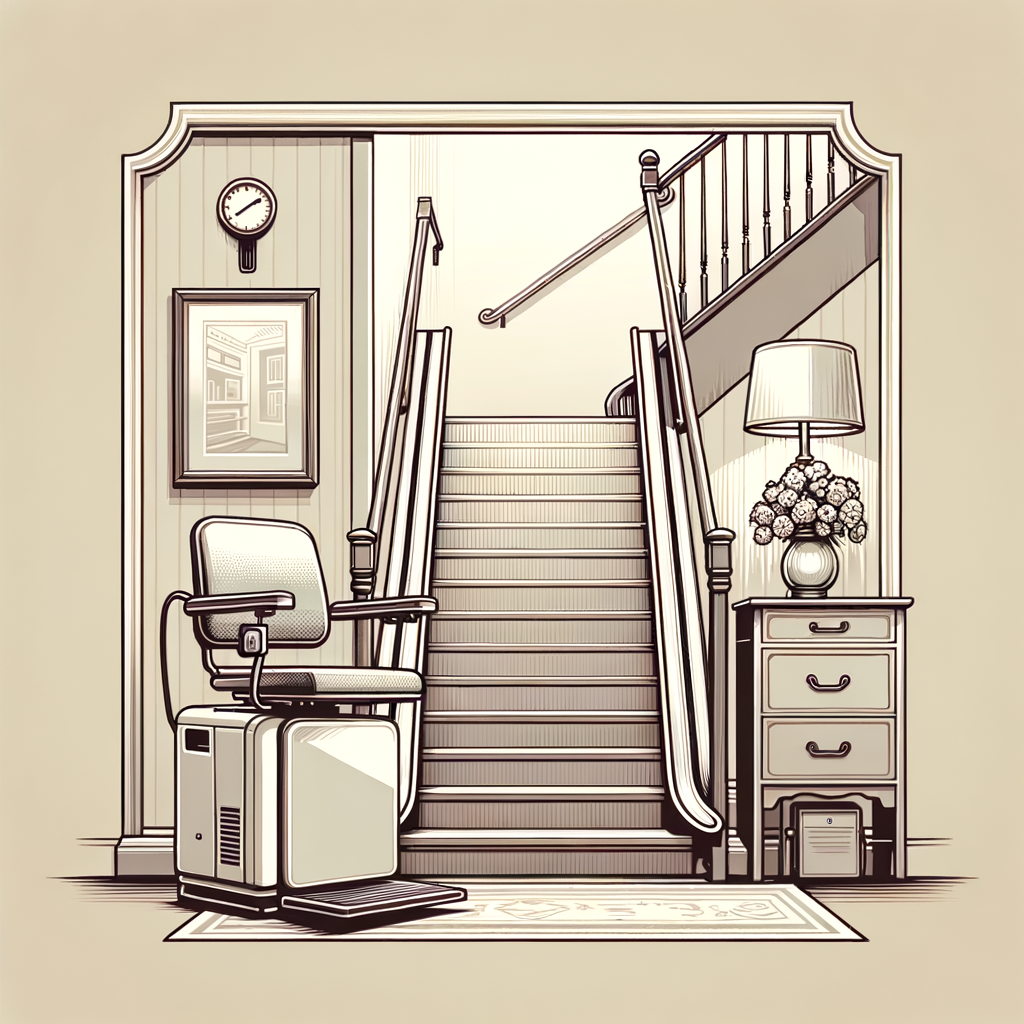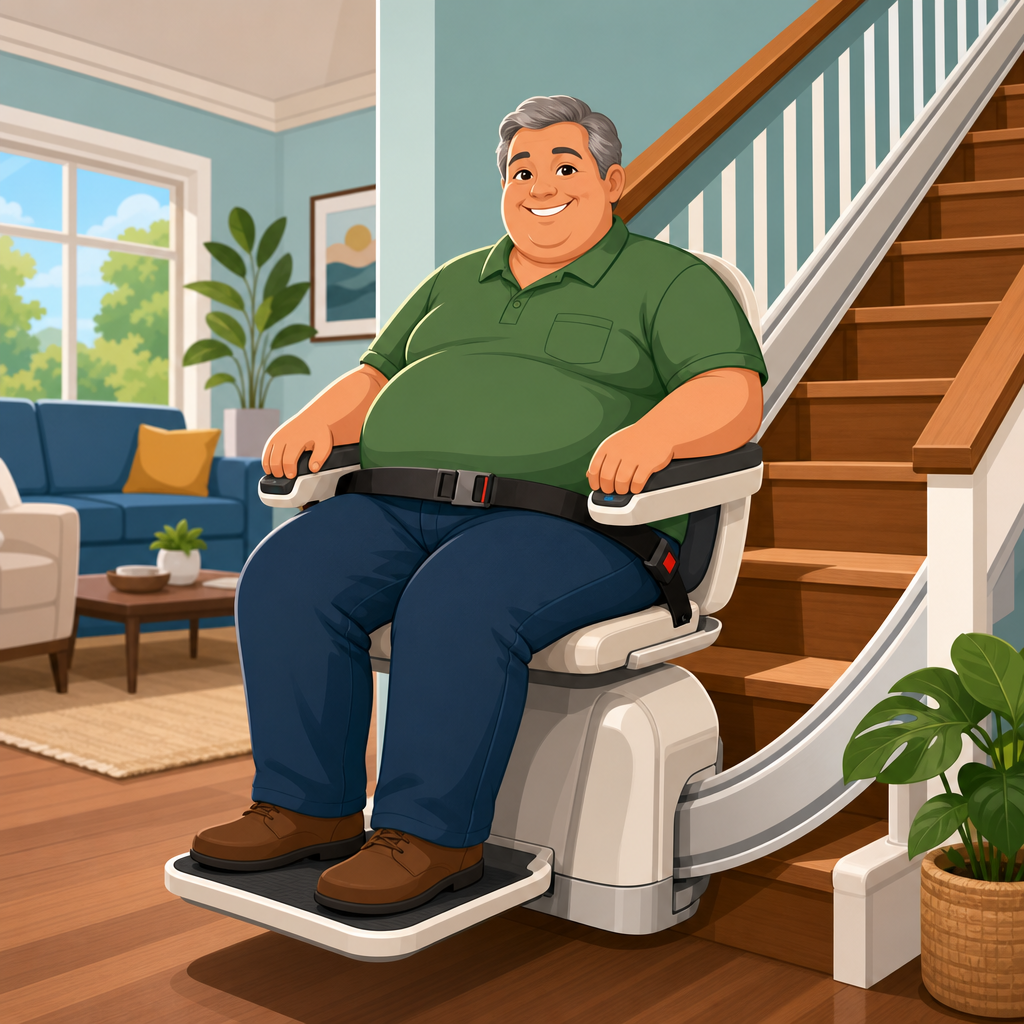
High-weight capacity chair lifts are stairlifts engineered to carry larger users safely, comfortably, and repeatedly on residential staircases that may not suit standard models. In the chair lift industry, these units are usually called heavy-duty lifts, high-capacity stairlifts, or bariatric stairlifts, and they are built around reinforced rails, wider seats, stronger drivetrains, and higher-rated gear systems. Most standard chair lifts support roughly 250 to 350 pounds, while heavy-duty models often start around 400 pounds and can reach 600 pounds depending on the manufacturer, rail design, seat configuration, and staircase layout. That difference is not a minor upgrade. It changes installation requirements, user fit, electrical load expectations, turning radius, and long-term reliability.
I have worked with homeowners comparing these systems after a fall, a hospitalization, or a failed standard lift installation, and the same questions always come up. Will it fit the stairs? Is the weight rating real or conditional? Does a bigger chair mean less room for everyone else? Can an older home handle it? These are practical questions because a high-weight capacity chair lift is not just a mobility product. It is a safety system that must match the user, the staircase, and the home at the same time. If any of those variables are ignored, the result is poor comfort, difficult transfers, or a lift that technically operates but does not truly solve the mobility problem.
This heavy-duty lifts hub explains what makes these models different, who needs them, how to evaluate specifications, what installation limits matter most, and where buyers commonly make mistakes. If you are researching chair lift types and designs, this is the starting point for understanding the heavy-duty category in plain terms. The goal is simple: help you identify the right high-weight capacity chair lift based on measurable factors rather than marketing claims.
What defines a heavy-duty chair lift
A heavy-duty chair lift is defined first by its safe working load, but capacity alone is not enough. A true high-weight capacity chair lift also includes structural and ergonomic changes that support larger body sizes during boarding, riding, and exiting. That usually means a wider seat pan, increased seat-to-footrest spacing, stronger armrests, a more stable carriage, and a reinforced rail or mounting system. Manufacturers also adjust the transmission, motor torque curve, braking system, and overspeed governor so the unit can move a higher load smoothly without excessive wear.
In practice, the best way to evaluate a model is to look beyond the headline rating. Ask whether the published capacity applies to straight rails only, whether it changes on a hinged rail or outdoor setup, and whether any seat options reduce the maximum supported weight. Reputable brands such as Bruno, Harmar, and Handicare publish detailed product specifications and installation criteria because heavy-duty lifts have tighter tolerances than standard units. A 600-pound rating on paper is useful only if the staircase width, landing depth, and transfer space support safe use in the real home.
Who should consider high-weight capacity chair lifts
These lifts are designed for more than one user group. The obvious fit is a person whose body weight exceeds the rating of a standard stairlift, but that is only the beginning. Many buyers need a heavy-duty model because of body shape, shoulder width, hip width, limited trunk stability, or difficulty standing from a narrow chair. Someone may weigh 280 pounds and still need a larger seat and stronger frame because a standard lift feels cramped, unstable, or hard to transfer onto. The correct chair should support the whole body, not force the user into a perched position.
High-weight capacity chair lifts are also common in multigenerational homes where several users share one system. I have seen families choose a heavy-duty unit not because one person exceeds 350 pounds, but because two users with different mobility needs require extra seat width, stronger arm support, and a more forgiving transfer surface. In rehabilitation settings, larger models may better accommodate braces, edema, or changing physical condition after surgery. For many households, the decision is about preserving safe access over time instead of buying the smallest model that works today.
Key specifications that matter most
When comparing heavy-duty lifts, five specifications determine whether a model will work: weight capacity, seat width, staircase width requirement, power system, and travel configuration. Capacity is the starting point, but dimensions often decide the purchase. Many heavy-duty units require at least 36 inches of clear staircase width, and some need more depending on seat style and rail placement. If the staircase narrows near a wall projection, banister, or landing turn, that local restriction matters more than the widest section.
Battery-powered systems are generally preferred because they continue operating during a power outage and charge at designated points or continuously along the rail. Heavy-duty battery systems must be sized correctly; otherwise, frequent trips under high load can shorten battery life. Gear rack design, motor wattage, and carriage duty cycle also matter. A unit in a single-user home may perform very differently from the same model in a busy household with repeated daily travel. Always ask for the tested incline range, start-stop behavior under maximum load, and whether the manufacturer limits speed or travel length at higher capacities.
| Specification | Typical Standard Lift | Typical Heavy-Duty Lift | Why It Matters |
|---|---|---|---|
| Weight capacity | 250 to 350 lbs | 400 to 600 lbs | Determines basic user compatibility and safety margin |
| Seat width | Narrow to medium | Wider, more supportive | Improves comfort, posture, and transfer stability |
| Minimum stair width | Usually lower | Often 36 in or more | Decides whether installation is physically possible |
| Rail and carriage | Standard reinforcement | Heavier structural design | Supports load without excess flex or wear |
| Intended usage | Light to moderate | Moderate to heavy | Affects durability in daily family use |
Staircase and home requirements
The most common installation issue is insufficient staircase width. Heavy-duty lifts take more lateral space because the seat, footrest, and carriage are larger, and the user’s body occupies more room while riding. A staircase may technically measure 36 inches and still fail if the wall has trim, the handrail projects inward, or a door opens into the travel path. Installers should measure tread depth, riser height, nose projection, bottom landing clearance, top overrun needs, and any obstructions along the rail line. Precision matters because heavy-duty lifts leave less room for error.
Landing space is equally important. Larger users often need a level, open transfer area rather than a tight top step or narrow hallway. Powered swivel seats, folding rails, and track overruns can improve safety, but each feature adds mechanical complexity and may affect the maximum capacity. In older homes, the stairs themselves usually do not need structural modification because most stairlifts mount to the treads, not the wall. Still, a reputable dealer should inspect the condition of the staircase, anchoring points, and clearance zones before quoting a high-weight capacity chair lift.
Straight versus curved heavy-duty lifts
Most high-weight capacity chair lifts are straight-rail models because straight runs are simpler to engineer at higher load ratings. Straight rails use a single consistent incline, fewer custom bends, and a more predictable load path. That makes them less expensive, faster to install, and easier to service. If your staircase is a single uninterrupted run, a straight heavy-duty lift will usually offer the best value and the widest model selection.
Curved heavy-duty lifts are available in some markets, but they are more specialized. A curved rail must account for turns, intermediate landings, and changing forces through each bend, all while maintaining seat stability and rider clearance. That raises manufacturing cost and narrows the number of eligible homes. In real projects, I often advise clients to consider whether a stair reconfiguration, platform lift, or first-floor living conversion might be more practical than forcing a bariatric curved stairlift into a complex staircase. The right solution is the one that remains safe and serviceable years after installation.
Comfort, transfers, and user fit
For heavy-duty lifts, comfort is a safety factor, not a luxury feature. A chair that is too narrow, too shallow, or too low increases the chance of an awkward transfer and makes the ride feel unstable. Look for a seat height that matches the user’s standing and sitting ability, armrests that support weight during transfer, and a footrest large enough to keep both feet positioned securely. Seat belt style matters as well. Some users do better with a retractable belt, while others need a more robust harness arrangement recommended by a clinician or dealer familiar with complex mobility needs.
Transfer quality also depends on approach angles at the top and bottom landings. A powered swivel seat can reduce twisting, but only if there is enough clearance to rotate and stand safely. Larger users may need extra room for a walker, cane, or caregiver assistance. This is why in-home assessments are indispensable. Product brochures cannot tell you whether knees will hit a newel post or whether the rider can reach the arm controls comfortably. The best high-weight capacity chair lift is the one that supports a calm, repeatable transfer every day.
Cost, maintenance, and long-term ownership
Heavy-duty lifts cost more than standard stairlifts because every major component is larger or more robust. A straight high-capacity model typically costs more upfront than a standard straight lift, and custom curved versions can rise sharply due to rail fabrication and limited product availability. Buyers should expect pricing to reflect installation complexity, powered options, warranty length, and dealer service coverage. A cheap quote is a warning sign if it skips measurement detail, excludes essential features, or comes from a dealer without local technicians.
Maintenance is not optional. High-load use increases wear on batteries, seat hinges, carriage rollers, and drive components, especially in homes where the lift runs many times a day. Follow the manufacturer’s maintenance schedule, keep the rail clean, and replace batteries proactively when performance drops. Ask who performs repairs, what parts are stocked locally, and how emergency service is handled. Brands with established dealer networks usually provide better long-term support than off-brand imports. Over the life of the unit, reliability and service response matter as much as the initial purchase price.
Common mistakes buyers should avoid
The biggest mistake is choosing by weight rating alone. Capacity numbers are easy to compare, but they do not address fit, transfer safety, staircase geometry, or future needs. Another common error is assuming all heavy-duty lifts are interchangeable. They are not. Two models with the same stated capacity can differ significantly in seat dimensions, footrest stability, charging method, and required stair width. Buyers also underestimate how important dealer experience is. Heavy-duty installations demand better measurements, more careful setup, and more honest guidance about what a home can accommodate.
A final mistake is delaying the purchase until the user can no longer manage the stairs at all. Earlier installation usually means better adaptation, fewer falls, and more independence. It also creates time to compare heavy-duty lifts thoughtfully instead of making a rushed decision after an injury. Start with a professional in-home assessment, ask for written specifications, and compare models based on actual fit in the space. If you are building out research across chair lift types and designs, use this hub to narrow the heavy-duty category, then move into model-specific, straight-rail, curved, and installation-focused guides before buying.
High-weight capacity chair lifts solve a specific mobility challenge: helping larger users travel stairs safely with equipment designed for their size, strength, and transfer needs. The essential points are straightforward. First, heavy-duty lifts differ from standard chair lifts in more than capacity; they use reinforced structures, wider seating, and drivetrains engineered for higher loads. Second, staircase width and landing clearance are often the deciding factors, so an in-home assessment matters more than brochure claims. Third, user fit is critical. Seat dimensions, arm support, footrest size, and transfer space determine whether the lift is truly usable every day.
For most buyers, the main benefit is confidence. A properly matched heavy-duty lift reduces fall risk, preserves access to the whole home, and supports independence without forcing the user into an undersized chair. It can also delay or prevent disruptive moves, especially in households where upstairs bedrooms and bathrooms remain essential. The best results come from careful measurement, realistic expectations, and a dealer who understands high-capacity installations in detail. If you are comparing heavy-duty lifts now, schedule an in-home evaluation, gather written specifications, and use those details to choose the chair lift that fits both the user and the staircase.
Frequently Asked Questions
What is a high-weight capacity chair lift, and how is it different from a standard stairlift?
A high-weight capacity chair lift is a stairlift specifically engineered to safely transport users who need more support than a standard residential model typically provides. In the industry, these units are often referred to as heavy-duty stairlifts, high-capacity stairlifts, or bariatric stairlifts. While many standard chair lifts are rated for about 250 to 350 pounds, high-capacity models are designed for higher weight limits and repeated daily use under greater loads.
The difference is not just the published weight rating. Heavy-duty lifts are usually built with reinforced rails, larger or more stable seat assemblies, stronger drivetrains, upgraded transmission components, and higher-rated gear systems. They often include wider seats, higher seat backs, sturdier armrests, and more generous footrests to improve comfort and security. These features help distribute weight more effectively and reduce strain on the unit over time.
Another key difference is usability. A high-capacity stairlift is meant to give larger users a safer, more comfortable ride without making the lift feel cramped or unstable. In practical terms, that means the unit is designed to handle both the user’s weight and the physical realities that often come with a larger body frame, such as needing more seat width, easier transfers on and off the chair, and more confidence during travel on the stairs.
How much weight can a heavy-duty stairlift hold?
Weight capacity varies by manufacturer and model, but heavy-duty stairlifts are designed to exceed the limits of standard residential lifts. While standard units commonly support around 250 to 350 pounds, high-weight capacity models are built for users who need a higher rated system. Depending on the specific design, some heavy-duty lifts may support 400 pounds, 500 pounds, or more.
It is important to understand that the listed weight capacity is only one part of the decision. The user’s height, body shape, seated position, and transfer needs all matter. For example, a lift may technically support a certain weight, but if the seat width, arm spacing, or footrest size do not fit the user comfortably, the lift may not be the right solution. That is why reputable providers evaluate more than just the number on a specification sheet.
Homeowners should also avoid assuming that “bigger is always better” without a proper assessment. The right lift must match the user, the staircase, and the structural and clearance limitations of the home. A qualified stairlift dealer can confirm the actual safe operating range of the product, explain any minimum staircase width requirements, and recommend a model that provides both capacity and comfort for long-term use.
Can a high-capacity chair lift be installed on any staircase?
Not every staircase is a fit for a high-capacity chair lift, and this is one of the most important things to know before shopping. Heavy-duty stairlifts often require more space than standard models because they typically have wider seats, larger frames, and reinforced rail systems. As a result, the staircase must have adequate width, landing space, and clearance for safe travel and safe entry and exit.
Straight staircases are often easier to accommodate than curved or multi-landing stairs, but the real answer depends on the home’s specific layout. Installers will usually measure the stair width, tread depth, angle, headroom, and the size of the top and bottom landings. They may also look at nearby doorways, handrails, walls, and any obstructions that could affect parking position or access to the seat. Even if a staircase can physically accept a rail, the installation still has to leave the home safe and usable for others walking on the stairs.
In some cases, a heavy-duty stairlift may not be appropriate if the staircase is too narrow or if the required clearances cannot be met. That does not always mean there are no options, but it does mean professional evaluation is essential. A knowledgeable dealer can tell you whether a high-capacity stairlift is feasible, whether a different lift style is better, or whether another accessibility solution should be considered.
What features should you look for in a bariatric or heavy-duty stairlift?
The most important feature is a verified weight capacity that fits the user’s needs with an appropriate safety margin, but that should be only the starting point. Comfort and safe fit are equally critical. Look for a wider seat, strong armrests, a supportive backrest, a stable footrest, and controls that are easy to operate. Swivel seating at the top landing can also be especially valuable because it allows for safer transfers on and off the lift.
From a mechanical standpoint, pay close attention to the rail design, drive system, and overall build quality. High-capacity units should be specifically engineered for heavier use, not simply marketed as upgraded versions of standard models. Reinforced rails, stronger motors or drivetrains, and higher-rated gear systems all contribute to better performance and durability. Safety sensors, seat belts, battery backup, smooth start-and-stop function, and reliable call/send controls are also key features to ask about.
It is also wise to consider the user’s daily routine and mobility level. For some people, ease of transfer is the deciding factor. For others, the ability to fold the unit when not in use, park it out of the way, or operate it independently matters most. A quality stairlift assessment should match the lift’s features to the user’s body size, strength, balance, and household environment, rather than focusing only on the maximum weight rating.
Is a high-weight capacity stairlift safe for everyday residential use?
Yes, when the lift is properly selected, professionally installed, and used within its rated limits, a high-weight capacity stairlift can be a very safe and practical solution for daily residential use. These lifts are built specifically for repeated operation under heavier loads, which is why their design includes reinforced structural components, stronger drive mechanisms, and more supportive seating. When matched correctly to the user and the staircase, they can significantly reduce the risk of falls and make staircase travel far safer than climbing steps without assistance.
Safety, however, depends on more than the machine itself. Proper installation is essential because the rail, mounting points, and clearances all affect performance. The user should also be able to get on and off the lift safely at the landings, buckle the seat belt, position their feet correctly, and operate the controls confidently. Routine maintenance is another important part of long-term safety, especially for lifts used multiple times a day.
The best way to ensure dependable everyday use is to work with an experienced stairlift provider who understands high-capacity applications. A professional can confirm the lift is appropriate for the user’s size and mobility needs, verify that the staircase can support the installation requirements, and explain proper operation and service schedules. In short, a heavy-duty stairlift is designed for residential reliability, but its safety and performance depend on expert fitting, correct use, and ongoing care.