Stair lifts move people over one of the highest-risk areas in any home: the staircase. When I inspect older units or explain failures to families, the same concern comes up every time—what prevents the chair from speeding out of control if a motor, gearbox, or drive component fails? The answer is a layered safety system built around the overspeed governor and the brake. Together, these devices detect abnormal motion, stop unintended descent, and keep the rider secured even during mechanical faults. Understanding how stair lift overspeed governors and brakes protect riders is essential for owners, caregivers, technicians, and anyone comparing models for a safer home.
A stair lift overspeed governor is a mechanical or electromechanical device that monitors travel speed and triggers a stopping action if the chair exceeds a preset threshold. The brake is the mechanism that actually halts motion and holds the chair in place. In most modern stair lifts, these parts work alongside reduction gearing, motor braking, seat switches, footrest obstruction sensors, final limit switches, and battery-backed controls. No single part carries the whole safety burden. Good design uses redundancy, meaning one protective layer remains available if another component underperforms or fails.
This matters because stair lift failures are not all alike. A lift can stop because of a simple charging issue, a dirty track, or a failed hinge switch. Those faults are inconvenient but usually safe. The more serious category involves unintended movement, excessive speed, or loss of control on a descent. Safety standards, including ASME A18.1 in North America and related conformity requirements in Europe, focus heavily on preventing those events. Manufacturers such as Bruno, Harmar, Handicare, Acorn, and Stannah build their systems differently, but the safety objective is the same: detect dangerous motion early, stop it quickly, and keep the passenger restrained until normal service is restored.
As the hub page for safety features explained, this article connects the core concepts behind overspeed protection, braking, fault detection, testing, and maintenance. If you understand what these parts do, you can ask better questions during installation, recognize warning signs sooner, and avoid the common mistake of assuming a stair lift is safe simply because it still runs. A chair that moves is not necessarily a chair that can stop safely under fault conditions. Reliable rider protection depends on mechanical integrity, correct adjustment, and regular inspection of every safety-critical component.
What an Overspeed Governor Does
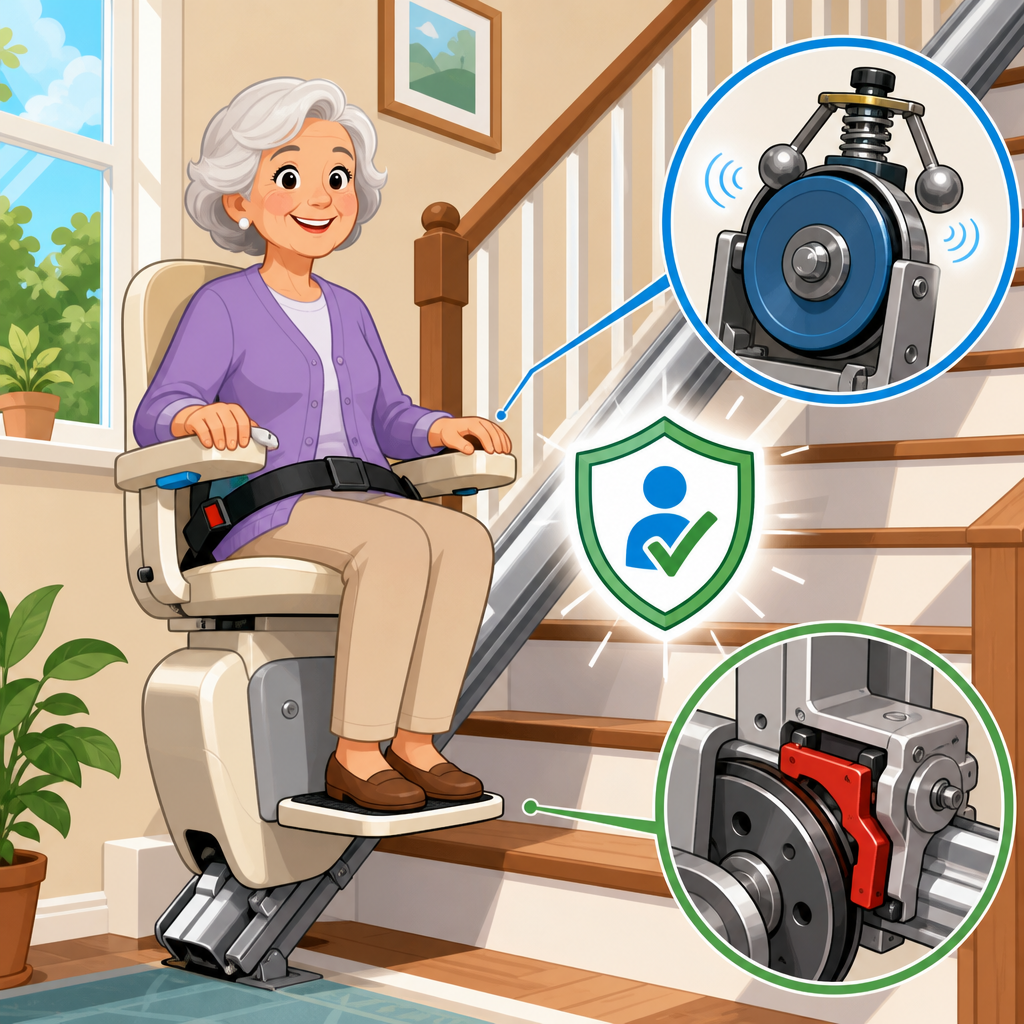
An overspeed governor is the dedicated safeguard against excessive travel speed, especially during descent. In plain terms, it watches how fast the stair lift is moving and reacts when that speed rises above a defined safe limit. On many units, the governor is purely mechanical, using rotating elements, spring tension, and centrifugal force. As speed increases, weighted parts move outward. Once they cross the calibrated threshold, they engage a trigger that activates a braking or locking mechanism. Because this action does not depend on software decisions alone, it remains dependable even when a control board fault is part of the problem.
The governor exists because gravity can amplify a failure. Stair lifts are designed with high-ratio gear reduction, which normally resists free movement. But if a gearbox suffers catastrophic wear, a drive pinion loses proper engagement, or a transmission-related component breaks, the chair could descend faster than intended. The overspeed governor is there for that low-probability, high-consequence event. In field service, this is one of the most important distinctions between basic motion control and true rider protection: a motor controller regulates normal speed, while the governor stands by for abnormal speed.
Thresholds vary by manufacturer and lift type. Straight stair lifts, curved models, and heavier-duty units may use different trigger points because track geometry, payload ratings, and drive architecture differ. What matters is calibration. If the governor trips too late, stopping distance increases. If it trips too early, the lift may nuisance-stop under normal operating conditions. Proper factory setup and post-installation verification are therefore critical. Technicians should confirm operation according to the service manual rather than rely on assumptions based on another brand.
How Stair Lift Brakes Stop and Hold the Chair
The brake is the part riders depend on once a fault is detected. In most stair lifts, braking is fail-safe, meaning the brake is applied by spring force and released only when electrical power energizes it. That design matters because a power loss should not cause the chair to roll. When the user presses the travel control, the system energizes the drive and releases the brake in a controlled sequence. When the control is released, a limit is reached, or a fault is detected, the brake reapplies and holds the unit stationary on the rail.
Several braking methods may be present in the same machine. An electromechanical motor brake may stop shaft rotation during ordinary operation. A separate overspeed-actuated safety brake may clamp, lock, or otherwise arrest movement when abnormal speed is sensed. The reduction gearbox also contributes resistance, though it should never be treated as the only stopping device. In better designs, the service brake, transmission, and overspeed protection complement each other so that no single predictable failure creates uncontrolled movement.
From practical experience, one of the most overlooked points is holding capacity. A brake is not judged only by whether it stops the chair; it must also hold the rated load on the staircase angle specified by the manufacturer. Wear, contamination, or incorrect adjustment can reduce that margin. That is why technicians inspect brake air gaps, mounting integrity, wiring, and engagement response, not just ride quality. A smooth ride can hide a brake that is weakening.
How the Safety Chain Works in Real Use
Stair lift protection is best understood as a safety chain. The user starts from a parked, charged position. The seat must be locked, armrests and controls must be functional, and swivel interlocks must confirm the chair is in travel position. When movement begins, the controller manages acceleration while monitoring limit circuits, obstruction sensors, and travel commands. During motion, normal speed is governed by the motor and controller. If motion becomes abnormal, the overspeed governor detects the condition and forces a stop through the brake or dedicated safety gear.
That sequence explains why multiple devices can stop a lift for different reasons. A footrest edge switch may halt travel because it hits an object on the stairs. A final limit switch may prevent overrun at the top landing. A seat swivel switch may block travel until the seat faces forward. None of those is an overspeed event, but all are part of comprehensive rider protection. Homeowners often call any stoppage “the brake kicking in,” yet accurate diagnosis matters because the remedy for a sensor issue is very different from the remedy for a brake or governor fault.
| Safety component | Primary job | What problem it addresses |
|---|---|---|
| Overspeed governor | Detects excessive travel speed | Uncontrolled or abnormally fast descent |
| Electromechanical brake | Stops motion and holds position | Run-on movement, stopping, parking security |
| Gear reduction drive | Limits speed through mechanical ratio | Normal controlled travel under load |
| Final limit switches | Cut travel at end positions | Overtravel at top or bottom landing |
| Obstruction sensors | Stop on contact with an object | Footrest or carriage striking obstacles |
| Swivel and seat interlocks | Allow travel only in safe position | Riding with seat rotated or unsecured |
Common Failure Scenarios and What Protects the Rider
The most serious scenario is a drivetrain failure during descent. If the drive loses its ability to regulate speed, the overspeed governor should trip and engage the brake or safety gear before the chair can accelerate dangerously. Another scenario is electrical power interruption. Most residential stair lifts use batteries, so the chair can continue to a landing or stop safely even if household power is lost. The charger may be offline, but the lift does not instantly become uncontrolled because motion and braking are still designed around stored low-voltage power and fail-safe stopping.
A third scenario is brake wear or contamination. In that case, the chair may exhibit delayed stopping, slight drift, or fault codes before complete failure occurs. Better systems detect abnormal current draw, release timing, or travel inconsistencies and shut the unit down. A fourth scenario is sensor bypassing. I have seen lifts where someone taped a switch closed or defeated an interlock to “keep it working.” That turns a manageable service issue into a genuine safety risk because the machine can no longer verify safe operating conditions. Safety devices should never be bypassed outside controlled manufacturer-approved test procedures.
There are also limitations worth stating clearly. Overspeed governors and brakes do not prevent every incident. They cannot compensate for a loose seatbelt that was never fastened, a user leaning far outside the chair, severe rail installation errors, or use beyond rated capacity. Protection depends on correct installation, proper rider behavior, and maintenance that keeps safety-critical tolerances within specification.
Maintenance, Testing, and Inspection Practices That Matter
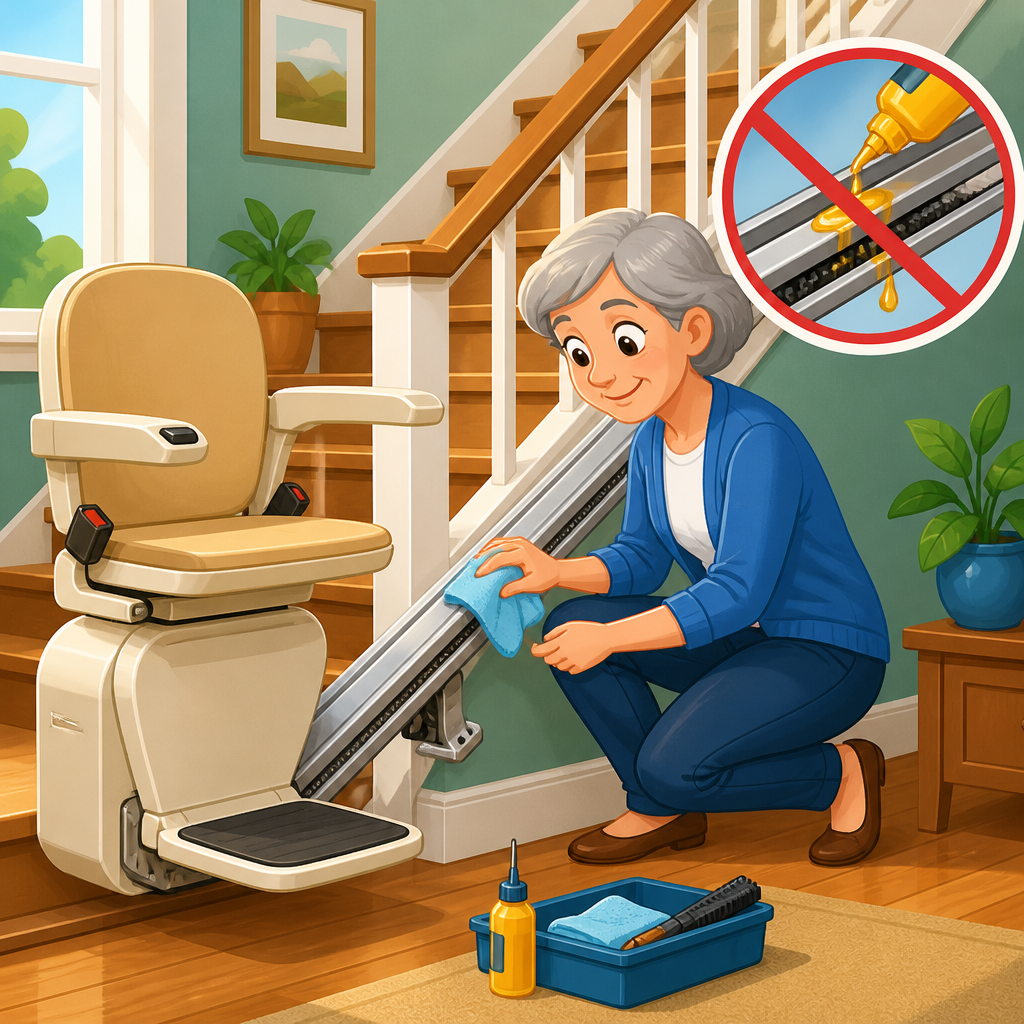
If this page is the hub for safety features explained, maintenance is where those features prove their value. During professional service, the technician should inspect the rail, carriage, drive system, charge points, batteries, wiring harnesses, seat interlocks, limit switches, and diagnostic logs where available. The brake should be checked for secure mounting, correct operation, and signs of overheating or contamination. The governor should be inspected according to the manufacturer’s procedure, with attention to linkage condition, free movement, and evidence of tampering or prior trip events.
Testing should follow the exact service literature for the make and model. That point cannot be overstated. A procedure valid for one stair lift may be unsafe for another because curved lifts, rack-and-pinion drives, cable systems, and proprietary carriage designs behave differently. Reputable technicians use manufacturer manuals, calibrated tools, and test loads when required. They also document findings, because trend data matters. A brake that is passing today but showing progressive wear is not the same as a brake in stable condition.
For owners and caregivers, the practical signs of trouble are simpler: unusual noise on descent, a jerky stop, drift after stopping, inconsistent speed, repeated fault beeps, failure to charge reliably, or visible damage near the carriage or rail. Any of those should prompt service before continued use. The safest habit is to treat changes in stopping behavior as urgent. Riders feel speed and stopping long before they can identify the underlying part, and that feedback is often the first clue that a safety-critical component needs attention.
How to Evaluate Safety When Buying or Servicing a Stair Lift
When comparing stair lifts, ask direct questions about overspeed protection, brake design, compliance standards, and service support. A quality provider should explain whether the unit uses a fail-safe brake, how overspeed is detected, what diagnostic features are available, and how periodic inspections are performed. They should also provide the rated capacity, staircase limits, battery type, and expected maintenance intervals in writing. If a seller focuses only on upholstery, price, or speed of installation, that is not enough for an informed safety decision.
It also helps to ask who performs repairs and whether genuine parts are stocked locally. Safety devices are not universal components that can be improvised easily. Brake coils, governor assemblies, and control boards often have model-specific settings. Fast, competent service reduces the temptation to bypass faults and keeps the original safety design intact. In my experience, the best outcomes come from installations where the dealer measures carefully, trains the user at handover, and schedules preventive maintenance rather than waiting for breakdowns.
Overspeed governors and brakes protect riders by doing one job exceptionally well: preventing a loss of control from becoming a fall. The governor detects dangerous speed. The brake stops and holds the chair. Around them sits a wider network of interlocks, sensors, limits, batteries, and mechanical design choices that make stair lift travel predictable and secure. For homeowners, the takeaway is straightforward: choose a lift with documented safety systems, use it exactly as instructed, and never ignore changes in speed, stopping, or fault behavior.
As the central guide to safety features explained within maintenance, troubleshooting, and safety, this article gives you the framework to understand every related topic—brake faults, sensor trips, annual service, battery issues, and safe operation. A stair lift is only as safe as its last proper inspection and its next correct repair. If you own, manage, or plan to buy one, schedule a professional safety check, review the manufacturer’s maintenance recommendations, and make overspeed and brake performance part of every service conversation.
Frequently Asked Questions
What is an overspeed governor on a stair lift, and what does it actually do?
An overspeed governor is a dedicated safety device designed to detect when a stair lift is moving faster than it should, especially during descent. Under normal operation, the chair travels at a controlled, low speed set by the drive system. If a major component such as the motor, gearbox, drive pinion, or transmission linkage fails in a way that could allow the chair to accelerate unexpectedly, the overspeed governor acts as an independent monitor. It is there specifically to recognize abnormal motion and trigger a stopping response before the lift can continue into a dangerous runaway condition.
In practical terms, the governor is part of a layered protection strategy rather than the only thing keeping the chair safe. Stair lifts are already built to move slowly and under controlled power, but manufacturers also assume that mechanical parts can wear, loosen, or break over time. The governor exists for that exact reason. It monitors the relationship between the chair and the rail or drive system and, when a preset speed threshold is exceeded, it activates a safety mechanism that either engages a brake directly or causes the lift to lock against the rail. That means the rider is not relying on just the motor to behave correctly. There is a second line of defense specifically designed for fault conditions.
This matters most on staircases because gravity naturally works against the system during descent. If a drive component were to fail on an incline, the chair could otherwise attempt to move downward faster than intended. The overspeed governor helps prevent that by stepping in automatically, without requiring any action from the rider. In a well-maintained stair lift, it is one of the key reasons a sudden uncontrolled drop is extremely unlikely.
How does the stair lift brake work with the overspeed governor to stop unintended movement?
The brake and overspeed governor are closely related, but they do different jobs. The overspeed governor detects the unsafe condition, and the brake provides the stopping force. Think of the governor as the sensor and trigger, and the brake as the device that actually holds or stops the chair. In many stair lift designs, the brake is spring-applied and electrically released, which is an important safety feature. That means the brake is naturally in the locked position unless the system actively energizes it to allow movement. If power is lost or a serious fault occurs, the brake defaults back to a secure state rather than letting the chair roll freely.
When the lift is running normally, the motor and transmission move the chair at a controlled pace while the brake is released under command from the control system. If the overspeed governor senses that the chair is moving beyond its safe speed threshold, it can command an immediate stop by engaging the brake or by activating a separate mechanical arresting mechanism, depending on the design. The objective is the same: interrupt motion quickly and keep the chair from continuing down the rail.
This coordinated response is what makes stair lift safety systems so effective. A brake alone is valuable, but a brake is far more protective when paired with an independent device that is specifically watching for abnormal speed. That way, even if the original drive control has failed, the system still has another means of recognizing danger and stopping the unit. For riders and families, this is the important takeaway: the chair is not depending on a single part or a single command to remain safe on the staircase.
Can a stair lift still be safe if the motor, gearbox, or another drive component fails?
Yes, that is exactly the type of situation these safety systems are designed to address. Stair lifts are engineered with the understanding that components can eventually wear or malfunction, particularly in older units that have seen years of use. A motor can stop behaving normally, a gearbox can develop internal failure, and mechanical drive parts can loosen, wear down, or break. The reason overspeed governors and brakes are so important is that they provide protection even when the primary drive system is no longer functioning as intended.
If a drive-related failure creates the possibility of unintended descent, the overspeed governor is meant to detect that abnormal increase in speed and trigger a stop. At the same time, the brake is designed to prevent free movement when the system is not properly powered or controlled. In many stair lifts, the brake is fail-safe by design, meaning it moves into a holding position automatically if electrical control is interrupted. That feature is especially important because it does not require a software command or rider input at the moment of failure.
That said, “safe” depends on proper maintenance and the overall condition of the unit. Safety devices are highly reliable when they are kept in working order, but older lifts still need regular inspection, cleaning, adjustment, and testing. Worn rollers, contaminated tracks, weak batteries, neglected service intervals, or unauthorized repairs can all affect how the system performs. So while the built-in safety architecture is strong, it should never be used as a reason to delay maintenance. The safest stair lift is one with intact protective systems and a documented service history confirming they have been inspected and tested correctly.
What signs might indicate a problem with a stair lift’s brake or overspeed protection system?
Most brake or overspeed governor problems do not begin with a dramatic event. More often, there are warning signs that something is changing in the system and the lift should be inspected before it is used again. One of the most common red flags is unusual movement at start-up or stop. If the chair seems to jerk, hesitate, drift slightly, or stop more abruptly than normal, that can point to issues with braking performance, drive engagement, or control timing. A stair lift should feel predictable and steady. Anything that suggests inconsistent restraint or motion deserves attention.
Another sign is unusual noise. Grinding, clicking, clunking, squealing, or repeated mechanical chatter during travel can indicate wear in the drive train, brake assembly, or related components. Some units may also display fault codes, beep unexpectedly, or refuse to run if a safety circuit detects something out of range. In other cases, families report that the lift “feels different” on the way down than it used to. That kind of description should not be dismissed. Changes in descent behavior are especially important because that is where overspeed protection matters most.
You should also take any service history seriously if the unit is older or has been sitting unused for long periods. Rust, dust buildup, dried lubrication, weak batteries, or prior nonstandard repairs can all interfere with normal safety operation. If the chair ever appears to move after the control is released, fails to hold position, or gives any indication of sliding, discontinue use immediately and have it examined by a qualified stair lift technician. Riders should never test a suspected brake or overspeed issue themselves on the staircase. These systems need professional evaluation, not trial-and-error troubleshooting during use.
How often should overspeed governors and brakes be inspected or tested on a stair lift?
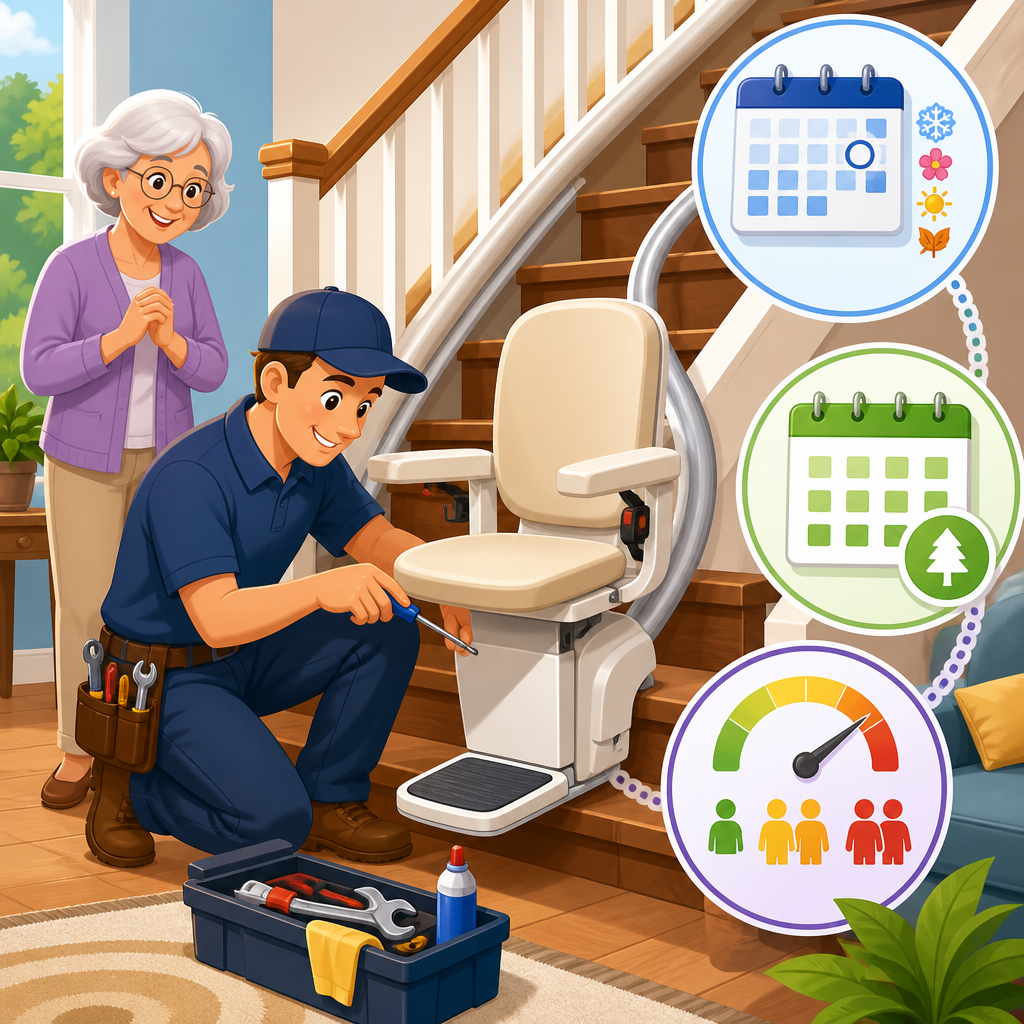
They should be inspected as part of routine professional maintenance at the intervals recommended by the manufacturer, and more often if the lift is older, heavily used, or installed in a demanding environment. For many households, an annual service visit is a practical baseline, but frequency can vary depending on the model, age, usage level, and local service guidance. The key point is that overspeed governors and brakes are not “fit and forget” components. They are critical safety devices and should be treated that way.
During a proper inspection, a technician will typically evaluate overall travel behavior, stopping performance, brake engagement, drive condition, rail condition, charging function, batteries, safety edges, seat interlocks, and any fault history the unit may store. Where manufacturer procedures allow, they may also carry out specific tests related to brake holding or overspeed response. These tests should be done according to the equipment’s service instructions, because safety systems are designed differently from one stair lift brand or model to another. Improvised testing is never a substitute for formal maintenance.
Homeowners and caregivers also play an important role between service visits. They should pay attention to changes in sound, feel, speed, or reliability, and report them promptly rather than waiting for the next scheduled appointment. A stair lift is moving someone through a high-risk area of the home, often someone with reduced mobility who depends on that equipment completely. For that reason, preventive inspection of the brake and overspeed protection system is not just a maintenance item; it is a core part of keeping the rider secure every time the chair travels up or down the stairs.