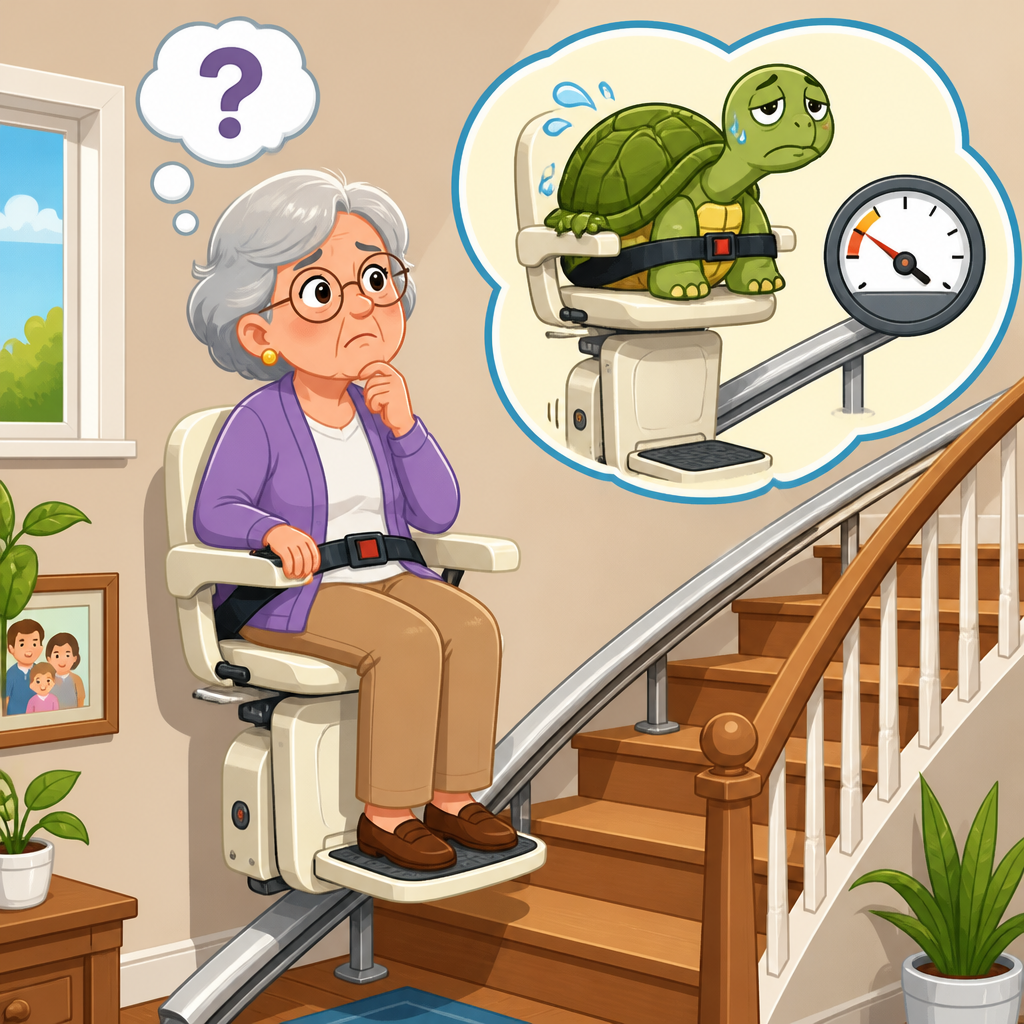
A stair lift that runs slowly under load is usually signaling a problem with power delivery, drivetrain resistance, adjustment, or worn components, and identifying the cause early prevents breakdowns, unsafe travel, and expensive repairs. In stair lift service work, I have found that owners often describe the issue the same way: the chair seems normal when empty, but once someone sits down it hesitates, creeps, or pauses on the rail. That pattern matters because load changes how every major system performs, from the batteries and charger to the motor, gearbox, carriage rollers, and safety circuits.
Under load means the lift is carrying a rider, and run slowly can describe reduced travel speed, delayed starts, intermittent movement, or a unit that labors audibly even if it still reaches the top. Most modern stair lifts use battery power delivered through a control board to a DC motor and gear reduction system. The batteries are recharged at parking points or through a continuous charging strip, depending on brand and rail design. When extra weight is added, weak batteries sag in voltage, worn gears show resistance, and alignment issues become much more obvious. That is why a stair lift can appear functional during a quick test yet still perform poorly in real use.
This matters for more than convenience. Stair lifts are mobility devices, and reduced speed under load can be the first warning sign before nuisance faults, mid-stair stoppages, or repeated service calls. It can also point to overdue maintenance that affects safety systems, seat swivels, footrest sensors, and charging reliability. The good news is that the most common causes are identifiable in a logical order. This guide explains the common issues and fixes, shows how technicians narrow down the fault, and serves as a hub for the broader maintenance, troubleshooting, and safety topics every stair lift owner should understand.
How a stair lift should behave under normal load
A correctly operating stair lift should move at a steady, deliberate speed whether the chair is empty or carrying a user within the rated capacity. Residential models are intentionally not fast; many travel around 15 to 20 feet per minute because controlled motion is safer on stairs. What should not happen is dramatic slowing, surging, chattering, or a need to “help” the chair by shifting weight or retrying the controls. In service visits, I treat rider-loaded performance as the real benchmark because unloaded tests can hide borderline batteries, weak charging, or friction in the carriage.
Manufacturers design these units with torque reserves so the motor and gearbox can handle normal body weight variations, carpet dust, and everyday use. If speed drops noticeably only when someone is seated, the system is operating too close to its limits. Typical clues include dim diagnostic indicators during travel, beeping after parking, reduced performance late in the day, or improvement after the lift has charged overnight. Those clues help separate electrical causes from mechanical drag. A lift that slows consistently in one section of the rail, for example, often suggests alignment, rack wear, or an obstruction rather than a battery issue.
Start with the owner’s manual and data plate. Weight capacity, charging method, and fault code meanings differ across brands such as Bruno, Harmar, Acorn, Stannah, Handicare, and AmeriGlide. The manual often lists status light patterns and parking requirements that immediately answer common questions. If your unit has onboard diagnostics, record the code before cycling power. That information is often more useful than a general description like “it got sluggish.”
Battery and charging problems are the most common cause
The most common reason a stair lift runs slowly under load is weak batteries or incomplete charging. Even when a stair lift plugs into a household outlet, most residential models ride on batteries, not direct house power. The charger maintains the batteries, and the batteries provide the current needed for the motor during travel. As sealed lead-acid batteries age, internal resistance rises. They may still show acceptable voltage at rest, but the moment a rider adds load, voltage drops sharply and the motor loses torque. That produces the classic symptom: normal or nearly normal empty travel, slow loaded travel, then eventual faulting.
Battery age matters. In many homes, stair lift batteries last about two to five years depending on use, charging consistency, temperature, and whether the unit is regularly left off the charge points. I have replaced many battery sets that looked fine on a simple meter reading but failed a loaded test. The proper check is not just open-circuit voltage; it is voltage under movement, charger output, and confirmation that the chair actually reaches and maintains its charging contacts at the park position.
Common charging failures include dirty charge contacts, misaligned charge strips, a failed charger, switched outlets that were accidentally turned off, tripped GFCI receptacles, and low household voltage. Owners are often surprised that a chair parked inches away from its true charging point may not charge at all. Over several days, the lift becomes sluggish under load before it stops completely. A technician will typically inspect contact wear, clean oxidation, verify charger LED status, measure output, and check battery condition with a load-aware test method.
| Symptom | Likely cause | Typical fix |
|---|---|---|
| Slow only with rider | Weak batteries | Replace battery pair and verify charger operation |
| Improves after long parking | Partial charging | Adjust parking position, clean contacts, test charger |
| Stops near one end of rail | Missed charge point | Realign charge cams or contacts |
| Beeping when parked | Not charging | Check outlet, breaker, GFCI, charger LEDs |
| Weak all day, every trip | Old batteries or bad charger | Load test batteries, confirm charger output |
If batteries are the issue, replacing only one is poor practice. Stair lifts generally use batteries as a matched set, and mixing old and new shortens service life and creates charging imbalance. It is also worth using manufacturer-approved specifications because amp-hour ratings, terminal styles, and charging profiles matter. After battery replacement, a competent technician should verify travel current and charging behavior rather than assuming the problem is solved.
Mechanical resistance in the rail, carriage, or drivetrain
If power checks out, the next major category is mechanical drag. A stair lift carriage rides on rollers or guides and engages a geared drive system that travels along the rail. Dirt buildup, dried lubricant where specified, damaged gear racks, worn bearings, flat-spotted rollers, and rail misalignment can all increase resistance. Under no load, the motor may still cope. Add a rider, and the extra friction shows up as slow movement, groaning, or vibration. This is especially common on units that have gone years without preventive service.
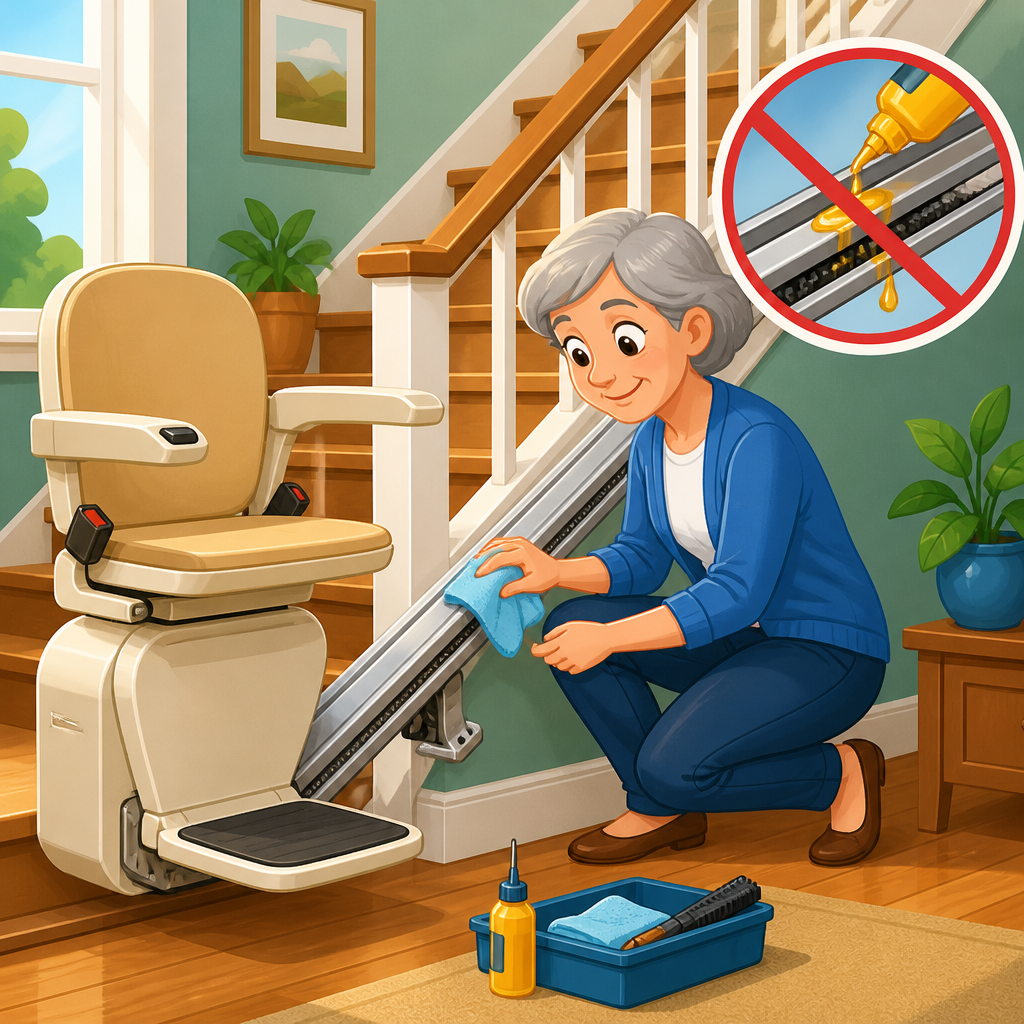
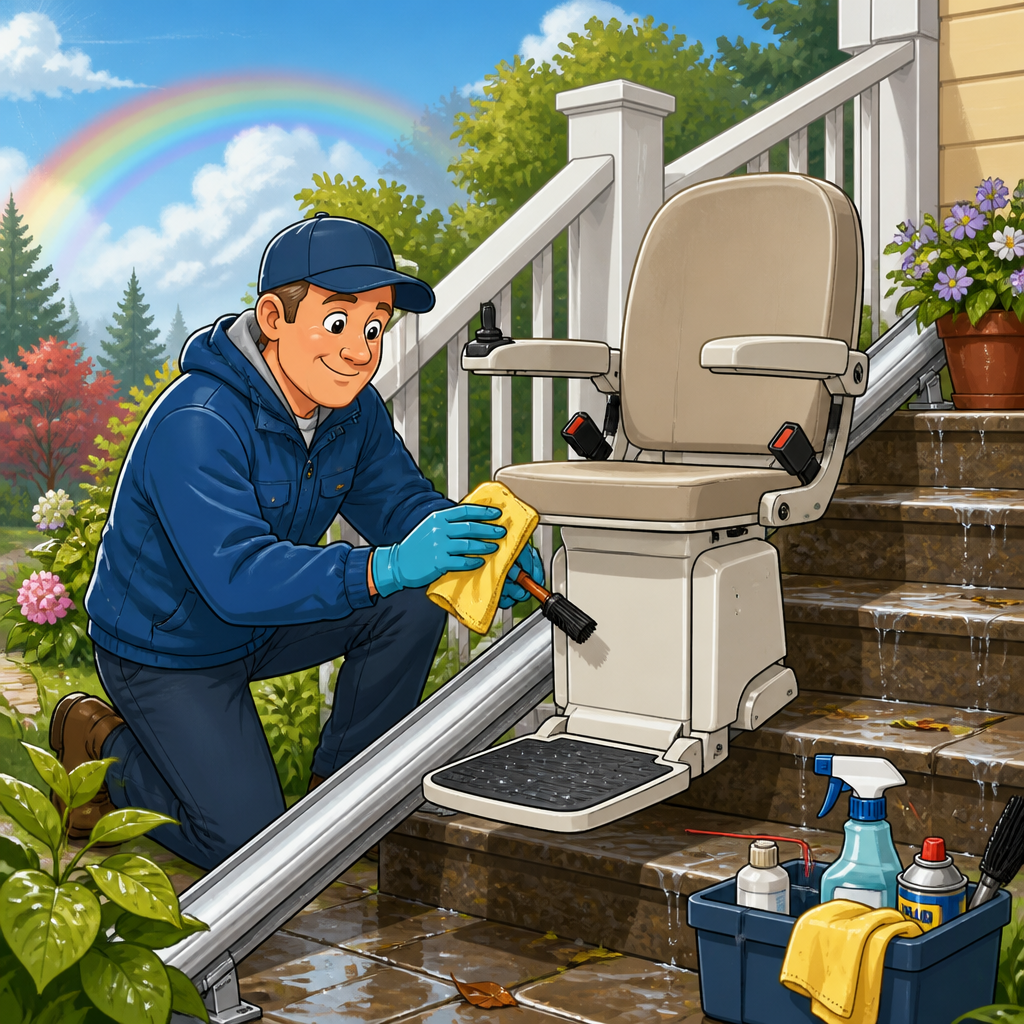
Not every stair lift requires the same lubrication approach, which is why random household grease is a mistake. Some manufacturers specify dry-running surfaces in certain areas and lubricant only on particular gear interfaces. I have seen over-lubricated rails collect dust and pet hair until the carriage drags badly. On outdoor stair lifts, corrosion is another frequent factor. Moisture can attack rack teeth, bearings, and contact surfaces, creating load-sensitive slowdown and noisy travel.
Mechanical resistance can also come from physical obstruction. A loose footrest edge, carpet transition strip, dropped toy, or bent overrun can create just enough drag to affect travel when occupied. If the slowdown occurs at the same spot on every ride, mark that location and inspect the rail, rack, and stair clearance there. Technicians often look for shiny wear patterns, metal filings, or uneven roller pressure that reveal where the carriage is binding. The fix may be as simple as cleaning debris or as involved as replacing worn rollers, adjusting the rail joints, or rebuilding a gearbox.
Motor, gearbox, and brake issues
Stair lift motors are built for high torque at low speed, usually through a DC motor paired with a gearbox. As motors age, brushes wear, commutators pit, and windings can overheat. Gearboxes can develop internal wear, hardened grease, or damaged reduction gears. Electromechanical brakes may drag if misadjusted or contaminated. Any of these problems can reduce available torque under load, especially on older or heavily used lifts. A common field clue is sound: batteries tend to cause weak, fading motion, while drivetrain problems often produce grinding, clicking, or a strained mechanical hum.
A dragging brake deserves special attention because it creates both slowdown and heat. Many stair lifts release the brake electrically when travel is commanded. If voltage to the brake coil is weak, or if the brake assembly is worn, the unit can partially release and then fight itself during motion. Similarly, a failing gearbox can pass an unloaded test yet bind when real torque is demanded. Technicians diagnose this by measuring current draw, listening for abnormal gear noise, checking temperature after short runs, and comparing actual speed against manufacturer expectations.
These are not do-it-yourself repairs for most owners. Opening a motor or brake assembly without the correct service data can compromise the safety of the lift. In practice, the reliable fix is usually component replacement or a factory-approved rebuild. If the unit is older and parts support is limited, that repair decision should be weighed against the age of batteries, the rail condition, and the availability of future service parts.
Weight capacity, seat setup, and user-related factors
Sometimes the stair lift is not failing; it is being asked to do more than it was designed to do. Every unit has a rated capacity, commonly around 250 to 350 pounds on many residential straight lifts, with heavy-duty models going higher. When user weight approaches the limit, any small weakness in batteries or mechanics becomes far more noticeable. In homes with multiple users, one person may report sluggish travel while another does not. That does not mean the concern is imaginary. It means the system margin is thinner under the heavier load.
Seat position also matters. A loose seat base, poorly latched swivel, or folding arms that do not lock correctly can interfere with normal operation on some models. If the seat is not fully secured, safety interlocks may partially inhibit motion or cause repeated stops that feel like slow travel. Footrest safety edges can create similar symptoms if they are sticky or misaligned. I always check these simple items early because they are easy to miss and often blamed on the motor.
If the user’s needs have changed, it may be time to reassess the lift specification rather than repeatedly repairing a standard-duty unit that is always near its limit. Heavy-duty stair lifts use stronger drive components, larger seats, and rails designed for higher loads. Matching the equipment to the user is not an upsell; it is basic reliability planning.
Control boards, wiring, and safety circuit faults
Modern stair lifts rely on control boards, wiring harnesses, relays, limit switches, and safety circuits that monitor seat position, overspeed systems, footrest edges, final limits, and charging status. A fault in these circuits can mimic a power or motor problem. High-resistance wiring connections, failing relays, or heat-stressed circuit boards may pass enough current for light movement but not enough for normal loaded travel. Intermittent faults are particularly common on lifts exposed to temperature swings or repeated flexing of harnesses near the carriage.
In diagnostics, pattern recognition helps. If slowdown comes with random beeps, status code changes, or call/send controls behaving differently from the arm controls, suspect electrical control issues. If the lift slows after several trips and recovers when cool, a thermal problem on the board or in the motor circuit is possible. Service technicians use wiring diagrams, continuity checks, and live voltage readings during travel to pinpoint where voltage is being lost. Replacing parts by guesswork is expensive and often ineffective.
Because this article is a hub for common issues and fixes, it helps to think of troubleshooting in layers: confirm charging, test batteries under load, inspect rail and carriage condition, verify seat and footrest interlocks, review diagnostic codes, then assess motor and board performance. That order solves most cases efficiently and avoids replacing good components.
Best fixes, preventive maintenance, and when to call a professional
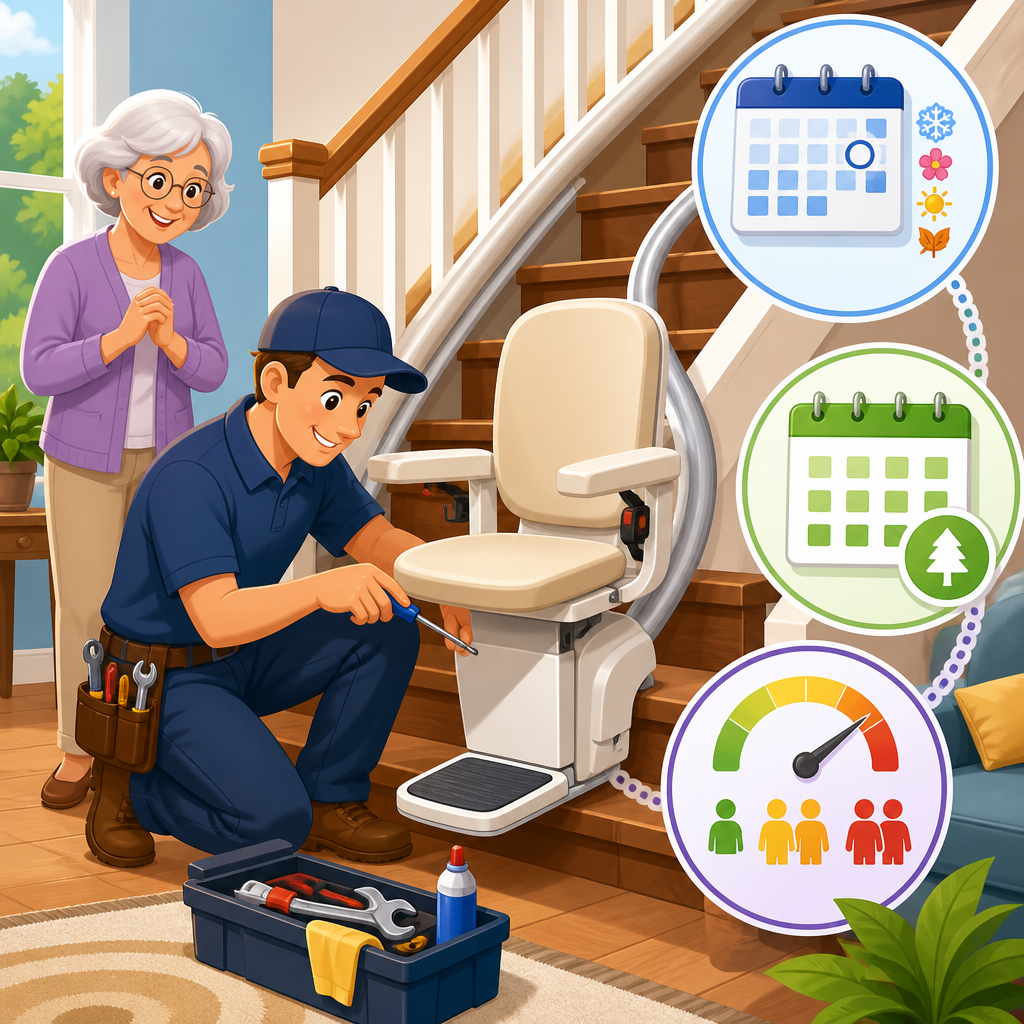
The right fix depends on the cause, but the most effective approach is disciplined maintenance rather than waiting for complete failure. Keep charge points clean, always park the chair where it charges, and listen for changes in sound or speed. Schedule preventive service at intervals recommended by the manufacturer or more often for high-use homes, outdoor units, or lifts serving heavier users. A proper service visit should include battery testing under load, charger verification, rail and rack inspection, carriage cleaning, roller and bearing assessment, safety edge checks, seat swivel confirmation, and a ride test with a realistic load.
Call a qualified stair lift technician promptly if the unit stops on the stairs, slows sharply with a rider, shows repeated fault codes, emits burning smells, trips breakers, or makes new grinding sounds. Mobility equipment is not the place for trial-and-error repairs with generic parts. Reputable providers follow manufacturer procedures, use approved batteries and components, and document voltage, current, and fault findings. If your lift is older, ask about parts availability and whether a major repair is cost-effective compared with replacement. That conversation is especially important for discontinued models where future downtime could leave a user without safe stair access.
A slow stair lift under load is usually fixable, and the symptom itself is useful because it narrows the fault to systems affected by rider demand. Most cases trace to weak batteries, poor charging, mechanical drag, or aging drivetrain parts, with control faults and interlocks close behind. Treat the slowdown as an early warning, not a minor annoyance. By checking the basics, following model-specific guidance, and arranging professional service before the lift fails completely, you protect reliability, rider safety, and peace of mind. If your chair has started creeping instead of cruising, schedule an inspection now and address the cause before the next trip becomes a shutdown.
Frequently Asked Questions
Why does my stair lift seem normal when empty but slow down once someone sits on it?
That symptom usually points to a problem that only shows up when the lift has to work harder. An empty chair puts very little demand on the motor, batteries, transmission, and drive system, so a weak component can still appear to function normally. Once a rider adds weight, the lift needs more torque and more stable power delivery. If the batteries are aging, the charger is not maintaining a full charge, the motor is worn, or the drivetrain has added resistance, the stair lift may hesitate, crawl, or pause under load.
In service situations, this “fine when empty, slow with a rider” pattern is one of the most useful clues because it narrows the issue to load-related performance. The most common causes include weak batteries, poor charging, dirty or high-resistance electrical connections, worn gears, a tired motor, excessive friction in the rollers or rail, and brake or gearbox drag. It can also happen when the unit is out of adjustment or overdue for maintenance. The key point is that the lift is warning you that one or more major systems are no longer handling normal operating demand properly. Catching it early often prevents a no-start condition, a complete stop on the rail, or more extensive damage to expensive components.
Are weak batteries the most common reason a stair lift runs slowly under load?
Yes, weak or failing batteries are among the most common reasons a stair lift slows down with a rider. Most modern stair lifts run on onboard batteries, even though the unit plugs into household power through a charger. The charger keeps the batteries topped off, and the batteries provide the actual power needed for travel. Over time, batteries lose their ability to deliver current under demand. They may still show enough voltage at rest to seem acceptable, but once weight is added and the motor draws harder, voltage can drop sharply and performance suffers.
This is why a stair lift can mislead owners: the chair may park correctly, beep normally, and even travel empty without obvious trouble, yet struggle badly under load. If the batteries are several years old, have gone through repeated deep discharges, or have been sitting off charge due to a parking or charger issue, they are prime suspects. A charger problem can create the same effect. If the lift is not consistently charging at the top or bottom stop, or if the charging contacts are dirty or misaligned, the batteries may never fully recover. The safest approach is to have both the batteries and charging system tested together, because replacing batteries without confirming charger output and contact condition can leave the root problem unresolved.
Can a stair lift run slowly under load because of mechanical resistance or worn parts?
Absolutely. A stair lift has to overcome gravity, rider weight, and the resistance created by its own moving parts. If anything in the drive path starts binding or wearing out, the strain becomes much more noticeable under load. Common examples include worn gear teeth, a tired gearbox, dry or damaged rollers, misalignment on the rail, excessive friction in the carriage, or a brake assembly that is not fully releasing. Any of these conditions can make the lift work harder than it should, which shows up as slow travel, hesitation, or intermittent stopping.
Mechanical resistance often builds gradually, so owners may not notice the change until the difference becomes obvious with a rider aboard. In many cases, people describe it as the lift “laboring” or “sounding different.” That description matters. Grinding, clicking, humming, or a strained motor sound can indicate the drive system is compensating for friction or wear. Left alone, that extra strain can accelerate battery failure, overheat the motor, and damage more expensive drivetrain components. This is why routine service is so important. Cleaning, lubrication where specified by the manufacturer, alignment checks, roller inspection, and gearbox evaluation can catch developing problems before they turn into a full breakdown.
Is it safe to keep using a stair lift that slows down or pauses when carrying someone?
No, it should not be considered normal or ignored. A stair lift that slows, creeps, or pauses under load is signaling that it is no longer performing as designed. Even if it still completes trips most of the time, the issue can worsen without much warning. What starts as a mild hesitation can become a stall on the staircase, repeated fault shutdowns, battery drain, or failure of related parts that are being overworked. For riders with mobility limitations, being stranded midway on the stairs can be more than inconvenient—it can become a serious safety concern.
There is also the issue of system stress. When a lift struggles under load, the motor, batteries, control system, and drive components may all be operating outside their ideal range. Continued use can turn a relatively straightforward repair, such as replacing batteries or correcting a charging issue, into a larger service call involving drivetrain or electronic components. If the unit pauses, slows noticeably, or behaves inconsistently with a rider, the best course is to stop treating it as a minor annoyance and schedule inspection promptly. Early diagnosis is almost always less expensive and safer than waiting for complete failure.
What should be checked first when diagnosing a stair lift that runs slowly under load?
The first step is to confirm whether the issue is electrical, mechanical, or a combination of both. A good diagnostic process usually starts with the batteries, charger output, and charging contacts, because power-delivery problems are common and can mimic many other faults. The technician should verify that the lift is charging correctly at its parking points, inspect the contacts for corrosion or misalignment, and load-test the batteries rather than relying only on resting voltage. A battery that looks acceptable on a simple meter check can still collapse under real demand.
After the electrical side, attention should shift to the drive system and rail. This includes checking for excess friction, worn rollers, rail contamination, misalignment, brake drag, gearbox wear, and any signs that the motor is straining more than normal. Listening to the unit during travel, observing whether the slowdown happens at specific points on the rail, and comparing unloaded versus loaded operation can provide valuable clues. Weight-related slowdown across the whole run often points toward power weakness or general drivetrain wear, while slowdown at one section may suggest a rail or alignment issue. The most effective diagnosis looks at the whole system, because stair lifts often slow under load due to more than one developing problem at the same time.