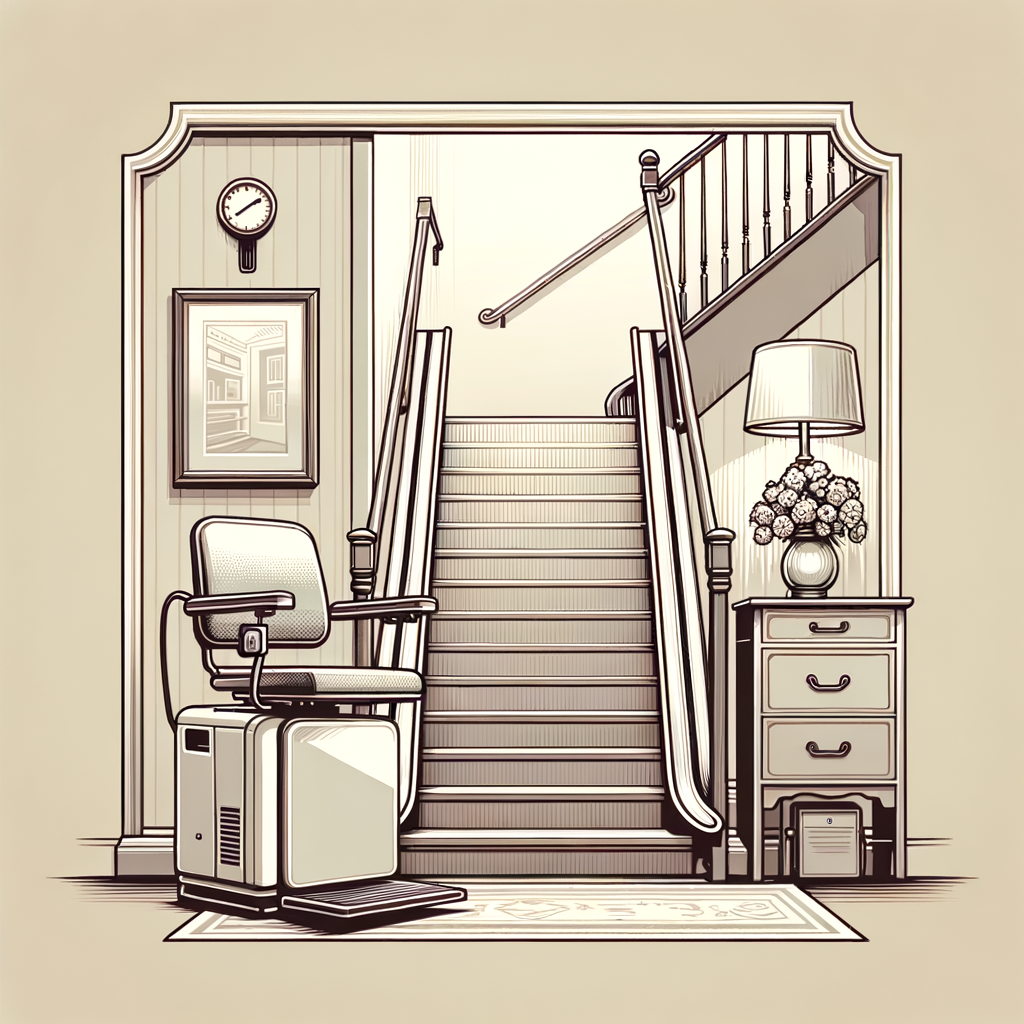
Chair lift technology in 2025 is defined by quieter drives, smarter controls, cleaner power systems, and more adaptable designs that make stair mobility safer and less intrusive in everyday homes. In this sub-pillar hub for Chair Lift Types & Designs, “general design and comparison topics” means the broad decisions buyers, caregivers, installers, and facility managers must understand before choosing among straight, curved, indoor, outdoor, perch, standing, and heavy-duty chair lifts. The topic matters because a chair lift is not just a seat on a rail; it is a safety device, a space-planning decision, a long-term maintenance commitment, and often the fastest way to preserve independence without major remodeling. After working with homeowners comparing retrofit accessibility options, I have seen the same pattern repeatedly: the best results come from understanding how modern chair lift systems balance comfort, battery reliability, rail engineering, user interface design, and code-aware installation. In 2025, innovation is less about flashy features and more about measurable gains in ride quality, fit, diagnostics, and usability for real people with arthritis, balance limitations, reduced vision, or changing care needs. That makes this guide useful as a hub article, because it connects design principles that influence every chair lift category.
What defines a modern chair lift in 2025
A modern chair lift in 2025 combines a rail system, carriage, drivetrain, seat assembly, safety sensors, charging method, and call-send controls into a compact mobility device engineered for daily use. The biggest change from older units is system integration. Earlier lifts often solved one problem at a time: basic powered travel up and down stairs. Newer models are designed as complete user-centered systems. Manufacturers now focus on soft start and soft stop programming, reduced gear noise, slimmer folded profiles, and seats that swivel with less physical effort at the landing. These improvements matter because many users are not only managing stairs; they are also managing pain, weakness, tremor, or fatigue. A smoother ride and easier transfer reduce fall risk.
Another defining trend is modularity. Straight stair lifts remain the fastest and most cost-effective installations because their rails can be cut to length on site. Curved stair lifts, once associated with long lead times and expensive custom fabrication, increasingly benefit from digital measuring tools, CAD-based rail design, and more precise manufacturing workflows. The result is better fit around landings, doorway conflicts, and tight turns. In practice, this means fewer compromises between preserving stair access for other household members and achieving safe seated travel for the rider.
Control design has also matured. Instead of relying solely on simple rocker switches, many systems now offer ergonomic armrest controls, improved remote call stations, status indicators, and onboard diagnostics that help technicians identify charging faults, obstruction triggers, or seat-position errors quickly. That is not cosmetic innovation. Faster troubleshooting means less downtime for users who depend on the lift every day.
Key design innovations shaping new chair lift models
The most important design innovations in chair lift technology for 2025 fall into six areas: rail profile, motor efficiency, battery charging, seat ergonomics, sensor coverage, and digital diagnostics. Slimmer extruded aluminum and refined steel rail designs now allow many lifts to fold tighter against the wall side of the staircase. This preserves more walking width, which is crucial in homes with narrow staircases. Installers still need to verify code-related egress concerns and manufacturer minimum stair width requirements, but modern rail geometry gives more flexibility than older bulkier systems.
Motor and transmission refinement is another major advance. High-quality DC drive systems paired with improved gear reduction and controller tuning deliver steadier acceleration and less vibration. In real homes, that translates into less perceived mechanical harshness, especially on longer runs where older units could feel abrupt. Several premium systems also prioritize lower standby energy use while maintaining reliable charging cycles.
Battery systems have become more dependable, and that is one of the most meaningful updates for users. Most residential stair lifts already used battery-powered operation with automatic charging at points on the rail, allowing continued use during a power outage. What is better in 2025 is charge management and error reporting. Systems can more clearly indicate when a chair is not parked correctly on a charge point, when a battery is nearing end of life, or when voltage irregularities point to a charger issue rather than a rail fault.
Seat design is improving as well. Better armrest shapes, higher seat backs on selected models, wider seat options, and easier folding mechanisms all support users with limited dexterity or trunk stability. For people who cannot bend comfortably, perch-style seats and standing stair lifts remain specialized but valuable alternatives. Heavy-duty designs have also expanded, with certain models supporting higher weight capacities and broader seat dimensions without sacrificing essential safety features.
| Innovation area | What is new in 2025 | User benefit | Best fit scenario |
|---|---|---|---|
| Rail engineering | Slimmer folded footprints and more precise custom rail fabrication | More stair clearance and cleaner installation | Narrow stairs and complex curved layouts |
| Drive control | Soft-start programming and smoother speed modulation | Less jarring motion and easier transfers | Users with pain, balance issues, or frailty |
| Battery management | Improved charge diagnostics and outage resilience | Higher reliability and fewer avoidable service calls | Daily essential use in residential settings |
| Seat ergonomics | Wider seat choices, easier swivel mechanisms, refined armrests | Better comfort and safer boarding | Users with limited flexibility or larger body size |
| Safety sensing | More obstruction points and clearer fault feedback | Reduced collision risk and easier troubleshooting | Homes with pets, clutter, or shared stair use |
| Connected service | Enhanced onboard diagnostics for technicians | Faster repair visits and lower downtime | Users who depend on the lift every day |
How 2025 chair lifts compare across major design categories
When buyers compare chair lift types, the first divide is straight versus curved. Straight stair lifts run on a single uninterrupted staircase and remain the most affordable, quickest to install, and easiest to service because parts and rails are more standardized. Curved stair lifts are custom designed for turns, intermediate landings, spiral sections, or unusual geometry. Their 2025 advantage is precision: digital measurement tools reduce fit errors, and software-assisted design helps rails hug the staircase more closely. If the staircase includes one or more turns, a curved unit is usually safer and more practical than attempting multiple separate lifts.
Indoor versus outdoor is the next major comparison. Outdoor chair lifts now use better weather-resistant covers, sealed components, corrosion-resistant materials, and UV-tolerant finishes. Even so, outdoor exposure still shortens the life of upholstery, plastics, and electronics compared with indoor use. Buyers should treat “weather resistant” as a design standard, not a promise of zero maintenance. In snowy, coastal, or humid regions, scheduled cleaning and inspection matter more than brochure language.
Seated, perch, and standing models serve different body mechanics. A standard seated chair lift works for the largest range of users and is generally the safest choice when transfers can be completed with support. Perch lifts suit users who struggle with deep hip or knee flexion and can tolerate a semi-standing position. Standing stair lifts save space and help in some narrow staircases, but they require stronger balance and are not appropriate for many users with significant instability. In evaluations, I recommend starting with transfer ability, trunk control, and fatigue level rather than the aesthetic appeal of a narrower model.
Heavy-duty chair lifts deserve separate attention. These models are not just wider seats on standard rails. Well-designed heavy-duty systems use reinforced carriage components, broader seats, and weight ratings that support larger users more safely. However, they often require wider staircases and careful planning to preserve usable walking space. That tradeoff is central to any whole-home design discussion.
Safety, accessibility, and installation standards buyers should understand
Chair lift safety in 2025 depends on engineering quality, proper installation, and appropriate user selection. Core safety features should include a seat belt, swivel seat lock at the landing, footrest and carriage obstruction sensors, overspeed protection where applicable, and reliable battery-backed operation. Many lifts also include pressure-sensitive edges that stop travel if the unit meets an object on the stairs. These are essential, but they do not replace basic stair management. Shoes, toys, pet items, and loose rugs near landings still create risk.
Installation quality remains one of the biggest differentiators between a good ownership experience and a frustrating one. Most stair lifts mount to stair treads rather than the wall, which surprises many buyers. That method often improves structural consistency and reduces wall modification. Precise leveling, secure bracket spacing, accurate rail alignment, and correct charge-point setup are critical. A poorly aligned rail can cause noise, premature wear, or intermittent charging faults that appear to be electrical problems but are actually installation errors.
Accessibility planning should also include landing clearance, transfer space, and whether a powered or manual swivel is needed. On some staircases, a rail overrun or hinged rail can improve safety by moving the user away from the stair edge at the top or bottom. Hinged rails are especially relevant when a doorway or walkway would otherwise be blocked. In homes where multiple family members use the stairs, folded dimensions matter almost as much as travel performance.
Buyers should ask installers how they assess stair width, nose profile, power supply, and user fit. They should also ask about compliance with manufacturer specifications and any local requirements that affect residential accessibility equipment. While stair lifts in private homes are not the same as commercial elevators, professional installation standards are still nonnegotiable.
Smart features, maintenance trends, and total cost considerations
Smart chair lift features in 2025 are practical rather than flashy. The useful innovations are service-oriented: onboard status codes, improved fault memory, remote-friendly diagnostic workflows, and controls that communicate system state more clearly. For the user, this may look simple: a clearer indicator light, a better remote, or an error code a technician can interpret quickly. For service teams, it reduces guesswork. That is significant because many chair lift issues are not catastrophic failures; they are charging interruptions, seat-position interlocks, or obstruction sensor triggers that can be resolved efficiently when the problem is identified correctly.
Maintenance has become more predictive. Experienced dealers increasingly track battery age, carriage wear points, seat hinge function, and charger performance before outright failure occurs. Annual service is still a sensible baseline for many households, though high-use lifts, outdoor units, and lifts in homes with dust, pets, or temperature swings may need more frequent inspection. Battery replacement intervals vary by usage and environment, but buyers should expect batteries to be consumable components rather than lifetime parts.
Total cost is broader than purchase price. Straight lifts typically cost less upfront, while curved and outdoor models carry higher design, fabrication, and installation costs. Added features such as power swivel, power footrest, custom upholstery, heavy-duty capacity, or a folding hinge rail also affect price. Long-term value depends on fit. A cheaper unit that is uncomfortable, too narrow, noisy, or hard to transfer onto is not actually less expensive if it goes unused. I advise buyers to compare warranty terms, local dealer service capacity, parts availability, and expected battery replacement costs along with the initial quote.
This hub article connects directly to deeper topics within Chair Lift Types & Designs, including straight versus curved chair lifts, indoor versus outdoor chair lift design, heavy-duty chair lifts, standing and perch models, and custom rail options for complex stairs. Those comparisons matter because the right design choice usually comes from matching the staircase, the user’s body mechanics, and the service support available in the local market.
The biggest innovation in chair lift technology in 2025 is not a single breakthrough feature; it is the way multiple design improvements now work together to make lifts safer, quieter, better fitting, and easier to live with. Better rail engineering preserves stair space. Smoother drive systems improve comfort. More informative diagnostics reduce downtime. Refined seat and swivel designs make transfers safer. And stronger category differentiation helps buyers choose correctly among straight, curved, outdoor, perch, standing, and heavy-duty models.
For anyone researching Chair Lift Types & Designs, the practical takeaway is clear: start with the staircase layout, then evaluate the rider’s physical needs, then compare installation quality and service support. That order prevents many expensive mistakes. A chair lift should match the home and the person equally well. If you are building your shortlist, use this hub as your starting point and move next into the specific comparison pages that apply to your staircase, environment, and mobility goals.
Frequently Asked Questions
What are the most important chair lift innovations to know about in 2025?
The biggest chair lift innovations in 2025 center on four areas: quieter operation, smarter control systems, cleaner power management, and more flexible design options. Newer drive systems are noticeably smoother and quieter than many older units, which matters in everyday use because a chair lift is often installed in the center of the home, not hidden away in a utility space. Improved motors, refined gear systems, and better rail engineering help reduce vibration, start-stop jolts, and the mechanical noise that used to make some stair lifts feel more intrusive than they needed to be.
Smart controls are another major step forward. Many modern chair lifts now include more intuitive armrest controls, enhanced remote-call stations, status indicators, diagnostic alerts, and safety monitoring that can help identify service needs early. Some models also offer better integration with home accessibility planning, allowing caregivers and homeowners to operate the unit with less confusion and more confidence. While not every 2025 model is a fully connected “smart device,” the overall trend is toward simpler operation, better feedback, and fewer user errors.
Power systems have improved as well. Battery-backed designs remain standard in much of the market, but charging is more efficient, battery management is smarter, and overall energy use is cleaner and less disruptive. In practical terms, that means more dependable performance during normal use and better resilience during short power outages. Finally, design adaptability has expanded. Buyers now have better options for straight, curved, perch, standing, indoor, outdoor, and heavy-duty chair lifts, with slimmer profiles, more compact folded dimensions, and rail configurations designed to preserve stair access for other users. Together, these innovations make 2025 chair lifts safer, less visually intrusive, and easier to match to real-world homes and mobility needs.
How do 2025 chair lifts compare with older models in terms of safety and usability?
Compared with older models, 2025 chair lifts generally deliver a more refined safety and usability experience from the moment the user sits down to the moment they dismount. Safety improvements often include better obstacle detection on the footrest and carriage, smoother acceleration and braking, improved seat locking, and more secure swivel and dismount systems at the top landing. These details may sound incremental, but in practice they can significantly reduce the risk of bumps, hesitation, awkward transfers, or improper positioning on the stairs.
Usability has improved just as much. Many older chair lifts worked well mechanically but required more effort to operate comfortably, especially for seniors, caregivers, or users with limited hand strength or balance. Newer designs in 2025 often feature easier-to-reach controls, more ergonomic seats, simpler folding mechanisms, and clearer indicator lights or alerts. Some units also offer better seat heights, armrest spacing, and footrest layouts to support safer transfers on and off the lift. This is especially important for users who have mobility limitations beyond climbing stairs, such as reduced hip flexibility, poor balance, or difficulty bending.
Another major difference is how well modern units fit into daily life. Newer lifts are often designed to feel less bulky, less noisy, and less disruptive for everyone else using the staircase. For multi-user households, that matters. A chair lift that folds compactly, parks out of the way, and operates consistently with fewer false stops can make the entire installation feel more practical. So while the core purpose of a chair lift has not changed, the 2025 generation is generally more polished, more user-friendly, and better aligned with the expectations people now have for safety, comfort, and reliability in home mobility equipment.
Are smart chair lift features in 2025 actually useful, or are they just marketing?
In many cases, smart chair lift features in 2025 are genuinely useful, but their value depends on the user, the home, and the specific lift model. The most practical smart features are not flashy extras; they are the ones that improve safety, simplify operation, and make maintenance more predictable. For example, remote call/send controls, system status notifications, diagnostic indicators, and clearer fault reporting can save time and reduce frustration for both users and caregivers. These features can be especially helpful in homes where more than one person uses the lift or where a family member regularly assists with operation.
Smart functionality also becomes more meaningful when it reduces service uncertainty. If a lift can better communicate charging issues, seat-position problems, or obstruction-related stoppages, users are less likely to assume the entire system has failed when the issue may be simple to resolve. Installers and service technicians benefit as well, because better diagnostics can speed up troubleshooting and reduce unnecessary callouts. From an ownership perspective, that can translate into less downtime and a clearer understanding of when maintenance is actually needed.
That said, not every buyer needs the most connected or feature-heavy system. For some users, the best chair lift is the one with straightforward, dependable controls and minimal complexity. Smart features should support accessibility, not complicate it. A good rule is to prioritize features that improve day-to-day use: easy operation, clear feedback, dependable charging, and safety monitoring. If a “smart” feature does not make the lift easier to use, easier to maintain, or safer in a meaningful way, it may be more marketing than necessity. In 2025, the strongest products are the ones that use technology to remove friction from the user experience rather than add another layer of learning.
What design options should buyers compare in 2025 before choosing a chair lift?
In 2025, buyers should compare far more than just price or brand name. The most important decision points usually begin with stair configuration: straight stair lifts are typically simpler and faster to install, while curved chair lifts are custom-built for staircases with turns, intermediate landings, or more complex layouts. From there, buyers should consider where the lift will be used. Indoor and outdoor models differ in materials, weather resistance, seat construction, and protective features, so choosing the correct environment-specific design is essential for long-term performance.
User needs are just as important as staircase shape. Standard seated lifts work well for many people, but perch and standing models may be better for users who have limited ability to bend their knees fully or who find sitting and rising from a chair difficult. Heavy-duty chair lifts are also a key category in 2025, offering wider seats, higher weight capacities, and stronger overall construction to support a broader range of users safely and comfortably. These are not niche details; they directly affect transfer safety, confidence, and whether the lift will remain suitable over time.
Buyers should also compare rail footprint, folded size, parking options, seat style, swivel function, footrest design, power system, and ease of service. In many homes, staircase clearance is a major concern, so a slimmer folded profile or a rail that parks the lift away from a main traffic zone can make a meaningful difference. Aesthetic design matters too, especially in visible residential settings where homeowners want the lift to blend into the space rather than dominate it. The best comparison process in 2025 is holistic: match the stair lift not only to the stairs, but also to the user’s mobility profile, household traffic patterns, future accessibility needs, and maintenance expectations.
Is it worth upgrading to a newer 2025 chair lift if you already have an older one?
Upgrading to a newer 2025 chair lift can absolutely be worth it, but the right answer depends on how well the current unit meets present and future needs. If an older chair lift is still safe, properly maintained, and suited to the user, replacement may not be urgent. However, many homeowners begin considering an upgrade when they notice increasing noise, rough starts and stops, reduced battery performance, recurring service issues, or difficulty operating the controls. These are not just convenience concerns; they can signal that the lift is becoming less dependable or less comfortable for the person relying on it every day.
An upgrade is often especially worthwhile when mobility needs have changed. A user who was once comfortable with a basic seated model may now need a higher seat, easier swivel action, better transfer support, a heavier-duty frame, or a perch-style design. In those situations, a newer chair lift is not merely a newer version of the same product; it may be a much better functional fit. Likewise, if the current lift feels bulky, blocks the stairs more than desired, or lacks modern safety sensors and smoother ride quality, the quality-of-life improvement from a replacement can be significant.
There is also a long-term planning argument for upgrading. Newer 2025 chair lifts are often designed to be quieter, more energy-efficient, easier to service, and better integrated into the home environment. For caregivers and property managers, reduced maintenance uncertainty and improved usability can justify the investment. The best way to evaluate whether an upgrade makes sense is to look at reliability, repair history, current user comfort, future mobility needs, and whether a newer design would materially improve safety and daily convenience. If the answer is yes in several of those categories, replacing an older unit may be one of the more practical accessibility improvements a household can make.