Installing a stair lift too far from the stair edge creates safety, comfort, and performance problems that often do not appear until daily use begins. In stair lift installation, the “stair edge” usually means the nosing or front line of each tread, while the rail offset is the horizontal distance between that edge and the installed track. That measurement sounds minor, but in practice it affects boarding position, footrest clearance, seat alignment, swivel space, hinge operation, and the user’s confidence every time they ride. I have inspected installations where a rail was only slightly over-set from the edge, yet the chair felt unstable to the user and made transfers much harder than necessary.
This issue matters because stair lifts are not forgiving products. They are mobility devices installed in tight architectural spaces, and small layout errors create compounding consequences. If the rail sits too far inboard, users may need to lean, twist, or step farther onto the staircase to sit down. That increases fall risk, especially for people with weak balance, reduced hip mobility, Parkinsonian gait, stroke-related asymmetry, or limited vision. The problem also affects other household members. A poorly positioned lift can narrow the clear walking width, create pinch points near balustrades, and interfere with doors or landings.
Manufacturers provide model-specific guidance for minimum staircase width, folded dimensions, overrun needs, and seat-to-step geometry, but installers still have to translate those numbers to real stairs. That is where mistakes happen. Carpet thickness, bullnose tread profiles, handrail projections, wall skirting, and newel post placement can tempt an installer to set the rail farther from the edge than ideal. Sometimes it is done to avoid a trim detail or to keep the footrest from touching an obstacle. Sometimes it results from poor measuring at survey stage. Either way, the installer may solve one interference issue by creating several larger usability problems.
As a hub page for installation mistakes to avoid, this article explains not just what goes wrong, but why. It covers transfer safety, code-adjacent access considerations, ride quality, structural fixing concerns, and the common site conditions that lead to over-offset rails. It also outlines how competent stair lift installers verify correct placement before drilling final fixing points. If you are comparing quotes, reviewing a proposed installation, or troubleshooting an uncomfortable existing unit, understanding the consequences of excessive distance from the stair edge will help you ask the right questions and avoid expensive rework later.
Why rail position relative to the stair edge matters
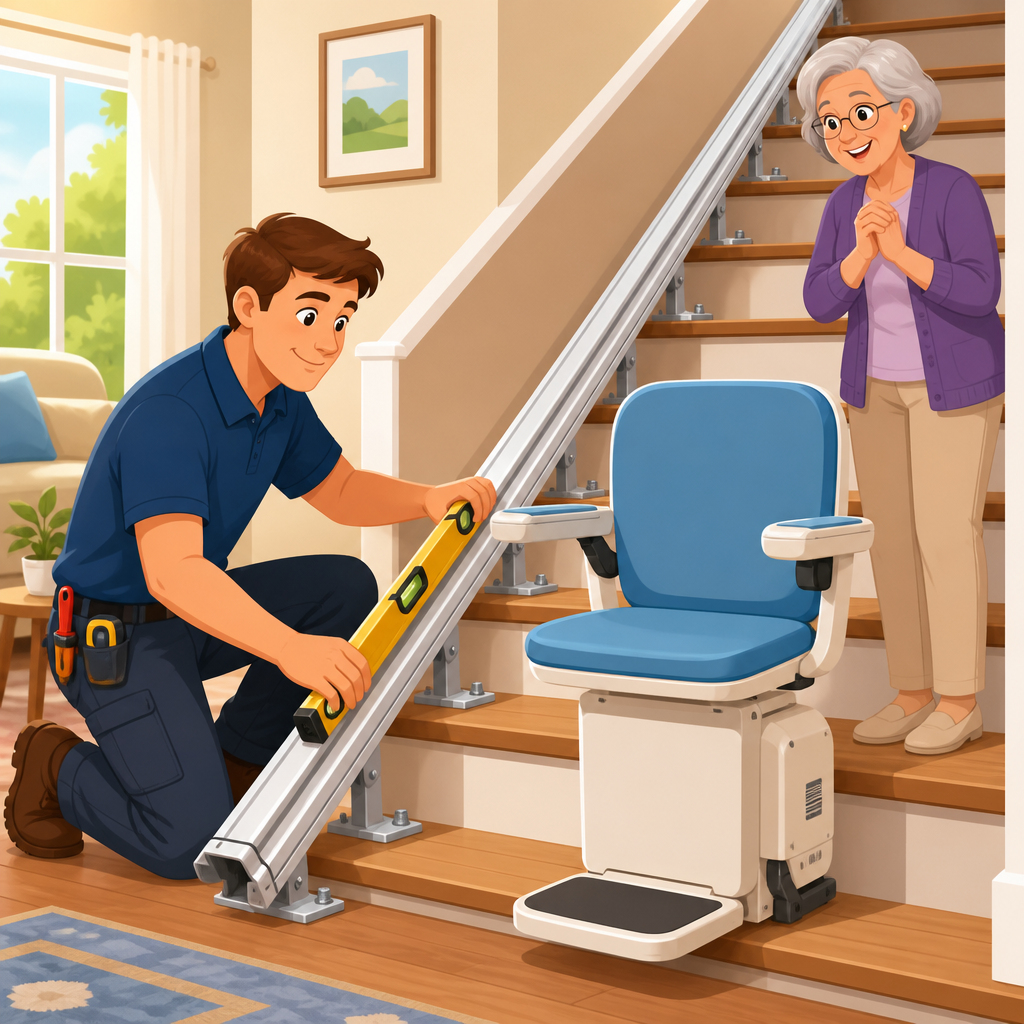
A stair lift rail is not mounted according to appearance alone. Its position determines the chair’s travel path and the rider’s body position from the first sit-to-stand transfer to the final dismount. On most straight stair lifts, brackets fix into the stair treads, and the rail is aligned so the chair clears walls, banisters, and knees while keeping the rider close enough to the landing for a safe transfer. Curved models involve even tighter geometry because bends, parking positions, and powered options all depend on exact clearances.
When the rail is too far from the stair edge, the seat ends up farther over the staircase rather than where the user expects it to be. That changes the transfer angle. Instead of backing up to the seat in a stable position from the landing, the user may have to step down or sideways onto a lower tread before sitting. For someone with limited ankle dorsiflexion or poor proprioception, that is not a minor inconvenience; it is a direct hazard. The same applies at the top landing, where safe exit depends on a predictable seat location and enough room to swivel without the knees contacting a wall, post, or opposite handrail.
Distance from the edge also affects folded clearance. A lift that is over-set can project into the walking line more than expected, even when the seat, arms, and footrest are folded. Staircase passability is especially important in family homes and in houses with care staff, where others still need to use the stairs safely. Installers must balance user comfort with pedestrian clearance, but pushing the rail inward is not a neutral compromise. It often reduces both rider safety and stair usability at the same time.
Safety and usability problems caused by excessive offset
The first problem is harder boarding. A user approaching the lift at the bottom landing expects to turn and sit with both feet supported and minimal reaching. If the seat is too far from the stair edge, they often have to lean backward before they feel the seat under them. I have seen this trigger “hover sitting,” where users lower themselves cautiously without full confidence in the seat position. That hesitation increases the chance of missing the seat edge or collapsing into it awkwardly, both of which can cause injury.
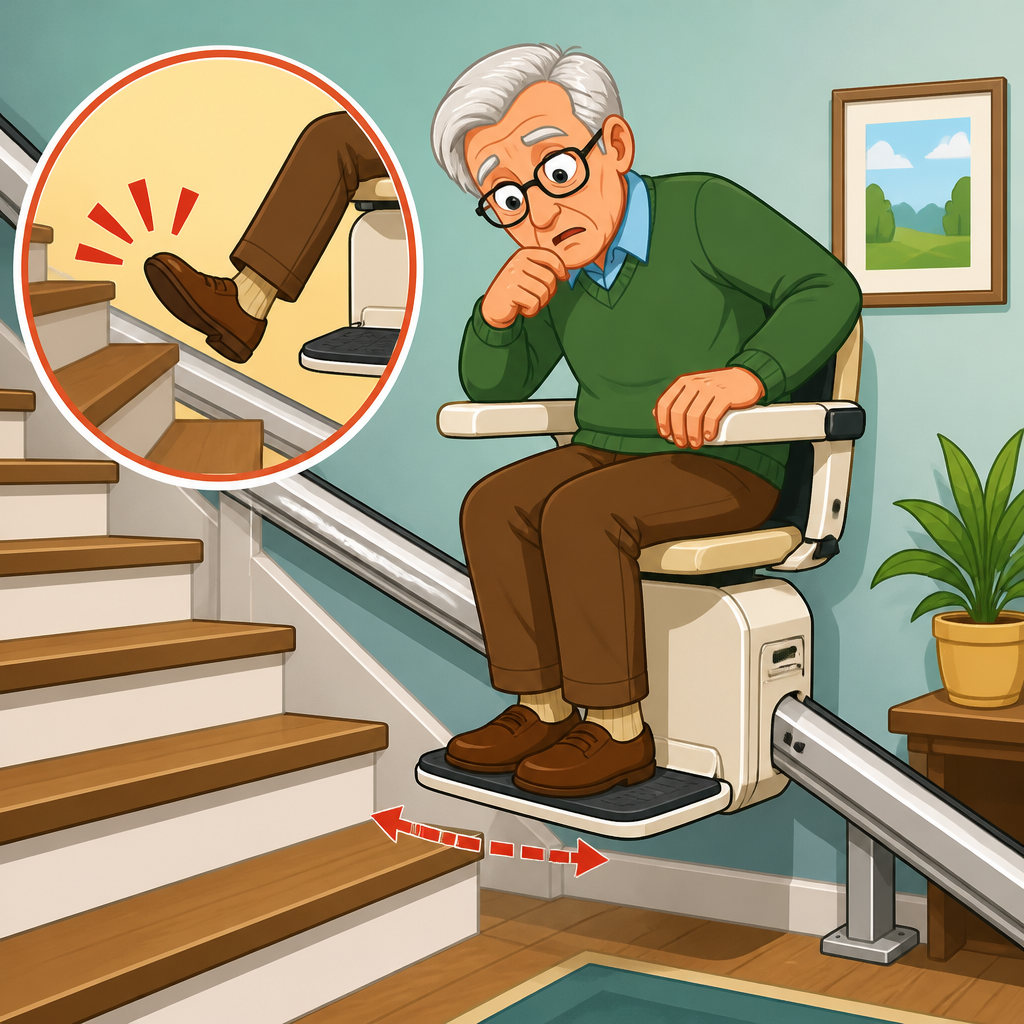
The second problem is awkward footrest access. The footrest may be farther over the open stair than the user can comfortably reach, especially if they have limited knee flexion, hip replacement precautions, or weakness on one side. Powered footrests help, but they do not fix poor geometry. Users still need to place their feet squarely and keep them within the footprint of the moving lift. If they cannot do that naturally, they may ride with one foot mispositioned, increasing the chance of clipping stair edges or feeling insecure during travel.
A third issue is reduced confidence. Stair lifts succeed when they become routine and predictable. Installations that require extra body movement, sideways shuffling, or blind reaching create anxiety. Users then avoid the lift, delay trips between floors, or insist on caregiver assistance for every transfer. From an outcomes perspective, that means the equipment has failed even if the motor, batteries, and safety edges work perfectly.
Finally, excessive offset can worsen emergency scenarios. If a user stops partway due to an obstruction fault, battery issue, or misuse of the key switch, rescue access may be harder if the chair sits in a compromised position relative to the stairs. Good installation geometry reduces dependence on strength, memory, and perfect conditions.
Common installation mistakes to avoid across the setup process
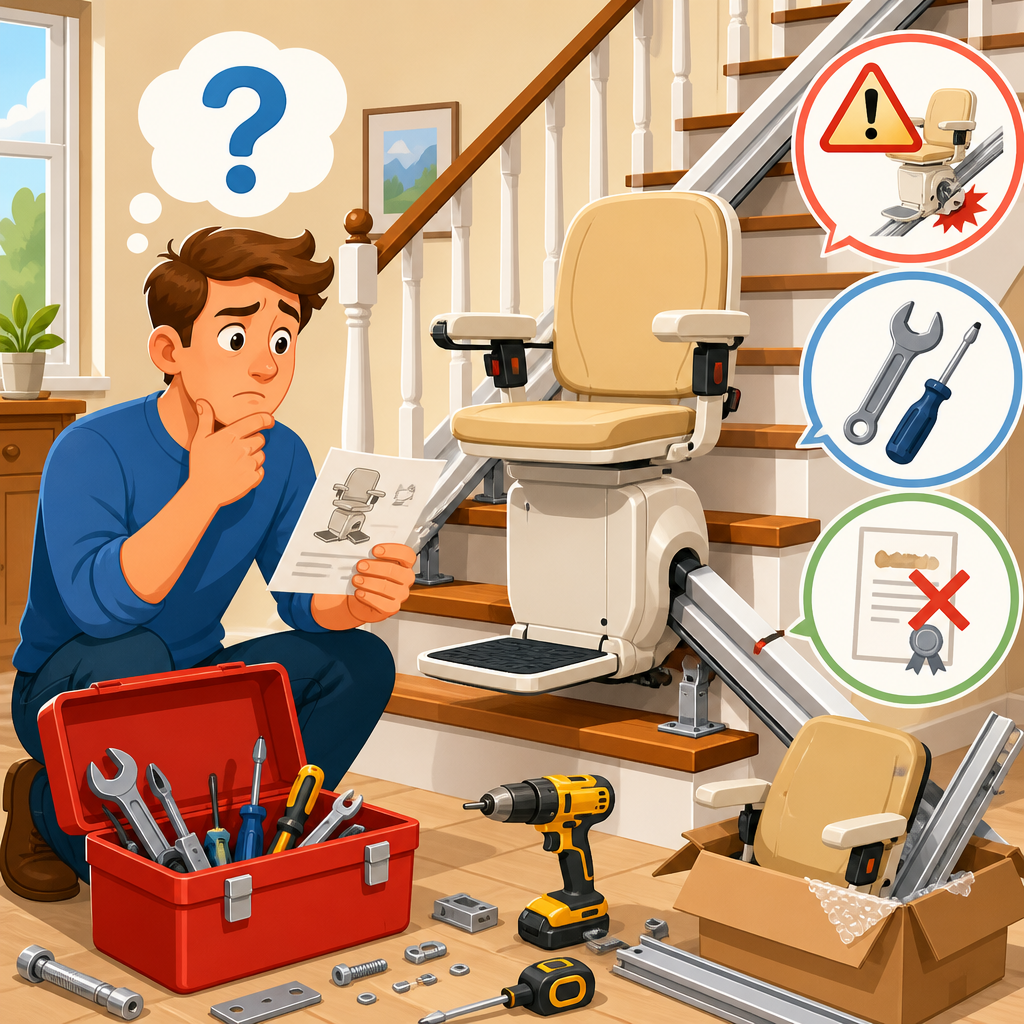
Over-setting the rail from the stair edge rarely happens in isolation. It is usually part of a broader pattern of installation mistakes to avoid: incomplete site surveys, failure to measure from finished surfaces, ignoring folded dimensions, and not simulating actual transfers with the user’s body size and mobility limitations. Experienced surveyors measure staircase width, tread depth, nosing profile, landing space, door swing, radiator projection, skirting thickness, and handrail depth before selecting the final rail line.
Another common mistake is measuring only the stair run and not the transfer zones. The top and bottom landings matter more than many buyers realize. A lift can technically fit the staircase and still be wrong for the user if the seat parks too far from a stable standing area. That is why reputable installers discuss whether the user transfers with a cane, walker, one-hand support, or caregiver assistance. They also check whether the user needs a powered swivel seat, a hinged rail, or a zero-intrusion lower park position.
Installers also make errors when they prioritize obstacle avoidance over user-centered layout. For example, they may move the rail inward to clear a protruding skirting board instead of using alternative bracket spacing, trim modification, or a different model with more suitable carriage geometry. Similarly, on narrow stairs they may assume that more inward placement preserves walking width, when in reality the folded chair projects differently and the user’s knees end up in a worse position. Small assumptions at survey stage often become major comfort and safety failures after commissioning.
| Installation mistake | What happens | Better approach |
|---|---|---|
| Rail set too far from tread nosing | User must lean or step onto stairs to transfer | Align rail to model-specific offset and test transfer path |
| Measured before final flooring or carpet | Clearances change after installation | Measure finished surfaces or account for final build-up |
| Ignored top landing swivel space | Knees or elbows strike wall or post during exit | Mock up swivel arc with user dimensions |
| Prioritized trim clearance over ergonomics | Chair fits physically but feels unsafe in use | Modify detail, bracketing, or model selection first |
| No user trial at handover | Problems appear only after installer leaves | Verify repeated safe boarding and dismounting |
How excessive distance affects clear width, comfort, and performance
One misconception is that moving a stair lift farther from the stair edge automatically frees more room for people walking past. On many staircases, the opposite occurs. Because the carriage and folded footrest follow the rail line, shifting the rail inward can move the bulk of the equipment closer to the center of the stairs. That narrows the practical walking channel, especially near turns, radiators, and newel posts. The effect is most noticeable on stairs close to the manufacturer’s minimum width requirement, often around 28 to 30 inches for compact straight lifts, though exact figures vary by model.
Comfort also declines during travel. The rider may feel less centered over the steps and more exposed over open space. While the unit remains mechanically stable if installed to specification, human perception matters. A seat that feels too far “out” from the stair edge can trigger fear of falling, even when no actual tip risk exists. That perception changes how users sit, grip the arms, and brace their feet, which in turn affects comfort and confidence.
Performance issues can follow. Powered swivel seats, powered hinges, and automatic folding components rely on unobstructed movement envelopes. If the rail is offset incorrectly, those features may operate at the edge of their clearance limits. Repeated contact, near-contact, or forced alignment can increase wear on hinges, carriage covers, and seat plastics. Service callbacks then focus on symptoms such as rattles, user complaints, or difficulty folding, when the root cause is poor initial geometry rather than a defective part.
There is also a structural dimension. Stair lift brackets are designed to distribute load into the treads, but unusual positioning can alter leverage and expose inconsistencies in old timber stairs. A qualified installer will assess tread condition, riser integrity, and fixing suitability. If the rail has been moved off the ideal line without proper engineering logic, the installation may be harder to brace cleanly and may transmit more noticeable movement or vibration into the staircase during operation.
How professionals determine the correct position
Correct stair lift placement starts with the manufacturer’s installation manual, not installer preference. Each model specifies bracket types, rail spacing, seat height range, clearance requirements, and safe overruns. During surveys, professionals take a full staircase profile and then confirm the proposed rail line against the intended user’s transfer needs. In straightforward cases, they can predict the finished seat position accurately from the model’s geometry. In more complex homes, they create a physical or digital mock-up to verify landing access and swivel clearance.
Good practice includes measuring from the finished stair nosing, checking handrail projection at multiple points, and identifying any feature that changes along the run, such as bowed walls or uneven skirting. Installers should also test assumptions about the user. Someone who can walk independently may still need a closer seat position because they cannot rotate their trunk well. Another user may tolerate a tighter transfer but need extra footrest room due to edema, braces, or large orthopedic shoes.
Before final commissioning, the installer should run the lift through complete travel cycles and supervise repeated boarding and dismounting at both ends. That handover stage reveals whether the rail is truly in the right place. If the user consistently reaches, shuffles, or repositions before sitting, the installation should be questioned immediately. A stair lift is properly installed only when the user can approach, sit, ride, swivel, and exit with controlled, repeatable movements. If your planned installation seems marginal, review related setup topics, compare model dimensions carefully, and insist on a survey that treats rail position as a safety-critical decision rather than a cosmetic choice.
The key takeaway is simple: a stair lift installed too far from the stair edge can undermine the very independence it is supposed to restore. The problems range from awkward transfers and reduced walking width to lower confidence, higher fall risk, and premature service issues. Most of these outcomes are preventable when installers measure correctly, follow model-specific geometry, and validate the fit with the actual user instead of relying on generic assumptions.
As the hub for installation mistakes to avoid, this topic connects to every stage of stair lift setup: surveying the staircase, selecting the right model, planning landing positions, checking folded clearance, and confirming safe handover. Rail offset is not a minor technical detail. It is one of the decisions that most strongly shapes daily usability. Homeowners, family members, occupational therapists, and installers should all treat it with the same seriousness as load capacity, battery backup, and safety sensors.
If you are buying a new stair lift or questioning an existing installation, ask for the exact reasoning behind the chosen rail position. Request a demonstration of boarding and dismounting at both landings, and do not accept discomfort as normal. A well-positioned stair lift should feel intuitive from the first ride. Use that standard when reviewing quotes, surveys, and final installation plans.
Frequently Asked Questions
What does it mean when a stair lift is installed too far from the stair edge?
When a stair lift is installed too far from the stair edge, it means the rail has been set farther in from the nosing, or front line, of the treads than the staircase and lift model were designed to accommodate. This is usually described as excessive rail offset. On paper, the difference may seem small, but in real-world use it changes how the chair sits over the stairs, where the footrest lands, how the user gets on and off the seat, and how naturally the lift travels along the staircase.
The stair edge is an important reference point because it helps define the safe and intended path of travel for the stair lift. If the rail is placed too far inward, the chair may feel pushed away from the ideal boarding position. That can force the user to lean, twist, or reach farther when sitting down or standing up. It can also alter the clearance between the footrest and the steps, affect knee and hip positioning during travel, and reduce usable space on the staircase for other people walking by.
In other words, this is not just a technical installation detail. Rail offset directly affects safety, comfort, and day-to-day usability. A lift may still run, but if the placement is wrong, the owner may start noticing problems only after regular use begins. That is why proper measurement from the stair edge is a core part of a correct stair lift installation.
What problems can incorrect rail offset cause during everyday use?
Incorrect rail offset can cause a surprising range of practical problems, especially once the user begins relying on the stair lift several times a day. One of the most common issues is awkward boarding and dismounting. If the chair sits too far from the edge, the user may need to step, pivot, or reach more than expected to get seated safely. For someone with limited mobility, poor balance, joint pain, or reduced leg strength, even a small increase in movement can create a meaningful fall risk.
Another frequent problem involves footrest clearance. If the rail is too far from the stair edge, the footrest may not align well over the steps. That can lead to a cramped riding position, increased chance of the footrest contacting stair nosings or obstructions, and less comfortable leg placement during travel. The user may also feel as though they are riding too far into the staircase rather than along it, which can make the experience feel unstable or unnatural, even if the unit remains mechanically functional.
Performance-related issues can also show up. Seat alignment at the top or bottom landing may be less than ideal, making transfers harder. Swivel-seat operation may become less convenient if the chair stops in a position that leaves too little room for a safe turn. On models with a hinged rail or folding section, improper offset can interfere with how that feature clears nearby walls, doorways, or walking paths. Over time, these usability problems can reduce confidence in the lift and cause the user to avoid using it properly. The system may not technically fail, but it may fail to serve the person safely and comfortably, which is just as serious.
Can installing a stair lift too far from the stair edge become a safety hazard?
Yes, it absolutely can. A stair lift is designed around safe transfer points, proper body positioning, and predictable clearances. When the unit is set too far from the stair edge, the biggest immediate safety concern is the transfer on and off the seat. If the user has to lean outward, rotate awkwardly, or place their feet in an unnatural position while sitting or standing, the risk of slipping or losing balance goes up. For users with arthritis, neurological conditions, post-surgical limitations, or age-related mobility challenges, those movements can be especially dangerous.
There is also a secondary safety issue involving how the rider sits during travel. If the chair’s position causes poor seat alignment or uncomfortable leg placement, the user may shift posture to compensate. That may not sound severe, but poor posture during movement can reduce stability and make the ride feel less secure. In some cases, a mispositioned footrest can contribute to foot drag concerns, shin contact with steps, or general discomfort that distracts the rider during operation.
Safety hazards are not limited to the rider, either. A rail installed too far inward can reduce clear walking space on the staircase or create a more intrusive chair position when folded. That may affect other members of the household, caregivers, or anyone sharing the stairs. If the layout interferes with normal stair traffic, the installation may create trip hazards or force people into less stable walking patterns. A safe stair lift installation should protect both the primary user and everyone else using that staircase.
How does rail placement affect comfort, seat alignment, and getting on and off the lift?
Rail placement has a direct effect on how natural the stair lift feels to use. Comfort starts with alignment. When the rail is properly positioned relative to the stair edge, the seat and footrest tend to sit where the user expects them to be, making transfers smoother and the riding posture more balanced. When the rail is too far from the edge, the rider may feel offset from the staircase in a way that forces their hips, knees, or feet into a less comfortable position. That can become frustrating very quickly, especially for someone using the lift multiple times a day.
Seat alignment at the landings is particularly important. A stair lift should bring the user into a position that supports a safe and controlled transfer. If the chair stops too far inward because of poor rail placement, the user may not be able to stand up with their feet under them properly. They may need to reach for a wall, handrail, or nearby surface for support, which is not ideal and can be unsafe. The swivel function may still work, but the benefit of that feature is reduced if the final seating position is poorly related to the landing area.
Comfort also includes psychological confidence. A well-installed lift feels intuitive. A poorly offset one often feels slightly “off” every time it is used. Even if the rider cannot identify the exact technical problem, they may describe the chair as awkward, cramped, or hard to get into. Those reactions are often valid signs that the rail placement is not serving the user’s body mechanics well. Good installation is not only about making the motor run; it is about making the entire ride and transfer process feel secure, repeatable, and comfortable.
What should homeowners do if they think their stair lift was installed too far from the stair edge?
If a homeowner suspects the stair lift was installed too far from the stair edge, the first step is to stop assuming the issue is simply “something to get used to.” While some adjustment is normal with any mobility device, persistent awkwardness, poor transfer position, reduced foot clearance, or unusual interference with landings and walkways should be evaluated. The best course of action is to contact the installer or a qualified stair lift technician and request a detailed inspection of rail placement, seat position, landing alignment, and overall clearances.
It is helpful to describe specific symptoms rather than only saying the lift feels wrong. For example, mention if the user has to reach too far to sit down, if their feet feel cramped, if the chair is difficult to swivel at the top, if the hinged section does not clear as expected, or if other household members have trouble passing on the stairs. These details can help the technician determine whether the rail offset is outside the intended range for that staircase or whether another adjustment is also needed.
In many cases, the solution may involve repositioning the rail, adjusting mounting locations, refining the stop positions, or reassessing whether the selected model is the right fit for the staircase geometry. The important point is that homeowners should not ignore the problem. Stair lifts are mobility and safety devices, not ordinary appliances. If installation placement compromises safe use, it should be corrected promptly by a professional familiar with the manufacturer’s specifications and the functional needs of the user.