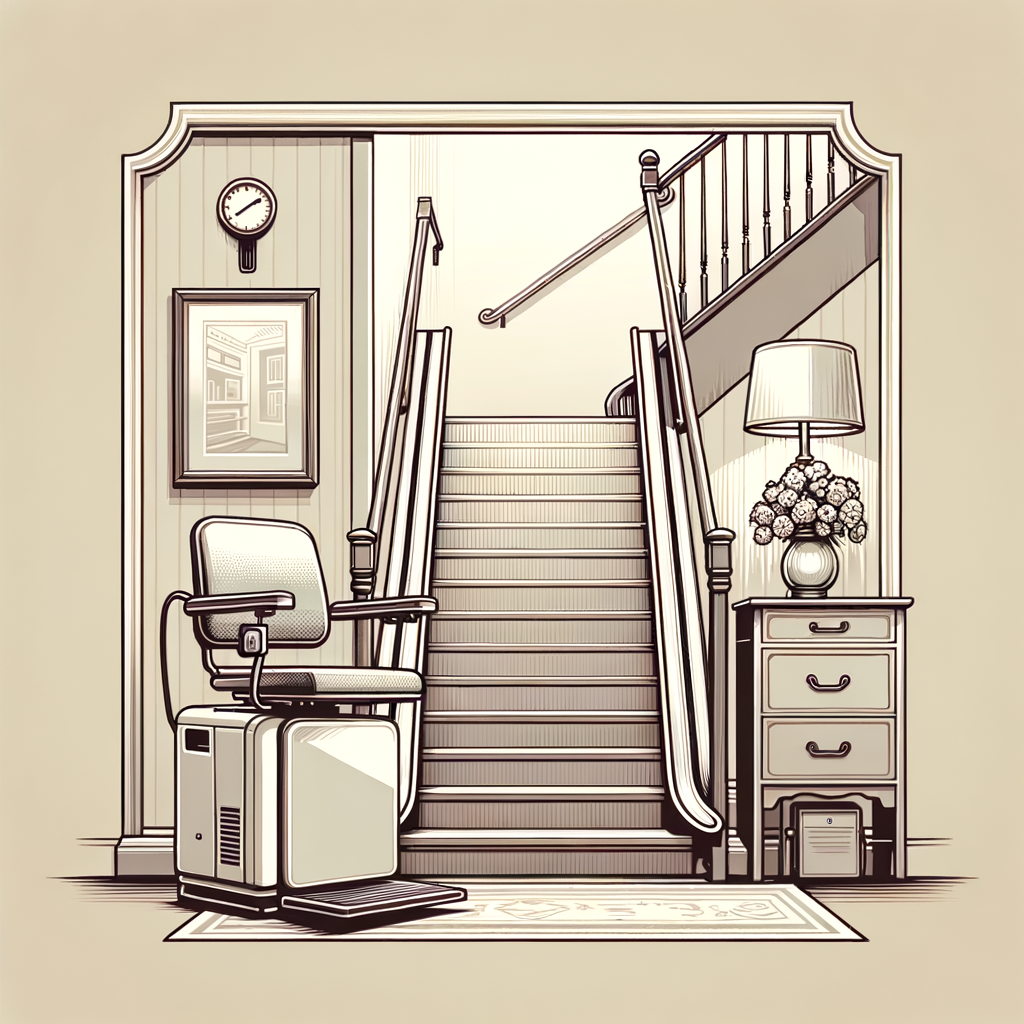
Lifts for plus-size users must be selected, installed, and maintained with a level of care that goes well beyond basic product comparison, because safety depends on matching the lift’s engineering limits to the user, the staircase, and the daily conditions of the home. In the heavy-duty lifts category, “plus-size” usually refers to users who need a higher weight capacity, a wider seat, more stable armrests, greater footrest area, and easier transfers on and off the chair. Many standard stair lifts are rated around 250 to 350 pounds, while heavy-duty models commonly range from 400 to 600 pounds, with some specialized configurations designed for even more demanding applications. That difference is not just about motor strength. It affects rail design, seat geometry, battery performance, wall clearances, structural loading, and the way installers evaluate the stairs before any equipment is ordered.
I have worked with families who assumed a larger chair alone would solve the problem, only to learn that the real safety issue was the staircase itself: narrow treads, tight top landings, weak mounting points, or a user whose hip width and transfer style required more side clearance than the brochure suggested. Heavy-duty lifts matter because they allow people to remain in multi-level homes without forcing unsafe stair climbing, rushed transfers, or makeshift mobility workarounds. They also matter because poorly matched equipment can create a false sense of security. A lift that technically moves but does not allow safe boarding, stable seating, or reliable operation under full load is not an acceptable solution. This guide explains the main safety considerations for heavy-duty lifts and serves as the central resource for understanding this specialized part of chair lift design.
Weight Capacity Is the Starting Point, Not the Only Safety Check
The first question most buyers ask is simple: what weight can the lift hold? That number is essential, but it is only the beginning. A rated capacity is established under specific test conditions set by the manufacturer, and safe use requires a margin between the user’s actual needs and the lift’s maximum load. If a person weighs 395 pounds, choosing a 400-pound unit is usually not prudent, especially once winter clothing, carried items, shifting body position, or assisted transfer forces are considered. In practice, installers and clinicians often look at body dimensions, center of gravity, and how the user sits down, not just the scale reading.
Weight distribution matters because stair lifts do not carry a static load in a laboratory. Users lean, reposition, brace with an arm, or drop into the seat with more force than the final seated weight suggests. A heavier user with limited trunk control may place significant side loading on one armrest during transfer. That can affect stability and comfort even if the rated capacity is not exceeded. The safest choice is usually a model designed specifically as a heavy-duty lift, with reinforced seat supports, stronger chassis components, and rails engineered for higher loads, rather than a standard model stretched to its limit.
Capacity should also be considered alongside duty cycle. In homes where the lift is used many times a day, batteries, drive systems, and charging contacts experience more wear. A heavy-duty unit used near its upper limit every day needs robust engineering and a maintenance plan. Buyers should ask for the manufacturer’s rated capacity, the installer’s assessment of fit, and written confirmation that the selected model is appropriate for the user’s body measurements and transfer needs. This article links conceptually to related guidance on straight stair lifts, curved stair lifts, and outdoor chair lifts, because weight capacity interacts differently with each design.
Staircase Dimensions and Structural Fit Determine Whether a Heavy-Duty Lift Is Truly Safe
A heavy-duty stair lift is often larger in every critical direction: seat width, overall projection from the wall, footrest depth, and turning radius at the top and bottom. That means the staircase must be measured carefully. Width is the headline number. Many manufacturers recommend at least 36 inches of staircase width for a heavy-duty stair lift, and some models need more depending on rail placement and seat style. Yet width alone does not settle the question. Tread depth, nose overhang, landing space, headroom, and obstacles such as door trim or radiators can all affect safe travel and transfer.
Structural fit is equally important. Most stair lifts mount to the stair treads, not the wall, but that does not mean any staircase can carry any lift. Installers should inspect tread condition, fastening integrity, and whether the stairs show deflection, rot, or prior repair issues. In older homes, I have seen cases where the visible staircase looked acceptable but the substructure beneath the treads had weakened. A heavy-duty system places greater loads on brackets and rails, especially during start-stop motion. If the structure is questionable, reinforcement may be needed before installation.
Landings create another common safety issue. The user must be able to approach the seat, turn, sit, and stand without backing into a drop or twisting awkwardly. Heavy-duty lifts often benefit from a top overrun, hinged rail, or powered swivel seat to improve transfer safety. These options are not luxuries. They can be the difference between a stable, controlled exit and a dangerous pivot near the stair edge. Any evaluation should include how the user currently transfers, whether a caregiver assists, and what mobility aid is used at each floor.
Seat Design, Posture Support, and Transfer Mechanics Matter as Much as the Motor
For plus-size users, the chair itself is a primary safety component. A seat that is too narrow creates pressure points and encourages unstable perching. A seat that is too high or too low can make standing difficult and increase fall risk. Heavy-duty lifts should provide adequate seat width, depth, back support, and armrest spacing so the user can sit fully back with hips centered. If the user cannot position properly because the armrests pinch, the backrest is too upright, or the footrest sits too far away, the entire ride becomes less secure.
Transfer mechanics deserve direct attention. Ask whether the user performs a stand-pivot transfer, uses a walker, needs a cane within reach, or relies on one stronger side. A powered swivel seat can reduce trunk twisting at the top landing. Locking armrests provide leverage, but they must be strong and easy to grip. A folding footrest is useful for staircase clearance, yet it should deploy with minimal force. For users with arthritis, reduced hand strength, or shortness of breath, small design details can determine whether they use the lift safely every day or start taking risks.
Seat belts are mandatory, but the type matters. Standard lap belts work for many users, though some need a longer belt, easier buckle style, or better anchoring position to avoid discomfort across the abdomen. In some clinical situations, a harness or additional positioning support may be discussed, but these should be recommended carefully and only when compatible with the manufacturer’s guidance and the user’s medical needs. Comfort is part of safety because discomfort causes shifting, leaning, and reluctance to use the lift. A properly fitted heavy-duty chair promotes neutral posture, secure seating, and predictable transfers.
Power System, Controls, and Safety Sensors Must Be Reliable Under Full Load
Most modern stair lifts use battery power with a charging system at one or both ends of the rail. This design allows operation during a household power outage, which is an important safety advantage. For heavy-duty lifts, battery condition is especially important because higher loads demand more energy. A weak battery may not fail dramatically at first. Instead, users may notice slower travel, warning beeps, or incomplete trips if charging contacts are dirty or misaligned. These early signs should never be ignored.
Control usability is another overlooked issue. A plus-size user may also have diabetes-related neuropathy, arthritis, or reduced dexterity. Toggle controls, rocker switches, and call-send remotes should be easy to operate with limited hand strength. Constant-pressure controls, which require the user to hold the switch during travel, are standard for good reason: they stop movement if the user releases the control. However, the switch must be responsive and comfortable enough that the user can maintain pressure without strain. When a caregiver routinely uses call-send controls, everyone in the household should know safe operating procedures.
Built-in safety sensors are nonnegotiable. Footrest obstruction sensors stop the lift if it contacts an object on the stairs. Overspeed governors, final limit switches, seat swivel interlocks, and transmission braking systems add layers of protection. Ask the dealer to explain exactly what devices the model includes and how they function. The best installers perform a live demonstration after installation, showing how the lift responds to an obstruction, how to park it for charging, and how to use manual lowering or emergency procedures if applicable. Heavy-duty performance is not only about lifting power. It is about predictable stopping, smooth starts, and reliable control under real-life conditions.
Installation Quality and Ongoing Maintenance Prevent Most Avoidable Failures
Even the best heavy-duty lift can become unsafe if installation is rushed or service is neglected. In my experience, many avoidable problems trace back to poor measuring, uneven rail alignment, loose brackets, or inadequate user instruction rather than manufacturing defects. A qualified installer should complete a site survey, verify staircase dimensions, review the user’s needs, and document any building issues before ordering equipment. After installation, the rail should be level within the manufacturer’s tolerances, charging points should connect consistently, and all safety features should be tested under expected operating conditions.
Maintenance should follow the manufacturer’s schedule, not a guess. That generally includes battery testing, gear rack inspection, lubrication only where specified, fastener checks, seat and swivel mechanism inspection, and functional testing of limit switches and obstruction sensors. Dust, pet hair, and debris can interfere with charging contacts and moving parts. In heavier-use homes, service intervals may need to be shorter. Replacing worn batteries before they fail completely is safer than waiting for a stoppage on the stairs.
| Safety area | What to verify | Why it matters for plus-size users |
|---|---|---|
| Rated capacity | Lift capacity exceeds user needs with practical margin | Reduces strain on motor, rail, and seat supports during daily use |
| Stair width | Usually 36 inches or more for many heavy-duty models | Ensures safe passage, knee clearance, and emergency stair access |
| Landing space | Room for approach, swivel, and standing with mobility aids | Prevents twisting or unstable transfers near the stair edge |
| Seat fit | Correct width, depth, armrest spacing, and belt length | Improves posture, comfort, and seated stability |
| Power system | Battery condition, charger contact, outage operation | Supports reliable travel under higher load demands |
| Service plan | Routine inspection and documented maintenance schedule | Helps catch wear before breakdowns or unsafe operation occur |
Owners should keep service records and contact the dealer promptly if they hear unusual noises, feel jerking, or notice inconsistent charging. A heavy-duty stair lift is a mechanical mobility device, not a furniture item. Treating it like medical-access equipment leads to better outcomes and fewer emergencies. When comparing providers, prioritize those with factory training, clear warranty terms, and local service capacity. Fast access to repair matters when the lift is the user’s primary route between floors.
Choosing the Right Heavy-Duty Lift for the Home and User Profile
The safest buying process starts with an in-home assessment, not an online price filter. Straight stair lifts are usually simpler and less expensive, but a curved staircase may require a custom rail designed to maintain correct clearances on turns and intermediate landings. Outdoor stair lifts need weather-resistant finishes, sealed controls, and covers, yet heavy-duty outdoor models may still have more limited availability than indoor versions. The right answer depends on the staircase layout, the user’s body dimensions, and whether needs are expected to change over time.
Brand reputation matters, but specifications must be read carefully. Well-known manufacturers such as Bruno, Harmar, Handicare, and Stannah offer models across multiple categories, though exact heavy-duty options vary by market and model year. Ask for verified capacity ratings, folded width, seat dimensions, rail overrun options, warranty coverage, and service response times. If a dealer cannot explain why a specific model suits a plus-size user on a specific staircase, keep looking. Good providers welcome detailed questions because fit and safety are inseparable.
This hub article should guide your next step: compare heavy-duty lift capacity ranges, review straight versus curved fit requirements, and examine installation planning before making a decision. The main benefit of a properly selected heavy-duty stair lift is straightforward: it turns a risky staircase into a controlled, repeatable transfer route that supports independence at home. Focus on capacity, fit, transfer safety, installation quality, and maintenance from the start. Then speak with an experienced dealer or accessibility specialist who can measure the stairs, assess the user, and recommend a lift that is genuinely safe for daily use.
Frequently Asked Questions
What makes a stair lift safe for plus-size users, and how is it different from a standard model?
A stair lift for plus-size users must do more than simply advertise a higher weight limit. True safety comes from the entire system being engineered for larger body sizes, higher operating loads, and more demanding daily use. That includes the motor, transmission, rail, seat frame, swivel mechanism, armrests, footrest, and mounting points. A standard stair lift may technically move a person up and down the stairs, but if the seat width is too narrow, the armrests feel unstable, or the footrest does not provide enough support, the ride can become uncomfortable and unsafe during boarding, travel, or exiting.
Heavy-duty models are typically designed with higher weight capacities, wider seats, reinforced components, and a larger overall footprint. That matters because safety is not just about whether the lift can carry a user once; it is about whether it can do so repeatedly, smoothly, and without straining the equipment. For plus-size users, proper fit is especially important. The user should be able to sit fully back in the chair, keep both feet well supported, use armrests for balance, and fasten the seat belt without awkward twisting or compression. A poor fit can increase the risk of sliding, leaning, difficulty transferring, or feeling unstable while the chair is moving.
Another key difference is staircase compatibility. Heavy-duty lifts often require more space on the stairs and at the top and bottom landings. If the staircase is narrow, has turns, or lacks enough clearance, a standard model may be the only one that physically fits, but that does not automatically make it the safest choice. In many cases, the safest lift is the one selected after an in-home assessment that considers the user’s body dimensions, mobility level, transfer needs, and the structural realities of the staircase. In short, a safe lift for a plus-size user is one that matches both the person and the home, not just the number listed in the brochure.
Is weight capacity the most important safety feature when choosing a lift for a plus-size user?
Weight capacity is one of the most important specifications, but it should never be the only one. Many buyers understandably start there, because exceeding the rated load of any mobility device is a direct safety risk. However, choosing solely by maximum capacity can lead to a lift that is technically strong enough but still poorly suited to the user’s real-world needs. Safe performance depends on a combination of factors, including seat dimensions, user height and hip width, center of gravity, arm support, foot placement, transfer space, and the condition and shape of the staircase.
For example, a lift may be rated for a higher weight but still have a seat that feels too restrictive or armrests that are too close together. That can make it difficult for the user to settle into a stable position. Likewise, if the footrest is too small, the user may struggle to keep their legs comfortably aligned during travel, which can affect stability and confidence. The boarding and exit process is also critical. Many incidents happen not while the lift is in motion, but while the user is trying to sit down, stand up, or swivel at the landing. A lift that supports a higher weight but does not offer safe, comfortable transfers is not the right solution.
It is also essential to build in a margin of safety. The user’s current body weight should be well within the manufacturer’s rated capacity, not right at the edge. Clothing, carried items, and natural weight fluctuations should all be considered. Beyond that, the lift should be evaluated as part of a complete mobility system. The user may need a powered swivel seat, a folding rail, a larger footrest, or easier-to-reach controls. The best way to think about capacity is this: it is the starting point for safety, not the final answer. A lift is safest when its weight rating, physical design, and installation environment all work together.
Why is a professional in-home assessment so important before installing a heavy-duty stair lift?
A professional in-home assessment is one of the most important safety steps in the entire process because it determines whether the lift, the staircase, and the user are truly compatible. Heavy-duty stair lifts are larger and more demanding than many standard models, so a simple product comparison online is not enough. An experienced assessor should measure staircase width, tread depth, landing space, headroom, rail path, and any turns or obstructions. They should also evaluate whether there is enough room for safe entry and exit at both ends of the staircase, especially if the user needs extra space to turn, stabilize, or transfer.
The assessment should also focus on the user, not just the stairs. That means understanding the person’s height, weight, body proportions, balance, lower-body strength, range of motion, and whether they use a cane, walker, or caregiver assistance. A plus-size user may need a wider seat and stronger arm support, but they may also need a seat height that makes standing easier or controls that can be used comfortably with limited hand strength. If those details are missed, the lift may fit the staircase but still fail the user in daily use.
Structural and electrical considerations matter as well. The installer needs to confirm that the staircase and mounting surfaces can accommodate the lift system according to the manufacturer’s requirements. They should also review power supply needs, battery charging setup, and emergency features. In some homes, the safest solution may require modifications to improve landing access or reduce trip hazards around the lift. A thorough assessment reduces the risk of ordering an unsuitable model, minimizes installation problems, and helps ensure the user will be able to operate the lift confidently every day. In practical terms, it is the difference between buying a piece of equipment and putting a safe mobility plan in place.
What safety features should buyers prioritize for daily use and safer transfers?
For plus-size users, the safest stair lift is one that protects the user not only during travel, but also during getting on and off the chair. That means buyers should prioritize features that improve stability, comfort, and transfer control. A properly sized, reinforced seat is at the top of the list, along with sturdy armrests that can be used for leverage without feeling loose or narrow. A reliable seat belt is essential, and it should be easy to fasten without excessive reaching or twisting. A larger footrest is also important because it helps keep the feet stable and reduces the chance of contact with the stairs during movement.
Swivel-seat functionality is another major safety feature. At the top landing especially, the chair should allow the user to rotate into a secure position for exit rather than stepping off sideways toward the staircase. Locking the seat in place during transfer is equally important, since uncontrolled movement at that moment can create a fall risk. Many users also benefit from easy-to-use controls, smooth start-and-stop operation, obstruction sensors, and battery backup so the lift can still function during a power outage. These may sound like convenience features, but in practice they are safety features because they reduce panic, awkward positioning, and the need for risky workarounds.
Space-saving features should be considered carefully. Folding arms, seats, or footrests can help keep the staircase usable for others, but they should not compromise the plus-size user’s ability to board or ride comfortably. The best setup is one that supports the user first and household traffic second. If the user has difficulty standing from a seated position, ask whether the model offers seating geometry or optional features that make transfers easier. If a caregiver is involved, their role should be considered too. Daily safety depends on repeated, predictable use, so the right features are the ones that the user can operate consistently, comfortably, and without strain.
How often should a stair lift for a plus-size user be serviced, and what maintenance issues matter most for safety?
A stair lift used by a plus-size user should be serviced according to the manufacturer’s schedule at a minimum, and often with extra attention if the lift sees frequent daily use. Because heavy-duty lifts operate under higher loads, regular inspection is especially important. Even a well-built model can become less safe over time if key parts wear, loosen, or fall out of adjustment. Professional maintenance helps confirm that the rail, carriage, seat assembly, swivel mechanism, armrests, footrest, batteries, charging points, and safety sensors are all functioning correctly. Waiting until something “seems wrong” is not the safest approach, because many problems develop gradually.
Owners should also perform simple routine checks between service visits. Listen for new noises, watch for jerky starts or stops, confirm that the seat locks securely, and make sure the footrest and controls respond normally. The rail should be kept clean and free of debris, and the staircase itself should remain uncluttered. If the lift uses batteries, declining battery performance can affect reliability, especially during power outages, so battery condition should never be ignored. Any sign that the chair is wobbling, the ride feels rougher than usual, or transfers are becoming harder should be treated as a prompt for immediate inspection.
Just as important, the lift should continue to match the user over time. If the user’s weight, mobility, balance, or medical condition changes, the original setup may no longer be ideal. Safety is not a one-time purchase decision; it is an ongoing process of monitoring fit, function, and performance. Buyers should work with qualified dealers and service