Outdoor stair lifts for decks, patios, and backyard access solve a practical mobility problem that affects daily independence, safety, and use of the home. An outdoor chair lift is a motorized seat that travels along a rail fixed to exterior steps, carrying a rider between levels without requiring them to climb. In this context, outdoor stair lifts, outdoor chair lifts, and exterior stair lifts are closely related terms, though buyers often use them interchangeably when searching for options. I have worked with homeowners comparing models for porch entries, raised decks, sloped garden stairs, and lakefront properties, and the same issue appears repeatedly: the backyard becomes unusable when steps become difficult or unsafe. That matters because exterior spaces are not extras. They are where people grill, garden, entertain family, reach driveways, or simply sit outside without asking for help. A properly selected lift restores routine access while reducing fall risk, strain on caregivers, and the temptation to avoid using parts of the property altogether.
Outdoor environments make these systems more specialized than indoor units. Rain, ultraviolet exposure, wind, airborne debris, freezing temperatures, and corrosion all affect performance and lifespan. The best outdoor stair lifts for decks and patios therefore use weather-resistant rails, sealed controls, marine-grade vinyl, protective covers, and components tested for temperature variation. They also must match the staircase itself. Straight outdoor stair lifts fit a single, uninterrupted run of steps, while curved outdoor stair lifts are built for turns, intermediate landings, or complex backyard paths. Key buying factors include weight capacity, seat size, power supply, battery backup, obstruction sensors, remote controls, parking positions, installation surface, and service availability. This article serves as a complete hub for outdoor chair lifts, giving you the framework to evaluate types, materials, features, installation constraints, maintenance needs, and real-world use cases before you request quotes or compare brands.
What Outdoor Chair Lifts Are and Where They Work Best
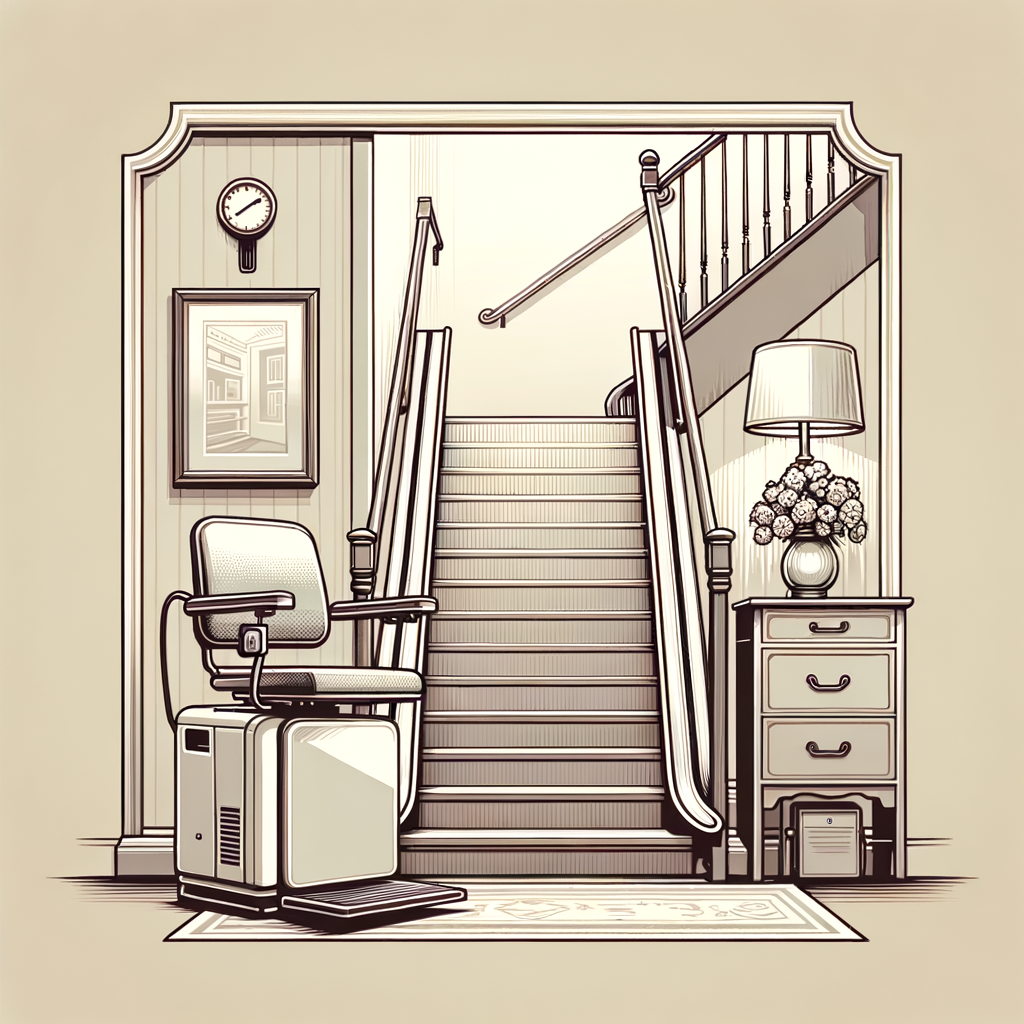
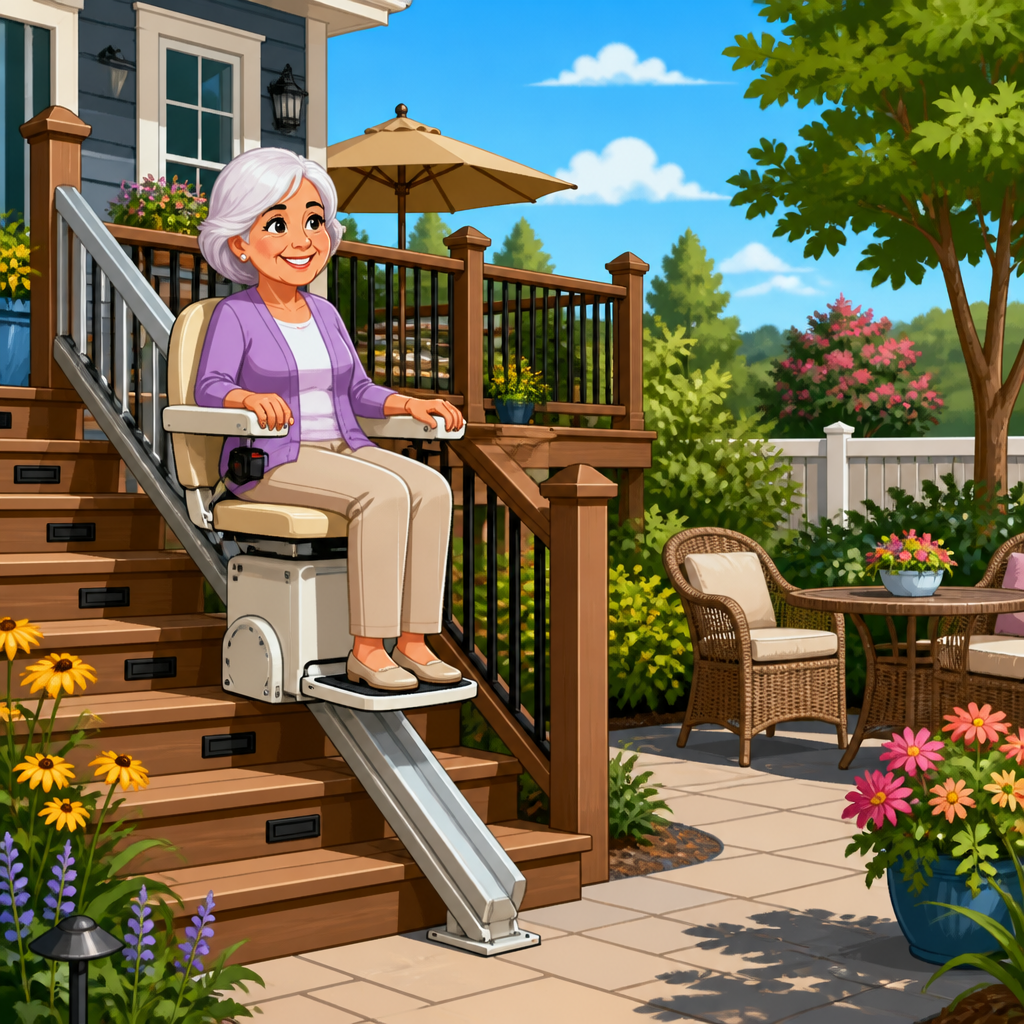
An outdoor chair lift is designed specifically for exterior stairs that connect one outdoor level to another. Common applications include front porch steps, rear deck stairs, patio transitions, garage-to-yard access, garden terraces, dock approaches, and hillside homes with multi-level landscaping. In each case, the lift rides on a rail attached to the stair treads or, less commonly, supported by engineered mounting points that avoid overloading fragile surfaces. The seat folds up when not in use, armrests usually fold as well, and a seat belt secures the rider during travel. Most residential systems run on batteries that charge continuously at designated points on the rail, so the lift can still operate during a power outage.
Straight outdoor stair lifts are the most common and most affordable because the rail is standardized and cut to length on site or ordered to fit. They are ideal for a deck with one run of steps or a patio with direct backyard access. Curved outdoor stair lifts are custom fabricated after detailed measurements or digital scans. They are used when stairs bend around landscaping, include a mid-landing, or connect staggered elevations. In practice, I tell homeowners to begin with the staircase geometry, not the catalog. If the stairs are straight and structurally sound, the project is usually simpler, faster, and less expensive. If there are turns, narrow landings, or uneven surfaces nearby, customization becomes the deciding factor.
Key Features That Make an Exterior Stair Lift Durable
Not every stair lift can be adapted for outdoor use. A true exterior stair lift includes design elements intended to withstand weather and temperature swings over time. Powder-coated aluminum components are common because aluminum resists rust better than untreated steel. Critical electronics are enclosed, wiring is sealed, and switches are protected from moisture intrusion. Seats are typically made with water-resistant or marine-grade materials that can tolerate humidity and direct sun better than indoor upholstery. Most reputable models include a fitted weather cover that should be used whenever the lift is parked outside.
Safety systems are equally important. Swivel seats help riders get on and off at the top landing without twisting near the stairs. Footrest and carriage sensors stop the lift if it contacts an object such as a dropped tool, pet toy, or accumulated debris. Call-send remotes let one rider send the unit to another end of the rail, which is useful for households with multiple users or when parking the lift away from the main view. In colder climates, I recommend checking the manufacturer’s operating temperature range and asking whether snow, ice, or wind-driven rain creates any restrictions. Outdoor stair lifts are durable, but no lift should run on icy stairs or a rail buried in frozen buildup.
Straight vs. Curved Outdoor Stair Lifts
The biggest design choice is whether the staircase needs a straight or curved system. Straight outdoor chair lifts use a single rail on one uninterrupted incline. They install quickly, often in a few hours once the equipment arrives, and replacement parts are generally easier to source. For a standard set of deck stairs with six to fifteen risers, a straight lift is usually the most efficient answer. Because the rail profile is simpler, these models often leave more visible stair width clear when folded, which matters on narrow exterior steps.
Curved outdoor stair lifts are custom machines built for complex routes. If the path includes one or more turns, a 90-degree transition, spiral geometry, or a landing that changes direction, a curved rail is required. Manufacturing lead times are longer because the rail is made to measured dimensions, and installation demands more planning. The benefit is precise access without forcing the user to transfer at a landing or walk any part of the route independently. On steep or irregular backyard stairs, a curved system can make an otherwise inaccessible property usable again. The tradeoff is cost. Curved models can cost several times more than straight systems because of custom engineering, rail fabrication, and more involved installation.
| Lift Type | Best Use | Main Advantage | Main Limitation |
|---|---|---|---|
| Straight outdoor stair lift | Single run deck, porch, or patio stairs | Lower cost and faster installation | Cannot handle turns or intermediate landings |
| Curved outdoor stair lift | Backyard paths with turns or multiple levels | Custom fit for complex stair layouts | Higher price and longer lead time |
Installation Requirements for Decks, Patios, and Backyard Stairs
Outdoor stair lift installation begins with a site assessment, not a product brochure. Installers measure overall run, rise, tread depth, landing space, handrail positions, overhead clearance, and available parking areas at the top and bottom. They also inspect the condition of the stairs because the rail is usually mounted to the treads, not the wall. Wood deck stairs need sound stringers and secure treads. Concrete and masonry steps need adequate anchoring points and should be checked for cracking or movement. If the stairway drains poorly, water management may need to be addressed before installation.
Space planning is often underestimated. The rider needs a safe boarding and exit area, particularly at the top landing. Some lifts offer a rail overrun, which moves the seat beyond the staircase so the user can get off farther from the stair edge. This can be valuable on a deck where the top landing is tight. Stair width also matters. While folded lifts preserve walking space, local code expectations and practical household traffic still need consideration. Experienced installers also account for gate swing, door thresholds, hose bibs, landscape lighting, and nearby furniture because exterior spaces are rarely as open as people imagine during the first phone call.
Power, Performance, and Safety in Real Outdoor Conditions
Most outdoor stair lifts are battery powered, with the batteries charging from household current through a charger connected to a standard electrical supply. This setup is preferred because the lift can continue operating during a household outage, which is especially important during storms. Typical residential units travel at a controlled speed designed for comfort rather than quick transport. Weight capacities commonly range from about 250 to 400 pounds, with heavy-duty models available above that range. Capacity should be verified with the manufacturer, not assumed from a similar indoor unit.
Performance outdoors depends on routine conditions. Leaves, pollen, dirt, and windblown grit can collect on the rail. Coastal homes face salt exposure, while wooded lots deal with sap, insects, and acorns. Safety therefore depends on both design and upkeep. Seat belts should always be used. The swivel lock must engage fully before dismounting. The footrest should clear stair noses throughout travel, and obstruction sensors must be tested during service visits. I also advise families to think about emergency procedures. If the user cannot transfer independently, who can assist if the lift stops midway, and what is the provider’s response plan? These are practical questions, and the right dealer will answer them directly.
Costs, Warranties, and Ownership Considerations
Outdoor stair lift cost varies widely by configuration, site conditions, and service region. In many markets, a straight outdoor stair lift falls roughly in the low-thousands to mid-thousands range installed, while a curved outdoor chair lift can rise substantially because of custom rail fabrication. Added charges may apply for unusual stair geometry, long rail runs, electrical work, site preparation, or premium seat options. Used and rental inventory for outdoor models is less common than for indoor units because weather exposure shortens resale appeal and custom rails have limited reuse value.
Warranty details deserve close reading. Coverage often differs for the motor, gearbox, rail, electronics, and batteries. Batteries are wear items and may require replacement every few years depending on use, charging consistency, and climate. Ask whether annual maintenance is required to keep the warranty valid, and whether labor is included after the initial coverage period. Dealer support is as important as the brand itself. A strong local provider can make a mid-priced lift a better long-term choice than a premium model sold with weak service coverage. Ownership costs are predictable when the staircase is well built, the lift is protected with its cover, and maintenance is performed on schedule.
How to Choose the Right Outdoor Stair Lift for Your Home
The best outdoor stair lift is the one that fits the user, the stairs, and the climate without compromise. Start with the rider’s needs. Consider leg strength, balance, transfer ability, body size, dominant hand, vision, and whether one or multiple people will use the lift. Then match those needs to the staircase layout. A compact seat may preserve more stair width, but a larger user may need a wider chair or higher weight capacity. A manual swivel may be acceptable for one person but difficult for another who has limited trunk rotation. These are not minor details; they determine whether the lift gets used consistently.
Next, evaluate environmental exposure. A shaded covered porch is easier on equipment than an open staircase facing direct afternoon sun and winter precipitation. Ask about corrosion resistance, replacement part availability, and how the model performs in your region’s temperature range. Reputable names in the market often include Bruno, Harmar, Access BDD, Handicare, and Stannah, though available outdoor models differ by dealer network and geography. Request an on-site assessment, a written proposal, and a clear explanation of what is included. If you are building or remodeling a deck, plan for accessibility early. Coordinating stair design, landing depth, lighting, and drainage before the lift is ordered usually produces the safest and cleanest result.
Outdoor stair lifts give people reliable access to decks, patios, gardens, docks, and backyard spaces that would otherwise be limited by pain, instability, or fall risk. The core decision points are straightforward: determine whether the stairs are straight or curved, confirm the structure can support the installation, prioritize outdoor-rated materials and safety features, and choose a provider with dependable local service. When those pieces align, an exterior stair lift becomes more than a convenience. It restores a part of the home that many families gradually stop using, often without realizing how much independence has been lost.
For most buyers, the smartest next step is a professional site evaluation. Measurements, climate exposure, landing safety, and user transfer needs all affect model selection and price more than online estimates suggest. Use this hub as your starting point for understanding outdoor chair lifts, then compare straight and curved options, review feature sets, and ask detailed warranty and maintenance questions before you buy. A well-chosen outdoor stair lift can make backyard access safe, routine, and sustainable for years.
Frequently Asked Questions
What is an outdoor stair lift, and how is it different from an indoor stair lift?
An outdoor stair lift is a motorized chair system designed to carry a person up and down exterior stairs safely and comfortably. It typically includes a seat, footrest, armrests, a drive system, and a rail mounted directly to the stair treads rather than the wall. For homes with deck stairs, patio steps, porch access, or backyard elevation changes, an outdoor chair lift can restore everyday access without requiring the user to climb steps manually. This can make a major difference for people with arthritis, balance concerns, limited mobility, or recovery needs after injury or surgery.
The main difference between an outdoor stair lift and an indoor model is weather protection and durability. Exterior stair lifts are built to handle rain, humidity, temperature swings, and sun exposure. They often use weather-resistant materials, protective covers, sealed components, and corrosion-resistant finishes to perform reliably outside. While indoor stair lifts are made for climate-controlled environments, outdoor models are specifically engineered for exterior use and should be chosen whenever the lift will be installed on deck stairs, patio stairs, garden access steps, or any other outdoor staircase.
Many homeowners use the terms outdoor stair lift, outdoor chair lift, and exterior stair lift interchangeably, and in practical buying conversations, they usually refer to the same type of mobility solution. The most important point is that the lift is rated for outdoor installation and matched to the exact staircase where it will be used. A properly selected unit can improve safety, independence, and confidence while helping homeowners continue using the full outdoor space around their property.
Can an outdoor stair lift be installed on deck, patio, porch, or backyard stairs?
Yes, in many cases an outdoor stair lift can be installed on deck stairs, patio access steps, porch stairways, and backyard staircases. The key requirement is that the staircase has enough physical space, structural stability, and a suitable layout for the rail and chair system. Most straight outdoor stair lifts are installed on straight runs of steps, while curved systems may be available for more complex layouts with turns, landings, or changes in direction. A professional assessment is the best way to confirm compatibility.
During an evaluation, the installer will look at the width of the stairs, the number of steps, the slope, the condition of the treads, the landing space at the top and bottom, and any obstructions such as handrails, gates, posts, or door swing clearance. Because the rail is commonly attached to the steps rather than the wall, many exterior staircases can accommodate a lift even when there is no nearby wall surface. This makes outdoor chair lifts especially useful for open deck stairways and freestanding backyard access stairs.
It is also important to think beyond basic fit. A good installation plan considers how the user gets on and off the seat, whether there is enough room to swivel safely at the top landing, and whether the unit can be parked in a position that does not interfere with regular stair traffic. In some cases, a folding rail or specialized configuration may be recommended. When installed correctly, an exterior stair lift can provide dependable access to spaces that may otherwise become difficult or unsafe to use, including decks, patios, gardens, and lower-level yard areas.
Are outdoor stair lifts safe to use in rain, heat, and other weather conditions?
Outdoor stair lifts are designed with exterior use in mind, and quality models are built to handle a range of weather conditions, including rain, humidity, sun, and changing temperatures. Manufacturers typically use weather-resistant seats, sealed electronics, durable finishes, and protective covers to help shield the lift when it is not in use. These features are important because outdoor equipment is exposed to more environmental stress than indoor mobility devices, and long-term performance depends on the lift being specifically rated for exterior conditions.
That said, weather resistance does not mean weather is irrelevant. Safe and reliable operation still depends on proper installation, routine maintenance, and following the manufacturer’s recommendations. For example, debris such as leaves, dirt, or ice should not be allowed to build up on the stairs or rail. In colder climates, users may need to monitor for snow or freezing conditions before operating the lift. In coastal or high-humidity areas, corrosion resistance becomes especially important, and regular service can help preserve the system over time.
Modern outdoor chair lifts also include core safety features that support secure use in daily life. These may include seat belts, obstruction sensors, swivel seats for safer dismounting, lockable controls, battery backup, and folding components that keep the stairs more open when the lift is not being used. An exterior stair lift is safest when it is professionally installed, kept clean, serviced as recommended, and used according to its weight limits and operating instructions. For many households, that combination delivers a practical, dependable mobility solution that supports safer outdoor access year-round.
How much does an outdoor stair lift cost, and what affects the price?
The cost of an outdoor stair lift can vary significantly depending on the staircase and the type of system required. In general, straight outdoor stair lifts tend to be the most affordable option, while custom curved exterior stair lifts usually cost more because they require specialized rail design and more complex installation. Pricing is influenced not only by the lift itself, but also by the length of the rail, the site conditions, the power setup, and any optional upgrades selected for comfort or convenience.
Several specific factors affect the final price. These include whether the stairs are straight or curved, how many steps are involved, whether there are narrow landings or special access challenges, and whether the homeowner wants features such as a powered swivel seat, folding footrest, upgraded seat style, or call/send controls. Outdoor-rated materials and weather-protection features may also contribute to cost compared with a standard indoor lift. In some situations, installation complexity increases if the staircase needs preparation work or if access to the site is more difficult.
Homeowners should also consider the total value rather than only the upfront price. An outdoor chair lift can help reduce fall risk, preserve independence, and make key parts of the home usable again, including decks, patios, porches, and backyard living areas. For many people, that improvement in safety and quality of life justifies the investment. It is smart to request a detailed quote, ask what is included in installation and warranty coverage, and clarify ongoing maintenance expectations so there are no surprises later.
How do I choose the best outdoor stair lift for backyard or patio access?
Choosing the best outdoor stair lift starts with understanding the user’s mobility needs and the exact layout of the outdoor staircase. The right model should fit the stairs properly, support the user’s weight and seating needs, and make boarding and exiting as easy as possible. If the lift will be used daily to reach a deck, patio, or backyard area, comfort, ease of operation, and reliability are especially important. A well-matched system should feel like a natural part of the home rather than a workaround.
When comparing options, look at key features such as weight capacity, seat size, swivel function, folding design, battery backup, weather protection, and control simplicity. It is also wise to ask about the lift’s outdoor rating, materials, warranty terms, and service availability in your area. Not all lifts are equal when it comes to long-term exposure to the elements, so product quality and installer experience matter. A reputable provider should measure the stairs carefully, explain the available configurations, and recommend a solution based on both safety and usability.
Finally, think about long-term ownership. Ask how the lift will be maintained, how quickly service can be scheduled if needed, and whether replacement parts are readily available. If multiple family members use the space, consider how the folded chair will affect stair clearance and overall traffic flow. The best exterior stair lift is one that combines proper fit, dependable outdoor performance, strong safety features, and local support. With the right setup, homeowners can regain convenient access to outdoor living spaces and continue enjoying their property with greater confidence and independence.