Outdoor stair lifts for front steps solve a very specific access problem: how to move safely from ground level to a porch, landing, or entry door when walking up exterior stairs has become painful, unstable, or impossible. In practical terms, an outdoor chair lift is a weather-resistant stair lift installed on exterior steps, usually with sealed electronics, corrosion-resistant rails, UV-stable materials, and a cover designed to withstand rain, sun, and temperature swings. I have worked with homeowners comparing these systems, and the biggest mistake I see is assuming any stair lift can simply be placed outside. It cannot. Exterior installations require a different standard of durability, drainage, and mechanical protection, especially at the charging points, call stations, seat hardware, and track anchors.
This matters because front-step access is often the difference between staying independent and feeling trapped at home. According to CDC fall-prevention guidance, stairs are a major source of injury risk for older adults and people with mobility limitations. A properly selected lift reduces repeated transfers, limits exposure to wet and uneven walking surfaces, and restores predictable entry for daily routines, medical appointments, package retrieval, and social visits. Front steps also create a distinct design challenge. They are usually shorter than interior staircases, but they are exposed to weather, may include brick, concrete, pavers, or metal handrails, and often sit in visible areas where curb appeal matters. The best solution depends on stair shape, rise, width, user size, transfer ability, local climate, and how the household uses the entrance. This guide explains which outdoor stair lift type works best, when each option makes sense, what features truly matter, and how to evaluate installation, maintenance, and cost with confidence.
Straight outdoor stair lifts are the best fit for most front steps
For most homes, a straight outdoor stair lift is the best type for front steps because most exterior entry stairs run in a single line without turns or intermediate landings. A straight lift uses a fixed rail mounted to the stair treads rather than the wall. That matters on porches and masonry entries because installers often have more reliable structural attachment points on the steps than on adjacent railings or facades. Straight systems are also faster to manufacture, simpler to service, and usually more affordable than custom curved models. In actual projects, this is the option that solves the problem cleanly when a homeowner has four to twelve steps from the walkway to the porch.
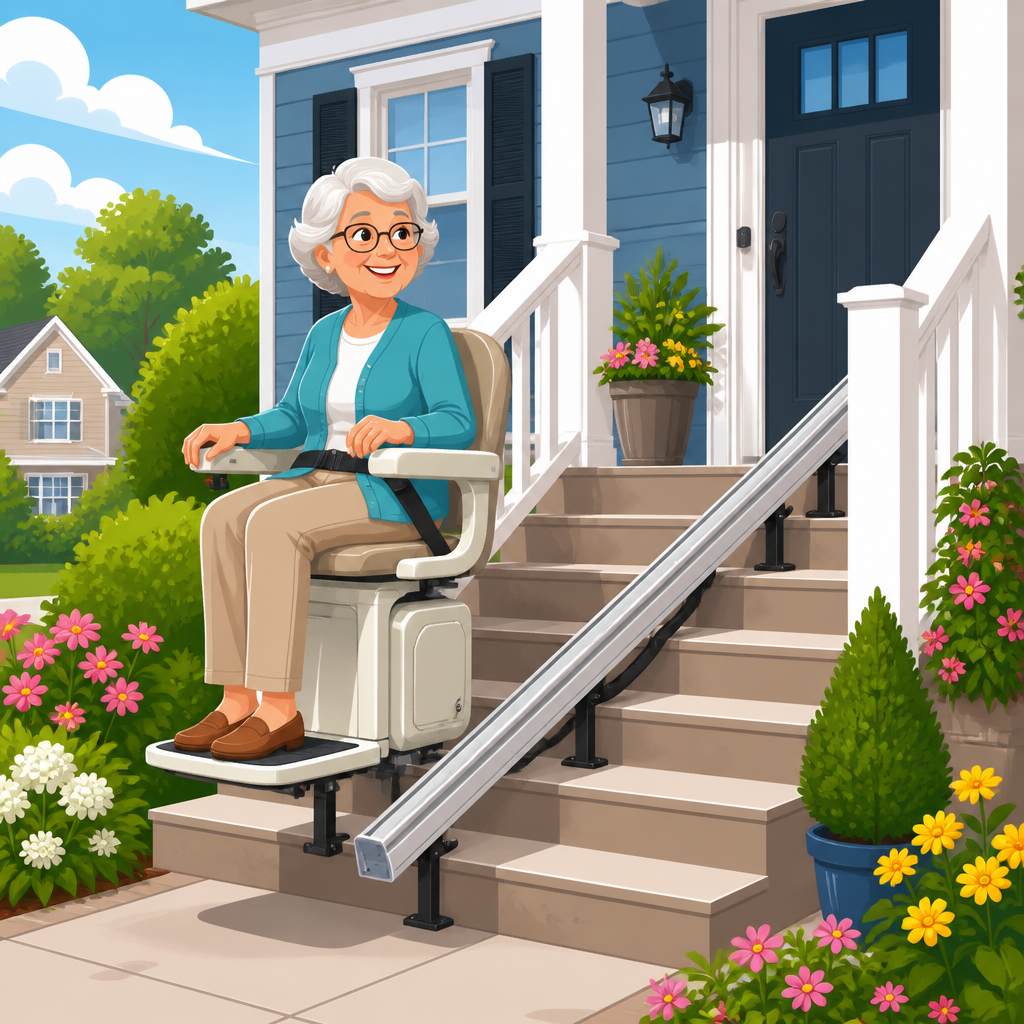
The operating concept is simple: the user sits on a folding seat, lowers armrests and footrest, fastens the seat belt, and rides along a powered rail. Outdoor versions typically include marine-grade vinyl or similarly water-resistant upholstery, anodized or powder-coated components, sealed gear racks, and a fitted cover. Models from brands such as Bruno, Harmar, and Access BDD are commonly specified for exterior use because they offer purpose-built outdoor packages rather than improvised modifications. In climates with frequent rain or coastal air, the difference between galvanized, powder-coated, and standard painted components is not cosmetic. It directly affects corrosion rate, service life, and maintenance frequency.
Straight outdoor lifts work best when the staircase is at least about 28 to 30 inches wide, though the real requirement varies by model and by how much clear egress local code requires. A folding rail or hinged rail may be recommended if the bottom of the track would obstruct a sidewalk or gate swing. On the top landing, installers look closely at transfer space. A swivel seat can make mounting and dismounting much safer, but if the porch is shallow, a perch-style approach or alternate rail overrun may be needed. When homeowners ask which type works best in general, straight outdoor stair lifts win because they cover the highest percentage of front-step layouts with the fewest compromises.
Curved and custom outdoor stair lifts work for complex entrances
Not every front entry is straight. Some homes have wraparound porch steps, split landings, a 90-degree turn, or a staircase that curves around masonry walls or decorative ironwork. In those cases, a curved outdoor stair lift can work, but it should be treated as a custom engineering project rather than a commodity purchase. The rail is fabricated to the exact dimensions of the steps and landings, often after a detailed photo survey or digital measurement. Because the track geometry is custom, lead times are longer, and pricing is substantially higher than for straight systems.
Curved outdoor lifts are most appropriate when the front entrance is the primary accessible route and no simpler alternative exists. I usually advise clients to compare this option with a vertical platform lift, ramp, or alternative entrance before proceeding, because custom outdoor rails can become expensive quickly. Still, there are situations where a curved chair lift is the most practical answer. A historic home with a narrow side approach may not have the run length for a ramp. A porch with a switchback stair may not allow a straight track. A well-designed curved unit can preserve the existing architecture while giving one seated rider dependable access.
The tradeoff is complexity. More joints, bends, and transitions create more potential maintenance points. Outdoor debris such as leaves, pollen, grit, and blown sand can collect at rail changes and charging contacts. Service quality matters more here than brand marketing. Before buying, homeowners should ask who measures the rail, who installs it, what the warranty covers outdoors specifically, and how replacement parts are sourced if a control board, gearbox, or carriage component fails years later. For complex front steps, a curved lift can work very well, but it is rarely the first choice unless the stair configuration demands it.
Platform lifts, ramps, and porch lifts may be better than a chair lift
When people search for outdoor chair lifts, they are often really asking a broader question: what mobility device is best for front steps? The answer is not always a seated stair lift. If the user relies on a wheelchair or scooter and cannot safely transfer to a stair-lift seat, a vertical platform lift is usually the better solution. Platform lifts carry the mobility device itself, eliminating the need to stand, pivot, and sit. For ADA-informed residential planning, that transfer issue is decisive. A chair lift is excellent for someone who can sit and stand with support. It is the wrong tool for someone who needs the wheelchair at the top and bottom of the stairs without a separate transfer.
Ramps are another alternative, especially for low-rise entries, but they require space. A rise of 24 inches can demand roughly 24 feet of ramp run at a 1:12 slope, plus landings, depending on application and local requirements. Many front yards simply cannot absorb that footprint without blocking walkways or changing drainage. Porch lifts, sometimes used as a shorthand for vertical platform lifts, solve the space problem but require a concrete pad, electrical service, gate safety systems, and weather protection planning. They also typically cost more than a straight outdoor chair lift.
| Option | Best For | Main Advantage | Main Limitation |
|---|---|---|---|
| Straight outdoor stair lift | Single-run front steps | Lower cost and fast installation | User must transfer to seat |
| Curved outdoor stair lift | Turns or multiple landings | Fits complex stair geometry | Custom fabrication raises cost |
| Vertical platform lift | Wheelchair or scooter users | No standing transfer required | Needs pad, gates, and more space |
| Ramp | Low-rise entries with ample yard space | No moving mechanical parts | Long footprint and site constraints |
The practical rule is straightforward. If the user can transfer safely and the stairs are straight, an outdoor chair lift usually works best. If the user cannot transfer, or if multiple household members use wheelchairs, look first at a platform lift. That comparison is central to any front-step access decision.
The features that matter most outdoors
Outdoor reliability depends less on brochure language and more on specific protective details. The first is weather sealing. Chargers, limit switches, wiring harnesses, and carriage electronics should be protected against moisture intrusion, not merely covered. The second is corrosion resistance. Stainless hardware, aluminum components, galvanized steel, and durable powder coating all matter, particularly in snowy or coastal regions where salt exposure accelerates rust. The third is battery operation. Most stair lifts run on batteries charged from household power. That setup is useful outdoors because the lift can continue operating during a short outage, but battery capacity degrades in extreme temperatures and should be replaced on schedule.
Safety features should be nonnegotiable. A seat belt, obstruction sensors, overspeed governor, keyed control, armrest controls, and call/send stations are standard on reputable models. Swivel seats are especially valuable at the upper landing because they let the rider dismount away from the staircase. Footrest position also matters. On shallow front steps, a folding footrest can reduce trip hazards for other users. If children, delivery traffic, or pedestrians pass near the base of the stairs, a hinged rail may be worth the added cost to preserve clear access.
Climate-specific details often determine long-term satisfaction. In freeze-thaw environments, snow removal practices must avoid packing ice around the rail and lower charging point. In hot southern exposures, direct sun can heat dark seats and shorten material life if covers are not used consistently. In coastal zones, owners should expect more frequent cleaning and periodic inspection for oxidation. An outdoor stair lift is not maintenance-free equipment. It is durable accessibility equipment that performs well when matched to its environment and serviced like any exterior mechanical system.
Installation, codes, and site planning determine whether the lift will work well
A good outdoor stair lift install begins with the staircase itself. Installers measure tread depth, riser height, total rise, angle, landing space, and stair width, then verify the structure can accept rail brackets. Brick and concrete steps can be excellent bases, but cracked treads, loose pavers, or uneven surfaces may need repair first. Drainage is another issue I insist on reviewing. If water pools at the bottom landing, the lower rail end and charging contacts will suffer. Minor grading or drain improvements can prevent recurring service calls.
Electrical planning is equally important. Most units use a standard dedicated outlet for the charger, but the outlet must be properly located and protected for exterior conditions in accordance with local electrical code. Installers also check whether the parked chair blocks required egress. While private residences do not follow every commercial rule, safe passage still matters. The folded seat, armrests, and footrest should leave reasonable clearance for ambulatory users and emergency access. Some municipalities or HOAs also have appearance requirements for visible front-entry equipment, so finish color and parked position can affect approval.
Professional assessment pays off because front entries often look simple but conceal constraints. I have seen jobs where a decorative newel post blocked the swivel path, where storm doors collided with the user at the upper landing, and where a walkway gate could no longer open after rail placement. The best installers test the entire user journey: approach, sit, ride, dismount, open the door, and clear the entry. That sequence matters more than any catalog specification.
Cost, maintenance, and choosing the right model
Outdoor stair lift pricing varies by staircase design, not just by brand. As a broad market range, a straight outdoor stair lift often falls around $4,000 to $8,000 installed, while a curved outdoor lift can rise well above $10,000 and sometimes much higher depending on rail complexity. A vertical platform lift generally starts above a straight chair lift and can move into the mid-five figures once concrete, electrical work, and gates are included. Prices also change by region, service network, and options such as powered swivel seats, folding rails, upgraded upholstery, and extended warranties.
Maintenance should be discussed before purchase, not after breakdown. Ask how often the unit should be serviced, whether annual preventive maintenance is recommended, what battery replacement typically costs, and whether service technicians are local. Outdoor units need routine cleaning, cover use, and periodic checks of the rail, seat fasteners, safety edges, and charging function. If the dealer cannot explain a realistic maintenance plan, that is a warning sign. Reputable providers also clarify what weather conditions warrant temporary nonuse, such as heavy icing or storm debris that could obstruct the track.
Choosing the right model comes down to five questions. Can the user transfer safely? Is the staircase straight or complex? What weather exposure does the unit face? How much landing space exists at top and bottom? And how quickly is service available if the lift stops working? In many homes, the best answer is a straight outdoor stair lift from an established manufacturer with a strong local installer. In others, a platform lift or alternate entry will be smarter and safer. The right decision is the one that fits the user, the stairs, and the climate without forcing daily workarounds.
Outdoor stair lifts for front steps work best when the equipment matches the actual access problem instead of the label on the brochure. For most households, a straight outdoor stair lift is the top choice because it fits common front-step layouts, installs faster, costs less than custom systems, and restores safe daily entry with minimal disruption. When the stairs include turns or multiple landings, a curved outdoor lift can solve the problem, but it should be approached as a custom project with higher cost and more maintenance considerations. And when the rider uses a wheelchair and cannot transfer safely, a vertical platform lift is usually the better answer.
The key is to evaluate the whole site: stair geometry, landing space, transfer ability, weather exposure, drainage, power supply, and service support. Features such as corrosion-resistant materials, sealed electronics, battery backup, swivel seating, obstruction sensors, and protective covers are not optional extras outdoors. They are the foundation of reliable performance. Homeowners who compare these details carefully usually avoid the most expensive mistakes, including buying indoor equipment for outdoor use, underestimating transfer risk, or ignoring climate effects on long-term durability.
If you are planning a front-step accessibility upgrade, start with a professional site assessment and compare a straight outdoor stair lift, a curved lift if needed, and a platform lift if transfers are difficult. The best model is the one that delivers safe, repeatable access every day. Use this page as your hub, then review the related outdoor chair lift topics in your buying process and get quotes from qualified local installers.
Frequently Asked Questions
What type of outdoor stair lift works best for front steps?
The best type of outdoor stair lift for front steps depends first on the shape of the stairs. If the front steps run in a straight line from the ground to the porch, a straight outdoor stair lift is usually the best fit. It is the simplest design, the most common, and often the most cost-effective option because the rail runs directly up one path without turns or intermediate landings. For many homes, this is exactly what is needed: a compact, weather-resistant lift that provides safe seated travel from the walkway to the front door.
If the front entry includes a turn, a curved section, multiple landings, or an unusual stair configuration, then a custom curved outdoor stair lift may be required. These are less common than straight units and need careful measuring because the rail must match the exact layout of the stairs. In some cases, a vertical platform lift or porch lift is actually the better answer, especially when the user relies on a wheelchair, walker, or cannot transfer comfortably into a stair lift seat. That is why “best” is not just about the product itself. It is about matching the lift to the user’s mobility needs, the stair design, and the exposure of the entryway to weather.
For most front steps, the ideal outdoor model includes sealed components, a corrosion-resistant rail, UV-stable plastic parts, a durable protective cover, and safety features such as seat belts, obstruction sensors, locking swivel seats, and call/send controls. A good installer will also look at clear walking space, porch access, power supply, and whether the folded chair leaves enough room for other people to use the stairs safely. In short, straight outdoor stair lifts work best on straight steps, custom systems work best on more complex layouts, and some homes are better served by a vertical lift instead of a chair lift.
How is an outdoor stair lift different from an indoor stair lift?
An outdoor stair lift is specifically built to tolerate conditions that would quickly damage a standard indoor unit. While both types perform the same basic function, moving a seated rider along a rail mounted to the stairs, outdoor models are engineered for exposure to rain, humidity, temperature changes, windblown debris, and direct sunlight. That usually means weather-sealed controls and electronics, treated or anodized rails, rust-resistant hardware, marine-grade or similarly durable finishes, and plastics designed to resist fading and brittleness from UV exposure.
Another important difference is protection when the lift is not in use. Most outdoor stair lifts come with a fitted cover that should remain in place whenever the chair is parked outside. The cover helps shield the seat, armrests, controls, and carriage from moisture and sun. Even with a cover, the unit still needs periodic cleaning and routine service, especially in climates with heavy rain, salt air, snow, or blowing dust. Outdoor lifts are durable, but they are not maintenance-free.
Outdoor installations also require more planning around drainage, electrical access, and exposure. A front stairway that gets full afternoon sun, driving rain, or winter ice presents different demands than a sheltered side entry. This is why using an indoor model outside is never a safe substitute. A proper outdoor stair lift is designed for exterior conditions from the start, and that difference affects reliability, longevity, and rider safety.
Can an outdoor stair lift be installed on any front steps?
Not on every staircase, but on many more than people expect. The key factors are stair width, overall rise, landing space at the top and bottom, and whether the stairway is straight or has turns. Most outdoor stair lifts are mounted to the stair treads rather than the wall, which makes them possible on many types of front steps, including concrete, wood, brick-faced, and composite stair systems. What matters most is whether the stairs are structurally sound and whether there is enough room for the rail and folded chair without creating a hazard for others using the entry.
The top and bottom landings are especially important. A user needs a safe place to get on and off the lift without standing on a steep step or twisting awkwardly near the edge. In many installations, the seat swivels and locks at the top so the rider can dismount toward the porch or entry landing more safely. Some systems can also include a rail overrun, which carries the user slightly beyond the top or bottom stair run for safer boarding. These details can make a major difference in day-to-day usability.
There are also situations where a stair lift may not be the right solution. Very narrow steps, severely deteriorated stair structures, or layouts with tight turns and minimal landing space can limit what is practical. In those cases, a vertical platform lift, a ramp, or even a reconfiguration of the entry may be a better long-term answer. A professional site evaluation is the best way to determine fit, because measurements alone do not tell the whole story. The installer should assess structural support, weather exposure, user transfer ability, and code-related concerns before recommending a system.
Are outdoor stair lifts safe to use in rain, cold weather, and other harsh conditions?
Yes, when they are true outdoor-rated models that have been properly installed and maintained. Outdoor stair lifts are built for exterior environments, so they are designed to handle moisture, temperature swings, and sunlight much better than indoor units. That said, “weather-resistant” does not mean “invincible.” Heavy rain, freezing temperatures, ice accumulation, windblown leaves, or coastal salt exposure can still affect performance if the lift is neglected. The safest approach is to choose a quality outdoor unit, keep it covered when not in use, and follow the manufacturer’s care recommendations closely.
Most outdoor stair lifts include several safety systems that remain important no matter the season. These often include a seat belt, obstruction sensors that stop the lift if something is blocking the path, a locking swivel seat for safer exit at the top, and battery operation so the lift can still run during a household power outage. Battery-powered drive systems are especially valuable at front entries because they reduce the risk of being stranded during storms or utility interruptions. The charger keeps the batteries topped up when the chair is parked correctly.
Cold-weather use deserves special attention. Rainwater can freeze on steps, footrests, or the seat if the cover is not used consistently. Snow and ice should be cleared from the staircase and rail path before operation. In very harsh climates, homeowners may need more frequent service checks to confirm the lift is staying clean, dry, and mechanically sound. Used properly, an outdoor stair lift is a dependable accessibility solution, but like any exterior mobility equipment, it performs best when the environment around it is kept as safe and clear as possible.
Should I choose an outdoor stair lift, a ramp, or a porch lift for front steps?
This depends on how the person moves, not just on the stairs themselves. An outdoor stair lift is usually best for someone who can safely transfer into a seat, remain seated during travel, and stand or pivot off the chair at the top landing. It is often the most practical solution when front steps are too tall for an affordable ramp and when the user does not need to stay in a wheelchair during the trip. For many homeowners, it solves the specific problem of getting from ground level to the porch without a major structural remodel.
A ramp can be excellent in the right setting, but it requires a surprising amount of space. Exterior ramps must follow slope guidelines to be safe and usable, which means even a modest rise can require a long run, switchbacks, landings, handrails, edge protection, and enough yard area to accommodate the layout. On small front lots or compact entryways, a ramp may be physically possible on paper but awkward, visually intrusive, or expensive once site work is included.
A porch lift, also called a vertical platform lift, is often the better choice for a wheelchair user or for someone who cannot manage a seated transfer onto a stair lift. It travels vertically like a small open lift from grade level to porch height and can be ideal when the rise is short and the user wants to remain in a wheelchair or on a scooter. In real-world planning, the best choice comes down to safety, independence, available space, transfer ability, and budget. A knowledgeable accessibility professional should compare all three options based on how the person actually enters and exits the home each day, not just on which product seems most familiar.