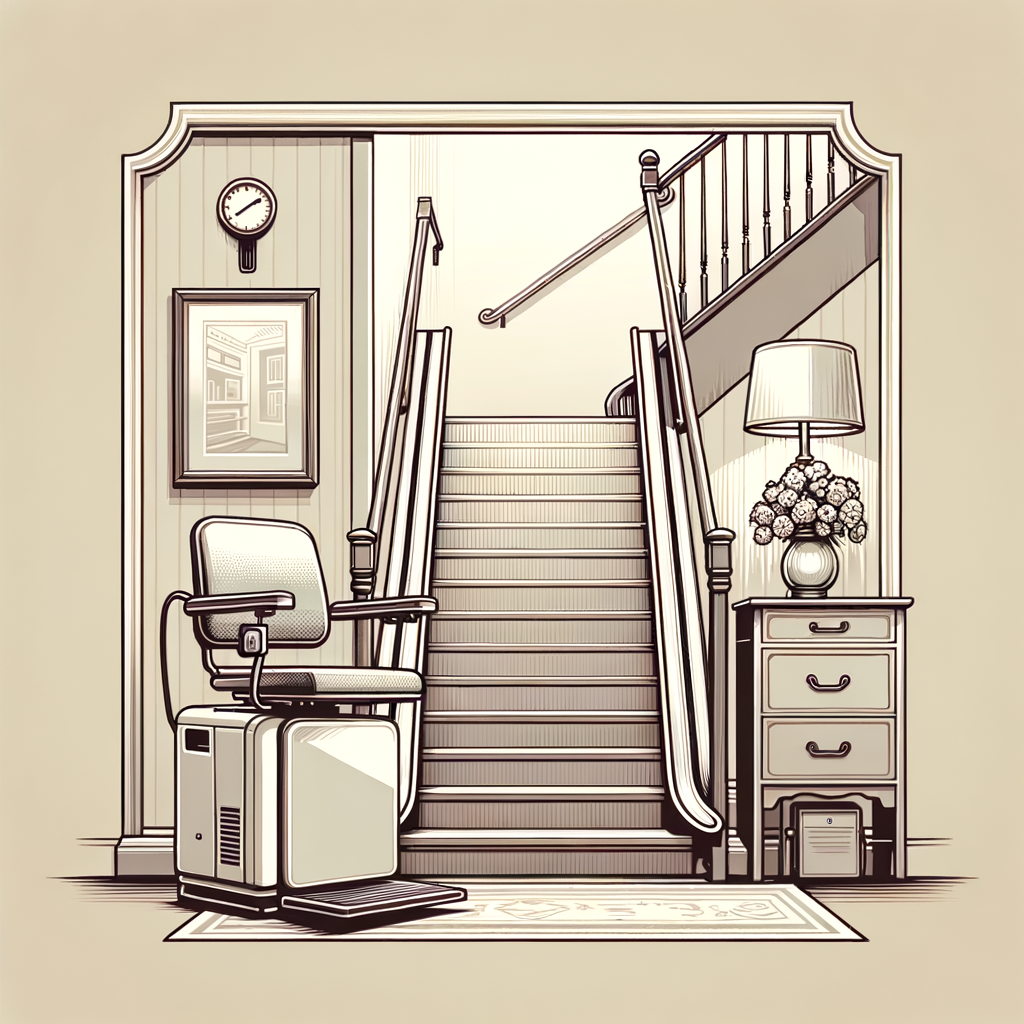
Choosing the right stair chair lift design is less about style and more about reliability, because a lift is often the difference between independent movement and daily risk on the stairs. In the chair lift industry, reliability means consistent operation, low fault rates, predictable maintenance needs, and safe performance over years of repeated use. Design refers to the engineering layout of the lift: rail type, drive system, power source, seat structure, and the way the unit handles straight runs, curves, and landings. When families compare chair lift types, they usually focus on price first, but after years of evaluating installations and service records, I have found that the most reliable chair lift designs are the ones built around mechanical simplicity, strong diagnostic systems, and parts support that lasts.
This matters because stair lifts are not occasional convenience products. They are mobility devices used every day by older adults, people recovering from surgery, and users living with arthritis, balance disorders, or neurological conditions. A design that works well in a showroom can become frustrating if it stalls on a swivel sensor, drains batteries too quickly, or needs specialized parts that take weeks to arrive. Reliability also affects long-term ownership cost. A cheaper unit with frequent callouts can cost more over five years than a premium design with stronger components and better service access.
As a hub article for comparative and ranking content under chair lift types and designs, this guide ranks the most reliable chair lift designs by engineering dependability, real-world serviceability, and suitability for different homes. It also explains where each design performs best, where it tends to fail, and what buyers should ask before installation. If you want the short answer, straight rail battery-powered lifts with rack-and-pinion drives remain the most reliable overall, while custom curved lifts can still be dependable when built by established manufacturers with strong survey and installation controls.
How reliability should be judged in chair lift design
Reliable chair lift design can be measured with five practical criteria. First is mechanical simplicity: fewer moving parts usually means fewer failure points. Second is power resilience: battery-backed systems continue working during outages, which is critical for users who cannot safely climb stairs. Third is track and carriage durability: rail alignment, gear wear, and carriage stability affect smoothness and long-term performance. Fourth is serviceability: technicians need clear access to batteries, charge points, limit switches, and diagnostic codes. Fifth is manufacturer ecosystem: the best design still becomes a poor choice if parts, installers, or warranty support are weak in your region.
In the field, I pay close attention to recurring service causes rather than marketing claims. Common issues include dirty charge contacts, seat swivel lock misalignment, footrest safety edge faults, and rail obstructions. These are not all equal. Some designs tolerate minor user error and still recover cleanly; others stop frequently and require resets. The most dependable lifts are engineered to fail safely without becoming overly sensitive. Standards and certifications also matter. Reputable manufacturers design to recognized stair lift and home accessibility safety requirements, and established dealers typically follow documented installation practices, load testing, and handover checks.
Ranking the most reliable chair lift designs
The ranking below reflects overall reliability in normal residential use, combining engineering strength with maintenance realities. It does not mean a lower-ranked design is poor. It means the design has more variables, more customization, or more environmental exposure that can affect long-term dependability.
| Rank | Chair lift design | Reliability outlook | Best use case | Main limitation |
|---|---|---|---|---|
| 1 | Straight rail, battery-powered, rack-and-pinion | Excellent | Standard indoor staircases | Only fits straight runs |
| 2 | Straight rail, battery-powered, cable or drum drive | Very good | Homes needing compact profile | More wear-sensitive drive components |
| 3 | Curved rail, battery-powered, modular rail | Good | Stairs with turns or intermediate landings | More joints and setup complexity |
| 4 | Curved rail, custom one-piece rail | Good to very good | Complex staircases needing precise fit | Long lead times and expensive parts |
| 5 | Standing or perched stair lifts | Moderate to good | Narrow stairs and limited knee bend users | Less forgiving user position |
| 6 | Outdoor chair lifts | Moderate | Exterior steps, porches, garden access | Weather exposure accelerates wear |
| 7 | Non-battery direct AC-powered lifts | Moderate | Legacy installs and specific retrofit cases | Stops in power outages |
The top-ranked design earns its place because it combines the fewest installation variables with the most mature engineering. Straight rails are easier to survey accurately, easier to mount, and easier to service. Rack-and-pinion drives are proven across mobility equipment because they provide positive engagement between gear and rail, reducing slippage concerns and giving predictable travel characteristics. Add onboard batteries with automatic charging at park points, and the result is a system that remains usable even during a household power cut.
Why straight rail rack-and-pinion lifts lead the ranking
If a homeowner asks me for the safest reliability-first recommendation, I start with a straight stair lift using a battery-powered rack-and-pinion design. Brands in this category have spent decades refining carriage electronics, overspeed governors, obstruction sensors, and folding seats. The rail is usually extruded aluminum or steel, mounted to the stair treads rather than the wall, which simplifies installation and reduces structural surprises. Because the staircase is straight, there is less need for custom bends, transition points, and precision mapping that can introduce fit errors.
These lifts also tend to have the strongest service networks. Models from established manufacturers such as Bruno, Handicare, Harmar, and Stannah often use standardized maintenance routines. A technician can inspect charging strips, battery voltage, gearbox condition, and safety circuits quickly. In practical terms, that means shorter visits and faster diagnosis. Replacement parts are also more likely to be stocked because straight lifts represent a large share of the market.
Another reliability advantage is user tolerance. Straight rack-and-pinion lifts usually handle minor debris, everyday start-stop cycles, and repeated folding better than more specialized systems. They are not invincible. Worn batteries, misaligned seat locks, and neglected annual service still cause failures. But compared with more complex designs, they give owners the best balance of durability, uptime, and manageable maintenance cost.
Where cable, drum, and alternative straight-drive designs fit
Not every straight stair lift uses the same drive architecture. Some employ cable drum systems, traction layouts, or proprietary enclosed drives intended to reduce visual bulk. These can be very reliable, especially in light residential use, but they generally rank slightly below rack-and-pinion because the drive path can be more sensitive to wear, tension, or adjustment. When installers maintain them correctly, many perform well for years. The issue is not that the design is weak; it is that there is less margin for neglect.
Compactness is the usual reason to choose one. In narrow stairways, homeowners may need a slimmer rail or lower profile carriage to preserve walking space. If that design comes from a mature product line with good dealer support, it can still be an excellent option. I advise buyers to ask directly about service intervals, battery replacement frequency, and whether common wear parts are dealer-stocked locally. A slightly less robust mechanism can still be a strong purchase if the support chain is excellent and the staircase demands that specific form factor.
Curved chair lift designs: reliable when engineered and installed well
Curved chair lifts are often misunderstood. They are not inherently unreliable, but they are more complex by design. A curved system must follow turns, landings, and changes in angle while maintaining smooth travel, proper seat orientation, and consistent charging locations. That requires either a modular rail assembled from prefabricated sections or a fully custom one-piece rail based on a detailed survey. Each additional bend, joint, and transition creates another opportunity for alignment error or tolerance drift.
In homes with multi-landing staircases, curved lifts are the only practical choice short of a residential elevator. Their reliability depends heavily on measurement accuracy and installation discipline. Modern digital surveying tools have improved outcomes significantly. Many manufacturers now use photo measurement, 3D mapping, or proprietary stair surveying software to reduce rail-fit mistakes. When the survey is right and the installer follows specification, a curved lift can operate smoothly for many years.
Between modular and one-piece custom rails, neither wins universally. Modular systems can simplify replacement of sections and may reduce lead times. One-piece custom rails often deliver smoother travel because there are fewer joints. However, if a custom section is damaged, replacement can be slower and costlier. That is why curved designs rank below straight models overall: not because they fail constantly, but because they involve more bespoke engineering and less room for installation error.
Specialized designs: standing, perched, and outdoor lifts
Standing and perched stair lifts serve important mobility needs, especially on very narrow staircases where a seated unit would project too far. They can be reliable machines, but the user experience is less forgiving. Because the rider remains upright or semi-seated, body position matters more, and safety sensors may be triggered more often if feet, knees, or clothing shift into the travel path. For users with limited balance, even a technically dependable unit may feel less stable than a seated lift. Reliability here should be judged together with suitability.
Outdoor chair lifts face the toughest operating conditions. Rain, wind-driven dust, temperature swings, corrosion, and UV exposure all shorten component life. Well-designed outdoor models use weather-resistant covers, sealed controls, treated rails, and marine-grade finishes, yet they still require more frequent inspection than indoor lifts. I have seen outdoor units perform admirably on porch steps for years, but only when owners keep covers on, clear leaves from the rail, and replace aging batteries before winter performance drops. The design can be sound and still rank lower simply because the environment is harsher.
Direct AC-powered lifts deserve a final note. Older systems that run without onboard battery backup can seem mechanically straightforward, but they lose a critical reliability advantage when household power fails. For users who depend on the lift to reach a bathroom or bedroom, outage resilience is part of reliability. That is why modern battery-powered designs have become the benchmark.
What actually determines long-term dependability after installation
The design matters, but installation quality and maintenance discipline decide whether a chair lift stays reliable. A poorly mounted top-ranked lift will underperform a correctly installed mid-ranked one. Dealers should complete a stair assessment, verify tread condition, confirm power supply, test charging points, and review user weight capacity and seat height. During handover, they should demonstrate swivel operation, folding steps, remote controls, and manual lowering or emergency procedures where applicable.
Maintenance is usually straightforward. Most manufacturers recommend annual service, though high-use homes may need more frequent checks. Batteries commonly last two to five years depending on charging habits, temperature, and travel frequency. Owners should keep the rail clean, avoid parking away from charge points for long periods, and report changes in sound or movement early. If a lift begins to beep, hesitates, or stops intermittently, delaying service often turns a small adjustment into a larger repair.
For most buyers, the best choice is simple: prioritize a straight battery-powered rack-and-pinion chair lift when the staircase allows it, choose a curved model from a proven manufacturer when the layout requires it, and treat dealer quality as part of the design decision. Reliable chair lift designs are the ones that combine sound engineering with local support, available parts, and realistic maintenance planning. Use this ranking as your starting point, then compare brands, warranties, and installers carefully before you buy.
Frequently Asked Questions
What makes one chair lift design more reliable than another?
A reliable chair lift design is defined by how consistently it performs over time, not by how modern or stylish it looks. The most dependable models are engineered around simple, proven mechanical systems that reduce unnecessary points of failure. In practice, that means a sturdy rail, a well-protected drive system, a dependable power setup, and a seat and carriage assembly built to handle repeated daily use without loosening, rattling, or developing alignment issues. Reliability also includes how the lift behaves under normal household conditions, such as frequent starts and stops, power interruptions, temperature changes, and years of wear on stairs that may not be perfectly uniform.
Some of the strongest indicators of reliability are low fault rates, smooth travel, predictable maintenance intervals, and built-in safety systems that continue working properly over the long term. Straight-rail lifts are often considered more reliable than highly customized curved systems simply because they use fewer specialized components and have less complicated installation variables. Battery-powered units also tend to rank highly because they keep operating during a power outage and generally place less immediate dependence on household current during travel. Overall, the most reliable chair lift design is usually the one with the fewest mechanical complications, the best component quality, and a long track record of stable performance in real homes.
Are straight stair chair lifts generally more reliable than curved chair lifts?
In most cases, yes. Straight stair chair lifts are usually considered more reliable because the design is simpler from both an engineering and installation standpoint. A straight lift runs on a standard rail over a direct path, which reduces the number of custom bends, transitions, and calibration demands. Fewer variables typically mean fewer opportunities for misalignment, less strain on the drive system, and easier troubleshooting if service is ever needed. This simplicity is one reason straight stair lift designs often rank at the top when reliability is the main concern.
That does not mean curved chair lifts are inherently unreliable. A well-manufactured curved system can perform very well for many years, especially when built by an experienced manufacturer and installed precisely. However, curved lifts depend more heavily on custom rail fabrication and exact site measurements. Because the system must navigate turns, landings, and changing stair geometry, there are simply more engineering factors involved. That added complexity can affect long-term consistency if the design, manufacturing, or installation quality is anything less than excellent. For homeowners who need a lift on a staircase with turns, a curved model may be the only practical option, but from a pure reliability ranking perspective, straight designs usually have the advantage.
Which drive systems are considered the most dependable in chair lift design?
The most dependable drive systems are usually those built around mature, widely tested technology rather than highly specialized or overly complex mechanisms. Rack-and-pinion systems are often regarded as among the most reliable in the chair lift industry because they provide consistent traction, controlled movement, and durable performance over years of regular use. In this design, a motor drives a gear that engages directly with a geared strip or rail, creating steady travel with a predictable mechanical relationship between the lift and the track. When properly engineered and maintained, this type of system offers a strong balance of safety, durability, and serviceability.
Cable-driven and other alternative drive systems can also perform well, but reliability often depends more heavily on component condition, tension accuracy, and long-term wear management. A good drive system should be enclosed or shielded from dust and debris as much as possible, operate without excessive vibration, and avoid placing unnecessary strain on the motor during startup or incline changes. Another important point is parts availability and technician familiarity. Even a technically strong design becomes less practical if repairs require uncommon parts or specialized service that is hard to find. From a long-term ownership perspective, the most reliable drive system is usually one that combines mechanical simplicity, durable materials, smooth operation, and broad service support.
Is a battery-powered chair lift more reliable than a direct electric model?
In many homes, battery-powered chair lifts are considered more reliable because they continue working even when the home loses power. Most modern battery-operated lifts charge automatically at designated points on the rail while using the battery to power travel. That setup provides a major reliability advantage in real-world use because stair access is preserved during outages, breaker issues, or short-term electrical interruptions. Since stair lifts are often installed for users who depend on them daily, that kind of operational continuity matters a great deal.
Battery-powered designs also tend to deliver smoother starts and stops, which can reduce stress on certain electrical components over time. That said, reliability still depends on battery quality, charging system design, and whether the unit gives clear warning signs when batteries begin to age. A direct electric model may avoid battery replacement, but it can leave the user stranded if household power fails. For that reason, battery-backed systems usually rank higher in reliability discussions, especially when reliability is defined as dependable access every day under a wide range of conditions. The key is not just having batteries, but having a well-designed charging system and easily serviceable components so performance stays consistent year after year.
How important are installation quality and maintenance when evaluating the reliability of chair lift designs?
They are critically important. Even the best chair lift design can become unreliable if it is installed poorly or maintained inconsistently. Reliability is not created by engineering alone; it also depends on whether the rail is mounted correctly, the carriage is aligned properly, the power and charging points are set up accurately, and all safety features are tested under actual operating conditions. Small installation errors can lead to recurring faults, noisy travel, premature wear, and intermittent charging problems that make a good design seem much less dependable than it really is.
Maintenance plays a similar role. A truly reliable chair lift should have predictable service needs, but those needs still have to be met. Routine inspections help catch worn rollers, battery decline, loose seat components, rail contamination, and safety sensor issues before they create larger failures. This is why reliability rankings should always consider the full ownership picture: design simplicity, part durability, installation precision, manufacturer support, and regular servicing. If two lift designs seem close on paper, the one with easier maintenance access, clearer diagnostics, and stronger dealer support will usually prove more reliable in everyday use. In other words, the most reliable chair lift is not just the one designed well, but the one that can be installed correctly, maintained easily, and kept operating safely for many years.