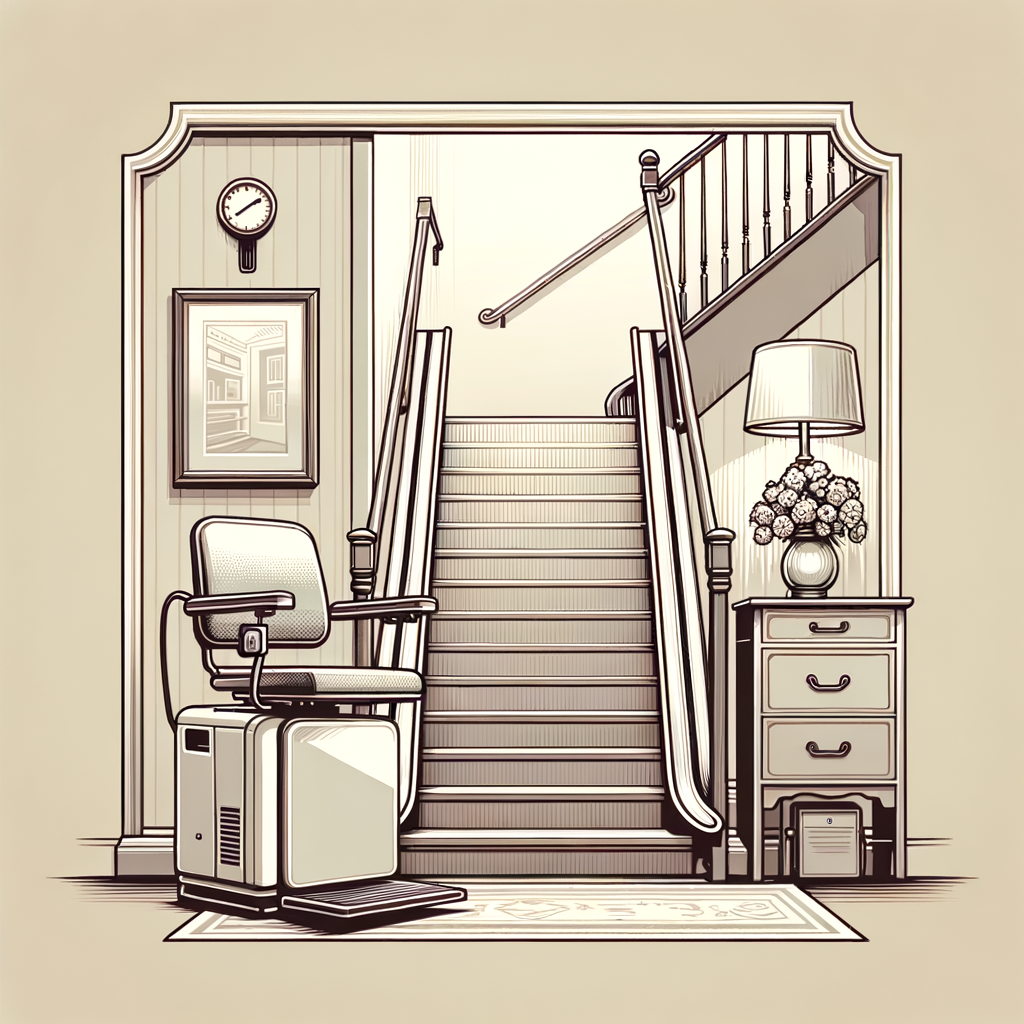
Choosing the right chair lift in 2025 means balancing safety, comfort, staircase layout, long-term reliability, and service support, not simply picking the cheapest unit. In this guide to the top 10 chair lift models for 2025, I compare leading stairlift options across straight, curved, outdoor, heavy-duty, and standing designs so buyers can match a model to their home and mobility needs. A chair lift, often called a stair lift or stairlift, is a motorized seat that travels along a rail fixed to the stairs, helping people move between floors without climbing steps. For older adults aging in place, people recovering from surgery, and households supporting a family member with arthritis, balance issues, or reduced leg strength, the right model can prevent falls and delay the need for a costly move or renovation.
After working through stairlift evaluations with families, installers, and home accessibility specialists, I have seen the same questions come up repeatedly: Which brands are most reliable? What works on narrow stairs? Which chair lift handles outdoor weather, higher weight capacities, or complicated turns? Those are practical questions, and they deserve direct answers. A strong stairlift model should provide smooth start-and-stop travel, battery backup, swivel seating, obstruction sensors, and dependable parts availability. It should also fit the staircase without creating a tripping hazard for other users. In this article, I rank ten widely recognized models and explain where each one fits best, where it falls short, and which buyer profile it serves. Think of this page as the comparison hub for chair lift types and designs, giving you a clear shortlist before you request in-home measurements and quotes.
How I ranked the best chair lift models for 2025
Ranking chair lift models fairly requires more than reading brochures. I looked at the factors installers and occupational therapists typically prioritize: staircase compatibility, ride quality, seat ergonomics, folded footprint, safety features, weight capacity, outdoor durability, customization options, warranty structure, and dealer network strength. Straight stairlifts are generally less expensive and faster to install because the rail is standardized. Curved stairlifts are custom built to the exact geometry of the staircase, including landings, turns, and intermediate bends, which increases lead time and cost but opens access in homes where a straight rail simply will not work.
Serviceability matters as much as specifications. A lift with excellent features but poor local support can become frustrating when batteries need replacement or sensors need adjustment. I also considered how each model addresses real-world problems: narrow staircases, users with limited knee flexion, high body weight, outdoor exposure, and multi-user households that need call/send controls and compact folding. The ten models below are not identical products competing on one dimension. They are the strongest choices across different use cases, and the ranking reflects broad value for 2025 rather than a single universal winner for every home.
| Rank | Model | Best For | Type | Notable Strength |
|---|---|---|---|---|
| 1 | Bruno Elite Straight | Overall reliability | Straight | Premium build and strong dealer reputation |
| 2 | Stannah Sadler | Narrow stairs and perch seating | Straight/Curved variants | Compact posture support for difficult staircases |
| 3 | Handicare 1100 | Low-maintenance straight runs | Straight | Friction-drive design with no rack grease |
| 4 | Bruno Elite Curved | Custom curved layouts | Curved | Refined ride on complex stair geometry |
| 5 | Harmar Helix | Heavy-duty users | Straight | High capacity and reinforced platform |
| 6 | Acorn 130 | Fast straight installations | Straight | Widely available with quick deployment |
| 7 | Savaria K2 | Versatile curved applications | Curved | Strong customization and call/send flexibility |
| 8 | Acorn 180 | Compact curved staircases | Curved | Modular approach for tight turns |
| 9 | Bruno Elite Outdoor | Exterior steps and porches | Outdoor straight | Weather-resistant components and cover |
| 10 | Stannah Starla | Design-conscious interiors | Straight/Curved variants | High comfort and upscale upholstery options |
1 to 3: best overall performance, compact fit, and easy maintenance
1. Bruno Elite Straight earns the top spot because it consistently performs well across the widest range of buyer priorities. Bruno has built a strong reputation in North America for durable rails, smooth battery-powered operation, and practical details such as power swivel options on some configurations, generous seat padding, and dependable obstruction sensing. In homes with a standard straight staircase, the Elite Straight is often the model I recommend first because it combines comfort with excellent after-install support through a broad dealer network. It is especially strong for buyers who want a premium straight stairlift and plan to remain in the home for years.
2. Stannah Sadler stands out because it solves a specific but common problem: narrow staircases and users who struggle to bend their knees enough for a conventional seated ride. The Sadler uses a perched seating position with supportive arm, seat, and back geometry that keeps the rider more upright. In practice, that can preserve clearance on stairs that would feel too tight with a standard chair. It is not the best choice for every user; some people prefer a traditional seated posture. But for homes with limited width or for riders with restricted hip and knee flexion, it is one of the smartest designs on the market.
3. Handicare 1100 ranks highly because its friction-drive system avoids the exposed rack-and-pinion grease associated with some straight stairlifts. That sounds minor until you see a family trying to keep a frequently used staircase clean. The narrow rail, folding design, and quiet travel make it a strong fit for busy households. Installers also appreciate that the system is engineered for tight stair footprints. If your top priorities are clean aesthetics, low maintenance, and efficient use of space, the Handicare 1100 deserves a close look.
4 to 7: the strongest choices for curved stairs, higher capacities, and mixed needs
4. Bruno Elite Curved is one of the best premium solutions for curved staircases with landings, turns, or unusual geometry. Curved installations live or die by measurement accuracy and manufacturing quality, because every rail is custom made. Bruno’s curved model is impressive for ride smoothness and sturdy feel, especially in homes where the stairlift must navigate multiple bends without jerky transitions. Buyers should expect a higher price than straight models and a longer lead time, but for homeowners who need custom access and want a polished result, the Elite Curved is a strong investment.
5. Harmar Helix deserves its ranking as a leading heavy-duty straight stairlift. Weight capacity is not just a number on a spec sheet; higher-capacity models often provide a wider seat, stronger transmission components, and more confidence for larger users or caregivers assisting transfers. The Helix is a practical option for households that need extra support without immediately moving to a platform lift. The tradeoff is space. Heavy-duty chair lifts usually require more staircase width, so accurate measurements and installer guidance are essential before purchase.
6. Acorn 130 remains popular because it is widely available, recognizable, and often fast to quote and install. For many buyers, speed matters. After a hospital discharge, a fall, or a decline in mobility, waiting weeks for access can be unrealistic. The Acorn 130 covers the essentials well: folding seat, armrests, battery backup, remote controls, and safety sensors. It may not feel as refined as the most premium competitors, but it is a practical contender for standard straight stairs when availability and straightforward operation matter most.
7. Savaria K2 is a flexible curved stairlift that fits many homes with intermediate landings and multiple directional changes. Savaria is known in the accessibility market for both residential and commercial lift products, and that broader engineering background shows in the K2’s customization. It is a good option for buyers comparing curved systems from several dealers and looking for a balance of customization, comfort, and brand credibility. As with any curved chair lift, the quality of the local survey and installation has as much impact on satisfaction as the base model itself.
8 to 10: specialized picks for tight curves, outdoor steps, and style-conscious homes
8. Acorn 180 is built for curved staircases and is frequently shortlisted for homes where space is limited and the route includes tight turns. Its modular rail concept can simplify certain installations compared with fully bespoke one-piece rail systems, although suitability depends on staircase design. I have seen it work well where a family needed a curved solution without the longest custom manufacturing timeline. Buyers should still compare ride feel and folding dimensions carefully, because curved stairlifts vary more than their marketing suggests.
9. Bruno Elite Outdoor is the model to beat for many exterior applications, including garage entries, porch steps, and backyard access points. Outdoor stairlifts must resist moisture, temperature swings, UV exposure, and debris. That means weather-resistant seat materials, protected electrical components, and a fitted cover are nonnegotiable. The Bruno Elite Outdoor is strong because it adapts the proven straight-lift platform for exterior use rather than treating outdoor access as an afterthought. Even so, outdoor units still need routine cleaning and periodic service, especially in coastal or snowy climates.
10. Stannah Starla rounds out the top ten as a comfort-first and design-forward option. Many people focus only on mechanics, but aesthetics matter when a lift is installed in a visible entry hall or main staircase. The Starla is known for upholstered styling, a refined seat shape, and a less institutional look than many accessibility products. It is not the budget pick, and design features should never outrank fit or safety. But for homeowners who want strong performance without making the stairlift look clinical, it is one of the best options available in 2025.
How to choose the right chair lift model for your home
The best chair lift model depends first on stair configuration. If the staircase is straight with no turns or split landings, a straight model is usually the most affordable and quickest path. If there is any curve, fan-shaped tread, or intermediate landing that changes direction, you are almost certainly looking at a curved system. Width comes next. Standard seated stairlifts need enough clear stair width for the rail, folded chair, and safe passage. Homes with narrow stairs may be better served by compact models like the Handicare 1100 or a perch-style design like the Stannah Sadler.
User needs should drive the final decision. Higher weight capacity, power swivel seats, powered footrests, and seat height adjustments are not luxury extras when they solve transfer problems. I always advise families to assess how the rider sits down, stands up, and manages the top landing, because many incidents happen during transfer, not travel. Ask whether the rider uses a cane or walker, whether one knee is weaker than the other, and whether arm strength is enough to fold components manually. Also consider future needs. Progressive conditions often make a slightly more capable model the better long-term value.
Price matters, but service matters more than many buyers realize. Straight stairlifts often fall into a lower cost range than curved units, while custom curved rails can cost several times more because of design and manufacturing complexity. Warranties differ between components, drivetrain, and labor. Battery replacement is a standard maintenance item, not a defect, and buyers should ask how quickly local technicians respond to service calls. A good dealer will measure carefully, explain clearance issues honestly, and discuss rental or reconditioned options where appropriate rather than forcing a one-size-fits-all sale.
What buyers should ask before requesting quotes
Before comparing prices, ask five direct questions. First, is the quoted model appropriate for the exact staircase shape, or is the dealer trying to fit a standard solution into a custom problem? Second, what is the folded width and remaining walk space? Third, which features are manual versus powered, especially swivel and footrest functions? Fourth, what are the warranty terms for parts, motor, batteries, and labor? Fifth, who performs service locally, and what is the average response time? Those answers reveal more than a headline price ever will.
It is also smart to ask about codes, permits, and installation method. Most residential stairlifts attach to stair treads rather than the wall, which surprises many homeowners. Reputable installers will also discuss charging points, parking positions, and whether a rail overrun is needed at the top or bottom landing for safer transfers. If you are building out a larger accessibility plan, connect this choice to related topics such as curved stair lift design, outdoor chair lift systems, heavy-duty models, and standing stair lifts. That broader comparison prevents expensive mistakes and leads to a lift that fits daily life, not just the staircase on paper.
The top 10 chair lift models for 2025 show that there is no single best stairlift for every household, but there is a best fit for each staircase and user profile. Bruno Elite Straight leads for overall reliability, Stannah Sadler solves narrow-stair and limited-flexion challenges, Handicare 1100 excels in clean low-maintenance performance, and specialized options from Harmar, Savaria, Acorn, Bruno, and Stannah cover heavy-duty, curved, outdoor, and design-focused needs. The most successful purchases come from matching the lift to the staircase, transfer needs, body mechanics, and local service support rather than chasing the lowest quote.
If you are using this page as your hub for comparative and ranking posts in chair lift types and designs, the next step is simple: narrow your shortlist to two or three models, then schedule in-home assessments from qualified local dealers. Ask for exact measurements, folded clearances, feature breakdowns, and service terms in writing. A well-chosen chair lift restores safe access every day, protects independence, and makes aging in place far more realistic. Start with the staircase you have, the mobility needs you expect over the next few years, and the model category that fits both.
Frequently Asked Questions
1. How do I choose the best chair lift model for my home in 2025?
The best chair lift for your home depends on much more than price. In 2025, the smartest approach is to start with your staircase type and the user’s mobility needs. Straight staircases usually work with more affordable, faster-to-install models because they use a standard rail. Curved staircases require custom rail systems designed to match turns, landings, or intermediate bends, which increases cost but ensures a proper fit. If the lift will be installed outside, you need a weather-resistant outdoor model with sealed components, durable upholstery, and corrosion-resistant materials. For larger users or households that want added stability, a heavy-duty chair lift with a wider seat, higher weight capacity, and reinforced frame may be the better choice. Standing or perch models can also be useful when a seated position is difficult or when the staircase is especially narrow.
Beyond staircase shape, look closely at safety and usability features. Important features include a seat belt, obstruction sensors, swivel seat, lockable controls, battery backup, folding footrest, and easy-to-use call/send controls. Comfort matters too, especially if the lift will be used daily. Seat height, armrest shape, padding, ride smoothness, and how easily the chair folds away can all affect long-term satisfaction. Reliability is another major factor. A slightly more expensive model from a reputable brand with strong dealer support, available parts, and a solid warranty often provides better value than a cheaper unit that is harder to service. The best chair lift model is the one that safely fits the home, supports the user’s mobility level, and comes from a company with dependable installation and after-sales service.
2. What is the difference between straight, curved, outdoor, heavy-duty, and standing chair lifts?
These categories describe how and where a stair lift is designed to operate, and choosing the right type is essential. A straight chair lift is built for a staircase with no turns or intermediate landings. Because the rail is standardized, straight models are generally the most budget-friendly and are often installed quickly. A curved chair lift is designed for staircases with bends, spirals, or multiple landings. These systems use a custom-made rail tailored to the exact dimensions of the staircase, which makes them more expensive but necessary for homes with non-linear layouts.
Outdoor chair lifts are specifically engineered for exterior stairs such as porch steps, deck access, or garage entries. They are built with weather-resistant covers, protected electronics, and materials that can stand up to rain, temperature changes, and UV exposure. Heavy-duty chair lifts are intended for users who need a higher weight capacity, more seat room, or a sturdier frame. These models can also be a good choice for taller individuals who need more legroom and a more substantial seat design. Standing chair lifts, sometimes called perch lifts, allow the user to ride in a near-standing or partially seated position. They are particularly helpful for users who have difficulty bending their knees fully or for homes where the staircase is too narrow for a traditional seated lift. Each type serves a specific purpose, so the right model depends on the physical space, the user’s body mechanics, and the day-to-day demands of the home.
3. Which features matter most when comparing the top chair lift models for 2025?
When comparing the top chair lift models for 2025, safety should come first. Obstruction sensors are one of the most important features because they stop the lift if something is detected on the stairs or rail. A swivel seat at the top landing is also critical because it helps the user get on and off more safely without twisting near the edge of the staircase. Seat belts, locking mechanisms, and battery backup systems are equally important. Battery-powered units are especially valuable because they continue operating during a power outage, which can be essential in an emergency or during bad weather.
After safety, focus on comfort, ease of use, and maintenance support. A smooth start-and-stop ride reduces jolting, which is especially helpful for users with arthritis, back pain, or balance issues. Fold-up seats, arms, and footrests help keep the staircase clear for others in the home. Call/send controls are useful in multi-user households because they allow the chair to be moved up or down the stairs when needed. Some premium models also offer powered swivel seats or powered footrests, which reduce the amount of bending and manual effort required. Finally, pay close attention to warranty terms, service availability, and dealer reputation. Even the most advanced chair lift is only as good as the company that installs and supports it. In practice, the best model is not simply the one with the longest feature list, but the one with the right combination of safety, fit, comfort, and dependable long-term service.
4. Are chair lifts safe and reliable for daily use?
Yes, modern chair lifts are generally very safe and reliable for daily use when they are properly matched to the staircase, professionally installed, and routinely maintained. Today’s leading models are designed with multiple layers of safety, including seat belts, swivel seats for safer transfers, obstruction sensors, pressure-sensitive footrests, overspeed controls, and battery backup operation. These built-in systems are intended to reduce the risk of falls, collisions, or sudden stoppages. For many people with limited mobility, a stair lift is one of the safest ways to continue using a multi-level home without the repeated strain and hazard of climbing stairs on foot.
Reliability depends heavily on product quality and service support. Well-known brands with established dealer networks tend to perform better over time because replacement parts, inspections, and repairs are more accessible. Battery-powered systems are common and dependable, but like any battery-based product, they require occasional replacement over the life of the unit. Regular maintenance helps keep the rail clean, the charging system functioning properly, and the lift running smoothly. It is also important that users receive clear instruction on proper operation, including folding the unit, fastening the seat belt, and using the swivel mechanism correctly. In short, chair lifts are built for everyday use, but long-term performance is best when the unit is installed by experienced professionals and supported by a responsive local provider.
5. Is it better to buy the cheapest chair lift, or pay more for a premium model?
In most cases, choosing the cheapest chair lift is not the best long-term decision. A lower upfront price can be appealing, but the true value of a chair lift comes from safety, fit, comfort, reliability, and support after installation. A budget model may be perfectly adequate for a simple straight staircase if it comes from a reputable company and includes the core safety features you need. However, if the user depends on the lift every day, has more complex mobility limitations, or has a staircase with unusual dimensions, paying more for a better-designed model can be well worth it. Premium models often offer smoother ride quality, stronger warranties, quieter operation, better seat ergonomics, and advanced features such as powered folding components or upgraded controls.
Service support is often the deciding factor. A chair lift is not just a product; it is a mobility system that may need adjustments, maintenance, battery replacement, or repairs over time. A more expensive model from a trusted manufacturer with dependable local service may ultimately cost less in frustration, downtime, and future issues than a cheaper unit with limited support. Buyers should also think about the importance of customization. If the staircase is curved, outdoors, narrow, or used by someone with specific physical needs, a premium or specialized model may be the only option that truly works well. The goal should not be to spend the least amount possible, but to choose the chair lift that delivers the safest and most practical solution for the home and the person using it every day.