Outdoor lifts operate in the harshest conditions a mobility system will ever face, so rust-resistant features are not optional extras; they are the design elements that determine whether an outdoor chair lift remains safe, quiet, and dependable after years of rain, humidity, salt air, pollen, and freeze-thaw cycles. In the outdoor chair lifts category, rust resistance refers to the materials, coatings, drainage details, electrical protection, and maintenance provisions that prevent corrosion from weakening structural parts or damaging moving components. I have evaluated outdoor stair lifts on exposed porches, coastal entryways, mountain homes, and shaded garden steps, and the pattern is always the same: the units that last are not simply “weatherproof,” they are engineered around corrosion control from the rail outward. That matters because outdoor accessibility equipment is expected to deliver daily reliability under conditions that attack steel, fasteners, wiring, bearings, and painted finishes. When a buyer compares models, lift capacity and seat comfort usually get attention first, but the better question is simpler: what keeps this lift from rusting where it matters most? This hub article answers that question while giving a complete overview of outdoor chair lifts, the major components involved, and the features that separate a short-lived installation from one that performs for a decade or more.
Outdoor chair lifts are motorized seating systems mounted to a staircase or inclined path to help users travel safely between levels outside the home. Most residential models are outdoor stair lifts built on an aluminum or steel rail, powered by rechargeable batteries, and controlled by onboard switches plus wall-mounted call stations. Because this page serves as a central guide within chair lift types and designs, it covers the core buying criteria that connect the entire outdoor segment: material selection, protective finishes, exposed hardware, drivetrain sealing, seat construction, cover design, installation practices, and upkeep. It also explains how weather exposure changes product requirements. A lift installed under a deep portico in Arizona faces a very different corrosion profile than one attached to open treads in coastal Florida, yet both need deliberate rust-resistant construction. Understanding those differences helps homeowners, caregivers, contractors, and occupational therapists choose correctly the first time.
Why rust resistance is the defining feature in outdoor chair lifts
Rust is the visible result of corrosion, but the real problem starts before orange staining appears. Moisture, oxygen, airborne salts, fertilizer residue, and trapped debris create electrochemical reactions that eat away at metal surfaces and accelerate wear at joints, welds, and threaded connections. On an outdoor chair lift, corrosion can compromise the rail, rack, brackets, footrest hinges, seat post, charging contacts, and even the enclosure around the control board. I have seen lifts that looked acceptable from a distance but had advanced rust under the seat frame and inside bracket interfaces because water sat unnoticed for months. That kind of hidden degradation increases noise, reduces ride quality, and eventually creates expensive service calls.
For buyers, the direct answer is this: the best rust-resistant outdoor chair lifts use corrosion-resistant base metals, layered protective coatings, sealed electrical components, stainless or similarly protected fasteners, and drainage features that stop water from pooling. Manufacturers that design specifically for outdoor use do not just move an indoor lift outside and add a cover. They upgrade the rail finish, weatherproof the seat and arm assemblies, protect the battery and charger system, and test the unit against temperature swings and precipitation. Brands with strong outdoor reputations usually provide explicit guidance on acceptable exposure levels, cleaning schedules, and replacement intervals for wear parts. That transparency is a useful quality signal.
Materials that resist corrosion at the rail, frame, and hardware level
The first place to look is the rail and structural frame because these parts carry the load and remain exposed every day. Aluminum is widely favored for outdoor stair lift rails because it forms a protective oxide layer naturally and does not rust like carbon steel. That does not make every aluminum rail equal. Extrusion quality, wall thickness, joint design, and surface treatment still matter, especially near cut ends and mounting points. Powder-coated aluminum rails generally perform well in residential settings, and marine-adjacent properties benefit from frequent rinsing to remove chloride deposits.
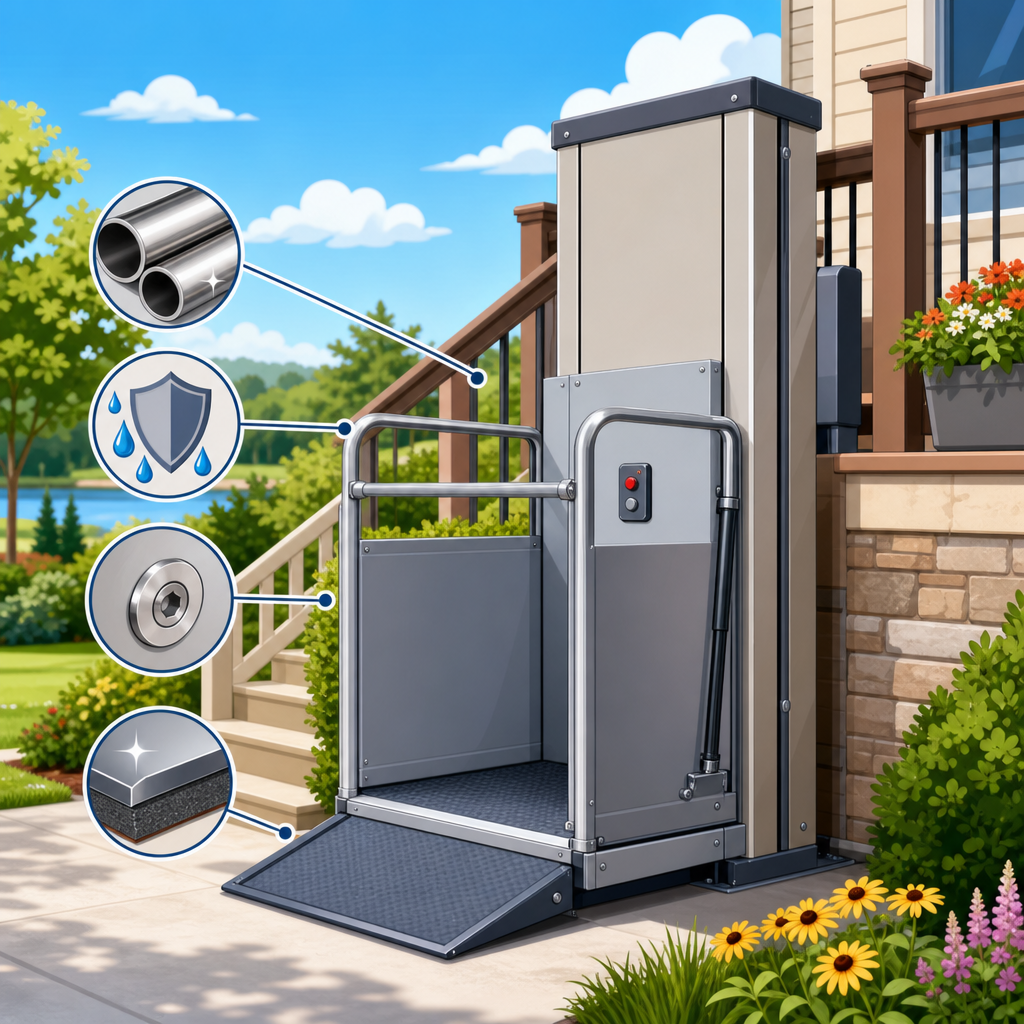
Steel can still be a sound choice when it is properly galvanized, zinc-coated, stainless, or fully protected by a durable coating system. The issue is untreated or poorly finished steel hardware. Fasteners are common failure points because dissimilar metals, repeated tightening, and chipped coatings create ideal corrosion sites. In practice, outdoor chair lifts should use stainless steel fasteners where feasible, or plated hardware with proven outdoor ratings and isolation washers to reduce galvanic corrosion. Grade 304 stainless is common; grade 316 offers better resistance in salt-rich environments. Ask which fasteners are exposed, which are hidden, and whether replacement hardware must match the manufacturer’s specification. That detail affects both longevity and warranty compliance.
| Component | Best rust-resistant feature | Why it matters outdoors |
|---|---|---|
| Rail | Powder-coated aluminum or protected steel | Resists corrosion on the main load-bearing path |
| Brackets | Galvanized or stainless hardware | Reduces rust at anchor points and joints |
| Fasteners | 304 or 316 stainless steel | Prevents seized bolts and staining |
| Seat frame | Corrosion-resistant metal with sealed welds | Protects structural integrity beneath upholstery |
| Footrest hinges | Protected pivots and drainage | Limits water retention in moving parts |
Protective finishes, coatings, and surface treatments that extend service life
Coatings are not cosmetic on an outdoor lift; they are part of the engineering package. Powder coating is one of the most valuable protective features because it creates a hard, even finish that resists chipping better than many liquid paints. A quality powder-coated surface also stands up well to ultraviolet exposure and repeated cleaning. However, coating performance depends on pretreatment. If the metal underneath was not properly cleaned and prepared, the finish can fail prematurely at edges or welds. Serious manufacturers use multistage pretreatment and controlled curing because adhesion is what determines long-term protection.
Galvanization adds another defense, especially for steel components. Zinc acts as a sacrificial layer, protecting the underlying steel even if the outer surface gets nicked. In coastal or snowy regions where deicing salts are common, that extra layer is valuable. Anodizing may also be used on aluminum components to improve corrosion resistance and surface hardness. For buyers, the practical question is not merely “what coating does it have?” but “which components receive which treatment, and where are the vulnerable edges?” Request model-specific documentation. Good outdoor chair lift specifications identify rail material, finish type, hardware grade, and environmental limitations. Vague phrases such as “weather-resistant finish” are not enough on a product that may sit outside for ten years.
Weather sealing for motors, batteries, controls, and charging systems
A rust-resistant outdoor chair lift must also protect what cannot rust visibly but can still fail from moisture. Motors, gearboxes, batteries, charging contacts, limit switches, and printed circuit boards all need sealing strategies that keep water out while allowing service access. Most modern outdoor stair lifts are battery powered, which is beneficial because the lift can continue operating during a power outage and avoids sending high operating current through long exposed wiring runs. Even so, the charger connection points and harnesses need weather protection. Look for enclosed battery compartments, gaskets around control housings, covered charging strips, and UV-stable cable insulation.
Ingress protection ratings can help, although not every manufacturer publishes them for every subsystem. When available, they give a clearer picture of dust and water resistance than marketing language alone. The seat swivel mechanism, joystick or rocker control, and call/send stations should also be designed for gloved or wet-hand operation without letting water migrate into the switch body. In field use, poorly protected charging contacts are a frequent weak link. Once oxidation builds up there, lifts can stop charging consistently, which users may mistake for a battery problem. The better designs shield those contacts and position them away from direct runoff.
Drainage, water shedding, and design details that prevent trapped moisture
Some of the most effective rust-resistant features are easy to miss because they are built into the shape of the lift rather than advertised on the brochure. Water-shedding seat shells, sloped surfaces, drain holes in tubing, open hinge geometry, and raised covers all reduce the time moisture remains on the equipment. Corrosion thrives where water gets trapped. I pay close attention to the underside of the seat, the footrest pivot area, the rail end caps, and the interfaces where brackets meet the rail. If those areas collect debris or hold standing water, corrosion and grime accelerate together.
Outdoor chair lifts should be designed so rain runs off quickly instead of funneling into seams. Seat upholstery should be marine-grade or otherwise non-absorbent, with stitching and attachment points protected from wicking. Footrests benefit from textured, non-slip surfaces that also allow drainage instead of forming a shallow basin. Rail orientation matters too. Some lifts use geared strips or racks positioned to reduce direct water accumulation, and some covers are shaped to keep runoff from dripping onto the drive carriage. These are not small details. They are the difference between a lift that needs only routine cleaning and one that develops chronic sticking, squeaking, and finish breakdown.
Installation choices that affect corrosion more than most buyers realize
Even a well-built outdoor stair lift can lose years of service life if it is installed without regard to moisture paths and material compatibility. Proper installation begins with the staircase itself. Wood steps that remain damp, spalled concrete, or rusting metal stringers can transmit moisture problems to the lift brackets and anchors. Installers should verify substrate condition, choose anchors rated for exterior use, and avoid creating water traps where brackets meet the stair surface. Sealants, spacers, and isolation materials may be necessary when dissimilar metals are in contact or where runoff repeatedly hits the same connection point.
Location planning also matters. A lift placed on the most exposed side of an entry stair may need a different cover strategy than one tucked under an overhang. In snowy climates, rail placement should account for shoveling patterns, drifting, and ice shedding from roofs. In coastal areas, even screened porches can accumulate salt film, so maintenance access becomes part of the installation decision. I advise clients to look at the entire water story: where rain lands, where it drains, where leaves collect, and where sprinklers spray. Irrigation overspray is one of the most overlooked corrosion accelerators on outdoor lifts, especially when water contains minerals or treatment chemicals.
Maintenance features that make rust prevention realistic over the long term
The best outdoor chair lift is not just corrosion-resistant on day one; it is easy to keep that way. Buyers should look for removable or hinged covers, accessible charging contacts, service-friendly battery compartments, and clear cleaning instructions from the manufacturer. If routine inspection requires partial disassembly, maintenance will be skipped. Outdoor lifts need periodic rinsing or wiping to remove dust, pollen, bird droppings, and airborne salts, followed by drying and visual checks for chipped finishes or loose hardware. In most residential settings, a seasonal maintenance visit is prudent, while coastal locations often justify more frequent inspection.
Ask specifically about approved cleaners and touch-up procedures. Some finishes can be damaged by harsh solvents, abrasive pads, or waxes that trap dirt. Manufacturers with mature outdoor programs often provide vinyl care guidance, rail cleaning recommendations, and replacement intervals for covers, batteries, and weather seals. Service support matters as much as product design because early intervention stops small coating failures from becoming structural corrosion. If a dealer cannot explain the maintenance routine in plain language, that is a buying concern. A durable outdoor chair lift should come with a realistic care plan that homeowners or caregivers can follow between professional service visits.
How to compare outdoor chair lift models as a hub-category buyer
Because this page is the hub for outdoor chair lifts within chair lift types and designs, the smartest comparison process starts with use case, then narrows to corrosion features. First identify staircase shape, length, and exposure level. Straight outdoor stair lifts usually offer lower cost and simpler maintenance than custom curved systems, but both need outdoor-specific construction. Next confirm weight capacity, folded width, seat height, and transfer safety at the top and bottom landings. Then evaluate rust resistance systematically: rail material, hardware grade, coating type, weather cover quality, electrical sealing, drainage design, and maintenance requirements.
Real-world examples help. A lakeside home with morning fog and frequent shade may demand stronger anti-corrosion hardware and more frequent cleaning than a dry, sun-exposed inland porch. A beach property should push buyers toward stainless fasteners, robust powder coating, protected contacts, and documented suitability for salt exposure. A mountain cabin may place more stress on freeze-thaw durability, ice management, and cover resilience. The common thread is simple: outdoor chair lifts succeed when corrosion control is built into every layer of the system. When you compare products across this category, choose the model that makes those protections visible, documented, and serviceable. Review the specifications, inspect the exposed hardware, and ask the dealer to explain exactly how the lift stays rust-resistant in your climate before you buy.
Frequently Asked Questions
What materials are best for preventing rust in an outdoor lift?
The best outdoor lifts start with corrosion-resistant base materials, because coatings alone cannot fully protect a poorly chosen metal in harsh weather. Look for components made from aluminum, stainless steel, and properly treated galvanized steel. Aluminum is naturally resistant to corrosion and is commonly used for rails, covers, and structural parts that are exposed to rain and humidity. Stainless steel is especially valuable for fasteners, brackets, and hardware, because these small connection points often fail first if standard steel is used. Galvanized steel can also perform well when it has a high-quality zinc coating and is used in parts designed to shed water instead of trapping it.
It is also important to ask where each material is used, not just whether the lift “includes stainless steel” somewhere in the design. A truly rust-resistant outdoor chair lift uses corrosion-resistant materials in the most vulnerable areas, including bolts, joints, footrest pivots, seat frames, exposed mounting hardware, and track supports. In coastal environments, where salt air accelerates corrosion, higher grades of stainless steel and marine-grade finishes are especially valuable. The most durable systems combine smart material selection with weather-sealed construction, so no single exposed component becomes a weak point that compromises the whole lift over time.
Which protective coatings and finishes matter most on an outdoor chair lift?
The most effective protective finishes are those designed specifically for long-term outdoor exposure, not just for appearance. Powder-coated finishes are among the most important features to look for because they create a durable barrier against moisture, UV exposure, and everyday abrasion. A high-quality powder coating is typically applied over properly prepared metal, which helps it bond evenly and resist chipping, peeling, and surface breakdown. Some manufacturers also use multi-stage finishing systems that include primers, corrosion inhibitors, and topcoats for extra protection in wet or salty climates.
Beyond the rail and frame, ask whether the lift’s smaller metal parts also receive protective treatment. Hardware, brackets, seat supports, hinges, and drive components can all become corrosion points if they are left with minimal finishing. Good outdoor lift design protects both visible and hidden surfaces, including underside areas where moisture can collect unnoticed. UV-resistant plastic covers and sealed housings also matter because they shield internal metal and electrical components from direct water exposure. In practical terms, the best finish is one that does more than make the lift look clean on installation day; it must continue defending the equipment through years of rain, pollen, humidity, and seasonal temperature swings.
Why are drainage and water-shedding design features so important for rust resistance?
Drainage is one of the most overlooked but most important rust-resistant features in any outdoor lift. Corrosion accelerates when water is allowed to sit inside rails, around mounting points, under seat components, or inside motor and control housings. A well-designed outdoor chair lift should actively move water away from vulnerable areas through sloped surfaces, drainage channels, weep holes, sealed covers, and component layouts that prevent pooling. Even the strongest materials can deteriorate faster if standing water repeatedly collects in hidden areas and never fully dries out.
This matters even more in climates with freeze-thaw cycles. When trapped moisture freezes, expands, and thaws over and over, it can crack coatings, loosen seals, and expose raw metal underneath. Good outdoor lifts are designed so that rainwater, condensation, and snowmelt have a clear path out of the system. Water-shedding seat covers, sealed armrest controls, and weatherproof footrest designs all help reduce exposure. In short, rust resistance is not just about what the lift is made of; it is also about whether the lift’s shape and construction allow it to dry quickly and completely after every storm or humid day.
How do weatherproof electrical components help protect an outdoor lift from corrosion?
Electrical protection is a major part of corrosion resistance because moisture and corrosion often work together. If water enters control panels, charging points, call/send stations, wiring connectors, or battery compartments, it can lead to oxidation, short circuits, unreliable performance, and expensive failures. A rust-resistant outdoor lift should have weather-sealed electronics, gasketed enclosures, protected wiring runs, and connectors designed for exterior use. These details help prevent moisture intrusion and reduce the chance that corrosion will start inside hard-to-see parts of the system.
Charging systems deserve special attention. Outdoor stair lifts and other mobility lifts often rely on battery charging contacts that must remain dependable in wet and dirty conditions. Well-designed outdoor models protect these contact points with covers, corrosion-resistant metals, and placement that minimizes direct exposure to rain and debris. Look for switches and controls rated for outdoor use, along with circuit protection that can tolerate temperature changes and humidity. When electrical systems are properly sealed and shielded, the lift is more likely to remain safe, quiet, and consistent over the long term, even in environments where ordinary indoor components would quickly degrade.
What maintenance-friendly features should I look for to keep an outdoor lift rust-resistant over time?
Even the best-built outdoor lift benefits from routine care, so maintenance-friendly design is a valuable rust-resistance feature in its own right. Look for lifts with smooth, accessible surfaces that are easy to wipe down, inspect, and clear of dirt, leaves, pollen, and salt residue. Removable or easy-open covers can make it much simpler for a technician to check hidden components before corrosion becomes serious. Protective covers for the seat and controls are also useful because they reduce direct exposure when the lift is not in use, especially during storms, off-seasons, or extended periods of inactivity.
It is also wise to ask whether the manufacturer recommends regular lubrication points, inspection intervals, and approved cleaning methods for outdoor environments. The best systems are designed so owners and service professionals can quickly spot coating damage, clear drainage openings, and replace worn hardware before rust spreads. In coastal or high-humidity areas, maintenance access becomes even more important because salt and moisture can accelerate corrosion dramatically. A lift that is easy to inspect and service will generally last longer than one with hidden trouble spots and hard-to-reach components. In other words, true outdoor durability comes from a combination of strong materials, smart engineering, and a design that supports simple, consistent preventive maintenance.