A stair lift that stops at the same spot every trip usually points to a repeatable obstruction, rail issue, power interruption, or safety circuit fault, and that pattern gives you a strong starting point for diagnosis. In stair lift servicing, consistent stoppage matters because random failures are harder to isolate; when the chair halts at one location every time, the problem is often tied to that section of track, a hinged rail transition, a charging contact zone, or a change in load on the drive system. This guide is the central resource for lift not working step-by-step help within maintenance, troubleshooting, and safety, covering what homeowners, caregivers, and facility managers should check before calling for service. A stair lift is a motorized chair that travels along a rail, using batteries, charging points, limit switches, sensors, and overspeed protection to move safely up and down stairs. If one of those systems detects resistance or loses electrical continuity, the unit stops by design. That is usually a safety feature, not a total breakdown. The key is to identify whether the stop is caused by something simple, such as dirt on the track or a footrest safety edge touching carpet, or something more technical, such as a charge strip misalignment, gearbox drag, or a fault in the call-send controls. I have worked through this exact complaint on straight and curved models from Bruno, Handicare, Harmar, and Stannah, and the most efficient repairs always begin with careful observation rather than immediate part replacement. By checking the same sequence each time, you can rule out common causes, document symptoms clearly, and avoid unnecessary downtime. This article explains what to inspect, what signs point to a specific fault, when to stop troubleshooting, and how to keep the lift reliable after the issue is resolved.
Start With the Pattern of the Stop
The first question is simple: does the stair lift stop in precisely the same physical location, or does it stop at roughly the same point in travel time? A fixed location suggests a rail, charging, obstruction, or wiring issue at that section of the staircase. A stop based on travel time may indicate battery weakness, motor overheating, or control faults. Watch at least two trips in each direction if the unit will allow it. Note whether the chair stops only going up, only going down, or both ways. Also check whether it resumes movement if you release and repress the toggle, joystick, or arm control. That behavior matters because some faults interrupt power momentarily, while others hold the safety circuit open until the underlying condition is corrected.
Listen for clues. A single beep on many units indicates a normal alert, while repeated beeping often points to charging problems or a diagnostic code. A clicking sound without movement can mean the relay engages but the drive does not turn, sometimes because the batteries are too weak under load. A scraping or rubbing sound at the same point often means the footrest, carriage, or rack is touching something. If the display shows a code, record it before cycling power. Manufacturers use different fault systems, but the code can immediately narrow the search to seat position, overspeed governor, limit switch, or battery charging.
Before touching anything, make the lift safe. Park it on a flat section if possible, switch it off with the main key or power switch, and keep users off the stairs until you finish the inspection. If the chair is stranded mid-rail and blocks access, do not force it by hand. Stair lifts use geared drive systems and safety brakes; forcing movement can damage the transmission or defeat a safety mechanism. Safety first, diagnosis second.
Check for Obstructions, Track Contamination, and Mechanical Interference
The most common reason a stair lift stops at the same spot is a physical obstruction or something contacting a safety edge. Start with the obvious path of travel. Look at the rail, gear rack, and the floor or carpet near the stopping point. Small items cause disproportionate trouble: pet toys, fallen clothing, grit packed into the rack, and even a stair nosing that has loosened enough to touch the footrest. On several service calls, I found the culprit was thick carpet bunching up at one tread. The chair ran normally until the footrest safety pan brushed the raised edge, then stopped exactly where it should.
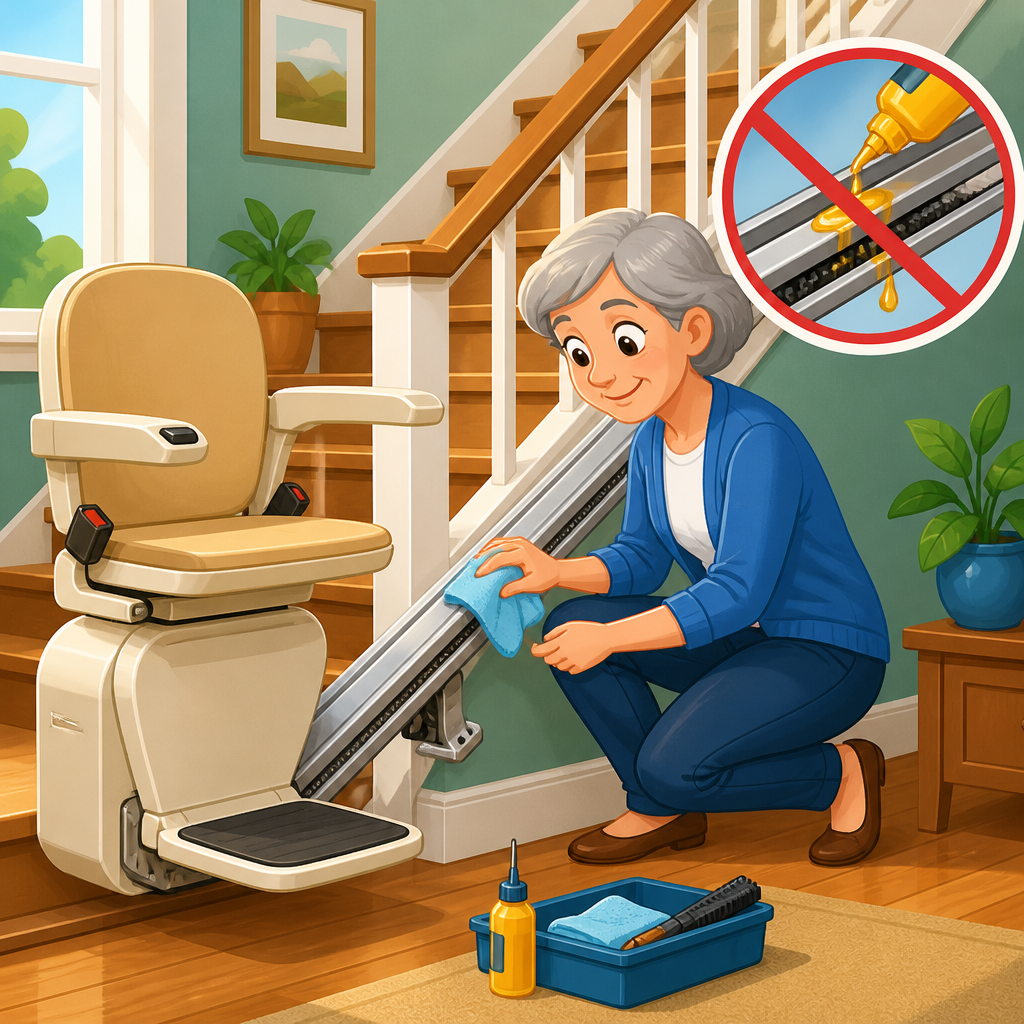
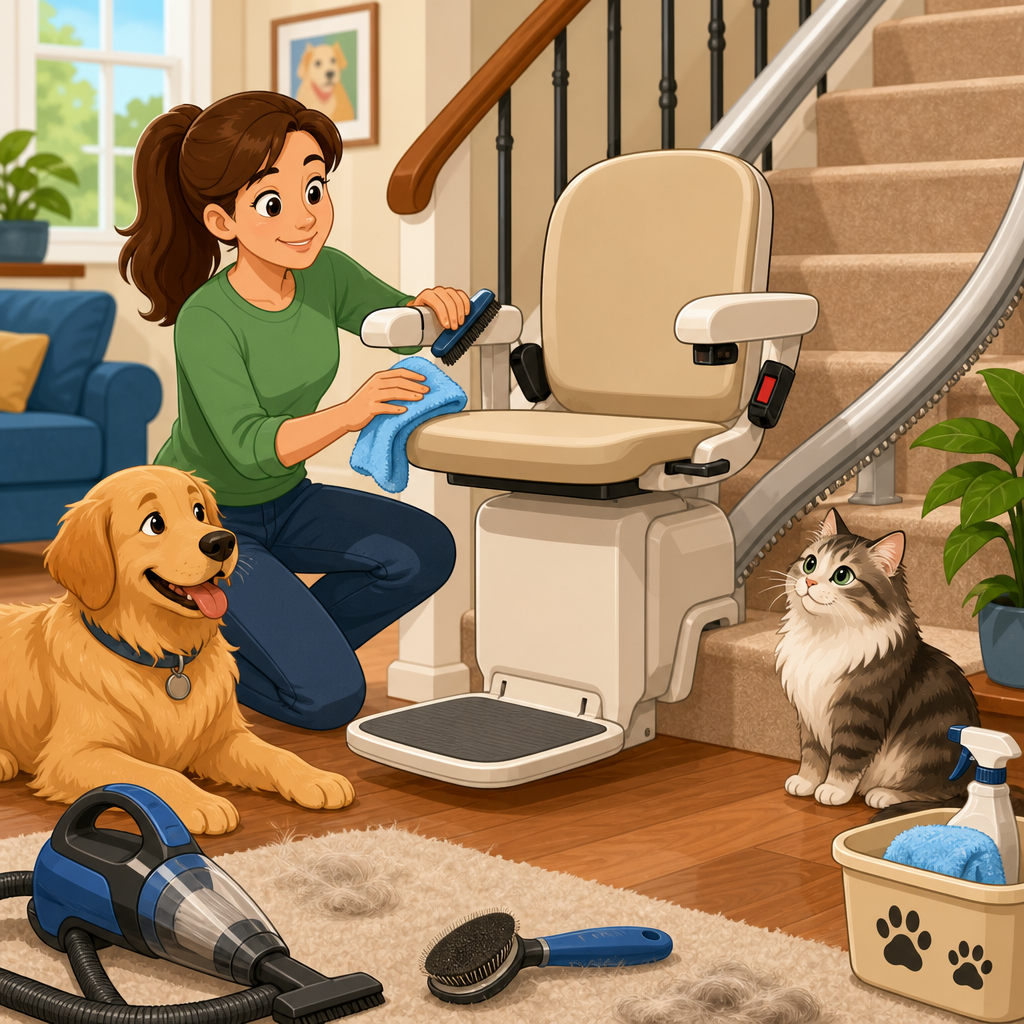
Clean the rail with a dry cloth unless the manufacturer specifies otherwise. Do not grease the track unless your model explicitly requires it; many modern stair lifts run on rollers over an aluminum extrusion with a geared rack, and excess lubricant attracts dust that worsens stoppages. Check the rack teeth around the problem area for packed debris, damaged teeth, or misalignment. If you see metal shavings, unusual wear, or a bent section, stop and arrange professional service. Those signs can indicate carriage roller wear or a rack mounting problem that should not be ignored.
Inspect the footrest, carriage covers, and seat base for anything loose enough to catch at one point on the staircase. Folding footrests can sag if hinges wear. Swivel seats may not lock fully, causing intermittent seat interlock faults when the rail angle changes. A powered hinge or folding rail at the bottom can also create a repeat stop if its limit switch does not confirm the rail is fully deployed. In houses with narrow halls, I often see bottom hinge rails slightly out of adjustment after being nudged repeatedly by vacuum cleaners or shoes.
Inspect Safety Sensors, Seat Position, and Hinged Rail Operation
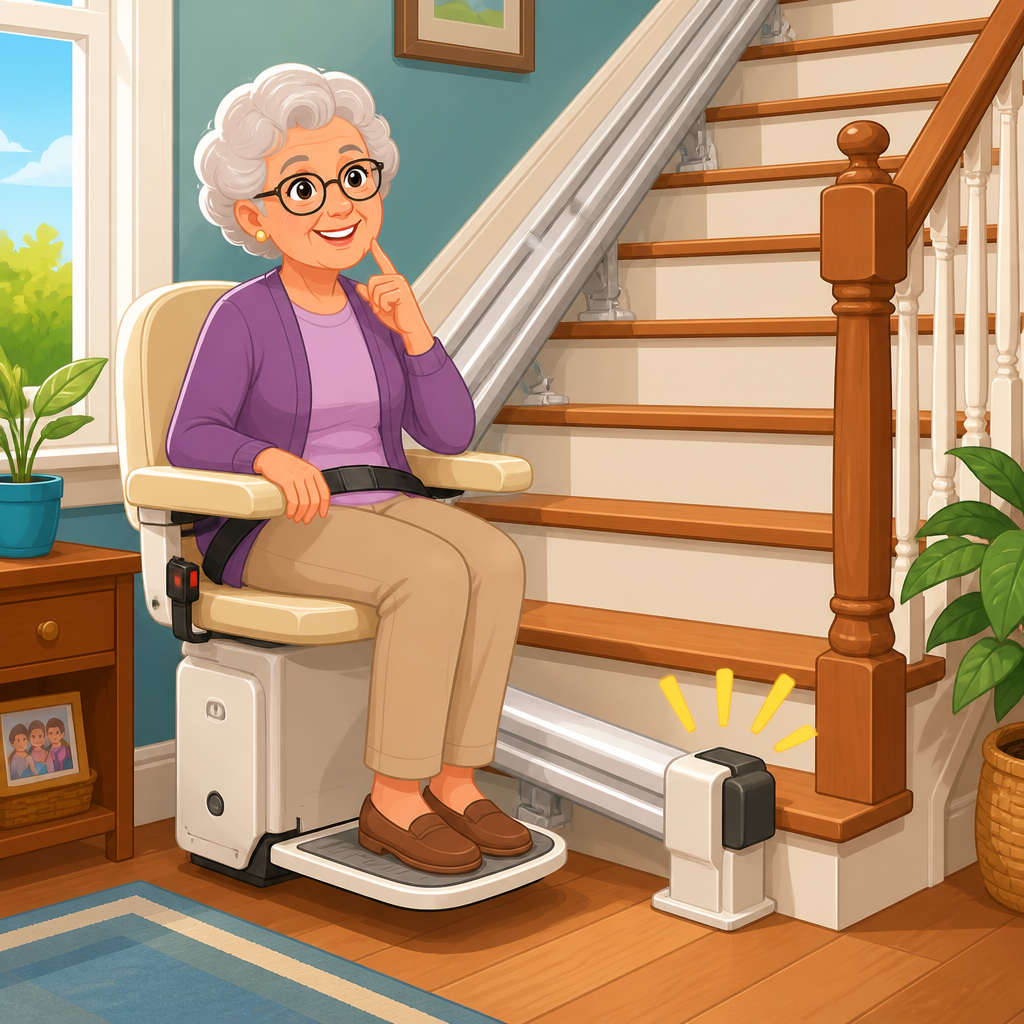
Stair lifts are designed to stop when any monitored safety device opens the circuit. That includes footrest edges, carriage bumpers, seat swivel interlocks, seatbelt switches on some models, and hinged rail sensors. If the lift stops at the same spot, the movement of the chair may be shifting weight or angle enough to trigger one of these sensors only there. Start by confirming the seat is fully locked in the travel position. Many users rotate the seat at the landing and then do not return it until the latch engages. The lift may move briefly, then stop once vibration opens the interlock.
Next, fold and unfold the footrest and arms to ensure free movement. A stiff hinge, trapped cable, or cracked plastic edge can hold a safety switch partially engaged. Press each safety edge gently by hand with the power off to feel whether it moves and returns evenly. If one side sticks, that is a likely cause. On some units, you can hear a faint microswitch click; on others, the switch is magnetic and silent. Either way, asymmetry is meaningful.
Hinged rails deserve special attention because they often create recurring stops near the bottom landing. The hinge may appear down but not be fully seated on its contact. If the lift pauses or dies as it crosses that transition, inspect the hinge pivot, the alignment pins, and the wiring loom that flexes every cycle. Worn hinge harnesses can break internally and lose continuity only at a specific position. That is a classic same-spot failure and one I have verified more than once with a continuity meter while slowly moving the hinge through its range.
Verify Power, Charging Points, and Battery Condition
Most residential stair lifts are battery powered and charge at one or more stations along the rail. If the chair stops consistently near a charging point or after leaving one, battery and charging issues move to the top of the list. Weak batteries can appear normal at rest yet collapse under load on an incline. In practice, a lift may travel partway, reach the steeper section, and stop in the same area every time because voltage drops below the controller threshold. Lead-acid batteries commonly last about three to five years, though cycle count, temperature, and charging habits matter more than age alone.
Look for charging contacts at the top and bottom parks, and on some models at intermediate points. Make sure the chair actually charges when parked. Typical clues include a charging light, a quiet hum from the charger, or a display indicator. Dirty contacts are common. Clean them gently with a dry cloth or very light abrasive approved by the manufacturer. If the contacts are pitted, loose, or visibly misaligned, they may charge intermittently. Also verify the wall outlet feeding the charger has power and has not been switched off. I have seen lifts diagnosed as mechanical failures when the real issue was a tripped GFCI in a nearby room.
| Symptom | Likely Cause | What to Check |
|---|---|---|
| Stops at same rail location both directions | Obstruction or rail defect | Track, rack teeth, carpet, footrest clearance |
| Stops near landing or hinge area | Hinged rail switch or seat interlock | Hinge alignment, seat lock, wiring loom |
| Stops after partial travel, then beeps | Weak batteries or poor charging | Charge contacts, outlet power, battery age |
| Clicks but does not move at that point | Voltage drop or drive resistance | Battery load, motor strain, rack contamination |
If you own a multimeter and the manufacturer permits user-accessible testing, battery voltage under load tells more than a resting reading. A battery set that reads close to nominal with no load can still fail when the motor starts. Because voltage thresholds vary by model and many lifts use paired sealed batteries, use the service manual or a qualified technician if you are unsure. Random probing without isolation can blow a fuse or damage a board.
Test Controls, Limit Switches, and Call-Send Functions
When a stair lift stops at the same spot, users often assume the motor is failing, but control inputs are another common source. Test the armrest control, remote call-send stations, and any joystick or rocker in both directions. If one control works more reliably than another, the issue may be in the input device, cable, or receiver rather than the drive. Wireless remotes typically either work or do not, but intermittent wall stations and worn armrest toggles can drop signal when vibration increases at one point on the rail.
Limit switches and final limits are especially important. These devices tell the lift where to slow, stop, or refuse travel for safety. If a limit cam has shifted, a magnet has moved, or a sensor bracket is loose, the controller may think it has reached a stop zone early. Because the problem occurs at one repeatable location, a mispositioned limit is a plausible cause. On curved lifts, where the carriage orientation changes along the rail, a small sensor alignment error can show up only in one section. Do not bend brackets aggressively. Mark the current position, photograph it, and compare with service documentation before adjusting anything.
Also check whether the lift behaves differently with a rider versus empty. Added weight changes carriage pitch and drive load. If the unit clears the problem area empty but stops with a user on board, suspect battery weakness, roller wear, or a sensor triggered by slight deflection. That observation is highly valuable for a technician and can reduce diagnostic time significantly.
Know When to Reset, When to Stop, and When to Call for Service
A basic reset can help after a nuisance fault, but it should never replace diagnosis. Turn the unit off, wait a minute, and restore power only if the manual allows it. If the lift runs normally once and then stops again at the same spot, the fault remains. Repeated resets are not a fix. They can also hide a worsening issue until the lift fails completely, often when the user needs it most.
Stop troubleshooting and call for qualified service if you notice any of the following: burning smell, visible wiring damage, cracked rail mounts, repeated breaker trips, battery swelling, harsh grinding, overspeed activation, or abrupt uncontrolled movement. These conditions involve electrical or mechanical hazards beyond routine homeowner checks. Stair lifts are safety devices, and standards such as ASME A18.1 exist for a reason. Repairs affecting brakes, governors, main boards, or structural rail alignment should be performed by trained technicians using manufacturer procedures.
When you call, provide a precise symptom report: brand and model, whether the lift is straight or curved, direction of travel, exact stop location, sounds or fault codes, battery age, and whether the problem occurs with or without a rider. Mention recent changes such as new carpet, painting near the rail, power outages, or a moved charger plug. In field service, that information often cuts the visit from broad troubleshooting to targeted repair.
Build a Reliable Maintenance Routine After the Repair
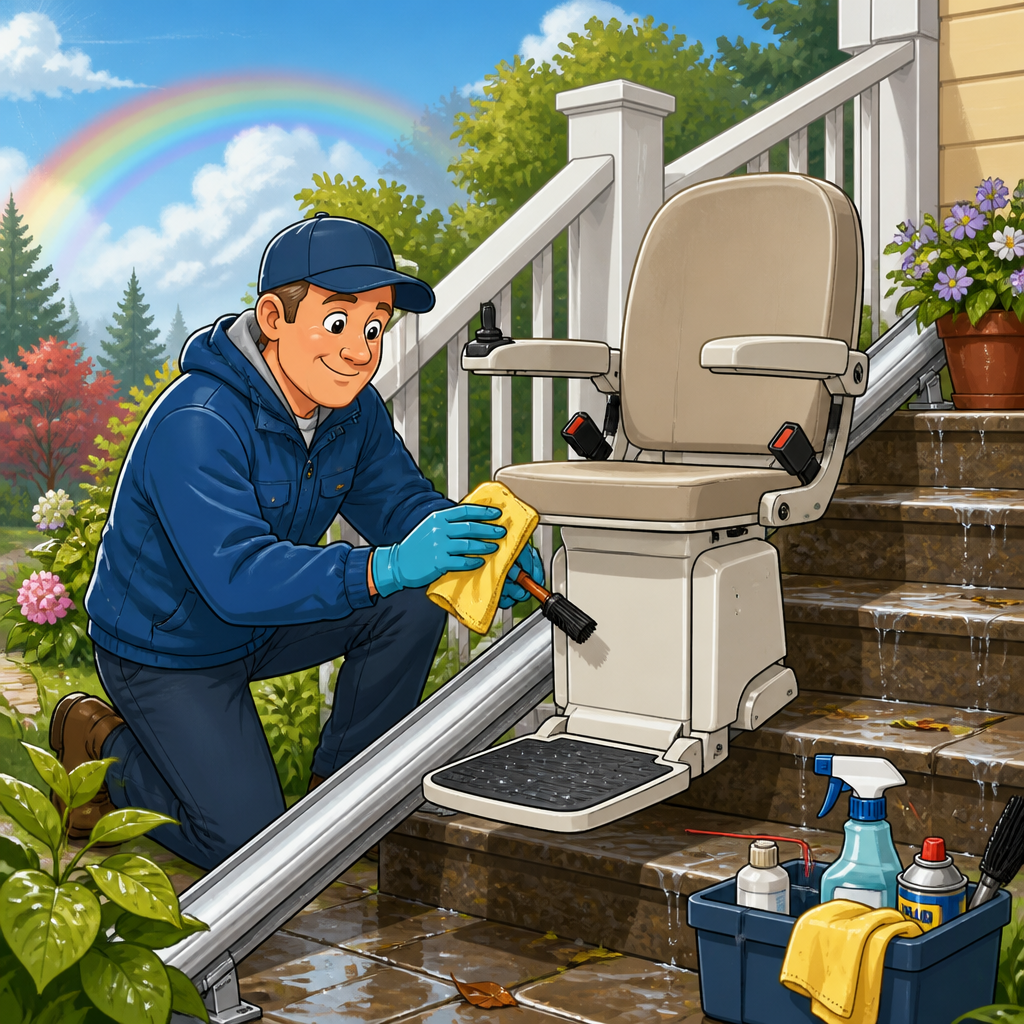
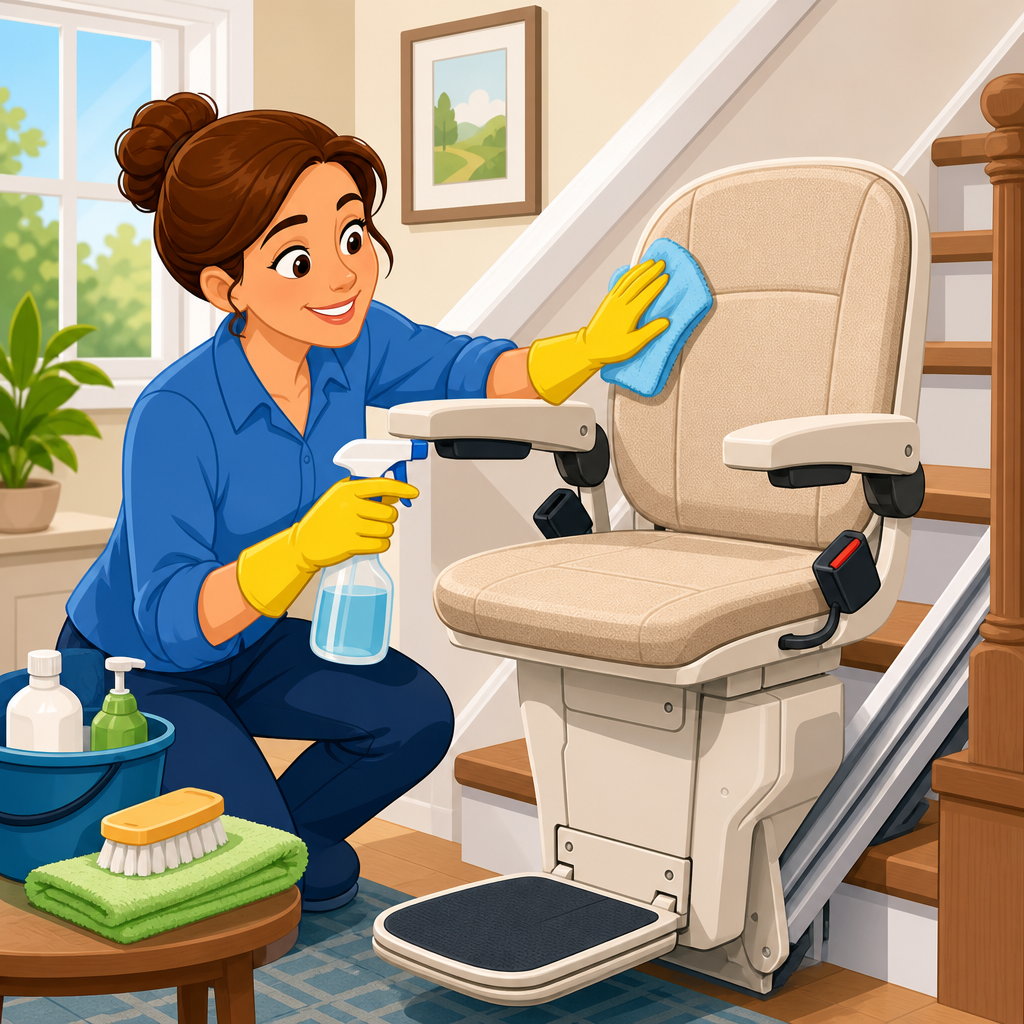
Once the same-spot stoppage is corrected, the best next step is prevention. A stair lift that is used daily should be visually checked every week and cleaned lightly every month. Keep the stairs clear, especially near the footrest path and lower hinge area. Confirm the chair parks on charge and that indicators show normal charging. If your model beeps when left off charge, do not ignore it; chronic low-charge operation shortens battery life and leads to under-load failures that mimic larger mechanical faults.
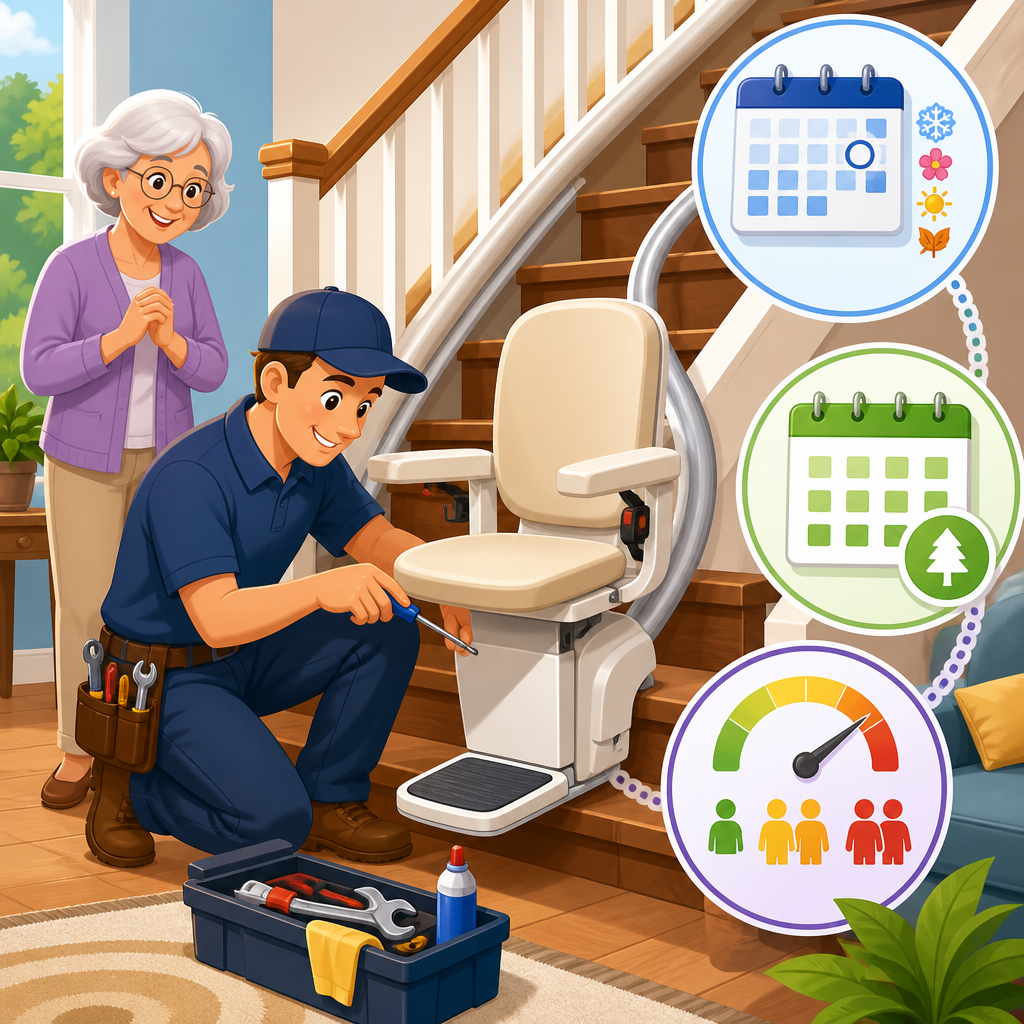
Schedule periodic professional maintenance based on usage, not just calendar time. In a one-user home, annual service is usually reasonable. In a multi-user setting or where the lift runs dozens of cycles weekly, more frequent inspection makes sense. A proper service visit should include battery testing under load, rail and rack inspection, safety edge verification, swivel seat interlock testing, hardware torque checks, and review of charger output. Ask the technician to document battery date codes and any wear parts approaching replacement.
This hub page should guide your first response whenever a lift is not working: start with the pattern, inspect for obstructions, verify safety devices, confirm charging, test controls, and escalate when the symptoms point to structural, electrical, or brake-related faults. The main benefit of this approach is speed with safety. You avoid guesswork, protect the user, and gather the right facts for a successful repair. If your stair lift stops at the same spot every trip, work through these checks methodically today, then arrange professional service if the cause is not immediately resolved.
Frequently Asked Questions
Why does a stair lift stop at the exact same spot on every trip?
When a stair lift stops at the same location every time, that repeatable pattern usually means the issue is tied to something specific at that point on the staircase rather than a random electrical fault. In many cases, the cause is a physical obstruction on or near the rail, a problem with the geared strip or track alignment, a hinged rail that is not fully locked into position, a charging contact interruption, or a safety edge being triggered as the chair passes a tight clearance area. Because the stoppage is consistent, that section of travel becomes the most important place to inspect first.
Another common reason is that the stair lift is encountering a small but repeatable change in resistance at the same point. That might be a loose rail bracket, debris in the rack, carpet rubbing the footrest, or even a section where the chair slightly shifts under load and activates a safety circuit. The fact that it happens on every trip is helpful for diagnosis, because it narrows the search. Instead of assuming the entire unit is failing, you can focus on what changes at that exact location: the angle of the rail, the spacing from the wall, the chair’s position on the stairs, nearby objects, and any charging or hinge components located there.
What should I check first if my stair lift always halts in one section of the rail?
Start with the simplest and safest visual checks. Look closely at the rail where the lift stops and inspect for dirt buildup, pet hair, small objects, or anything caught in the geared rack or track path. Check both sides of the rail and the area around the footrest to make sure nothing is brushing the lift during travel. Even something minor, such as a loose rug edge, a protruding carpet staple, or a child’s toy near the stairs, can repeatedly trigger a safety edge or create just enough drag to stop the chair at the same location.
Next, inspect any folding or hinged rail section if your unit has one. A hinged rail must usually be fully raised or lowered and securely latched before the lift can travel through that area reliably. If the hinge alignment is slightly off, the lift may stop every time it reaches that transition. Also check for signs of rail movement, loose mounting brackets, unusual gaps, or rubbing marks that suggest misalignment. If your stair lift displays error codes or beeps when it stops, note exactly what happens. Those signals can point to a specific safety circuit or power issue. Do not dismantle covers or bypass safety devices; if basic inspection does not reveal an obvious cause, the next step is professional servicing.
Could a power or charging issue cause the lift to stop at the same point every trip?
Yes, especially on battery-powered stair lifts, power and charging issues can absolutely create stoppages in a consistent location. Many stair lifts charge at designated points on the rail, usually near the top or bottom parking position, and if the charging contacts are dirty, misaligned, or intermittently disconnected, the batteries may not be receiving a full charge. A weak battery can still move the chair for part of the journey, but it may struggle and stop when it reaches a section that requires more torque, such as a steeper area, a curve, or a point where the load on the drive system changes.
There can also be a local interruption along the travel path. For example, if wiring near a hinge, carriage contact, or control connection is loose, movement to that exact point may momentarily break the circuit and stop the lift. In some cases, the lift is not losing all power but is detecting an abnormal condition and shutting down to protect itself. If the unit runs again after resetting or only works when lightly loaded, that can further suggest a battery, contact, or power-delivery problem. Check whether the lift is parking properly on its charge points, whether any charging indicator light is behaving normally, and whether the stop tends to happen more often after multiple trips. Those clues can help distinguish a charging fault from a rail or obstruction issue.
Can weight, seat position, or safety sensors make a stair lift stop in the same place?
They can. Stair lifts rely on several safety interlocks, and a problem with seating position, footrest clearance, swivel-seat locking, armrest controls, or overspeed and obstruction sensors can show up at one precise point in travel. For example, if the seat is not fully locked forward, the lift may start but stop once vibration or rail angle changes enough to affect the seat switch. Similarly, a footrest safety edge may be slightly out of alignment and get triggered only when it passes a narrow section of staircase, a wall projection, thick carpet edge, or accumulated debris.
Load can also matter more than people expect. If the user’s weight is within the unit’s rating but near the upper end, or if the rider shifts position during travel, the chair may place extra strain on the drive system at a particular incline or transition point. That does not necessarily mean the lift is overloaded; it may mean the batteries are weak, the rail needs adjustment, or the carriage components are wearing and only show symptoms when demand increases. Make sure the seat is fully locked in travel position, the footrest is unfolded correctly, armrests are secure, and nothing is hanging from the chair that could catch on the staircase. If the stop happens with one user but not another, that is important information to tell a technician.
When should I stop troubleshooting and call a stair lift technician?
You should call a qualified technician if the lift repeatedly stops in the same place after you have ruled out obvious obstructions and simple user-position issues, or if you notice grinding noises, jerky movement, visible rail misalignment, hinge problems, inconsistent charging, warning beeps, or fault lights. A repeatable stop is often diagnosable, but many of the likely causes involve components that should be inspected and adjusted by someone familiar with the lift’s model-specific safety systems. Professional testing may include checking battery output under load, verifying carriage sensors, inspecting rack engagement, confirming rail alignment, and reading stored fault information if the unit supports diagnostics.
You should also stop using the lift and arrange service promptly if the chair restarts unpredictably, stops with a rider stranded, fails near the top landing, or shows signs of intermittent electrical loss. Those symptoms can increase the risk of a fall during transfers or leave the unit unreliable when it is needed most. The good news is that a lift that always stops in the same spot often gives a technician a strong starting point, which can speed up the repair process. Be ready to describe exactly where it stops, whether it happens going up, down, or both directions, whether the problem changes with different riders, and what lights or sounds the lift produces at the moment it halts.