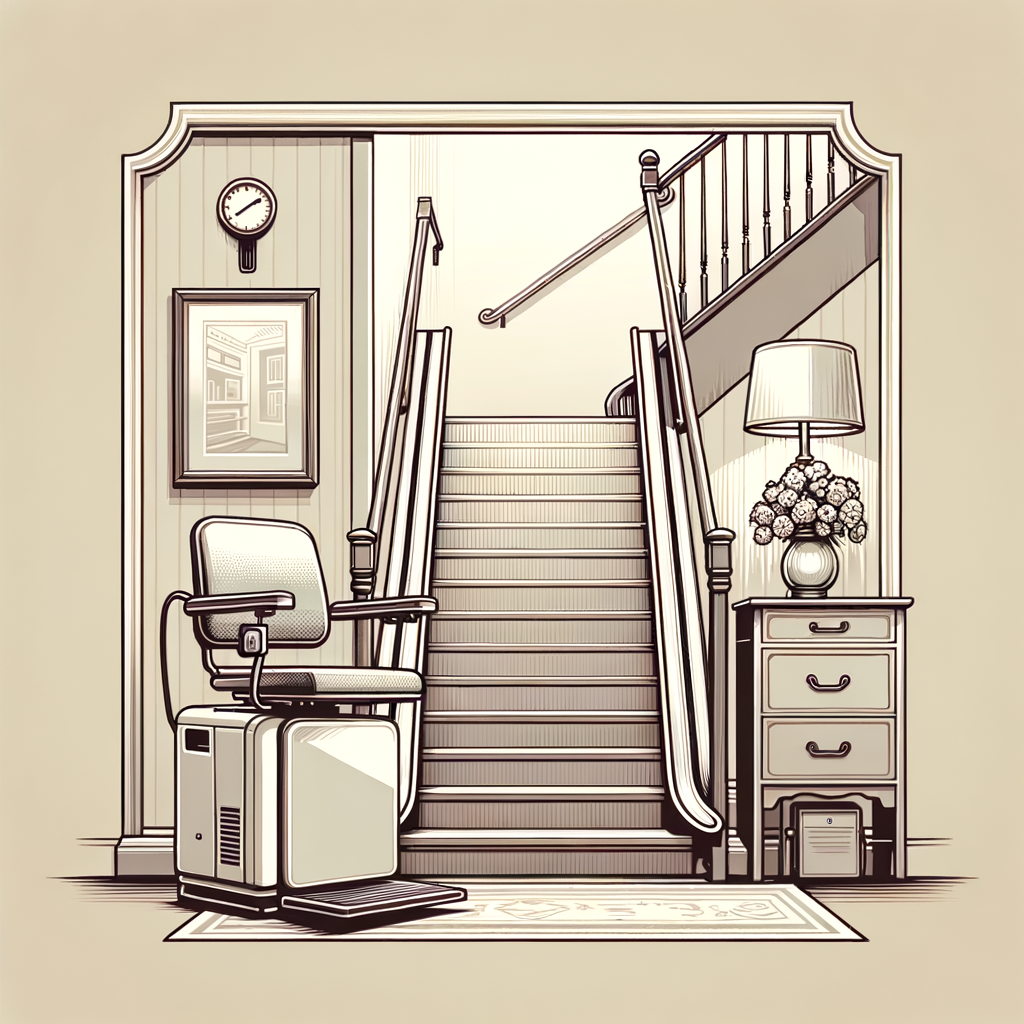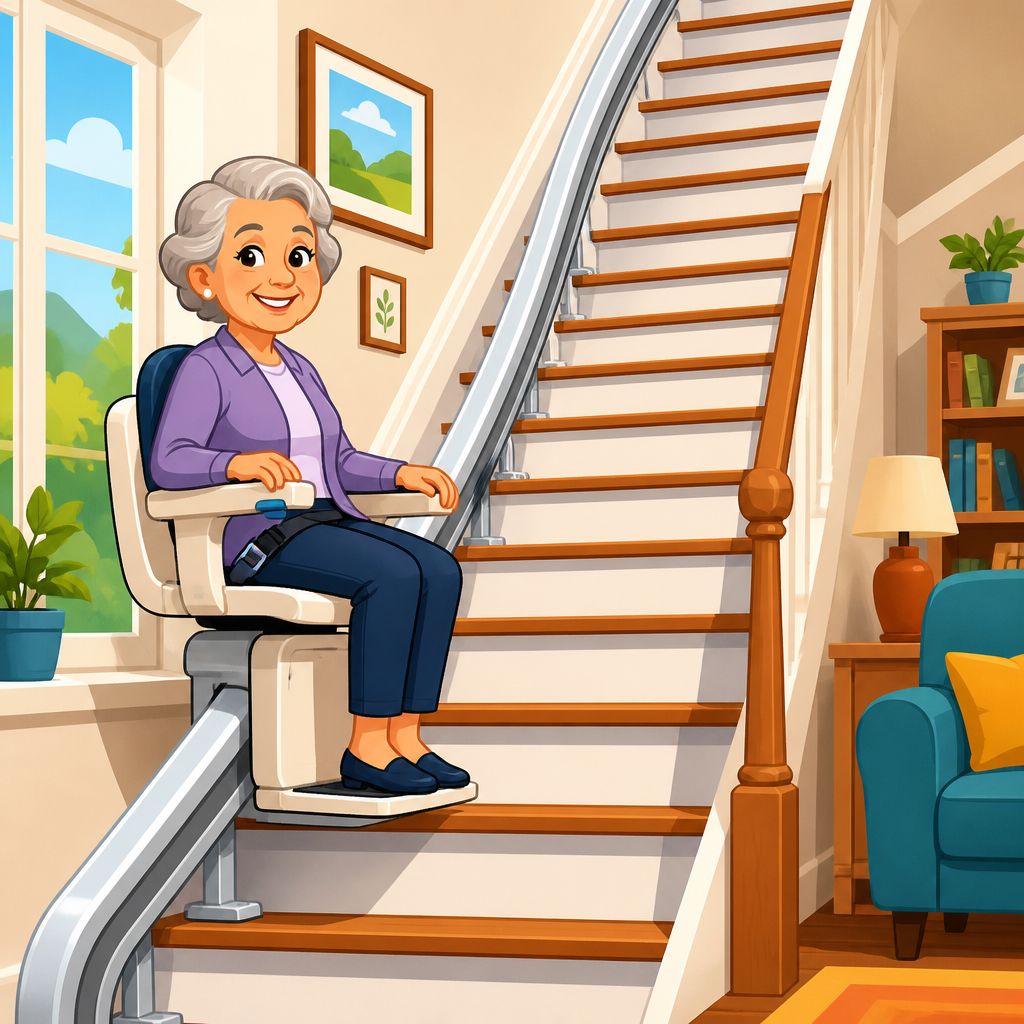
Stair lifts for steep stairs solve a specific mobility problem: how to move a person safely along a staircase whose angle, rise, width, landings, or curvature make standard equipment harder to fit. In practice, “steep stairs” usually means a staircase with a greater-than-average pitch, taller risers, shorter treads, or tight transitions that change how a rail, footrest, and seat travel. That matters because most residential stair lifts are engineered around defined installation limits, not around a vague idea of difficulty. When I assess homes, the first questions are never about upholstery or price. They are about stair pitch, clear width, user transfer ability, parking space, and whether the top and bottom landings allow safe entry and exit.
A stair lift is a motorized chair that runs on a rail fixed to stair treads, not typically to the wall. Core components include the rail, carriage, transmission, seat, footrest, call/send controls, charge system, and safety sensors. For steep stairs, each component becomes more consequential. A steeper angle changes seat-to-footrest geometry, rider posture, speed perception, and the way the carriage handles start, stop, and leveling. It can also affect code-adjacent concerns such as maintaining a usable path of egress, although private homes are treated differently from public buildings. The right solution often depends on whether the stairs are straight, curved, narrow, split-level, or interrupted by a doorway or radiator.
This topic matters because the consequences of getting it wrong are significant. A poorly matched lift can create knee compression, awkward transfers, footrest strikes, excessive rail projection, and a false sense of security for users with balance, vision, or trunk-control limitations. It can also waste money. I have seen homeowners order a standard straight lift online, only to learn later that the staircase pitch exceeded the model’s approved range or that the folded chair blocked passage too much for other occupants. The good news is that steep stairs do not automatically rule out a lift. They simply require more careful measurement, model selection, and safety planning than a routine installation.
As a hub page within Chair Lift Types & Designs, this article explains the main stair lift options, the design limits that determine fit, and the safety considerations that should shape a buying decision. It is intended to answer the practical questions people ask early: Can a stair lift work on very steep stairs? When is a custom rail necessary? How narrow is too narrow? What features improve comfort and transfer safety? And when should you consider an alternative such as a standing stair lift, a perched seat, or a home elevator? Understanding those answers upfront leads to safer installations and better long-term value.
How steep stairs change stair lift design requirements
Steep stairs affect more than the rail angle. They change the rider’s posture and the space envelope of the moving chair. On a typical staircase, the seat remains level while the carriage follows the rail. On a steeper staircase, that level seat can make the rider feel more reclined relative to the stair line, especially if the seat base is deep or the user has limited hip flexion. This is why manufacturers publish operating angle ranges and why experienced dealers run a body-fit assessment, not just a tape-measure survey. The staircase may physically accept a rail while still being a poor ergonomic match for the rider.
Pitch is only one variable. Installers also measure tread depth, riser height, nosing projection, staircase width at the narrowest point, headroom, obstruction locations, and available landing space for swiveling and standing. A steep staircase with shallow treads can place the lower rail closer to the walking line, increasing trip risk for other users. A top landing that ends immediately at a door may require a hinged rail or parking arrangement to keep the doorway clear. In older homes, I often find that “steep” coincides with uneven geometry, which can complicate rail brackets and final clearances even when the lift model is technically approved for the angle.
Comfort and confidence also shift on steep runs. Many users tolerate a standard seat on moderate stairs, then feel unstable on a sharper incline because their feet do not rest fully or their knees rise too high. Models with adjustable seat height, footrest height, arm spacing, and seat depth matter more here than they do on average stairs. So do powered swivel seats and powered footrests, which reduce bending and twisting at the landings. For users with Parkinson’s disease, post-stroke weakness, arthritis, or reduced trunk control, these details often determine whether the lift is genuinely usable every day or merely possible in theory.
Stair lift options for steep stairs
The first division is straight versus curved stair lifts. Straight stair lifts are built for a single uninterrupted run and are usually faster to install and less expensive. Some straight models can handle relatively steep angles, but only within the manufacturer’s tested range. Curved stair lifts use a custom rail for turns, intermediate landings, spiral sections, or complex geometry. On steep stairs, curved systems are often the better answer because they allow tighter control of parking positions, overrun lengths, and seat orientation at each landing. Customization is not cosmetic here; it is what makes safe boarding and dismounting possible.
Seat style is the next major decision. Standard seated lifts are the default, but not always the best fit for steep staircases. Perch stair lifts, also called perched-seat or sit-stand lifts, support the user in a near-standing position and reduce the horizontal space the chair occupies. They are useful where the staircase is narrow or where the user has difficulty bending the knees deeply. True standing stair lifts go further, requiring the rider to stand throughout travel while supported by armrests and a safety belt. In my experience, standing models work well only for a limited group: users with adequate balance and endurance who mainly need help with the vertical climb, not with transfers.
Outdoor-rated and heavy-duty variants can overlap with steep-stair applications too. A heavy-duty stair lift may offer a wider seat and higher capacity, but that does not guarantee suitability for a steep or narrow staircase. In fact, larger chairs can worsen clearance problems. Conversely, some compact models designed for narrow stairs use a slimmer carriage and folded profile, making them better candidates despite lower maximum user weight. Several recognized manufacturers, including Bruno, Handicare, Harmar, Access BDD, Stannah, and Acorn, offer model lines with different space envelopes, rail designs, and seat configurations, but the right match always comes down to measured conditions and user ability rather than brand reputation alone.
| Option | Best use case | Main advantage | Key limitation on steep stairs |
|---|---|---|---|
| Straight seated lift | Single run, adequate width, standard landings | Lower cost and faster installation | Limited by approved pitch range and landing space |
| Curved seated lift | Turns, split landings, complex geometry | Custom fit and better parking flexibility | Higher price and longer lead time |
| Perch stair lift | Narrow stairs, limited knee flexion | Smaller folded profile, easier on tight stairs | Requires partial weight bearing and confidence |
| Standing stair lift | User can stand safely during travel | Minimal seat intrusion on narrow stairs | Not suitable for poor balance or low stamina |
Installation limits that determine whether a lift will work
The most important limits are rail angle, clear staircase width, and safe landing access. Manufacturers specify the stair angle range each model can accommodate. If the staircase falls outside that range, the model is not a candidate, regardless of sales claims. Width is equally critical. A common planning threshold is around 30 to 36 inches of staircase width, but the real issue is usable clearance with the rail installed and the chair folded. A narrow staircase may still accept a compact or perch model, while a wider staircase can fail if a wall projection, handrail, or door swing creates a pinch point.
Landings deserve special attention because most incidents happen during transfers, not during travel. At the top landing, the rider needs room to swivel, place both feet securely, and stand without backing toward open stairs. A track overrun can move the user away from the stair edge before dismounting, and on some layouts that feature is essential rather than optional. At the bottom landing, there must be enough space to approach, sit, and rise without stepping into a door path or narrow hall. Hinged rails help where a lower overrun would block a doorway, but they add another moving part that must be maintained and operated consistently.
Power and structure are usually manageable, yet they still matter. Most modern stair lifts use rechargeable batteries and a standard household outlet to keep the unit charged. This means the lift can often run during a short power outage, but only if battery health is good and charge points are not obstructed. The rail mounts to the stair treads, so installers verify tread condition, fastener holding strength, and overall staircase stability. In older homes with soft wood, loose treads, or previous repairs, reinforcement may be needed. For more detailed guidance on geometry and fit, this hub should connect readers to narrower articles on straight stair lifts, curved stair lifts, narrow stair solutions, and perch or standing models.
Safety considerations that matter most on steep stairs
The baseline safety package should include a seat belt, obstruction sensors on the carriage and footrest, overspeed protection, limit switches, a swivel-seat lock, and reliable call/send controls. These are standard on quality units, but their presence alone does not make a steep-stair installation safe. The real test is whether the user can transfer onto the seat, maintain posture during travel, and exit at the landing without twisting or rushing. I advise families to watch a full demonstration with the intended user, including folding and unfolding the footrest, fastening the belt, swiveling the seat, and sending the lift away after use.
Transfer safety is the deciding factor for many buyers. A user who leans heavily to one side, freezes during turns, or cannot reposition the feet reliably may need a powered swivel, a larger footrest, or caregiver assistance. In some cases, a stair lift is the wrong device because the transfer itself remains unsafe even though the ride is smooth. That is common in advanced neurologic disease, severe dementia, or when orthostatic hypotension causes dizziness on standing. Occupational therapists and physical therapists can add value here by assessing sit-to-stand ability, trunk control, and whether a user can operate the controls under normal household conditions.
Routine maintenance is not optional. Battery degradation, worn seat swivels, misaligned charge contacts, and dirty rail surfaces can all reduce reliability. Reputable manufacturers and dealers recommend scheduled service and a clear rescue plan if the lift stops mid-run. Users should know how to use the manual lowering or recovery procedure if the model has one, and family members should know who provides emergency support. Safety also includes the people who walk the stairs. A steep staircase with a protruding rail, folded footrest, or parked chair can become a household trip hazard, so parking locations and folded dimensions should be part of the original design discussion, not an afterthought.
Costs, tradeoffs, and when to consider alternatives
Price varies widely because complexity drives cost. Straight stair lifts often start in the low thousands of dollars installed, while curved units commonly cost several times more due to custom rail fabrication and additional fitting work. Perch and standing models can also carry premiums because they serve narrower use cases. The least expensive option is not always the best value. I have seen buyers save money upfront by choosing a basic chair, then replace it within a year because it was uncomfortable on a steep run or impossible for a spouse to use safely. Long-term value comes from matching the device to the staircase and the rider’s likely future needs.
There are real tradeoffs. A perch lift may preserve more walking space for others but can be harder for a frail user to tolerate. A heavy-duty model may increase comfort for a larger rider but reduce staircase clearance. A curved rail can solve landing access and obstruction issues yet lengthen lead time if mobility needs are urgent. If multiple household members will use the lift, controls, seat dimensions, and user weight capacity need to fit more than one body type. Buyers should also ask about warranty coverage, service response times, battery replacement intervals, and whether the unit can be reconditioned or relocated if the home layout changes.
Sometimes the better answer is not a stair lift. A vertical platform lift may suit a wheelchair user who cannot transfer safely. A home elevator may be justified where several floors, high daily use, or long-term accessibility planning outweigh the larger project cost. On very narrow or unusually steep stairs, a through-floor lift or first-floor living conversion may be more practical than forcing a marginal stair lift installation. The smartest next step is a professional site assessment with precise measurements and a transfer-focused demonstration plan. Use this hub as the starting point, then compare the linked stair lift types, ask hard questions about limits, and choose the option that is safe every day, not just possible on installation day.
Frequently Asked Questions
Can a stair lift be installed on very steep stairs?
Yes, a stair lift can often be installed on very steep stairs, but whether it is truly feasible depends on the exact geometry of the staircase rather than the label “steep” alone. Installers look at several measurements, including the stair angle, riser height, tread depth, overall width, headroom, landing space, and whether the staircase includes turns, intermediate landings, or tight transitions. A staircase with a sharper-than-average pitch may still accept a lift if the rail can be mounted securely and the chair can travel without the user’s knees, feet, or body contacting nearby walls, handrails, or the opposite side of the staircase.
The key issue is that stair lifts are built within specific engineering limits. Manufacturers typically publish acceptable ranges for stair angle and clearance, and once a staircase falls outside those ranges, standard equipment may no longer be appropriate. On a steep staircase, the seat position, footrest angle, and rail path become more important because the rider must remain stable and comfortable throughout the trip. In some cases, a custom curved unit, a more compact seat design, or a rail with special start and stop positions can make an installation possible where a basic straight model cannot.
The only reliable way to know is through an on-site assessment by a qualified dealer or accessibility specialist. They will measure the stairs, evaluate the user’s mobility needs, and determine whether a code-compliant, manufacturer-approved configuration exists. If the staircase is too steep or otherwise outside approved specifications, a reputable installer should say so clearly rather than force a marginal or unsafe fit.
What staircase measurements matter most when choosing a stair lift for steep stairs?
For steep stairs, the most important measurements go well beyond simple stair length. The installer will usually start with the overall run of the staircase, then measure the angle or pitch, the height of each riser, the depth of each tread, and the clear width from wall to wall or wall to railing. These dimensions determine whether the rail can be mounted properly and whether there will be enough room for the chair, footrest, and rider during travel. On a steeper staircase, even a small reduction in tread depth or landing clearance can affect usability in a major way.
Landing space at the top and bottom is especially important. A stair lift needs safe boarding and exit points, and steep stairs often lead into tighter upper landings or more abrupt lower transitions. The installer will check whether the seat can swivel safely at the top, whether a folding rail or track overrun is needed, and whether the rider can get on and off without standing too close to the stair edge. They will also evaluate knee clearance and foot clearance along the route, because a steep incline can change the rider’s posture and bring the knees or feet closer to the staircase structure.
Curves, turns, and obstructions matter too. If the staircase includes a bend, narrow landing, doorway, radiator, baseboard projection, or nearby handrail, the rail design may need customization. Finally, user-specific measurements such as body size, transfer ability, seated posture, and whether the person uses a walker or wheelchair at the landing are essential. A technically installable lift is not automatically a practical one. The best choice is the one that fits both the staircase and the rider safely.
Are there limits to what a stair lift can handle on steep or narrow stairs?
Yes, and those limits are one of the most important safety considerations. Stair lifts are not universal devices that can be adapted to every staircase. Each model has manufacturer-defined installation parameters covering maximum and minimum stair angles, required clearances, rail placement tolerances, weight capacity, and landing requirements. If a staircase is too steep, too narrow, too irregular, or too constrained at the landings, a standard residential stair lift may not be approved for installation.
Narrow stairs create a common problem because the chair and footrest must leave enough walking space when folded and enough travel clearance when occupied. On steep stairs, the user’s body angle can make the effective space tighter than expected. A staircase might technically have enough width on paper but still create knee, shoulder, or foot interference during actual use. Similarly, unusually tall risers or short treads can complicate the rail-to-step relationship and alter how the rider sits in relation to the incline.
Weight capacity is another limit that should not be overlooked. Heavier-duty stair lift models may offer higher capacity, but they also tend to require more space. That can create a tradeoff on steep stairs where compactness and strength are both needed. There are also practical limits related to comfort and transfer safety. If the user cannot sit securely, keep their feet on the footrest, or exit safely at the top landing, then the installation may not be appropriate even if the rail itself can be mounted. In those cases, alternatives such as a through-floor lift, home elevator, or staircase modification may be safer long-term solutions.
What safety features are most important for stair lifts on steep staircases?
On steep staircases, safety features become even more important because the travel angle can feel more pronounced and the margin for awkward transfers is smaller. At a minimum, the lift should include a seat belt, obstruction sensors on the footrest and carriage, a swivel seat with a locking mechanism, and reliable start-stop controls that allow smooth movement without jerking. These are standard on many quality lifts, but their proper setup and adjustment are critical when stairs are steeper than average.
A powered swivel seat can be especially helpful for users who have difficulty twisting at the top landing. The purpose is to let the rider turn away from the staircase and stand onto the landing rather than toward the stair edge. A folding footrest, armrests, and seat are also valuable for preserving as much staircase access as possible for other household members. On some installations, a track overrun can move the chair away from the stair edge at the top or bottom, reducing fall risk during transfers. If the bottom landing is close to a doorway or walkway, a hinged rail may be used to prevent the track from becoming an obstruction.
Battery backup is another major safety feature. Most modern stair lifts run on batteries that charge from household power, allowing continued operation during an outage. That matters because getting stranded on a staircase is a serious concern for mobility-limited users. Just as important as built-in features is professional installation and maintenance. A steep-stair application should never be treated casually. The lift should be installed exactly to manufacturer specifications, tested under load, and serviced regularly so brakes, sensors, charging points, and seat functions remain dependable over time.
How do you know whether a custom curved stair lift is needed instead of a standard straight model?
A straight stair lift is designed for a staircase that runs in one uninterrupted line from bottom to top. If the stairs have a turn, a landing in the middle, a change in direction, or a nonstandard entry and exit challenge, a custom curved lift may be necessary. On steep stairs, that decision is not only about whether the staircase bends. It is also about whether the user can board, ride, and exit safely using a straight rail without ending up in an awkward or unsafe position at either landing.
Custom curved lifts are often the answer when the staircase geometry is complex. They can be built to follow inside or outside bends, wrap around landings, and stop in positions that improve transfer safety. This can be especially useful when steep stairs end in a tight upper landing where a standard stop point would leave too little room to swivel and stand. A custom rail may also help avoid obstacles or place the parked chair in a less intrusive location. In homes where preserving walkway space is important, a tailored curved solution can sometimes achieve a better functional fit than trying to force a straight model into a borderline application.
That said, custom curved lifts are usually more expensive and take longer to manufacture than straight lifts because the rail is made to the staircase’s exact dimensions. The added cost is often justified when it meaningfully improves safety, comfort, and usability. A professional assessment should compare all realistic options, including whether a straight lift with a track overrun could work, whether a compact model offers enough clearance, and whether the stairs fall within approved limits at all. The right choice is the one that gives the user a secure, repeatable transfer and reliable travel every time, not simply the lowest upfront price.