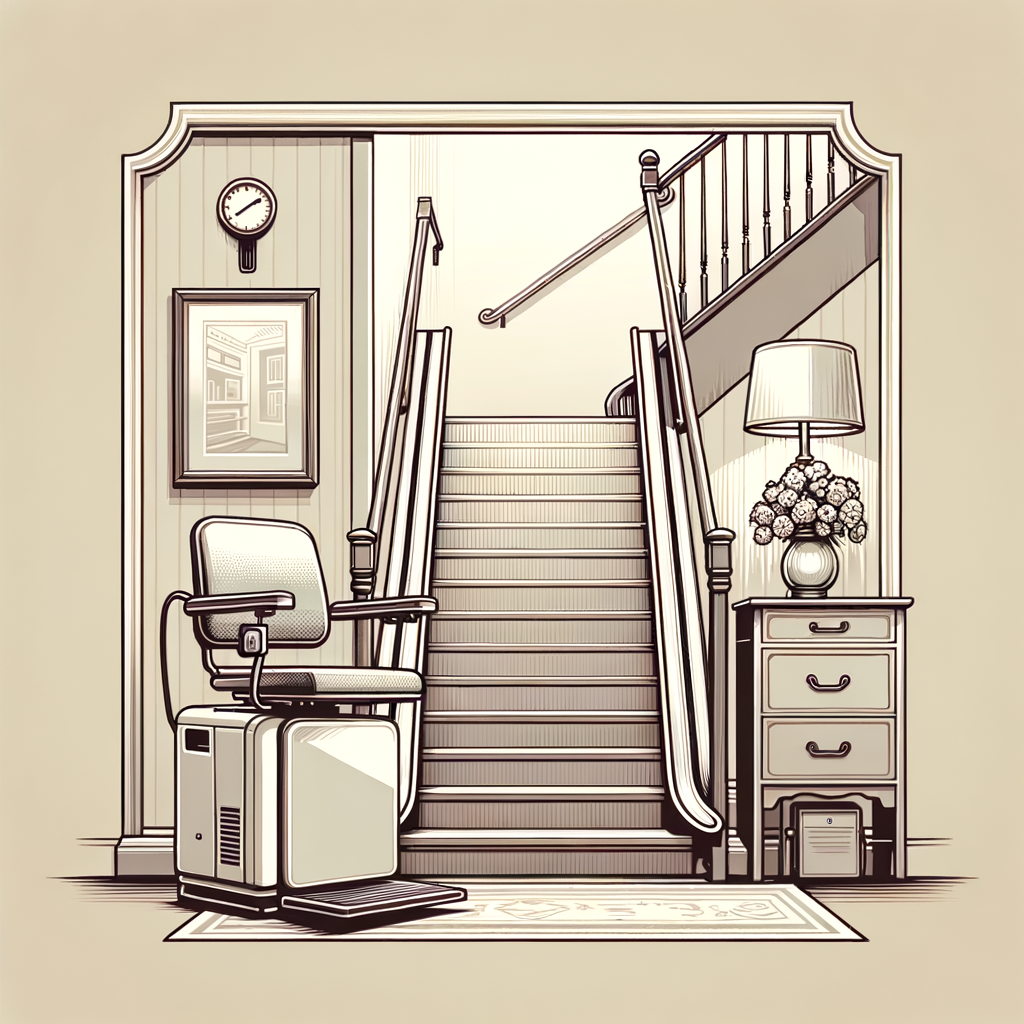
Choosing the easiest chair lift for elderly users to operate starts with one practical question: which design reduces physical effort, confusion, and safety risk the most during everyday use? In my experience evaluating home mobility equipment for older adults and family caregivers, the answer is rarely about the most advanced model. It is about the chair lift that matches the user’s strength, balance, vision, dexterity, and confidence level. For many households, ease of operation matters more than speed, upholstery, or premium upgrades because a stair lift only helps when it feels simple enough to use every single day.
A chair lift, often called a stair lift, is a motorized seat that travels along a rail attached to the staircase. The user sits down, secures the belt, presses a control, and rides between floors. Key operating features include seat height, swivel function, armrest controls, remote call stations, footrest design, safety sensors, and battery backup. When older adults say they want an easy chair lift, they usually mean one that requires minimal hand strength, has obvious controls, stops smoothly, and allows safe boarding and exiting. Those are the criteria that separate an accessible product from a stressful one.
This topic matters because falls on stairs remain one of the most serious home safety risks for older adults. According to the Centers for Disease Control and Prevention, falls are a leading cause of injury among adults over sixty-five, and stairs are a common site of serious incidents. A well-matched chair lift can restore access to bedrooms, bathrooms, and laundry areas without the disruption of moving or undertaking major remodeling. It can also reduce caregiver strain. Families often focus on weight capacity or installation cost first, but the easiest chair lift to operate is usually the one that gets used consistently and correctly, which directly affects safety and long-term value.
As a sub-pillar hub under chair lift types and designs, this guide compares the main chair lift categories, ranks the features that most affect usability, and helps readers understand which models fit different needs. It also points naturally toward deeper topics such as straight stair lifts, curved stair lifts, outdoor stair lifts, heavy-duty models, perch seats, and seated versus standing designs. If you are comparing options for yourself, a parent, or a client, the most useful approach is to evaluate operation in real-life terms: how easy it is to sit, press, ride, swivel, stand, and repeat that process safely several times a day.
What makes a chair lift easy for an elderly person to operate?
The easiest chair lift for elderly users to operate is one with intuitive controls, stable entry and exit, and minimal physical demands. In practice, that usually means a standard seated stair lift with a large armrest-mounted rocker switch, powered swivel seat, folding footrest, and battery-powered drive. These features reduce the need to bend, twist, grip hard, or make precise finger movements. Smooth starts and stops also matter because abrupt movement can feel unsafe to users with arthritis, vestibular issues, Parkinsonian symptoms, or general frailty.
I look first at hand function. Many older adults can still press a broad toggle or paddle control but struggle with tiny buttons, stiff switches, or touchscreen-style interfaces. A simple armrest control is almost always easier than relying on handheld remotes alone. Remote call-send controls remain useful for multi-user homes, but they should be secondary. Seat ergonomics are just as important. If the seat is too low, too narrow, or too deep, the user may have trouble standing up safely at the top landing. A powered swivel can make a dramatic difference because it turns the rider away from the staircase before standing.
Vision and cognition influence usability too. Clear contrast on controls, obvious seatbelt latching, and predictable movement patterns make operation easier for users with reduced vision or mild cognitive decline. The best systems avoid unnecessary complexity. They do not require navigating menus or remembering multiple steps. In home assessments, I often explain that the easiest lift is the one a user can learn in one demonstration and repeat without coaching. Brands like Bruno, Harmar, Stannah, Handicare, and Acorn all offer models aimed at straightforward operation, but ease depends on the exact configuration and the individual using it.
Ranking chair lift types by ease of operation
For most elderly users, straight seated stair lifts are the easiest category to operate, followed by premium curved seated models, then outdoor lifts, heavy-duty lifts, and finally perch or standing lifts. Straight lifts typically win because they have the simplest rail path, the most standardized controls, and the least complicated boarding process. They are common, proven, and easier for installers to set up precisely. That often translates into smoother performance and fewer user frustrations. Curved lifts can be just as easy once installed, but the custom rail and landing geometry introduce more variables.
Outdoor stair lifts rank slightly lower not because the controls are difficult, but because weather covers, moisture, temperature shifts, and exposed components can add stiffness or inconvenience. Heavy-duty lifts can be very easy to use for larger riders, especially when a standard seat feels cramped, but wider seats may slightly change transfer mechanics in narrow staircases. Perch lifts and standing stair lifts usually demand better balance, stronger legs, and more confidence, so they are not the easiest choice for most elderly users even though they solve specific space constraints well.
| Chair lift type | Ease of operation | Best for | Main limitation |
|---|---|---|---|
| Straight seated stair lift | Excellent | Most elderly users on a single straight staircase | Only fits straight stairs |
| Curved seated stair lift | Very good | Homes with turns, landings, or spiral sections | Higher cost and custom lead time |
| Outdoor stair lift | Good | Porch, deck, or exterior entry access | Weather exposure affects convenience |
| Heavy-duty stair lift | Good to very good | Users needing higher capacity or more seat room | Requires more staircase width |
| Perch or standing lift | Fair | Users who cannot fully bend knees on narrow stairs | Needs balance and postural control |
If you are building out a full comparison across chair lift types and designs, this ranking provides the core framework. From here, readers usually move into detailed comparisons of straight versus curved lifts, indoor versus outdoor lifts, heavy-duty versus standard capacity models, or perch versus seated systems. Those topic clusters support buying decisions because ease of operation is never separate from staircase design, body mechanics, and daily routine.
Why straight seated stair lifts are usually the easiest option
A straight seated stair lift is usually the easiest to operate because every part of the experience is simpler. The user approaches a predictable seat position, sits down on a full chair, fastens the belt, presses one control, and rides on a rail with no directional complexity. At the top, the seat can swivel toward the landing so the rider stands up onto a flat surface rather than toward the stairs. This is the setup I recommend most often for older adults with arthritis, general weakness, or fear of falling.
Standard straight lifts from Bruno Elite, Stannah Sadler variants for special cases, Handicare 1000, Harmar Pinnacle, and Acorn 130 differ in ride feel and options, but they share a basic advantage: they are familiar. Simplicity helps adoption. Family members can learn operation quickly, and service technicians can troubleshoot them more easily because the design is common. Straight models also tend to cost less than curved lifts, which matters when families are balancing usability with budget. Lower cost does not automatically mean lower ease. In this category, it often means less customization and fewer complications.
That said, ease still depends on feature selection. A basic manual swivel may be acceptable for a strong user, but a powered swivel is easier for someone with painful shoulders or limited trunk rotation. A manual footrest that folds with a toe tap may be easier than bending, while a powered footrest can help users with reduced leg mobility. The simplest lift on paper is not always the easiest in practice. The right straight stair lift combines an uncomplicated rail design with the powered assistance features the user specifically needs.
When curved, heavy-duty, outdoor, or perch lifts become the better choice
A curved stair lift becomes the easiest option when the home layout requires it. If the staircase has a turn, intermediate landing, or multiple flights, forcing the user to transfer between lifts or continue walking part of the stairs defeats the purpose. Custom curved models from Bruno, Handicare, Savaria, and Stannah can provide very easy operation once installed because they eliminate extra transfers. The user still rides in a seated position with familiar controls; the complexity is in the rail engineering, not the day-to-day experience.
Heavy-duty models are easier for users who need more seat width, higher capacity, or greater stability. A person may technically fit on a standard lift but still feel unsafe or compressed. In those cases, a larger chair with a stronger frame is not a luxury; it directly improves ease of operation by making sitting and rising more natural. Staircase width is the key constraint. Many heavy-duty lifts require at least thirty-six inches or more of clear width to preserve safe passage.
Outdoor lifts are often the easiest way to access a porch or garage entry when ramps are impractical due to slope or space. Here, the best operator experience comes from weather-resistant controls, a durable cover, and consistent maintenance. Perch lifts, sometimes called standing or semi-seated lifts, are a niche option. They can be lifesavers for users with limited knee flexion or very narrow stairs, but they are not the easiest for the average elderly rider because they demand posture control and confidence while traveling.
Features that matter most for simple daily use
The features that most improve ease of operation are large controls, a powered swivel, easy seatbelt use, smooth start-stop motion, obstruction sensors, battery backup, and seat dimensions matched to the rider. If I had to prioritize just three, I would choose intuitive armrest controls, safe transfer support at the top landing, and a comfortable seated posture. Those three factors determine whether the user feels secure enough to use the lift independently.
Battery backup is especially important. Most modern stair lifts run on batteries that charge from household power, allowing several trips during an outage. For older adults living alone, that is more than a convenience. It prevents the lift from becoming unusable during storms or utility interruptions. Safety sensors on the carriage and footrest stop the lift if it encounters an obstacle, protecting both the rider and others on the staircase. Fold-up arms, seat, and footrest help preserve stair access for the household, but they should not create extra strain for the primary user.
Do not underestimate the value of ride quality. Gear rack noise, seat wobble, and abrupt braking make some users stop trusting a machine even when it is technically safe. A demo ride is invaluable. The easiest chair lift to operate should feel boring in the best possible way: predictable, stable, quiet enough, and easy to repeat without hesitation. That is the standard worth using in any ranking post or side-by-side comparison.
How to choose the easiest chair lift for a specific elderly user
Start with the person, not the product category. Assess grip strength, shoulder mobility, hip and knee range of motion, balance, body size, vision, hearing, and how the user transfers from standing to sitting. Then assess the staircase: straight or curved, width, landing space, nearby doorways, and electrical access. A user with severe arthritis on a straight staircase may need a standard seated lift with powered swivel and powered footrest. A taller or broader rider may need a heavy-duty model. A user with fused knees may do better on a perch seat despite its tradeoffs.
Always ask how many times per day the lift will be used and whether more than one rider needs it. In shared homes, call-send remotes and folding components matter more. In single-user homes, the emphasis should stay on immediate, uncomplicated control from the seat. Reputable dealers usually perform an in-home assessment and explain code-related and manufacturer-specific requirements. Use that visit to test the user’s ability to buckle the belt, reach the control, and stand safely at the upper landing.
The main takeaway is straightforward: for most elderly users, the easiest chair lift to operate is a straight seated stair lift with large armrest controls and powered transfer features. When the staircase or body mechanics require something else, curved, heavy-duty, outdoor, or perch models can be easier because they fit the real situation better. Compare designs carefully, request a live demonstration, and choose the model the user can operate calmly and confidently every day. If you are researching chair lift types and designs, use this hub as your starting point, then move into the specific comparison pages most relevant to your home and mobility needs.
Frequently Asked Questions
What type of chair lift is usually the easiest for elderly users to operate?
In most cases, the easiest chair lift for an elderly user to operate is a straightforward seated stair lift with simple, clearly labeled controls and minimal extra features. For many older adults, ease of use comes down to predictability: sit down comfortably, fasten the seat belt, press and hold one obvious control, and ride smoothly to the top or bottom. Models with large toggle switches, paddle controls, or easy-to-feel armrest buttons are often simpler than lifts with smaller controls, touch-sensitive panels, or overly complicated programming.
The best choice is usually not the most high-tech unit. It is the one that fits the user’s physical abilities and daily routine. Someone with arthritis may do better with a lift that uses a broad, gentle-pressure control instead of a tiny button. A user with limited vision may benefit from high-contrast markings and a seat that clearly locks into position. A person who gets anxious on stairs may feel safest with a lift that starts and stops smoothly and has an easy swivel seat at the landing. In practical terms, the easiest chair lift is the one the user can understand, trust, and operate without strain or second-guessing.
Which chair lift features make operation simpler and safer for seniors?
The features that make a chair lift simplest and safest are usually the ones that reduce effort, improve clarity, and support stable transfers on and off the seat. A well-designed swivel seat is one of the most important examples. At the top landing especially, the seat should turn easily and lock securely so the rider can stand up away from the staircase rather than near the edge. This can significantly reduce the risk of losing balance during transfers.
Another important feature is intuitive control placement. Seniors tend to do best with controls that are easy to see, easy to reach, and easy to understand on the first try. Armrest-mounted controls with simple directional movement are often ideal. Seat belts should also be easy to grasp and fasten, especially for users with limited dexterity. Footrests that fold easily, seats with supportive cushioning, and armrests that feel stable can all make the lift more comfortable and less intimidating.
Safety sensors are also valuable because they help stop the lift if something is blocking the stairway. Soft-start and soft-stop technology improves comfort and can be especially helpful for elderly users who are sensitive to jerky motion. Remote call/send controls may also simplify household use, particularly when more than one person uses the lift or when the chair needs to be moved to another level. Overall, the easiest chair lift to operate is one that combines simple controls with features that quietly reduce the chances of confusion, discomfort, or unsafe movement.
Are battery-powered chair lifts easier for elderly people to use than non-battery models?
Yes, in many homes, battery-powered chair lifts are easier and more reassuring for elderly users because they continue to work during a power outage. That reliability matters more than many families realize. Older adults often feel more confident using equipment when they know it will operate even if the electricity goes out during a storm or local outage. That added peace of mind can make the lift feel simpler overall, because the user does not have to worry as much about being stranded on one floor.
Battery-powered systems also tend to provide smooth, controlled movement and are now standard on many modern stair lifts. They charge automatically when the chair is parked in the correct position, so the everyday operation usually remains simple. The user typically does not need to manage the battery directly, which is helpful for seniors who may be overwhelmed by maintenance tasks. What matters most is that the charging points are reliable and that the user or caregiver understands where the chair should be parked for charging.
That said, battery power alone does not guarantee easier operation. The real question is whether the overall design is senior-friendly. A battery-powered lift with confusing controls can still be frustrating, while a basic battery-powered model with a comfortable seat and easy hand control may be exceptionally easy to use. So while battery backup is a major advantage, it should be seen as part of a broader ease-of-use package rather than the only feature that matters.
How can families tell whether a chair lift will be easy for an elderly parent or relative to use every day?
The best way to judge ease of use is to look beyond product brochures and focus on the specific user’s real-world abilities. Families should consider strength, balance, hand function, vision, hearing, memory, and confidence on the stairs. A chair lift that seems simple to one person may be difficult for another. For example, an elderly adult with mild hand weakness may need a larger control surface, while someone with cognitive changes may benefit from the most basic operating sequence possible. Ease of operation is personal, not universal.
During the selection process, it helps to ask practical questions. Can the user sit down and stand up safely from the seat height? Can they fasten and release the seat belt without assistance? Can they understand the control immediately? Does the seat swivel and lock firmly enough to support a stable exit? Is the ride smooth enough to avoid fear or discomfort? Families should also pay attention to whether the user appears hesitant, tense, or confused while trying a demonstration. That reaction can reveal more than a feature list ever will.
Professional assessment is also valuable. A reputable stair lift provider should evaluate the staircase, the user’s mobility level, and the home layout before recommending a model. In some cases, a caregiver’s needs also matter because the easiest system may be the one that both the rider and helper can manage safely. When families take the time to match the equipment to the person rather than just comparing brand claims, they are much more likely to choose a chair lift that feels easy and dependable every day.
Is the easiest chair lift to operate always the safest option for elderly users?
Usually, the easiest chair lift to operate is also among the safest choices, but only when ease is defined correctly. A lift is not truly easy if it cuts corners on stability, transfer support, or reliability. For elderly users, genuine ease of use means the chair requires little physical effort, creates little confusion, and lowers the risk of falls or operating mistakes. In that sense, simplicity and safety often go hand in hand.
For example, a chair lift with one clear control, a secure seat belt, a stable footrest, and a dependable swivel seat can be both easy and safe. On the other hand, a lift may look simple on paper but still be a poor safety match if the seat is too narrow, the controls are hard to manipulate, or the transfer at the landing feels awkward. Safety depends not only on built-in features but also on how well the lift matches the user’s body, mobility, and comfort level.
The safest approach is to choose a model that removes unnecessary complexity without removing essential protections. Elderly users benefit from systems that are intuitive but also well-engineered, professionally installed, and supported by regular maintenance. In other words, the easiest chair lift to operate should not be the one with the fewest features at all costs. It should be the one with the right features, presented in the clearest and most manageable way for that individual user.