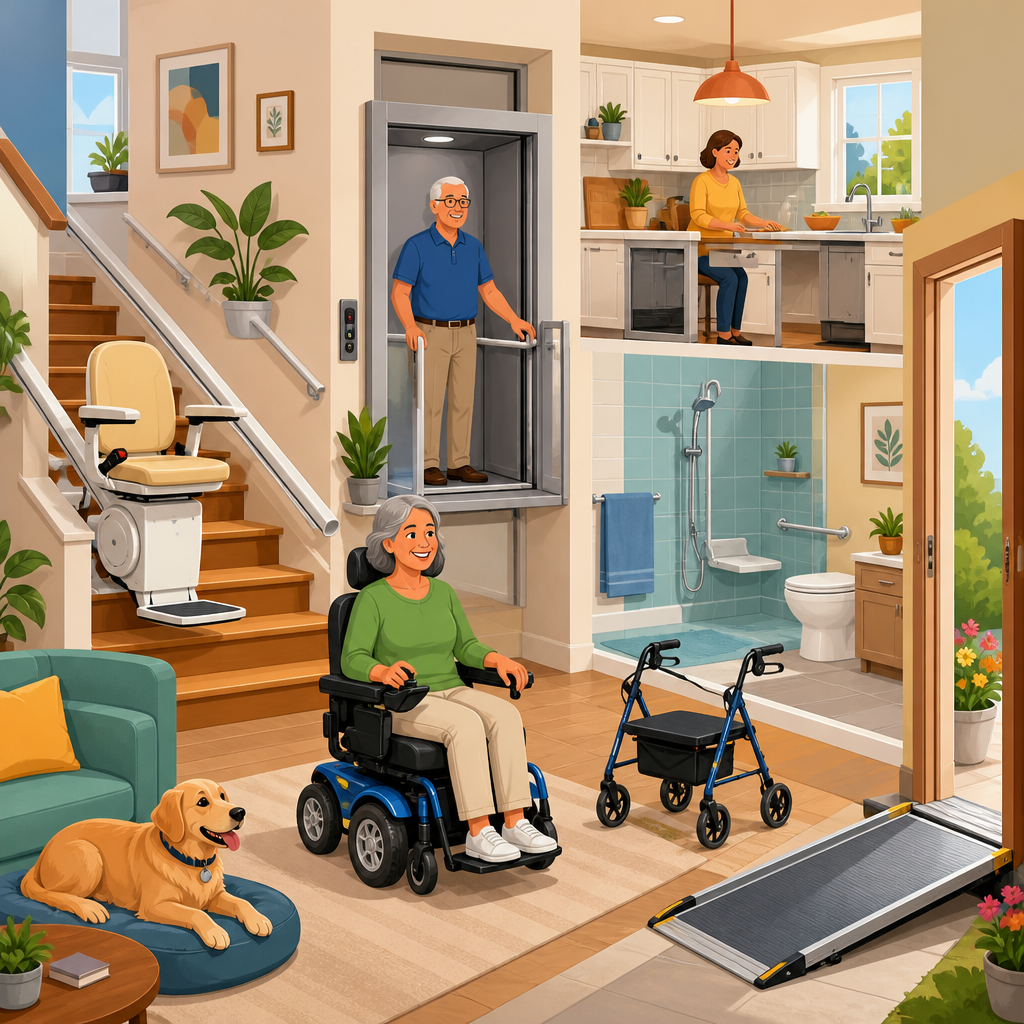
When a stair lift is not enough, the real challenge is no longer a single staircase but the full journey through the home, from bed to bathroom, kitchen to entryway, and indoors to outdoors. Mobility devices for full-home accessibility are the equipment, transfer systems, supports, and environmental controls that let a person move safely, conserve energy, and maintain independence across every room. In practice, I have seen families start with one urgent purchase, usually a stair lift after a fall or hospital discharge, only to realize within weeks that transfers, bathing, toileting, doorway clearance, and outdoor access are equally important. A stair lift solves vertical travel on one staircase; it does not address standing tolerance, pressure relief, turning radius, caregiver strain, or emergency egress. That distinction matters because the right mobility plan reduces falls, prevents avoidable injuries, delays institutional care, and makes daily routines workable for both the user and the people helping them.
Full-home accessibility means matching devices to functional goals, not buying equipment in isolation. Key terms matter. Mobility aids usually refer to products that assist walking or self-propulsion, such as canes, walkers, wheelchairs, and scooters. Transfer equipment helps a person move from one surface to another, including transfer boards, patient lifts, and sit-to-stand devices. Accessibility modifications are changes to the environment, such as ramps, widened doors, roll-in showers, and lowered thresholds. Durable medical equipment is the broader reimbursement category many of these items fall under. The best outcomes come from evaluating strength, balance, cognition, endurance, skin protection needs, home layout, and caregiver capacity together. Standards from the Americans with Disabilities Act are useful reference points for clearances and turning space, even though private homes are not always legally bound to meet them. Occupational therapists, physical therapists, ATPs, and qualified accessibility contractors each play a distinct role in building a workable plan.
This hub article covers the main categories of mobility devices used when a stair lift alone leaves gaps in safety or independence. It explains what each device does, who it helps, where it fits in the home, and the tradeoffs that buyers often miss. It also outlines how to assess a house room by room, how to prioritize spending, and when to combine equipment with home modifications. If you are comparing mobility aids and devices for yourself, a parent, or a client, the goal is straightforward: create reliable access throughout the home, not just access to the stairs.
Why stair lifts leave accessibility gaps
A stair lift is designed for one task: carrying a seated user up and down a staircase on a rail. It can be an excellent solution for someone who can still transfer safely onto the seat, sit upright during travel, and stand again at the top or bottom landing. In many homes, however, those assumptions break down. A person with Parkinson’s disease may freeze during transfers. Someone recovering from stroke may have unilateral weakness that makes pivoting unsafe. A wheelchair user may reach the second floor by stair lift and still have no way to access a narrow bathroom or get into a standard tub. I often explain it this way: the stair lift handles the elevation change, but not the chain of movements required before and after the ride.
There are also environmental limitations. Stair lifts do not solve split-level layouts with multiple short flights, exterior steps at entrances, or inaccessible thresholds between rooms. Most models are not intended as evacuation devices during a fire. They do nothing for pressure management, positioning, toileting access, or fatigue over long distances. For progressive conditions such as multiple sclerosis, muscular dystrophy, or advanced arthritis, the person’s needs may change faster than expected, making a stair lift a partial and temporary fix. Full-home accessibility starts by identifying every movement the user must complete in a typical day, then selecting devices that reduce the physical demand and the risk at each point.
Mobility aids for moving through daily living spaces
Walking aids remain the first line of support for many people because they are relatively affordable, portable, and familiar. Canes can widen the base of support and offload a painful joint, but they offer limited help for significant balance loss. Crutches provide more unloading for an injured leg yet demand upper-body strength and coordination. Walkers are more stable; standard walkers maximize support, while two-wheel and four-wheel rollators improve flow and reduce lifting. Rollators are useful for users who fatigue easily because they include a seat for rest breaks, though they are not appropriate when substantial weight bearing through the frame is required. In home assessments, I pay close attention to flooring transitions, hallway width, and the user’s ability to manage brakes, since a device that works well in a clinic may be awkward on thick carpet or unsafe in a tight bathroom.
Manual wheelchairs and transport chairs become important when walking is slow, painful, or unreliable. A transport chair is pushed by a companion and works well for appointments or short indoor trips, but it is not a substitute for an independently driven wheelchair. A properly fitted manual wheelchair can improve access, yet fit is everything: seat width, depth, back support, footrest length, and cushion selection affect posture, propulsion efficiency, and skin integrity. For users with limited arm strength, shoulder pain, or long travel distances, a power wheelchair or mobility scooter may be more realistic. Scooters are often easier to understand for new users and perform well in larger open areas, but they need more turning room and are less adaptable for complex seating. Power wheelchairs offer tighter maneuverability and programmable controls, making them better suited to many indoor environments.
| Device | Best use case | Main advantage | Main limitation |
|---|---|---|---|
| Cane | Mild balance loss or unilateral joint pain | Low cost and easy to carry | Minimal support for major instability |
| Walker | Moderate balance impairment | High stability indoors | Can be awkward on stairs and in narrow bathrooms |
| Manual wheelchair | Limited walking with good arm function or caregiver help | Better indoor access than many scooters | Requires propulsion strength and fit |
| Power wheelchair | Low endurance, complex seating needs, full-time use | Independent mobility with strong positioning options | Higher cost and charging/space needs |
| Scooter | Longer distances with fair trunk control | Simple controls and outdoor capability | Larger turning radius indoors |
The most common mistake is choosing solely by diagnosis instead of by function and environment. Two people with the same medical condition may need very different devices depending on cognition, hand dexterity, home layout, and caregiver availability. A rollator that preserves dignity and independence for one person can increase fall risk for another who forgets to lock the brakes before sitting. Good mobility planning tests the device where it will be used: at the bedside, in the bathroom doorway, at the kitchen table, and on the path to the mailbox.
Transfer, lifting, and repositioning equipment
Transfers are where many home injuries happen. A person may manage short walks with a walker yet still be unable to stand up from a low toilet, pivot into bed, or recover after sliding forward in a chair. Transfer boards can bridge a small gap between surfaces for users with enough trunk control and upper-body function to shift across. Pivot discs and gait belts may help for assisted standing transfers, but they require a trained helper and should never replace proper assessment. For people who cannot bear weight safely, mechanical lifts become essential. Floor-based patient lifts, often called Hoyer lifts after a well-known brand, use a sling to lift and move a person between bed, chair, commode, or bath system. Sit-to-stand lifts support users who can participate partially, reducing caregiver strain while preserving some active movement.
Ceiling lifts are often the best long-term answer when transfers occur many times per day. Because the motor runs on a track overhead, the system reduces floor clutter and makes positioning easier in small bedrooms and bathrooms. The upfront installation cost is higher, but families frequently report more consistent use because the device is always available rather than parked in another room. Repositioning equipment also matters. Adjustable beds, bed rails used appropriately, leg lifters, friction-reducing sheets, and pressure-redistributing mattresses can prevent skin damage and lower the effort required for turning and sitting up. For users at risk of pressure injuries, cushions and mattresses should be selected with the same care as the mobility device itself. Poor pressure management can undermine independence quickly, even when transportation through the home is technically solved.
Bathroom accessibility devices that prevent falls
The bathroom is usually the highest-risk room in the home because it combines wet surfaces, tight spaces, low fixtures, and rushed movements. Grab bars are one of the most effective and underused safety devices, but they must be installed at the right height, anchored correctly, and placed where the hand naturally reaches during transfers. Towel bars are not substitutes. Raised toilet seats, bedside commodes, and toilet safety frames can make toileting safer by reducing the depth of the sit and adding leverage for standing. In many cases, a comfort-height toilet or a bidet seat also improves hygiene and reduces caregiver assistance.
For bathing, the right choice depends on whether the user can step over a threshold, stand for even short periods, and manage balance while turning. Shower chairs and bath benches are appropriate for some users, while others need a rolling shower commode chair that doubles as a toileting system. Tub transfer benches can work when there is no budget for a full bathroom renovation, but they still require enough sitting balance to lift the legs over the tub wall. Roll-in showers provide the most durable access when a wheelchair or rolling shower chair is part of daily life. Slip-resistant flooring, handheld showerheads, anti-scald valves, and adequate task lighting further reduce risk. In my experience, bathroom upgrades often deliver the fastest improvement in dignity because they affect deeply personal routines that happen several times a day.
Vertical access beyond stair lifts
When stair lifts are not enough, the next step is to consider equipment that moves the person together with their wheelchair or that eliminates the need for a transfer entirely. Platform lifts, sometimes called wheelchair lifts, carry a wheelchair user vertically over a short rise such as porch steps or between levels. They are especially valuable when the user cannot transfer safely to a stair-lift seat. Limited-use limited-application elevators and residential elevators provide more complete vertical access across floors and are often the most practical choice for power wheelchair users or households planning for aging in place over many years. Home elevators require more structural planning, machine space depending on model, and a larger budget, but they offer the widest future flexibility.
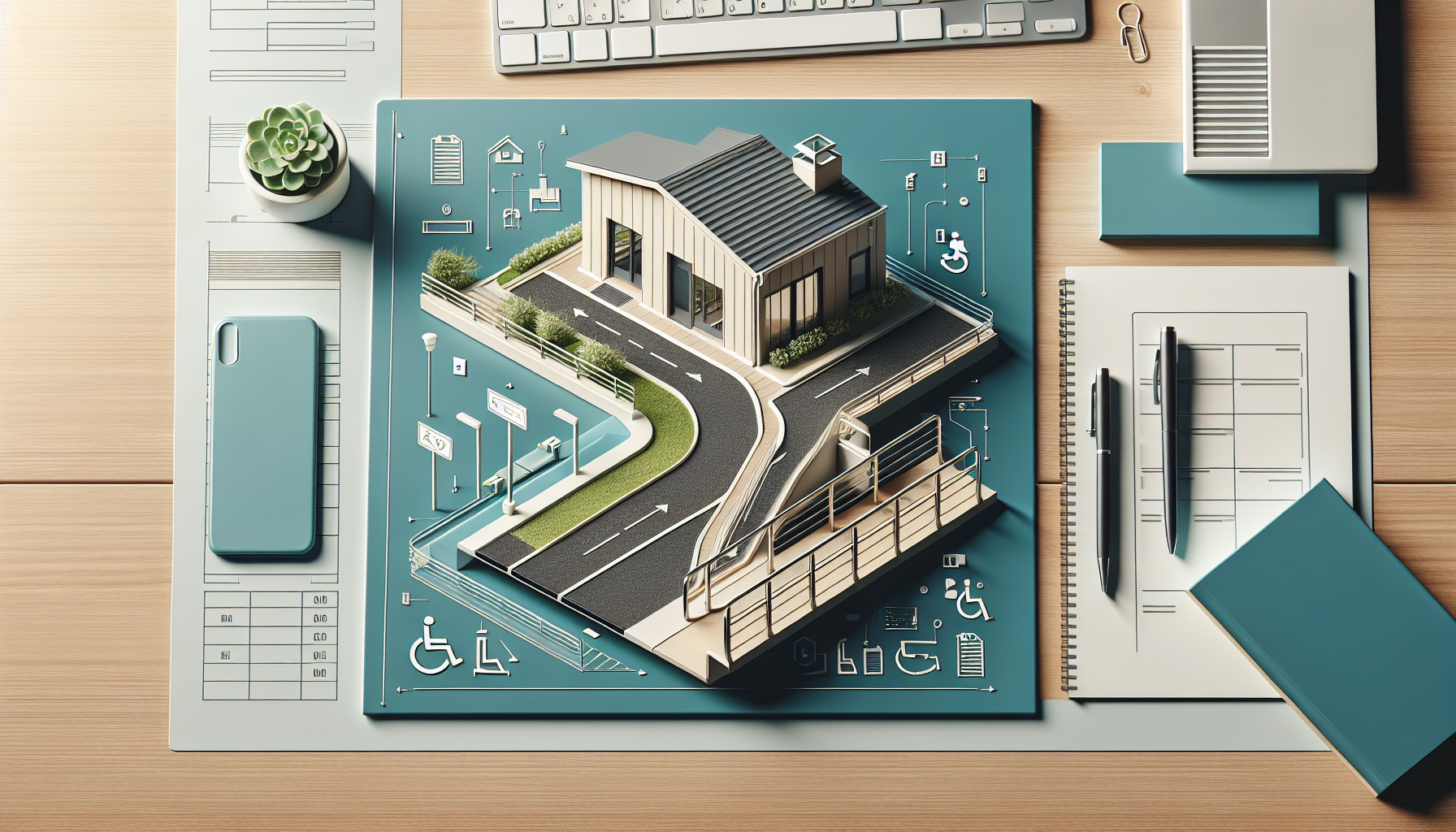
Ramps remain foundational for entry access. The key variables are slope, landing size, surface traction, weather exposure, and handrail design. Portable ramps can solve a single threshold, but modular aluminum ramps are usually better for sustained use at exterior doors. Threshold ramps reduce interior tripping hazards and improve wheelchair flow between rooms. In garages and split entries, vertical platform lifts often preserve more yard space than long ramps. The right choice depends on rise, available footprint, local permitting, and whether the user is self-propelling or assisted. A long ramp that satisfies slope guidelines may still be impractical if the user lacks the strength to ascend it independently.
Smart controls, home modifications, and choosing the right plan
True full-home accessibility combines devices with environmental changes and simple automation. Lever door handles, offset hinges, widened doors, lowered peepholes, and rocker-style light switches make movement easier without looking institutional. Voice assistants, smart locks, video doorbells, automated blinds, and app-based lighting reduce unnecessary trips across the house and help users with limited grip or reach. In kitchens, pull-out shelves, side-opening ovens, induction cooktops, and adjustable work surfaces can be as important as any wheelchair. For bedsides and living rooms, power recliners with lift functions, overbed tables, and charging stations placed at reachable heights support daily comfort and routine.
Choosing the right plan starts with a home accessibility assessment. Map the user’s day from waking to bedtime, noting every point where help is needed, every near fall, and every task avoided because it is too tiring or unsafe. Measure door widths, hallway turns, toilet clearances, bed height, and the path from parking area to entrance. Then prioritize purchases by risk and frequency: safe toileting and transfers generally come before convenience upgrades. Trial equipment when possible, ask suppliers about service networks and battery replacement schedules, and verify weight capacities carefully. Funding may come from private pay, insurance, veterans’ benefits, Medicaid waiver programs, or nonprofit grants, but coverage varies widely and often excludes construction work. A stair lift can be useful, but it is rarely a complete mobility strategy. The real goal is a coordinated system of mobility aids and devices that supports safe movement, effective care, and independence in every part of the home. If you are building that plan now, start with a room-by-room assessment and involve a qualified therapist or accessibility specialist before you buy.
Frequently Asked Questions
1. How do I know when a stair lift is no longer enough for safe mobility at home?
A stair lift solves one very specific problem: getting up and down a staircase while seated. It can be an excellent first step, but it does not address the full path a person takes through the home. If someone can reach the second floor but still struggles to transfer out of bed, navigate a narrow bathroom, stand safely in the shower, carry meals from the kitchen, or get in and out of the house, then the issue has moved beyond stairs alone. At that point, the focus needs to shift from a single device to a whole-home accessibility plan.
Common signs include frequent near-falls, increasing fatigue after short distances, needing help with basic transfers, avoiding parts of the home because they feel unsafe, or relying heavily on family members for tasks that used to be manageable. You may also notice workarounds becoming routine, such as sleeping in a recliner instead of using the bedroom, sponge bathing because the tub is too difficult, or staying inside because the threshold or porch steps are too challenging. Those are strong indicators that additional mobility devices and environmental supports may be needed.
In practical terms, the right question is not just, “Can this person use the stairs?” It is, “Can this person move safely and efficiently from bed to bathroom, through the kitchen, to the entrance, and possibly outside, with reasonable comfort and independence?” If the answer is no, a stair lift may still be part of the solution, but it should no longer be the only solution.
2. What mobility devices are commonly used for full-home accessibility beyond a stair lift?
Full-home accessibility usually involves a combination of devices rather than one piece of equipment. The most appropriate mix depends on strength, balance, endurance, upper-body function, cognition, home layout, and the person’s long-term goals. In many homes, the next layer of support includes walkers, rollators, manual wheelchairs, or power wheelchairs for safe movement across longer indoor distances. For people who fatigue easily or cannot manage repeated standing and walking, a wheelchair or scooter may preserve energy and reduce fall risk throughout the day.
Transfer equipment is also a major part of whole-home mobility. This may include bedside rails, transfer boards, pivot discs, patient lifts, sit-to-stand lifts, or ceiling-mounted lift systems. These devices help bridge the gap between surfaces such as bed to wheelchair, wheelchair to toilet, or wheelchair to shower chair. For bathroom access, common equipment includes raised toilet seats, grab bars, shower chairs, rolling commode chairs, tub transfer benches, and handheld shower heads. In kitchens and living areas, lift chairs, overbed tables, adjustable beds, and reach-assist tools can reduce strain and improve day-to-day function.
For home entry and movement between levels, options may include vertical platform lifts, home elevators, ramps, threshold ramps, porch lifts, and automatic door openers. Environmental controls can also be surprisingly important. Smart lighting, voice-activated systems, video doorbells, remote-controlled blinds, and accessible thermostat controls can reduce the need for difficult walking and reaching. The most effective plans usually combine mobility devices, transfer supports, and home modifications so that the person is not just able to move, but able to move safely, consistently, and with less dependence on others.
3. Should we choose a wheelchair, scooter, transfer device, or home lift first?
The right first investment depends on the biggest daily barrier, not necessarily the most obvious one. Families often begin with the staircase because it is visually dramatic and urgent, but the true bottleneck may be transferring to the toilet, bathing safely, or getting out the front door for medical appointments. A smart approach is to identify where the person is most likely to fall, where they need the most hands-on help, and which limitation is affecting the largest part of the day. That is usually where equipment will make the fastest and most meaningful difference.
For example, if someone can still walk short distances but becomes exhausted moving room to room, a wheelchair or power mobility device may be more useful than another transfer aid. If the primary issue is standing up from bed, the toilet, or a chair, then transfer equipment or lift-assist seating may take priority. If the person cannot enter or leave the home without major assistance, an exterior ramp or vertical platform lift may matter more than an indoor device. In homes with multiple levels, a stair lift may need to be paired with a wheelchair on each floor, or replaced by a home elevator or platform lift if seated stair travel is no longer practical or safe.
In my experience, the best sequence comes from evaluating the entire daily routine: waking up, toileting, bathing, dressing, eating, leaving the house, and going to bed. When you map those steps honestly, the first purchase becomes much clearer. This is also why an occupational therapist, physical therapist, ATP, or experienced accessibility professional can be so valuable. They can assess body mechanics, caregiver needs, and home layout together, helping you avoid spending money on a device that solves one problem while leaving several bigger ones untouched.
4. How can families create a full-home accessibility plan instead of buying equipment one piece at a time?
The most effective accessibility plans start with a room-by-room and task-by-task assessment. Rather than asking, “What product should we buy?” begin with, “What does this person need to do every day, and where does each step break down?” Follow the full journey through the home: getting out of bed, reaching the bathroom, transferring to the toilet, bathing, dressing, moving to the kitchen, eating, resting, answering the door, leaving the house, and accessing outdoor areas. This process reveals not only where equipment is needed, but also where the home itself is creating unnecessary barriers.
Once the problem areas are clear, prioritize them by safety, frequency, and impact on independence. Fall risks and essential activities of daily living should come first. A bathroom transfer issue, for example, is usually more urgent than access to a guest room. Next, think in systems. A wheelchair may require wider doorways, lower thresholds, turning space, and a roll-under sink. A lift device may require enough floor clearance, charging access, and caregiver training. A ramp may be useless if the interior hallway is too narrow to continue moving through the home. In other words, each equipment choice should be considered as part of an overall mobility pathway.
It is also wise to plan for progression, not just current need. Many families regret buying equipment that works for a few months but cannot adapt as strength or balance changes. Choosing adjustable, compatible, and future-ready solutions can save substantial money and stress over time. Professional assessments can help, especially when multiple devices may interact. A good plan accounts for the user’s needs, the caregiver’s physical ability, the dimensions of the home, emergency egress, and realistic budget priorities. The goal is not simply to add products. It is to create a home environment where movement becomes safer, smoother, and more sustainable every day.
5. Can full-home accessibility improve independence and quality of life, or does it mostly make caregiving easier?
It does both, and that is exactly why it matters. Well-chosen mobility devices and home accessibility supports can dramatically improve independence by reducing the number of tasks that require physical assistance. When a person can transfer more safely, move between rooms with less effort, bathe with proper support, and enter or leave the home more reliably, they regain control over daily routines that affect dignity, confidence, and emotional well-being. Even small improvements, such as easier toilet access or reduced fear of falling in the shower, can have a major impact on quality of life.
At the same time, caregiving often becomes safer and more sustainable. Family members frequently take on lifting, guiding, and steadying without realizing how physically demanding and risky those tasks are. Transfer devices, lifts, proper seating, and accessible layouts can reduce caregiver strain, lower the risk of back injuries, and make it easier to provide support without constant hands-on effort. This is especially important when care needs are increasing and informal caregivers are trying to help without clinical training.
Perhaps most importantly, full-home accessibility can expand participation in normal life. It can make it possible to eat at the table, use the preferred bathroom, sleep in the bedroom instead of the living room, go outside for fresh air, attend appointments, and remain in the home longer with greater comfort. That is more than convenience. It is a meaningful shift in autonomy, routine, and peace of mind. When a stair lift is not enough, the right broader mobility strategy can transform the home from a series of obstacles into a place that truly supports daily living.