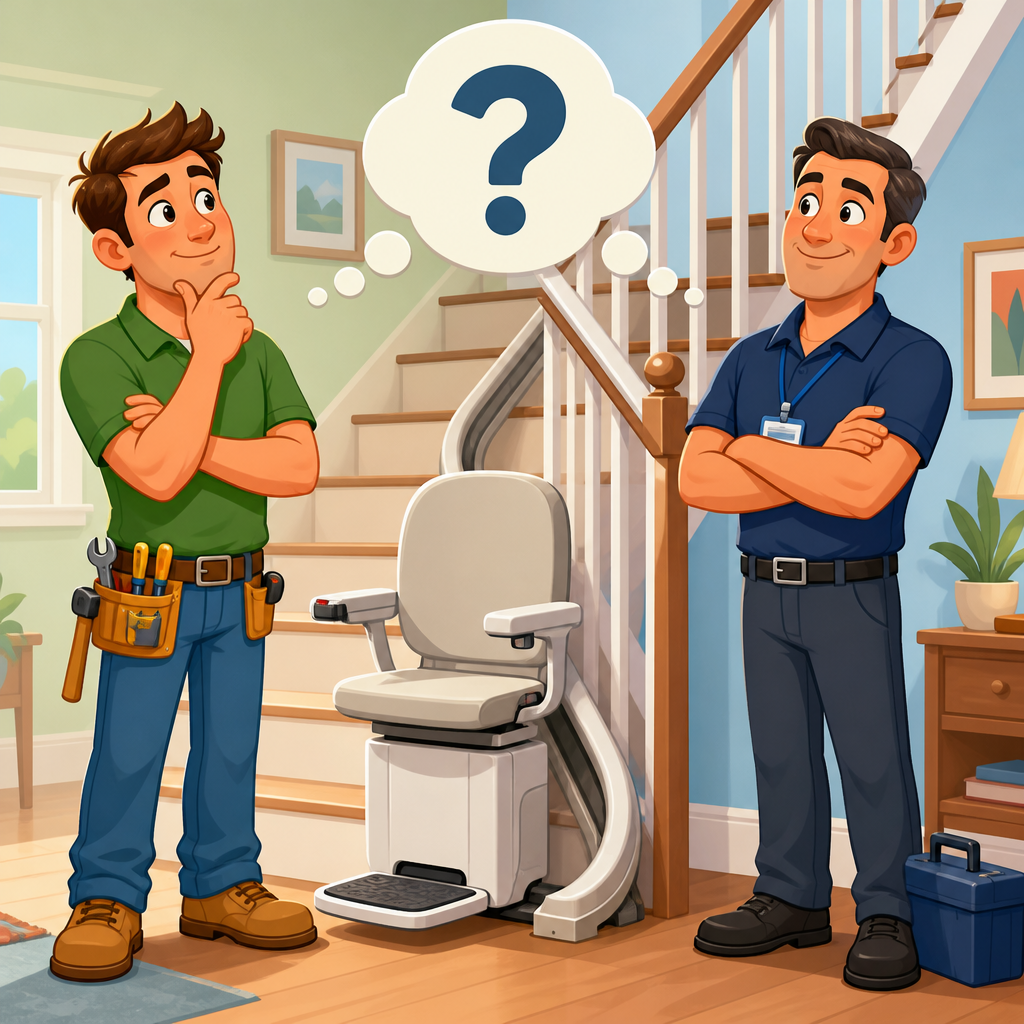
Installing a chair lift seems straightforward until the permit question surfaces: who pulls the permit for a chair lift installation, the homeowner or the contractor? In most jurisdictions, either party can apply, but the best choice depends on local building rules, the type of lift, liability, and who is actually performing the work. A chair lift, also called a stair lift or inclined platform lift in some codes, is a motorized device fixed to a stairway or adjacent structure to carry a seated user between levels. The permit is the formal approval from the local building department that allows the installation to proceed and triggers inspections where required.
This matters because permits are not just paperwork. They determine whether electrical work is inspected, whether anchoring methods meet code, whether emergency egress is maintained, and whether the installation will create headaches during insurance claims or home sales. In my experience working through residential accessibility projects, permit responsibility is one of the first issues that separates a clean installation from a costly redo. Homeowners often assume a lift is like furniture and needs no approval; contractors sometimes assume a low-voltage unit is exempt. Both assumptions can be wrong. The right answer starts with understanding the local authority having jurisdiction, the scope of work, and the contract language that assigns responsibility.
As the hub page for permits and building codes within installation and setup, this guide explains the decision clearly. It covers when permits are required, who typically pulls them, what codes apply, how inspections work, and what documents building officials may request. It also addresses common edge cases, including battery-powered stair lifts, outdoor lifts, straight versus curved rail systems, and projects in condominiums or historic homes. If you are comparing permit duties across mobility projects, this page should anchor related guidance on electrical permits, accessibility upgrades, and inspection preparation.
Who usually pulls the permit for a chair lift installation?
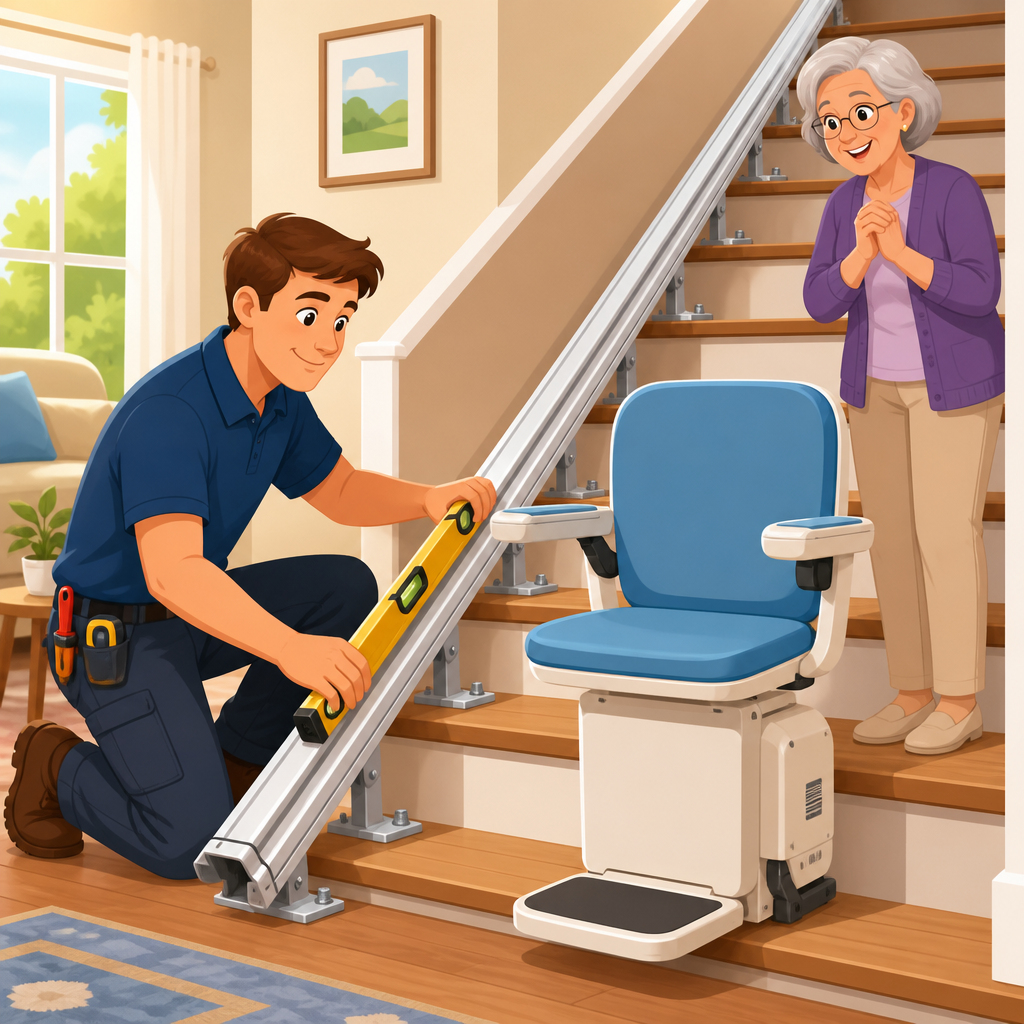
The contractor usually pulls the permit when a licensed contractor is hired to install the chair lift. That is the standard practice because the permit ties the work to the installer’s license, insurance, and code responsibility. Building departments prefer this arrangement since the person or company doing the work is the one answering inspection questions, correcting deficiencies, and documenting compliance. Reputable stair lift dealers and accessibility contractors routinely handle permit applications as part of their installation package, especially when electrical modifications, structural fastening, or exterior work are involved.
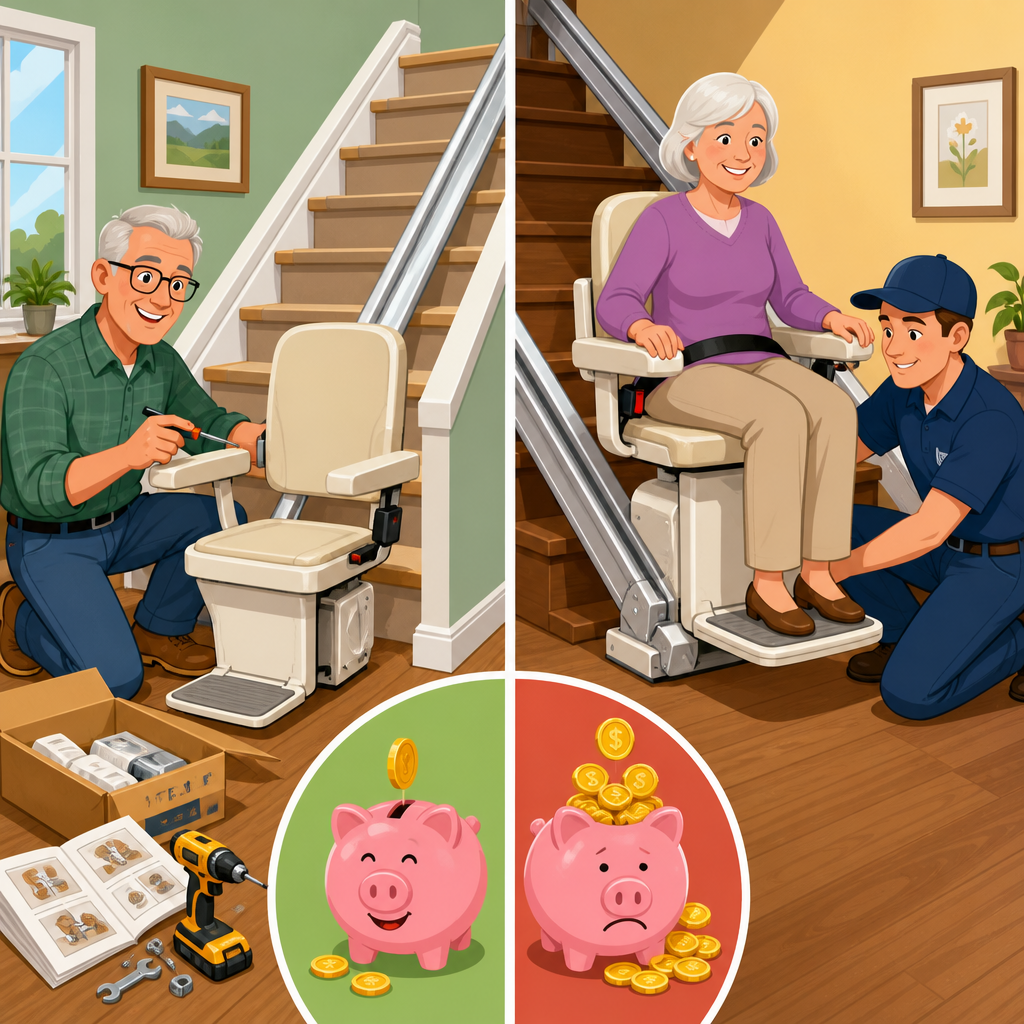
Homeowners can often pull the permit themselves if local rules allow owner-applicant permits. However, doing so shifts practical responsibility onto the homeowner. If an inspection fails because the dedicated circuit is missing, the rail encroaches on required egress width, or the landing clearance is inadequate, the homeowner must coordinate corrections. Some jurisdictions also limit owner-pulled permits to work the owner personally performs, which can create a mismatch if a paid contractor is still doing the installation. That is why many building officials and attorneys advise homeowners not to pull permits for contractor-performed work unless there is a very specific reason.
The clearest answer is this: if a licensed contractor is installing the chair lift, the contractor should generally pull the permit unless local code expressly directs otherwise. If the homeowner is purchasing a unit direct and self-managing the installation, the homeowner may be the permit applicant, but only after confirming the local rules in writing.
When is a permit required for a chair lift installation?
A permit may be required when the installation involves electrical work, structural attachment, alteration of guards or handrails, exterior exposure, or any device covered by local building, residential, electrical, or accessibility codes. Whether a chair lift needs a permit is not uniform nationwide. One city may treat a battery-powered stair lift on an existing stair as minor equipment, while another may require a building or electrical permit because the rail is permanently attached and the charger plugs into or connects with house wiring. Outdoor lifts, vertical platform lifts, and porch lifts almost always face closer scrutiny because of weatherproofing, foundations, landings, and guard requirements.
Most permit questions come down to scope. If installers drill rails into stair treads, add a receptacle, hardwire a charging point, relocate a handrail, or alter the top or bottom landing, many jurisdictions consider that regulated work. In the United States, officials often look to the adopted International Residential Code, International Building Code, National Electrical Code, and referenced accessibility standards, then apply local amendments. For inclined platform lifts and some accessibility devices, ASME A18.1 Safety Standard for Platform Lifts and Stairway Chairlifts is especially important. Manufacturers also provide listing and installation instructions that officials may treat as enforceable when referenced by code.
Homeowners should never assume that “battery powered” means “permit free.” Battery-driven stair lifts still require charging, fixed mounting, and safe clearance. In several jurisdictions I have worked with, the building department waived a building permit for a basic indoor straight stair lift but still required an electrical review if a new outlet was installed. The only reliable method is to ask the local building department, describe the exact model and installation conditions, and record the answer.
Which codes and standards affect stair lift permits?
Several code layers can apply at once. The first is the local building or residential code, usually based on a version of the International Residential Code for one- and two-family homes. This code governs stair geometry, handrails, guards, and means of egress. A chair lift cannot create an unsafe obstruction that traps occupants during an emergency. The second layer is the National Electrical Code, commonly adopted as NFPA 70, which covers receptacles, branch circuits, grounding, and equipment connection. If the installation adds or changes wiring, electrical compliance matters immediately.
Another important standard is ASME A18.1, which specifically addresses platform lifts and stairway chairlifts. Inspectors may use it to evaluate operating clearances, controls, safety edges, overruns, and other technical features. In multifamily, public, or commercial settings, accessibility provisions can also come into play, including ICC A117.1 and Americans with Disabilities Act requirements for the broader route and use conditions, though a private home follows a different compliance path. Condominium boards may add separate review rules, and historic districts may impose design constraints for visible exterior lifts.
The practical lesson is that chair lift permits are rarely just about the lift. They involve the surrounding stair, landings, electrical supply, and life safety. That is why experienced contractors collect manufacturer cut sheets, installation manuals, listing information, and mounting details before applying. A complete permit package speeds approval and reduces field disputes.
Homeowner permit versus contractor permit: key differences
Choosing who pulls the permit changes responsibility more than many people realize. A homeowner permit can look faster because the owner controls the filing, but it can complicate liability, inspection scheduling, and warranty support. A contractor permit costs the homeowner indirectly through contract pricing, yet it usually delivers cleaner accountability. The table below summarizes the differences that matter most in residential chair lift work.
| Issue | Homeowner Pulls Permit | Contractor Pulls Permit |
|---|---|---|
| Primary code responsibility | Owner answers to building department | Licensed installer answers to building department |
| Inspection coordination | Owner schedules and attends if required | Contractor usually schedules and handles corrections |
| License linkage | May not tie work to installer’s license | Permit is linked to contractor credentials |
| Risk of scope mismatch | Higher if paid contractor performs owner-permitted work | Lower because permit matches actual performer |
| Insurance and claims clarity | Can be murkier after failures or injuries | Usually clearer documentation trail |
| Best use case | Owner-managed or DIY-allowed installation | Standard professional installation |
In plain terms, contractor-pulled permits are usually the safer and cleaner choice. They align responsibility with execution. Homeowner permits make the most sense only when the owner is legitimately managing the work and understands the compliance burden.
How the permit process works from quote to final inspection
The permit process begins before the application. A competent installer should survey the staircase, measure width and pitch, inspect top and bottom landing space, confirm power supply, and identify code-sensitive issues such as narrow egress paths or a conflicting door swing. Next comes equipment selection: straight rail, curved rail, outdoor model, heavy-duty seat, folding footrest, or hinged rail. Those specifications matter because permit reviewers need to know how far the unit projects into the stairway and how it will be supported.
After the survey, the applicant submits a permit package. For a simple residential stair lift, that may include a permit form, site photos, manufacturer specification sheets, a basic floor plan or stair sketch, electrical notes, and the contractor’s license information. Some departments request engineered attachment details if the structure is unusual. Once approved, the installation proceeds. Inspectors may review fastening, outlet placement, cord management, clearances, call/send controls, and safe operation. If electrical work was added, a separate electrical inspection may be required before final sign-off.
The final inspection closes the loop. Do not treat it as optional if a permit was issued. Finaled permits become part of the property record and help during refinancing, resale, and insurance review. I have seen delayed closings caused by open permits for accessibility equipment that was physically complete but never signed off. A ten-minute final inspection can prevent weeks of transaction delays later.
Common permit mistakes and how to avoid them
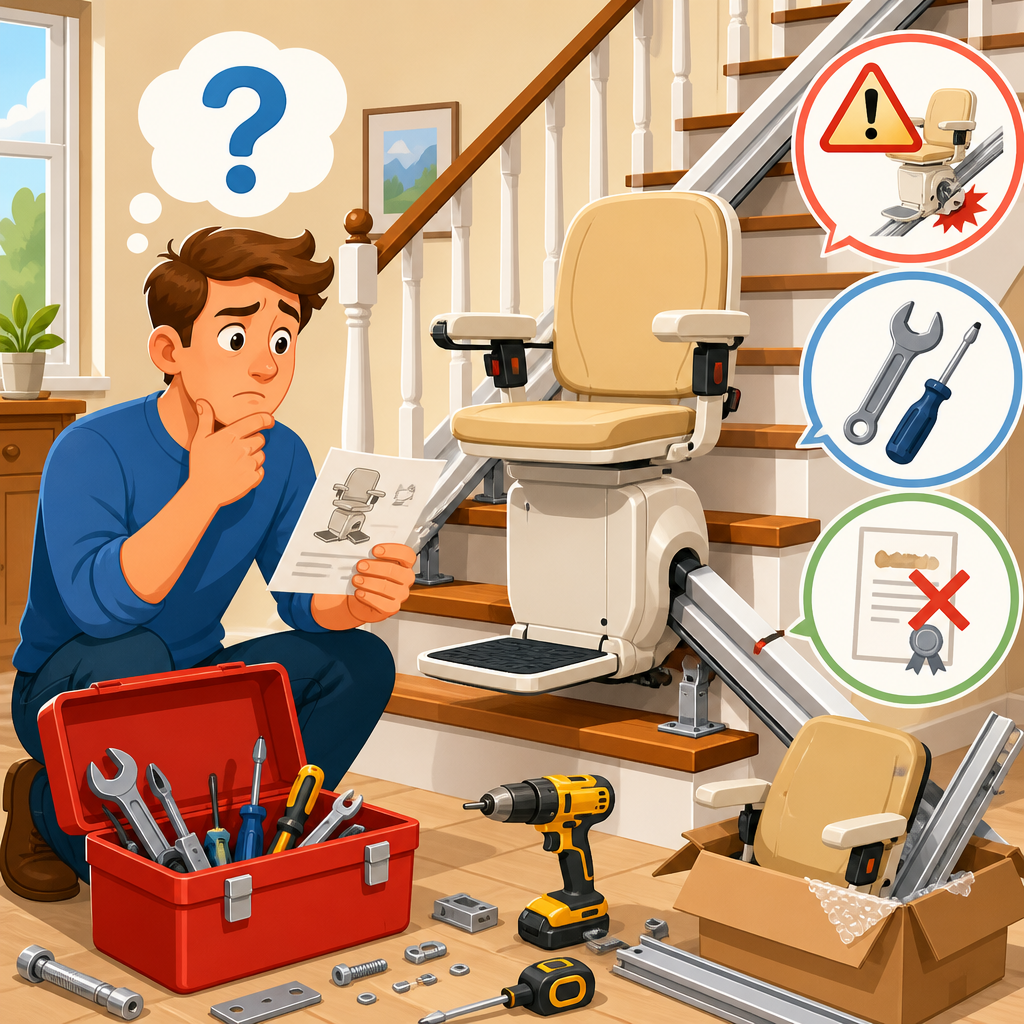
The most common mistake is skipping the permit inquiry entirely. Homeowners buy a chair lift online, hire a handyman, and only later learn that the installation narrowed the only stair below what the local inspector accepts. Another frequent error is assuming the mobility dealer handles permits automatically. Some dealers do; others sell equipment only and leave permit responsibility unstated. If the contract does not explicitly say who applies, who pays, and who attends inspections, confusion is almost guaranteed.
A second mistake is treating the stair lift as isolated equipment rather than part of the stair system. The rail, seat, folded profile, charging point, and track overruns all affect circulation and safety. For example, a hinged rail may solve a doorway conflict at the bottom landing, but it must still operate reliably and maintain safe access. Outdoor installations add another layer: corrosion resistance, weather-rated power supply, drainage, and frost considerations for any supporting elements. In coastal areas, I have seen faster hardware deterioration when installers ignored manufacturer requirements for exposure conditions.
The fix is simple but disciplined. Confirm permit requirements before ordering. Use an installer experienced with local inspectors. Ask for permit numbers, approved plans if applicable, and closed permit documentation at the end. Save the manual, warranty, and inspection records with your home files.
Special situations: condos, historic homes, and exterior lifts
Some properties make permit responsibility more complex. In condominiums and cooperatives, the unit owner may need both a municipal permit and association approval. The association may control common stairs, wall penetrations, and exterior appearance, even when the lift serves a private unit. In those cases, the contractor should still pull the municipal permit if they are doing the work, but the homeowner must often secure association consent first. Missing that step can halt the project after equipment has been ordered.
Historic homes present different challenges. A building department may permit the lift, yet a preservation board may restrict visible changes to stair trim, balusters, or exterior facades. Creative mounting solutions can preserve historic fabric, but they need planning and sometimes custom brackets. Exterior chair lifts and vertical platform lifts trigger the highest review level because they may involve concrete pads, weatherproof disconnects, landings, guards, and drainage. These are not informal installations. They should be designed, permitted, and inspected like any other permanent accessibility improvement.
Conclusion
So, who pulls the permit for a chair lift installation: homeowner or contractor? In most professionally installed residential projects, the contractor should pull it. That approach best aligns legal responsibility, inspection coordination, and code compliance with the party doing the work. Homeowners can sometimes apply themselves, but that choice increases their administrative burden and can blur responsibility if a hired installer performs the job.
The core rule is to verify local permit requirements before ordering equipment, then put permit responsibility in writing. Ask the building department whether a building permit, electrical permit, or both are needed. Ask the installer for license details, manufacturer documentation, and final inspection sign-off. Pay close attention to stairs used for primary egress, outdoor conditions, condo approvals, and any structural or electrical changes. Those details determine whether a chair lift installation is merely convenient or fully compliant.
If you are planning a stair lift or comparing accessibility upgrades, use this page as your starting point for permits and building codes. Then review your local rules, choose a qualified installer, and make permit handling part of the contract before the first bracket is mounted.
Frequently Asked Questions
Who is usually responsible for pulling the permit for a chair lift installation: the homeowner or the contractor?
In many areas, either the homeowner or the contractor can apply for the permit, but the most practical and lowest-risk option is often the licensed contractor performing the installation. That is because the permit holder is typically the party representing that the work will comply with local building, electrical, and safety codes. If a contractor is handling the full installation, including any wiring, structural anchoring, or modifications to stairs, landings, or walls, it usually makes sense for that contractor to pull the permit in their own name. Doing so creates a clearer line of responsibility if the inspector has questions or if corrections are required before final approval.
That said, some homeowners choose to pull the permit themselves, especially if local rules allow owner-applied permits and they are directly hiring trades or managing the project. This can happen in smaller residential jobs where the lift is considered a simple accessory rather than a major alteration. However, when a homeowner pulls the permit, they may also be taking on greater responsibility for making sure the work is done correctly, scheduling inspections, and resolving any compliance issues. In practical terms, the best answer is not simply “homeowner” or “contractor,” but “whoever local law allows and whoever is best positioned to stand behind the installation.” Before work starts, it is smart to confirm the permitting process with the local building department and make sure the contract clearly states who is responsible.
Does every chair lift installation require a permit?
No, not every chair lift installation automatically requires a permit, but many do, and the only reliable answer comes from the local authority having jurisdiction. Permit requirements vary widely by city, county, and state. In one area, a standard residential stair lift mounted to existing stairs may be treated as minor work, while in another it may require a building permit, an electrical permit, or both. The rules can also change depending on whether the system is a basic seated stair lift, a platform lift for wheelchair access, or a lift installed in a commercial, multifamily, or public-facing property.
The need for a permit often depends on what the installation involves. If the chair lift simply mounts to the stair treads with no structural changes and plugs into an existing approved outlet, the local department may view it differently than a project that includes new dedicated electrical circuits, reinforcement, alterations to handrails, or changes to egress width. Accessibility equipment can also trigger additional review where fire safety, emergency exit clearance, or ADA-related considerations apply. Because of these variables, homeowners should never assume that a permit is unnecessary just because the lift looks simple or because a retailer describes it as a quick install. A short phone call to the building department can prevent expensive corrections later, especially if the home is refinanced, sold, or inspected after the fact.
If the homeowner pulls the permit, does that increase their liability?
It can. Pulling the permit does not automatically make the homeowner legally responsible for every technical aspect of the installation, but it can place more of the administrative and practical burden on them. When the homeowner is listed as the permit applicant, the local jurisdiction may expect that person to coordinate inspections, respond to correction notices, and ensure the work is completed according to code. If something is installed improperly, the homeowner may have fewer protections than they would if a licensed contractor had obtained the permit and contractually accepted responsibility for code compliance.
There is also a real-world liability issue beyond the permit form itself. A chair lift is a motorized accessibility device attached to a stairway, which is already a high-risk area in the home. If the unit is not anchored correctly, interferes with safe passage, or includes electrical work that was not approved, the consequences can involve injury, failed inspections, insurance complications, or disputes during a future sale. This does not mean a homeowner should never pull the permit, but it does mean they should understand what they are agreeing to. If they do apply themselves, they should confirm whether their installer is licensed where required, ask for proof of insurance, verify who will meet the inspector, and keep all manufacturer specifications, permit records, and final sign-offs. In short, homeowner permits are possible, but they should be approached with care rather than convenience.
What should be included in the contract so there is no confusion about permits?
The contract should state clearly and directly who is responsible for determining whether a permit is required, who will apply for it, who will pay the associated fees, and who will schedule and attend inspections. This should not be left to assumptions or verbal discussions. For a chair lift installation, the agreement should also describe the exact scope of work, including whether the installer is providing only the lift equipment and mounting it, or whether the job includes electrical work, battery charging setup, structural reinforcement, rail modifications, or finish repairs. The more specific the contract is, the less likely there will be disputes if the local inspector requires changes.
A strong agreement should also identify the model being installed, confirm that the work will comply with applicable local codes and manufacturer requirements, and specify who is responsible if corrections are required by the building department. It is wise to include language about licensing and insurance, estimated permit timelines, and whether final payment depends on passing inspection. If a contractor says no permit is required, homeowners should consider asking that statement to be put in writing, along with the basis for that conclusion. That way, if a problem arises later, there is documentation showing who made the determination. Good contracts reduce finger-pointing and help ensure that both the homeowner and the installer understand their obligations before the first bracket or rail section is attached.
How can a homeowner verify the correct permit process before a chair lift is installed?
The safest approach is to contact the local building department directly and describe the project in plain terms. Instead of asking only, “Do I need a permit for a chair lift?” it helps to explain the exact type of equipment, where it will be installed, whether it is a seated stair lift or platform lift, whether new electrical work is involved, and whether the property is a single-family residence, condo, rental, or commercial building. Permit requirements often depend on those details. Some jurisdictions may route the question to building, others to electrical, and some may involve accessibility or elevator-related divisions depending on how the equipment is classified under local code.
Homeowners should also ask follow-up questions that clarify procedure, not just yes-or-no requirements. Useful questions include: Who is allowed to apply for the permit? Must the installer be licensed in a specific trade? Are separate permits required for electrical work? Will inspections be necessary, and at what stages? Is there any issue with stairway width, handrail clearance, or emergency egress? For condos or HOA-governed properties, it is also important to check association rules, because private approval may be required even when the local jurisdiction permits the work. Finally, homeowners should compare what the building department says with what the installer is proposing. If the contractor’s explanation and the local official’s guidance do not match, that is a sign to pause and get clarification before installation begins.