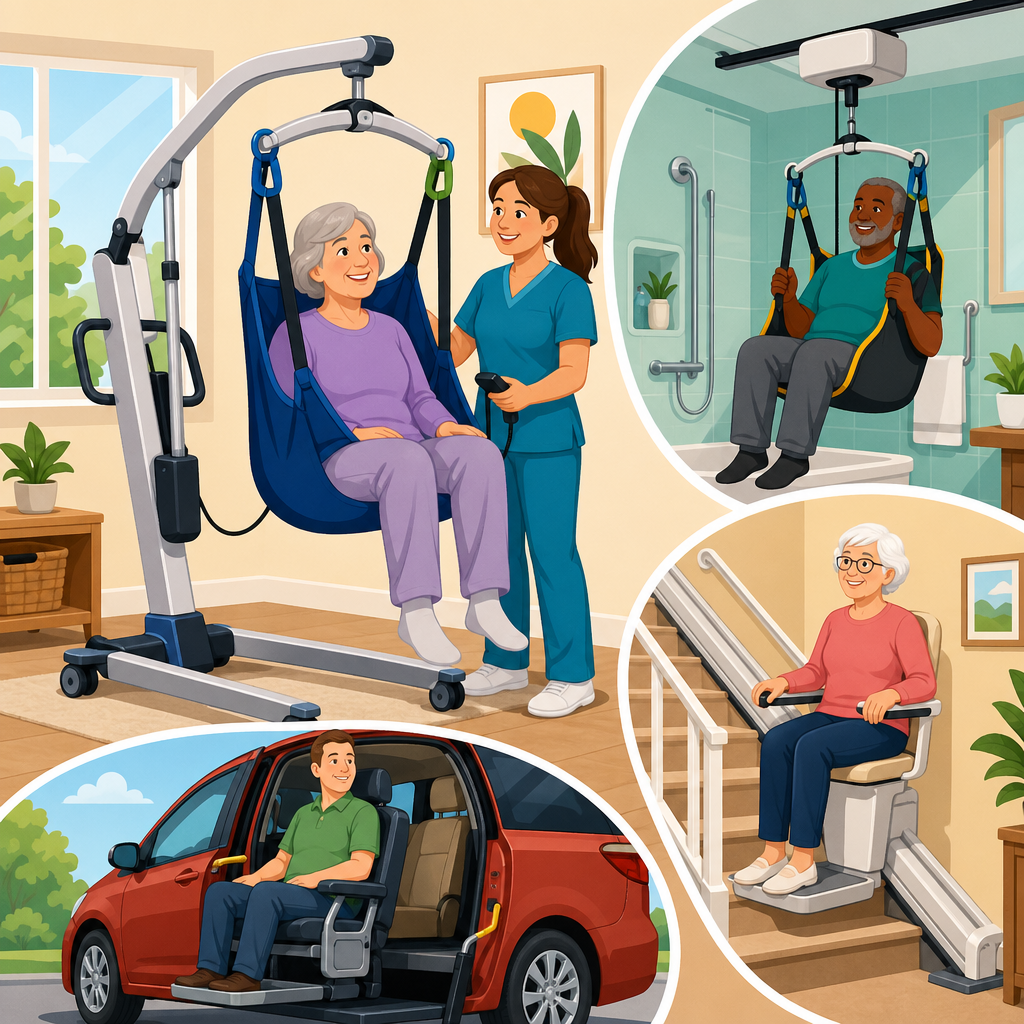
Choosing the best chair lifts for homes with multiple users starts with understanding that one staircase may need to serve very different bodies, mobility levels, and daily routines. In practice, that changes everything from rail design and seat dimensions to call stations, weight capacity, and safety programming. A chair lift, often called a stair lift, is a motorized seat that travels along a rail fixed to the stairs, helping people move between floors without climbing steps. For disabled users, older adults, and family caregivers, the right model protects independence, reduces fall risk, and makes a multi-person household workable.
I have worked with families comparing lifts after a new diagnosis, after hospital discharge, and during long-term aging-in-place planning, and the same issue appears repeatedly: a product that works for one user can fail badly for a second. One person may need a narrow seat to preserve stair clearance, while another needs a higher back, powered swivel, or extra-wide perch. A spouse may walk the stairs most days but need occasional support after surgery. An adult child may be helping from another floor and require remote call controls. In shared homes, the best chair lifts are the ones that balance access, comfort, and predictable operation for everyone who depends on them.
This guide serves as a hub for buying decisions around chair lifts for disabled users, with a specific focus on households where more than one person will use the same lift. It covers the core lift types, the features that matter most in shared settings, the tradeoffs between compact and heavy-duty designs, and the brands and configurations commonly recommended by installers. It also explains when a stair lift is not the right answer and when a platform lift or home elevator should be considered instead. If you are evaluating options for a straight staircase, a curved staircase, or a split-level home, the goal is simple: match the equipment to real users, not marketing claims.
What makes a chair lift suitable for multiple users
The best chair lifts for multiple users share five traits: broad fit, easy operation, reliable safety systems, flexible controls, and serviceable components. Broad fit means the seat, armrests, footrest, and weight rating must accommodate the heaviest and tallest intended user without becoming awkward for the smallest user. Easy operation means simple rocker, joystick, or toggle controls that can be learned quickly, plus swivel and folding mechanisms that do not demand high hand strength. Reliable safety systems include obstruction sensors, seat belt monitoring, overspeed governors, final limit switches, and battery backup. Flexible controls usually include wall-mounted call-send stations at both landings so the lift can be summoned or parked out of the way. Serviceable components matter because multi-user homes produce more travel cycles and more wear.
Manufacturers rarely market directly around shared use, but installers do. In homes I have assessed, the most common points of failure are not motors; they are mismatched expectations. A compact seat may be fine until a second user with poor trunk control feels unstable. A very large heavy-duty seat may fit one person but block the staircase for others. The practical answer is to measure the staircase, identify every expected user, and prioritize the limiting factor. That may be seat width, knee clearance at the top landing, transfer space, or duty cycle. Reputable dealers use a site survey to check stair width, landing geometry, power supply, and transfer safety before recommending a model.
For disabled users, comfort and transfer safety deserve as much attention as raw lifting ability. A stair lift does not simply move a person; it must allow a safe seated transfer on and off the chair. Powered swivel seats are especially useful in multi-user households because one user may manage a manual swivel while another cannot. Likewise, powered footrests reduce bending for users with spinal stiffness or balance problems. These features add cost, but in homes with several users they often prevent the lift from becoming usable for only the strongest person in the house.
Straight, curved, outdoor, and standing lifts: which type fits the home
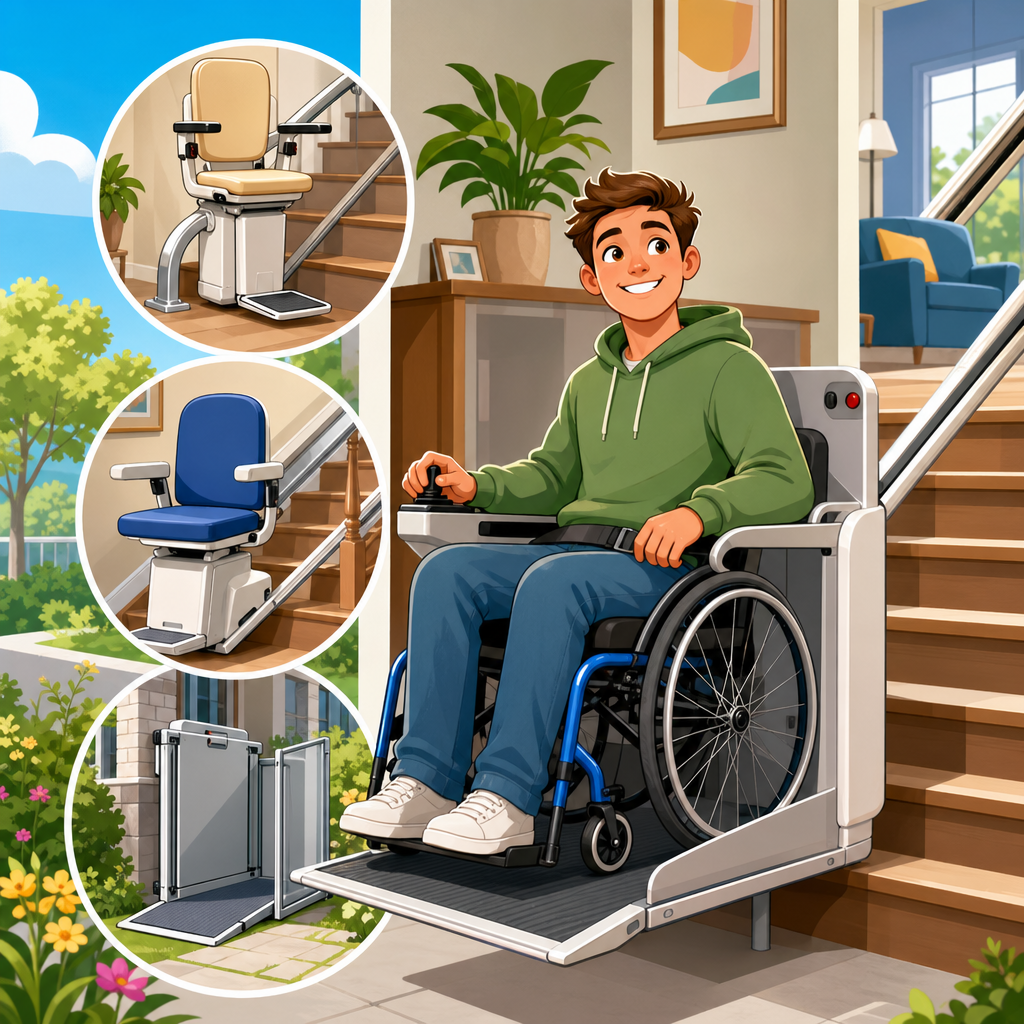
The first buying decision is lift type. Straight stair lifts fit a single, uninterrupted run of stairs and are usually the most affordable and fastest to install. Many can be installed in a few hours once the site is confirmed. Curved stair lifts are custom-built for stairs with turns, intermediate landings, or spiral geometry. They cost more because the rail is manufactured to the staircase, but they are often the only practical way to serve the main route in a multi-level home. Outdoor stair lifts are weather-protected versions designed for porch, deck, or garage-entry stairs, with sealed components and covers. Standing or perch lifts support users who cannot bend the knees fully to sit, though they require better balance and are not appropriate for many disabled users.
For homes with multiple users, straight lifts are often chosen when the staircase is simple and the household needs a dependable shared solution without custom fabrication delays. Models from Bruno, Harmar, and Stannah dominate this category because they combine established service networks with proven battery-powered drive systems. In contrast, curved lifts are selected when the main staircase includes a 90-degree or 180-degree turn and the household cannot realistically relocate sleeping space downstairs. Curved models from Handicare, Stannah, and Access BDD are common because their rail options can handle tight bends and parking positions that keep the chair out of the primary walkway.
Outdoor lifts deserve special mention because multi-user homes often need step-free access before anyone reaches the indoor staircase. If one user enters from the garage and another from the front stoop, an outdoor unit may be as important as the interior lift. Weather resistance, lockable controls, and UV-stable upholstery matter here. A standing lift is more specialized. I only recommend it after confirming that every intended user can ride safely in that posture. In a shared household, if even one regular user cannot stand securely during travel, a seated lift is usually the better investment.
Features that matter most for disabled users in shared households
When comparing the best chair lifts for disabled users, focus on the features that change daily usability. Weight capacity is the starting point. Standard residential lifts commonly support around 250 to 350 pounds, while heavy-duty models can reach 400, 500, or even 600 pounds depending on the staircase and manufacturer. Seat width and seat height are equally important because two users with different body sizes may need different thigh support and hip room. If one user has limited hip flexion or uses ankle-foot orthoses, the angle of the seat and footrest can determine whether the transfer feels secure.
Battery backup is non-negotiable. Most modern stair lifts run on batteries that charge continuously from the rail, allowing operation during a power outage. In households with multiple users, that feature is critical because a loss of power cannot leave someone stranded on the wrong floor. Call-send controls are another must-have. They let a user upstairs send the chair down after use so another person can summon it later, and they help keep the chair parked at the end of the rail rather than in the middle of the staircase. Swivel seats, retractable rails, seat belts, obstruction sensors, and diagnostic displays round out the core feature set.
| Feature | Why it matters for multiple users | Best fit scenario |
|---|---|---|
| High weight capacity | Accommodates the largest intended rider safely | Shared households with varied body sizes |
| Powered swivel seat | Reduces twisting during transfers at the landing | Users with weak balance, arthritis, or stroke effects |
| Call-send stations | Lets the chair move between floors without a rider | Two or more users on different schedules |
| Folding footrest and arms | Preserves stair clearance when parked | Narrow staircases in active family homes |
| Retractable rail | Prevents the rail from blocking a doorway or hallway | Bottom landing near entry doors or room access |
| Battery operation | Keeps the lift usable during outages | Any home where stairs are the main route |
Do not overlook the parking and charging arrangement. Some lifts charge only at specific points, while others have more flexible charge contacts. In a shared home, the chair must be easy to park where it neither blocks the stairs nor creates confusion about whether it is charging. If the bottom landing opens near a front door, a hinged or retractable rail may be essential. If one user has cognitive impairment, choose controls that give clear tactile feedback and consistent behavior. Simple, repeatable operation reduces user error far more effectively than a long feature list.
Best chair lift brands and configurations for multi-user homes
There is no single best chair lift for every shared household, but several brands consistently perform well. Bruno is widely respected for build quality, straightforward controls, and strong dealer support in North America. Its straight-lift models are often recommended when a home needs dependable daily use and a stable seat for riders with moderate mobility limitations. Harmar is known for broad model variety, including compact and heavy-duty options, making it useful when one household includes users with very different body sizes. Stannah stands out for refined ride quality, custom curved solutions, and thoughtful safety engineering, especially where the staircase geometry is complex. Handicare is a strong contender for curved installations and flexible rail configurations in tighter spaces.
For households with larger users or mixed needs, heavy-duty models deserve close attention. These lifts generally offer wider seats, higher weight limits, and reinforced frames, but they also require enough stair width to maintain code-compliant or at least practically safe passage for others. On many residential staircases, a heavy-duty model works best when the stairs are at least around 36 inches wide, though the exact requirement depends on rail placement and local conditions. If the staircase is narrower, a standard model with careful seat selection may serve more people safely than an oversized unit that compromises access.
Used and reconditioned chair lifts can work well for straight staircases because the rail is often cut to length and the core drivetrain can be refurbished. In shared households, though, I advise caution. More users mean more cycles, and a lower purchase price is not a bargain if parts support is weak or the installer cannot provide prompt service. Curved lifts are less commonly reused because the rail is custom to the original staircase. Whether buying new or reconditioned, ask about warranty terms, battery replacement intervals, local service response time, and whether the dealer stocks common parts such as seat switches, charge contacts, and remotes.
How to assess fit, installation, and long-term ownership costs
The best buying process begins with an in-home assessment, not an online checkout page. A professional survey should measure overall stair length, tread depth, nosing profile, width at the narrowest point, top and bottom landing clearance, nearby door swing, and any obstructions such as radiators or trim. The dealer should also watch how each user approaches the stairs, sits, stands, and transfers. That observation matters because two people with the same diagnosis may use the lift very differently. Someone with Parkinsonian rigidity may need a higher seat and powered functions, while a manual wheelchair user may need more transfer space at the landing.
Installation quality directly affects safety and noise. Residential stair lifts are usually mounted to the stair treads, not the wall, so the rail alignment, anchoring, and charging contacts need careful adjustment. A rushed installation can produce jolting starts, poor leveling, or intermittent charging. After installation, every user should be trained on seat folding, belt use, swivel operation, parking, and what to do if the lift stops due to an obstruction sensor. In homes with multiple users, I strongly recommend labeling the call stations clearly and establishing a default parking spot so no one is left waiting at the wrong floor.
Cost varies widely. Straight stair lifts often start in the low thousands installed, while curved models can cost several times more because of custom rail fabrication. Added powered features, hinged rails, outdoor packages, and heavy-duty upgrades all raise the total. Ownership costs also include battery replacement every few years, annual service if recommended by the manufacturer, and occasional upholstery or switch repairs. Medicare generally does not cover stair lifts as durable medical equipment, though some Medicaid waiver programs, veterans’ benefits, state assistive technology programs, or local aging-in-place grants may help. For households deciding between a premium stair lift and a first-floor bedroom conversion, comparing total project cost is often revealing.
When a chair lift is not the best solution
A chair lift is excellent for many disabled users, but it is not universal. If a person cannot transfer safely onto a seat even with assistance, a stair lift may create more risk than it removes. If a user remains in a power wheelchair and must stay seated throughout travel, a vertical platform lift or home elevator is often the appropriate option. Homes with extremely narrow stairs, poor landing space, or severe cognitive impairment may also require a different approach. In some cases, adding a bedroom and accessible bathroom on the main floor is safer and less expensive than forcing a stair lift into a marginal layout.
Shared households should also think beyond the primary user. If emergency egress is already limited, a large stair lift can complicate evacuation for others unless the rail and folded chair leave sufficient passage. If one resident has visual impairment, contrast markings and consistent parking positions become more important. If another uses a walker, bottom-landing congestion may matter more than seat width. The right mobility solution respects the entire household. That may mean choosing a slimmer lift, adding a second rail in a different location, or investing in broader home accessibility changes rather than relying on one piece of equipment to solve every problem.
The best chair lifts for homes with multiple users are the ones that match the staircase, the largest and least mobile rider, and the daily flow of the household. Start with lift type, then evaluate weight capacity, seat fit, powered transfer features, call-send controls, and parking position. Favor brands with strong local service such as Bruno, Harmar, Stannah, or Handicare, and insist on an in-home assessment before buying. In shared homes, reliability, easy operation, and transfer safety matter more than flashy extras.
For disabled users, the real benefit of a well-chosen stair lift is not just getting upstairs. It is preserving routine, reducing caregiver strain, and letting more than one person use the home fully and safely. Take the next step by scheduling a professional stair lift assessment, comparing two or three written quotes, and asking each dealer to explain exactly how their recommendation serves every user in the house.
Frequently Asked Questions
1. What features matter most when choosing a chair lift for a home with multiple users?
In a shared household, the best chair lift is rarely the cheapest or most basic model. It needs to work safely and comfortably for more than one person, which means the selection process should focus on flexibility first. Key features include appropriate weight capacity, adjustable seat dimensions, easy-to-use controls, and safety systems that can accommodate users with different mobility levels. A lift that works well for one person may feel unstable, cramped, or difficult to operate for another, so it is important to choose a model designed for broader day-to-day use rather than a highly individualized fit.
Weight capacity is one of the most important considerations. Standard stair lifts may support a moderate range of body weights, while heavy-duty models are built for larger users and often include wider seats and reinforced components. In a home with multiple users, it is usually better to size the system for the heaviest intended user while still making sure the seat, armrests, and footrest remain usable for smaller individuals. That prevents the household from outgrowing the lift too quickly and helps avoid unsafe compromises.
Control options also matter. Wall-mounted call/send stations allow different users to bring the chair to their floor when needed, which is especially useful when more than one person relies on the lift throughout the day. Swivel seats, folding arms, obstruction sensors, seat belts, soft start and stop functions, and battery backup are equally important because they improve safety and usability across a range of physical abilities. If one user has balance limitations and another has joint pain or weakness, these features can make the difference between a lift that is technically installed and one that is actually practical for everyone in the home.
Finally, rail design should match the staircase and the traffic pattern of the home. Straight staircases may allow for simpler systems, while curved or multi-landing stairs need custom rails. In multi-user households, a rail with overruns or parking positions can help keep the seat out of the main walkway when not in use. The goal is to choose a chair lift that supports shared access, predictable operation, and safe transfers for every intended user rather than optimizing only for a single person’s needs.
2. How do you choose the right chair lift size and weight capacity for different users in the same home?
The safest approach is to evaluate the needs of every regular user before selecting a model. That means looking at body size, transfer ability, seated posture, grip strength, and whether any user has a condition that may progress over time. A chair lift in a shared home should not be chosen based only on who needs it most today. Instead, it should be selected to handle the largest foreseeable demand while still remaining manageable for users with smaller frames or lower strength.
Weight capacity should always meet or exceed the needs of the heaviest user, but capacity alone is not enough. Seat width, backrest shape, armrest spacing, and footrest size all affect comfort and safety. A seat that technically supports a higher weight may still be too narrow or awkward for daily use. At the same time, an oversized heavy-duty chair can feel less secure for a smaller user if the seat depth and arm placement do not provide enough support. This is why an in-home assessment is so important. A qualified dealer can take body measurements, observe how each user sits and transfers, and recommend models that strike the best balance.
Staircase width also plays a major role. Heavy-duty stair lifts often require more clearance than standard models. In homes with multiple users, families sometimes assume a larger lift is automatically the best answer, but that is only true if the stairs can accommodate it without creating a hazard for others walking up and down. Building around both user fit and staircase constraints ensures the system is safe not only for riders but for everyone using the stairs.
It is also wise to think ahead. If one household member has a progressive mobility condition, selecting a model with more capacity and roomier seating now may prevent an early replacement later. In other words, the right size for a multi-user stair lift is not just about comfort in the present. It is about making sure the equipment remains practical, durable, and safe as household needs evolve.
3. Are there chair lift options that make it easier for multiple people to share the same staircase throughout the day?
Yes, and this is where thoughtful system design becomes especially valuable. Homes with multiple users often benefit from features that improve access, reduce waiting, and keep the staircase clear when the lift is not in use. One of the most useful options is a set of call/send controls installed at both levels of the home. These allow one user to call the chair to their floor and another to send it away after use, which helps the lift function more like a shared transportation tool rather than a fixed personal device.
Parking and overrun features are also helpful. A rail overrun moves the chair away from the edge of the staircase, creating a safer spot for getting on and off. In a shared-use setting, this can improve transfer safety and reduce congestion at the top or bottom landing. Some households also prefer a folding rail or hinged rail if a doorway or hallway sits close to the stairs. That way, the lift can serve multiple riders without blocking the normal movement of other family members.
For households with varying abilities, ease of operation is critical. Large rocker switches, light-touch controls, remote handsets, and powered swivel or folding components can make a major difference. A user with arthritis may need low-force controls, while another user with balance challenges may benefit most from a powered seat swivel that reduces twisting during transfers. Shared usability means the lift should be simple enough for the least physically able rider while still being convenient for everyone else.
In some larger homes or in homes where two users need simultaneous access, a professional may discuss whether a single lift is sufficient or whether another accessibility solution makes more sense. Most households can share one well-chosen stair lift successfully, but usage patterns matter. If several people depend on the lift at the same time each day, a system with quick operation, dependable battery charging, and intuitive controls will be much more practical than a bare-bones model. The best shared stair lift setup supports the rhythm of the home, not just the staircase itself.
4. What safety features are especially important for disabled users when more than one person uses the chair lift?
Safety becomes even more important in a multi-user home because the lift must perform reliably for people with different physical abilities, reaction times, and transfer methods. At a minimum, the chair lift should include a seat belt, obstruction sensors on the footrest and carriage, a secure swivel-and-lock seat at the landing, and battery backup in case of a power outage. These are not luxury features. They are core protections that help reduce falls, collisions, and interruptions in access.
Obstruction sensors are particularly important in busy households. Because the lift is used more often, there is a greater chance that shoes, pets, bags, or objects may end up on the stairs. Sensors help stop the lift if something blocks the travel path. Soft start and soft stop functions are equally valuable because they reduce sudden jolts, which can be unsettling or painful for riders with limited trunk control, joint problems, neurological conditions, or balance impairments.
A swivel seat that locks firmly in place at the top landing is another major safety benefit. For many disabled users, the transfer on and off the lift is the riskiest part of the entire trip. A properly locking seat allows the rider to exit onto the landing rather than toward the staircase. If multiple users have different levels of strength or coordination, powered swivel and powered footrest options may further improve safety by reducing bending, twisting, and awkward reaching.
Professional installation and maintenance are part of safety as well. Even the best chair lift can become risky if it is poorly fitted to the staircase or not serviced regularly. In a multi-user environment, the system may accumulate wear faster, so routine inspections are especially important. Families should also make sure every user is trained on proper operation, including how to fasten the belt, position the feet, use the call/send controls, and respond if the lift stops. The safest chair lift is one that combines strong built-in protections with correct daily use by everyone in the home.
5. Should homeowners choose a standard or heavy-duty chair lift for a household with multiple users?
The answer depends on the user mix, the staircase dimensions, and how much flexibility the household needs over time. A standard chair lift may be completely appropriate if all intended users fall comfortably within the manufacturer’s limits for weight, seat size, and mobility needs. These models often work well on narrower staircases and can be a more practical fit where preserving walking space is a concern. For many homes, a standard lift with strong safety features and convenient controls is enough to serve multiple people effectively.
However, a heavy-duty chair lift is often the better choice when at least one user needs a higher weight capacity, a wider seat, or more generous space for transfers. In shared homes, heavy-duty models can provide useful extra margin, especially if users have different body types or if a condition may progress in the future. They are also worth considering when comfort has been an issue with smaller seats or when the family wants to invest in a solution that remains viable as needs change.
That said