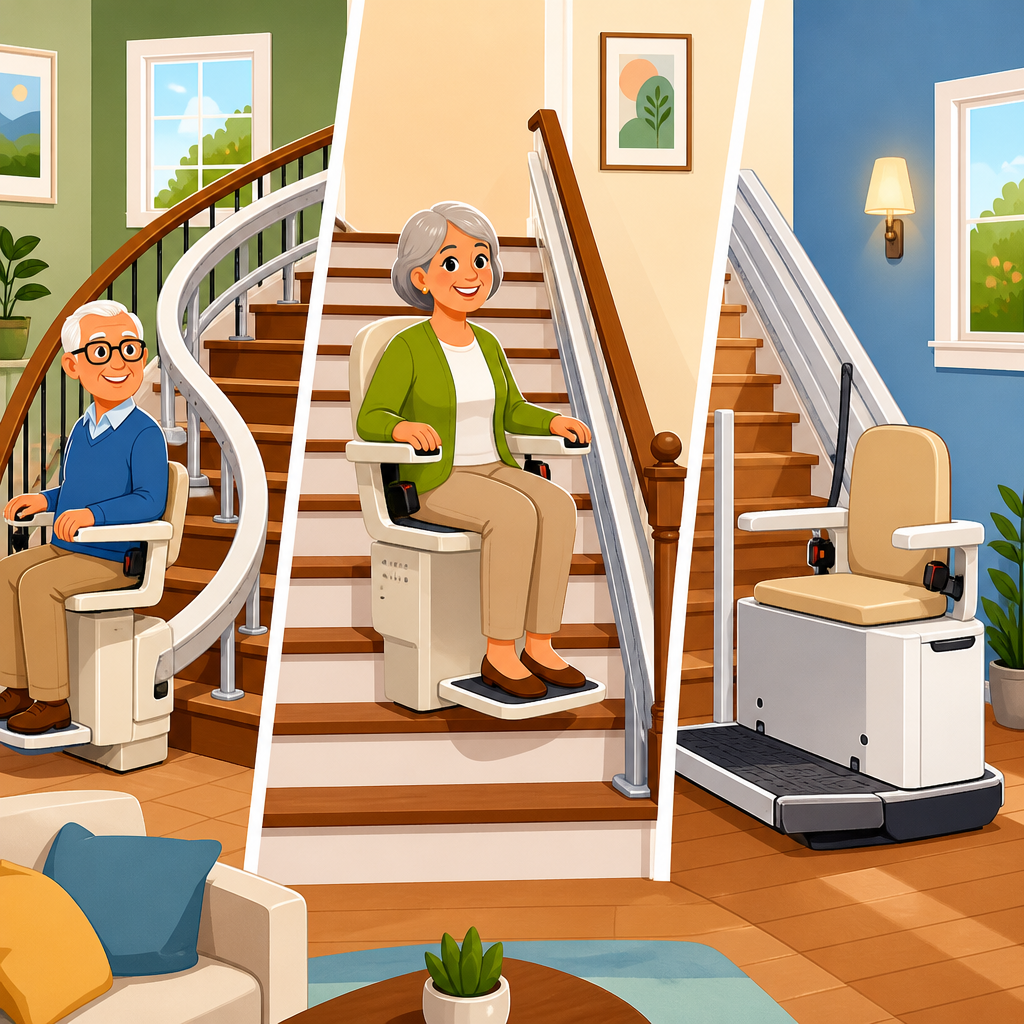
Choosing a stair lift is rarely an impulse purchase. Most buyers are balancing safety, mobility, home layout, price, and long-term service when comparing brands, and Savaria stair lifts consistently enter that conversation. This Savaria Stair Lifts review examines the company’s straight, curved, and high-capacity options while also placing Savaria in the wider context of top stair lift brands. If you are building a short list for a home accessibility project, this guide gives you the key facts, tradeoffs, and product distinctions that matter before requesting quotes.
Savaria is a North American accessibility manufacturer known for stair lifts, home elevators, vertical platform lifts, and related mobility products. In stair lift terms, “straight” means the rail runs on a staircase without turns or landings, “curved” means the rail is custom built to follow bends or intermediate landings, and “high-capacity” refers to lifts designed for users who need higher weight limits, roomier seats, or reinforced performance. Those definitions sound simple, but they affect installation complexity, cost, lead time, and the kind of service support you should expect after the sale.
This category matters because the wrong stair lift can create daily friction in the exact place where reliability is most important. I have seen buyers focus almost entirely on purchase price, then discover that the real difference between brands shows up in seat comfort, rail intrusion, call stations, battery behavior during power outages, and how quickly a dealer can source parts. Savaria deserves attention because it offers coverage across the most common residential use cases, from standard straight staircases to custom curved layouts and heavier-duty needs. As a hub page for top stair lift brands, this article also helps you understand where Savaria fits relative to names shoppers often compare, including Bruno, Stannah, Acorn, Handicare, and Harmar.
Savaria at a Glance and How It Fits Among Top Stair Lift Brands
Savaria’s reputation rests on breadth and dealer-based support. Unlike single-product companies, Savaria operates across several home accessibility categories, which matters because stair lift buyers often later consider ramps, porch lifts, or elevators. In practice, that broader product ecosystem can make coordination easier for households planning aging-in-place upgrades in phases. The company is especially relevant in North America, where local dealer networks strongly influence installation quality and ongoing maintenance.
Among top stair lift brands, Savaria typically competes on customization, solid build quality, and a product line that reaches beyond entry-level straight lifts. Bruno is often praised for ride quality and domestic manufacturing, Stannah for established engineering and polished curved systems, Acorn for direct-to-consumer visibility, Handicare for modular features and dealer reach, and Harmar for value-oriented models with broad availability. Savaria belongs in that group because it covers the full residential decision tree: simple stairs, complex geometry, and larger user profiles. Buyers who want one brand to address multiple scenarios usually keep Savaria on the shortlist.
One reason Savaria is frequently evaluated by occupational therapists, accessibility consultants, and experienced dealers is that its lineup is easier to match to functional requirements than many shoppers expect. You are not only choosing a seat on a rail. You are choosing transfer height, folded footprint, armrest geometry, control style, swivel operation, charging points, and the dealer’s capacity to maintain the unit for years. Savaria products generally present well in those conversations because they are built to be prescribed, not just sold.
Straight Stair Lift Options: Practical Performance for Standard Staircases
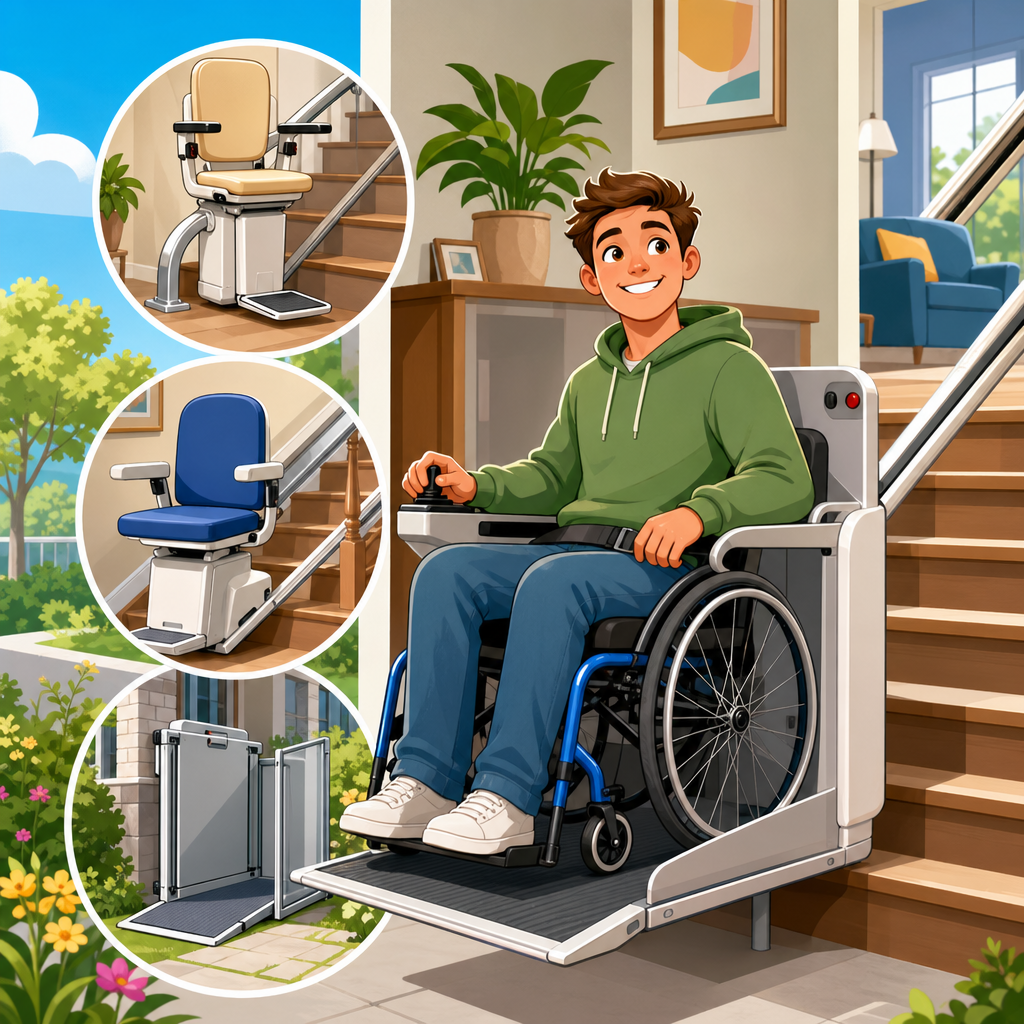
For homes with a single uninterrupted flight of stairs, Savaria’s straight stair lift offerings are the most economical entry point. Straight lifts are faster to measure, easier to install, and usually available with shorter lead times than curved models because the rail does not need custom fabrication. In many homes, installation can be completed in a few hours, and the rail mounts to the stair treads rather than the wall, which simplifies structural concerns. That basic configuration is standard across the industry, but the details separate acceptable lifts from comfortable daily-use equipment.
Savaria straight lifts are typically evaluated for smooth travel, seat ergonomics, and compact folding behavior. Buyers often ask whether a straight model is “good enough” versus stepping up to a premium competitor. In my experience, the better question is whether the unit supports the user’s transfer pattern. If someone pivots slowly, has limited knee flexion, or needs stable arm leverage when standing, seat height and armrest position matter more than brochure language about convenience. Savaria generally performs well here, especially for buyers who have been properly assessed by a knowledgeable dealer.
A standard straight lift from Savaria is best suited to users who can sit upright comfortably, have a typical residential staircase width, and want dependable battery-powered operation. Battery systems are now normal in quality stair lifts because they allow continued use during many power outages and provide smoother starts and stops than old direct-power designs. Savaria follows that industry standard. You still need a nearby power supply for charging, but the user rides on battery power, which is the safer and more resilient setup.
Compared with other top stair lift brands, Savaria straight units often land in the middle-to-upper range of the market rather than the bargain tier. That usually reflects fit and finish rather than a dramatic difference in basic function. A less expensive lift may still carry a user upstairs. The question is whether it does so quietly, comfortably, and consistently over years of repeated use. For buyers who plan to age in place long term, those differences become more important than the initial quote.
Curved Stair Lift Options: Custom Rails, Complex Layouts, and Higher Stakes
Curved stair lifts are where brand quality and dealer competence matter most. A curved staircase may include one or more turns, a pie-shaped landing, a spiral element, a narrow transition, or multiple floors connected by continuous rail. Every one of those variables affects measurement accuracy, rail fabrication, and final ride quality. Savaria’s curved stair lift options are designed for this more exacting category, where no two installations are identical and errors are expensive. When shoppers ask whether curved lifts are worth the added cost, the answer is yes if the staircase geometry demands it; there is no straight-lift workaround that is equally safe.
Savaria curved systems are custom configured to the staircase, and that customization usually means a longer lead time and significantly higher pricing than straight models. Across the market, curved stair lifts often cost several times more than straight lifts because the rail is purpose-built after detailed surveying. Some dealers now use advanced measuring systems and digital tools to improve precision, but the principle remains the same: a curved lift is engineered for one staircase. If you move homes, reusing that rail is unlikely.
Where Savaria earns consideration is in balancing customization with livability. A well-designed curved stair lift should preserve as much walking space as possible, park neatly when not in use, and negotiate turns without abrupt motion. Poorly planned curved installations can create knee collisions, awkward landings, or obstructions for other household members. Savaria dealers who routinely handle custom accessibility work tend to be better prepared for these issues than sales teams focused on commodity installations. This is one category where the installer is almost as important as the manufacturer.
Shoppers comparing Savaria with Stannah, Handicare, or Bruno on curved lifts should ask for more than a price. Request rail placement drawings, parking location options, seat orientation at the top and bottom landings, and a clear explanation of transfer safety. Ask how service calls are handled if the custom rail needs adjustment. Those practical details often reveal more about the quality of the purchase than the brochure photos do.
High-Capacity and Heavy-Duty Considerations for Larger Users
High-capacity stair lifts serve a critical but sometimes underexplained segment of the market. Not every user fits safely or comfortably into a standard seat, and weight capacity alone does not tell the whole story. Larger users often need a broader chair, stronger arm support during transfers, more torso room, and a rail-and-drive system engineered to maintain smooth operation under heavier loads. Savaria’s high-capacity positioning is important because many households need bariatric-friendly accessibility products without moving immediately to a platform lift or major renovation.
When evaluating high-capacity options, I advise buyers to look at four factors: rated capacity, seat dimensions, staircase width, and transfer clearance at landings. A lift may advertise a strong weight limit but still feel restrictive if the seat pan is narrow or the arms close in too tightly. Likewise, a spacious chair is not useful if the staircase becomes impassable for other residents once the lift is installed. Savaria tends to be considered when buyers need that balance between stronger support and practical household circulation.
Another overlooked issue is user confidence. Heavy-duty models should not merely carry the load; they should feel stable during boarding, travel, and dismounting. That stability comes from seat design, footrest position, rail engineering, and controlled acceleration. Top stair lift brands differ more here than they do in marketing claims. In dealer showrooms and home trials, the strongest products are usually the ones that feel predictable, not flashy. Savaria’s better installations succeed because they reduce uncertainty for users who may already be dealing with pain, weakness, or fall anxiety.
Feature Comparison, Safety Standards, and Real-World Buying Questions
Most buyers narrow their decision once they compare features in plain language. The essentials include a swivel seat for safer exit at the upper landing, obstruction sensors that stop the lift if something blocks the path, seat belt use, folding arms and footrest, call-send controls, battery backup operation, and easy-to-grip controls. Better questions include: Can the seat height be matched to the user’s standing mechanics? Is the folding profile compact enough for a narrow hall? Can the rail overrun move the user away from the stair edge at the top or bottom? Those answers matter every day.
| Buying Factor | Why It Matters | Savaria Review Insight |
|---|---|---|
| Straight vs. curved rail | Determines cost, lead time, and installation complexity | Savaria covers both well, with curved models requiring stronger dealer expertise |
| Weight capacity | Affects safety, seat sizing, and drive performance | High-capacity positioning is a meaningful strength for larger users |
| Battery operation | Keeps lift usable during many outages | Standard and expected; ask about charger placement and replacement intervals |
| Seat and transfer ergonomics | Influences daily comfort and fall risk | Often a better differentiator than headline pricing |
| Dealer service network | Impacts installation quality and repair response | Critical to the ownership experience with any Savaria unit |
Safety should also be discussed in relation to recognized standards and local practice. Reputable stair lift products and installations are commonly evaluated against applicable code, manufacturer guidance, and accessibility best practices rather than improvised home modifications. The practical takeaway is simple: work with an established dealer that measures carefully, documents the proposal, and explains maintenance. An annual service check is reasonable for many households, and faster attention may be warranted when a user depends on the lift multiple times every day.
Price remains a central question. Straight stair lifts from major brands usually cost far less than curved models, while high-capacity versions can add expense depending on the configuration. Savaria is seldom the ultra-cheap option, but it often justifies its position with broader customization and compatibility with more demanding scenarios. If you are comparing quotes, include warranty terms, labor coverage, service response expectations, and removal options. The cheapest bid can become expensive if parts availability or follow-up support is weak.
Who Should Buy Savaria and How to Compare It With Other Brands
Savaria is a strong fit for buyers who want a serious accessibility brand, need more than the simplest staircase solution, or may expand their home mobility setup over time. It is especially compelling for curved staircases, larger users, and households that value working with a local dealer capable of assessment and follow-through. Buyers who prioritize the absolute lowest upfront cost may look elsewhere first, but that is not always the same as finding the best value. In accessibility equipment, dependable daily function is the value.
As a hub within buying guides and product reviews, this page should help you frame the next comparison. If your staircase is straight and your needs are uncomplicated, compare Savaria against Bruno, Harmar, Acorn, and Handicare on comfort, folded width, warranty, and local service. If your staircase is curved, compare Savaria with Stannah, Bruno, and Handicare on custom rail design, parking positions, and installer experience. If weight capacity or seating space is the main issue, ask each brand for exact dimensions rather than trusting broad sales language. Measurements beat adjectives every time.
The central takeaway from this Savaria Stair Lifts review is that Savaria belongs on any credible list of top stair lift brands because it addresses the real decision points buyers face: standard stairs, custom curves, and higher-capacity needs. Its products are best judged through the lens of fit, transfer safety, and dealer execution, not just headline pricing. Start by getting a professional in-home assessment, request side-by-side quotes from qualified dealers, and use this article as your baseline when narrowing the field to the stair lift that will work safely in your home for years.
Frequently Asked Questions
What types of stair lifts does Savaria offer, and who are they best suited for?
Savaria offers three main stair lift categories that cover most residential accessibility needs: straight stair lifts, curved stair lifts, and high-capacity models. Straight stair lifts are designed for staircases without turns, landings, or changes in direction. These are typically the most straightforward to install, the most budget-friendly, and the best fit for homeowners who want a practical mobility solution on a standard set of stairs. In many homes, a straight model is the fastest path to improved safety and independence.
Curved Savaria stair lifts are intended for staircases with bends, intermediate landings, spiral sections, or custom architectural layouts. Because these systems require a rail built specifically for the home’s staircase, they are more complex and generally more expensive than straight models. However, for households with multi-turn staircases, a curved lift may be the only realistic way to maintain full access between floors without major remodeling.
High-capacity stair lifts are especially relevant for users who need a higher weight limit, a roomier seat, or a greater sense of stability during travel. These models can also be a better option for caregivers planning ahead for changing mobility needs. In practical terms, Savaria’s lineup appeals to a wide range of buyers, from seniors wanting to age in place to families adapting a home after illness, injury, or long-term disability. The right choice usually comes down to staircase shape, body type, daily usage patterns, and whether the home needs a standard or more customized accessibility solution.
How does Savaria compare with other top stair lift brands?
Savaria is often considered a strong competitor in the premium home accessibility market because it combines a broad product range with an established reputation in mobility equipment. Compared with other leading stair lift brands, Savaria tends to stand out for offering solutions across multiple staircase types rather than focusing only on basic straight-lift installations. That makes the brand especially relevant for buyers who are comparing not just entry-level options, but also custom curved systems and heavier-duty models.
In the broader market, the most meaningful comparisons usually involve build quality, customization, dealer support, warranty coverage, ride comfort, and long-term service availability. Savaria generally performs well in these categories, particularly for buyers who value a brand with deep roots in accessibility products. Like many top-tier stair lift companies, Savaria products are commonly sold and installed through local dealers, which means the quality of the local representative can be just as important as the brand name itself. A great dealer can make the process smoother through accurate measurements, professional installation, clear training, and dependable service after the sale.
That said, no stair lift brand is universally “best” for every household. Some competitors may be more widely recognized for a specific niche, such as compact seats, very tight rail designs, or aggressive pricing on straight stair lifts. Savaria’s advantage is that it usually remains a serious contender across the most common buyer priorities: safety, customization, and dependable daily operation. For shoppers building a short list, Savaria is worth comparing side by side with other leading brands based on quote transparency, local service strength, available features, and how well each model matches the exact staircase in the home.
Are Savaria stair lifts a good choice for safety, comfort, and everyday use?
Yes, Savaria stair lifts are generally viewed as a strong option for households prioritizing safety and usability. For most buyers, the core purpose of a stair lift is reducing fall risk while restoring confidence on the stairs, and Savaria’s systems are designed around that need. Common stair lift safety elements typically include a secure seat, seat belt, obstruction sensors, and call/send controls that allow the lift to be moved when needed. These features help the user board, ride, and exit more safely while also making the lift easier to share in multi-person households.
Comfort matters just as much as safety because a stair lift only helps if the user feels comfortable using it consistently. Savaria models are often evaluated on seat design, riding smoothness, ease of controls, and overall stability. For people with limited balance, arthritis, joint pain, or reduced lower-body strength, a comfortable seated position and predictable movement can make a major difference in daily life. A lift that feels steady and intuitive tends to be used more confidently, which supports long-term independence.
Everyday practicality also depends on how the stair lift fits into the home. Buyers should consider whether the seat, footrest, and armrests fold when not in use, whether the rail placement leaves adequate walking space, and whether the controls are simple enough for the intended user. Savaria is often appealing because its product range can address both simple and more specialized needs. Still, the real-world experience will depend on proper installation and fit. The best way to judge day-to-day suitability is to review available features carefully, ask about the exact model being quoted, and work with an experienced dealer who can recommend the right setup for the user’s mobility level and staircase configuration.
How much do Savaria stair lifts typically cost, and what affects the price?
The cost of a Savaria stair lift varies significantly depending on whether the system is straight, curved, or high-capacity. In general, straight stair lifts are the most affordable because they use standardized rails and involve simpler installation. Curved stair lifts cost more because the rail must be custom manufactured to match the staircase’s exact dimensions, turns, and landings. High-capacity models may also carry a premium due to reinforced components, larger seating, or specialized design requirements.
Beyond the lift type itself, several factors can influence the final price. These include staircase length, number of turns, parking options, power swivel or powered folding features, seat upgrades, electrical considerations, and whether the installation requires any special accommodations. In some homes, even small details such as narrow staircases or unusual wall and banister layouts can affect labor and equipment needs. Because of these variables, quotes can differ not just by model, but also by installer and region.
Buyers should also think beyond the initial purchase price. Long-term value includes warranty coverage, maintenance expectations, service call responsiveness, and the reputation of the local dealer. A lower quote is not always the best deal if it comes with weaker post-installation support. When comparing Savaria with other stair lift brands, ask for a fully itemized proposal and confirm what is included in the quoted price, such as installation, user training, warranty terms, and any future service commitments. That approach makes it much easier to judge whether a Savaria stair lift is competitively priced for the features and support being offered.
What should you consider before buying a Savaria stair lift for your home?
Before buying a Savaria stair lift, start with the two biggest factors: the staircase itself and the user’s mobility needs. The shape of the stairs will determine whether a straight or curved model is required, while the user’s height, weight, balance, transfer ability, and hand strength will help identify the most appropriate seat style and control setup. If the user’s condition may change over time, it is smart to think ahead rather than choosing only for current needs. A slightly more capable model now may prevent another major purchase later.
It is also important to evaluate the home environment as a whole. Consider whether multiple people use the stairs, how much folded clearance is needed, where the lift will park, and whether there is a safe place to get on and off at both levels. In households with caregivers or spouses, ease of operation for everyone involved can be an important quality-of-life factor. Noise level, charging arrangement, and overall visual impact may matter as well, especially in frequently used living spaces.
Finally, pay close attention to the installer, not just the manufacturer. Since Savaria stair lifts are commonly sold through dealers, the local company’s experience can have a direct effect on measurement accuracy, installation quality, and service response if repairs are needed. Ask about warranty support, maintenance plans, repair turnaround times, and whether replacement parts are readily available. If possible, request a home assessment and a detailed explanation of why a specific Savaria model is being recommended. A thoughtful buying process usually leads to a safer installation, fewer surprises, and a stair lift that performs reliably for years.