
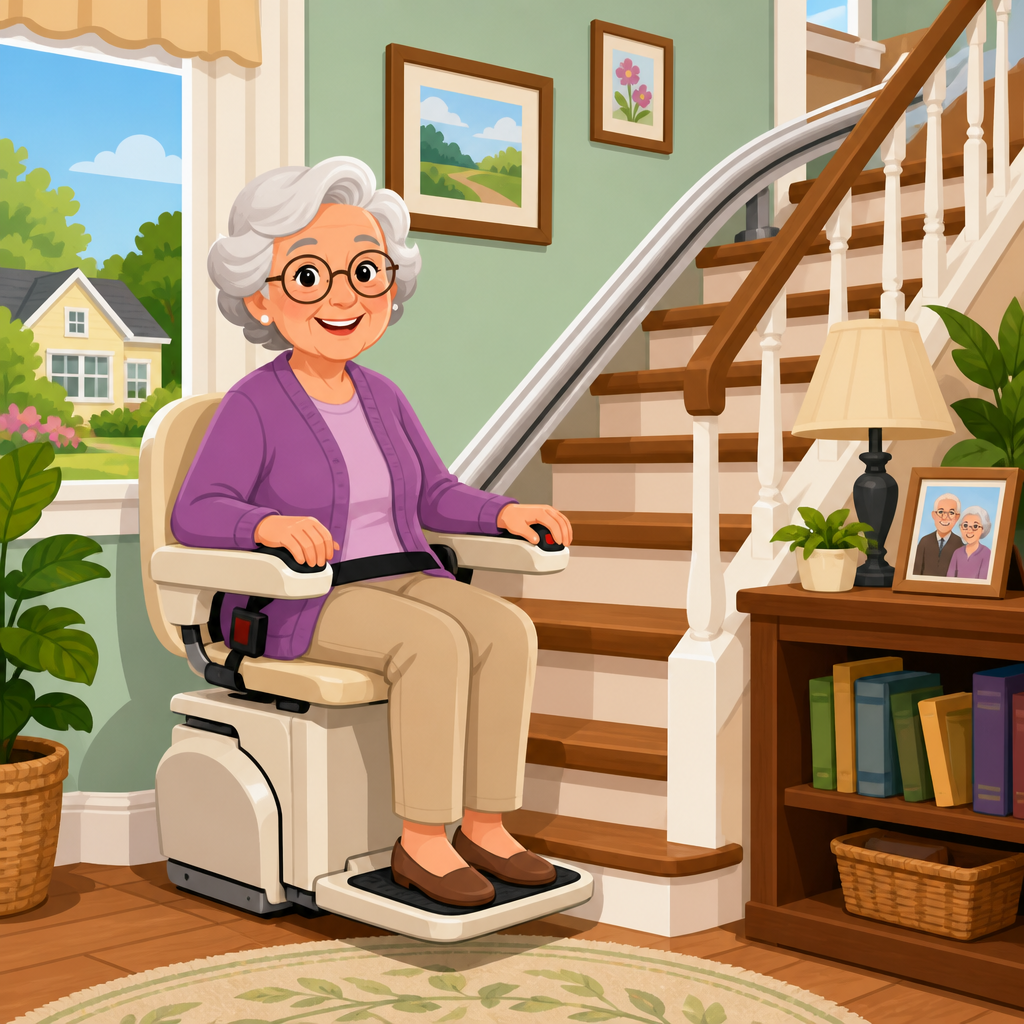
Affordable stair lifts for fixed-income seniors can make the difference between aging safely at home and facing a move that feels financially and emotionally forced. A stair lift is a motorized chair or perch that travels along a rail attached to the staircase, carrying a person between floors without climbing steps. For seniors living on Social Security, a pension, or limited retirement savings, the challenge is not understanding the value of a stair lift; it is figuring out how to pay for one without making a costly mistake. I have worked with families comparing quotes, evaluating used units, and balancing safety against monthly budgets, and the same questions come up every time: What does a stair lift really cost, which options are worth considering, and where should you start if money is tight? This guide answers those questions directly. It explains the main price drivers, the most realistic low-cost paths, financing and assistance sources, and the tradeoffs between buying new, buying used, and renting. It also serves as a hub for budget-friendly options, so you can use it as your starting point before diving deeper into brand comparisons, installation details, or funding strategies. The goal is simple: help fixed-income seniors and their families choose a safe, reliable stair lift that fits both the staircase and the budget.
Understand what makes a stair lift affordable
An affordable stair lift is not simply the cheapest product on a quote sheet. It is the option that delivers safe daily use, dependable service, and a total cost you can actually sustain. In practice, that means looking at purchase price, installation, warranty coverage, battery replacement, service call fees, and whether the lift can be resold or transferred later. A straight stair lift for a single flight is usually the least expensive category because the rail is standardized. Curved stair lifts cost more because the rail is custom fabricated to match turns, landings, and intermediate bends. In most markets, a new straight stair lift often starts around $2,500 to $5,500 installed, while a new curved model commonly begins near $10,000 and rises significantly with complexity. Outdoor lifts cost more than indoor equivalents because they need weather-resistant components and covers.
Affordability also depends on the user’s mobility profile. A basic seated model may work well for someone with knee pain who can still transfer independently. A heavy-duty model with a higher weight capacity, wider seat, or powered swivel may be necessary for another user, and those upgrades add cost. I often tell families to avoid paying for features that solve no real problem, but not to strip out features that make transfers safer. For example, a manual swivel seat can save money, yet if shoulder weakness makes twisting difficult, the cheaper feature may increase fall risk at the top landing. Budget planning should start with the user, not the catalog.
Start with the staircase, the user, and the timeline
The first practical step is to identify three facts: the shape of the staircase, the physical needs of the user, and how quickly the lift is needed. These determine nearly every affordable path. A straight staircase with no turns opens the door to lower-cost new units, refurbished inventory, and short-term rentals. A curved staircase narrows the field because even used chairs still require a new custom rail in most cases. If the user needs a lift after surgery or during rehab, a rental can be more economical than a full purchase. If the user has a progressive condition and plans to remain in the home long term, buying usually makes more financial sense.
Measure and document before you request quotes. Count the steps, photograph the staircase from top and bottom, note any doorways near the stairs, and record the user’s height, weight, and transfer ability. Dealers will still need an in-home assessment, but accurate early information helps eliminate unrealistic options. This is also the stage to ask whether a stair lift is the right solution at all. If bathroom access, laundry, and bedroom can be consolidated on one floor for far less money, that may be the better move. In many homes, though, especially two-story houses with bedrooms upstairs, a stair lift is the most cost-effective way to preserve independence.
Compare low-cost buying paths before you request quotes
Fixed-income shoppers usually have four realistic budget-friendly options: buy a new straight stair lift, buy a refurbished straight stair lift, rent a straight stair lift, or pursue financial assistance for a higher-cost configuration. Each path fits a different situation. New straight lifts provide the strongest warranty and latest components. Refurbished lifts lower the purchase price by reusing the carriage, seat, and drive system after inspection, testing, and part replacement. Rentals reduce upfront cost and are common for temporary needs, though long-term rental fees can exceed the cost of ownership. Assistance programs become especially important for curved staircases, where sticker shock is common.
| Option | Best for | Typical cost pattern | Main tradeoff |
|---|---|---|---|
| New straight stair lift | Long-term use, standard staircase | Higher upfront, lower service uncertainty | More cash required at purchase |
| Refurbished straight stair lift | Budget-conscious long-term use | Lower upfront than new | Warranty may be shorter |
| Rental straight stair lift | Temporary recovery or hospice needs | Lower upfront, recurring monthly fees | Can cost more over time |
| Financial assistance plus purchase | Curved stairs or very limited cash | Varies by grant, loan, or waiver | Approval can take time |
When comparing these paths, ask dealers to show the full installed price, not just the equipment cost. I have seen families choose a lower advertised number only to discover separate fees for installation, rail overrun, powered options, permit-related work, or removal of an old unit. A useful quote should identify the model, weight capacity, seat type, battery system, charge points, warranty term, and whether service labor is included. If a quote is vague, it becomes hard to compare value.
Know where seniors actually save money
The largest savings usually come from staying within the straight stair lift category whenever possible, considering certified refurbished equipment, and limiting optional upgrades to those that improve safety or usability. Straight rails are cheaper to manufacture and easier to install, so they are the foundation of most low-cost plans. Refurbished lifts can save hundreds or even more than a thousand dollars compared with new units, depending on brand, age, and warranty. In the field, reputable dealers typically replace worn batteries, inspect the motor and gearbox, verify safety sensors, and clean or replace cosmetic parts before resale. That process matters more than the word refurbished itself.
Another way seniors save money is by choosing standard upholstery, manual footrest operation, and a seat style that fits the user without custom fabrication. Brands such as Bruno, Harmar, Access BDD, and Handicare are frequently seen in the U.S. market, and dealer support often matters as much as the brand badge. A lower-priced lift from a responsive local dealer can be a better value than a slightly cheaper internet lead with weak after-sale service. Stair lifts are durable medical-adjacent equipment installed in the home; they are not ideal impulse purchases.
Used private-party stair lifts are where many people hope to find dramatic bargains, but this path requires caution. A chair removed from another home may not include a rail that fits yours, may lack service records, and may not be supported by a local installer. For straight lifts, the rail can sometimes be cut or replaced affordably, but for curved lifts the savings often disappear once custom rail work is required. If buying used outside a dealer, verify the exact model, year, availability of parts, and who will install and service it. Otherwise, a cheap listing can become unusable equipment in a garage.
Look beyond the sticker price to total cost of ownership
Budget planning should include the first year and the likely life of the lift. Most modern stair lifts use rechargeable batteries, even though they plug into household power through a charger. The batteries allow operation during a power outage and typically need replacement every few years depending on use, charging habits, and climate. Service plans vary widely. Some dealers include labor for a year; others cover parts only. If a senior lives in a rural area, travel charges for service can be meaningful, so ask about them upfront.
Installation quality also affects cost. A properly installed stair lift mounts to stair treads, not the wall, and should leave enough clearance for others using the stairs when folded. Poor fit can lead to nuisance faults, rough rides, or transfer difficulty at the landing. In homes with narrow staircases, parking positions or hinged rails may be needed to prevent obstruction at the bottom. Those features add cost, but in some layouts they prevent the need for more expensive remodeling. Affordability is often about choosing the least expensive safe solution, not the lowest invoice number.
Use funding sources that many families overlook
Many seniors assume Medicare pays for stair lifts. In original Medicare, that is generally not the case because stair lifts are usually treated as home modifications rather than covered durable medical equipment. That said, there are other funding paths worth checking. Medicaid Home and Community-Based Services waivers may help in some states when a lift supports safe living at home and avoids institutional care. Veterans may have access to assistance through the Department of Veterans Affairs, including home modification programs for qualifying disabilities. Area Agencies on Aging, state assistive technology programs, local nonprofits, and disease-specific organizations sometimes offer grants, low-interest loans, or equipment exchange programs.
Home equity lines, personal loans, or dealer financing can spread payments out, but they need careful review on a fixed income. Interest rate, origination fee, and prepayment terms matter. I generally advise families to compare financing against rental and against the cost of moving bedrooms downstairs. If monthly payments create stress, the “affordable” lift may not truly be affordable. A better strategy is often to combine a smaller cash purchase with grant funds, family support, or the sale of unused medical equipment. Some community organizations also maintain closets of gently used accessibility items, though stair lifts are less commonly available there than walkers or shower chairs.
Choose a dealer who can support a budget decision
The right dealer will not push the most expensive model first. They will assess needs, explain tradeoffs clearly, and present at least one practical lower-cost path if the staircase allows it. Look for companies that perform in-home evaluations, provide written quotes, carry liability insurance, and service what they sell. Ask how quickly they can respond to a breakdown, whether they stock batteries and common parts, and whether they remove or buy back units later. Reviews can help, but direct answers during the estimate process are more revealing than star ratings alone.
Questions I recommend asking include: Is this quote for new or refurbished equipment? What is the weight capacity? What happens if the user’s needs change? How long is the warranty on parts and labor? Are there annual maintenance recommendations? Can the lift be transferred to another home? Can you provide references for installations similar to mine? A trustworthy dealer answers these without pressure. If someone refuses to itemize pricing or dismisses safety questions, keep shopping.
Make this hub your starting point for budget-friendly stair lift decisions
Affordable stair lifts for fixed-income seniors are absolutely possible when you begin with the right framework: identify the staircase type, define the user’s mobility needs, compare new, refurbished, and rental paths, and evaluate total cost instead of focusing only on the advertised price. Straight staircases offer the widest range of budget-friendly options, while curved staircases usually require more creative funding and quote comparison. Real savings come from matching the product to the situation, not from chasing the cheapest listing online.
As the central guide in this budget-friendly options subtopic, this article is designed to point you toward smarter next steps. From here, explore detailed brand reviews, funding resources, installation checklists, and comparisons of new versus used units so you can narrow the field with confidence. A stair lift is a major purchase, but it is also a practical investment in safety, independence, and the ability to remain at home. Start by gathering measurements, documenting the user’s needs, and requesting two or three itemized quotes from reputable local dealers. That simple process will quickly show which affordable stair lift options are truly worth your money.
Frequently Asked Questions
What is the first step a fixed-income senior should take when shopping for an affordable stair lift?
The best place to start is with a clear assessment of need, home layout, and budget. Before comparing brands or prices, determine who will use the stair lift, how often it will be used, and whether the staircase is straight, curved, narrow, or has landings. Straight stair lifts are usually much more affordable than curved models because they use standardized rails, while curved stair lifts are custom-built and can cost significantly more. It is also important to think about mobility needs beyond today. For example, a senior who currently walks independently but struggles with balance may need different seat, swivel, or safety features than someone who transfers from a walker.
Once those basics are clear, the next step is to schedule in-home estimates from more than one stair lift provider. Reputable companies typically inspect the staircase, discuss features, and provide a written quote. Ask each company to separate the cost of the unit, installation, warranty coverage, and any ongoing service plans. This makes it easier to compare offers fairly. Fixed-income seniors should also ask whether there are lower-cost options such as reconditioned models, short-term rentals, or basic feature packages that still meet safety needs.
It also helps to gather financial information early. Knowing what can realistically be paid from savings, monthly income, family support, or financing prevents wasted time looking at options that are out of reach. Starting with a practical plan rather than a sales pitch allows seniors and their families to make a safer, more confident decision.
Are there programs or benefits that can help pay for a stair lift?
Yes, but the answer depends heavily on location, income level, veteran status, insurance coverage, and the reason the stair lift is needed. Original Medicare usually does not cover stair lifts because they are often classified as home modifications rather than durable medical equipment. However, that does not mean all assistance is off the table. Some Medicare Advantage plans may offer limited supplemental benefits for home safety or support services, so it is worth calling the plan directly and asking for details in writing.
Medicaid may help in some states through Home and Community-Based Services waivers or similar programs designed to help seniors remain safely at home instead of moving to a facility. These programs vary widely, and eligibility rules can be strict, but they are one of the most important places to investigate. Fixed-income seniors should also check with their local Area Agency on Aging, county aging office, or state department that handles elder services. These organizations often know about grants, low-interest loans, nonprofit programs, and local charitable resources that are not widely advertised.
Veterans and surviving spouses may have additional options through the Department of Veterans Affairs if the stair lift is connected to a mobility need. Depending on circumstances, veterans may qualify for home modification assistance or related support. In addition, some nonprofit organizations, religious groups, and disease-specific foundations may offer limited financial help. The key is to ask several sources instead of assuming there is no assistance. Funding is often patchwork rather than simple, but combining benefits, grants, family help, and lower-cost equipment can make a stair lift more attainable.
Is buying a used or reconditioned stair lift a good way to save money?
For many fixed-income seniors, a used or factory-reconditioned stair lift can be one of the smartest ways to reduce cost without sacrificing safety, especially for a straight staircase. Reconditioned stair lifts are typically pre-owned units that have been inspected, repaired, cleaned, and tested by the dealer or manufacturer before resale. Because the rail on a straight staircase is easier to reuse or replace than a custom curved rail, these units are often available at a meaningful discount compared with brand-new models.
That said, affordability should never come at the expense of reliability. The safest approach is to buy from an established stair lift company that offers installation, a warranty, and service support. Ask exactly what “reconditioned” means in their process. Find out whether the motor, batteries, seat, track, and safety sensors were replaced or tested, and request written warranty terms. A low upfront price can become expensive if the unit has no service support, no parts availability, or no labor coverage for repairs.
Seniors should be cautious about buying a stair lift from online marketplaces or private sellers unless a qualified local company is willing to inspect and install it. Improper installation or missing components can create serious safety risks. Also, used curved stair lifts are often less practical because the rail is custom-made for a specific staircase and may not fit another home. In many cases, a reconditioned straight stair lift offers the best balance of savings, safety, and support.
Should a senior rent, finance, or buy a stair lift outright?
The right payment approach depends on how long the stair lift will be needed, how limited the budget is, and whether the staircase requires a straight or curved system. Buying outright is often the most cost-effective option over the long term if the senior expects to stay in the home for years. It avoids recurring payments and may make sense if there are savings available, family contributions, or grant funds that can be applied immediately.
Renting can be a good option when the need is temporary, such as after surgery, during rehabilitation, or while waiting for a permanent housing decision. Rentals are more commonly available for straight stair lifts because the equipment is easier to reuse. Even when monthly payments look manageable, it is important to ask about installation charges, removal fees, minimum rental periods, maintenance, and what happens if the unit is no longer needed. Sometimes a rental seems inexpensive at first but adds up quickly over many months.
Financing may help seniors who need a stair lift right away but cannot cover the full cost at once. However, financing should be approached carefully on a fixed income. Before signing, compare the interest rate, monthly payment, total repayment amount, and any penalties or hidden fees. A lower monthly payment may still be a poor deal if it stretches the cost far beyond the value of the equipment. In many cases, seniors do best by comparing all three paths side by side and choosing the one that protects both safety and long-term financial stability.
How can seniors make sure they are getting a safe, fairly priced stair lift and not overpaying?
The most effective way to avoid overpaying is to get multiple written estimates from reputable local providers and compare them carefully. A fair quote should explain the model being recommended, whether it is new or reconditioned, the rail type, installation costs, warranty details, battery backup, service coverage, and any optional upgrades. Without that breakdown, it is difficult to know whether the price reflects real value or unnecessary add-ons. Seniors should ask each company why a specific model is being recommended and whether a lower-cost option could still safely meet their needs.
It is also wise to research the company itself. Look for businesses with a track record of stair lift installation and service, not just general home improvement work. Read reviews, check whether they handle maintenance after installation, and ask how quickly they respond to service calls. A stair lift is not just a product purchase; it is a mobility and safety system that may need future battery replacement, troubleshooting, or adjustments. Strong after-sale support matters just as much as the initial price.
Finally, seniors should not feel pressured to decide on the spot. High-pressure tactics, vague pricing, and “today only” discounts are warning signs. A trustworthy company should be willing to answer questions, explain safety features, and provide time to review the decision with family or a caregiver. The goal is not simply to find the cheapest stair lift. It is to find the safest, most reliable option that fits the home and the budget, so the senior can remain independent with confidence.





