When elderly parents come to stay for a few weeks or months, stairs can turn a welcoming home into a daily obstacle. Stair lift rental for visiting elderly parents or temporary houseguests solves that problem without the full commitment of buying equipment that may only be needed for a short period. In practical terms, a stair lift rental is a temporary agreement with a mobility equipment provider that installs a motorized chair on an existing stair rail, then removes it when the need ends. For families comparing rental vs. purchase, the decision affects safety, timing, budget, and the overall comfort of the guest.
I have worked with families arranging short-term accessibility during post-surgery recoveries, holiday visits, and extended caregiving stays, and the same questions come up every time. How quickly can a lift be installed? Is renting cheaper than buying? Will a straight or curved staircase change the options? Can Medicare help? Those questions matter because stair-related falls remain one of the biggest household risks for older adults, and many homes were never designed for changing mobility needs. A temporary stair lift can allow a parent to sleep in a proper bedroom, use the main bathroom, and move independently instead of relying on constant assistance.
This article serves as the central guide to rental vs. purchase under cost and financing options. It explains how stair lift rentals work, when buying makes better financial sense, what costs to expect, and how to evaluate providers. It also gives you the language and framework needed to compare quotes intelligently. If you are planning for a parent’s seasonal visit, a recovering relative, or a houseguest with limited mobility, this guide will help you make a decision based on duration, stair type, total cost, and household logistics rather than guesswork.
What Stair Lift Rental Usually Includes
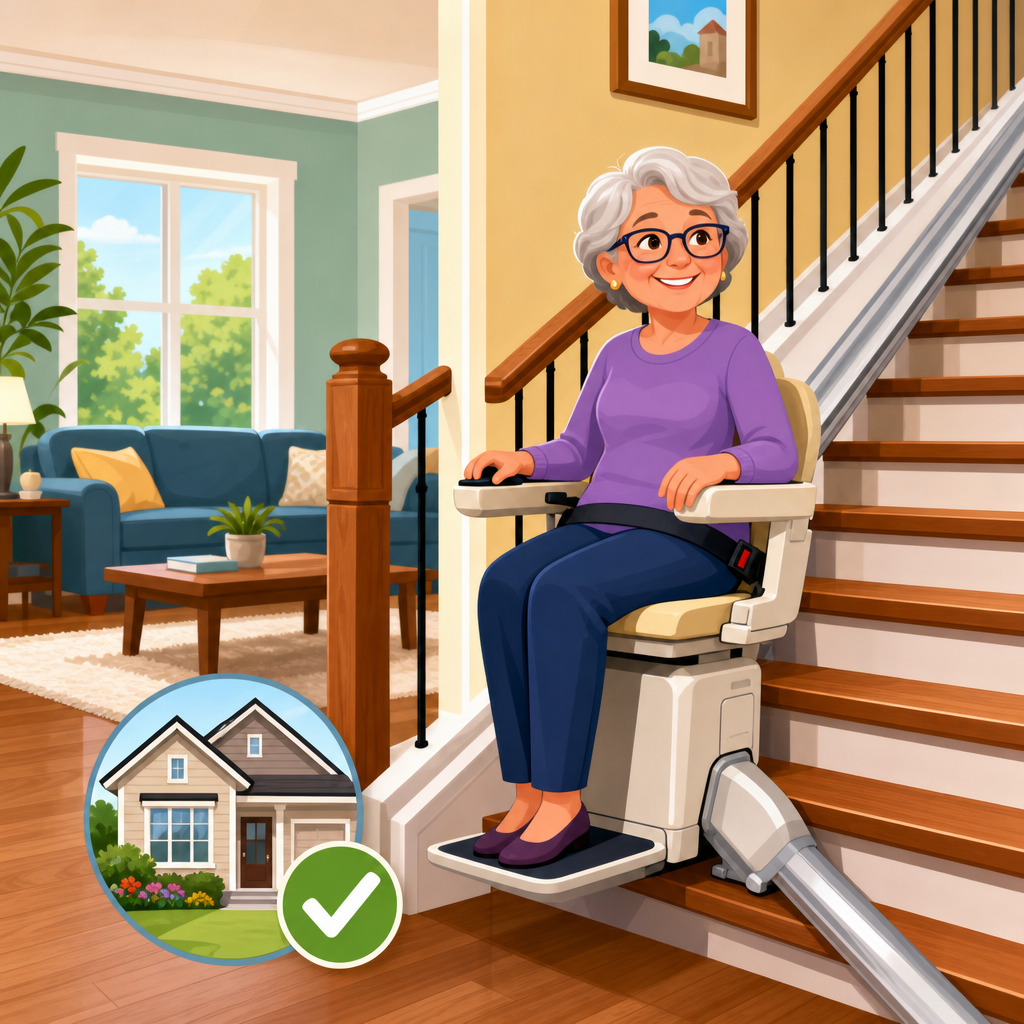
A stair lift rental typically includes four core components: equipment use, installation, a service plan, and eventual removal. Most providers charge an upfront fee for installation and rail setup, then a monthly rental fee for the chair and maintenance coverage. In many markets, straight stair lifts are the most common rental product because the rail can often be reused across homes with similar staircase dimensions. Curved stair lifts, by contrast, usually require a custom rail built for the exact turns, landings, and angles of one staircase, which makes true rental programs less common and often more expensive.
For a family hosting elderly parents temporarily, the appeal is flexibility. If the visit lasts six weeks instead of six months, you are not left owning equipment you no longer need. Reputable dealers also handle safety testing, battery checks, seat belt verification, and track alignment as part of setup. Many units run on rechargeable batteries with a plugged-in charging point at the top or bottom landing, so they can still operate during a power outage for several trips. Ask whether the rental includes service calls, because response time matters if your guest depends on the lift to reach a bathroom or bedroom.
Not every stair lift can be rented, and not every home qualifies for the same timeline. Straight indoor staircases are generally fastest. Outdoor stair lifts, narrow stairs, and multi-landing configurations may require more planning. If you need a lift before a parent arrives from out of town, request an in-home assessment early and confirm doorway clearance, folded seat width, and transfer space at both landings.
Rental vs. Purchase: How to Decide
The rental vs. purchase decision starts with one variable: expected duration of use. If your parent or houseguest needs help for one to six months, renting is often the more economical path, especially for a straight staircase. If the need is likely to extend beyond a year, buying often becomes more cost-effective because repeated monthly payments eventually exceed the installed purchase price. In my experience, families make better decisions when they estimate the probable usage window, then compare the total cost over that period instead of focusing only on the lower monthly number.
Purchase also makes sense when the user’s condition is permanent or progressive. For example, a parent with Parkinson’s disease, severe knee osteoarthritis, or chronic balance impairment may return multiple times or eventually move in. In that case, owning the lift can avoid repeated installation charges. Many purchased lifts can also be resold back to dealers, transferred to another home if compatible, or kept in place as part of a broader aging-in-place strategy. Some dealers offer refurbished straight lifts at lower prices, which can narrow the gap between rental and purchase.
Renting is strongest when circumstances are temporary and uncertain. Common examples include a 90-day recovery after hip replacement, a winter stay by snowbird parents, or hospice support during a limited care period. In these situations, preserving cash and avoiding a large upfront payment usually matters more than long-term ownership value. The important point is simple: short-term need generally favors rental, while long-term or recurring need usually favors purchase.
Typical Costs and Break-Even Thinking
Costs vary by region, brand, and staircase design, but most families can use a realistic framework. A straight stair lift rental commonly involves an installation fee plus monthly charges. A purchased straight lift typically includes equipment and installation in one larger price. Curved lifts can cost several times more because custom fabrication is required. The table below shows representative ranges often seen in the U.S. market, though local quotes may differ.
| Option | Typical Upfront Cost | Typical Ongoing Cost | Best Fit |
|---|---|---|---|
| Straight rental | $300 to $1,500 installation/removal | $100 to $300 per month | Visits, recovery, temporary caregiving |
| Straight purchase | $2,000 to $5,500 installed | Low; service as needed | Long-term or recurring use |
| Curved purchase | $10,000 to $20,000+ installed | Low; service as needed | Permanent need on complex stairs |
| Curved rental or lease-style arrangement | High custom setup cost | Variable monthly fee | Rare, case-by-case situations |
Break-even analysis helps clarify the choice. Suppose a straight rental costs $900 upfront and $180 per month. Over six months, total cost is about $1,980. Over twelve months, it becomes $3,060. If a comparable purchased lift costs $3,800 installed, renting remains cheaper for a shorter stay but loses its advantage as the timeline extends. This is why the expected duration should drive the decision more than emotion or sales pressure. Always ask for the total out-the-door amount over the number of months you actually expect to need the lift.
Also account for indirect costs. If not having a lift forces someone to sleep in a recliner downstairs, use a half bath only, or depend on two-person assistance for stairs, the strain on caregivers can be substantial. A stair lift is not just a line item; it can reduce fall risk, preserve dignity, and make the whole visit workable.
Questions to Ask Before You Sign Any Agreement
The best quotes are detailed, not just cheap. Ask whether the contract includes installation, removal, maintenance, battery replacement, emergency service, and warranty coverage during the rental term. Confirm the minimum rental period; some companies require three months even if the need ends sooner. Ask about cancellation terms, same-day or next-day repair response, and whether there are extra charges for moving the chair parking position or adding rail overruns at the top or bottom landing.
Safety and fit questions are equally important. Request the model name, weight capacity, folded width, seat height, and whether the seat swivels and locks for safer transfers. If your parent uses a walker, measure landing space so they can step off, turn, and stabilize without crowding. Ask whether the lift has obstruction sensors, a seat belt, call/send controls, and a manual lowering feature if the unit stops. Established manufacturers such as Bruno, Harmar, Acorn, and Stannah are widely recognized, but local dealer quality often matters as much as brand reputation.
Finally, ask the provider to explain who owns the rail and whether wall damage or stair tread holes will be repaired after removal. Most lifts attach to the stair treads rather than the wall, which surprises many homeowners. Small holes may remain after removal, and good dealers will describe that clearly before installation.
When Purchase Is the Better Long-Term Investment
Buying becomes the smarter move when mobility limitations are not temporary. If your parents visit several times each year, if one is likely to move in, or if the home is already being adapted for aging in place, purchase usually provides better long-term value. Ownership can also support wider home planning. Families often pair a bought stair lift with bathroom grab bars, better lighting, lever handles, and threshold ramps so the house works safely across changing health conditions.
There are emotional benefits too. A purchased lift feels stable and permanent, which can reduce resistance from older adults who do not want to feel like temporary guests in their children’s homes. I have seen this matter more than families expect. When the equipment is presented as a thoughtful home upgrade rather than an emergency rental, use tends to be more consistent. That consistency matters because a lift only improves safety when people actually use it instead of attempting the stairs unassisted.
Purchase may also open financing options not available for short rentals. Dealers sometimes offer promotional financing, monthly payment plans, or discounted pricing on certified pre-owned straight lifts. If a physician can document medical necessity, some health savings accounts, flexible spending accounts, Veterans Affairs benefits, state assistive technology programs, or long-term care insurance policies may help, though coverage rules vary and traditional Medicare generally does not pay for stair lifts because they are usually classified as home modifications rather than durable medical equipment.
How This Hub Connects the Full Cost and Financing Topic
As the hub page for rental vs. purchase, this article is designed to help you identify the right next question. If your timeline is short, your next step is understanding rental pricing details, contract terms, and installation scheduling for straight stairs. If your need may extend beyond a year, the next layer is purchase pricing, refurbished units, financing, and resale value. If your staircase has turns or intermediate landings, you will need specific guidance on curved-lift economics because custom rails change the equation dramatically.
You should also branch into related decision points. One is funding: can you use HSA or FSA dollars, a home accessibility grant, VA support, or long-term care insurance reimbursement? Another is installation timing: how fast can providers survey the home, secure a straight rail, and complete setup before a parent arrives? A third is alternatives: for some homes, a downstairs bedroom setup, temporary hospital bed, or portable accessibility changes may be enough, while in others the stair lift is the only realistic way to preserve normal household use.
The main advantage of treating rental vs. purchase as a hub topic is clarity. Instead of asking, “What is the monthly fee?” ask the better question: “What option gives my parent safe access at the lowest total cost for the actual duration and staircase type involved?” That is the question that leads to a sound decision.
Stair lift rental for visiting elderly parents or temporary houseguests is often the fastest, most practical way to make a multilevel home safe for a short stay. It works best when the staircase is straight, the need is temporary, and the family wants predictable costs without a large capital purchase. Buying usually becomes the better value when the need is long-term, recurring, or part of a broader aging-in-place plan. The core decision comes down to duration, staircase complexity, and total cost over time, not just the first quoted number.
If you remember three things, remember these. First, straight stair lifts are far easier to rent than curved models because straight rails are more standardized. Second, monthly rental pricing can look attractive but may exceed a purchase price surprisingly quickly once installation fees are included. Third, dealer quality matters as much as equipment brand because assessment accuracy, installation skill, and service response directly affect safety.
Use this page as your starting point for the full cost and financing conversation. Gather measurements, estimate the likely length of need, and request itemized quotes from reputable local providers. Then compare rental vs. purchase using total projected cost, service terms, and the real needs of the person who will ride the lift. A careful quote review today can prevent a rushed, expensive decision later.
Frequently Asked Questions
What is a stair lift rental, and when does it make sense for visiting elderly parents or temporary houseguests?
A stair lift rental is a short-term mobility solution that allows you to have a motorized chair installed on your staircase for a limited period instead of purchasing the equipment outright. The lift travels along a rail mounted to the stairs, helping a person safely move between levels without climbing steps. For families hosting elderly parents, recovering relatives, or temporary houseguests with mobility limitations, this can make a multi-story home far more accessible and comfortable.
Rental is often the best fit when the need is temporary or uncertain. For example, if parents are staying for a few weeks during the holidays, spending several months with family after a medical procedure, or visiting while downsizing or transitioning between homes, a rental can provide the access they need without the long-term financial commitment of ownership. It is also a practical option when you want to improve safety quickly, especially if stairs are creating daily stress or increasing fall risk.
In most cases, the provider handles delivery, installation, setup, and eventual removal. That means homeowners can address the mobility challenge without taking on a permanent home modification. A rental makes particular sense when the goal is to support independence, reduce the physical strain of helping someone up and down the stairs, and preserve normal family routines during a temporary stay.
How does the stair lift rental process work from installation to removal?
The process usually starts with a home assessment, either in person or sometimes through detailed measurements and photos, depending on the provider and the staircase layout. During this step, the company evaluates whether the staircase is straight or curved, confirms clearances, checks power access, and reviews the user’s mobility needs. This helps determine the right lift model and whether rental is available for that specific staircase type.
Once the stair lift is selected, the provider schedules installation. In many homes with a straight staircase, installation can be completed relatively quickly, often in just a few hours. The rail is typically attached to the stair treads rather than the wall, which means major remodeling is usually unnecessary. The chair, footrest, seat belt, and controls are then set up and tested. The installer should explain how to operate the unit, how to fold the seat and footrest when not in use, and what safety features are built in, such as obstruction sensors and swivel seats.
During the rental period, some agreements include service, maintenance, and repair support, which is an important detail to confirm before signing. If a problem comes up, you want to know whether service calls are covered, how quickly technicians respond, and whether there are any additional charges. At the end of the rental term, the company returns to remove the equipment. In many cases, removal is straightforward, and the staircase is left in good condition with minimal signs that the lift was there. Asking for a full explanation of installation, service, and removal policies upfront helps prevent surprises later.
How much does it cost to rent a stair lift, and what should families look for in the rental agreement?
Stair lift rental costs can vary based on several factors, including the type of staircase, the length of the rental, the model being installed, your location, and what services are included. In general, families can expect an upfront charge that may cover installation, setup, and sometimes the first rental period, followed by monthly rental fees. Straight staircases are typically more rental-friendly and more affordable than curved staircases, which often require custom rails and may not be available for short-term rental in the same way.
Beyond the advertised monthly price, it is important to ask for a complete breakdown of costs. This should include installation fees, removal fees, service or maintenance charges, deposits if required, and any minimum rental period. Some companies offer flexible month-to-month terms, while others require a set contract length. If your guest’s stay may be extended or shortened, flexibility matters. A lower monthly rate is not always the best deal if the contract is rigid or loaded with added fees.
Families should also review what is included in customer support. Ask whether repairs are covered, whether there is emergency service, and what happens if the unit stops working. Clarify cancellation policies, renewal terms, and whether the company can remove the lift quickly if it is no longer needed. A strong rental agreement should be easy to understand and transparent about costs, responsibilities, and timelines. Taking the time to compare providers can help you find not just the lowest price, but the best combination of safety, reliability, and convenience.
Can a stair lift be installed on any staircase, and what safety features should homeowners expect?
Many staircases can accommodate a stair lift, but not every staircase is suited to every type of lift. Straight staircases are generally the simplest and most common for rental installations because they use standard rail systems. Curved staircases, landings, and staircases with unusual angles may require custom equipment, which can affect cost, availability, and installation time. Narrow stairways, doorways near the stairs, and limited landing space can also influence whether a particular model will work safely.
A reputable provider will verify fit and safety before installation. They should assess whether there is enough room for the chair to travel without creating a hazard for others using the stairs and whether the rider can get on and off the seat securely at the top and bottom. In some homes, folding rails or compact seat designs may help preserve walkway space. The right company will not simply try to place equipment in the home; they will make sure it can be used safely by the intended guest.
As for safety features, most modern stair lifts include a seat belt, easy-to-use armrest controls, a swivel seat that locks into place for safer dismounting, a folding footrest, and sensors that stop the lift if something is blocking its path. Battery backup is another valuable feature because it allows the lift to operate during a power outage, depending on the model. Homeowners should also ask about weight capacity, ease of operation, and whether remote call/send controls are included. These features can make a significant difference in day-to-day comfort and confidence, especially for older adults who may already feel cautious about stairs.
How can families decide whether renting a stair lift is better than buying one for a temporary stay?
The decision usually comes down to how long the lift will be needed, what type of staircase is involved, and whether there may be future use beyond the current visit. Renting is often the smarter choice when the need is truly temporary, such as a seasonal visit, a post-surgery recovery period, or a few months of extended family support. It allows you to solve the immediate mobility problem without making a permanent investment in equipment that may sit unused later.
Buying may make more sense if the person visiting expects to return frequently, if a household member will continue needing stair assistance, or if the anticipated rental period is long enough that ownership becomes more cost-effective. For some families, the choice is also influenced by staircase design. Straight staircases are typically easier to rent, while curved staircases may involve custom solutions that shift the cost comparison. A knowledgeable provider can often help estimate where the financial break-even point lies based on the home and expected duration of use.
It is also helpful to think beyond cost alone. Renting offers flexibility, less long-term responsibility, and a clear end point when the guest no longer needs help with stairs. Buying may provide more customization and long-term value if mobility needs are likely to continue. The best approach is to evaluate the guest’s physical needs, the expected length of stay, the home’s layout, and the total cost of both options. In many short-term situations, stair lift rental gives families an efficient, practical way to make the home safer and more welcoming without overcommitting.