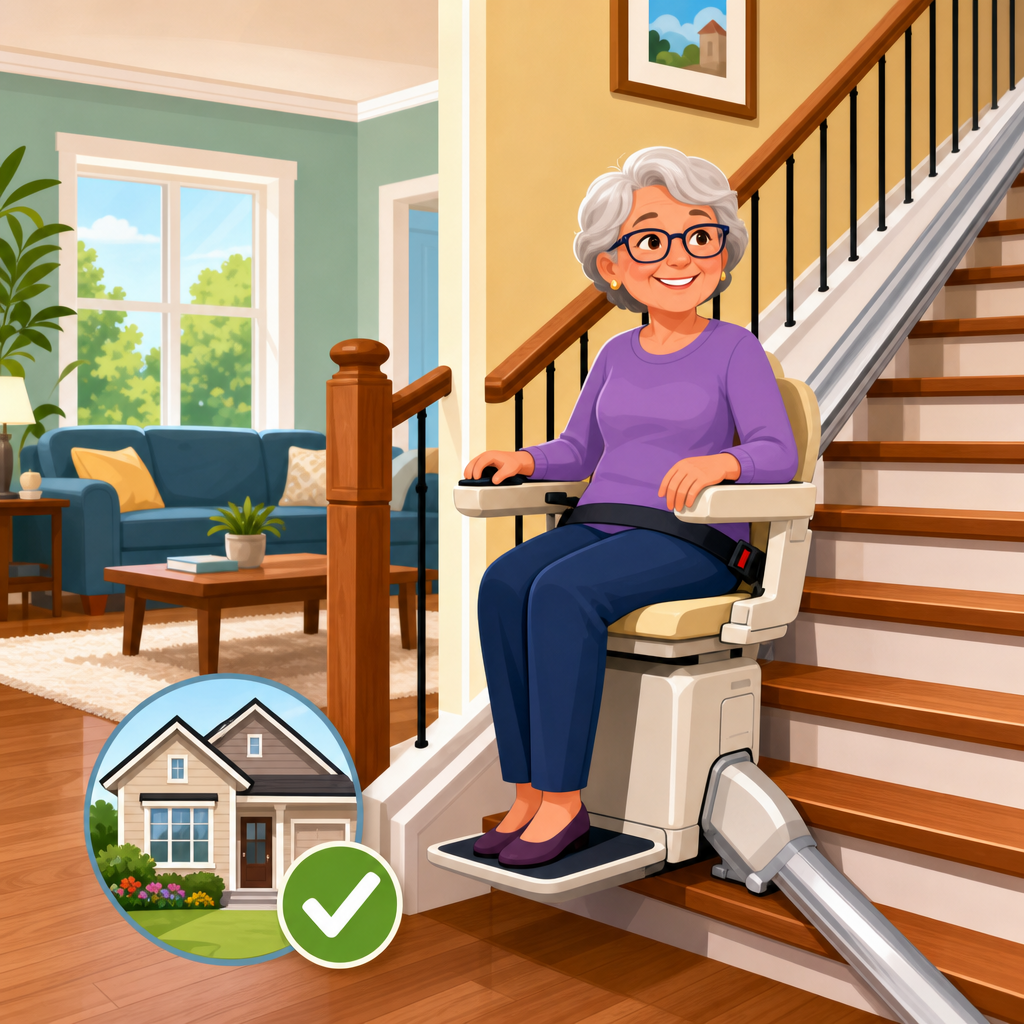
Chair lifts can often be deducted as a medical expense, but the answer depends on why the lift was installed, how it was used, and whether the cost meets Internal Revenue Service rules for medical care. For households balancing mobility needs with major home modification costs, understanding tax deductions for chair lifts can reduce the real financial burden and help families plan purchases with fewer surprises. In practice, I have seen buyers focus on the equipment price, then miss the documentation and timing steps that determine whether any tax benefit is actually available.
A chair lift, sometimes called a stair lift, is a motorized seat attached to a rail that carries a person up and down stairs. It is different from a home elevator and different from a patient transfer lift. For tax purposes, the key issue is not the product category but whether the expense is primarily for medical care. The IRS defines medical care in Section 213 of the Internal Revenue Code as amounts paid for the diagnosis, cure, mitigation, treatment, or prevention of disease, or for treatments affecting a structure or function of the body. Mobility equipment can fit that definition when it is prescribed or clearly necessary because of a medical condition.
This matters because stair lift costs are substantial. A straight stair lift commonly costs a few thousand dollars, while curved systems can run much higher due to custom rails, more complex installation, and service needs. If a taxpayer can treat part or all of that amount as a qualified medical expense, the deduction may offset some out-of-pocket cost. The issue is especially important for older adults aging in place, disabled veterans adapting homes after injury, and family caregivers coordinating safety improvements after a stroke, fall, spinal condition, or progressive neurological diagnosis.
Tax treatment also gets confusing because chair lifts sit at the intersection of medical expenses and home improvements. The IRS generally distinguishes between ordinary personal expenses and modifications made for medical reasons. Some capital improvements to a home qualify, but there is a major caveat: if the improvement increases the value of the home, the deductible medical expense is usually reduced by that increase in value. Certain items designed for people with disabilities may qualify in full when they do not materially add to property value. That is why stair lifts require careful analysis rather than a blanket yes or no answer.
As the hub for tax deductions and medical expenses under cost and financing options, this guide explains when chair lifts may be deductible, how to calculate the amount, what records to keep, how reimbursement affects the deduction, and where related topics fit into a broader financing plan. The goal is straightforward: help you decide whether your chair lift expense belongs on Schedule A, and if so, how to support the deduction with credible, organized evidence.
When a chair lift qualifies as a medical expense
A chair lift qualifies as a medical expense when its primary purpose is medical care for the taxpayer, spouse, or dependent. In plain terms, that means the lift is installed because someone has a diagnosed condition that makes stair use unsafe, painful, or functionally impossible. Common examples include severe arthritis, multiple sclerosis, Parkinson’s disease, post-surgical mobility restrictions, heart conditions that limit exertion, spinal cord injuries, and balance disorders. A physician’s recommendation is not explicitly required in every case, but in real audits it is one of the strongest pieces of evidence.
The intended user also matters. If the chair lift is mainly for general convenience, resale appeal, or future aging concerns without a current medical need, the expense is unlikely to qualify. By contrast, if a homeowner installs a stair lift after a knee replacement because climbing stairs would jeopardize recovery, the medical purpose is clear. The same logic applies if an adult child pays for a stair lift in a parent’s home and the parent qualifies as a dependent under tax rules. Dependency tests become important there, and they should be reviewed carefully before claiming the expense.
IRS Publication 502 is the practical starting point. It lists many capital expenses and home improvements that may qualify if their main purpose is medical care. While chair lifts are not always named directly, related accessibility modifications are clearly contemplated, including lifts and transportation-related adaptations. The governing standard is purpose and medical necessity, not marketing labels. In my experience, taxpayers are on firmer ground when they can show a doctor’s note, diagnosis records, mobility assessments, and invoices that specifically describe the installation as an accessibility modification.
How the deduction is calculated on your tax return
Even if a chair lift qualifies as a medical expense, not every dollar automatically lowers taxable income. Medical expenses are generally claimed as an itemized deduction on Schedule A, and only the amount that exceeds 7.5 percent of adjusted gross income is deductible. That threshold is critical. If your adjusted gross income is $80,000, the first $6,000 of qualified medical expenses produces no deduction. Only medical expenses above that number count. Therefore, a chair lift often provides the most tax value in a year when combined with other large healthcare costs such as surgery, long-term care, prescription drugs, hearing aids, or home health services.
Timing matters as well. You generally deduct medical expenses in the year they are paid, not necessarily when they are ordered or financed. If you put a stair lift on a credit card in December and pay the installer then, the expense is generally treated as paid that year. If you finance the lift through monthly payments, the deductible amount usually tracks what you actually paid during the tax year unless the financing arrangement is structured differently. Interest is usually not a medical expense, which is another reason to separate equipment cost from financing charges in your records.
Insurance reimbursements, veterans benefits, flexible spending arrangements, health savings accounts, and other tax-advantaged funding affect the calculation. You cannot deduct amounts that were reimbursed or paid with pre-tax dollars. If a nonprofit grant covers part of the installation, only your unreimbursed share remains potentially deductible. For homeowners who are piecing together several funding sources, this is where clean bookkeeping becomes essential.
| Scenario | Chair Lift Cost | Reimbursement | Potential Qualified Expense | Key Tax Note |
|---|---|---|---|---|
| Straight lift prescribed after stroke | $4,500 | $0 | $4,500 | Still subject to the 7.5% AGI threshold |
| Curved lift with $1,500 grant assistance | $12,000 | $1,500 | $10,500 | Only unreimbursed cost may count |
| Lift paid through HSA funds | $5,000 | $5,000 | $0 | No double tax benefit is allowed |
| Lift increases home value by $2,000 | $6,000 | $0 | $4,000 | Capital improvement rule may reduce deduction |
Home improvement rules and the home value test
The most misunderstood part of deducting chair lifts is the capital improvement rule. A stair lift is attached to the home, so the IRS may treat it as a capital expense rather than a simple medical supply. When that happens, the deductible medical expense is generally the cost of the improvement minus any increase in the value of the property. For example, if a lift costs $7,000 and increases the home’s fair market value by $1,500, the potential medical expense is reduced to $5,500. If the improvement adds no value, the full cost may qualify.
In many cases, chair lifts do not significantly increase market value because they are specialized accessibility devices tailored to a particular user and staircase. Some buyers may even view them as something they plan to remove. That practical market reality can help support a claim that the installation did not materially enhance property value. Still, taxpayers should avoid assumptions. If the amount is large, a written appraisal or broker opinion before and after installation can strengthen the file, especially for custom curved lifts that are permanently mounted.
There is nuance here. Repairs and maintenance directly related to the medical equipment, such as service calls, replacement batteries, or rail adjustments, may also be medical expenses if they are necessary to keep the lift operating for the person’s medical use. However, broader remodeling around the staircase, repainting unrelated areas, or cosmetic upgrades made at the same time are personal home costs, not medical deductions. Keeping invoices separated by scope of work makes the return much easier to defend.
Documentation that supports a defensible deduction
If you claim a chair lift as a medical expense, documentation should tell a consistent story. The strongest file includes a physician letter stating the medical condition and why the lift is needed, the installer contract, proof of payment, product specifications, permit records if required locally, and any assessments from occupational therapists or aging-in-place specialists. I also recommend saving photos of the staircase before and after installation and a brief personal timeline noting the diagnosis, falls, surgery, or functional decline that led to the purchase. Those details are persuasive because they connect the tax claim to a real health event.
Invoices should be itemized. Ask the dealer or contractor to separate the lift equipment, installation labor, electrical work, structural changes, service plans, and financing charges. This helps determine which amounts are potentially medical and which are not. It also helps if the taxpayer later removes the lift, relocates it, or seeks reimbursement from a state assistive technology program. Clean records support multiple decisions beyond taxes.
For high-cost projects, a tax professional may suggest obtaining a statement on home value impact. That does not always require a full formal appraisal, but some objective support is wise when the deduction is substantial relative to income. The burden is on the taxpayer to substantiate the expense, and reconstruction after an audit notice is much harder than building a complete file at the time of purchase.
Related expenses, common mistakes, and planning opportunities
Chair lifts rarely exist in isolation. Many households also incur costs for ramps, grab bars, widened doorways, accessible bathrooms, hospital beds, walkers, wheelchairs, in-home caregiving, and transportation to treatment. As the hub page for tax deductions and medical expenses, this is the central point: these related costs should be reviewed together because bundling them in one tax year may push total medical expenses above the 7.5 percent threshold. Strategic timing can matter. If elective work can reasonably be scheduled in the same year as a major surgery or long-term care start date, the deduction may become more meaningful.
The most common mistakes are claiming reimbursed amounts, forgetting the AGI threshold, failing to itemize, and assuming every accessibility upgrade is fully deductible. Another frequent error is relying on a sales representative’s statement that “this is tax deductible” without consulting Publication 502 or a qualified tax advisor. Dealers know products; they do not determine tax law. On the other hand, many taxpayers are too conservative and fail to claim legitimate expenses because they assume home modifications are always personal. The law is more favorable than that when medical necessity is clear and records are strong.
State tax treatment may differ from federal rules, and some states offer additional programs for older adults or people with disabilities. Veterans may also have access to housing adaptation grants through the Department of Veterans Affairs, such as Specially Adapted Housing or Home Improvements and Structural Alterations benefits in qualifying situations. Those programs can lower out-of-pocket cost, but any reimbursement must be accounted for before calculating a deduction. The best approach is coordinated planning: review grants, insurance, assistive technology loan programs, financing terms, and possible tax treatment before signing the contract.
In the end, chair lifts can be deductible as a medical expense when they are installed primarily to address a documented medical need and when the taxpayer properly applies the IRS rules for unreimbursed medical costs and capital improvements. The core questions are simple: Was the lift medically necessary, who paid for it, was any amount reimbursed, did it increase the home’s value, and do total medical expenses exceed the deduction threshold? When those questions are answered carefully, the tax result becomes much clearer.
For families comparing mobility solutions, the main benefit of understanding these rules is better decision-making. A chair lift is not only a safety device; it is also a financial event that touches taxes, grants, financing, and long-term home planning. Good documentation, realistic expectations, and early advice from a tax professional can turn a confusing expense into a well-supported deduction strategy. Use this hub as your starting point, then review your records, total your medical costs, and confirm the numbers before filing.
Frequently Asked Questions
Can you deduct a chair lift as a medical expense on your taxes?
Yes, a chair lift can often qualify as a deductible medical expense if it is installed primarily for a medical reason rather than for convenience, comfort, or general home improvement. The Internal Revenue Service generally allows deductions for costs paid for the diagnosis, cure, mitigation, treatment, or prevention of disease, as well as for equipment that affects a structure in a way that accommodates a medical condition. In practical terms, that means a stair lift or chair lift may be deductible when it is necessary to help a person with limited mobility safely access different levels of the home.
The key issue is medical necessity. If the lift is installed because a taxpayer, spouse, or dependent has a documented condition that makes stairs unsafe or unusable, the expense is much more likely to qualify. If it is installed simply to make life easier, to age in place without any specific diagnosis, or to increase home convenience, the deduction becomes much harder to support. Taxpayers also need to remember that medical expenses are typically deductible only if they are itemized and only to the extent total qualified medical expenses exceed the applicable adjusted gross income threshold for the tax year. So even when the chair lift itself qualifies, the tax benefit depends on the household’s full medical-expense picture.
What makes a chair lift medically necessary in the eyes of the IRS?
A chair lift is generally considered medically necessary when there is a clear health-related reason for the installation and that reason can be supported by records. Common examples include severe arthritis, neurological disorders, paralysis, recovery from a major injury, heart or lung conditions that make climbing stairs dangerous, or other mobility impairments that substantially limit the person’s ability to move safely through the home. The stronger the connection between the medical condition and the need for the lift, the stronger the deduction position usually is.
Although tax rules do not always require a formal prescription in every situation, obtaining a written recommendation or letter of medical necessity from a physician is one of the smartest steps a taxpayer can take. That document should explain the condition, describe why stairs present a medical problem, and state that the chair lift is needed to accommodate the condition. Buyers often concentrate on the equipment price and installation date, then overlook the paperwork that proves why the purchase was made. That missing documentation can become a problem later if the deduction is questioned. In addition to a doctor’s letter, it helps to keep invoices, proof of payment, installation contracts, and any accessibility assessments that show the lift was installed to address a real medical limitation.
Is the full cost of a chair lift deductible, including installation, repairs, and related home modifications?
Often, the cost of the chair lift itself and its installation can qualify as a medical expense if the project is medically necessary. In many cases, related costs that are directly tied to making the lift functional and safe may also be included. That can potentially cover electrical work, track installation, seat or safety upgrades required for the patient’s condition, and limited structural modifications needed to accommodate the equipment. The basic rule is that the expense must be directly connected to medical care or to accommodating a disability.
However, there is an important tax wrinkle when the improvement increases the value of the home. For capital improvements made for medical purposes, the deductible amount may have to be reduced by any increase in the property’s fair market value. For example, if a medically necessary chair lift and related work cost $12,000, but the project increases the home’s value by $3,000, only $9,000 may be treated as a medical expense. In many cases, specialized accessibility equipment adds little or no market value, but that should not simply be assumed without support. Repairs and maintenance may also be deductible if they are needed to keep the medically necessary equipment operating, though they should be clearly documented and tied to the original qualifying medical purpose. Because this area can become fact-specific, taxpayers with large projects often benefit from discussing the details with a tax professional before filing.
What documentation should you keep if you plan to deduct a chair lift?
Good documentation is one of the most important parts of claiming a chair lift as a medical expense. At a minimum, you should keep the sales invoice, installation contract, receipts, canceled checks or credit card statements, and any warranty or service agreements. You should also retain medical records that show the condition requiring the lift, along with a doctor’s note or letter stating that the lift was recommended or required for medical reasons. If there were multiple bids, assessments, or contractor proposals, keep those too, especially if they explain why the chosen installation was necessary for accessibility or safety.
It is also wise to maintain records showing whether the installation increased the home’s value, since that can affect the deductible amount. This could include an appraisal, contractor commentary, or other valuation support if appropriate. If you later pay for repairs, replacement parts, or service calls, save those records separately and note how they relate to the original medically necessary equipment. Many taxpayers lose potential deductions not because the purchase fails the medical test, but because they cannot produce a clear paper trail showing what was bought, why it was needed, who needed it, and how much was actually paid out of pocket. Organized records make it much easier to support the deduction if questions arise.
Can you deduct a chair lift if it is used by an elderly family member or installed for aging in place?
Possibly, but age alone is not enough. A chair lift installed for an elderly family member can qualify if that person has a medical condition that makes the lift necessary and if the person is the taxpayer, the taxpayer’s spouse, or a qualifying dependent under tax rules. The fact that someone is older or prefers not to use stairs does not by itself make the expense deductible. The IRS focuses on whether the installation was made to treat or accommodate a specific medical condition, not simply to make the home more comfortable for later years.
This distinction matters a great deal for families planning ahead. If the lift is installed as a preventive convenience before any documented mobility limitation exists, the deduction is less likely to hold up. If, on the other hand, the family member has a diagnosed condition and the chair lift is installed to reduce fall risk, preserve access to essential living areas, or allow safe movement through the home, the case for deduction is much stronger. The dependent-status issue matters too. If the person using the chair lift is not the taxpayer, spouse, or qualifying dependent, the expense may not be deductible even if the medical need is real. Because these situations often involve both tax and caregiving considerations, families should confirm eligibility, gather medical support before installation when possible, and review the deduction with a qualified tax adviser.