State tax credits for accessibility renovations can reduce the cost of making a home safer, more usable, and more valuable for people with disabilities, older adults, and family caregivers. In practice, these incentives vary widely by state, but they generally reward spending on qualified modifications such as ramps, widened doorways, roll-in showers, stair lifts, lower countertops, grab bars, non-slip flooring, and other improvements that remove barriers. A tax credit directly lowers tax liability dollar for dollar, while a tax deduction reduces taxable income, and a medical expense deduction may apply when a renovation is primarily for medical care and does not increase the property’s value. I have helped homeowners organize receipts, contractor scopes, and physician documentation for these projects, and the same pattern appears repeatedly: people focus on the construction budget first, then realize too late that financing strategy and tax treatment can materially change net cost. That is why this topic matters. Accessibility work is often urgent, expensive, and emotionally tied to independence. Understanding state tax credits for accessibility renovations, related tax deductions, and medical expense rules helps households compare funding sources, avoid documentation mistakes, and plan renovations in the right tax year.
This article serves as a hub within cost and financing options, with special attention to tax deductions and medical expenses. The central question is straightforward: which accessibility renovations may qualify for a state tax credit, and how do those credits interact with federal medical expense deductions, health savings accounts, flexible spending arrangements, and other financing tools? The answer depends on who uses the home, why the renovation is necessary, how the state defines a qualifying expenditure, and whether a physician or occupational therapist has documented functional need. Some states offer credits aimed at universal design, aging in place, or disability access; others provide deductions, sales tax exemptions, property tax relief, or no targeted incentive at all. Because programs change, the safest approach is to treat every project as both a construction job and a compliance file: define the medical or functional purpose, obtain itemized invoices, preserve proof of payment, and verify the current state rules before work begins. Done correctly, tax planning can turn a necessary renovation into a more manageable investment.
What counts as an accessibility renovation for tax purposes
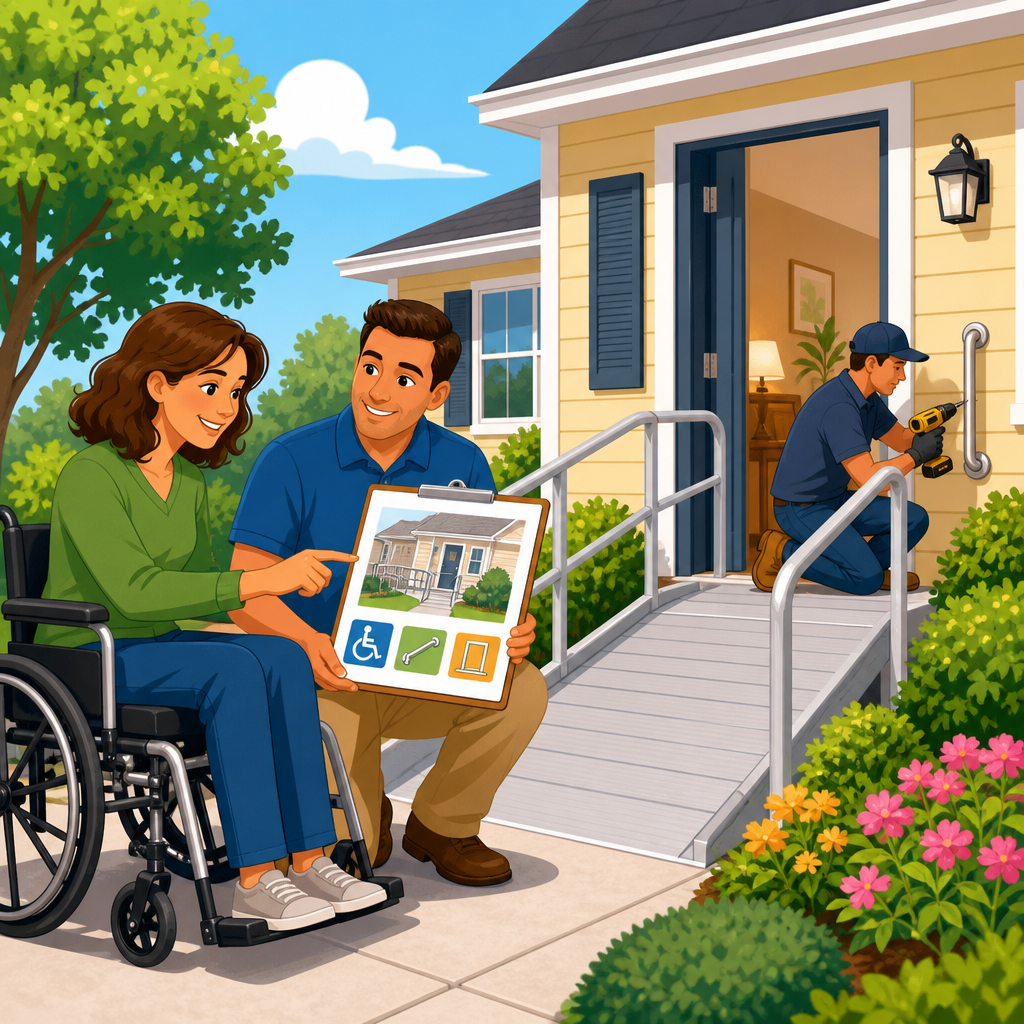
An accessibility renovation is a permanent or semi-permanent change that improves access, mobility, safety, or independent use of a home for a person with a disability or a chronic medical condition. Common examples include zero-step entries, threshold removal, hallway widening to at least thirty-six inches, lever handles, accessible sinks with knee clearance, curbless showers, comfort-height toilets, transfer space beside fixtures, handrails on both sides of stairs, and exterior pathway improvements. From a tax standpoint, the key distinction is not whether a feature feels helpful, but whether it can be documented as related to functional limitations or medical care. Cosmetic upgrades generally do not qualify. Replacing a bathtub with a roll-in shower may qualify; replacing builder-grade tile with luxury imported tile usually will not. Installing a residential elevator for a wheelchair user may qualify if necessity is documented; adding an elevator as a prestige feature usually will not. Precision matters because tax agencies and preparers look for purpose, not marketing language.
I advise homeowners to request bids that separate eligible accessibility items from general remodeling work. If a contractor combines demolition, plumbing relocation, decorative finishes, and accessibility hardware into one lump sum, later tax support becomes weaker. An itemized scope should list, for example, grab bar blocking, ADA-informed fixture placement, anti-scald valves, slip-resistant flooring coefficient, and door hardware substitutions. Those details help establish that the project was built to address access needs rather than to refresh the room. This is especially important when a state tax credit has a cap or limited categories. It also supports any federal medical expense claim, where the Internal Revenue Service generally allows costs of home improvements made for medical care, subject to rules about increased property value. Homeowners who document the accessibility function at the beginning almost always have cleaner filings at year end.
How state tax credits work and where to verify eligibility
State tax credits for accessibility renovations are not standardized. Some states create a nonrefundable income tax credit for a percentage of qualified expenditures; others cap credits at a fixed dollar amount per year or require preapproval. A few states tie eligibility to age, disability status, veteran status, or income thresholds. There may also be credits directed at landlords, small businesses, or employers rather than owner-occupants, so reading the exact statute matters. The most reliable sources are the state department of revenue, state housing finance agency, and state unit on aging or disability services office. Secondary summaries can be useful for screening, but they go out of date quickly. I have seen clients rely on old blog posts describing a credit that had expired two years earlier. Verification should happen before signing a contract, because some states require an application, assigned certificate number, or approved contractor category before costs are incurred.
When evaluating a state credit, focus on five operational questions. First, what improvements are explicitly covered? Second, who may claim the credit: the homeowner, the person with the disability, a caregiver, or all of them under certain conditions? Third, is the credit refundable, nonrefundable, or carried forward to future tax years? Fourth, what documentation is required: physician certification, proof of disability benefits, building permits, paid invoices, photographs, or proof that the property is a primary residence? Fifth, how does the state treat overlapping subsidies? Some programs reduce eligible expenses by grant amounts or insurance reimbursement. If the state offers no direct credit, look for adjacent relief such as sales tax exemptions on mobility equipment, property tax abatements for disabled veterans, assistive technology loan programs, or weatherization and housing rehabilitation grants that can be paired with accessibility goals.
| Question to verify | Why it matters | Typical documents |
|---|---|---|
| Eligible renovation category | Defines whether ramps, lifts, bathrooms, or entrances qualify | Contractor scope, product specifications |
| Who can claim | Determines whether owner, dependent, or caregiver may file | Tax return, residency proof, dependency records |
| Credit structure | Affects actual savings and timing of benefit | State forms, carryforward worksheets |
| Medical necessity standard | Strengthens support for disability-related improvements | Physician letter, occupational therapy assessment |
| Interaction with grants | Prevents double counting and audit issues | Grant award letters, reimbursement statements |
Tax deductions and medical expenses: the rules homeowners miss
The federal medical expense deduction is often the most misunderstood part of accessibility financing. Generally, medically necessary home improvements may be deductible as medical expenses if they are primarily for medical care for the taxpayer, spouse, or dependent. The common examples recognized in tax guidance include constructing entrance or exit ramps, widening doorways and hallways, installing railings or support bars, modifying bathrooms, lowering kitchen cabinets, moving electrical outlets, modifying fire alarms and smoke detectors, and adding lifts when medically required. However, there is an important limitation: if the improvement increases the value of the property, only the cost above that increase may count as a medical expense. If a $30,000 renovation raises the home’s value by $10,000, the potentially deductible portion is usually $20,000, assuming all other requirements are met. Certain operating and maintenance costs for medically necessary equipment may also qualify.
Another major limitation is the adjusted gross income threshold for itemized medical expenses on a federal return. Taxpayers can generally deduct qualifying unreimbursed medical expenses only to the extent they exceed 7.5 percent of adjusted gross income. That means smaller projects may produce no federal deduction if total medical costs do not clear the threshold. This is why bundling medically necessary expenses into one tax year can be strategic. If a household expects surgery, therapy, durable medical equipment purchases, and a bathroom conversion in the same year, itemizing may become much more advantageous. State income tax treatment may differ from federal rules, and some states have their own medical deduction calculations, so review both systems together. Homeowners should also remember that expenses paid with tax-advantaged dollars from an HSA or FSA cannot usually be deducted again. Double benefits are not allowed, and clean tracking is essential.
Documentation that makes or breaks a claim
Good documentation is the difference between a supported tax position and a weak one. The best file starts with a physician letter or medical necessity statement describing the diagnosis or functional limitation and explaining why the renovation is needed. For mobility-related projects, an occupational therapist home assessment is especially valuable because it translates clinical need into design requirements. A strong assessment may specify turning radius, transfer clearance, recommended fixture heights, ramp slope, handrail placement, lighting needs, and fall-risk hazards. That level of detail aligns the tax claim with the construction scope. Next, keep signed contracts, change orders, canceled checks, card statements, invoices marked paid, permit records, inspection approvals, before-and-after photographs, and manufacturer cut sheets for specialized products such as stair lifts or accessible bathing systems. If a project includes both medical and nonmedical work, insist on separated line items.
I also recommend obtaining a real estate appraisal when the project is large enough that property value impact could affect the medical expense deduction. Tax guidance often hinges on whether an improvement increased market value, and an appraiser can provide support that barrier-removal changes added little or no value beyond specialized utility. For example, a ramp with institutional dimensions or a highly customized wheelchair shower may not contribute to broad market appeal in the same way a luxury bathroom remodel would. That distinction can materially affect deductible amount. Keep all records for the standard tax retention period used by your preparer, and longer if state carryforwards are involved. Finally, ask your CPA or enrolled agent to review the project before filing, not after. Accessibility renovation tax treatment is fact specific, and it is far easier to structure documentation proactively than to reconstruct it under audit pressure.
How to combine credits, deductions, and other funding sources
The lowest net cost usually comes from stacking programs correctly. Start with nonrepayable funds such as state grants, Medicaid waiver home modifications where available, veterans’ housing adaptation benefits, or local rehabilitation assistance. Then evaluate whether any remaining out-of-pocket cost qualifies for a state tax credit. After that, analyze whether the unreimbursed portion may also support a federal or state medical expense deduction, remembering that reimbursed amounts and tax-advantaged account distributions affect the calculation. HSA and FSA funds can be excellent for portions of a project that clearly qualify as medical expenses, especially equipment and smaller modifications, because they convert eligible costs into pretax spending. For larger projects, a home equity line of credit, cash-out refinance, rehabilitation loan, or contractor financing may bridge timing gaps until a tax benefit is realized. The right sequence avoids disallowed overlap and improves cash flow.
Consider a practical example. A homeowner spends $24,000 on a wheelchair-accessible bathroom and entry ramp. A local grant covers $6,000. The state offers a nonrefundable credit equal to 25 percent of qualified unreimbursed costs up to a cap, producing a $4,500 credit. The remaining unreimbursed amount is $13,500. If the bathroom conversion is medically necessary and the homeowner itemizes deductions, some or all of that remaining amount may contribute to a medical expense deduction, subject to the adjusted gross income threshold and any increase in property value. If the homeowner had instead paid $5,000 of the project from an HSA, that $5,000 would not also be deductible. This layered analysis is why tax planning should happen before funding decisions are locked in. The subtopic of tax deductions and medical expenses is not separate from renovation budgeting; it is a core part of deciding what is affordable.
Common mistakes, limitations, and planning tips
The most common mistake is assuming every accessibility improvement automatically qualifies for tax relief. Eligibility is narrower than most people expect. A second mistake is missing timing rules. Some credits apply only in the year the expense is paid, not when work starts, and carryforward provisions vary. Third, homeowners often fail to distinguish between durable medical equipment and permanent improvements. A portable patient lift, for example, may be handled differently from a permanently installed ceiling track lift. Fourth, many people forget landlord and tenant scenarios. If an adult child pays to modify a parent’s home, the tax treatment may differ depending on dependency status, ownership, and who is legally obligated for the expense. Fifth, homeowners underestimate permit and code issues. A poorly built ramp with the wrong slope or missing landings can create safety risk and weaken the factual basis for a medical necessity claim. Using licensed contractors and code-compliant designs is not optional.
Planning tips are straightforward. Confirm the state program first, obtain clinical documentation second, and design the project around documented functional needs rather than resale trends. Ask contractors for accessibility-specific line items, and if you are renovating a bathroom or kitchen, separate decorative upgrades from medical modifications. Coordinate with a CPA before choosing payment sources. If you expect large medical costs, map them by tax year to evaluate itemizing. If your state has no direct credit, do not stop there; search for property tax relief, assistive technology loans, utility-sponsored smart-home accessibility rebates, and nonprofit funding. Most important, preserve a paper trail that tells a coherent story from diagnosis to design to payment. State tax credits for accessibility renovations are valuable, but they work best when treated as one part of a broader financing strategy that includes tax deductions and medical expenses, not as a standalone solution.
Accessibility renovations are about more than construction. They protect independence, reduce fall risk, support caregiving, and often prevent costlier institutional care. The financial side deserves the same rigor as the design side. State tax credits for accessibility renovations can meaningfully reduce out-of-pocket cost, but only when homeowners verify current program rules, document medical or functional necessity, and coordinate credits with deductions, grants, and tax-advantaged accounts. The biggest takeaway is simple: know the difference between a credit, a deduction, and a medical expense claim, because each changes the math in a different way. A credit lowers tax owed directly, a deduction lowers taxable income, and a medical expense deduction has additional thresholds and valuation rules that many households overlook.
As the hub for tax deductions and medical expenses within cost and financing options, this page should be your starting point before any accessibility project begins. Build a documentation file, talk with your tax professional, and verify your state’s current rules through official agencies. Then move to the related articles on medical necessity letters, combining grants with tax benefits, and funding accessible bathroom and entry modifications. Careful planning turns a complex process into a manageable one, and it can make essential home changes financially possible. Start your eligibility review before signing the contract.
Frequently Asked Questions
What are state tax credits for accessibility renovations, and how do they work?
State tax credits for accessibility renovations are incentives offered by certain states to help offset the cost of modifying a home to improve safety, mobility, and daily usability. Unlike a tax deduction, which reduces taxable income, a tax credit directly lowers the amount of state income tax you owe. That difference matters because a credit can provide a dollar-for-dollar reduction in tax liability, making it one of the more valuable forms of financial relief for homeowners, caregivers, and families supporting someone with a disability or age-related mobility limitations.
These programs vary significantly from one state to another. Some states provide a percentage-based credit tied to qualified renovation expenses, while others may cap the credit at a specific dollar amount. Eligibility rules can also differ. In some cases, the credit may be available only for a primary residence. In others, it may be limited to households below certain income thresholds, older adults, veterans, or people with documented disabilities. Some programs are refundable, meaning you may receive the remaining amount even if the credit exceeds your tax owed, while many are nonrefundable and can only reduce your tax bill to zero.
In practical terms, the process usually starts with identifying a qualifying accessibility project, completing the work, keeping detailed records, and then claiming the credit when you file your state tax return. Because state rules are highly specific, it is important to confirm eligible expenses, annual limits, documentation requirements, and filing deadlines before beginning a project. Checking your state department of revenue website, consulting a tax professional, and reviewing any related housing or disability assistance programs can help you understand exactly how the credit applies in your situation.
What home improvements typically qualify for a state accessibility renovation tax credit?
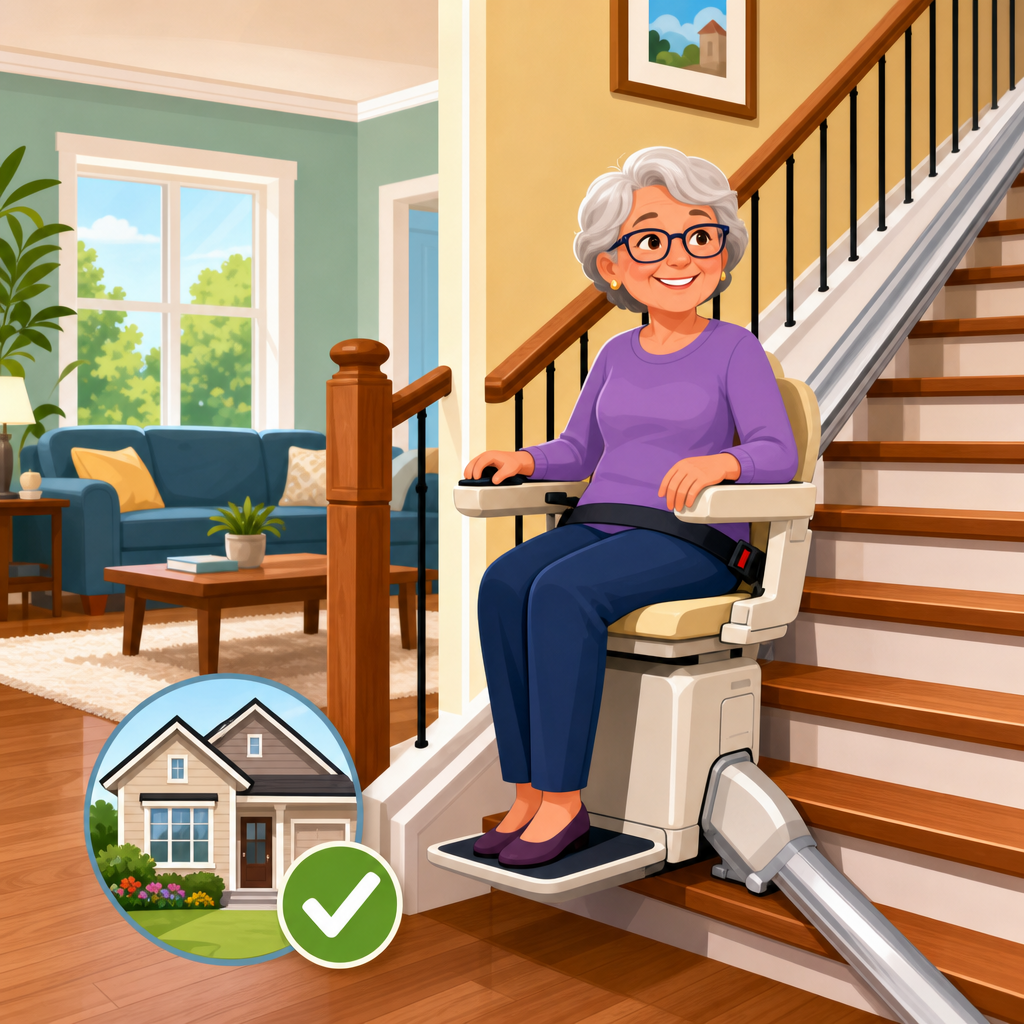
Qualified improvements generally include modifications that remove barriers and make a home safer and more functional for someone with mobility, balance, sensory, or other physical limitations. Common examples include wheelchair ramps, widened doorways and hallways, roll-in or curbless showers, grab bars, stair lifts, porch lifts, handrails, lowered sinks or countertops, accessible toilets, lever-style door handles, and non-slip flooring. In many cases, modifications to improve access into and throughout the home are the core focus of these programs.
That said, not every renovation automatically qualifies simply because it appears helpful. States often distinguish between medically or functionally necessary modifications and general home improvements. For example, replacing standard flooring with non-slip flooring in a bathroom used by someone with limited mobility may qualify, while a broader cosmetic flooring upgrade throughout the home may not. Likewise, a lowered kitchen work area designed for wheelchair access may be eligible, but a full luxury kitchen remodel usually would not be unless the qualifying accessibility components are clearly separated and documented.
Some states may also require that the renovation be specifically intended to accommodate a resident with a disability or an older adult aging in place. Others may require a physician’s statement, occupational therapist recommendation, contractor certification, or proof that the installation meets accessibility-related standards. Because definitions of “qualified expenses” can be narrow, it is wise to request itemized invoices and ask in advance whether labor, design fees, permits, equipment, and installation costs are covered. The more clearly the project is tied to accessibility and documented as such, the stronger your claim is likely to be.
Who is eligible to claim a state tax credit for accessibility renovations?
Eligibility depends on the state program, but the credit is commonly designed for homeowners who make accessibility improvements for themselves, a spouse, a dependent, or another qualifying household member. In some states, older adults and people with disabilities are the primary intended beneficiaries. In others, family caregivers may also qualify if they are paying for modifications that allow a loved one to live more safely and independently at home. Certain programs may even extend to landlords who retrofit rental units for accessibility, although those rules are typically more limited and program-specific.
Residency and ownership status usually matter. Many states restrict the credit to owner-occupied primary residences, which means second homes, vacation properties, and investment properties may not qualify. Income thresholds may also apply, especially where the credit is intended to support moderate-income households. Some programs require that the person benefiting from the renovations meet a legal or medical definition of disability, while others are broader and include age-based accessibility needs. Veterans, households caring for injured family members, and people transitioning from hospital or rehabilitation care may also be covered under certain state-specific rules.
Because tax credits are tied to state law, the exact requirements can be highly technical. Before assuming you qualify, review whether the credit depends on age, disability status, filing status, adjusted gross income, property type, or the timing of the renovation. If multiple people contributed to the cost, ask whether the credit can be split or whether only the person listed as the property owner or taxpayer can claim it. A state revenue department, tax preparer, or benefits counselor can help you verify eligibility before you commit to the project or file your return.
What documentation do I need to keep when claiming an accessibility renovation tax credit?
Good documentation is essential because accessibility credits are often claimed based on specific, verifiable expenses. At a minimum, you should keep itemized invoices from contractors and suppliers, proof of payment such as canceled checks or credit card statements, signed contracts, permit records if applicable, and before-and-after descriptions of the work performed. Itemization is especially important when a larger remodel includes both qualifying and non-qualifying expenses, since the state may allow only the accessibility-related portion of the total cost.
Depending on the state, you may also need supporting evidence showing that the renovation was necessary for accessibility. That can include a physician’s letter, disability documentation, an occupational therapist’s recommendation, or a written explanation of how the modification improves access, mobility, or safety for a specific resident. For example, if you install a roll-in shower or stair lift, it helps to have paperwork connecting the project to the resident’s physical needs rather than relying solely on the description in a contractor invoice. Some states may also require product specifications, manufacturer information, or certification that equipment was professionally installed.
When it is time to file, you may need to complete a special state tax form and attach schedules or statements that summarize the qualified costs. Even if your state does not require every document to be submitted with the return, keep all records in case of questions or an audit later. Organizing paperwork in a dedicated folder from the start of the project can save time and reduce mistakes. If you are coordinating the renovation with other assistance such as grants, insurance reimbursements, or local housing programs, keep records of those amounts as well, since they may reduce the expenses eligible for the credit.
Can I combine a state tax credit with federal tax benefits, grants, or other financial assistance for accessibility upgrades?
In many cases, yes, but the interaction between programs needs to be handled carefully. A state tax credit may be used alongside other sources of assistance such as local grants, nonprofit funding, veterans’ housing benefits, Medicaid waiver programs, or certain federal tax provisions, depending on the rules. However, you usually cannot claim a tax benefit twice on the same out-of-pocket dollar. If part of the renovation cost was reimbursed by a grant, insurer, or assistance program, that reimbursed amount may not be eligible for the full state credit.
Federal tax treatment can add another layer. Some accessibility modifications may qualify as medical expenses for federal tax purposes if they are primarily for medical care and meet IRS rules. That does not automatically prevent you from claiming a state credit, but you should make sure the calculations are consistent and that you are following each program’s instructions on how to account for reimbursements, increases in home value, and qualified medical necessity. The details can get complicated quickly, especially if the project includes structural changes, specialized equipment, or multiple funding sources.
The smartest approach is to plan before construction begins. Ask each program administrator or your tax advisor how benefits can be coordinated, whether there are ordering rules, and which documents you will need to preserve. In some situations, combining a state credit with grants or federal tax relief can substantially reduce the net cost of a renovation. In others, the total benefit may be limited by funding caps, tax liability, or anti-duplication rules. A little upfront planning can help you maximize the assistance available while staying fully compliant with state and federal requirements.