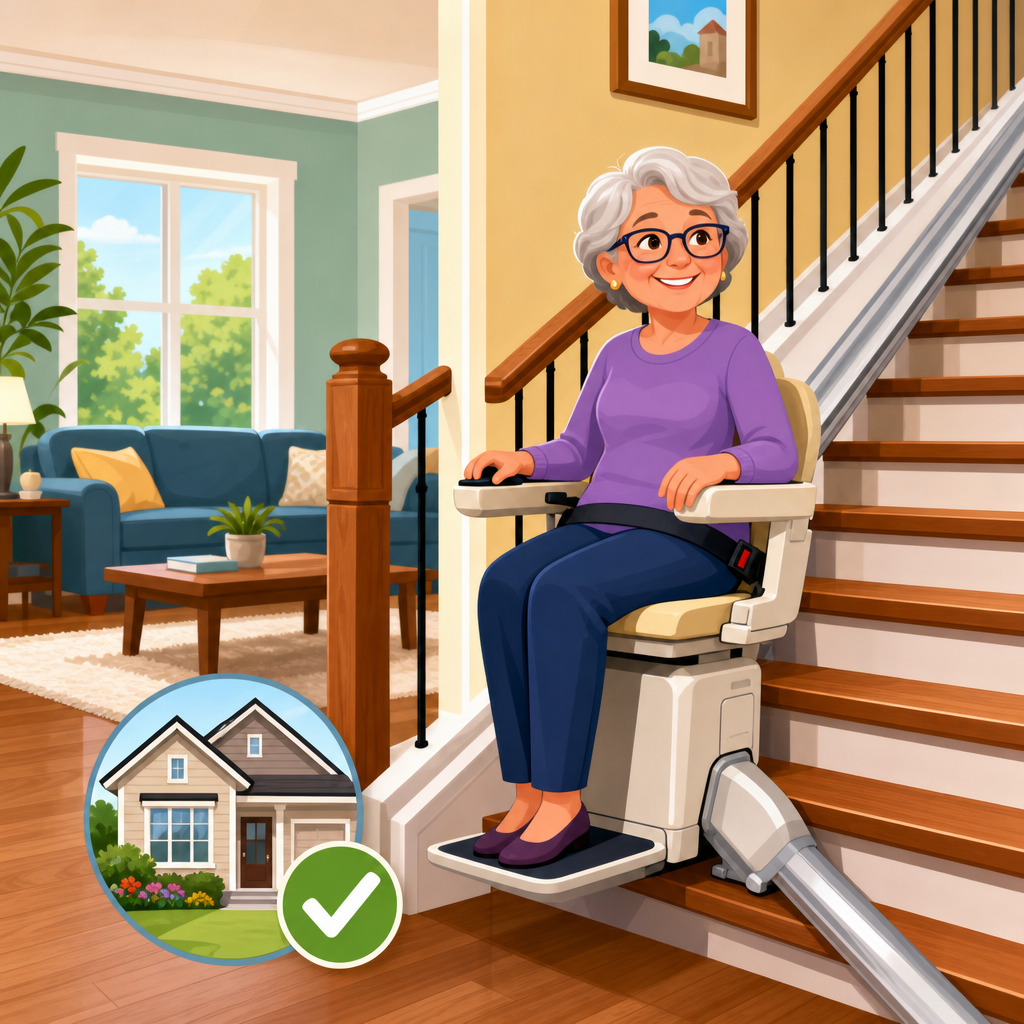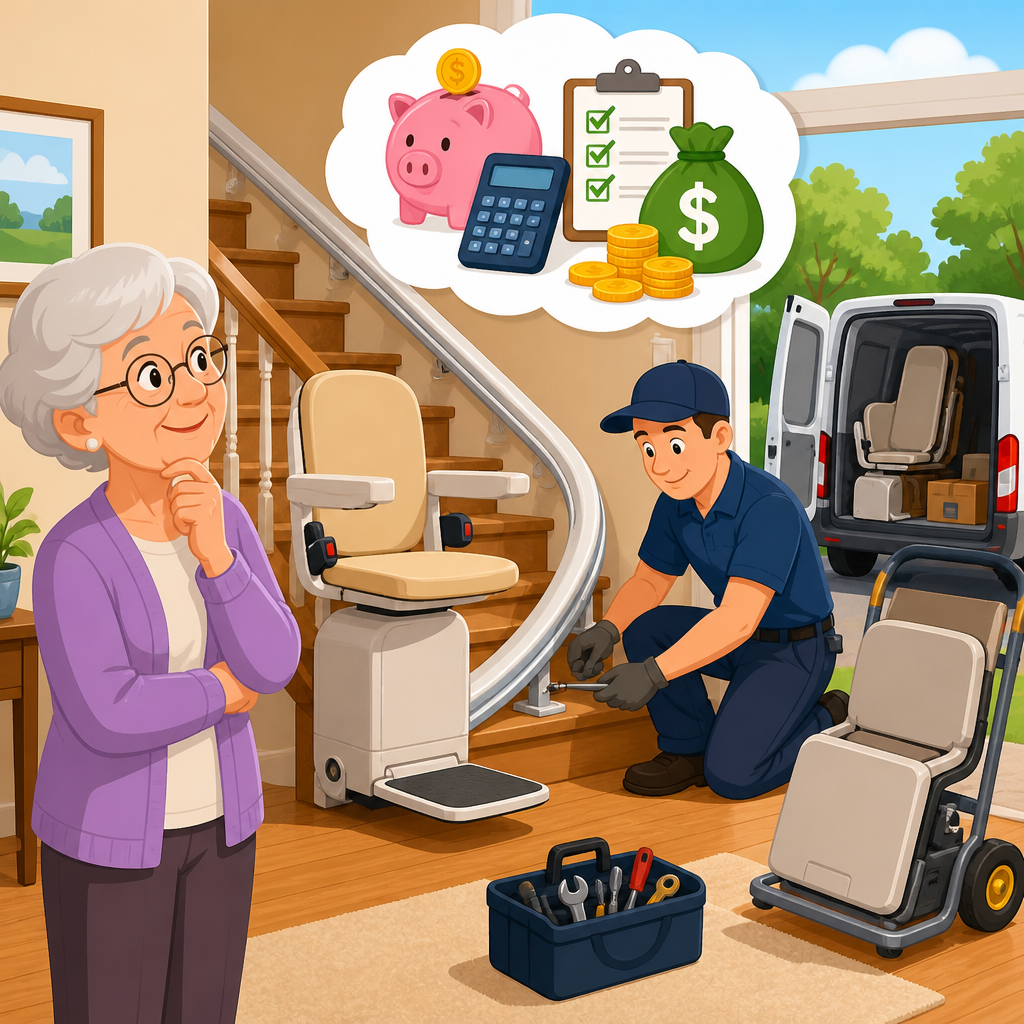
Stair lift rental installation and removal fees are often the least understood part of the total cost, yet they can make the difference between an affordable short-term mobility solution and a surprisingly expensive commitment. A stair lift rental lets someone use a motorized chair or perch attached to a rail on an existing staircase for a limited period, usually month to month, instead of buying the equipment outright. Installation fees cover the technician visit, rail fitting, testing, safety setup, and basic user instruction. Removal fees cover uninstalling the rail and chair, patching minor marks if included, and transporting the unit away. Because this article sits within the broader cost and financing conversation, it also needs to answer the larger question people actually ask: when does renting make more sense than purchasing? In my experience reviewing quotes for families, discharge planners, and older homeowners, the answer depends less on the advertised monthly rate and more on the structure of one-time charges, staircase type, expected duration of use, and whether the unit is straight or curved.
That matters because stair lifts are usually bought during stressful moments: after a fall, before surgery, during hospice planning, or when an aging parent wants to stay in the home without moving a bedroom downstairs. In those moments, people compare a rental ad that sounds inexpensive with a purchase quote that looks high, but they are not always comparing equivalent services. Some dealers include installation in the monthly rental price; others charge a separate setup fee that can range from a few hundred dollars to well over a thousand, especially when a temporary curved solution is involved. Removal may be included in the contract, billed at a flat rate, or waived only if minimum rental terms are met. Understanding what is usually charged helps you judge quotes correctly, budget for the full term, and avoid paying for convenience features or service add-ons that you do not need.
What stair lift rental installation fees usually include
For a standard straight stair lift rental, the most common charge structure is a one-time installation or setup fee plus an ongoing monthly rental fee. In many U.S. markets, straight stair lift setup typically falls around $300 to $1,500, with monthly rental rates often landing between $150 and $300. The wide range exists for practical reasons. A simple, indoor, straight staircase with adequate width, a nearby power source, and no unusual landings takes less labor and less rail than a narrow staircase with a folding hinge, overrun, or parking position at the bottom. Most installation fees cover an in-home assessment, delivery, mounting brackets secured to stair treads rather than the wall, rail assembly, seat attachment, battery charging check, limit switch testing, and a demonstration of seat swivel, seat belt use, footrest folding, and call-send controls.
Families should ask whether the quoted installation fee also includes permit review where applicable, basic warranty coverage during the rental term, and return visits for initial adjustments. Reputable providers generally include ordinary wear-related service in the monthly rental, particularly for battery-powered straight units from established brands such as Bruno, Harmar, Stannah, or Access BDD. However, inclusion policies vary by dealer, because many local companies are independent resellers rather than factory-owned branches. I have seen one dealer advertise a low monthly rate but then add separate charges for measuring, delivery outside normal service areas, and the first service call after installation. Another included all of that in a higher setup fee, which made the quote easier to compare and, in the end, cheaper for a three-month rental. The practical lesson is simple: installation is not just labor; it is the bundle of site preparation, travel, configuration, testing, and early support.
What removal fees usually cover and when they are charged
Removal fees are usually more predictable than installation fees, but they still deserve close attention. For straight stair lift rentals, removal is commonly charged as a flat fee, often roughly $200 to $700, though some dealers build it into the original setup charge or waive it after a minimum term such as three or six months. Removal normally includes scheduling pickup, disconnecting the chair and rail, taking the equipment down safely, and hauling it away. Because stair lift rails are typically fastened to stair treads, not walls, structural damage is usually limited to small holes in the treads. Some companies leave those as is, while others may provide basic cosmetic filling but not full refinishing or repainting. That distinction should be written into the agreement, especially if the staircase is hardwood and appearance matters for resale or household aesthetics.
Another issue is timing. If a lift is removed after a hospitalization improves mobility sooner than expected, ask whether the company bills partial months, requires notice before the next billing cycle, or enforces a minimum rental period. I have reviewed contracts where removal itself was modest, but the customer still owed the balance of a three-month minimum even if the lift was used for only five weeks. In hospice cases, some providers are more flexible and prorate charges, but that is a courtesy, not a universal standard. For outdoor stair lift rentals, removal may cost more due to weatherproof covers, corrosion-resistant hardware, and steeper access challenges. The bottom line is that removal fees are usually lower than installation fees, yet contract terms around notice, minimums, and stair repair can have a bigger financial effect than the pickup charge alone.
Rental vs. purchase: when renting saves money and when it does not
The best way to evaluate rental vs. purchase is to calculate total cost over the expected period of use, not just compare monthly payment to sale price. Renting usually makes the most financial sense for temporary needs: post-surgical recovery, rehabilitation after a stroke, short-term caregiving after an injury, or end-of-life care. Purchasing often makes more sense when use will likely continue beyond eight to fifteen months, depending on the market, model, and whether used equipment is available. A new straight stair lift purchase commonly ranges from about $2,500 to $5,500 installed, while a curved stair lift often starts much higher because the rail is custom fabricated to the staircase. Rentals for curved stair lifts are much less common and frequently expensive because providers cannot always redeploy the rail easily to another home.
| Scenario | Likely Better Option | Why |
|---|---|---|
| Recovery after knee or hip surgery for 2 to 4 months | Rental | Lower upfront commitment and easier removal once mobility returns |
| Progressive condition expected to last years | Purchase | Total rental cost usually exceeds purchase cost over longer periods |
| Hospice or short-term palliative care | Rental | Fast installation and no need to resell equipment later |
| Curved staircase with indefinite need | Purchase | Custom rail economics usually favor ownership |
| Budget limited but need ongoing access | Used purchase or financing | Can reduce lifetime cost versus many months of rent |
In practice, families often underestimate how quickly rental totals grow. For example, a straight lift with a $900 installation fee, $225 monthly rate, and $300 removal fee costs $2,550 over six months and $3,900 over twelve months. That can approach or exceed the installed cost of a used or entry-level new straight stair lift. On the other hand, if the need truly lasts only eight weeks, renting prevents tying up thousands of dollars in equipment that may have little resale value and must be removed later anyway. When I walk clients through this comparison, I recommend building a simple timeline with three totals: likely use, worst-case longer use, and ownership cost including maintenance after warranty. That approach turns an emotional decision into a measurable one.
Why staircase type changes the fee structure
The single biggest variable in both rental availability and installation pricing is whether the staircase is straight or curved. A straight stair lift travels on a standard rail for stairs with no turns, intermediate landings, or directional changes. Because straight rails can be cut to length and reused, dealers commonly maintain rental inventory and can install quickly. Curved stair lifts require a rail designed to match the exact geometry of the staircase, often using photo measurement systems or digital surveying. That customization raises engineering, fabrication, and shipping costs. As a result, “curved rental” may actually mean a buyback arrangement, a refurbished rail program for a compatible layout, or a high setup charge paired with lower monthly billing.
Other staircase features also affect charges. A hinged rail at the bottom may be required to keep a doorway clear, increasing parts and labor. An outdoor staircase needs weather-rated components and can involve more maintenance exposure. A narrow staircase may demand a specific seat style, reduced clear width evaluation, or code-related caution about egress. Power supply matters too. Most modern lifts use batteries charged from a standard outlet, but if no practical outlet exists near the charging points, an electrician may be needed, and that is often excluded from the stair lift quote. Installation fees rise for multi-story travel, difficult access, rural service territory, or rush scheduling after hospital discharge. These are not arbitrary markups; they reflect real deployment costs that should be disclosed clearly before work begins.
Common contract terms, hidden charges, and smart questions to ask
The most useful way to avoid surprises is to ask providers for an itemized written quote. Beyond installation, monthly rent, and removal, watch for delivery charges, measurement fees, minimum rental terms, mileage surcharges, stair hinge upgrades, outdoor equipment premiums, and service exclusions caused by misuse or damage. Battery replacement during a short rental is uncommon, but ask who pays if performance drops. Clarify whether the unit is new, used, or refurbished; many rental units are professionally refurbished, which is normal and usually cost-effective. What matters is whether the lift meets the applicable safety standards, is tested before installation, and comes from a reputable manufacturer with available parts.
Ask direct questions that produce clear answers. Is there a three-month minimum? Is removal included if the user passes away or moves into skilled nursing? Are monthly charges prorated? Does the quote include basic stair tread hole filling? Is there a cancellation fee if the home assessment has already been completed? Can rental payments be credited toward purchase if the temporary need becomes permanent? Some dealers offer rent-to-own structures, but the math is not always favorable, so compare the effective total against a normal purchase with financing. Also ask how quickly the company can service the lift if it stops working. A lower monthly fee is not a bargain if the provider has no local technicians and a mobility-impaired user gets stranded upstairs. In this category, responsiveness is part of the real price.
Financing options, insurance realities, and choosing the right provider
Many families assume Medicare will pay for a stair lift rental, but original Medicare generally does not cover stair lifts because they are considered home modifications rather than durable medical equipment under standard benefit rules. Some Medicare Advantage plans may offer limited supplemental benefits, but coverage is inconsistent and usually modest. Medicaid waiver programs, Veterans Affairs benefits, state assistive technology programs, workers’ compensation claims, or nonprofit loan closets may help in specific cases. Long-term care insurance sometimes contributes when policy language supports home care alternatives, though reimbursement rules vary. Because direct coverage is often limited, the practical comparison is usually rental, used purchase, new purchase, or financing through the dealer or a medical credit line.
Choosing the right provider matters as much as choosing the right payment model. Look for a company that performs an on-site assessment, explains staircase measurements, discusses safety features without overselling, and provides a written agreement that separates setup, monthly billing, and removal. Check reviews for service responsiveness, not just sales friendliness. Ask whether technicians are factory trained and whether replacement parts are stocked locally. A dependable dealer will explain why a particular model fits the user’s weight, transfer ability, and stair configuration, and will be honest if a ramp, first-floor room conversion, or vertical platform lift is actually the better solution. If you are comparing rental vs. purchase, ask for both quotes side by side. That single step exposes the true break-even point and makes the decision far easier.
Stair lift rental installation and removal fees are usually straightforward once you know how providers build the quote: a one-time setup charge, a monthly rental rate, and a pickup or removal fee, with price shifts driven mainly by staircase type, service area, and contract terms. Straight stair lifts are the most rental-friendly and often the best short-term answer. Curved stair lifts are more complex, less reusable, and frequently better suited to purchase if the need will last. The most important takeaway is that monthly rent alone does not tell you the real cost. You need the full timeline cost, including setup, minimum terms, service coverage, and removal conditions.
For the broader rental vs. purchase decision, duration of need is the clearest guide. If mobility support is temporary, renting often preserves cash and avoids ownership hassle. If use is likely to continue for many months or years, purchasing, especially used or financed, usually delivers better value. Get itemized quotes from at least two local providers, compare total cost over your expected timeframe, and ask every question before signing. That simple process will help you choose the safest and most cost-effective path for your home.
Frequently Asked Questions
What do stair lift rental installation fees usually include?
Stair lift rental installation fees usually cover the labor and setup work needed to make the lift safe and ready to use, not just the act of placing the chair on the stairs. In most cases, the charge includes the technician visit, measuring and fitting the rail to the staircase, mounting the lift system, connecting the power supply or charging components, testing the controls, checking safety sensors, and showing the user how to operate the lift properly. Many companies also include a basic orientation for family members or caregivers, which can be especially helpful when the lift is being rented after surgery, illness, or a temporary mobility change.
What is not always obvious is that installation pricing can vary depending on the staircase itself. A straight staircase is usually less expensive because it uses standard rail sections and is faster to install. A curved staircase, a staircase with landings, or a setup that needs custom rail work can increase the upfront charge significantly. Some rental providers also separate the first month’s rental payment from the installation fee, while others bundle part of the startup cost into a larger initial payment. That is why it is important to ask for a written breakdown showing the installation charge, monthly rental fee, service coverage, and any removal or pickup cost at the end of the rental term.
How much is usually charged to remove a rented stair lift?
Removal fees are commonly charged when the rental ends, and they can range from modest to substantial depending on the lift type and the provider’s pricing model. In many straightforward rentals for straight staircases, removal may cost a few hundred dollars, reflecting the technician’s time to uninstall the chair, detach the rail, remove brackets, and transport the equipment away. However, with more complex or custom configurations, especially curved lifts, removal charges are often higher because the uninstall process takes longer and may involve multiple rail sections or more specialized labor.
Some companies advertise low monthly rental rates but recover part of their overall cost through removal fees, so this is one of the most important line items to review before signing an agreement. In some cases, the removal charge is waived if a minimum rental period is met, or it may be reduced if the customer later purchases a lift from the same company. The key question to ask is whether the removal fee is fixed, estimated, or dependent on site conditions. A clear contract should state exactly what happens when the rental ends, including how much notice is required, whether damage repair is included, and whether any deposit is refundable after removal.
Why can installation and removal fees seem high compared with the monthly rental cost?
Installation and removal fees often feel high because they reflect skilled labor, travel, scheduling, equipment handling, and safety responsibility rather than the simple use of the stair lift itself. The monthly rental fee pays for access to the equipment over time, but the setup and takedown charges cover trained technicians who must install the rail securely, confirm the lift operates correctly on the specific staircase, and ensure the system meets safety expectations. Stair lifts are mobility devices, so installation is not treated like ordinary furniture delivery. The company is taking on the risk and responsibility of placing a motorized device in a home where reliability matters every day.
Another reason these fees stand out is that rental stair lifts are often used for short-term needs. If someone only rents for one or two months, the installation and removal charges make up a large percentage of the total bill. By contrast, if the rental lasts six months or longer, the upfront and end-of-term fees are spread over a longer period and may seem more reasonable. This is why stair lift rentals are most cost-effective when the need is temporary but not extremely brief. For very short use, such as only a few weeks, it is especially important to compare the full all-in cost rather than focusing only on the monthly advertised rate.
Are stair lift rental installation and removal fees negotiable or ever waived?
Sometimes they are, but it depends heavily on the company, the type of staircase, and the expected length of the rental. Some providers will reduce or waive part of the installation fee during promotions, especially for standard straight staircases where the equipment is more readily available and easier to fit. Others may offer discounted setup if the customer commits to a minimum rental term, prepays several months, or bundles service coverage into the agreement. Removal fees may also be negotiable in certain situations, particularly if the company is eager to place inventory quickly or if the customer is comparing multiple quotes.
That said, not every fee is flexible. Custom curved stair lifts are much less likely to come with waived setup or removal charges because they require more planning, more technician time, and sometimes custom-fabricated rail sections. The best approach is to ask directly whether there is any flexibility in the installation, removal, delivery, or minimum rental terms. It also helps to request competing estimates from local providers. Even if one company will not lower the fee itself, they may include added value such as maintenance, service calls, battery coverage, or faster scheduling. A lower headline price is not always the better deal if important support is excluded.
What should you ask before agreeing to stair lift rental fees?
Before agreeing to any stair lift rental, ask for a complete itemized quote that separates installation, monthly rental, removal, service, and any possible extra charges. This is the best way to avoid surprises. Ask whether the quoted installation fee includes all labor, rail fitting, testing, user instruction, and travel. Confirm whether the removal charge is mandatory, whether it changes based on how long the unit stays in the home, and whether there are any fees for rescheduling, cancellation, or extending the rental. If the staircase is curved or unusually narrow, ask whether the quote is final or subject to change after an in-home assessment.
You should also ask about minimum rental periods, repair coverage, and who pays if the lift needs service during the rental. Some companies include maintenance and standard repairs in the monthly fee, while others charge separately for service visits. It is also smart to ask how the lift is powered, whether there are any electrical requirements, and whether installation leaves any marks or small holes after removal. Finally, ask what the total expected cost would be for the number of months you realistically think the lift will be needed. That final all-in number is what matters most when deciding whether a stair lift rental is truly an affordable short-term mobility solution.