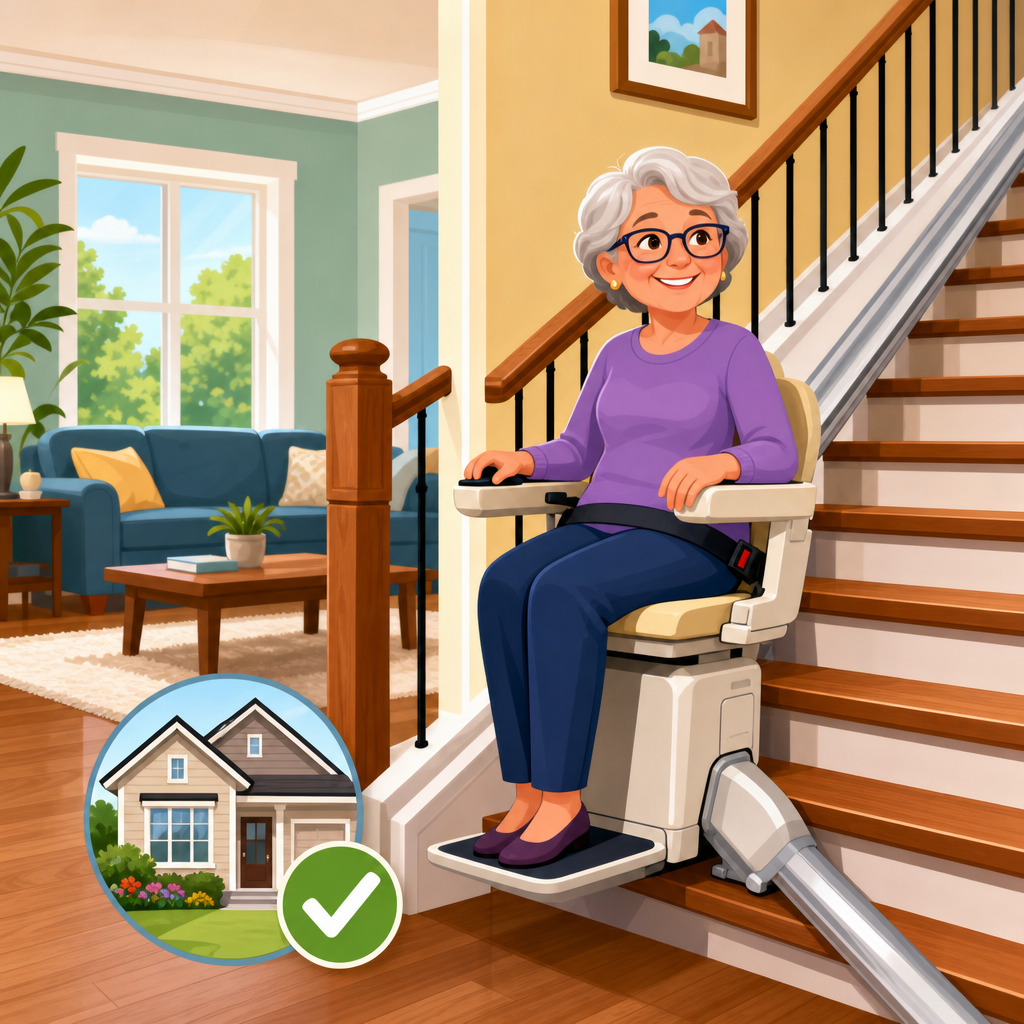
Short-term stair lift rental and buying a used stair lift solve the same urgent problem, but they save money in very different ways. Families usually face this decision after surgery, a hospital discharge, or a sudden decline in mobility, when the goal is safe access between floors without overspending. A stair lift is a motorized chair that travels on a rail fixed to the staircase, while a short-term rental is a temporary agreement with monthly payments and a used purchase is a previously installed or refurbished unit bought outright. I have helped families compare both options, and the cheapest path depends less on sticker price than on staircase type, expected duration of use, installation fees, and resale potential. This matters because stair lifts often become a decision made under pressure, with little time to compare contracts, warranties, and long-term costs. A straight staircase can keep costs relatively predictable, but curved stairs, landings, and power-swivel seats can change the math quickly. The core question is simple: if mobility support is needed for a few months, is it smarter to rent, or does buying used deliver lower total cost? The answer requires a full cost comparison, not assumptions.
In practice, rentals appeal because they reduce upfront expense and often include service, maintenance, and removal. Used purchases appeal because monthly rental fees add up fast, and an owned unit can sometimes be resold or kept for future use. Both paths have tradeoffs. Some suppliers rent only straight stair lifts because rails can be reused, while curved stair lifts usually require custom fabrication, making rental uncommon or expensive. Used inventory also varies widely by brand, age, battery condition, rail compatibility, and local dealer support. Reputable manufacturers such as Bruno, Harmar, Stannah, Acorn, and Handicare have different service networks and replacement part availability, which affects the real lifetime cost of a used unit. Under many local building codes and manufacturer guidelines, the lift must be installed to preserve adequate stair clearance and safe operation, so the lowest listed price is never the complete price. To choose well, buyers need to compare total cost over time, the clinical reason for the lift, and the risk that needs may extend longer than expected. That is where a hub guide becomes useful.
How short-term stair lift rentals are priced
A short-term stair lift rental usually combines four charges: an installation fee, the first month of rental, ongoing monthly payments, and eventual removal. In most markets, a straight stair lift rental starts with installation in the several-hundred-dollar range and monthly fees often land between about $150 and $300, depending on the dealer, region, and features. Some companies fold removal into the initial contract, while others bill separately when the unit is taken out. The major financial advantage is low commitment. If someone needs the lift for eight weeks after a knee replacement or stroke rehabilitation, renting avoids paying thousands upfront for equipment that may not be needed later.
The fine print matters. I have seen contracts with a three-month minimum, which means a customer expecting six weeks of use still pays for a quarter. Others include service calls and battery replacement, which can make the rental more predictable than ownership. Rentals also reduce downtime risk because the dealer retains responsibility for keeping the unit operational. For caregivers, that service obligation has value. A chair that stops mid-staircase is not just inconvenient; it can become a safety event. In short, rental pricing is less about the posted monthly rate and more about the total package of setup, minimum term, support, and removal.
What buying a used stair lift really costs
Buying a used stair lift has a higher upfront cost but may produce lower total spending if the lift will be used beyond a short window. A used straight stair lift commonly costs from roughly $2,000 to $4,000 installed, though premium models, heavy-duty seats, powered options, or long rails can increase that number. The word used can describe several conditions. A dealer-refurbished lift has usually been inspected, fitted with tested components, and sold with at least a limited warranty. A privately sold lift listed on a marketplace may be far cheaper, but it often excludes professional installation, service history, and any guarantee of rail fit or code-compliant setup.
The biggest hidden variable is compatibility. Straight rails are easier to reuse because they can often be cut to length or replaced economically. Curved rails are generally custom-built for a specific staircase geometry, so a secondhand curved system may be unusable in another home even if the chair itself still works. Batteries, charge contacts, seat swivels, footrest sensors, and call-send controls also affect total cost. If a bargain unit needs new batteries, service labor, or a replacement gearbox, the savings disappear quickly. This is why the safest way to buy used is through a local dealer who can verify the model, installation standards, and future parts support.
Rental vs. used purchase: where each saves more
The cost break-even point usually arrives faster than families expect. On a straight staircase, a rental with a $900 installation fee and $200 monthly charge costs about $2,100 over six months, before any removal fee. Stretch that to twelve months and the same rental totals about $3,300. If a dealer-refurbished straight stair lift can be purchased and installed for $2,800 with a limited warranty, ownership may be cheaper somewhere between the eighth and tenth month, especially if resale is possible later. That is why short-term need is the central filter. For use under roughly six months, rental often wins. For use closer to a year or longer, buying used often saves more.
| Scenario | Typical Cost Pattern | Usually Better Value | Why |
|---|---|---|---|
| Recovery after surgery, 1 to 3 months | Install fee plus a few monthly payments | Rental | Lower upfront spend and included service reduce risk |
| Rehabilitation with uncertain end date, 4 to 9 months | Rental totals begin to climb toward purchase pricing | Depends on contract | Minimum terms, removal fees, and warranty details decide value |
| Ongoing mobility loss, 10 months or more | Higher upfront purchase, lower long-run total | Used purchase | Monthly rental fees usually exceed ownership cost over time |
| Curved staircase | Custom rail and limited rental availability | Often used or new purchase | Curved rentals are rare and custom rails are expensive |
Real-world examples make the difference clearer. A family supporting a parent after hip surgery may know the need ends when weight-bearing improves and physical therapy is complete. In that case, renting avoids tying cash up in equipment with little future value. By contrast, a person with Parkinson’s disease, multiple sclerosis, or heart failure may initially expect a temporary need but ultimately require help for years. In those cases, buying used can protect the budget better, especially if the home layout will not change soon. The smartest comparison is not monthly rate against purchase price; it is total expected cost across the likely period of use.
Staircase type changes the economics immediately
The single biggest structural factor is whether the staircase is straight or curved. Straight stair lifts use standard rails, so both rental programs and used inventory are more common. Dealers can often remove a straight rail from one home, refurbish the chair, and reinstall it elsewhere with relatively modest adaptation. That reuse supports a viable rental market. Curved stair lifts are different. They require custom rail measurements using photo surveys, digital mapping, or templates to match turns, landings, and parking positions exactly. Because the rail is made for one staircase, rental inventory is limited and used curved purchases are difficult to match.
That difference often settles the decision before price quotes even arrive. If the stairs are straight, getting both rental and used-purchase estimates is worthwhile. If the stairs are curved, the customer should expect fewer rental options and significantly higher setup costs. Sometimes a dealer can reuse a curved chair carriage while fabricating a new rail, creating a hybrid refurbished solution. Even then, the custom rail remains the expensive component. For homes with outdoor stairs, weather-rated lifts add another layer, since sealed controls, corrosion-resistant materials, and covers increase cost and narrow used availability. The staircase is not a small detail; it defines the market options.
Service, warranty, and downtime costs people overlook
The most common budgeting mistake is treating the stair lift like furniture instead of mobility equipment. A stair lift is closer to a medical-access device. If it fails, the user may be stranded on one level of the home or forced into an unsafe transfer on the stairs. Rental agreements often include service coverage, which has measurable financial value. A technician visit can cost well over a hundred dollars before parts, and battery replacement on an older lift can add another meaningful expense. On a used purchase, the length and scope of warranty coverage determine whether the low sale price is actually low.
Ask direct questions. Does the warranty cover labor, parts, or both? Is there emergency weekend service? Are batteries considered wear items? Are replacement boards or gears still available from the manufacturer? Brands with strong dealer networks usually hold value better because future maintenance is simpler. In my experience, the best used purchase is not the cheapest chair online. It is the unit backed by a dealer who can service it quickly and source parts without guesswork. A stair lift that costs less but sits broken for ten days can be more expensive in practical terms than a higher-priced unit with dependable support.
How to estimate your break-even point accurately
The cleanest way to compare rental vs. buying used is to calculate total cost for three timelines: three months, six months, and twelve months. For rental, add installation, monthly fees, any minimum-term requirement, service charges not included, and removal. For purchase, add installed price, taxes if applicable, expected maintenance outside warranty, and subtract realistic resale value if the lift may be sold later. Resale should be conservative. A privately resold straight stair lift may recover only a fraction of purchase price, especially if a buyer must pay separately for disassembly and reinstallation.
Then test the estimate against the user’s health outlook. Surgeons may provide a rough recovery period after joint replacement. A discharge planner, occupational therapist, or physical therapist can often indicate whether stair navigation is likely to improve, plateau, or decline. If the outlook is uncertain, build two scenarios: expected duration and worst-case duration. That prevents the common mistake of renting for a “couple of months” that turns into a year. Financially, break-even analysis is simple arithmetic. Practically, it is a risk-management exercise shaped by clinical uncertainty and the realities of the home.
Questions to ask before signing any rental or purchase agreement
Start with five practical questions. Is the staircase straight or curved? What is the all-in installed cost? What service is included, and how quickly can a technician respond? Is there a minimum rental term or a restocking or removal fee? If buying used, what exact model is being installed and how long will parts remain available? These questions expose the real value of the offer. They also make quotes comparable across dealers, which is essential because providers often package fees differently.
Next, ask about user fit and home fit. What is the seat width and weight capacity? Is a hinged rail needed to avoid blocking a doorway at the bottom of the stairs? Does the folded chair leave enough clearance for other stair users? Are there transfer concerns if the user has limited trunk strength, poor vision, or difficulty operating a swivel seat? Savings only count if the lift can be used safely every day. Families should also ask whether the provider is insured, factory-trained, and familiar with local permitting rules where required. A lower quote from an installer who cannot support the unit later is rarely a true savings.
When this hub should lead you to a deeper financing decision
Rental vs. purchase is the center of stair lift cost planning, but it connects to other financing questions. Some households compare paying cash with monthly financing. Others want to know whether Medicare covers stair lifts, whether Medicaid waiver programs help in their state, or whether veterans’ benefits, Area Agency on Aging grants, or nonprofit funds can offset costs. Those programs vary widely and often have eligibility limits, wait lists, or rules about permanent home modifications. Still, they can change the rental-versus-buying math substantially.
The main takeaway is straightforward. Short-term stair lift rental usually saves more when the need is clearly temporary, the staircase is straight, and a service-inclusive contract limits surprise costs. Buying a used stair lift usually saves more when use will extend beyond several months, when a reputable dealer can install and support the unit, and when ownership avoids a long stream of rental payments. Compare total cost, not advertised price. Review the staircase type, expected duration, service coverage, and contract terms before deciding. If you are choosing now, request side-by-side quotes for rental and dealer-refurbished purchase and calculate your break-even point before signing.
Frequently Asked Questions
Is it cheaper to rent a stair lift short-term or buy a used one?
The cheaper option depends mostly on how long the lift will be needed, how complex the staircase is, and what costs are included upfront. In many cases, a short-term stair lift rental costs less when the need is truly temporary, such as recovery after surgery, rehabilitation after a fall, or support during a short-term living arrangement. Rentals usually involve an installation fee, possible removal fee, and ongoing monthly payments, so they can be cost-effective for needs lasting a few weeks to a few months. Buying a used stair lift often makes more financial sense when the need may continue longer than expected, because instead of paying month after month, you make one larger purchase and may keep the unit for as long as needed.
The key is to compare total cost, not just the monthly price. A rental that looks affordable at first can become more expensive over time if the user needs the lift for six months, nine months, or longer. On the other hand, a used stair lift may come with purchase, installation, and service costs that make it less attractive for very short-term use. Straight staircases are usually simpler and less expensive for both renting and buying used, while curved staircases can dramatically change the numbers because custom rails are more expensive and are often harder to find on the used market. For most families, the real savings come from matching the financing model to the likely duration of need: rent for short recovery periods, and consider buying used if the timeline is uncertain or likely to extend.
How long does someone usually need a stair lift before buying used becomes the better value?
There is no single break-even point for every situation, but many families find that buying a used stair lift becomes the better value when the need extends beyond a short recovery window. If the person using the lift is expected to regain mobility within a month or two, renting often keeps overall spending lower and avoids the commitment of ownership. If recovery is open-ended, if mobility has declined more permanently, or if the household expects to need stair assistance for many months, buying used can begin to outperform a rental financially.
A practical way to decide is to estimate the full rental total over several time frames, such as three months, six months, and twelve months, and compare that figure with the all-in cost of a used purchase. Include installation, service coverage, removal, and any maintenance terms in both options. Also consider the likelihood that “temporary” needs become longer than expected. Hospital discharges, rehabilitation timelines, and age-related mobility changes often do not follow a perfect schedule. That is why families who are unsure sometimes discover that a used stair lift saves more in the long run, even if the upfront cost is higher. The smartest approach is to ask providers for itemized quotes and calculate the total spend at different milestones before making a decision.
What extra costs should families watch for when comparing stair lift rental and used purchase options?
The most common mistake is comparing only the headline price. With a rental, families should ask about delivery, installation, monthly fees, minimum rental periods, service calls, repair coverage, battery replacement, and removal charges at the end of the agreement. Some rental programs include maintenance and standard service, which can make them more appealing for short-term use. Others charge separately for certain visits or limit what is covered, so it is important to know exactly what the monthly payment includes.
With a used stair lift purchase, the extra costs may include installation, a new seat or upgraded components, replacement batteries, warranty coverage, future service calls, and in some cases rail modifications. If the staircase is curved, there may be fewer used options available, and custom rail work can raise the total significantly. Families should also ask whether the unit has been refurbished, inspected, and tested, and whether the dealer provides a labor warranty in addition to parts coverage. If there is any chance the lift will be removed later, ask whether the company offers buyback, trade-in, or removal services. A lower sticker price does not always mean a lower total cost, so reviewing every line item is essential to finding the real savings.
Does renting or buying used make more sense for someone recovering from surgery or a hospital discharge?
For recovery after surgery or a recent hospital discharge, short-term rental often makes the most immediate sense because it is designed for urgent, temporary mobility needs. Families in these situations usually want fast installation, predictable monthly costs, and the flexibility to remove the lift once recovery is complete. When the doctor expects the person to regain strength and safely manage stairs again within a limited period, renting can prevent overspending on a device that may only be used briefly.
That said, buying a used stair lift may still be the better decision if the recovery timeline is uncertain or if the patient has other health conditions that could make stair use difficult long after the initial event. For example, a person recovering from surgery who also has balance issues, arthritis, or progressive mobility limitations may end up needing the lift far longer than first expected. In that case, a used purchase may deliver better long-term value and eliminate the pressure of recurring rental fees. The decision should be based not just on the surgery itself, but on the person’s broader mobility outlook, the home’s staircase type, and whether the need is truly short-term or simply unknown.
What should families ask a stair lift company before choosing between a rental and a used stair lift?
Families should ask for a full cost breakdown for both options, including installation, equipment charges, service coverage, warranty details, and removal or resale possibilities. It is important to ask whether the quoted rental price is month-to-month or subject to a minimum term, and whether maintenance is included. For a used purchase, ask if the lift has been refurbished, how old it is, whether the batteries are new, what parts were replaced, and what kind of warranty is provided on both parts and labor. These questions help reveal whether the lower-looking option is truly the best financial choice.
It is also wise to ask about timing, staircase compatibility, and future flexibility. Find out how quickly the unit can be installed, whether the staircase is straight or curved, and whether that affects the availability of rental or used inventory. Ask what happens if the user needs the lift longer than planned, or no longer needs it after only a short time. Some providers offer credits, purchase conversions, or trade-in options that can significantly improve value. Finally, make sure the company evaluates safety as seriously as price. A properly fitted, professionally installed stair lift is not just a convenience—it is a fall-prevention tool during a vulnerable time. The best savings come from choosing the option that is affordable, safe, and realistic for the expected duration of need.