Accessible vanity designs for limited mobility users shape whether a bathroom or bedroom supports independence or quietly creates daily strain. In accessibility work, I have seen small design choices matter more than expensive finishes: a sink set one inch too high can force painful shoulder lift, while a mirror angled correctly can restore a person’s full grooming routine without assistance. An accessible vanity is a storage, washing, and grooming station planned so people who use wheelchairs, walkers, canes, prosthetics, or seated positions can use it safely and comfortably. Limited mobility can result from age, arthritis, stroke, spinal cord injury, joint replacement, chronic pain, neurological conditions, or temporary recovery after surgery. Good design responds to reach range, knee clearance, turning space, lighting, grip strength, and transfer safety.
This matters because the bathroom and bedroom are the most personal rooms in a home. They are used when people are tired, rushed, medicated, or physically vulnerable. The right vanity supports hygiene, medication routines, dressing, shaving, cosmetics, skin care, and dental care without unnecessary twisting or standing. The wrong setup increases fall risk, dependence on caregivers, and frustration that compounds over time. In practice, bathroom and bedroom accessibility overlap: the same user who needs roll-under sink clearance may also need seated access to a dressing table, reachable outlets, and storage that works from bed or a wheelchair. As a hub topic, accessible vanity design connects to broader planning decisions including circulation space, slip resistance, task lighting, smart controls, and adaptable storage systems. When these elements are coordinated, users gain privacy, confidence, and a home environment that works with their body instead of against it.
What makes a vanity accessible in bathrooms and bedrooms
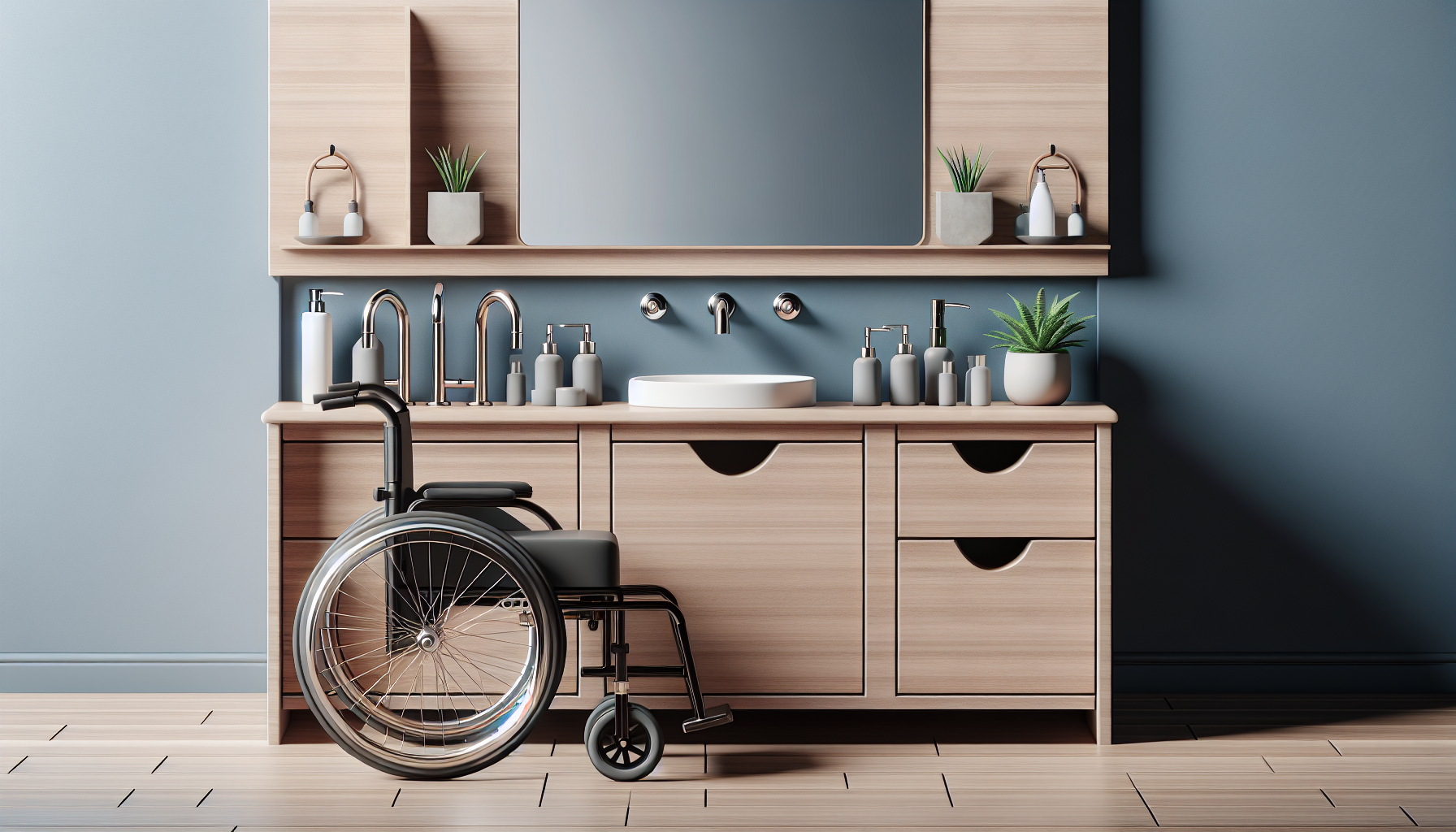
An accessible vanity begins with dimensions that fit real bodies and mobility devices. In most residential projects, I start by checking clear floor space, approach direction, and whether the user needs a forward approach or side approach. A wheelchair user usually benefits from roll-under knee clearance, open toe space, and a work surface height around 30 to 34 inches depending on chair height and upper-body function. Many designers reference ADA principles even in private homes because they provide a reliable baseline: clear floor space of about 30 by 48 inches, knee clearance near 27 inches high, and insulated pipes to prevent burns. Those are not universal answers, but they prevent common mistakes. For bedroom vanities, the same logic applies at a dressing table or makeup station. A seated user needs legroom, reachable storage, and enough space to turn without catching wheels on bench legs or decorative aprons.
Accessible design also means reducing the effort required to complete repetitive tasks. Lever handles are easier than small knobs for users with arthritis. Touchless or single-lever faucets reduce grip demand and can be set with anti-scald protection. Drawers generally work better than deep base cabinets because items can be pulled into view rather than reached for blindly. Full-extension soft-close slides, D-shaped pulls, and shallow organizers make daily tools easier to find. Mirrors should serve seated and standing users, either by extending lower on the wall, tilting forward, or combining a large mirror with an adjustable magnifying mirror. Lighting should be bright, even, and placed to reduce shadows on the face. In a bathroom, that usually means vertical fixtures or well-positioned sconces rather than a single overhead bulb. In a bedroom, layered lighting helps with grooming and medication management. Accessibility is not one feature; it is a set of coordinated details that reduce strain and improve safe use every day.
Bathroom vanity layouts that improve safety and independence
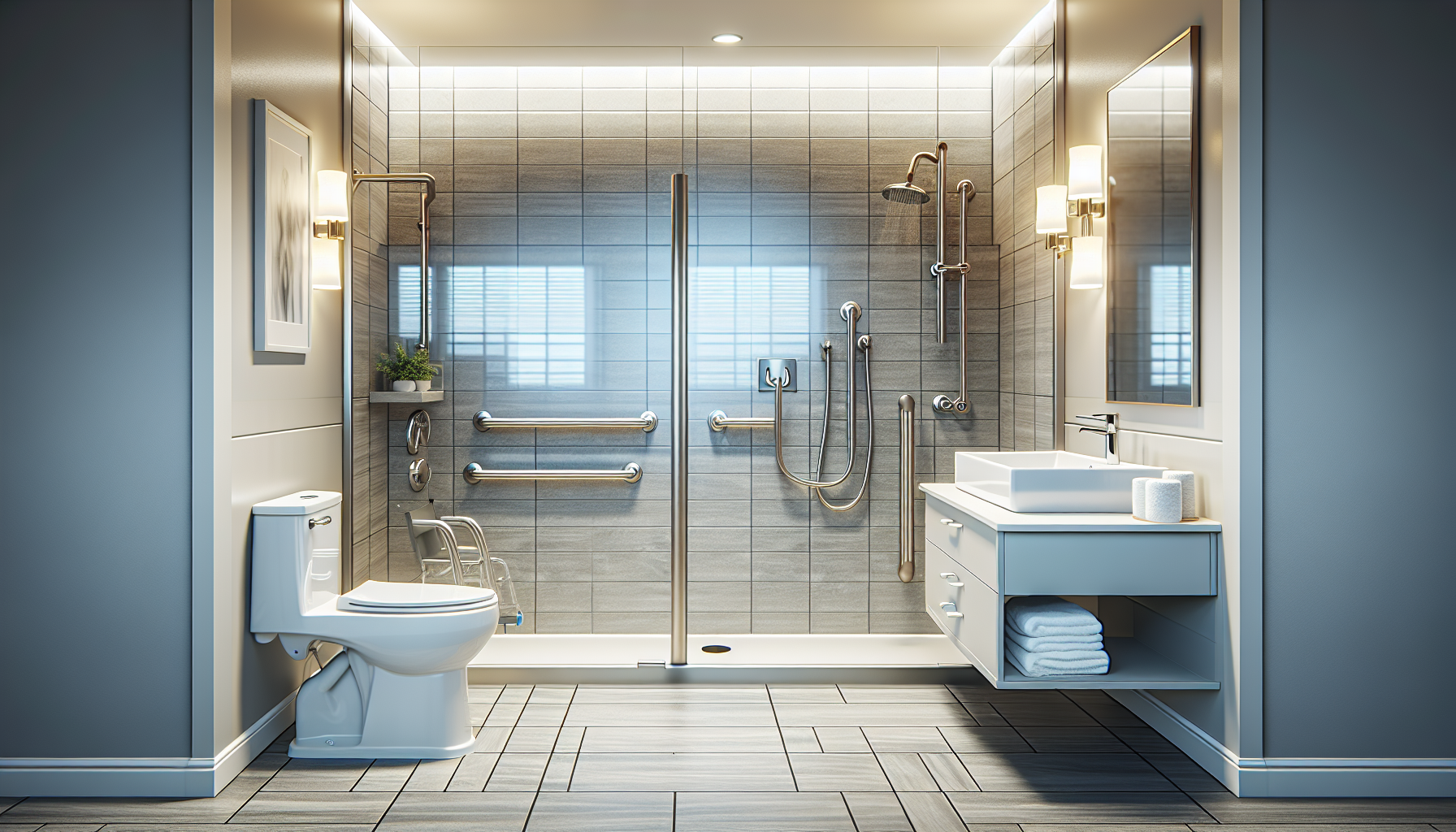
The safest bathroom vanity layouts prioritize movement before style. A user needs enough space to approach, stop, turn, and back away without clipping the vanity edge, door swing, or toilet. In many remodels, the biggest win comes from replacing a bulky double vanity with one wider accessible station and more open maneuvering room. That tradeoff often improves function far more than adding another sink. Wall-mounted vanities are especially effective because they create visual openness and let installers customize knee clearance. If plumbing must remain exposed, protective covers and pipe insulation are essential. Rounded countertop corners reduce injury risk during transfers or loss of balance. Flooring should maintain slip resistance when wet, and transitions between bedroom and bath should be flush to prevent caster hang-ups and walker trips.
Placement of related fixtures matters just as much as the vanity itself. Towel storage should be within easy reach from the sink, not across the room. Electrical outlets should sit where grooming devices can be plugged in without stretching cords over water. Medicine storage should be secure yet reachable, ideally in pull-out organizers rather than high mirrored cabinets. I often recommend a combination of one open shelf for frequently used items and one drawer with dividers for personal care tools. If the bathroom serves a person with one-sided weakness after stroke, set the primary open access on the stronger side. If transfers are part of the routine, ensure vanity edges and nearby grab bars do not interfere. Good bathroom vanity design anticipates the path of motion from doorway to sink to toilet to shower and removes unnecessary obstacles from that sequence.
| Design element | Recommended approach | Main benefit |
|---|---|---|
| Counter height | 30 to 34 inches based on seated or standing use | Reduces shoulder strain and supports safer reach |
| Knee clearance | About 27 inches high with open toe space below | Allows wheelchair roll-under access |
| Faucet control | Single lever or touchless with anti-scald valve | Improves use for weak grip and protects skin |
| Storage | Full-extension drawers with organizers and pulls | Makes items visible and reachable |
| Mirror placement | Lowered, full-height, or tilted mirror | Supports seated grooming without neck strain |
| Lighting | Vertical face lighting plus ambient layer | Improves visibility for shaving and makeup |
Bedroom vanity and dressing area accessibility
Bedroom vanity design is often overlooked, yet it can be more important than the bathroom sink for users who pace their energy carefully. A seated dressing station lets someone apply makeup, brush hair, shave with an electric razor, insert hearing aids, sort medications, and organize clothing without standing for long periods. For people with multiple sclerosis, long COVID, Parkinson’s disease, or post-surgical fatigue, that energy conservation is not a convenience; it directly affects whether they can complete the rest of the day. The best bedroom vanity designs include a stable chair or wheelchair parking position, glare-controlled task lighting, and outlets at the work surface height rather than hidden near the floor. A shallow worktop, usually 18 to 22 inches deep, keeps items inside the user’s comfortable reach zone. If mirrors are mounted above a dressing table, they should begin low enough for seated eye level and avoid forcing the user to lean forward.
Storage planning in bedroom accessibility should follow frequency of use. Everyday items belong between shoulder and hip height; occasional items can go higher or lower. Pull-down closet rods, valet rods, and open-front bins pair well with an accessible vanity because dressing routines flow across the same area. I have found that many users prefer mixed storage: one drawer for cosmetics or grooming tools, one tray for medications or assistive devices, and one open caddy that can move between bed and vanity. For users with tremor or reduced dexterity, containers should open easily and remain stable on the surface. Upholstered benches may look elegant, but many are too low and soft for safe transfers. A firmer seat at an appropriate transfer height, often close to wheelchair seat height, is usually a better choice. In both compact apartments and larger homes, the bedroom vanity should be treated as part of a full accessibility system, not as decorative furniture.
Materials, fixtures, and technology that reduce physical effort
Material selection affects usability more than many homeowners expect. Matte or low-sheen countertops reduce glare for users with visual sensitivity. Solid-surface materials and quartz are easier to clean than heavily textured stone, and integrated backsplashes help contain splashes without creating hard-to-reach joints. Rounded edge profiles are safer than sharp waterfall corners. In bathrooms, moisture resistance is nonnegotiable, but so is warmth and touch comfort. Metal pulls that get cold can be unpleasant for users with neuropathy; coated hardware can help. Sink selection also matters. A shallow basin with rear drain placement improves knee clearance, while broad sink rims can create awkward reach. Vessel sinks often look attractive but usually raise the working height too much for seated use, making them a poor fit for accessible vanity design.
Technology can remove effort when it is chosen carefully. Motion-sensor or touch-activated lighting helps users who enter with a walker or have limited hand control. Smart mirrors with dimmable light can support grooming at different times of day, but controls must be simple and legible. Electrically adjustable-height vanities are increasingly available and can work well in multigenerational homes, though they cost more and require thoughtful service access. In several projects, the biggest practical gains came from less glamorous upgrades: outlets with USB-C at reachable height, drawer organizers that prevent overreaching, and illuminated rocker switches with strong contrast. Heated flooring near the vanity can improve comfort for users who stand briefly, but it should not replace anti-fatigue mats or seating where needed. The principle is straightforward: every selected fixture should reduce force, reduce bending, or reduce risk. If a product adds complexity without lowering effort, it is not improving accessibility.
Designing for specific mobility needs and shared households
No single accessible vanity serves every limited mobility user. Wheelchair users usually need open approach, precise knee clearance, and unobstructed side movement. People who walk with a cane or walker may prioritize support points, lower slip risk, and the ability to lean lightly without damaging the vanity. Users with arthritis need large grips, low-resistance hardware, and controls that do not require pinching. People with low vision benefit from strong contrast between countertop, sink edge, flooring, and wall, plus even lighting that avoids glare. Someone living with dementia may need simpler layouts, visible daily-use items, and reduced visual clutter. In practice, I map the sequence of a real morning routine and look for strain points: where the user pauses, braces, twists, reaches too high, or sets items in unstable places. Those observations reveal more than any showroom display ever will.
Shared households introduce another layer of planning. A bathroom may need to work for a wheelchair user and an ambulatory partner, or for an older adult now and a future caregiver later. In those cases, flexibility matters. A wider single-basin vanity can outperform a stylish double vanity because it leaves adaptable counter space. Adjustable mirrors, movable storage inserts, and layered lighting help accommodate different heights and tasks. If children use the room too, avoid creating barriers with overly specialized layouts that only one person can use. The most successful accessible bathrooms and bedrooms feel intuitive for everyone while quietly protecting the user with the greatest need. That is why universal design principles remain so useful: they produce spaces that are safer, clearer, and easier for the whole household, not just the person with a diagnosis.
Planning a remodel: measurements, codes, and common mistakes
The best accessible vanity remodels begin with measurement, not product selection. Record doorway width, hall clearance, turning diameter, fixture offsets, outlet locations, and the user’s seated eye level, knee height, elbow height, and forward reach. Measure the mobility device too, including footrests and turning behavior. Then test the routine with painter’s tape on the floor or cardboard mockups. I routinely see costly errors from skipping this step. Common problems include beautiful cabinets that block footrests, mirrors mounted for standing adults only, drawers colliding with door swings, and under-sink plumbing left exposed where knees can contact hot pipes. Another frequent mistake is treating building code minimums as full accessibility solutions. Code compliance helps with safety, but personalized usability comes from fitting the room to the actual user and their daily habits.
Professional input is often worth the cost, especially in primary bathrooms and aging-in-place renovations. Occupational therapists can identify transfer patterns and reach limitations. Certified Aging-in-Place Specialists, accessibility-focused designers, and experienced contractors can translate those needs into cabinetry, lighting, and fixture selections. If the project is part of a broader bathroom and bedroom accessibility plan, coordinate vanity work with grab bar backing, shower access, bedside lighting, flooring transitions, and closet hardware so changes reinforce each other. Budget should prioritize high-impact function first: safe circulation, accessible storage, proper lighting, and durable fixtures. Decorative upgrades can follow. The strongest outcome is a vanity that disappears into the routine because it works so well. Review your current bathroom or bedroom setup, note the tasks that feel hardest, and use those pain points to guide your next accessibility upgrade.
Frequently Asked Questions
What makes a vanity truly accessible for someone with limited mobility?
A truly accessible vanity is designed around the user’s physical reach, seated height, transfer needs, and daily grooming routine rather than around standard cabinet dimensions. The most important features usually include proper knee and toe clearance underneath the sink, a countertop height that can be comfortably used from a wheelchair or seated position, and enough clear floor space in front of the vanity to allow easy approach and turning. For many users, the ability to roll directly under the sink is what changes a vanity from decorative furniture into a practical independence-supporting station.
Accessibility also depends on how fixtures and accessories are positioned. Faucets should be easy to operate with limited hand strength, which is why lever handles, touchless controls, or extended single-handle faucets are often better than small knobs. Mirrors should be placed low enough or tilted so the user can see their full face without straining the neck or upper body. Storage should keep daily-use items within comfortable reach, ideally in drawers, pull-outs, or open shelving instead of deep base cabinets that require bending or awkward reaching.
Just as important, the vanity should reduce physical strain over time. A sink that is slightly too high can create shoulder pain, while one that is too deep can force forward leaning and fatigue. Sharp corners, hard-to-reach outlets, poor lighting, and slippery flooring nearby can all undermine usability. In practice, an accessible vanity is successful when it allows a person to wash, groom, and access personal items safely, comfortably, and with as little assistance as possible.
What is the best height for an accessible vanity and sink?
There is no single perfect height for every user, but accessible vanity height should always be based on the person using it most often. For wheelchair users, a lower countertop than standard is commonly needed so the sink and grooming surface can be reached without raising the shoulders or overextending the arms. In many cases, a vanity in the range of about 30 to 34 inches works better than standard heights, but the right number depends on wheelchair seat height, arm mobility, and the type of tasks being performed there.
The sink itself matters as much as the countertop height. A shallow sink is often more comfortable than a deep basin because it reduces forward reach and allows easier handwashing, face washing, and grooming from a seated position. Knee clearance underneath should be planned carefully so the user can roll in close enough without hitting plumbing or cabinet components. Protective covers or insulated wraps on hot water pipes are also important, since exposed plumbing can cause injury when the legs are positioned under the sink.
If a household includes more than one user with different mobility needs, adjustable-height designs or carefully selected compromise heights can be worth considering. Custom planning is especially helpful when pain, limited trunk balance, or reduced arm range are involved. Even small adjustments can have a major impact. A one-inch change in height may seem minor on paper, but in everyday use it can be the difference between a comfortable routine and repeated physical strain.
Which vanity storage features are most helpful for wheelchair users and people with limited reach?
The most helpful storage features are those that bring items forward, reduce bending, and keep essentials visible. Full-extension drawers are often one of the best choices because they allow users to access the entire drawer contents from above without reaching deep into a dark cabinet cavity. Drawer organizers, divided trays, and labeled sections can make a big difference for users who need quick access to medications, grooming tools, or personal care products without searching through clutter.
Pull-out shelves, side-access compartments, and open shelving can also work very well, especially when frequently used items need to be reached from a seated position. Open storage directly below the counter is not always possible if knee clearance is required, but side storage towers or adjacent wall-mounted cabinets can be excellent alternatives. The key is to place everyday items within a comfortable reach zone, generally between shoulder and knee level for the specific user, while storing rarely used items higher or farther away.
Hardware and usability details matter too. D-shaped pulls, loop handles, and soft-close drawers are usually easier to manage than small knobs. Push-to-open systems can help in some situations, but they may be less practical for users who have limited balance or need firm support while opening cabinetry. Good accessible storage should support routine without frustration. It should allow someone to retrieve a toothbrush, razor, towel, hairbrush, or skincare item in one smooth sequence, without twisting, straining, or needing assistance.
How should mirrors, lighting, and outlets be designed for an accessible vanity?
Mirrors, lighting, and outlets are often overlooked, but they are essential to making an accessible vanity fully functional. A standard wall mirror mounted too high can make grooming difficult or impossible for a seated user. In many cases, the best solution is a mirror that extends lower on the wall, a tilted mirror, or a combination of a primary mirror and a secondary magnifying mirror mounted within reach. The goal is to allow clear visibility for shaving, makeup, hair care, and other personal routines without forcing the person to lean forward excessively or strain the neck.
Lighting should be bright, even, and positioned to reduce shadows on the face. Side lighting or well-balanced front lighting is usually better for grooming than a single overhead fixture, which can create harsh shadows and make detailed tasks harder. Accessible design should also consider users with low vision, so glare control, high-quality task lighting, and intuitive switch placement are important. Rocker switches, motion-sensor lighting, or large-button controls are often easier to use than small traditional switches.
Electrical outlets should be reachable from a seated position and placed where appliances can be used safely without cords stretching across the sink or floor. This is especially important for hair dryers, electric razors, toothbrush chargers, and other daily-use tools. Outlets should be positioned close enough to the active grooming area to be practical, but not so close that they create water-safety concerns. When these elements are coordinated well, the vanity becomes far easier to use independently and consistently every day.
Can an accessible vanity still look stylish and fit into a modern bathroom or bedroom design?
Yes, absolutely. Accessible vanity design does not have to look institutional or unfinished. In fact, many of the most effective accessible vanities blend universal design principles with clean, modern aesthetics. Wall-mounted vanities, open-bottom sink designs, sleek drawer systems, integrated lighting, and contemporary hardware can all support accessibility while still feeling polished and intentional. The idea is not to hide accessibility features, but to incorporate them in a way that feels natural, attractive, and comfortable in the space.
Material selection plays a big role in both appearance and function. Durable, easy-to-clean countertops with softly rounded edges can look elegant while improving safety. Contrasting finishes can help define edges for users with low vision, and matte surfaces may reduce glare better than highly reflective materials. Decorative mirrors can still be used, as long as their placement or angle supports visibility from seated and standing positions. The same goes for storage: well-designed drawers and side cabinets can look high-end while making the space easier to use.
The best results usually come from planning accessibility from the beginning rather than trying to add it after design decisions are already fixed. When layout, height, lighting, storage, and fixture placement are all chosen with mobility needs in mind, the finished vanity can feel both beautiful and empowering. Good accessible design does more than meet a code requirement. It supports independence, reduces fatigue, and allows the user to maintain everyday routines with dignity in a space that still feels personal and well designed.