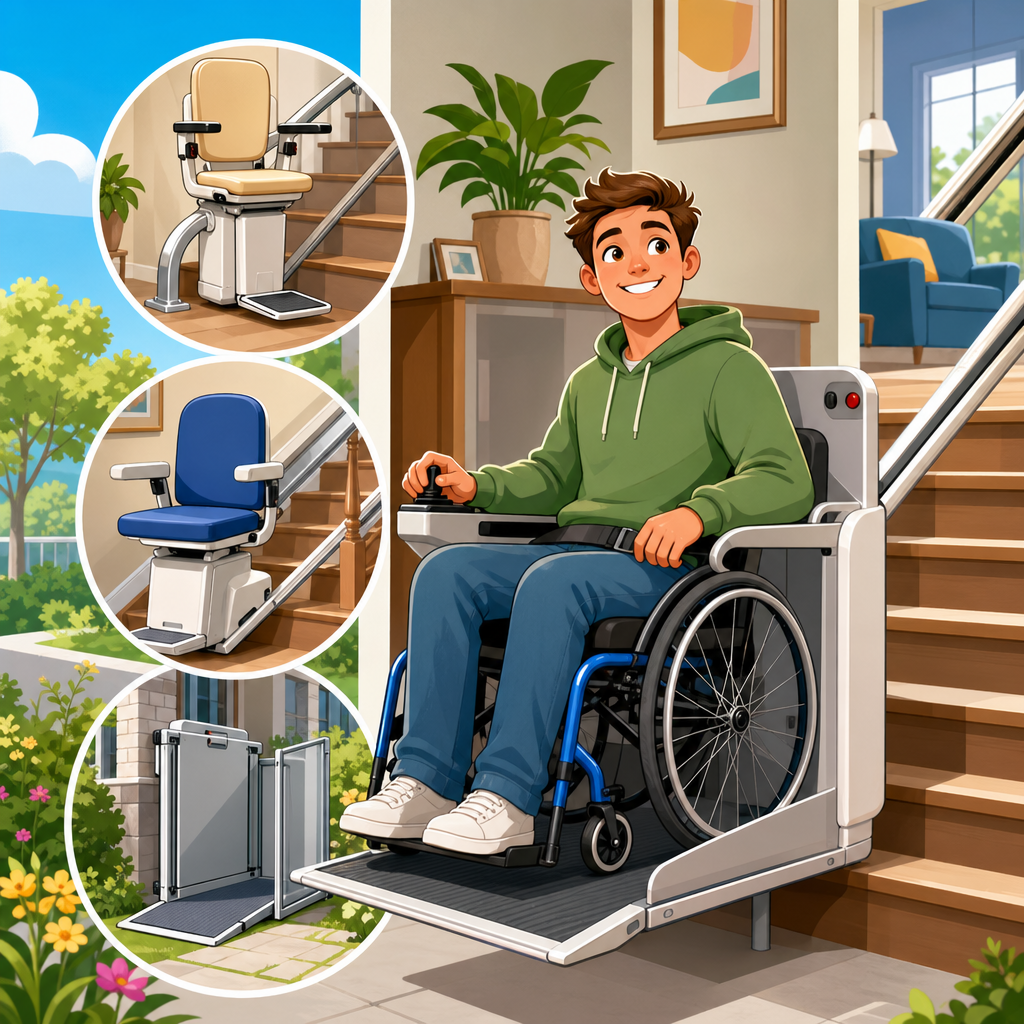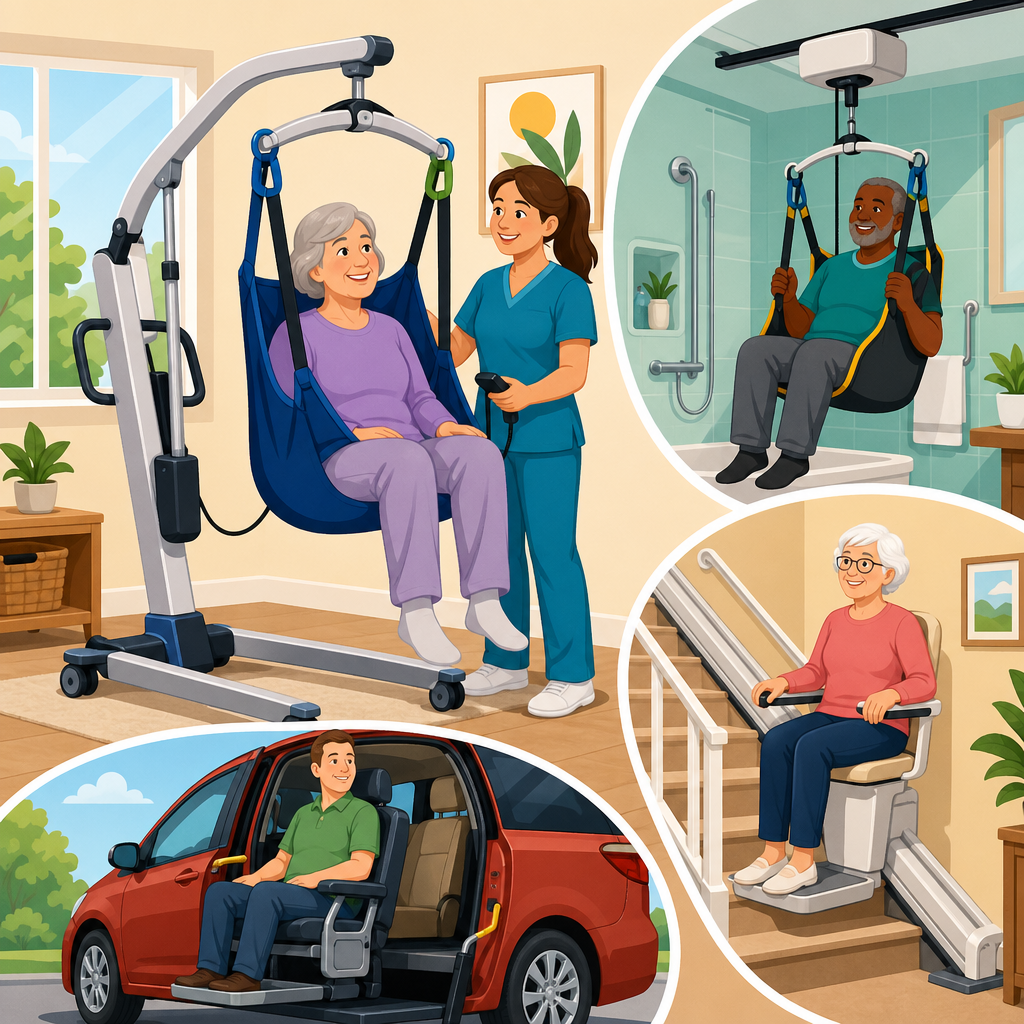
Buying a stair lift from Amazon sounds convenient, but convenience is only one part of a safe purchasing decision. A stair lift is a motorized chair or perch that travels along a rail fixed to the staircase, allowing people with limited mobility to move between floors without climbing steps. In practice, the buying process includes measurements, weight capacity checks, power requirements, installation planning, warranty review, and long-term service support. I have worked on accessibility purchases where families focused first on price and shipping speed, then discovered that fit, service, and code-related details mattered more than the listing headline. That is why this topic deserves a careful guide.
Amazon has changed how people shop for medical and mobility equipment. Buyers can compare brands quickly, read reviews, check delivery windows, and sometimes find lower prices than they see in local showrooms. At the same time, stair lifts are not plug-and-play household items. Straight stair lifts, curved stair lifts, outdoor stair lifts, and heavy-duty models all have different installation and service needs. A product page may show appealing photos and a simple feature list, yet leave out critical details such as seat-to-footrest dimensions, folding clearance, charger placement, battery replacement cost, or whether the rail can be cut on site. For older adults, caregivers, and anyone planning to age in place, getting those details wrong can create serious expense and safety risks.
This article explains the real pros and cons of buying a stair lift from Amazon, with a focus on the broader landscape of retailers and online stores. It covers what Amazon does well, where specialized dealers still have a strong advantage, how to evaluate listings, and when online buying makes sense. If you are comparing sellers as part of a larger mobility purchase, this page should help you ask better questions and avoid the most common mistakes.
Why Amazon appeals to stair lift shoppers
The biggest advantage of Amazon is visibility. In one search, a shopper can see multiple brands, price ranges, accessories, and customer ratings. That speed matters when a family is reacting to a fall, a new diagnosis, or a hospital discharge. Amazon also makes comparison shopping easier than many dealer websites. You can scan specifications, see whether a unit is intended for indoor or outdoor use, and check whether sellers include installation hardware, remote controls, swivel seats, retractable seat belts, or powered footrests. For budget-minded buyers, that transparency can feel empowering.
Amazon may also offer savings on entry-level or straight stair lift packages, especially from third-party sellers moving inventory nationally. In some cases, shoppers find open-box components, refurbished units, or older model rails at lower prices than local dealers quote. Prime shipping and familiar checkout reduce friction, and Amazon reviews can surface practical issues that glossy brochures ignore. I have seen reviews identify problems like narrow seat padding, confusing remotes, or delayed replacement part shipments long before those concerns appeared in official product FAQs.
Another benefit is research efficiency. Even if you ultimately buy elsewhere, Amazon can help you understand the market. You can learn the difference between rack-and-pinion drive systems and cable-driven systems, compare common weight capacities such as 300, 350, or 400 pounds, and see what features are now standard. That makes Amazon useful as a discovery platform within the larger retailers and online stores category, particularly for first-time buyers.
What Amazon listings often leave out
The core weakness of Amazon for stair lifts is that many listings are incomplete for a high-consequence product. A stair lift is not defined only by brand and weight limit. It must match the staircase geometry and the user’s body dimensions. Straight stair lifts fit staircases without turns or intermediate landings. Curved stair lifts usually require custom rails built from exact measurements, which means generic online listings can be misleading. A buyer may think they found a bargain, then learn the listed price covers only the chair, not the custom rail fabrication or certified installation.
Many listings also understate service realities. Stair lifts rely on batteries, charging contacts, limit switches, call-send controls, and safety sensors. If a footrest sensor fails or a seat swivel interlock stops engaging, the unit may not run until repaired. On Amazon, seller support quality varies widely. Some merchants are responsive and experienced. Others are primarily marketplace resellers with limited technical depth. Before buying, shoppers should verify who provides troubleshooting, whether parts are stocked in the United States, and how warranty labor is handled.
Measurements are another common gap. Good stair lift planning requires more than stair count. You need the staircase length measured from the top landing edge to the bottom, overall width, headroom, landing clearance, and any obstructions such as radiators, door swings, trim, or banisters. Listings may mention a minimum staircase width, often around 28 to 30 inches for many straight models, but omit the folded dimensions that determine whether others can still use the stairs comfortably. That missing information is where costly returns begin.
Amazon versus dealers and specialty mobility retailers
Traditional stair lift dealers and specialty mobility retailers usually provide stronger pre-sale assessment and post-sale support. They often perform in-home evaluations, measure the staircase, identify electrical and structural considerations, and recommend the right rail configuration. Brands such as Bruno, Stannah, Acorn, Harmar, Handicare, and Access BDD are commonly sold through dealer networks because installation quality directly affects safety and reliability. In my experience, dealer quotes look higher at first because they bundle assessment, fitting, installation, and service into one price. Once you add those items to an online purchase, the gap often narrows.
Where Amazon can compete is on visibility, broad access, and simple purchasing of standardized products. Where dealers win is customization, local accountability, and support after the chair is on the rail. This distinction is especially important for curved stair lifts, outdoor models, and homes with tight landings. Specialty retailers may also offer rental options for straight lifts, trade-in programs, or reconditioned units with local service coverage. Amazon usually does not replicate that full lifecycle support.
| Buying channel | Best for | Main advantages | Main drawbacks |
|---|---|---|---|
| Amazon marketplace | Initial research, simple straight-lift comparisons, price checking | Fast browsing, user reviews, easy checkout, broad seller access | Uneven listing quality, uncertain installation support, variable service networks |
| Specialty mobility retailer | Buyers needing guidance and product education | More accurate specifications, trained staff, better fit advice | Smaller inventory visibility, prices may appear less transparent |
| Local stair lift dealer | Custom fits, complex homes, long-term service needs | In-home assessment, installation, warranty labor, faster repairs | Higher upfront quotes, fewer brands in one showroom |
| Direct from manufacturer | Brand-loyal buyers in supported regions | Clear product information, stronger policy consistency | May still route through dealers, limited availability by area |
Safety, installation, and compliance questions
For most buyers, installation is the issue that should decide the channel. Stair lifts are typically mounted to the stair treads, not the wall, but that does not make installation simple. The rail must be aligned precisely, brackets must be secured correctly, charging points must be positioned properly, and the seat height and final stop locations must allow safe boarding and dismounting. Reputable installers test overspeed governors, obstruction sensors, swivel locks, and battery charging before handoff. If an Amazon listing treats installation as an afterthought, that is a warning sign.
Buyers should also ask about standards and site conditions. In the United States, stair lifts are commonly evaluated against ASME A18.1 requirements for platform lifts and stairway chairlifts, while some products may carry ETL or UL-related electrical certifications through components or system testing. Local code interpretation can vary, particularly in multifamily or commercial settings. A private home has more flexibility than a public building, but safe installation still demands professional judgment. If a seller cannot explain what standards the product follows, move on.
There are practical safety questions too. Does the unit run on batteries with a constant-charge system, allowing use during a power outage? What is the seat belt type? Is there a manual lowering or recovery procedure? Can the footrest and seat fold to preserve walking space? Is there a powered swivel at the top landing for users with limited trunk strength? These are not premium extras in many households; they are what make the lift usable day after day.
Cost, warranties, returns, and hidden expenses
Many shoppers begin with price, so it is worth stating the ranges plainly. A straight stair lift often costs less than a curved model because the rail is standardized. Curved systems are usually far more expensive due to custom fabrication and more complex installation. On Amazon, a listing might advertise an attractively low figure, but buyers must confirm whether that includes the rail length they need, shipping to their ZIP code, installation, and any charge for cutting or modifying the track. White-glove delivery may be extra. Disposal of packaging and old equipment may be extra. Local installer travel may be extra.
Warranty terms deserve close reading. Some stair lifts separate coverage into motor, gearbox, electronics, rail, batteries, and labor. Batteries are wear items and often have shorter coverage periods. A two-year parts warranty with no labor coverage can become expensive if the nearest qualified technician is not local. Returns are even more complicated. Once a rail has been cut, drilled, or custom fabricated, return eligibility may disappear. Amazon’s general return expectations do not always map cleanly onto mobility equipment. Shoppers should get seller policies in writing before ordering.
Also factor in maintenance. Stair lift batteries commonly need replacement every few years depending on use, temperature, and charging reliability. Outdoor units need weather-resistant covers and more frequent inspection. If your chosen seller cannot point you to a technician network and replacement parts catalog, the initial savings may not hold.
How to evaluate an Amazon stair lift listing like a pro
Start with the seller, not the product photos. Check how long the seller has been active, whether they specialize in mobility equipment, and how they answer technical questions. Then review the specification sheet line by line. Look for maximum incline, minimum staircase width, folded dimensions, seat height, weight capacity, drive type, power source, warranty breakdown, and what exactly is included in the box. If the listing does not name the model number clearly, do not assume compatibility with accessories or replacement parts.
Next, verify the fit process. Reliable sellers should ask for staircase photos and measurements before finalizing the order. For curved stair lifts, they should require a detailed survey or digital measurement, not just a rough tape measurement from the homeowner. Ask whether installation is included, subcontracted, or entirely your responsibility. If subcontracted, who carries liability insurance and who handles callbacks? Those questions quickly reveal whether a marketplace listing represents a real support system or only a shipping transaction.
Finally, read reviews with discipline. Ignore vague praise and look for repeated comments about noise, seat comfort, service response time, damaged shipments, or difficulty obtaining parts. One negative review is not decisive; a pattern is. Amazon can be useful here because practical owner feedback often exposes quality-control problems faster than brand marketing does.
When buying from Amazon makes sense, and when it does not
Buying a stair lift from Amazon can make sense in a narrow set of circumstances. It is most reasonable when the staircase is straight, measurements are simple, the product is standardized, the seller is specialized, installation is clearly arranged, and local service support is confirmed before purchase. It may also work for accessories, replacement remotes, covers, batteries, or footrest upgrades where compatibility is certain. For experienced buyers who already know the exact make and model they need, Amazon can function as an efficient transaction channel.
It is usually a poor choice when the staircase has turns, intermediate landings, very narrow clearance, or unusual obstructions. It is also risky when the user has complex transfer needs, high body weight, significant balance issues, or requires powered options to board safely. In those cases, an in-home assessment is not optional. The broader lesson for anyone shopping retailers and online stores is simple: use Amazon for visibility and comparison, but do not mistake marketplace convenience for a full mobility solution.
The best buying decision balances price, fit, safety, installation quality, and service after the sale. Amazon can play a helpful role in that process, especially during research, but the smartest buyers verify measurements, standards, warranty terms, and technician access before clicking order. If you are comparing where to buy a stair lift, start by defining your staircase type and support needs, then contact qualified sellers with those facts in hand. That approach will save money, reduce risk, and lead to a lift that works reliably when it matters most.
Frequently Asked Questions
Is it a good idea to buy a stair lift from Amazon?
It can be, but only in specific situations. Amazon may offer fast browsing, price comparisons, customer reviews, and the convenience of ordering from home, which makes it appealing to shoppers who want to move quickly. However, a stair lift is not a typical plug-and-play household item. It is a mobility device that must match the user, the staircase, and the home’s electrical and structural conditions. Before buying, you need to confirm whether the model is designed for straight or curved stairs, verify the maximum weight capacity, review seat dimensions and transfer height, and understand what kind of installation is required. In many cases, the biggest risk is assuming that a lower online price equals a better value. If the lift does not fit properly, lacks local service support, or comes with a weak warranty, the overall cost can rise quickly. For some buyers with a standard straight staircase and access to qualified installation help, Amazon may be a workable place to purchase. For others, especially those with complex stairs or urgent mobility needs, working directly with a stair lift dealer or accessibility specialist is often the safer path.
What are the main advantages of purchasing a stair lift through Amazon?
The biggest advantages are convenience, product visibility, and pricing transparency. Amazon lets buyers compare multiple brands and models in one place, read product descriptions, review shipping timelines, and sometimes find competitive prices that are lower than traditional showroom quotes. That can be helpful if you are still learning what features matter, such as folding rails, swivel seats, battery backup, seat belts, remote controls, and obstruction sensors. Another benefit is that shoppers can often see a wide range of accessories and related products without making multiple phone calls or appointments. In some cases, Amazon listings also make it easier to compare published weight capacities, seat sizes, and rail lengths side by side. That said, these benefits are strongest during the research phase. Convenience in ordering does not automatically mean convenience in ownership. Stair lifts require accurate measurements, careful planning, and dependable post-purchase support. So while Amazon can simplify the shopping process, it does not replace the importance of technical fit, safe installation, and ongoing service. Buyers should think of Amazon as a marketplace, not a substitute for expert evaluation.
What are the biggest drawbacks or risks of buying a stair lift on Amazon?
The biggest drawbacks usually involve fit, installation, and long-term support. Unlike many home products, stair lifts are highly dependent on staircase configuration and user needs. A product listing may look straightforward, but even a small misunderstanding about stair length, landing clearance, rail overrun, or seat-to-footrest dimensions can create major problems. Another concern is installation. Some Amazon listings are for equipment only, meaning assembly and installation are not included. If the lift requires professional installation and none is arranged, the buyer may end up scrambling to find a qualified installer after delivery. Service is another major issue. Stair lifts are mechanical devices with motors, batteries, charging systems, and safety sensors, so breakdowns do happen over time. If the seller is distant, unresponsive, or not connected to a local service network, repairs may be slow or unavailable. Warranty limitations can also be a problem, especially if coverage depends on authorized installation or excludes labor. Returns can be difficult as well, since these are large, heavy, and sometimes special-order items. In short, the main risk is treating a stair lift like a simple e-commerce purchase when it is really a mobility system that needs proper planning and support.
What should I check before ordering a stair lift online from Amazon?
Before ordering, start with the staircase itself. Determine whether it is straight or curved, and measure carefully from the top landing to the bottom landing along the edge of the stairs where the rail will run. Count the number of steps, note the stair width, and check whether there is enough space for the seat, footrest, and user to travel safely without blocking others. Next, confirm the user’s needs. Weight capacity is critical, but so are seat width, seat height, armrest design, footrest size, and how easy it is to get on and off at the top and bottom. Also look at power requirements. Many stair lifts use battery-powered operation with a charging point connected to household electricity, so you need to know where charging will occur and whether an outlet is properly located. Review installation details closely to see whether professional installation is included, recommended, or required for warranty validity. Then study the warranty terms, including what is covered for parts, motors, batteries, and labor. Finally, investigate long-term service. Ask who will handle maintenance and repairs in your area if the lift stops working. The smartest online buyers are the ones who treat the product page as the beginning of their due diligence, not the end of it.
Is buying a stair lift from Amazon cheaper in the long run?
Not necessarily. The upfront purchase price may be lower, but total ownership cost depends on much more than the initial listing price. A cheaper stair lift can become expensive if it requires separate installation, additional rail components, electrical adjustments, or modifications because the original measurements were off. Long-term costs also include battery replacement, routine maintenance, service calls, and repairs. If the stair lift is from a lesser-known brand or a seller without a reliable support network, even a minor issue can lead to delays, costly troubleshooting, or difficulty finding replacement parts. By contrast, a higher-priced option from a local dealer may include in-home assessment, professional installation, warranty support, and service access, all of which can reduce hassle and future expense. The best way to think about cost is to compare complete ownership packages, not just sticker prices. Ask what is included, what is excluded, who installs it, who services it, how warranty claims are handled, and what happens if the unit arrives damaged or does not fit. A stair lift is a safety and accessibility investment, so the cheapest checkout total is not always the least expensive decision over time.