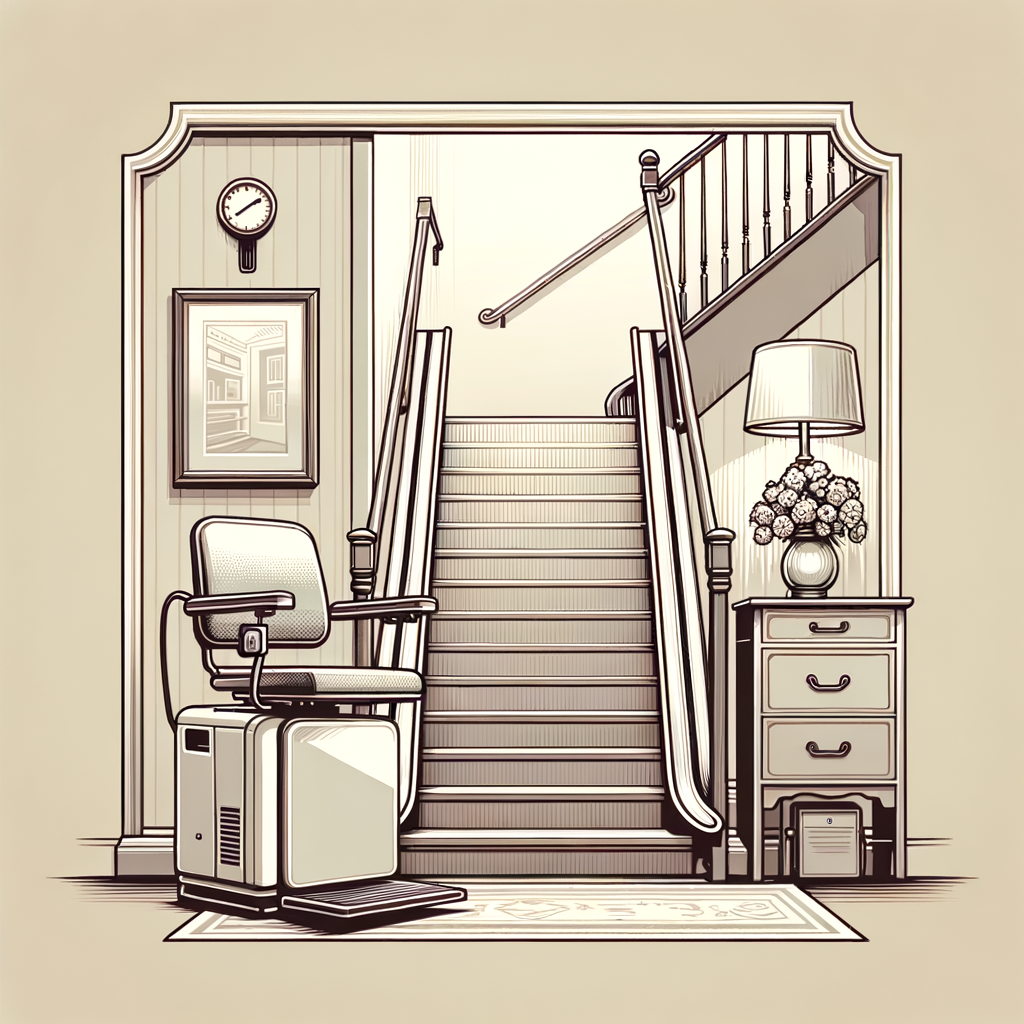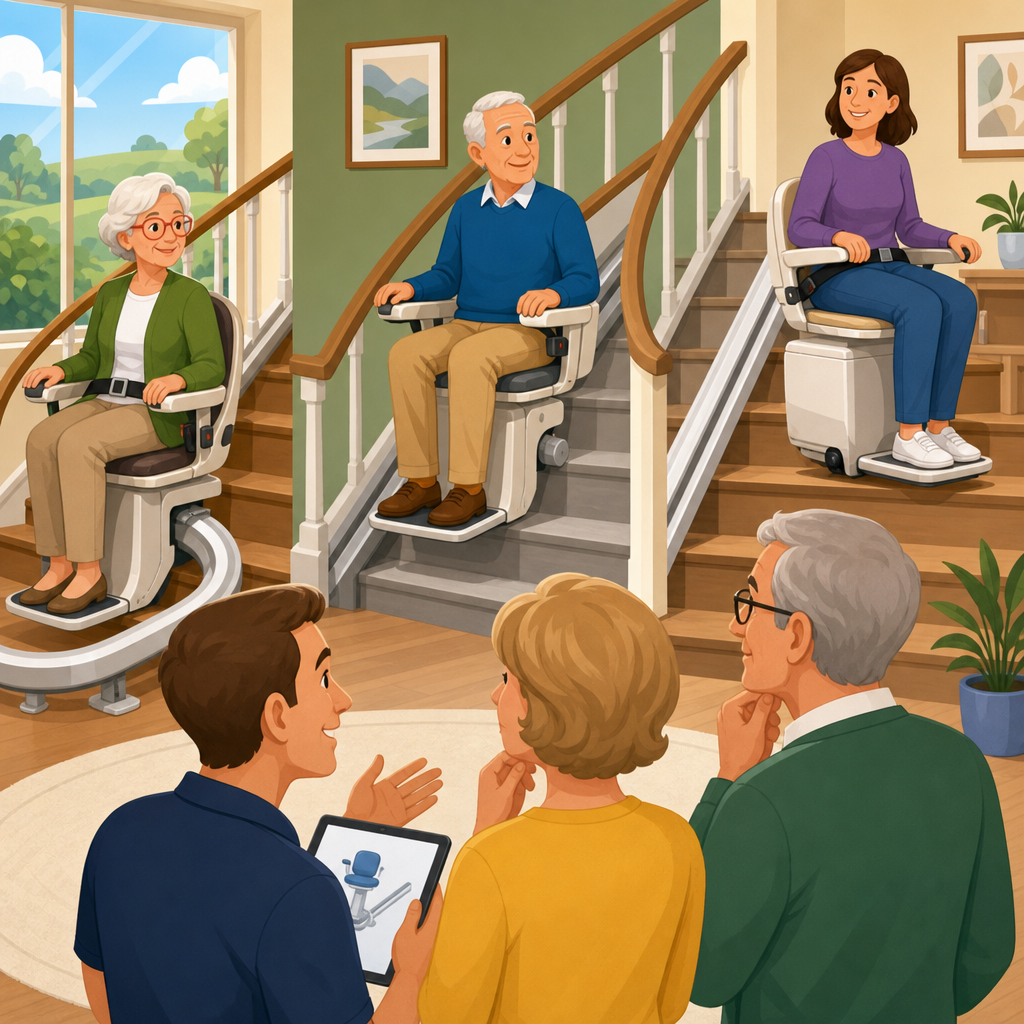
Choosing the right chair lift based on your mobility level starts with understanding that no single model fits every user, staircase, home layout, or long-term care plan. In practice, the best chair lift is the one that matches how you move today, supports how you may move in the future, and integrates safely with the structure of your stairs. A chair lift, sometimes called a stair lift, is a motorized seat that travels along a rail mounted to the staircase, carrying a person between floors while reducing fall risk and preserving access within the home. Mobility level refers to how easily a person can transfer, sit upright, operate controls, bear weight, and manage balance before, during, and after the ride. This matters because the wrong lift can create new hazards: a seat that swivels poorly may strain hips, a narrow seat may limit safe transfers, and a standard model may fail to support a user whose condition is progressive. I have seen families focus only on staircase shape or price, then discover after installation that the user struggles more with standing, positioning, or hand control than with the stairs themselves. That is why this topic belongs at the center of any chair lift buying decision. When chosen well, a chair lift extends independent living, reduces caregiver strain, and delays costly home moves. When chosen poorly, it becomes an expensive obstacle. The most effective evaluation combines the user’s physical abilities, the staircase design, the lift’s specifications, and the service network behind the product.
Start with a realistic mobility assessment
The first step in choosing the right chair lift is to define the user’s current mobility in practical terms rather than broad labels like “good” or “limited.” Ask whether the person can walk independently, uses a cane or walker, needs help standing, has one-sided weakness, experiences dizziness, or has difficulty bending knees or hips. Transfer ability is especially important. A user may handle the ride itself but struggle to sit down safely if the seat height is too low or the landing area is cramped. I typically break mobility into functional categories: mild limitation, moderate limitation, significant limitation, and complex mobility needs. Mild limitation usually means the user can stand and pivot without help, grasp controls easily, and sit upright without trunk support. Moderate limitation often includes slower transfers, reduced balance, arthritis pain, or fatigue. Significant limitation may involve partial weight-bearing, poor core stability, tremor, or difficulty positioning feet. Complex mobility needs can include neurological conditions, severe joint restriction, post-stroke weakness, or progressive diseases that change equipment needs over time.
This assessment should also consider cognitive and sensory factors. A chair lift user needs to understand basic operation, tolerate movement, and follow a safe boarding routine. Vision affects the ability to judge seat position and footrest placement. Hearing matters less for operation than balance and communication, but clear alerts are still helpful. Hand function is another overlooked factor. Standard toggle or rocker controls may be difficult for someone with severe arthritis, Parkinsonian tremor, or reduced grip strength. In those cases, larger pressure-sensitive controls or alternative switch styles can make a meaningful difference. If the user receives occupational or physical therapy, involve that clinician. A therapist can identify whether the real barrier is transfer mechanics, trunk control, joint range, or endurance. That level of specificity leads to a better product match than shopping by brand alone.
Match chair lift type to the staircase and the user
Once mobility level is clear, the next decision is chair lift type. Straight stair lifts are designed for staircases without turns, intermediate landings, or curves. They are usually the most affordable, the fastest to install, and the easiest to service because many manufacturers use modular rails cut to length. Curved stair lifts are custom-built for staircases with bends, spirals, split landings, or multiple levels. The rail is manufactured to the exact dimensions taken during a site survey, often with digital photo measurement systems. Outdoor stair lifts use weather-resistant materials, sealed components, and protective covers for porches, decks, or exterior entry stairs. Standing or perch lifts are specialized options for users who cannot bend their knees fully or who have extremely narrow stairs, though they require stronger balance and are unsuitable for many users with moderate or severe limitations.
The user’s mobility level should determine whether a standard seated model is appropriate or whether features from a premium or heavy-duty category are essential. A person with mild limitation on a straight staircase may do well with a basic seated lift that includes a swivel seat, seat belt, and obstruction sensors. Someone with moderate limitation may benefit from a powered swivel, powered footrest, and a larger seat to reduce twisting and bending. A user with significant limitation may need a higher weight capacity, extra seat width, a lower start rail position for easier boarding, and a custom parking location that creates more room at the landing. In homes where the user can manage transfers but not repeated stair climbing, a standard model often works very well. In homes where transfers are difficult, the staircase fit alone does not decide suitability; transfer safety does. That is the dividing line many buyers miss.
Core features that matter by mobility level
Chair lift brochures often highlight sleek rails and upholstery choices, but the features that truly matter are those that improve boarding, positioning, and reliability. For mild mobility limitations, the essentials are straightforward: a stable seat, intuitive control, folding footrest, seat belt, and obstruction sensors that stop the lift if something is on the stairs. For moderate limitations, powered features become more than convenience. A powered swivel seat can reduce the hip rotation needed to exit at the top landing. A powered footrest prevents the need to bend down manually. Remote call-send controls are important if more than one person uses the lift or if the seat must be parked away from the main living area. Soft start and soft stop reduce jolting, which matters for users with back pain, vestibular sensitivity, or poor trunk control.
For significant or progressive mobility loss, seat dimensions, armrest spacing, and drive quality are critical. Heavy-duty models commonly support 350 to 600 pounds, depending on the brand and rail design. Some also offer higher seat backs, wider seats, and reinforced transmission systems. If the user has edema, a rigid ankle, or difficulty keeping feet positioned, the footrest depth and height must be checked carefully. Battery-powered systems are now standard in many residential models; they charge at stations along the rail and continue working during power outages for a limited number of trips. That is valuable for all users, but essential for anyone who cannot safely remain on one floor if household power fails.
| Mobility level | Best chair lift fit | Most important features | Main caution |
|---|---|---|---|
| Mild limitation | Standard straight or curved seated lift | Simple controls, seat belt, folding arms and footrest, obstruction sensors | Do not choose by price alone if symptoms are likely to progress |
| Moderate limitation | Seated lift with comfort and transfer upgrades | Powered swivel, powered footrest, soft start-stop, adjustable seat height | Landing clearance must support slower transfers |
| Significant limitation | Heavy-duty or custom-configured seated lift | Higher capacity, wider seat, stable armrests, precise parking positions, battery backup | Transfer difficulty may require clinical input before purchase |
| Complex or progressive needs | Future-focused model or alternative accessibility solution | Upgrade path, robust service support, adaptable controls, custom rail layout | A chair lift may become insufficient as needs change |
Comfort, transfer safety, and daily usability
Daily usability separates a technically compatible chair lift from one that genuinely improves life at home. The seat should allow the user to sit fully back without excessive effort, keep hips and knees in a tolerable position, and support an exit movement that feels controlled rather than rushed. In real installations, top landing safety is where many problems appear. If the chair stops too close to the stair edge, the user may twist awkwardly while still feeling exposed to the stairs. A manual swivel seat can solve that for some people, but others need a powered swivel because they lack the strength or coordination to rotate the seat smoothly. A hinged rail, often used at the bottom of the stairs to prevent the track from blocking a doorway, can be useful, but it adds moving parts and requires enough timing and space for safe operation.
Consider how the chair lift will function on an ordinary day, not just during a demonstration. Can the user fold or unfold the seat independently? Is the hallway wide enough when the lift is parked? Can another household member still use the stairs comfortably? If the user carries oxygen tubing, wears a brace, or has a pet underfoot, those details affect safe operation. Upholstery texture and seat padding matter less than secure positioning. Armrests should support standing without feeling loose. Footrest edges should be visible and easy to align with. Some manufacturers offer offset or overrun options that move the user beyond the top or bottom stair run for safer dismounting. Those options can be extremely valuable in homes with tight landings. Good installers discuss these practical movements in advance rather than treating them as minor accessories.
Comparing brands, standards, and installation quality
Brand comparison should focus on rail engineering, service availability, parts support, and compliance with recognized safety standards. In North America, residential stair lifts are commonly evaluated against ASME A18.1 and related code expectations, though local requirements vary. Reputable manufacturers include Bruno, Stannah, Handicare, Harmar, Access BDD, and Savaria, with product strengths that differ by staircase type, capacity, and dealer network. A strong dealer matters as much as the brand because most residential lifts are sold, measured, installed, and serviced through local providers. I advise buyers to ask who performs service after installation, what the response window is for breakdowns, whether batteries are stocked locally, and how warranty labor differs from parts coverage. A five-year drivetrain warranty sounds strong, but if service is delayed for a week, the practical value drops quickly.
Installation quality affects safety, noise, ride smoothness, and long-term maintenance. The rail is usually mounted to stair treads, not the wall, which surprises many homeowners. Proper anchoring, track alignment, charging point setup, and final limit adjustment are essential. A rushed installation can leave the seat slightly misleveled, the footrest too high, or the stop position poorly aligned with the landing. Ask whether the installer will perform a full handoff that includes boarding technique, seat rotation, call-send operation, folding methods, and emergency lowering procedures if applicable. Also ask for written maintenance guidance. Many issues that users describe as “the lift feels wrong” turn out to be fit problems, not product defects. That is why a thorough in-home assessment and post-installation review matter more than showroom impressions.
Planning for progression, cost, and alternatives
A chair lift should be chosen with the next several years in mind. If the user has a stable condition, a straightforward model may be all that is needed. If the user has Parkinson’s disease, multiple sclerosis, heart failure, severe arthritis, or another condition likely to progress, build future needs into the decision now. That may mean selecting a model with a larger seat, easier controls, better battery performance, or a dealer with strong upgrade options. Cost varies widely. Straight stair lifts often start in the lower thousands, while custom curved models can reach much higher depending on rail complexity, overrun length, and powered options. Outdoor units and heavy-duty units add cost, but they may prevent a more expensive move or renovation. Medicare typically does not cover chair lifts for home use, though Medicaid waivers, veterans’ programs, state assistive technology programs, or aging services grants may help in some cases.
It is also important to recognize when a chair lift is not the best solution. If the user cannot transfer safely even with armrest support, cannot remain seated upright, or needs caregiver assistance on both ends of every ride, a vertical platform lift, home elevator, first-floor bedroom conversion, or ramped entry plan may be more appropriate. Wheelchair users who cannot transfer independently often need a different device entirely. In some homes, the staircase is so narrow or the landing so constrained that a standard seated lift creates traffic and transfer problems. A reputable provider says so. The right decision is not always the least expensive or the most compact option; it is the option that delivers repeatable safety. Start with a professional in-home assessment, compare equipment against real mobility needs, and choose a chair lift that supports independence without compromising comfort or confidence every day.
Frequently Asked Questions
How do I know which chair lift is right for my current mobility level?
The right chair lift starts with an honest assessment of how you move on a daily basis, not just how the staircase looks. Some people need help mainly because of mild balance issues, joint pain, or reduced stamina, while others may have more advanced mobility limitations that affect their ability to sit, stand, transfer, or operate controls independently. If you can sit down and stand up with minimal assistance, a standard seated chair lift may be a good fit. If bending the knees is difficult, standing or perch-style stair lifts may be more appropriate in certain cases. For users with significant weakness, limited trunk control, or progressive conditions, it is important to look beyond basic comfort and focus on seat height, arm support, swivel function, footrest design, and ease of transfer at the top and bottom landings.
It is also important to think about whether your mobility is likely to stay the same, improve, or decline over time. A lift that works today may become less practical if a user develops greater difficulty with transfers, needs caregiver support, or begins using additional mobility aids. That is why a professional assessment is so valuable. Reputable providers evaluate the staircase, the user’s physical abilities, and the home environment together. In most cases, the best choice is not the most advanced model or the least expensive one, but the one that safely matches your present needs while leaving room for likely changes in your mobility.
What features matter most if I have trouble sitting down, standing up, or transferring safely?
If transfers are the biggest challenge, focus on features that reduce strain and improve stability at every point of use. A powered swivel seat can be especially helpful because it turns the seat away from the staircase at the top landing, making it easier and safer to get off without twisting toward the stairs. Seat height and depth also matter more than many buyers realize. A seat that is too low can make standing painful or unsafe, while a seat that is too deep can reduce support and make repositioning difficult. Supportive armrests, a well-placed footrest, and easy-to-reach controls all contribute to a more stable transfer.
For users with arthritis, weakness, or limited flexibility, powered options can make a major difference. A powered footrest reduces the need to bend down before or after each ride. Powered folding components may also help in homes where multiple people share the stairs. If a caregiver assists with transfers, the layout at the top and bottom of the stairs becomes just as important as the lift itself. There should be enough landing space to get on and off safely, and in some homes a track overrun may be recommended so the user can dismount farther away from the stair edge. These details may seem small, but for people with reduced strength or balance, they often determine whether the lift feels safe and usable every day.
Can a chair lift still be a good option if my mobility may get worse in the future?
Yes, but only if you choose with future needs in mind. Many people buy a chair lift after a health change, surgery, or fall, but mobility often continues to evolve after installation. Conditions such as Parkinson’s disease, multiple sclerosis, arthritis, neuropathy, stroke recovery, and general age-related decline can all change how easily a person transfers, sits upright, or uses hand controls. In those situations, it is wise to select a model that does more than solve an immediate problem. Features such as a larger seat, smoother start-and-stop motion, a powered swivel, heavier weight capacity, and simple controls may become much more important over time.
That said, planning ahead does not mean overbuying a system that is unnecessary today. It means discussing realistic scenarios with an experienced stair lift provider and, when appropriate, with a physical or occupational therapist. In some homes, a standard chair lift may remain appropriate for years. In others, the user may eventually need a different accessibility solution altogether, especially if independent transfers become too difficult. The goal is to choose a lift that supports current function, accommodates likely progression where possible, and fits into a broader long-term care plan rather than treating the purchase as a one-size-fits-all fix.
How does the type of staircase affect which chair lift I can choose?
The staircase has a major impact on lift selection because the rail is mounted to the stairs themselves, and every stairway presents different structural and spatial considerations. Straight staircases are usually the simplest and most affordable to fit because they use a standard rail. Curved staircases, stairways with turns, intermediate landings, or unusual angles require a custom rail designed specifically for that layout. Narrow stairs can also affect the type of seat, footrest, and folding features that make sense, especially in households where others still need to walk the staircase comfortably and safely.
Beyond shape, installers also consider stair width, landing size, wall proximity, obstructions such as doors or radiators, and whether there is enough room for safe boarding and exiting. In some cases, a compact model or a perch lift may be considered when knee flexion is limited or the staircase is unusually tight. The user’s mobility level and the staircase design have to be matched carefully. A model that works well on paper may not be safe if the top landing is cramped or if the user needs extra room for transfers. This is why an in-home assessment is essential: the right chair lift is not chosen by product category alone, but by how the user and the staircase function together.
Should I choose a basic chair lift or invest in a model with more advanced safety and comfort features?
A basic chair lift can be an excellent solution for someone with relatively stable mobility, good sitting balance, and the ability to get on and off the seat without much assistance. However, once mobility limitations become more complex, advanced safety and comfort features are often worth the investment because they improve day-to-day usability and reduce risk. Common upgrades such as seat belts, obstruction sensors, lockable controls, smooth ride technology, powered swivel seats, powered footrests, and remote call/send controls are not just convenience items in many situations; they can directly affect whether the lift is used safely and consistently.
Comfort also matters more than people sometimes expect. If the seat feels unstable, the controls are awkward, or the ride starts and stops too abruptly, a user may become anxious about using the lift or may avoid it altogether. For individuals with chronic pain, stiffness, or neurological conditions, better cushioning, more supportive seating, and easier controls can greatly improve confidence. The smartest approach is to evaluate each feature based on a real need: Does it reduce bending? Does it make transfers safer? Does it help the user remain independent longer? If the answer is yes, that feature is likely a practical investment rather than an unnecessary upgrade.