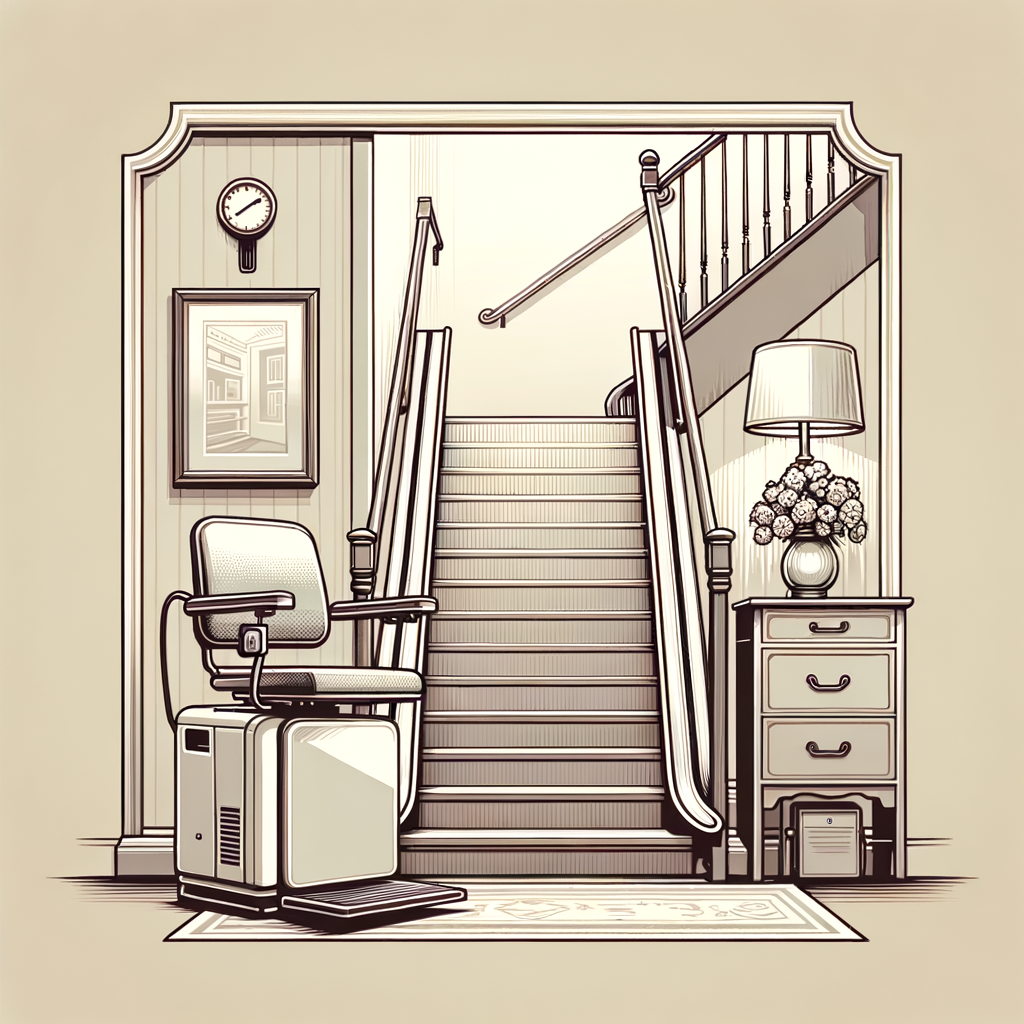
Universal design principles in chair lift engineering shape how modern lift systems serve the widest possible range of users without requiring special adaptation, and they now influence everything from rail geometry to control placement, seat ergonomics, power backup, and installation planning. In practical terms, universal design means creating products and environments that are usable by people with different mobility levels, body sizes, sensory abilities, and living situations. For chair lifts, that includes older adults aging in place, wheelchair users transferring to a seat, people recovering from surgery, caregivers assisting riders, and family members who still need normal stair access. This matters because a chair lift is not just a motorized seat on a rail; it is a safety-critical access device installed inside an occupied home or public setting, where design errors affect daily independence, fall risk, caregiver strain, and long-term usability. After working through lift assessments in narrow townhouses, split-level homes, and commercial retrofits, I have seen the same lesson repeatedly: the best chair lift design is not the one with the most features, but the one that fits real users, real stairs, and real routines with the fewest compromises.
Within the wider topic of chair lift types and designs, universal design is the comparison framework that ties the category together. It provides the criteria for evaluating straight stair lifts, curved stair lifts, outdoor models, perch lifts, heavy-duty configurations, and platform alternatives. It also clarifies key terms. Accessibility refers to whether a person can use the system at all. Usability refers to how easily, safely, and confidently that use happens in everyday life. Inclusive engineering extends both ideas into product design, accounting for anthropometrics, biomechanics, cognition, maintenance access, and failure modes. Standards and codes support these decisions. In the United States, ASME A18.1 governs platform lifts and stairway chairlifts, while electrical work is tied to the National Electrical Code and local permitting. In Europe and the United Kingdom, manufacturers often design to Machinery Directive requirements and standards such as EN 81 family provisions where applicable. Across regions, the engineering objective is consistent: reliable stair travel with controlled motion, predictable user interaction, and minimal obstruction of the built environment.
Core universal design principles applied to chair lifts
The most useful way to understand universal design in chair lift engineering is to map broad principles into hardware decisions. Equitable use means the lift should work for as many users as possible without creating a separate, stigmatizing solution. A seat with moderate height, supportive armrests, intuitive rocker controls, and remote call stations serves independent riders and caregivers alike. Flexibility in use appears in swivel seats, folding arms, adjustable seatbelt configurations, and optional left- or right-side controls. Simple and intuitive use is achieved through low-force buttons, clear indicator lights, consistent travel logic, and emergency stop placement that can be reached while seated. Perceptible information includes audible alerts, visible status LEDs, and error reporting that installers and service technicians can interpret quickly.
Tolerance for error is especially important because chair lifts operate on stairs, where mistakes have serious consequences. Engineers address this with overspeed governors, final limit switches, obstruction sensors on the carriage and footrest, seat interlocks, and battery-backed descent during power loss. Low physical effort matters both for riders and for anyone folding or parking the lift. Well-designed hinges, balanced seat components, and powered folding rails reduce strain on arthritic hands and shoulders. Size and space for approach and use affect transfer safety more than many buyers realize. The landing must allow a person to sit and stand without twisting toward open stairs, and nearby doors, radiators, trim details, or handrails can interfere with safe movement. When comparing models, these fundamentals are more informative than marketing language because they predict whether the installation will remain comfortable and safe after the first few weeks of use.
User-centered engineering: fit, comfort, and transfer safety
Chair lift engineering starts with the rider’s body mechanics. Seat width, seat depth, backrest angle, armrest spacing, footrest size, and seat height determine whether a person can transfer safely and ride without fatigue. A smaller user may need a shorter seat depth to avoid pressure behind the knees, while a taller or heavier user may require a wider seat, stronger drivetrain, and reinforced chassis. Manufacturers such as Bruno, Stannah, Handicare, and Acorn offer different ergonomic approaches, but the engineering questions are the same: can the user sit down in control, remain stable during travel, and stand up on the landing without unsafe rotation?
Transfer geometry is where many successful or failed installations are decided. A powered swivel seat at the top landing can move the rider away from the stair edge before standing, which materially reduces fall exposure. Perch-style lifts support users who cannot bend fully at the hips or knees, but they require better balance and are not universally appropriate. Seatbelts should be easy to latch one-handed, and armrests must support partial weight-bearing without flexing. In homes with multiple users, a compromise fit may be necessary, so adjustability matters. I typically advise evaluating the least stable rider first, because a chair lift that works only for the strongest household member is poorly matched to the purpose of universal design.
Stair geometry, rail design, and space planning
Every chair lift type is constrained by the stair itself. Straight stair lifts use a constant rail on stairs without turns, intermediate landings, or changes in angle. They are simpler, faster to install, and generally less expensive because the rail can be manufactured from standard sections. Curved stair lifts are custom engineered to follow turns, spirals, or multi-landing layouts. Their rails are site-specific, often produced from digital surveys or photo-measurement systems, and small measurement errors can become major fit problems. Universal design in this context means preserving stair usability for everyone else while still creating safe lift travel for the rider.
Rail placement affects clear width, headroom, and trip risk. A rail mounted too high or too far from the wall can narrow the walking path for other stair users. A rail too tight to the wall may create knuckle clearance issues or interfere with trim and handrails. Hinged rails, commonly used near doorways, prevent the lower rail from blocking circulation, but they add moving parts and maintenance points. Parking positions at top or bottom landings can reclaim usable space and reduce the visual impact of the installation. Engineers also account for floor conditions, wall projections, nosing profiles, and staircase pitch. The best installations feel integrated rather than imposed, which is why detailed surveying and pre-installation conflict checks are essential.
| Design topic | Straight stair lift | Curved stair lift | Universal design implication |
|---|---|---|---|
| Rail form | Standard linear rail | Custom rail for turns and landings | Customization improves fit but raises cost and lead time |
| Installation time | Usually faster | Usually longer due to fabrication | Project urgency may favor straight configurations where possible |
| Space management | Simpler parking options | More variables at bends and landings | Detailed surveying is critical to preserve stair access |
| Cost profile | Lower average cost | Higher average cost | Budget decisions must not override transfer safety |
| Future adaptability | Limited to same stair form | Highly specific to one staircase | Resale and relocation value differ significantly |
Controls, interfaces, and operational clarity
A chair lift should not require instruction every time it is used. Good interface design makes operation obvious. Most residential units use constant-pressure controls, meaning the rider must keep pressing the switch during travel. This is a deliberate safety choice because it stops movement if the rider releases the control. Toggle paddles, rocker switches, and joystick-style controls each have advantages, but the best option is the one the intended user can operate consistently with limited dexterity or sensation. Wireless call-send remotes are standard on many models and allow the seat to be moved away when not in use or summoned from another landing.
Interface clarity extends beyond the rider. Caregivers need to understand seat positioning, footrest folding, charging status, and emergency procedures. Service technicians benefit from diagnostic displays, fault codes, and accessible reset points. Some manufacturers now include app connectivity or advanced monitoring, but these features only help when they simplify maintenance rather than complicate basic use. In my experience, physical controls with clear labeling outperform touch-based interfaces in residential settings because they are easier to learn and more reliable under stress. Audible beeps, slow-start motor control, and visible battery indicators support confidence, especially for new users who may initially fear motion on stairs.
Power systems, safety layers, and reliability in daily use
Most modern chair lifts are battery powered at the carriage, with charging points positioned along the rail or at parking stations. This arrangement allows the lift to continue operating during a household power outage for a limited number of trips, which is a significant universal design advantage because mobility needs do not pause when the grid fails. Direct-powered systems still exist in some contexts, but battery-backed drives have become the practical standard for residential reliability. The quality questions are battery chemistry, charger design, duty cycle tolerance, and how clearly the system communicates low-charge conditions.
Safety engineering is multi-layered. The lift should start and stop smoothly to reduce jarring for users with pain, spasticity, or reduced trunk stability. Overspeed protection prevents uncontrolled descent. Final limit switches stop travel before overrun. Footrest and carriage sensors stop the unit if it contacts an object on the stairs. Seat swivel locks prevent travel unless the chair is in the correct riding position. Manual lowering or emergency procedures must be realistic for the household, not just compliant on paper. Reliability also depends on serviceability. Accessible batteries, standardized diagnostic procedures, and local parts availability often matter more over five years than a slightly quieter motor at installation.
Comparing chair lift types through a universal design lens
As a hub within general design and comparison topics, this article should help readers understand where each chair lift type fits. Straight stair lifts are usually the most practical starting point for a single uninterrupted staircase. They offer predictable installation, broad model availability, and lower cost. Curved stair lifts are the correct answer when the stair has turns or intermediate landings and the user needs continuous seated travel. Outdoor stair lifts require weather-resistant covers, sealed controls, corrosion-resistant materials, and rails designed for temperature variation. Heavy-duty lifts address higher weight capacities and larger body dimensions, often with wider seats and stronger structural elements. Perch lifts solve clearance or joint-flexion problems but require careful user screening.
Universal design does not mean one model suits everyone. It means the selection process accounts for the broadest realistic set of needs while respecting the site. For some households, a vertical platform lift or home elevator will outperform any chair lift because the user cannot transfer safely. For others, a compact stair lift with folding components preserves enough walking width that the staircase remains useful to everyone. Good comparison work therefore balances user ability, stair form, building layout, budget, aesthetics, and future progression of mobility needs. If a condition is likely to change, choosing a marginal fit today often creates avoidable replacement costs later.
Installation quality, codes, and long-term performance
Even excellent chair lift engineering can be undermined by poor installation. Survey accuracy, bracket spacing, fastener selection, charging point alignment, and landing clearances all affect performance. Most residential rails mount to stair treads rather than walls, which surprises many homeowners but usually improves structural predictability and avoids unnecessary wall reinforcement. Installers should verify tread condition, check for loose nosings, and confirm there is sufficient electrical provision for charging equipment. Where permits or inspections are required, compliance should be treated as a baseline, not the finish line.
Long-term performance depends on maintenance planning and honest discussion of limitations. Battery replacement is routine, not exceptional. Track cleaning, hinge checks, gearbox inspection, and sensor testing should follow the manufacturer schedule. Upholstery, outdoor covers, and remote batteries also need periodic attention. Homeowners should ask about response times, parts inventories, and whether local technicians service the exact model installed. The most successful projects are the ones where engineering, installation, and aftercare are aligned around daily function. If you are comparing chair lift designs across this subtopic, use universal design principles as your checklist: fit the user, fit the stair, reduce effort, preserve safety margins, and plan for the next stage of mobility rather than only the present moment.
Universal design principles give chair lift engineering its clearest purpose: make stair travel safer, easier, and more dependable for the widest practical range of people. When you evaluate chair lift types through this lens, features stop being marketing add-ons and become measurable design choices. Seat dimensions affect transfer safety. Rail placement affects household circulation. Control logic affects confidence. Battery backup, obstruction sensing, swivel locking, and smooth starts affect real-world risk every day. Straight, curved, outdoor, heavy-duty, and perch lifts all have valid roles, but only when matched carefully to the rider, the staircase, and the building context.
For readers using this page as a hub within general design and comparison topics, the main takeaway is simple: start with people and spaces, not product brochures. Define who will use the lift now, how their needs may change, what the staircase can physically support, and which design preserves the most independence with the fewest tradeoffs. Then compare models on standards compliance, service support, adjustment range, and installation quality. That approach leads to better outcomes than chasing the cheapest rail or the most aggressive feature list. Use these principles as your decision framework, and then move deeper into the related articles in this section to compare specific chair lift designs with confidence.
Frequently Asked Questions
1. What does universal design mean in chair lift engineering?
In chair lift engineering, universal design means creating lift systems that are usable, safe, and intuitive for the broadest possible range of people without requiring custom adaptation for each user. Rather than focusing only on a single type of rider, engineers design around variation in mobility, strength, balance, reach, vision, hearing, body size, and living environment. This approach influences nearly every part of the system, including seat height, armrest support, swivel operation, footrest design, control location, rail routing, boarding clearances, and emergency features. The goal is not simply to make a chair lift work, but to make it easy to understand, comfortable to use, and dependable in everyday life for older adults, people recovering from injury, wheelchair users transferring to the seat, and other household members who may interact with the lift.
Universal design also extends beyond the rider experience to the installation environment. Engineers must consider staircase width, landings, wall proximity, lighting conditions, and the need to keep stairs usable for others in the home. A well-engineered chair lift should reduce physical strain, minimize confusion, and support independent use across a wide range of scenarios. In that sense, universal design is both a technical and human-centered framework: it aligns mechanical performance with real-world accessibility so the lift serves more people more effectively over a longer period of time.
2. Which chair lift features are most influenced by universal design principles?
Several key features are directly shaped by universal design principles, starting with the seat itself. Seat width, cushion firmness, back support, armrest shape, and seat height all affect how easily a person can transfer onto and off the lift. Engineers often design for stable posture, reduced pressure points, and secure seating for users with different body types and levels of trunk control. Swivel seats are another major element, especially at upper landings, because they help position the user away from the staircase before standing. Locking swivel mechanisms, folding components, and supportive armrests all contribute to safer, more predictable movement.
Controls are equally important. Universal design encourages simple, clearly labeled controls that can be operated with limited hand strength or dexterity. Many systems include large rocker switches, paddle controls, or easy-touch buttons instead of small, difficult-to-press interfaces. Call/send stations mounted at accessible heights add convenience for households with multiple users. Visual indicators, audible alerts, and intuitive movement directions also improve usability for people with sensory or cognitive limitations. Safety systems, such as seat belts, obstruction sensors, overspeed governors, and battery backup, are typically integrated in ways that support confidence rather than complicate operation.
Rail geometry and installation planning are also strongly influenced by universal design. Straight and curved rail designs must accommodate smooth travel, consistent speed, and practical boarding positions on both ends of the staircase. Engineers may extend rails beyond the steps to create safer transfer zones or park the chair away from the main living area. Foldable footrests and seats help preserve stair access for others in the home. In short, universal design shapes both the visible user features and the hidden engineering decisions that determine how inclusive, practical, and reliable the finished lift system will be.
3. How does universal design improve safety and usability for different types of users?
Universal design improves safety and usability by anticipating a wide range of physical and sensory needs before the product is ever installed. For users with limited leg strength or balance issues, stable seat geometry, supportive armrests, and predictable start-and-stop motion reduce the effort required to transfer safely. For people with arthritis or reduced grip strength, easy-to-operate controls and low-force mechanisms are essential. For taller, shorter, heavier, or more petite users, thoughtful dimensions and weight-rated engineering help ensure that the lift feels stable and properly fitted rather than awkward or restrictive. This reduces the chance of slips, misalignment during transfer, or misuse caused by discomfort.
The usability benefits are just as important as the safety features. A chair lift that is intuitive to operate is more likely to be used consistently and independently. Simple controls, visible status indicators, and reliable seat positioning make the system easier to understand for first-time users and less mentally taxing for daily use. Universal design also considers users with changing needs over time. Someone recovering from surgery may need temporary support now, while an older adult may need long-term accessibility with minimal physical effort. By engineering for flexibility, manufacturers can create systems that remain useful even as the user’s condition, confidence, or household situation changes.
Another major advantage is that universal design supports shared living environments. In many homes, a chair lift is used by one primary rider but exists in a space used by everyone. Folding components, unobtrusive rail placement, safe parking positions, and accessible call/send controls help the lift work well for caregivers, family members, and visitors too. That broader usability is a core part of universal design: the system should not feel like a specialized obstacle, but like a well-integrated mobility solution that improves access while preserving function for the whole household.
4. Why are rail layout, control placement, and installation planning so important in universal chair lift design?
Rail layout, control placement, and installation planning are central to universal chair lift design because they determine whether the lift will actually work safely and comfortably within a real home. Even the best chair lift seat or motor system can become difficult to use if the boarding area is cramped, the controls are hard to reach, or the rail stops in a position that forces an awkward transfer. Universal design looks closely at the entire user journey: approaching the lift, sitting down, operating it, traveling, and standing up again. Engineers and installers must make sure each of those steps can be completed with minimal strain and maximum stability.
Rail geometry affects smoothness, space efficiency, and transfer safety. On straight staircases, this may involve choosing the right overrun length so the chair can stop at a safer landing position. On curved stairs, custom rail fabrication often allows the system to follow the home’s layout while maintaining practical seat orientation and adequate clearance. Installation planning also considers wall projections, handrails, door swings, hallway traffic, and whether other stair users can still move comfortably through the space. These decisions are not just aesthetic; they directly affect accessibility, safety, and long-term satisfaction with the lift.
Control placement is another area where universal design has a measurable impact. Controls should be reachable from a stable seated position and easy to locate and understand. Wall-mounted call/send stations need to be installed at usable heights for people with limited reach or mobility. In some designs, powered seat swivels, folding footrests, or remote controls further reduce physical effort. Taken together, these installation details help create a lift system that feels natural and dependable in daily life. Universal design succeeds when the engineering and the environment work together seamlessly rather than forcing the user to adapt to poor placement or awkward operation.
5. How do power backup, reliability, and long-term adaptability relate to universal design in chair lifts?
Universal design is not only about initial accessibility; it is also about dependable performance over time. Power backup is a good example. Many modern chair lifts use battery-powered drive systems that continue operating during a household power outage, which is critical for users who rely on the lift as their primary means of moving between floors. From a universal design perspective, this is more than a convenience feature. It protects independence, reduces anxiety, and ensures the system remains functional in situations where a user may have no safe alternative. Backup power, charging design, and fault monitoring all contribute to a more resilient and inclusive product.
Reliability is equally important because inconsistent performance creates barriers for all users, especially those with limited mobility or confidence. Smooth motion, dependable stopping accuracy, diagnostic alerts, and robust safety interlocks support trust in the equipment. When a chair lift behaves predictably every time, users are more likely to operate it independently and safely. Universal design encourages engineering choices that reduce maintenance burden and simplify troubleshooting, such as accessible service components, clear status indicators, and durable materials that stand up to repeated use in residential settings.
Long-term adaptability is the final piece. People’s needs can change due to aging, illness, recovery, or changes in who lives in the home. A universally designed chair lift is engineered with enough flexibility to remain useful through those changes whenever possible. That might include accommodating different body sizes, supporting accessory upgrades, offering powered options for users with reduced strength, or fitting installation plans that preserve access as the household evolves. In practical terms, universal design helps future-proof the mobility solution. Instead of solving only today’s access issue, it creates a more inclusive and sustainable system that can continue serving users safely and effectively for years.