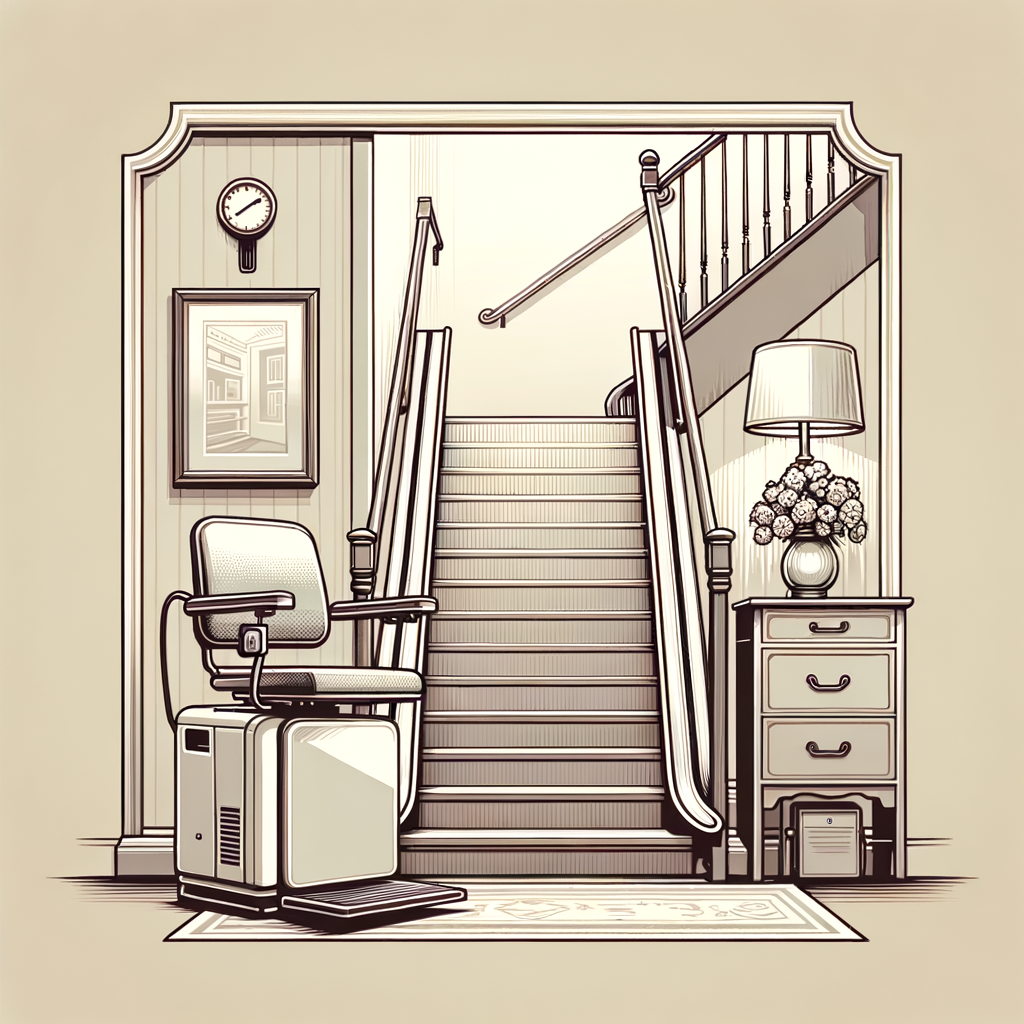
Future trends in chair lift design and manufacturing are reshaping how mobility equipment is engineered, installed, maintained, and integrated into modern homes and public buildings. A chair lift, sometimes called a stair lift, is a powered seat that travels along a rail fixed to a staircase, allowing people with limited mobility to move safely between levels without climbing steps. In manufacturing terms, design covers the rail system, carriage, motor, seat structure, sensors, controls, and user interface, while production includes material selection, fabrication, testing, installation methods, and service support. This matters because demand is rising fast as populations age, more people remain in multi-story homes longer, and accessibility expectations are becoming stricter in housing, healthcare, hospitality, and retrofit construction.
I have worked with lift dealers, installers, and spec sheets long enough to see the market move from heavy, standardized systems toward more adaptive, data-aware, and user-centered products. Ten years ago, many buyers focused almost entirely on basic lifting capacity and price. Today, they ask about battery runtime during outages, seat ergonomics, smart diagnostics, compact fold dimensions, custom rail lead times, and whether the lift will blend into interior design. That shift is not cosmetic. It reflects a broader trend: chair lift design is becoming an intersection of industrial engineering, electronics, digital service, and inclusive design. Manufacturers that treat lifts as simple mechanical devices are being overtaken by those that build complete mobility systems.
The next wave of innovation is defined by six themes: better customization, safer automation, smarter electronics, lighter and stronger materials, cleaner manufacturing, and modular service models. These trends affect residential straight stair lifts, curved stair lifts, outdoor models, perch lifts, heavy-duty units, and platform-adjacent systems. They also influence adjacent decisions such as installation time, dealer training, inventory planning, warranty cost, and long-term reliability. As this hub article explains, the future of chair lift design and manufacturing is not one single breakthrough. It is a practical redesign of the entire product lifecycle, from digital measurement and fabrication to daily user comfort and predictive maintenance.
Customization is becoming the default design standard
One of the clearest future trends in chair lift design is the move from limited model variation to mass customization. Straight stair lifts have long been easier to standardize because the rail is linear and can be cut to length on site. Curved stair lifts, by contrast, require route-specific rails built to match landings, turns, and obstructions. What is changing is the speed and accuracy of customization. Manufacturers increasingly use digital stair surveying tools, CAD modeling, and CNC bending or machining to reduce errors between site measurement and rail production. In practice, this means fewer installation surprises, better fit around tight corners, and shorter wait times for complex projects.
Customization is also expanding beyond the rail. Seat height, arm width, swivel angle, footrest clearance, upholstery type, and control placement are now treated as configurable variables rather than fixed assumptions. For users with arthritis, reduced grip strength, or limited hip mobility, those details directly affect whether a lift is usable without assistance. I have seen installations succeed or fail based on small dimensional choices, such as whether the folded seat projects too far into a narrow stairwell or whether the armrests support a stable transfer from a walker. Future chair lift design will rely more on anthropometric data and adjustable geometry so one product platform can serve a wider range of bodies and transfer patterns.
Another important development is aesthetic customization. Historically, some homeowners delayed buying a stair lift because they viewed it as medical equipment that would dominate the room. Newer designs use slimmer rails, concealed wiring, more refined plastics, neutral finishes, and upholstery choices aligned with residential furniture. This is particularly important in higher-value homes, multifamily developments, and hospitality settings where visual integration affects acceptance. The design lesson is simple: better accessibility products are adopted faster when they feel like part of the environment instead of an institutional add-on.
Safety systems are moving from reactive protection to active prevention
Chair lifts have always included baseline safety elements such as seat belts, obstruction sensors, limit switches, overspeed governors, and swivel seat locks. Those features remain essential, but future chair lift manufacturing is shifting toward layered safety architecture. Instead of waiting for contact with an obstacle, newer systems aim to predict and prevent unsafe movement conditions. Improved sensor arrays can monitor carriage position, motor load, seat orientation, and footrest status in real time. If a user has not fully locked the seat into travel position, the system can stop before movement begins rather than relying on a later fault event.
This evolution mirrors broader machinery safety practices influenced by standards-driven design and failure mode analysis. Better control boards can distinguish between transient resistance and a true obstruction, reducing nuisance stoppages without compromising protection. Soft-start and soft-stop programming now plays a larger role as well. Abrupt acceleration may be technically functional, but it can destabilize frail users, especially those with balance disorders, Parkinsonian symptoms, or postoperative limitations. Smoother motion profiles improve both comfort and safety because they reduce the chance of sliding, bracing awkwardly, or losing confidence in the device.
Future systems will also improve emergency resilience. Battery-backed DC drives are already common because they allow operation during power outages, but battery management is getting more sophisticated. Intelligent charging, health monitoring, and clearer replacement alerts reduce the risk of silent battery decline. In regions facing storms, heat stress, or unreliable grids, this is not a luxury feature. It is a core design requirement. Better diagnostics also help dealers identify recurring sensor faults, rail alignment issues, or charging strip contamination before a breakdown strands the user upstairs or downstairs.
Digital controls and connected service are changing manufacturing priorities
The rise of connected electronics is one of the most significant future trends in chair lift design and manufacturing. Traditional lifts relied on relatively simple control logic and local troubleshooting. Modern platforms increasingly use microprocessor-based controllers, fault-code logging, and service interfaces that allow technicians to diagnose issues faster. Some manufacturers are beginning to add remote monitoring features, either through onboard connectivity or service tools paired during maintenance visits. For owners, this can mean quicker repairs. For manufacturers, it changes how products are engineered, because electronic architecture must support updates, diagnostics, and component traceability over many years.
Connected service matters most when it reduces downtime. A stair lift is not like an appliance that can wait for a convenient repair slot. If it fails, a user may effectively lose access to part of the home. Remote diagnostics can tell a dealer whether a problem is likely a battery issue, a charging contact issue, a seat switch fault, or a motor controller error before a technician arrives. That improves first-visit fix rates and reduces parts inventory guesswork. It also feeds valuable field data back into manufacturing, where recurring patterns can inform design revisions, supplier changes, or firmware improvements.
With more electronics comes a clear tradeoff: increased capability must not create unnecessary complexity for users. The best systems hide technical sophistication behind very simple controls. Large rocker switches, intuitive call-send stations, easy-to-read status lights, and clearly labeled fault indicators are more useful than flashy interfaces. In my experience, older users and caregivers value predictability over novelty. The future belongs to manufacturers that pair robust digital systems with calm, understandable user interaction.
| Design trend | What is changing | Practical benefit | Main challenge |
|---|---|---|---|
| Mass customization | Digital measurement, CAD rail design, modular seating options | Better fit on complex stairs and improved user comfort | Higher configuration management demands |
| Active safety | More sensors, smarter control logic, smoother motion profiles | Fewer preventable stops and safer transfers | More validation and testing needed |
| Connected service | Fault logging, remote diagnostics, traceable electronics | Faster repairs and better product improvement cycles | Cybersecurity and long-term support requirements |
| Advanced materials | High-strength alloys, engineered polymers, corrosion-resistant finishes | Lighter systems with strong durability | Material cost and qualification time |
Materials and mechanical engineering are advancing together
Future chair lift manufacturing will be defined as much by materials engineering as by electronics. Manufacturers are under pressure to reduce visible bulk, improve durability, lower shipping costs, and simplify installation without sacrificing load capacity. That pushes development toward high-strength aluminum extrusions, optimized steel sections, engineered polymers, sealed bearing systems, and corrosion-resistant coatings. Material choice is not merely a cost question. It affects vibration, noise, cleanability, weather performance, and how precisely components can be assembled at scale.
For indoor lifts, lightweight rail assemblies help installers handle components more safely and reduce labor strain on difficult staircases. For outdoor lifts, the challenge is harsher. Ultraviolet exposure, wind-driven rain, temperature cycling, and airborne contaminants can degrade finishes, crack lower-grade plastics, and corrode exposed hardware. Better outdoor models now use marine-grade or powder-coated finishes, weather-sealed covers, improved drainage paths, and electronics protection designed for real exposure rather than occasional dampness. If an outdoor stair lift is expected to remain reliable over several seasons, ingress protection, gasket design, and connector quality matter as much as motor rating.
Mechanical refinement also includes quieter drive systems and more compact transmissions. Rack-and-pinion drives remain common because they are durable and serviceable, but manufacturers continue to refine tooth geometry, lubrication methods, and carriage isolation to reduce noise and vibration. In premium segments, users increasingly expect near-silent travel, especially in open-plan homes. Lower noise is not just a comfort feature; it signals precision and can influence user confidence. A lift that sounds rough often gets perceived as unsafe, even when it is mechanically sound.
Manufacturing is becoming leaner, greener, and more modular
Chair lift manufacturing is moving toward modular product platforms that support multiple models with shared components. This trend reduces production complexity, speeds technician training, and improves spare parts availability. A manufacturer may use one motor family, one control architecture, and one seat frame across straight, curved, heavy-duty, and outdoor variants, with targeted changes for rail geometry or environmental protection. That modularity is especially valuable in a dealer-driven market where service consistency shapes brand reputation. If technicians can diagnose familiar assemblies across product lines, maintenance becomes faster and less error-prone.
Sustainability is also influencing design decisions, though practical realities still dominate. Manufacturers are reducing waste through more precise cutting, digital fabrication, recyclable packaging, and better inventory planning. Powder coating is often favored for durability and lower solvent impact compared with some traditional finishing methods. More efficient motors and chargers can lower standby consumption, which matters because many stair lifts remain plugged in continuously. None of this turns a chair lift into a low-impact product overnight, but the direction is clear: buyers, care providers, and public-sector procurement teams increasingly expect environmental responsibility alongside performance.
Another manufacturing trend is design for installation and service. Products are being engineered so rails align faster, wiring routes are cleaner, and replacement parts can be swapped without dismantling large sections of the lift. This has a direct economic impact. Labor is one of the biggest variables in installed cost, especially for retrofits in older homes with narrow stairs, awkward landings, or limited access. Every minute saved during installation or repair improves margins while reducing disruption for the resident. The best future-ready designs treat factory production, field installation, and long-term service as one continuous system.
Comparison factors that will shape the next generation of chair lifts
As buyers compare future chair lift types and designs, several factors will separate average products from leading ones. First is staircase compatibility. Straight lifts will remain the most affordable and quickest to install, but curved lifts will gain better lead times as digital manufacturing improves. Second is user transfer design. Features like powered swivel seats, powered footrests, and perch-style configurations will become more important as manufacturers target users who cannot easily bend their knees or sit fully. Third is footprint. Narrow staircases require compact rails, slimmer carriages, and better folded dimensions to preserve access for other occupants.
Fourth is serviceability. A lower purchase price does not guarantee lower lifetime cost if batteries are hard to access, fault codes are opaque, or proprietary parts take weeks to obtain. Fifth is resilience. In real homes, dust, pet hair, minor bumps, voltage fluctuation, and irregular cleaning are normal. Better products are designed for that reality. Finally, design quality should be judged by human outcomes: Can the user operate it independently, transfer safely, trust it daily, and keep using the home they prefer? That is the standard that matters most.
For anyone building a broader understanding of chair lift types and designs, this hub should connect naturally to deeper topics such as straight versus curved stair lifts, indoor versus outdoor chair lifts, heavy-duty models, rail engineering, power systems, and accessibility planning for aging in place. The future of chair lift design and manufacturing is not about adding features for their own sake. It is about producing lifts that fit more staircases, serve more body types, fail less often, and remain easier to install, maintain, and live with.
The most important takeaway is that future chair lift design will be driven by practical user needs translated into better engineering. Customization will become faster and more precise. Safety systems will shift from simple reaction to active prevention. Digital controls will improve diagnostics without making operation harder. New materials and refined mechanics will reduce bulk, noise, and weather-related wear. Modular manufacturing will support quicker production, easier service, and more reliable parts supply. Across all of these changes, the goal remains constant: dependable mobility on stairs with minimal disruption to the home and maximum independence for the user.
Manufacturers, dealers, specifiers, and homeowners should evaluate chair lift designs as complete systems rather than isolated features. A sleek seat means little if the rail fit is poor. Advanced diagnostics mean little if parts support is weak. High lifting capacity means little if transfer geometry is unsafe. The best products balance ergonomics, structural design, electronics, installation efficiency, and service access. That balanced approach is where the industry is heading, and it is the clearest sign of long-term product quality.
If you are researching chair lift types and designs, use this article as your starting point, then compare models by staircase fit, safety architecture, serviceability, materials, and real daily usability. Those factors will tell you far more than marketing labels. The future of chair lift manufacturing belongs to companies that build reliable, adaptable, and human-centered mobility equipment. Start your comparison with those standards, and every next decision will be sharper.
Frequently Asked Questions
1. What are the most important future trends in chair lift design and manufacturing?
The most important future trends in chair lift design and manufacturing center on smarter technology, better customization, stronger safety systems, and more efficient production methods. Manufacturers are moving beyond basic powered travel up and down stairs and are designing chair lifts as connected mobility systems that work more seamlessly within homes, healthcare environments, and public buildings. This includes integrating digital diagnostics, app-based controls, remote monitoring, and predictive maintenance features that can identify wear before a component fails. As a result, future chair lifts are expected to become more reliable, easier to service, and less disruptive for users who depend on them every day.
Another major trend is modular engineering. Instead of building every lift from scratch, manufacturers are increasingly developing standardized rail sections, carriage units, seat assemblies, and control modules that can be configured to fit straight staircases, curved stairs, narrow stairways, and more complex layouts. This modular approach helps reduce manufacturing lead times, improve consistency, and simplify installation. It also allows for easier upgrades when a homeowner or facility needs new features, such as a powered swivel seat, folding footrest, or enhanced obstacle detection.
Design trends are also becoming more user-centered. Future chair lifts are being developed with increased attention to ergonomics, visual appeal, quiet operation, and compact storage. Many buyers want a mobility device that does not make a home feel clinical, so manufacturers are investing in sleeker seat profiles, improved upholstery materials, hidden wiring, and rail systems that blend better with interior architecture. At the same time, there is growing emphasis on sustainability through recyclable materials, lower-energy motors, longer-life batteries, and more efficient fabrication processes. Taken together, these trends show that the next generation of chair lifts will be smarter, safer, more adaptable, and more integrated into everyday living spaces.
2. How will smart technology change the way chair lifts are used and maintained?
Smart technology is poised to transform chair lifts from stand-alone mechanical devices into connected systems that are easier to monitor, maintain, and personalize. In practical terms, this means future chair lifts may include onboard sensors that continuously track motor performance, battery condition, seat positioning, rail alignment, usage frequency, and fault conditions. Instead of waiting for a breakdown, the system could alert the user, caregiver, or service provider when maintenance is needed. This predictive approach is especially valuable for people who rely on a stair lift as an essential part of daily mobility, because it can reduce unexpected downtime and improve overall safety.
Connectivity will also improve the user experience. Future models may offer smartphone integration, voice activation, smart home compatibility, and personalized ride settings. A user could call the chair lift from another floor through a mobile app, receive reminders about battery charging or service intervals, or adjust seat preferences based on comfort needs. In multi-user households or assisted living settings, software could store customized profiles for speed sensitivity, seat height, or control layout. These features are not just convenient; they help make chair lifts more accessible to users with different physical abilities and comfort requirements.
From a maintenance perspective, manufacturers and service providers will likely benefit from remote diagnostics and over-the-air software updates. Technicians may be able to review error codes and performance data before arriving on-site, bringing the right parts and reducing repair time. In some cases, software-based issues could be resolved without a home visit at all. For manufacturers, the data gathered from connected lifts can also inform future product development by revealing common wear patterns, usage habits, and environmental factors that affect long-term performance. That feedback loop is expected to make future chair lifts more durable, more precise in operation, and better aligned with real-world user needs.
3. What safety innovations are expected to shape the next generation of chair lifts?
Safety will remain one of the most important priorities in future chair lift design, and upcoming innovations are expected to make lifts more responsive, intelligent, and protective in everyday use. Current chair lifts already rely on essentials such as seat belts, obstruction sensors, limit switches, and battery backup systems, but future designs will build on these features with more advanced sensor networks and control logic. For example, next-generation lifts may use improved obstacle detection systems that can identify small objects, pets, or unexpected movement on the stairs with greater accuracy. This can help prevent collisions and sudden stops while still allowing smooth travel along the rail.
Manufacturers are also likely to focus on safer boarding and exit functions. Powered swivel seats, automatic footrests, soft-start and soft-stop motion control, and better leveling systems can reduce strain and lower the risk of falls when a user gets on or off the seat. In future designs, these systems may become more adaptive, responding to the user’s weight distribution, seating position, or movement patterns. Enhanced restraint systems and lock mechanisms may also be introduced to improve stability during travel, especially for users with limited balance, reduced muscle control, or more complex mobility challenges.
Another important development is system redundancy and fail-safe engineering. Future chair lifts may include more advanced battery management, dual-sensor verification for critical movement commands, and self-check routines that test key components before operation. If a fault is detected, the lift could shift into a safe operating mode rather than simply shutting down abruptly. For public or commercial settings, manufacturers may also adapt designs to meet stricter regulatory and accessibility requirements, including better emergency communication options and more robust usage tracking. Overall, the direction of safety innovation is clear: chair lifts are becoming more proactive, more precise, and better able to support users in both routine and unexpected situations.
4. How are materials and manufacturing processes evolving in the chair lift industry?
Materials and manufacturing processes in the chair lift industry are evolving to support lighter products, stronger components, improved aesthetics, and more sustainable production. In the past, many chair lift systems relied heavily on conventional steel structures and relatively simple fabrication methods. While durability remains essential, manufacturers are now exploring more advanced combinations of steel, aluminum, engineered polymers, and composite materials to improve performance without adding unnecessary weight. Lighter components can make installation easier, reduce strain on mounting systems, and improve energy efficiency, especially in battery-powered units.
Precision manufacturing is also becoming more important. Computer-aided design, digital prototyping, CNC machining, robotic welding, and advanced finishing techniques allow manufacturers to produce rail systems, carriage housings, and seat assemblies with tighter tolerances and more consistent quality. For curved stair lifts in particular, digital measurement tools and 3D modeling help ensure a closer fit to the staircase, reducing installation errors and improving ride smoothness. As production technologies continue to improve, manufacturers can offer more customization while maintaining high repeatability and quality control.
Sustainability is another key driver. Future chair lift manufacturing is likely to emphasize recyclable materials, reduced waste, lower-emission coatings, and more energy-efficient factory operations. Battery technology is also expected to improve, with longer-lasting and more reliable power systems that require less frequent replacement. In addition, modular manufacturing can reduce material waste by standardizing many core parts while still allowing application-specific customization. This helps manufacturers balance cost, performance, and environmental responsibility. Over time, these advancements will make chair lifts not only more attractive and dependable, but also more practical to produce and maintain at scale.
5. How will future chair lifts be better integrated into homes and public buildings?
Future chair lifts will be better integrated into homes and public buildings through a combination of improved design flexibility, architectural compatibility, and broader accessibility planning. In residential settings, one of the biggest trends is making chair lifts less visually intrusive. Homeowners increasingly want mobility solutions that preserve the appearance and function of their living space, so manufacturers are designing slimmer rail profiles, folding seats and armrests, and finishes that coordinate with modern interior styles. Future systems may be planned earlier in home renovation or new-build projects, allowing electrical access, rail placement, and parking positions to be incorporated more naturally into the design of the staircase and surrounding area.
In public and semi-public environments, integration will depend on durability, compliance, and the ability to serve a wider range of users. Chair lift manufacturers may develop systems specifically engineered for higher traffic, more frequent cycling, and stricter regulatory demands. These installations often require enhanced safety features, vandal-resistant controls, easy-clean surfaces, and clearer user interfaces. As accessibility standards continue to evolve, chair lifts may increasingly be part of a layered mobility strategy that also includes ramps, elevators, platform lifts, and smart building systems. This means the chair lift is not treated as an isolated device, but as one component in a broader accessible environment.
Technology will play a large role in that integration. Future chair lifts may communicate with building management systems, emergency alert systems, and other connected infrastructure. In homes, they may work alongside smart lighting, door automation, and voice assistants to create a more supportive living environment for aging in place. In commercial or institutional settings, integrated monitoring can help facility managers track service status, usage patterns, and maintenance needs across multiple units. The overall trend is toward chair lifts that are easier to incorporate, easier to manage, and better suited to the aesthetic, functional, and accessibility goals of the spaces where they are installed.