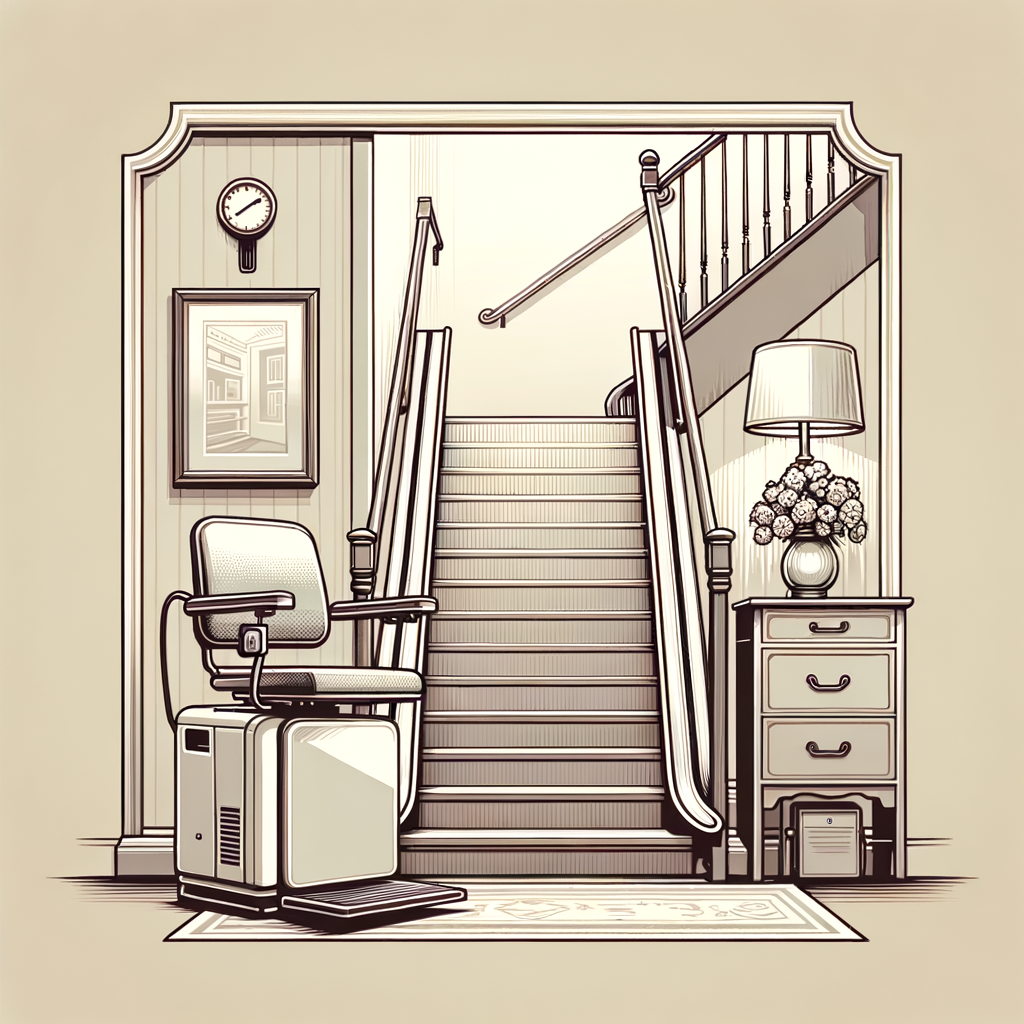
Heavy-duty chair lifts are purpose-built stair lift systems engineered to carry higher user weights, fit broader seat dimensions, and deliver stable, reliable travel on stairs that standard models may not serve safely. In practical terms, “heavy-duty” usually means a lift rated above the common 300 to 350 pound range, with many models supporting 400, 500, or 600 pounds depending on rail design, seat structure, and staircase configuration. These lifts matter because weight capacity is not just a comfort feature; it is a safety, durability, and accessibility requirement. After working with families comparing lift options, I have seen the same pattern repeatedly: people focus first on price or appearance, then realize the real decision points are fit, structural compatibility, and long-term reliability. A properly specified heavy-duty stair lift can restore access between floors, reduce fall risk, and support aging in place without forcing a move. As a hub topic within chair lift types and designs, heavy-duty lifts connect to questions about straight versus curved rails, indoor versus outdoor use, power systems, transfer safety, and home modifications. Understanding how these systems are designed helps buyers, caregivers, and facility managers choose equipment that matches real needs rather than marketing claims.
What makes a chair lift heavy-duty
A heavy-duty chair lift differs from a standard stair lift in several measurable ways. The first is rated capacity, established by the manufacturer through engineering tests and safety certification. The second is seat geometry: wider seats, higher backrests, reinforced armrests, and stronger footrests make transfers easier and support larger body types. The third is rail and carriage construction. Heavy-duty systems typically use thicker rails, more robust drive components, and carriage assemblies designed to manage greater loads without excessive flex or vibration.
In homes, the need for a heavy-duty lift often becomes clear when the user requires more hip width, a deeper seat pan, or extra stability during boarding. Capacity alone does not guarantee comfort. I have seen a 400 pound rated unit feel cramped because the arm spacing was too narrow, while another model with a modestly larger chassis offered a much better transfer experience. That is why reputable dealers measure stair width, landing clearance, knee room, and body dimensions before recommending a model.
Most quality stair lifts sold in North America are designed around recognized standards such as ASME A18.1 for platform lifts and stairway chairlifts, with additional listing or testing through organizations such as UL depending on the model. Buyers should ask whether the exact lift configuration being quoted is certified for its stated capacity. That question matters more than a generic brochure number.
Key design features that improve strength and comfort
The best heavy-duty chair lifts combine structural strength with features that make daily use easier. A reinforced seat base spreads weight more evenly and reduces pressure points during travel. Higher torque motors and matched gear systems maintain smooth starts and stops, which is especially important for users with joint pain or poor trunk stability. Battery-powered drives remain common because they allow operation during power outages and provide controlled movement through the carriage, while the charger keeps batteries topped up at designated points on the rail.
Comfort features also deserve close attention. Swivel seats with locking positions help users exit onto the landing instead of twisting over the stairs. Adjustable seat height can improve knee angle for taller users. Wider armrests, retractable seat belts, and oversized footrests reduce awkward positioning. Many heavy-duty models include call-send controls, folding rails for doorway clearance, and diagnostic displays that simplify service.
One feature people often underestimate is seat-to-footrest distance. If it is too short, taller users ride with sharply bent knees, which can be painful and unsafe during transfer. Another is track overrun at the top or bottom landing. A well-planned overrun moves the user away from the stair edge before standing, reducing the chance of a fall. These details turn a lift from “technically usable” into genuinely supportive equipment.
Straight, curved, and outdoor heavy-duty lifts
Heavy-duty lifts are available in several configurations, and the staircase determines what is possible. Straight stair lifts run on a rail mounted to a single, uninterrupted flight of stairs. They are usually the most affordable, fastest to install, and easiest to service because the rail is modular and standardized. For many homes, a straight heavy-duty model provides the best value when the staircase is wide enough.
Curved heavy-duty stair lifts are built for stairs with turns, intermediate landings, spiral sections, or unusual geometry. These systems rely on custom-manufactured rails based on precise measurements or digital scans. They cost more because every rail section is made for one staircase. They also require more planning, especially when the user needs a high capacity and the home has tight bends. Not every curved model supports the same weight as a straight version, so this must be verified model by model.
Outdoor heavy-duty lifts are designed for porches, decks, garage entries, and exterior stairways. They use weather-resistant materials, sealed controls, and protective covers, but exposure still affects maintenance intervals. In coastal climates, salt air can accelerate corrosion, and in cold regions, ice and wind-driven moisture increase wear. Outdoor use is practical, but only when the lift is rated specifically for exterior installation.
| Type | Best use case | Main advantage | Main limitation |
|---|---|---|---|
| Straight heavy-duty lift | Single flight with no turns | Lower cost and faster installation | Cannot handle landings or bends |
| Curved heavy-duty lift | Stairs with turns or complex layouts | Custom fit for difficult staircases | Higher price and longer lead time |
| Outdoor heavy-duty lift | Exterior steps and entry access | Expands accessibility beyond the home interior | Needs weather-specific materials and more upkeep |
Weight capacity, stair width, and home fit
The most common question is simple: what weight capacity do I need? The correct answer starts with the user’s actual body weight but does not end there. Clothing, carried items, body distribution, transfer needs, and future changes all matter. I usually advise buyers not to choose the minimum capacity that technically works today. A reasonable margin improves comfort and extends component life, especially in frequent-use households.
Stair width is the next gating factor. Many heavy-duty lifts require more staircase width than standard units because of their larger seat and carriage. While dimensions vary by manufacturer, a staircase around 36 inches wide is often the practical minimum for comfortable heavy-duty use, and some installations benefit from more. Narrow stairs can create issues even when the rail technically fits, because knees, elbows, or footrests may project into walking space. On shared stairs, local code expectations for egress clearance also need review.
Landings deserve equal attention. A spacious top landing can make a lift workable even on a challenging staircase, while a cramped landing can make a high-capacity model difficult to board safely. In some homes, moving a door swing, adding a folding rail, or adjusting furniture placement is the difference between a poor installation and an excellent one. The lift should fit the home and the person as a system.
Safety standards, installation, and maintenance
Safe performance depends on far more than the chair itself. Professional installation is essential because the rail must be anchored correctly to the stair structure, aligned to the manufacturer’s tolerances, and tested under load. Stair lifts are usually attached to stair treads rather than the wall, which surprises many buyers. That mounting method often simplifies installation and reduces the need for major remodeling, but the stairs still must be sound.
Core safety features include obstruction sensors on the carriage and footrest, overspeed governors or equivalent braking controls, seat belts, swivel interlocks, and charge monitoring. Good installers demonstrate each feature and verify the user can operate the seat, controls, and folding components without strain. If a lift will serve multiple users, setup should reflect the least able rider, not the strongest one.
Maintenance is straightforward but should not be neglected. Rails need to stay clean, batteries eventually require replacement, and service technicians should inspect rollers, gear racks, wiring, and charging contacts at recommended intervals. Heavy-duty systems can be very durable, yet higher loads place predictable demands on moving parts. A realistic service plan matters as much as the initial purchase. Ask about warranty terms, labor coverage, battery exclusions, and response time for repairs, because downtime on a stair lift can disrupt an entire household.
Who benefits most from heavy-duty stair lifts
Heavy-duty stair lifts are not only for bariatric users. They also help tall individuals, people with broad shoulders or limited hip flexion, and anyone who feels unstable on a compact seat. I have recommended heavy-duty units for users well below the maximum weight because the wider seat, stronger arm support, and smoother ride made transfers safer. Capacity is one variable; ergonomic fit is another.
These lifts are especially useful for people recovering from joint replacement, living with arthritis, neuropathy, heart failure, COPD, or balance disorders, where climbing stairs causes fatigue or shortness of breath. They can also support caregivers by reducing the need for assisted stair navigation. In multigenerational homes, a heavy-duty lift may serve current and future users better than a standard model, provided the staircase has the necessary width.
Commercial and public settings sometimes use high-capacity accessibility equipment, but stairway chair lifts are more common in private residences than in heavily trafficked public buildings. In clinics, houses of worship, and small offices, planners should assess duty cycle, code requirements, transfer independence, and whether a platform lift or elevator would better match traffic patterns. The right solution depends on user mix, building layout, and budget.
Cost factors and how to compare models
Heavy-duty stair lift cost depends on rail type, capacity, seat options, installation complexity, and whether the unit is new, reconditioned, or rented where available. Straight heavy-duty lifts generally cost less than curved models because manufacturing and installation are simpler. Custom curves, powered folding rails, advanced seats, and outdoor packages increase pricing quickly. Buyers should compare total installed cost, not just equipment price.
When reviewing quotes, ask for the exact model number, rated capacity, seat width, folded width, warranty, maintenance recommendations, and projected battery replacement schedule. Confirm whether the quote includes permits if required, electrical work if charging locations need adjustment, and removal of an old unit. Dealers should also explain what happens if the user’s needs change. Some companies offer trade-in options or alternative seat packages; others do not.
A trustworthy comparison focuses on fit, safety, service network, and parts support. Well-known manufacturers and dealers with trained technicians may cost more upfront, but the difference often pays back in reliability and faster repairs. For a device used multiple times a day, the cheapest quote is rarely the best value.
Heavy-duty chair lifts solve a specific problem: they provide safe, comfortable stair access for users who need more capacity, more space, or more stability than standard stair lifts can offer. The best results come from matching the lift to the person, the staircase, and the home’s daily routine. Capacity ratings, seat dimensions, landing clearance, rail type, and service support all matter, and no single brochure spec can replace a careful assessment. Straight models usually offer the simplest path for a wide, uninterrupted staircase, while curved and outdoor systems extend accessibility to more complex layouts. Safety features, professional installation, and ongoing maintenance are essential, not optional extras. If you are evaluating heavy-duty lifts as part of the broader chair lift types and designs category, use this page as your starting point, then compare models with measurements, real usage needs, and long-term support in mind. A well-chosen heavy-duty stair lift can protect independence, reduce fall risk, and make a multi-level home workable again. The next step is simple: schedule an in-home assessment and insist on a recommendation based on fit and safety, not guesswork alone.
Frequently Asked Questions
What is a heavy-duty chair lift, and how is it different from a standard stair lift?
A heavy-duty chair lift is a stair lift specifically engineered for users who need more support than a standard model can safely provide. While many conventional stair lifts are rated in the 300 to 350 pound range, heavy-duty models are typically designed to carry 400 pounds or more, with some systems supporting 500 or even 600 pounds depending on the rail system, seat construction, motor, and staircase layout. The difference is not simply a stronger motor. Heavy-duty lifts usually include a reinforced chassis, a wider and deeper seat, sturdier armrests, a more robust rail, and components designed to maintain smooth, stable travel under higher loads.
These lifts are also built with comfort and access in mind. Users often benefit from more generous seat dimensions, higher seat backs, and easier transfers on and off the lift. In many cases, the staircase itself must be wide enough to accommodate the larger seat and rail profile while still leaving usable walking space. That is why choosing a heavy-duty chair lift is both a safety and a fit decision. It is not just about meeting a number on a spec sheet. It is about making sure the entire system matches the user’s body size, mobility needs, and home environment so the lift performs reliably every day.
Who should consider a heavy-duty chair lift?
A heavy-duty chair lift is a smart option for anyone who exceeds the safe working capacity of a standard stair lift or who would be better served by a roomier, more supportive seat. This can include larger adults, bariatric users, or individuals who need extra stability during transfers. It may also be appropriate for people who are within the weight limit of a standard model but find typical seat sizes too narrow or uncomfortable. In other words, capacity is only part of the equation. Proper seat width, depth, arm support, and overall riding position all contribute to safe and confident use.
Families often begin exploring heavy-duty stair lifts when a loved one struggles with stairs but still wants to remain at home. A professional assessment can determine whether a heavy-duty model is the right choice based on weight, body dimensions, balance, medical conditions, and the staircase design. In many situations, selecting the stronger and wider lift from the start can provide a better long-term solution, especially if mobility needs are expected to change over time. The goal is to choose a system that supports independence without compromising comfort, safety, or daily usability.
How much weight can a heavy-duty chair lift hold?
Most heavy-duty chair lifts are rated above standard residential stair lifts, commonly starting around 400 pounds and extending to 500 or 600 pounds in some models. The exact capacity depends on several factors, including whether the lift is designed for straight or curved stairs, the rail engineering, the seat frame, and the drive system. Straight staircases often allow for higher-capacity systems because the rail design is simpler and can be optimized for greater load support. Curved staircases may have more design constraints, so the available capacity can vary by manufacturer and installation conditions.
It is important to understand that published weight capacity should never be treated as an estimate or a guideline to stretch. The rated limit represents the maximum safe load under normal operating conditions, and exceeding it can affect stability, wear, ride quality, and overall system safety. Reputable dealers will verify not only user weight but also the user’s seated dimensions, transfer needs, and staircase width before recommending a model. That full evaluation helps ensure the chair lift is appropriate in real-world use, not just technically compatible on paper.
Can a heavy-duty chair lift be installed on any staircase?
Not every staircase can accept every heavy-duty chair lift, but many homes can accommodate one with the right product and planning. The biggest factor is staircase width. Because heavy-duty models generally have wider seats and more substantial rails, they often require more clearance than standard stair lifts. Installers also look at the angle of the stairs, landing space at the top and bottom, wall obstructions, door swings, handrails, and whether the staircase is straight or curved. In some homes, a straight heavy-duty lift is relatively straightforward to install, while curved stairs may require a custom-built rail and a more detailed site survey.
This is why an in-home assessment is so important. A qualified stair lift professional will take precise measurements and determine whether the lift can be installed while preserving safe access to the staircase for other household members. In some cases, they may recommend specific seat styles, folding components, or parking options to improve clearance. If a heavy-duty chair lift is not the best match for the staircase, they may suggest alternative accessibility solutions. A proper evaluation ensures the system fits both the user and the home, which is essential for safe and dependable operation.
What features should you look for in a heavy-duty chair lift for strength and comfort?
The most important features begin with structural integrity and verified capacity. Look for a lift with a weight rating that comfortably meets the user’s needs, not one that only barely qualifies. A reinforced rail, durable seat frame, dependable motor, and smooth start-and-stop operation all contribute to a more secure ride. Beyond strength, comfort matters just as much. A wider seat, supportive backrest, stable armrests, easy-to-use controls, and a seat height that allows safer transfers can make everyday use much easier. Swivel seats, folding footrests, seat belts, obstruction sensors, and call-send controls are also valuable features that improve convenience and safety.
It is also wise to consider installation quality, service support, and manufacturer reputation. Heavy-duty stair lifts are specialized systems, so expert fitting and ongoing maintenance play a major role in long-term performance. Ask about warranty coverage, battery backup, service response times, and whether the model is designed specifically for higher-capacity use rather than adapted from a standard platform. The best heavy-duty chair lift is one that combines proven strength with a comfortable seating experience and a layout that works naturally in the home. When those elements come together, users gain not just a way to navigate stairs, but a safer and more confident daily routine.