Buying a used chair lift can reduce the upfront cost of improving accessibility, but the biggest question most shoppers ask is simple: do used chair lifts come with any warranty? The short answer is yes, sometimes, but the type, length, and value of that warranty vary widely depending on who sells the lift, how it was refurbished, and whether the manufacturer allows coverage to transfer. In practice, warranty and return policies often matter as much as price because a chair lift is a safety device with moving parts, electrical systems, rails, batteries, and controls that must work reliably every day.
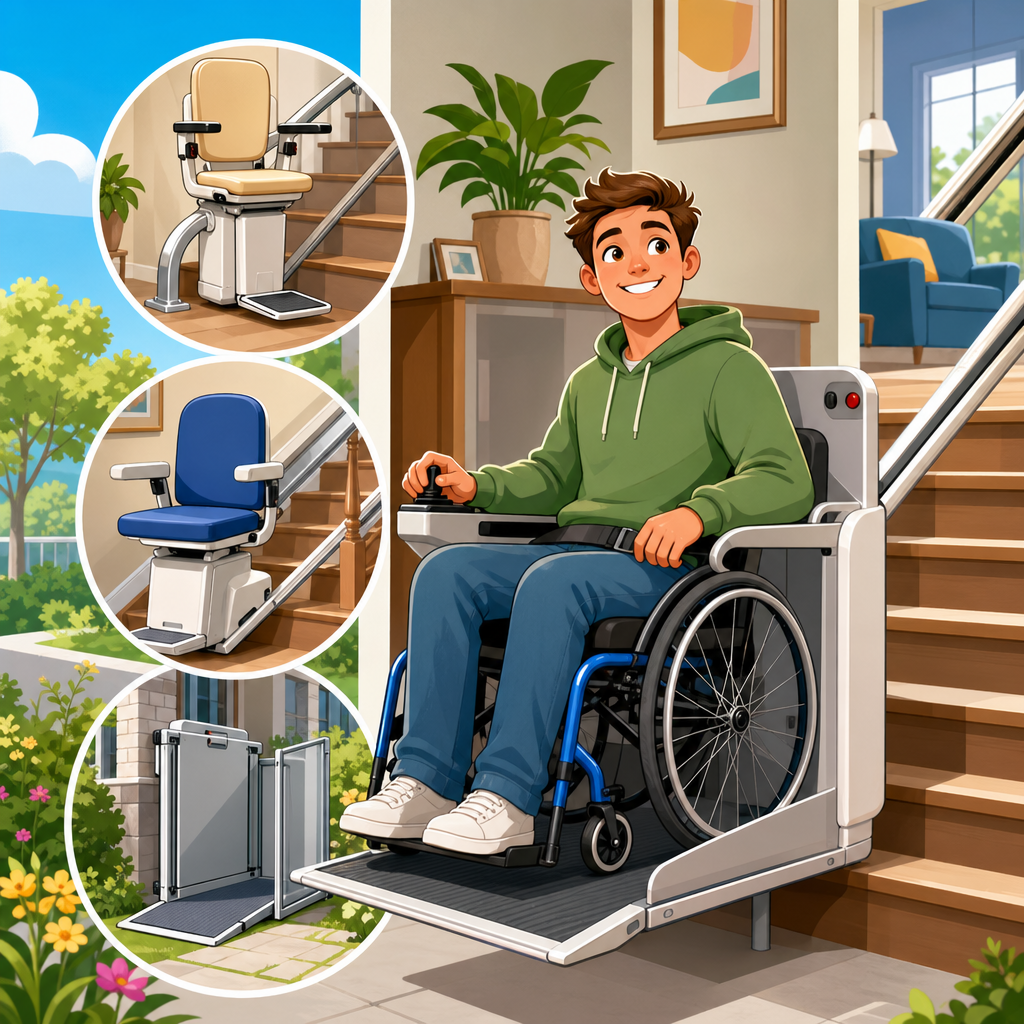
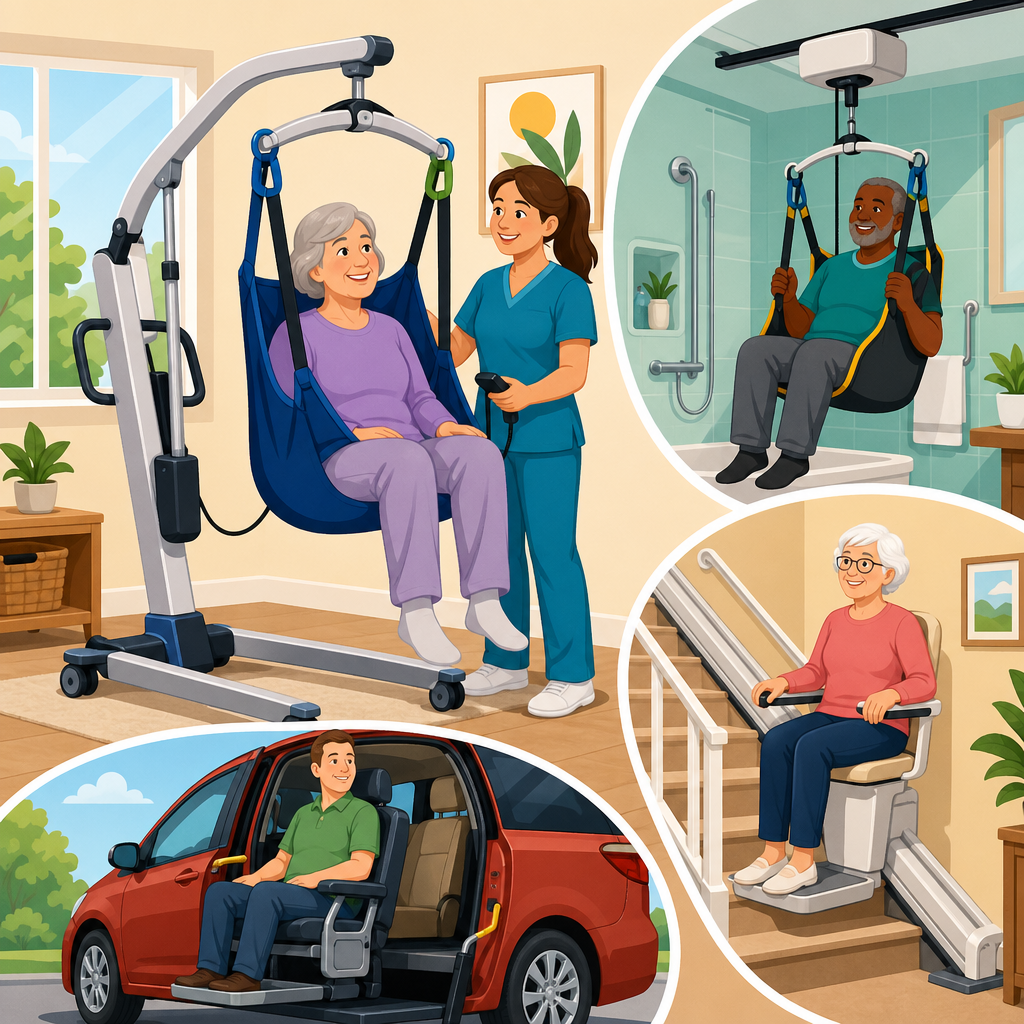
In this guide, used chair lifts means previously owned stair lifts, platform lifts, or seat-style lifts that have been removed from another home, reconditioned, and sold again through a dealer, installer, broker, or private seller. A warranty is a written promise covering certain repair costs for a defined period. A return policy is separate: it explains whether you can cancel, return, or exchange the equipment after purchase or installation. I have worked with mobility equipment buyers comparing new and refurbished units, and the pattern is consistent: people focus first on sticker price, then discover too late that labor exclusions, nontransferable manufacturer terms, or custom-rail limitations can create expensive surprises.
This topic matters because chair lifts are not commodity products. Every installation depends on the staircase layout, rail length, mounting hardware, power supply, and service support in your area. A low-priced used lift without meaningful warranty coverage may become the most expensive option if a gearbox fails, a call/send control stops pairing, or batteries degrade within months. By contrast, a professionally refurbished unit with a documented parts-and-labor warranty and a clear return policy can be a practical, safe purchase. This hub article explains exactly what warranties on used chair lifts usually cover, what they exclude, how return policies work, and how to evaluate an offer before you sign a contract.
What warranties on used chair lifts usually include
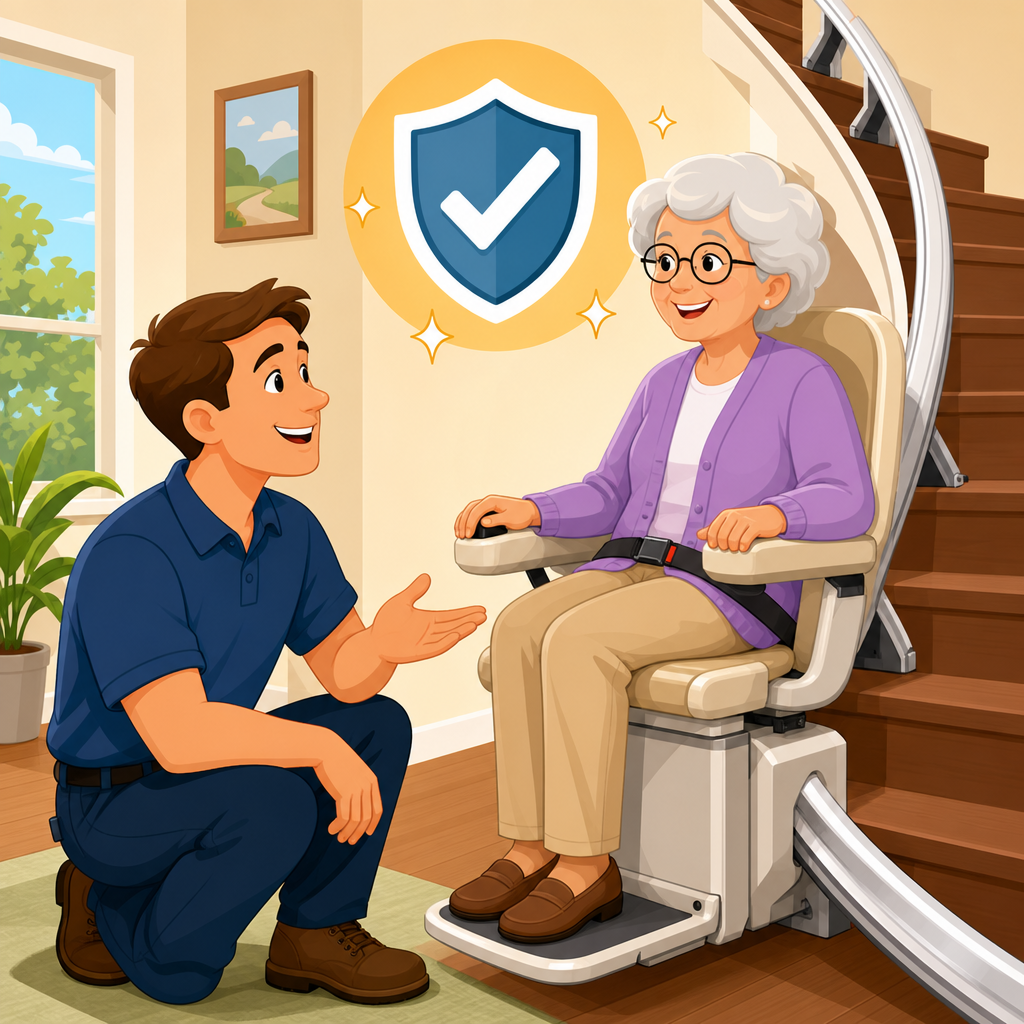
Used chair lift warranties are typically dealer warranties rather than full original manufacturer warranties. That distinction is critical. Many major brands, including Bruno, Harmar, Stannah, Acorn, and Handicare, offer strong protection on new equipment, but those terms often apply only to the original purchaser or only when the lift is installed by an authorized dealer in approved conditions. Once the unit is removed from its first home and resold, the original coverage may expire or become nontransferable. When a seller advertises a “warranty” on a used chair lift, it usually means the dealer promises to repair or replace specified components for a shorter period, often 30 days, 90 days, six months, or one year.
The strongest used chair lift warranties cover major mechanical and electrical components: motor, transmission, circuit board, charger, power supply, seat swivel mechanism, footrest safety edges, and remotes or call/send stations. Some also include batteries, though battery coverage is often prorated or shorter because batteries are wear items. Labor is where many buyers get tripped up. A parts-only warranty can still leave you paying diagnostic fees, trip charges, and installation labor for replacement components. In home accessibility equipment, those service charges add up quickly, especially in rural areas where a technician may travel a long distance. Always ask whether labor, travel, and emergency service are included in writing.
Refurbishment quality directly affects how valuable the warranty is. A reputable dealer will inspect the rail, replace worn rollers, test limit switches, verify charging contacts, check seat locks, and document that the lift meets current safety expectations before resale. In those cases, even a six-month warranty can be meaningful because the seller has actually reduced the risk of early failure. A vague promise like “works when installed” is not a real warranty. If the seller cannot tell you what was replaced, tested, or recalibrated, the coverage has limited value.
What return policies mean for used stair lift buyers
Return policies answer a different question: if the chair lift does not fit your needs, can you get your money back? With used stair lifts, the answer is often no, or only partially. Straight stair lifts are easier to remove and reuse, so dealers may offer a short cancellation window before installation or a limited return period with restocking fees. Curved stair lifts are another story. Because the rail is custom made for the staircase, returns are usually restricted even when the chair itself is refurbished. Once a custom rail is ordered, that rail may have little value outside your home’s exact staircase dimensions.
In my experience, the most buyer-friendly policies separate equipment charges from custom fabrication and labor charges. For example, a dealer may allow cancellation before rail production begins, refund most of the chair cost, and keep only the home assessment fee. After installation, the same dealer may permit removal within a set period but deduct labor, pickup, and rail fabrication costs. That is reasonable if disclosed upfront. What is not reasonable is finding out after a dispute that “all sales are final” was buried on page three of the contract.
A proper return policy should state the deadline for cancellation, whether installation voids returns, how refunds are calculated, and who pays removal costs. It should also explain whether rental payments can be applied to purchase, since some buyers use rentals as a lower-risk alternative when recovery from surgery may be temporary. For shoppers exploring warranty and return policies across mobility products, this page serves as the hub because the same principles carry into power chairs, lift recliners, scooters, and home lifts: custom work reduces return rights, while standardized equipment usually offers more flexibility.
Common warranty exclusions and hidden limitations
The most important rule is this: read exclusions before comparing warranty lengths. A one-year warranty with broad exclusions can protect less than a 90-day warranty with full parts and labor. Used chair lift warranties commonly exclude normal wear items, cosmetic damage, batteries, seat upholstery, remote batteries, and damage caused by misuse, overloading, power surges, pet interference on the stairs, or outdoor exposure. Outdoor stair lifts face extra limitations because moisture, temperature swings, UV exposure, and corrosion accelerate wear even with covers and weather-resistant components.
Another common limitation is staircase condition. If the stairs, wall, or landing structure shift, or if household electrical issues affect charging, a seller may deny a claim by arguing that the failure was caused by the home rather than the lift. Weight capacity matters too. If a lift rated for 300 pounds is used beyond spec, coverage can be voided. Installers also distinguish between indoor straight lifts, outdoor straight lifts, and curved lifts because each has different service profiles and parts availability.
Parts availability is a serious issue with older used units. A dealer may warrant the system, but if a board or gearbox is obsolete, the actual remedy may be limited to a substitute part, a dealer credit, or removal of the unit. That is why the age of the lift and the support status of the brand matter. I advise buyers to ask whether the model is still actively supported and whether the dealer stocks compatible parts locally.
How to evaluate a used chair lift warranty before you buy
The best way to evaluate a warranty is to treat it like a service contract for a medical-adjacent safety product, not like a casual appliance guarantee. Ask for the full written warranty before paying a deposit. Confirm the make, model, serial number, installation date, refurbishment checklist, and exact term of coverage. Ask who performs service, how fast emergency calls are handled, whether weekends are covered, and whether there is a local technician network. A warranty is only as useful as the company that honors it.
| Question to Ask | Why It Matters | Strong Answer |
|---|---|---|
| Is the warranty from the manufacturer or dealer? | Determines transferability and claim process | Dealer warranty in writing with named service contact |
| Are parts and labor both covered? | Labor and travel often cost more than small parts | Full parts, labor, and trip charges included |
| What components are excluded? | Battery and electronics exclusions are common | Clear exclusion list, not vague wording |
| Is the model still supported? | Obsolete parts can make warranty claims useless | Current parts availability confirmed by dealer |
| What is the return policy after installation? | Custom rails usually limit refunds | Refund formula and removal fees stated in contract |
Also ask whether the dealer is licensed or accredited where required, whether technicians are factory trained, and whether the installation complies with applicable codes and manufacturer instructions. In the United States, stair lifts in private homes are often installed under manufacturer specifications and local residential requirements rather than a single universal consumer rule, so dealer competence matters enormously. Reputable companies document site measurements, weight capacity, parking positions, charging points, and user training at handoff.
Private sellers, dealers, and refurbished programs compared
Where you buy a used chair lift strongly shapes your warranty options. Private-party sales from online marketplaces usually offer no warranty and no meaningful return rights. You may get a working unit at pickup, but you also assume compatibility risk, missing hardware, worn batteries, and uncertain installation history. Many homeowners underestimate how difficult it is to match a used rail to another staircase or to safely reinstall a lift without the correct brackets, charging layout, and setup procedure. For that reason alone, private sales are best approached as parts purchases unless a qualified dealer has already agreed to inspect and install the specific model.
Authorized dealers generally offer the safest route because they can assess whether the lift is suitable, serviceable, and legal to install. Some run formal refurbished programs that include cleaning, replacement of high-wear parts, bench testing, and a limited warranty. Others simply resell trade-ins. The difference matters. A formal refurbishing process should produce records, not just assurances. Ask for those records. If a seller says a used lift is “certified” or “factory reconditioned,” ask who performed the work and what standard was used.
Rental fleets can also be attractive. Many straight stair lift rentals use newer equipment that is regularly maintained, then sold after a defined service life. These units often have clearer histories than one-off trade-ins from unknown sources. The warranty may still be limited, but predictable maintenance history reduces risk.
When buying used makes sense and when new is the smarter choice
A used chair lift makes sense when the staircase is straight, the buyer needs a lower initial price, and a reputable local dealer can provide installation, service, and written warranty support. It is especially practical for temporary needs after surgery, for budget-constrained households, or for secondary staircases that see lighter daily use. In those cases, a well-refurbished lift can deliver years of safe service at meaningful savings.
Buying new is often the smarter choice for curved staircases, complex landings, heavy daily use, outdoor environments, or households that need the longest possible coverage and current parts support. New units usually offer stronger manufacturer backing, newer electronics, quieter drives, and easier access to replacement parts. Over time, those advantages can outweigh the initial savings of used equipment. This is particularly true if the buyer plans to remain in the home for many years or if more than one user depends on the lift every day.
The bottom line is that used chair lifts can come with a warranty, but not all warranties are equal and not all return policies protect the buyer. Focus on written terms, parts-and-labor coverage, local service capacity, model support status, and refund conditions before you compare price alone. If you are evaluating accessibility equipment under warranty and return policies, use this hub as your starting point, then review each linked product guide with the same checklist. Ask hard questions, get every promise in writing, and choose the offer that protects safety as well as budget.
Frequently Asked Questions
Do used chair lifts usually come with a warranty?
Yes, some used chair lifts do come with a warranty, but there is no single standard. Whether coverage is included depends largely on who is selling the lift, how the unit was acquired, and whether it was professionally refurbished before resale. A used chair lift sold by a reputable mobility dealer is far more likely to include at least a limited warranty than one purchased through a private seller, online marketplace, or local classified listing. In many cases, dealers offer short-term coverage on major components such as the motor, gearbox, circuit board, or installation workmanship, while private sales are typically sold as-is with no protection at all.
It is also important to understand that a used chair lift warranty is usually narrower than the warranty provided with a new model. Coverage may last only 30 days, 90 days, or six months rather than several years, and batteries, remote controls, cosmetic parts, and wear items may be excluded. Some warranties apply only to parts, while others may include labor or service visits. Because a chair lift is a safety-related device, buyers should treat the warranty as more than a bonus feature. It can be a strong indicator of how much confidence the seller has in the product and whether they are prepared to stand behind the lift if something goes wrong after installation.
What kind of warranty coverage should I expect on a used or refurbished chair lift?
The most common type of warranty on a used or refurbished chair lift is a limited warranty rather than full bumper-to-bumper coverage. That means specific parts or systems may be covered for a set period, while others are excluded. For example, a dealer may warranty the drive system, motor, transmission, and key electrical components but exclude batteries, seat upholstery, armrest damage, footrest wear, and issues caused by misuse. Some companies also separate the equipment warranty from the installation warranty, so the lift itself may be covered for one period while labor or service calls are covered for a shorter window.
Refurbished lifts sold by established dealers often have stronger protections because they have been inspected, tested, cleaned, repaired, and reinstalled by trained technicians. In those cases, you may see terms like 90-day parts and labor, six-month major component coverage, or a one-year warranty on dealer-supplied reconditioned units. That said, the wording matters. Buyers should ask for a written warranty document that explains exactly what is covered, how long it lasts, who performs service, whether in-home labor is included, and what would void the agreement. The best warranties are clear, specific, and easy to use, not vague promises that the seller will “take care of it” if there is a problem.
Can the original manufacturer’s warranty transfer to a second owner?
Sometimes, but not often. Many chair lift manufacturers limit their warranties to the original purchaser and the original installation address. That means even if the chair lift is relatively new, the original factory warranty may end once the unit is removed, resold, or installed in a different home. Some manufacturers also require installation by an authorized dealer for any warranty to remain valid, so a used lift that has been relocated or reinstalled by an unapproved party may have no manufacturer coverage at all.
This is why buyers should never assume that “still under warranty” means the same thing as fully covered by the manufacturer. The seller should be able to show written documentation confirming whether any original warranty remains, whether it is transferable, and whether the planned installation will meet the manufacturer’s conditions. If the factory warranty does not transfer, the next best protection is usually a dealer-backed warranty that covers the refurbished unit after resale. In practical terms, dealer support is often more valuable than a doubtful manufacturer warranty claim, especially when fast service and local repair availability matter most.
Is a warranty enough, or should I also pay close attention to return policies and service support?
You should absolutely pay attention to return policies and service support, not just the warranty itself. A warranty only helps if it is usable in real-world situations. For example, a short warranty may still be valuable if the dealer offers fast local service, handles labor at no extra charge, and stocks replacement parts. On the other hand, a longer warranty may be less helpful if the buyer has to pay for travel fees, uninstall costs, shipping, or diagnostic visits before any covered repair takes place. Since chair lifts are customized to the staircase and installation environment, service access can matter just as much as the wording of the warranty.
Return policies are also important because some problems become obvious only after installation and daily use. The seat height may feel wrong, the controls may be difficult for the user, the ride may not feel smooth enough, or the staircase layout may create usability issues that were not obvious during the sales process. A reputable seller should explain whether there is a trial period, whether deposits are refundable, what happens if the lift is not suitable, and whether removal costs are included if the sale falls through. In a safety device like a chair lift, dependable follow-up support can be just as important as the initial price discount that comes with buying used.
What questions should I ask before buying a used chair lift with a warranty?
Before buying, ask for the exact warranty terms in writing and go beyond the simple question of whether a warranty exists. You should ask: How long is the coverage period? What parts are covered? Is labor included? Are batteries included? Who performs repairs? Is there a charge for service calls or travel time? Does the warranty start on the purchase date or installation date? Is the stair lift refurbished, or is it simply resold in used condition? Was it tested before installation? Is the rail new or reused? Has the model been discontinued, and if so, are replacement parts still available? These questions help reveal whether the warranty has real value or is mainly a sales talking point.
It is also wise to ask about the lift’s age, usage history, maintenance record, and compatibility with your staircase and mobility needs. If the seller cannot clearly explain what was inspected or replaced during refurbishment, that is a red flag. Buyers should also confirm whether the installer is experienced, licensed where required, and familiar with the specific brand. A strong used chair lift purchase usually includes more than a low price: it includes professional installation, documented refurbishment, accessible service, and a warranty that clearly defines what happens if the equipment fails. When you evaluate all of those pieces together, you are much more likely to end up with a chair lift that is both affordable and dependable.