Grant programs to fund ADA-compliant modifications can make the difference between delaying critical accessibility upgrades and completing them on a realistic budget. In practical terms, ADA-compliant modifications are physical or operational changes that help a property, business, nonprofit, school, or public facility meet accessibility requirements under the Americans with Disabilities Act and related design standards. These upgrades often include ramps, lifts, widened doorways, compliant restrooms, accessible parking, improved wayfinding, lower counters, door hardware, and technology that supports people with mobility, sensory, or cognitive disabilities. I have worked with property owners and program managers who assumed accessibility work was financially out of reach, only to discover that grants, tax incentives, rehabilitation funds, and local assistance programs could cover a meaningful share of the cost.
This topic matters because accessibility is both a legal obligation and a practical investment in public use. The ADA applies differently depending on whether a property is a place of public accommodation, a commercial facility, multifamily housing development, school, transit site, municipal building, or workplace, but the central principle is consistent: people with disabilities must have equal access. The challenge is that compliance work can be expensive, especially when older buildings require structural changes, site work, plumbing relocation, or elevator upgrades. Owners also face confusion about which rules apply, what documentation is needed, and where funding can be found. A strong funding strategy starts with understanding the standards, the project scope, and the types of grant programs available.
For a hub article on ADA compliance and guidelines, the key point is simple: grants rarely fund vague intentions. Funders support clearly defined projects tied to recognized accessibility standards, measurable outcomes, and realistic budgets. That means property owners need to think beyond a wish list. They need an accessibility audit, drawings or at least a scope narrative, code review, cost estimates, and evidence that the proposed modifications will remove specific barriers. In my experience, the organizations that secure funding most consistently are the ones that treat accessibility planning like capital planning. They align compliance requirements, user needs, construction feasibility, and grant timing before they submit applications.
What ADA-compliant modifications usually include
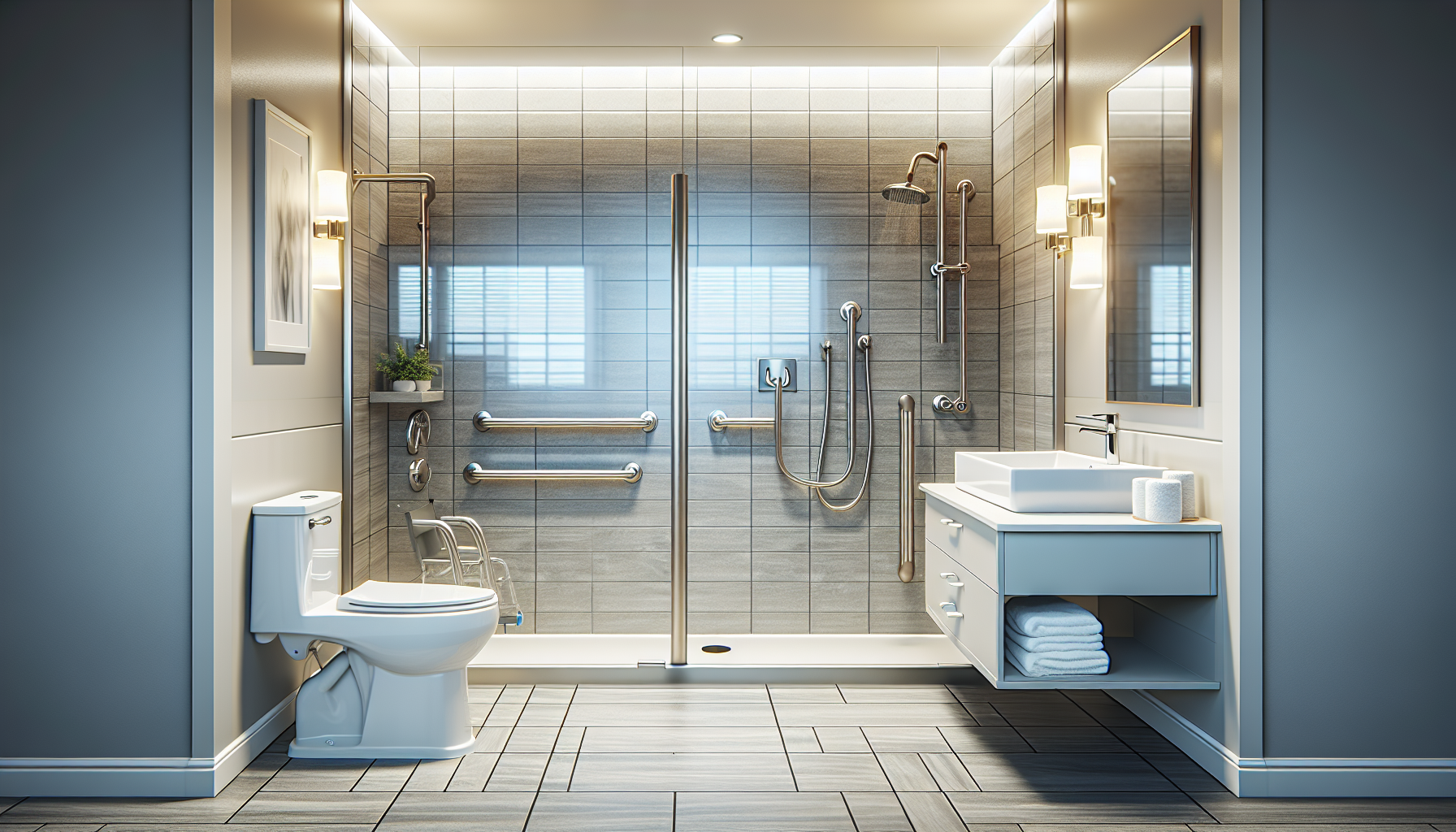
ADA-compliant modifications cover far more than ramps. The 2010 ADA Standards for Accessible Design establish technical and scoping requirements for many building elements, from accessible routes and clear floor space to toilet room layouts, signage, reach ranges, parking, and assembly seating. In existing facilities, common modifications include installing compliant entrances, regrading walkways, replacing inaccessible thresholds, adding automatic operators, adjusting mounting heights for dispensers and controls, converting restrooms to provide turning space and grab bars, and creating accessible service counters. Depending on the building type, projects may also include visual alarms, assistive listening systems, tactile signage, accessible hotel guest rooms, pool lifts, and platform lifts where permitted.
Not every project is governed by the same rule set. Public accommodations and commercial facilities generally look to ADA requirements, while housing projects may also involve the Fair Housing Act, Section 504 of the Rehabilitation Act, Uniform Federal Accessibility Standards, or state accessibility codes. Schools, local governments, and federally funded organizations often have additional obligations. This is why a proper accessibility assessment matters before pursuing funding. A ramp that seems helpful may still fail because of slope, landing size, handrail geometry, or cross slope. A restroom renovation can miss compliance if the door swing overlaps required clearances. Grant reviewers notice when applicants understand these details.
Accessibility work also needs to be prioritized by impact. If budgets are limited, focus first on high-use barriers that block entry, restroom access, circulation, and service delivery. The Department of Justice has long emphasized barrier removal that is readily achievable in existing facilities, meaning easily accomplishable without much difficulty or expense, though that standard depends on the size and resources of the entity. For many small organizations, phased compliance tied to grant funding is the realistic path. A well-structured grant request explains what barrier will be removed now, what remains for later phases, and how each phase expands access for real users.
Where grant funding comes from and who qualifies
There is no single national grant program that pays for every ADA upgrade. Funding usually comes from a mix of federal pass-through programs, state capital grants, community development funds, disability access initiatives, historic preservation grants with accessibility components, transportation programs, veterans’ service funding, rural development assistance, and local nonprofit or foundation grants. Eligibility depends heavily on the applicant type. Municipalities, schools, transit agencies, and nonprofits often have access to more grant opportunities than private for-profit businesses. Small businesses may rely more on tax incentives such as the Disabled Access Credit under Internal Revenue Code Section 44 and the Architectural Barrier Removal Deduction under Section 190, but they should still check state and local grant programs.
For community-serving facilities, one of the most important sources is Community Development Block Grant funding administered by states or local governments through the U.S. Department of Housing and Urban Development. CDBG money can support accessibility improvements when a project meets national objectives such as benefiting low- and moderate-income persons or supporting public facilities. I have seen towns use these funds to renovate municipal entries, build accessible sidewalks to community centers, and upgrade public restrooms in senior-serving buildings. USDA Rural Development programs can also support accessibility improvements in eligible rural facilities, especially when tied to essential community services.
Nonprofits should look closely at private foundations, hospital community benefit programs, regional disability organizations, and state accessibility grant pools. Faith-based institutions may find accessibility support through denominational grant programs or local religious foundations. Libraries, museums, and arts venues often have separate cultural facility grants that permit ADA-related capital work. Healthcare facilities and clinics may qualify under health infrastructure grants if the modifications improve patient access. The strongest applicants match the funding source to the facility mission. A theater should not submit the same narrative as a daycare center, even if both need accessible restrooms and entrances.
| Funding source | Typical applicants | Common ADA-related uses | Key limitation |
|---|---|---|---|
| CDBG | Local governments, nonprofits via municipality | Accessible public facilities, sidewalks, entrances, restrooms | Must meet HUD eligibility and local priorities |
| USDA Rural Development | Rural communities, nonprofits, public entities | Community facility access improvements | Geographic and program eligibility rules apply |
| State capital grants | Schools, municipalities, nonprofits | Renovations, lifts, parking, circulation upgrades | Competitive and often reimbursement-based |
| Private foundations | Nonprofits, community institutions | Targeted access improvements tied to mission | Usually partial funding, not full building modernization |
| Tax incentives | Eligible businesses | Barrier removal expenses and accessibility purchases | Offset taxes rather than provide upfront cash |
How to build a fundable ADA compliance project
A fundable accessibility project begins with documentation. Start with an accessibility audit performed by a qualified consultant, architect, or code specialist who knows the ADA Standards and any applicable state code. The audit should identify barriers, cite the standard involved, describe the operational impact, and prioritize corrective actions. Then translate the audit into a scope of work. Grant programs are far more receptive when they can see line items such as “replace entry door with automatic operator and compliant maneuvering clearances” instead of broad phrases like “improve accessibility.” If drawings are not yet complete, provide concept sketches, photographs, and a narrative that clearly links each construction item to a documented barrier.
Cost estimating is the next critical step. Owners often underbudget because they price only the visible fix and ignore demolition, design fees, permits, hazardous materials review, utility relocations, temporary access measures, and contingency. In older buildings, accessibility projects can trigger related work under building codes, fire protection rules, or path-of-travel requirements. For example, converting a restroom may require plumbing reconfiguration, new exhaust, electrical relocation, and finishes beyond the immediate fixture area. I advise clients to get preliminary pricing from contractors experienced in renovation, not just generic square-foot estimates, because grant budgets that look unrealistic lose credibility quickly.
The narrative should answer four questions directly. What barrier exists now? Who is affected? What standard or best practice supports the proposed solution? What outcome will result after construction? Real examples help. A community clinic might explain that its only patient restroom lacks turning radius and compliant grab bar placement, forcing wheelchair users to seek assistance or leave the building. The proposed renovation would create an accessible toilet room serving 8,000 annual visits, improving independent access and reducing service inequity. That is far stronger than saying the clinic “wants to be more accessible.” Precision wins grants.
Compliance, design review, and common mistakes
One of the biggest mistakes in accessibility funding is assuming that any contractor can design the solution during construction. Accessibility details are exact. Parking spaces need proper width, access aisles, slopes, signage, and route connections. Doors need clear width, hardware operable without tight grasping, maneuvering clearance, and threshold limits. Ramps need compliant running slope, landings, edge protection where required, and handrails at the correct height and extensions. Restrooms involve centerline dimensions, toe clearance, mirror height, accessory placement, and transfer space. A grant-funded project that installs noncompliant work wastes money and can leave the owner exposed to complaints or enforcement.
Design review should happen before applications are submitted whenever possible. If the project affects a historic building, coordinate early with the State Historic Preservation Office because accessibility changes may need design adjustments that protect character-defining features. If federal money is involved, environmental review, procurement standards, Davis-Bacon wage rules, or Section 504 obligations may apply. For schools and public entities, self-evaluation and transition planning can strengthen the application by showing that the project is part of a documented compliance strategy. For businesses, a barrier-removal plan aligned with annual budgeting shows seriousness and reduces the impression that the request is ad hoc.
Another common mistake is treating ADA compliance as only a construction issue. Operations matter too. An accessible entrance is less useful if deliveries block it, snow removal is inconsistent, or staff redirect users to a side door. Grant reviewers and inspectors increasingly look at the user experience, not just the drawing set. Include policies for maintaining accessible routes, keeping parking signed and striped, training staff on accommodations, and preserving clear floor space around service points. Compliance is not achieved on opening day and forgotten. It has to be maintained through operations, inspections, and future renovations.
How this hub connects the broader accessibility planning process
ADA compliance and guidelines sit at the center of accessibility and mobility planning because they influence site design, entrances, vertical circulation, bathrooms, parking, interior routes, signage, and technology. As the hub for this subtopic, this page should guide readers toward more detailed resources on accessibility audits, accessible bathroom renovations, wheelchair ramps and lifts, ADA parking requirements, doorway and threshold modifications, universal design strategies, and tax incentives that complement grants. In practice, these topics are interconnected. A business may start by searching for grant programs, but it quickly needs to understand design standards, phasing, procurement, maintenance, and documentation.
The main benefit of using grants strategically is that they let organizations solve higher-value barriers sooner. Instead of spending limited operating cash on minor fixes that do not materially change access, a grant-backed plan can fund an integrated project: accessible parking tied to a compliant route, entrance, restroom, and service counter. That sequence improves usability because it removes the entire chain of barriers. If you are planning ADA-compliant modifications, begin with an audit, identify the standards that apply, map likely funding sources, and build a project package with scope, costs, and outcomes. That preparation is what turns accessibility needs into funded improvements and durable compliance.
Frequently Asked Questions
What types of ADA-compliant modifications can grant programs help pay for?
Grant programs can often help cover a wide range of accessibility improvements, especially when the upgrades remove barriers for people with disabilities and support compliance with the Americans with Disabilities Act and related accessibility standards. Common funded projects include exterior improvements such as ramps, curb cuts, accessible parking spaces, handrails, and improved pathways of travel. Interior modifications may include widened doorways, automatic door openers, accessible restrooms, grab bars, lowered service counters, adjusted sink and mirror heights, improved lighting, and better wayfinding signage. In some cases, grants may also support vertical access solutions such as platform lifts or elevators when they are necessary and appropriate for the building.
Beyond structural changes, some programs may allow funding for communication and operational accessibility improvements. That can include visual alarm systems, assistive listening systems, accessible website or kiosk upgrades, Braille or tactile signage, and certain adaptive furnishings or equipment. However, every grant program has its own rules, and some focus only on capital improvements while others may support planning, design, engineering, or code review costs as well. The strongest applications usually show that the requested modifications directly improve access, serve a defined population, and align with recognized ADA design requirements rather than being general renovation work dressed up as accessibility spending.
Who is typically eligible to apply for grants for accessibility upgrades?
Eligibility varies widely, but many ADA modification grants are designed for specific applicant groups rather than the general public. Common eligible applicants include nonprofit organizations, schools, municipalities, transit providers, community health centers, housing providers, small businesses, and religious or community-serving institutions, depending on the program. Some grants are intended for public facilities, while others target privately owned buildings that serve the public. There are also programs aimed at landlords, affordable housing operators, veterans’ organizations, and rural property owners. In addition, some states and local governments offer accessibility funding specifically for commercial districts, historic properties, or community development projects.
That said, eligibility is rarely based only on organization type. Funders may look at factors such as the building’s use, the number of people served, the income level of the surrounding community, whether the property is open to the public, and whether the project addresses an identified compliance or access gap. Some programs require applicants to own the building, while others allow long-term tenants to apply with landlord approval. It is also common to see requirements related to nonprofit status, good standing with state agencies, matching funds, procurement procedures, or environmental and historic preservation review. Before investing time in an application, it is smart to confirm the applicant type, property type, geographic limits, and documentation requirements so the project clearly fits the funder’s priorities.
How do I find grant programs to fund ADA-compliant modifications?
The best approach is to search at several levels rather than relying on one source. Federal opportunities may appear through agencies connected to community development, transportation, education, rural development, housing, health, or public infrastructure. State agencies often administer accessibility-related funding through departments of commerce, rehabilitation, disability services, historic preservation, education, or economic development. Local governments may offer facade improvement grants, community block grant funding, small business improvement programs, or public facility grants that can be used for ADA-related work. Private foundations, corporate giving programs, hospital systems, and regional community foundations can also be valuable sources, especially for nonprofits and community-serving organizations.
In practice, the most effective search combines online research with direct outreach. Look for terms such as “accessibility grant,” “barrier removal funding,” “ADA improvement grant,” “capital grant for nonprofit facilities,” “community development block grant accessibility,” and “small business accessibility improvements” along with your city or state. Then call program administrators and ask whether ADA-compliant modifications are eligible, whether design costs can be included, and whether matching funds are required. It also helps to speak with local disability advocacy groups, chambers of commerce, architects familiar with accessibility standards, and municipal building departments, since they often know about recurring programs that are not heavily advertised. A well-organized funding search usually includes a spreadsheet of deadlines, eligible costs, award ranges, and application requirements so you can match the right project to the right funding source.
What should a strong grant application include for an ADA accessibility project?
A strong application makes it easy for reviewers to understand both the access problem and the practical solution. Start with a clear description of the existing barriers, such as steps at the main entrance, noncompliant restroom layouts, narrow door clearances, inaccessible service counters, or a lack of accessible routes between key areas. Then explain exactly how the proposed modifications will improve access for employees, customers, students, residents, visitors, or program participants. The most persuasive applications connect the project to real use, showing how the upgrades will increase safety, independence, participation, and legal compliance rather than simply modernizing the property.
Detailed project documentation matters. Funders often want contractor estimates, architectural drawings, photos of current conditions, a project budget, a timeline, and evidence that the work is based on ADA standards or an accessibility assessment. If the project is large, include phases and clarify which phase the grant would fund. If matching funds are required, identify committed sources and provide letters of support when possible. It is also helpful to explain how the organization will maintain the improvements after installation and how the project fits into broader inclusion goals. Applications tend to score better when they are specific, realistic, and measurable—for example, stating that the project will create an accessible entrance and compliant restroom that allow full public access to services, rather than simply saying the building will become “more accessible.”
Do grants usually cover the full cost of ADA-compliant modifications, or should I expect to contribute other funding?
In many cases, applicants should expect to combine grant funding with other resources. Some grant programs do pay for a substantial share of accessibility improvements, but full funding is far from guaranteed. Many awards have caps that may cover only a portion of a larger project, particularly when the work involves major structural changes, elevators, extensive restroom reconstruction, or site regrading. It is also common for grants to reimburse costs after work is completed, which means the applicant may need enough cash flow to front expenses. Other programs require a formal match, such as 10 percent, 25 percent, or more, while some simply favor applicants who demonstrate financial commitment from other sources.
For that reason, it is wise to build a layered funding strategy from the beginning. Possible supplemental sources include capital campaign funds, local government support, low-interest loans, tax incentives, donor contributions, community fundraising, or internal reserves. Small businesses may also explore barrier removal tax incentives where available, while nonprofits may combine facility grants from multiple funders if allowed. The key is to read the grant terms carefully so you understand which costs are eligible, whether soft costs like design and permitting are included, and whether the program prohibits overlapping reimbursement from another source. A realistic budget, a defined scope, and a backup funding plan will put you in a much stronger position than assuming one grant will solve the entire problem.