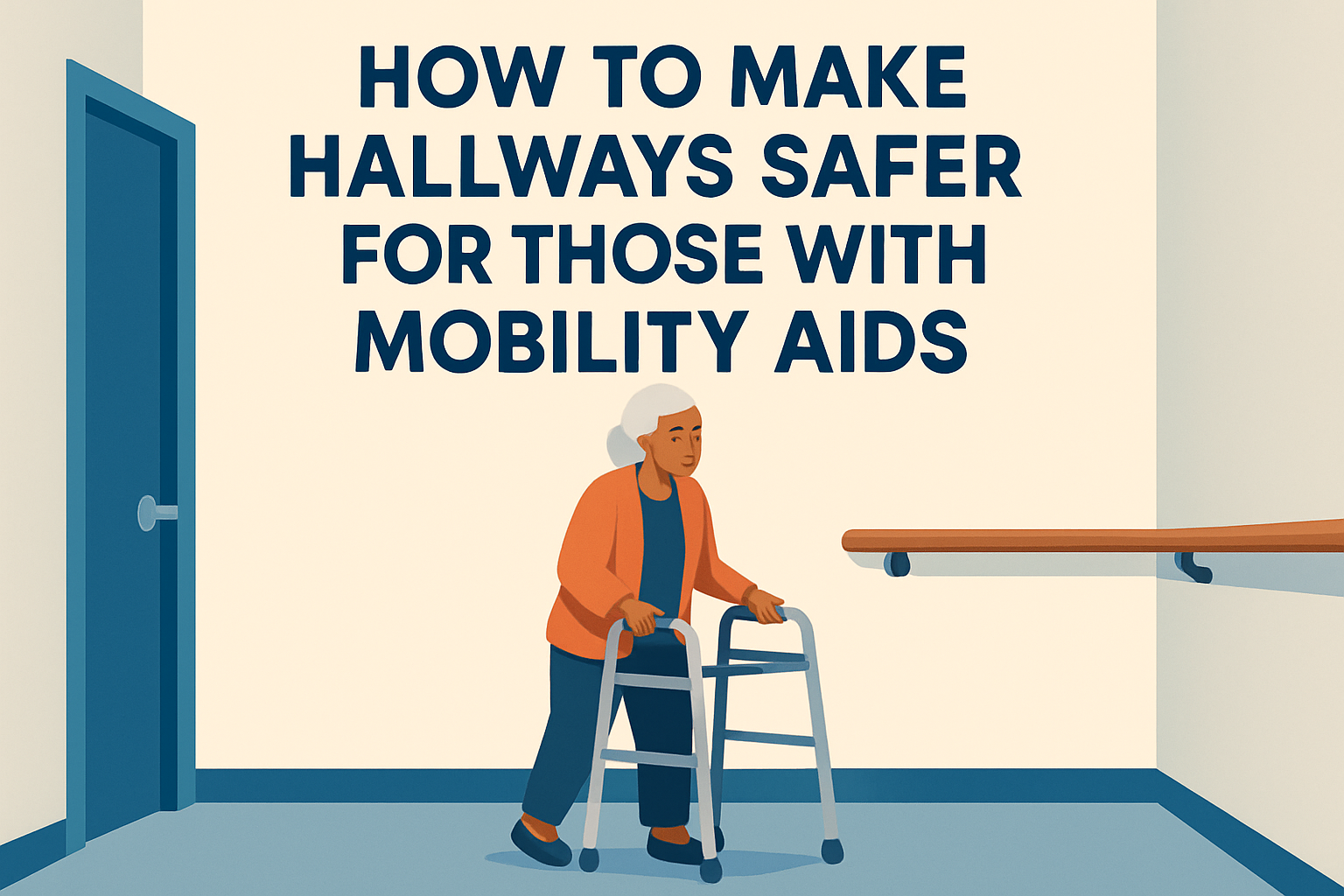
Hallways are the circulation routes of a home, and when they are narrow, poorly lit, cluttered, or uneven, they become one of the most common points of friction for people who use canes, crutches, walkers, rollators, wheelchairs, or mobility scooters. Making hallways safer for those with mobility aids is a core part of home accessibility modifications because a hallway connects bedrooms, bathrooms, kitchens, entries, and emergency exits. If that connection fails, the rest of the house may be technically accessible but practically unusable.
In accessibility work, hallway safety means more than preventing falls. It includes maintaining clear width, reducing effort, improving turning space, supporting balance, protecting hands and walls, and making movement predictable in day and night conditions. I have seen many homes where a bathroom remodel gets all the attention, while the path to the bathroom still has tight corners, slippery runners, and dim switches placed out of reach. The result is a home that looks upgraded but still creates daily risk.
This article serves as a hub for home accessibility modifications, using hallways as the organizing example. The same principles apply to doorways, flooring transitions, bedroom access, bathroom approaches, and entry routes. Standards such as the ADA Standards for Accessible Design, ANSI guidance, universal design principles, and fall-prevention best practices all point to the same conclusion: safe travel paths matter because they support independence, conserve energy, and reduce injury risk. Below, you will find the essential modifications, dimensions, materials, and planning decisions that make hallways work better for people using mobility aids at home.
Start with clearance, width, and turning space
The first question homeowners ask is simple: how wide should a hallway be for a walker or wheelchair? In practice, wider is always easier, but there are useful benchmarks. A hallway around 36 inches wide may allow basic passage for many users, while 42 inches feels more forgiving for walkers and caregiver assistance. For wheelchair users, 48 inches creates a far more functional route, especially where hands need space beside wheels or where the person has limited upper-body strength. If the hallway includes a turn into a bedroom or bathroom, the usable geometry matters as much as the raw number. Trim, radiators, protruding shelves, and partly open doors often steal the inches people actually need.
I usually advise clients to measure clear width at the narrowest point, not wall to wall on paper. Baseboards, handrails, thermostat boxes, and decorative columns can create pinch points that catch walker legs or knuckles. Turning space also matters at the ends of halls and outside key rooms. A wheelchair may need a five-foot turning circle, but in existing homes a T-turn or offset maneuvering area can sometimes work when a full circle is impossible. If widening walls is too costly, removing obstructions and changing door swings often produces meaningful gains.
Hallway dimensions should also account for how people move in real life. A rollator user may walk slightly diagonally. A person with Parkinsonian gait may need extra room to initiate steps. Someone recovering from surgery may rely on a walker now and a wheelchair later. Designing to the current minimum often means renovating again within a few years. Good home accessibility modifications anticipate progression, temporary setbacks, and caregiver support.
Remove floor hazards and create smooth, stable surfaces
Flooring is one of the biggest safety factors in hallways. Mobility aids perform best on surfaces that are firm, level, non-glossy, and low resistance. Thick carpet can drag walker wheels and make wheelchairs harder to push. Highly polished stone can become dangerously slick with socks or moisture. Loose runners are especially hazardous because their edges curl, slide, and catch tips of canes and front casters. When I assess homes after falls, hallway rugs are one of the most frequent contributors.
The best flooring choices for accessible hallways are typically low-pile commercial-grade carpet tile, quality sheet vinyl, luxury vinyl plank with good slip resistance, cork in appropriate finishes, or matte-finish engineered wood with minimal bevels. The right answer depends on the user. Someone pushing a wheelchair often benefits from a smoother hard surface, while a person who walks with a cane may prefer slightly more forgiving underfoot traction. In both cases, transitions between rooms should be low and beveled. Even a small lip can stop a transport chair or destabilize a frail gait.
Subfloor condition matters too. A visibly minor dip can tilt a rollator and shift body weight unexpectedly. Uneven boards, threshold strips, and cracked tiles should be corrected, not merely covered. If full replacement is not possible, targeted repairs in the travel path still reduce risk. Hallways should also be kept dry. Water from entry doors, pet bowls, nearby bathrooms, or humidifiers can turn a safe surface into a hazard, particularly for users with reduced reaction time.
Improve lighting, visibility, and controls
Good hallway lighting reduces falls because mobility aid users depend on visual contrast to judge edges, turns, and obstacles. Older adults also need more light to see comfortably, and many eye conditions reduce contrast sensitivity long before they cause obvious vision loss. A dim hallway may feel manageable to an able-bodied visitor but remain unsafe for someone using a cane or walker at night.
Layered lighting works best. Ambient ceiling fixtures provide general illumination, while wall washing or evenly spaced sconces can reduce shadows. Motion-sensor night lights are extremely effective between bedrooms and bathrooms because they remove the need to search for switches in the dark. Light switches should be easy to reach from both seated and standing positions, and rocker-style switches are easier for people with arthritis than small toggles. Smart bulbs and voice assistants can help, but they should supplement, not replace, simple manual controls that work during internet outages or when a user is distressed.
Visibility also includes contrast. If walls, trim, floors, and door frames are all similar in tone, depth perception suffers. Contrasting door casings, matte finishes that limit glare, and clearly visible hardware can make route-finding easier. Mirrors in narrow halls should be placed carefully, since reflected movement can disorient some users, especially those with dementia or balance disorders.
Add support features without creating new obstacles
Support along a hallway can increase confidence, but it must be designed correctly. Continuous handrails on one or both sides can help users who “furniture walk,” transition from room to room, or steady themselves while a caregiver manages equipment. The rail should be graspable, securely anchored to framing, and set at a height that matches the user’s reach. Decorative oversized rails often look attractive but are harder to grip, especially for small hands or reduced grip strength.
At the same time, support features should not narrow the path too much. I have seen retrofit rails installed into already tight corridors, leaving insufficient clear width for a walker. In those cases, a better strategy may be wall reinforcement for selected grab points near doorways, plus a wider hall kept free of protrusions. Corner guards and wall protection panels are also worth considering in homes with wheelchairs or scooters because they reduce damage and keep the route smoother over time.
Seating can be useful in longer hallways, but only if placed in recessed niches or extra-wide zones. A small bench in a standard corridor becomes an impact hazard. The same is true for umbrella stands, decorative tables, and plants. Hallways should carry movement, not storage.
Coordinate doors, hardware, and room approaches
Many hallway problems are actually doorway problems. A hall may be wide enough, but if bedroom and bathroom doors swing into the maneuvering area, the usable space collapses. Reversing a door swing, installing offset hinges to gain a bit of opening width, changing to pocket or barn-style doors where appropriate, or widening the rough opening can transform access. Pocket doors save swing space, but they need quality hardware and easy-to-grip pulls. Barn doors avoid track-in-wall construction, yet they provide less privacy and acoustic control, so they are not always right for bathrooms.
Lever handles are strongly preferred over round knobs because they require less grip and wrist rotation. Hallway closets deserve attention too. Linen closets, utility cabinets, and laundry doors often create surprise obstacles when left open. Self-closing hardware can help in some homes, but only if it does not increase opening force too much. Door closers that are too strong can be impossible for people with limited arm strength.
Approaches to key rooms should be prioritized. The route from bedroom to bathroom is usually the highest-value hallway upgrade in the home. The route from entry to living area matters next, especially for people returning from appointments or receiving deliveries with a walker or wheelchair. Accessibility works best when those priority paths are treated as systems, not isolated projects.
Plan for emergency egress, daily routines, and future needs
A safe hallway must function during ordinary routines and during emergencies. That means keeping exit routes clear, ensuring doors are easy to unlock and open, and allowing enough space for a caregiver to assist if a user becomes fatigued or dizzy. Fire safety is part of home accessibility modifications, not a separate topic. Smoke alarms should be audible and, where needed, paired with visual alerts. During a power outage, battery-backed lighting or plug-in emergency night lights can maintain a safe path.
Daily routines reveal what design drawings miss. Watch how the person carries laundry, navigates oxygen tubing, uses a wheelchair footrest, or turns with a rollator near a bedroom door. If they pause to reposition, scrape knuckles, or angle sideways, the hallway is giving useful feedback. Small changes such as moving artwork, raising low-hung fixtures, trimming doorstops, or relocating a hamper can remove repeated points of stress.
| Hallway issue | Why it is risky | Best modification |
|---|---|---|
| Narrow clear width | Causes impacts, awkward turning, caregiver difficulty | Widen corridor, remove protrusions, change door swings |
| Loose rug or high transition | Catches canes, walkers, and wheelchair casters | Remove rug, bevel thresholds, level flooring |
| Poor lighting at night | Reduces contrast and obstacle detection | Add brighter fixtures, motion-sensor night lights, rocker switches |
| Round doorknobs | Hard to grip with arthritis or weakness | Install lever handles |
| Cluttered walls or furniture | Shrinks usable path and creates collision hazards | Keep hallway as a dedicated travel route |
Future planning is just as important. Many homeowners begin with a cane and later need a rollator, transport chair, or full wheelchair. A hallway modified only for current needs may quickly become inadequate. If you are opening walls, upgrading flooring, or changing lighting, it is usually cost-effective to overspecify the route now rather than repeat demolition later. That is the practical mindset behind durable, accessible home design.
Making hallways safer for those with mobility aids improves far more than one passageway; it strengthens the entire home accessibility plan. The most effective upgrades are usually straightforward: increase clear width where possible, remove rugs and abrupt transitions, choose stable slip-resistant flooring, improve lighting and contrast, add properly designed support features, and coordinate door swings and hardware with the route. When these elements work together, movement becomes smoother, less tiring, and less risky.
As the hub for home accessibility modifications, hallway safety also points to the next decisions homeowners should make throughout the house. Evaluate bathroom access, bedroom circulation, entry thresholds, kitchen turning space, and stair alternatives using the same principles of clearance, stability, visibility, and reach. If you are unsure where to begin, start with the route used most often and most urgently, usually bedroom to bathroom, then expand outward. A focused assessment today can prevent falls, preserve independence, and make every room more usable tomorrow. Contact a qualified occupational therapist, aging-in-place specialist, accessibility contractor, or universal design professional to create a plan that fits the user, the home, and the budget.
Frequently Asked Questions
What are the most important hallway changes to make first for someone who uses a mobility aid?
The best place to start is with the changes that immediately improve safe passage from one end of the hallway to the other. In most homes, that means clearing clutter, improving lighting, and checking the floor surface. Hallways often collect furniture, décor, storage bins, shoes, cords, and other items that reduce usable width. For someone using a cane, walker, rollator, wheelchair, or scooter, even a small obstruction can force awkward turning, sudden stops, or loss of balance. Creating a consistently open path is one of the fastest and most effective safety upgrades.
After clearance, focus on lighting. A hallway should be evenly lit from end to end, with minimal shadowing and no dark transition areas near doorways, corners, or stair landings. Bright, glare-free lighting helps people spot floor changes, wall edges, thresholds, and obstacles early enough to react safely. Motion-sensor lights, illuminated switches, and two-way switching at both ends of the hall can make the space easier to use, especially at night or during emergencies.
Next, evaluate the floor itself. Uneven surfaces, loose runners, thick carpet, raised thresholds, and slick finishes can all interfere with mobility aids. Walkers and wheelchairs need a predictable rolling surface, while cane and crutch users benefit from stable traction. In many cases, replacing problematic flooring or securing transitions provides a major safety improvement. If the hallway still feels difficult after those changes, the next priorities are usually widening the clear path where possible, adding sturdy handrails when appropriate, and making sure nearby doors do not swing into the travel route in a way that blocks safe movement.
How wide should a hallway be to safely accommodate walkers, wheelchairs, and scooters?
There is no single width that works perfectly for every person and every device, but in general, wider hallways are safer and easier to navigate. A narrow hallway may technically allow someone to pass through, yet still feel restrictive, stressful, and difficult to use independently. Walkers and rollators need enough room to move forward without catching on baseboards, trim, or door hardware. Wheelchairs and mobility scooters need not only travel clearance, but also enough maneuvering room near doorways and intersections to make turns without bumping walls or scraping knuckles.
In practical home accessibility planning, it helps to measure the actual mobility aid being used, then compare that measurement to the hallway’s narrowest points. Pay close attention to trim, radiators, protruding shelves, light fixtures, and partially open doors, because these often reduce the real usable width more than homeowners expect. If someone must angle a walker to pass through, brush the wall with a wheelchair, or repeatedly stop and reposition to turn into adjacent rooms, the hallway likely needs modification.
When structural widening is not immediately possible, there are still meaningful improvements that can increase safe function. Removing wall-mounted obstacles, changing door swing direction, using offset hinges to gain a bit more doorway clearance, and relocating storage out of the hall can all improve movement. For some households, the goal is not simply “meeting a measurement,” but creating a route that allows the user to move with confidence, preserve energy, and avoid contact injuries to hands, elbows, and shoulders. A hallway should support smooth travel, not just barely permit it.
What flooring works best in a hallway for people using canes, walkers, or wheelchairs?
The safest hallway flooring is smooth, stable, slip-resistant, and low in rolling resistance. It should allow a cane tip to land securely, a walker to move without catching, and wheelchair or scooter wheels to roll without excessive effort. Hard, even surfaces such as properly installed luxury vinyl, sheet vinyl, low-pile commercial-style carpet, or other firm flooring options often perform well because they reduce trip hazards and make movement more predictable. The key is consistency. Sudden changes in surface texture or height are where many problems begin.
Loose rugs and thick runners are among the most common hallway hazards. They can bunch, slide, curl at the edges, or create resistance that destabilizes mobility aids. Even rugs that seem harmless to an able-bodied resident can become dangerous for someone who drags a foot slightly, uses a cane for balance, or relies on front caster wheels. If a rug cannot be fully secured and kept flat at all times, it is usually better removed from the hallway altogether.
Floor transitions also deserve careful attention. A small lip between two flooring materials may not look serious, but it can stop a walker, catch a wheelchair wheel, or create a toe-trip point. Hallway flooring should also avoid highly polished finishes that increase slipperiness, especially in homes where moisture may be tracked in from bathrooms, laundry areas, or exterior doors. If a person has reduced strength, pain, or limited endurance, flooring that requires extra pushing force can make daily movement much harder. The best choice is one that supports both traction and easy rolling while minimizing vibration, catching, and fatigue.
Do handrails belong in hallways, and who benefits most from them?
Yes, handrails can be extremely helpful in hallways, particularly for people who walk with canes, crutches, or without a wheeled device but still need balance support. A properly installed hallway handrail provides a continuous point of contact that can improve stability, reduce anxiety, and make short trips between rooms less physically demanding. For many older adults and people recovering from surgery, illness, or injury, a hallway handrail adds reassurance in a part of the home that is used many times a day.
That said, handrails should be planned carefully so they support movement without narrowing the passage too much. In a hallway already used by wheelchairs, wider walkers, or scooters, a poorly placed rail can reduce clearance and create hand-scrape or elbow-bump issues. The rail should be sturdy, easy to grip, and mounted at an appropriate height for the person using it. It should not have sharp edges or decorative profiles that are difficult to hold during a balance loss. Ideally, it should run continuously along the key section of the hall rather than appearing only in isolated spots where it is less useful.
Handrails are especially valuable where the hallway connects to bedrooms, bathrooms, or entry areas that are frequently used at night, when fatigue is greater, or when surfaces may be more hazardous. They can also be paired with improved lighting and non-slip flooring for a more complete safety solution. For wheelchair users, a handrail may be less essential for propulsion but still useful for transfers, standing support, or use by other household members. The right decision depends on the user’s mobility pattern, but in many homes, hallway handrails are a simple upgrade with meaningful daily benefits.
How can you make a hallway safer without doing a full remodel?
Many effective hallway safety improvements do not require major construction. Start by treating the hallway as a dedicated travel route rather than a storage area. Remove decorative tables, plant stands, shoe racks, baskets, and other items that narrow the space. Secure or remove rugs, tape down or reroute cords, and make sure nothing is left on the floor, even temporarily. These basic steps can significantly reduce the risk of trips, collisions, and blocked movement.
Lighting upgrades are another high-impact, low-disruption improvement. Brighter bulbs, additional fixtures, motion-activated night lighting, and illuminated switch plates can make the hallway easier to use immediately. You can also increase safety by improving visual contrast. For example, contrasting trim, door frames, or threshold markings can help people with low vision distinguish edges and openings more clearly. Replacing hard-to-grab round doorknobs with lever handles on connected rooms can also help, because hallway safety is not only about traveling through the corridor but also about entering and exiting rooms without losing balance.
Other practical no-remodel changes include lowering wall clutter, relocating artwork or shelves that protrude into the path, adjusting door swing where possible, and installing simple assistive features like grab points or handrails if space allows. If the flooring is mostly sound but one area is hazardous, targeted repair may solve the problem without replacing the entire hall surface. In homes with emergency planning concerns, make sure the hallway remains a reliable route to exits at all times. A safer hallway does not always begin with demolition. Often, it begins with careful observation of how the person actually moves through the space each day and then making the route cleaner, brighter, steadier, and easier to navigate.