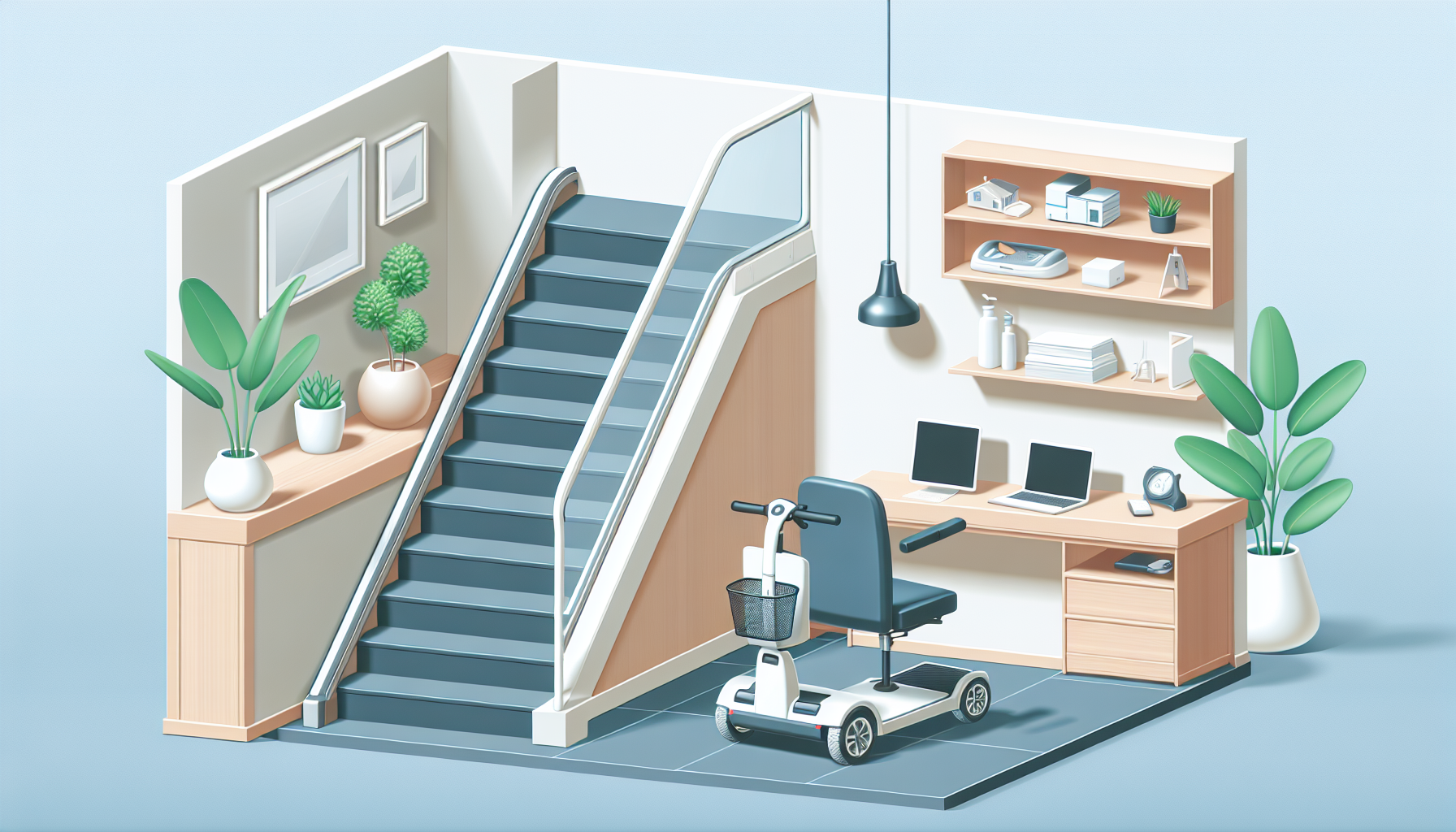
Pairing a stair lift with a mobility scooter safely can transform a multilevel home from a daily obstacle course into a practical, independent living space. In my work with home accessibility planning, I have seen many people buy one device, struggle for months, and only later realize that the real solution is using both together as a coordinated system. A stair lift carries the person between floors on a rail-mounted chair, while a mobility scooter supports travel across larger flat areas such as hallways, driveways, community paths, and shopping centers. When these devices are chosen and positioned correctly, they reduce fatigue, lower fall risk, and make it easier to stay active at home and beyond.
This topic matters because the benefits of each device can disappear if the combination is poorly planned. A scooter that is too wide for the landing can block the stair lift transfer. A stair lift seat set too low or too high can make standing and pivoting unsafe. Charging points in the wrong place create trailing cables, which become trip hazards. Weight capacity, turning radius, knee space, door thresholds, and emergency egress all affect whether the setup works in real life. The goal is not simply to own a stair lift and a scooter. The goal is to create a smooth, repeatable transfer process that supports independence without adding new risks.
For many households, this article serves as the central guide to mobility aids and devices within a broader accessibility plan. It explains how to match equipment, measure your home, plan transfers, prevent common mistakes, and know when to involve an occupational therapist, stair lift dealer, scooter supplier, or contractor. It also connects the practical issues people ask most often: Can a mobility scooter be stored near a stair lift? How much space is needed at the top and bottom of the stairs? Is it safe to transfer alone? What charging and maintenance routines matter most? By answering these questions directly, you can make informed decisions before spending money or rearranging your home.
Understand the roles of each device before you combine them
A stair lift and a mobility scooter solve different mobility problems, and safe pairing starts with respecting that difference. A stair lift is designed for seated vertical travel along a staircase. It typically includes a foldable seat, footrest, armrests, a swivel seat at the landing, and safety sensors that stop the lift if it meets an obstruction. A mobility scooter is built for horizontal travel and generally comes in travel, mid-size, or heavy-duty formats. It includes handlebars or a tiller, batteries, anti-tip wheels, a seat, and a base length that determines maneuverability. Neither device replaces the other, and trouble starts when people try to use one in place of its intended function.
The safest setup lets the user transfer from scooter to stair lift with minimal twisting, no rushed movements, and stable support for both sitting and standing. In homes I have assessed, the best results usually come when the scooter is parked on a level area adjacent to the stair lift landing, not directly in front of the stairs. That layout leaves enough clearance for the stair lift footrest to lower fully and for caregivers, if needed, to stand to one side during a transfer. If the landing is tight, a compact scooter or a stair lift with a powered hinge rail may be necessary.
It is also important to think in journeys rather than products. A person may use the scooter to reach the front door, transfer to a hallway chair, move to the stair lift, ride upstairs, and then use a second walking aid on the upper level. Others keep a scooter on one floor and a rollator on another. This is why mobility aids and devices should be viewed as a coordinated system. The right question is not, “Which machine should I buy first?” It is, “What is the safest way to complete every movement I make in a normal day?”
Measure the home carefully and identify transfer zones
Before selecting equipment, measure the home with the same discipline an installer would use. Start with staircase width, top and bottom landing depth, door widths, hallway width, threshold height, and the turning circle available where the scooter will park. Many straight stair lifts can fit on relatively narrow stairs, but the exact requirement varies by model and by whether the rail intrudes into the landing. Curved stair lifts require more detailed surveying because bends, intermediate landings, and rail overrun options affect where the seat stops and swivels.
For the scooter area, note both the overall dimensions and the practical operating footprint. A scooter may fit through a doorway on paper but still be difficult to align without repeated reversing. Four-wheel scooters generally offer more stability outdoors, while three-wheel models often turn more tightly indoors. I have found that users frequently underestimate how much extra side clearance they need for comfortable transfers, especially if they have limited trunk rotation, use a transfer board, or need a caregiver beside them.
| Planning Factor | Why It Matters | Typical Best Practice |
|---|---|---|
| Landing depth | Prevents crowding during entry and exit from the stair lift | Leave clear space for footrest, swivel, and standing pivot |
| Scooter turning radius | Determines whether parking and repositioning are realistic | Test the actual model, not just brochure dimensions |
| Seat height alignment | Reduces strain during transfers between devices | Match heights as closely as possible or use therapist guidance |
| Charging point location | Avoids extension cords and trip hazards | Install outlets near the parking zone on each device’s route |
| Emergency egress | Keeps exits usable during breakdowns or evacuation | Do not let parked equipment block doors or main pathways |
Once measurements are collected, mark transfer zones with painter’s tape on the floor. This simple step reveals whether the scooter can be parked at the right angle, whether the stair lift user can plant both feet safely, and whether another person can move around them. It also helps identify hidden obstacles such as radiator projections, low handrails, console tables, and door swings. A good plan on paper becomes a safe plan only when the body can move through it without awkward compensation.
Choose compatible equipment and avoid sizing mistakes
Compatibility is the biggest factor separating a safe mobility setup from an expensive frustration. Start with user weight, hip width, leg length, and upper-body control. A stair lift should provide enough seat width and back support without forcing the user into a perched position. The armrests must allow secure pushing during sit-to-stand transitions. The scooter seat should support prolonged use while also enabling a controlled transfer. If the scooter has a high central tiller or bulky front fairing, it may interfere with leg placement when standing up.
Battery placement and charging routines matter more than most buyers expect. Stair lifts commonly charge through contact points at the top and bottom of the rail. Scooters require a dedicated charger and often several hours to recover from use. If the scooter battery is charged in a garage but the stair lift transfer happens in the hallway, the daily routine may become impractical. I advise placing the scooter where it is actually used and arranging power safely there, rather than assuming users will tolerate repeated repositioning. Convenience is a safety feature because people are more likely to follow a routine that feels easy.
Do not overlook seat height and foot positioning. If the stair lift seat is significantly higher than the scooter seat, the user may slide downhill during transfer. If it is lower, rising may require excessive knee and hip effort. Some scooters allow seat post adjustments, and some stair lifts have configurable seat heights. Aligning these settings can make an enormous difference. For users with limited balance, a transfer aid such as a floor-to-ceiling pole, wall-mounted grab rail, or therapist-approved pivot technique may be necessary. The point is not to create a perfect showroom installation. The point is to create a repeatable movement that still feels safe on a bad day.
Set up a transfer routine that reduces fall risk
The safest transfer routine is simple, consistent, and practiced under supervision at first. In most cases, the user should stop the scooter on level flooring, switch off the power, engage any parking mechanism if present, and move the tiller out of the way if the model allows it. Before standing, both feet should be placed firmly, and any bag or oxygen tubing should be managed so it does not snag. The stair lift seat should already be in the correct position, with the footrest down and the swivel lock understood.
During the transfer, avoid twisting while half-standing. A controlled stand-pivot-sit pattern is usually safer than reaching across a gap. Users should aim to turn their whole body with short steps rather than rotate the knees or spine abruptly. Once seated on the stair lift, they should place their feet fully on the footrest, use the seat belt if provided, and keep elbows and clothing inside the armrests during travel. At the upper landing, the same sequence happens in reverse. If fatigue, dizziness, or poor sensation affects performance, transfers should be assessed by an occupational therapist or physical therapist rather than improvised at home.
Caregivers often help with good intentions but poor body mechanics. Pulling on a user’s arms is unsafe for both people. Better support comes from cueing, guarding at the trunk, and making sure the path is clear before movement begins. In my experience, one or two supervised practice sessions with the exact scooter and stair lift dramatically improve confidence. Safety is less about strength than about predictability. A transfer done the same way every time is easier to trust and easier to correct when conditions change.
Address charging, maintenance, and long-term reliability
Daily reliability depends on maintenance, and maintenance begins with charging habits. A stair lift should be parked at its charging point whenever it is not in use, according to the manufacturer’s instructions. A mobility scooter battery should be charged on the schedule recommended for its battery type, often after regular use rather than after complete depletion. Deeply discharging scooter batteries shortens lifespan, while neglected stair lift batteries can leave a user stranded between floors or with a nonfunctioning seat when it is most needed.
Routine checks should include tire condition on the scooter, sensor cleanliness on the stair lift, seat swivel operation, footrest folding, remote controls, charger cables, and unusual noises during movement. Reputable manufacturers and dealers provide service intervals and fault guidance, and these should be followed. Brands differ, but the principle is constant: accessibility equipment is not furniture. It is powered mobility equipment, and it requires inspection. If a stair lift begins stopping unexpectedly or a scooter drifts, loses range, or wobbles, stop assuming it will improve on its own and schedule service.
Home changes also affect long-term reliability. New carpet, threshold strips, replacement doors, or hallway furniture can alter clearances that were once safe. Even a basket added to the front of a scooter can change turning behavior in a narrow transfer zone. Review the setup whenever health status or home layout changes. Many people need a second assessment after surgery, after a fall, or when moving from a cane to a rollator. A mobility plan should evolve with the user, not remain frozen at the day of installation.
Know when professional input is essential
Some situations should always involve a professional assessment. These include significant balance impairment, recent falls, one-sided weakness after stroke, Parkinsonian freezing, severe arthritis affecting transfers, cognitive impairment, and any home with especially tight landings or curved stairs. An occupational therapist can assess transfer technique, seating height, reach, and environmental barriers. A qualified stair lift surveyor can confirm rail design, parking positions, hinge options, and power requirements. A mobility scooter specialist can match indoor maneuverability and outdoor stability to the user’s real travel needs.
Professional input is also valuable because standards and product details matter. Stair lifts should be installed according to manufacturer specifications and local electrical requirements, not adapted casually by a handyman. Scooters should be used within their intended environment, weight rating, and incline limitations. Insurance, warranties, and service contracts can be affected by incorrect installation or unauthorized modifications. When buyers try to save money by choosing based only on price, they often spend more later correcting avoidable mistakes.
Done well, pairing a stair lift with a mobility scooter creates a complete mobility pathway: safe vertical travel inside the home, efficient horizontal travel on level surfaces, less fatigue, and more independence. The key is to treat both devices as parts of one system. Measure carefully, choose compatible equipment, practice transfers, maintain batteries and moving parts, and ask for expert help when the situation is complex. If you are planning accessibility and mobility solutions for yourself or a family member, start by mapping the full daily journey through the home, then build your mobility aids and devices around that routine.
Frequently Asked Questions
1. Can I safely use a stair lift and a mobility scooter together in the same home?
Yes, in many cases a stair lift and a mobility scooter work very well together, and for many people they are actually more effective as a pair than either device alone. A stair lift is designed to move you safely between floors while seated on a rail-mounted chair, and a mobility scooter is designed to help you travel longer distances across flat, open areas. When these two devices are planned as a coordinated system, they can make a multilevel home much easier to live in without forcing you to over-rely on one piece of equipment for tasks it was never meant to handle.
The key to using both safely is understanding where one device ends and the other begins. A stair lift should only be used to transport the person, not the scooter. In most homes, that means the scooter stays on one floor while you ride the stair lift to another level, where a second scooter, walker, cane, or another mobility solution may be waiting if needed. Safety problems usually happen when people try to improvise, such as attempting to carry scooter batteries on the stairs, maneuvering a large scooter too close to the top landing, or assuming they can transfer without enough room or support.
A proper setup includes enough clear floor space at both ends of the stair lift, stable transfer points, and a realistic plan for how you will move before and after using each device. It is also important to consider your balance, upper-body strength, transfer ability, vision, and reaction time. If you can transfer on and off the stair lift seat consistently and can operate the scooter confidently on level surfaces, the combination can be both safe and highly practical. The best results usually come from evaluating the full travel path through the home rather than treating each device as a separate purchase.
2. Where should I park the mobility scooter in relation to the stair lift?
The scooter should be parked close enough to the stair lift to make transfers convenient, but never so close that it blocks the approach, the landing, or the swivel and footrest area of the lift chair. One of the most important principles in accessibility planning is preserving clear, predictable movement space. At both the top and bottom of the stairs, you need room to approach the lift, sit down, rotate if the seat swivels, place your feet securely, and stand up again without bumping into the scooter or having to twist awkwardly.
In practice, that usually means choosing a designated parking spot beside the stair lift landing rather than directly in front of it. The scooter should be parked on a flat, stable surface with the key removed and the power turned off when not in use. You should also make sure it does not narrow the hallway or create a tripping hazard for you or anyone else in the home. If the landing is tight, a compact scooter or a repositioned charging station may be necessary to keep the area safe and usable.
Another important factor is battery charging and daily routine. Ideally, the scooter parking area should be close to an electrical outlet but still out of the stair lift’s operating path. You want a setup that works every day, not one that feels manageable only when you are having a strong day. A professional installer or home accessibility specialist can help measure turning radius, parking clearance, and transfer space so that the scooter and stair lift complement each other instead of competing for the same area.
3. Do I need two mobility scooters if my home has more than one level?
Not always, but in many multilevel homes, two scooters or two mobility solutions can be the safest and most practical arrangement. A stair lift carries the person up and down the stairs, but it does not transport a standard mobility scooter between floors. Because of that, if you rely heavily on a scooter for movement on both levels, you may find that keeping one scooter upstairs and another downstairs makes daily life much easier. This can eliminate the need to walk farther than is comfortable after getting off the lift and can reduce the temptation to take unnecessary risks.
That said, not everyone needs two full-sized scooters. Some people use a mobility scooter on the main floor and a walker, rollator, or cane on the second floor if distances are shorter there. Others keep a compact transport chair or another supportive device upstairs for nighttime bathroom trips or bedroom-to-bathroom travel. The right choice depends on how much space each floor offers, how far you need to travel, how often you change levels, and whether you can walk short distances safely after using the stair lift.
Cost, charging needs, and storage space also matter. Two devices can improve independence, but only if each one fits the space and can be used without cluttering critical pathways. In my experience, people are often surprised that the safest solution is not necessarily the most expensive one. The goal is to create smooth, low-risk movement patterns throughout the day. If one floor requires extensive seated mobility and the other does not, a mixed setup may work better than buying duplicate equipment. A careful home assessment can help you decide whether a second scooter is truly needed or whether another mobility aid would be more appropriate.
4. What should I check before transferring from my mobility scooter to the stair lift?
Before every transfer, you should pause and make sure both the scooter and the stair lift are positioned properly. The scooter should be fully stopped, powered off, and placed on a level surface. If your model has a freewheel mode, verify that it is in drive mode so the scooter does not roll unexpectedly. The stair lift chair should be at the landing, locked into place, and ready for boarding. If the seat swivels, armrests lift, or footrest folds, make sure those features are arranged in the safest way for your transfer.
Body positioning matters just as much as equipment positioning. Try to place the scooter so you can transfer with minimal twisting, reaching, or stepping backward. Keep your feet planted securely before standing, and use stable support points rather than grabbing moving parts. Avoid leaning on scooter tillers, stair lift armrests that are not designed for weight-bearing, or any folding components that may shift. If you use a transfer board, gait belt, or caregiver assistance, that plan should be consistent and rehearsed rather than improvised in the moment.
You should also check the environment around you. Good lighting, dry floors, and a clutter-free landing make a significant difference. Many falls happen not because the equipment fails, but because a transfer is rushed, cramped, or done while fatigued. If you feel weak, dizzy, or unsteady, it is better to wait for help than to force the transfer alone. Over time, a safe routine becomes predictable: park the scooter, turn it off, position yourself carefully, sit fully on the stair lift seat, secure the seat belt, place your feet on the footrest, and only then begin the ride. That kind of step-by-step consistency is one of the best ways to reduce risk.
5. Should I have my stair lift and scooter setup professionally assessed?
Absolutely. A professional assessment is one of the smartest steps you can take if you want to pair a stair lift with a mobility scooter safely. Many people focus on product features, but the real safety question is whether the entire movement plan works inside the actual home. A qualified stair lift provider, occupational therapist, accessibility consultant, or mobility equipment specialist can evaluate stair width, landing size, hallway clearance, transfer angles, seat height compatibility, and the way you personally move between devices.
This matters because even excellent equipment can become unsafe if the layout is wrong. A scooter that technically fits in a hallway may still leave too little room for turning toward the stair lift. A stair lift may be properly installed but stop at a landing that does not give enough space for a safe stand-pivot transfer. A professional can identify these issues before they lead to frustration, near-misses, or falls. They can also recommend practical adjustments such as moving furniture, adding grab bars, improving lighting, widening a turning area, or selecting a more suitable scooter size.
An assessment is especially important if your mobility is changing, if you have had recent falls, or if a family member will sometimes assist with transfers. The best plans account for both current needs and likely future needs. That may include discussing whether you need a heavy-duty scooter, a folding model, a perch-style lift seat, or backup mobility equipment on another floor. Professional guidance helps turn two separate devices into one coordinated accessibility strategy, which is exactly what makes a multilevel home safer, more functional, and far less physically demanding to navigate every day.