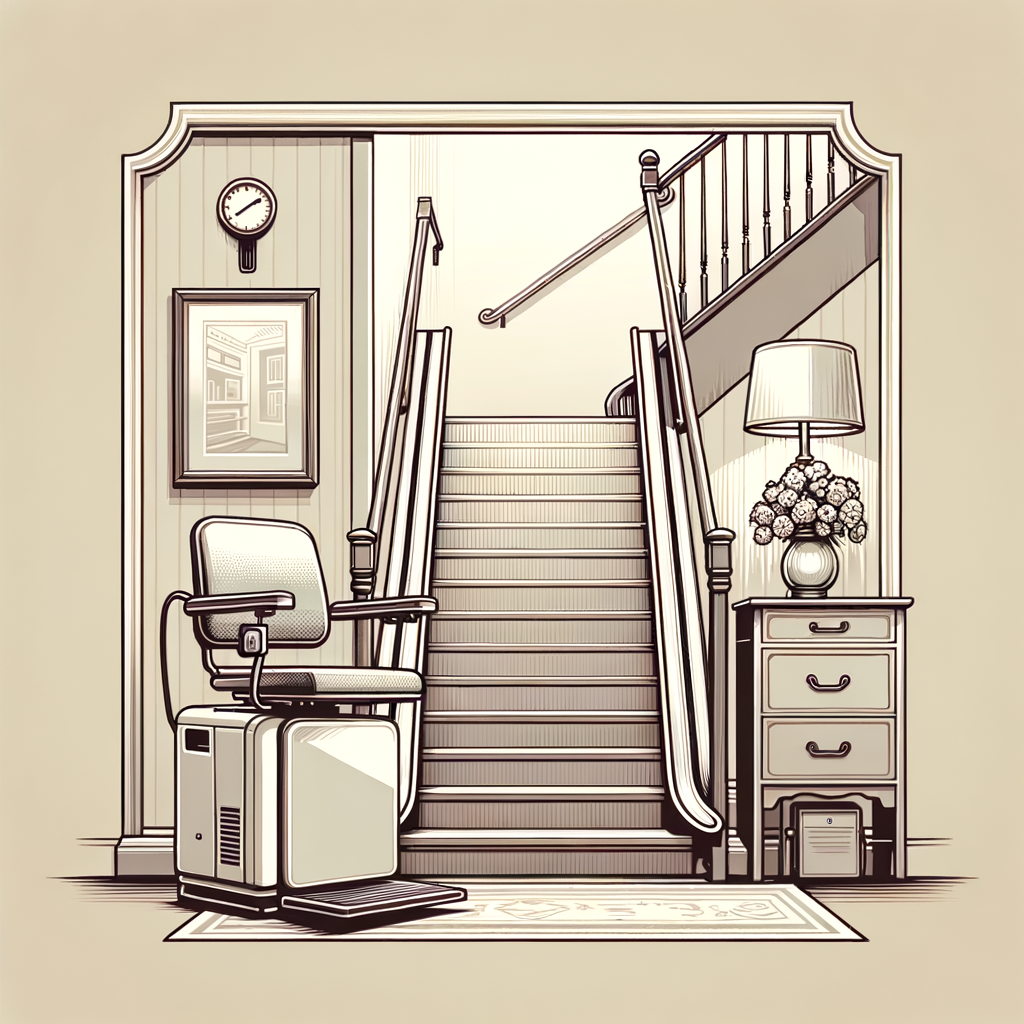
Innovative lift designs for split-level houses solve a specific mobility problem: they connect staggered landings, short stair runs, and mid-floor transitions that standard stairlifts often struggle to serve efficiently. In residential accessibility work, a split-level house usually means a home where floors are offset by half flights rather than arranged in one continuous stack. That layout can be attractive architecturally, but it complicates movement for older adults, wheelchair users, and anyone recovering from injury. A conventional straight stairlift may only cover one run, while a basic home elevator may require more construction than the space or budget allows. That gap is where custom and hybrid designs matter most.
When I assess split-level properties, the first question is not which product looks modern; it is how the resident actually moves through the house day to day. Some people need seated travel between entry and living room. Others need standing support on a short rise to a kitchen landing. Still others need a platform solution that accommodates a wheelchair on one level change and a compact seat lift on another. Innovative lift designs for split-level houses bring these needs together through tailored rail geometry, modular drive systems, compact shafts, and combinations of technologies installed as one coordinated accessibility plan.
This topic matters because split-level homes are common in suburban housing stock built from the 1950s through the 1980s, and many owners want to age in place rather than relocate. According to AARP surveys on housing preferences, most older adults want to remain in their current homes as long as possible. Yet split levels are among the least forgiving layouts when mobility changes. Falls frequently occur on short internal stair runs because residents underestimate them, carry objects, or try to manage without support. A well-designed lift system reduces that risk, preserves independence, and often avoids expensive first-floor remodeling.
Custom designs are built around a home’s exact geometry, user needs, and code constraints. Hybrid designs combine two or more lift approaches, such as a curved chair lift with a small vertical platform lift, or a through-floor lift paired with transfer seating. As the hub page for custom and hybrid designs, this article explains the main design paths, where each works best, what technical decisions shape performance, and how homeowners can evaluate solutions with confidence.
Why Split-Level Houses Need Specialized Lift Design
Split-level houses create circulation patterns that differ from a two-story colonial or ranch. Entry may sit between the upper bedroom level and lower family room. Kitchens may be reached by six or seven steps, while garages connect through another half flight. Because these changes in elevation are small but frequent, accessibility planning must focus on route continuity rather than one dramatic vertical journey. In practice, the resident needs a chain of accessible movements that covers the entire daily path from bedroom to bathroom, kitchen, living area, exterior door, and laundry.
Standard products often fail because they are designed around predictable stair geometry. A straight stairlift assumes one uninterrupted run. A typical curved stairlift can handle turns and landings, but on split levels the issue is often multiple short runs separated by narrow intermediate platforms that require careful parking positions, folding clearances, and transfer space. Headroom can be limited where ceilings follow stair angles. Door swings at mid-landings can interfere with rails. Lower-level rooms may have slab construction that complicates pit excavation for a full residential elevator.
Another challenge is user diversity. In one household, a resident may be able to pivot into a chair but cannot climb steps safely. In another, a wheelchair user needs a platform with minimal transfers. In another, both conditions exist at different times due to progressive illness or rehabilitation. That is why the best split-level lift designs are not product-first. They begin with a measured survey, route mapping, and a realistic forecast of changing mobility over five to ten years.
Custom Chair Lift Configurations for Complex Stair Geometry
For many split-level homes, the most efficient solution remains a custom chair lift, but rarely in off-the-shelf form. Customization usually starts with rail design. Manufacturers such as Handicare, Bruno, and Stannah use photo measurement, digital templating, or laser-based surveys to fabricate rails that follow exact stair contours. In split-level applications, a rail may include tight radius turns, parking bends away from the main hallway, and intermediate stop points that let the user exit at more than one landing. These details are not cosmetic. They determine whether the lift is actually usable without obstructing circulation.
One effective design is the twin-run curved chair lift with a shared upper park position. I have seen this used where the main entry sits on a mid-level landing. The rail serves the lower family room on one direction and the upper bedroom level on the other, allowing the user to board at the entry and travel either up or down. Another option is a single curved rail that wraps around a half landing with a powered swivel seat at the top, reducing twisting during exit. Powered hinges are especially valuable near doorways, where a fixed lower rail would block passage.
Seat selection also matters more than buyers expect. Perch seats help users with limited knee flexion on narrow stairs because they reduce folded projection. Heavy-duty models can support higher capacities, often around 350 to 400 pounds depending on brand. Some users need a manual swivel for simplicity; others need powered rotation because shoulder strength is limited. Call-send controls, retractable seat belts, obstruction sensors, and battery backup are now standard expectations rather than premium extras.
The main limitation is wheelchair access. A chair lift serves the person, not the chair. If transfers are difficult or impossible, custom chair systems may be only part of the answer.
Hybrid Lift Designs That Combine Technologies
Hybrid lift design means using more than one accessibility method to create a complete route through the house. This approach is often the smartest answer for split levels because each level change presents a different physical constraint. A short, narrow interior stair may suit a seated lift, while a garage entry with more open space may accommodate a compact vertical platform lift. Instead of forcing one device to solve every problem, the design assigns the right technology to each transition.
A common hybrid arrangement combines a curved chair lift inside with a porch or garage platform lift outside. The user enters the house via wheelchair on the platform, transfers to a chair lift at the interior half flight, and reaches the main living level without major remodeling. Another arrangement pairs a through-floor lift between principal levels with a short straight stairlift to a sunken living room or basement family room. This reduces the need for a full elevator shaft while still covering the home’s most important pathways.
Hybrids can also be phased. Families sometimes install a chair lift first after surgery or a fall, then add a platform or through-floor unit later as mobility changes. Planning for this in advance matters. Electrical capacity, wall reinforcement, and parking areas should be considered during the first installation so future work is simpler and less expensive.
| Design option | Best use in split-level homes | Main advantage | Main limitation |
|---|---|---|---|
| Custom curved chair lift | Multiple short runs with seated user | Uses existing stairs with limited building work | Requires transfer from wheelchair |
| Vertical platform lift | Garage, porch, or open lower-level rise | Wheelchair access with minimal transfer | Needs more floor area than a chair lift |
| Through-floor lift | Connecting two primary living levels | Small footprint compared with full elevator | Usually serves only two stops |
| Residential elevator | Major renovation or new build | Highest convenience and long-term flexibility | Highest construction cost and complexity |
| Hybrid combination | Mixed level changes and evolving needs | Tailored route coverage across the house | Requires strong planning and coordination |
Space Planning, Structural Constraints, and Installation Strategy
The success of innovative lift designs for split-level houses depends on precise space planning. Stair width is the first checkpoint. In many jurisdictions and manufacturer guidelines, enough clear width must remain for safe pedestrian use, though exact requirements vary by local code and whether the home is owner occupied. Rail side, folded seat depth, arm width, and footrest projection all affect clearance. A stair that measures adequately on paper can still feel unusable if the landing is cramped or a handrail conflicts with the carriage.
Structure is the next issue. Stairlifts are usually fixed to treads, not walls, but curved systems create different load paths than straight models and may need careful anchoring on older stairs. Platform lifts and through-floor lifts impose more demanding structural requirements. A vertical platform lift may need a concrete pad or manufacturer-approved base. A through-floor lift requires opening framing between levels and preserving fire separation where applicable. Residential elevators introduce pit depth, overhead clearance, machine space requirements for some systems, and detailed code review under standards such as ASME A17.1 or A18.1, depending on lift type and jurisdiction.
Electrical planning should never be treated as an afterthought. Most modern stairlifts charge from standard household circuits at park points, but platform lifts and through-floor lifts often need dedicated supply. Backup power options vary. Battery-driven chair lifts can usually complete several trips during outages, while larger units may stop without generator support or battery lowering features. In homes where the lift is essential for bathroom access or emergency egress, outage planning is part of responsible design.
Installation strategy matters as much as hardware choice. I advise clients to sequence work around daily routines: complete dusty framing before final rail measurement, confirm flooring thickness before setting bottom stops, and test transfer clearances with the actual user before sign-off. Small adjustments at this stage prevent major frustration later.
User-Centered Features That Improve Safety and Daily Use
The best custom and hybrid designs succeed because they respect the user’s body mechanics, not because they include the longest feature list. Transfer height must align with the user’s hip strength and balance. Armrests should support a controlled stand without forcing shoulder strain. Seat depth matters for shorter users whose feet may otherwise dangle above the footrest edge. For platform lifts, gate orientation, ramp angle, and control placement determine whether the unit feels secure or awkward.
Safety systems have improved significantly. Modern lifts commonly include overspeed governors, slack cable or chain monitoring on applicable systems, obstruction sensors on carriage and footrest edges, limit switches, keyed controls, and emergency stop buttons. Some manufacturers offer powered folding rails and automatic platform folding to keep walkways clear. Remote diagnostics are increasingly available on premium models, allowing service teams to identify fault codes before a visit.
Usability details often produce the greatest satisfaction. A hinged rail can keep a front door from being blocked. A zero-intrusion parking bend can tuck a chair away from the hall. A platform with constant-pressure controls may be safer, but a user with limited hand strength might need larger buttons or attendant operation. In homes with more than one user, programmable stops and dual remotes reduce conflict. Good design also considers caregivers, delivery routes, and emergency responders who still need to move through the home safely.
Cost, Maintenance, and Long-Term Value
Costs vary widely because split-level projects are highly site specific. A straight chair lift may start in the low thousands, while custom curved models commonly run much higher due to fabricated rails and installation complexity. Platform lifts, through-floor lifts, and residential elevators rise in cost as structural work, electrical upgrades, permitting, and finish repairs increase. The right way to judge value is not by equipment price alone but by total outcome: fall prevention, continued use of the full house, reduced caregiving burden, and delayed relocation.
Maintenance should be discussed before purchase. Stairlifts need battery replacement, rail cleaning, and periodic inspection of rollers, charge contacts, and safety circuits. Platform lifts and elevators require more formal service schedules. Reputable dealers offer preventive maintenance plans, response time commitments, and access to local parts support. Ask who actually services the unit, how long the manufacturer has supported that model line, and whether diagnostics require proprietary software.
Resale impact is nuanced. A lift rarely returns dollar for dollar like a kitchen renovation, but accessibility upgrades can widen the buyer pool in markets with older homeowners or multigenerational families. More important, a well-planned system can preserve quality of life for years. That practical value is often the strongest financial argument.
How to Choose the Right Custom or Hybrid Solution
Start with the route, not the product. List every level change used in a normal day, then identify where transfers are acceptable and where wheelchair access is essential. Request an in-home assessment from a dealer experienced with split-level properties, not only straight stair installations. Ask for measured drawings, code assumptions, and at least two design alternatives. If occupational therapists are involved, integrate their recommendations early.
Compare proposals on five points: user fit, route coverage, structural disruption, service support, and future adaptability. A cheaper chair lift that solves only one stair may be a worse investment than a phased hybrid plan. Insist on clarity about lead times, warranty terms, and permit responsibility. If possible, test similar units in a showroom. The right system should feel stable, intuitive, and realistic for daily use.
Innovative lift designs for split-level houses work best when they are custom to the home and honest about tradeoffs. Some projects call for a single well-engineered curved chair lift. Others need a hybrid strategy that combines seated travel, wheelchair access, and future flexibility. The benefit is straightforward: safer movement through every important part of the house without surrendering the character of a split-level layout. If you are planning accessibility upgrades, map your daily route, book a professional survey, and use that assessment to build a design that fits both the house and the life lived inside it.
Frequently Asked Questions
What makes lift design for a split-level house different from a standard home lift installation?
Split-level houses present a very specific accessibility challenge because the floors are not arranged in one simple vertical sequence. Instead of moving cleanly from ground floor to first floor, residents often need to travel between staggered landings, half flights of stairs, and intermediate levels. That means a standard residential lift design may not always be the most efficient or space-conscious solution. In many cases, the lift must be configured to stop at multiple short-rise points rather than just two main floors, and that changes everything from shaft planning to door placement and travel distance.
Innovative lift designs for split-level houses focus on serving those mid-floor transitions smoothly and safely. A well-designed system can be positioned to connect offset landings directly, reducing the need to navigate short stair runs that are often the biggest daily obstacle for people with reduced mobility. This is especially important for older adults, wheelchair users, and anyone recovering from injury, because even a few steps can become a serious barrier. The best designs take into account how the home is actually used, where the natural traffic patterns are, and which levels need the easiest access most often.
Another key difference is customization. In a conventional two-storey property, lift planning can be relatively straightforward. In a split-level home, the design team may need to consider compact through-floor lifts, short-travel platform lifts, or bespoke enclosed lifts that align precisely with half-landings. Structural limitations, headroom, pit depth, turning space for wheelchair users, and how the lift integrates with the home’s layout all become more important. The result is not just a lift that fits the building, but one that solves the movement problem created by the split-level design in a practical, elegant way.
Which types of lifts work best in split-level houses?
The best lift for a split-level house depends on the number of staggered levels, the available space, the user’s mobility needs, and whether wheelchair access is required. In many homes, a compact home lift or through-floor lift can work very well if it can be positioned to connect the most important living areas. These lifts are often chosen because they require less building work than a full commercial-style elevator and can be installed in existing homes with relatively modest structural changes.
For homeowners who need wheelchair access between offset landings, vertical platform lifts are often a strong option. They are particularly useful where the travel distance is short but the level change still creates a barrier. In split-level layouts with several half-storey changes, a platform lift may be installed to serve a key transition point, such as from the main entry level to the principal living area. If the property has multiple staggered levels that all need to be connected, a bespoke residential lift with several programmed stops may be more suitable.
In some cases, inclined platform lifts or highly specialized stairlift systems may still have a role, but standard stairlifts often struggle in split-level houses because the stair geometry can be awkward, broken up, or too complex for a simple continuous track. That is why lift innovation in this area often focuses on short-rise elevators, custom landing access, and compact systems that can be tailored to unusual floor arrangements. A professional accessibility assessment is the best way to determine which solution is safest, most comfortable, and most future-ready for the household.
Can a lift be installed in an existing split-level house without major disruption?
Yes, in many cases a lift can be installed in an existing split-level house without a full-scale rebuild, but the level of disruption depends on the property’s structure and the type of lift selected. One of the advantages of modern residential lift technology is that many systems are designed specifically for retrofit projects. Compact footprints, reduced pit requirements, self-supporting structures, and flexible door configurations make it easier to adapt a lift to an existing home rather than building around it from scratch.
That said, split-level homes require especially careful planning because the lift must line up with the right landings and provide practical access at each stop. The design team will usually assess load-bearing walls, floor construction, ceiling height, and circulation space around the entry and exit points. In some homes, a lift can be placed in a corner, near a stairwell void, or in an area that minimizes the loss of usable floor space. In others, a more creative solution may be needed, such as serving the most important levels rather than every single offset floor.
Disruption can often be managed effectively through phased installation and smart design choices. Homeowners may need some structural alterations, electrical work, and finish repairs, but these are often more contained than people expect. The key is working with specialists who understand both accessibility and residential design. When properly planned, a retrofit lift can significantly improve independence and safety while preserving the character and function of the home. For many families, that makes it a highly worthwhile upgrade rather than an overwhelming construction project.
How do innovative lift designs improve safety and independence in split-level homes?
Innovative lift designs improve safety by removing one of the most persistent hazards in split-level houses: repeated negotiation of short stair runs and offset landings. These small level changes are easy to underestimate, but they are a common source of falls, fatigue, and loss of confidence for people with limited mobility. A lift designed specifically for a split-level layout creates predictable, step-free movement through the home, which can reduce the physical strain and anxiety associated with everyday tasks such as going from the entrance level to the kitchen, bedroom, or living area.
Independence is improved because the user is no longer forced to rely on help for transitions that the home’s layout makes awkward. That matters in practical and emotional terms. Being able to move between levels safely can make it easier to carry out daily routines, maintain privacy, and continue living in the home long term. For wheelchair users, this may mean direct access to key parts of the property that would otherwise be unreachable. For older adults, it can mean avoiding the gradual restriction of living only on one accessible level while other rooms become effectively unusable.
Modern lift systems also include features that support safe independent use, such as easy-reach controls, smooth start-and-stop operation, battery backup, obstruction sensors, emergency communication features, and doors designed for secure entry and exit at tight landings. In split-level homes, the best safety outcomes come from matching these features to the actual architecture of the property. Rather than forcing the resident to adapt to the building, the lift helps the building adapt to the resident’s needs. That is the real value of innovative design in accessibility-focused home improvement.
What should homeowners consider before choosing a lift for a split-level house?
Homeowners should start by thinking about current mobility needs and future requirements. A lift that works well for someone who simply finds stairs tiring may not be the best long-term choice for a wheelchair user or for a household planning to age in place. It is important to consider who will use the lift, whether seated or standing travel is sufficient, whether wheelchair turning space is needed, and which levels of the house truly need to be connected. In a split-level property, those questions are especially important because not every landing necessarily needs equal access if budget or space is limited.
Space planning is another major factor. The available footprint, the location of structural walls, the proximity to existing staircases, and the practicality of entering and exiting at staggered landings all influence which lift designs are feasible. Homeowners should also ask about weight capacity, travel speed, power requirements, maintenance needs, noise levels, and emergency features. Aesthetics matter too. Because split-level homes often have distinctive architectural character, many people want a lift that blends into the design rather than looking purely utilitarian.
Finally, it is essential to work with experienced professionals who understand split-level access challenges specifically, not just residential lifts in general. A detailed survey and design consultation can reveal opportunities that are not obvious at first glance, such as serving two critical half-level transitions with one strategically placed lift. Homeowners should also review local building requirements, warranty terms, service support, and the installer’s experience with retrofit accessibility projects. The right decision is usually the one that balances safety, usability, long-term value, and compatibility with the home’s unique layout.