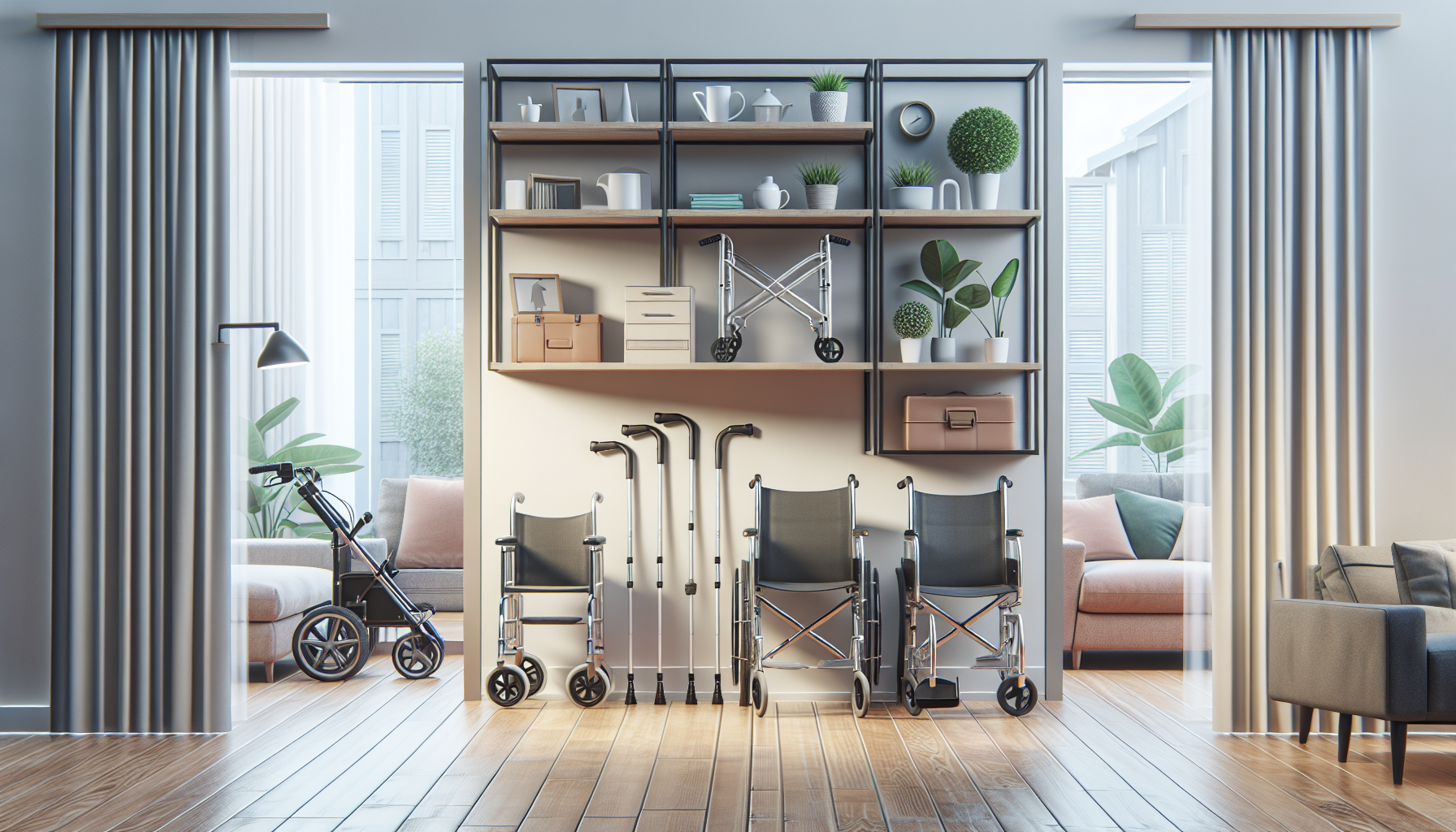
Mobility aids that fit easily into small apartments solve a very practical problem: how to move safely, independently, and comfortably in limited square footage without turning a home into a maze of bulky equipment. In accessibility planning, mobility aids and devices include any tool that supports walking, standing, transferring, reaching, or moving through daily routines, from canes and rollators to transfer benches, bed rails, grab bars, lift chairs, and compact wheelchairs. In small apartments, the challenge is rarely just medical need. It is spatial efficiency. Hallways are narrow, bathrooms are tight, storage is scarce, and furniture often sits closer together than ideal. I have worked with clients and families in studio apartments, older walk-ups, and modern one-bedroom rentals, and the same question comes up every time: what actually fits, and what makes life easier instead of harder?
The answer starts with matching the device to the user, the layout, and the task. A poorly sized walker can clip door frames. An oversized shower chair can block transfers. A power scooter may be useful outdoors but impossible to park indoors. On the other hand, the right cane tip, foldable rollator, narrow transport chair, or wall-mounted support bar can change daily life immediately. Good choices reduce fall risk, conserve energy, support recovery after surgery, and extend independent living. They also protect caregivers by lowering the physical strain of assisting with transfers and bathing. This hub article covers the full landscape of mobility aids and devices for small apartments, with clear guidance on what each category does, where it works best, what limitations to expect, and how to choose products that support safety without overwhelming the living space.
How to Evaluate Mobility Needs in a Small Apartment
Before comparing products, assess three things: the user’s physical needs, the apartment’s dimensions, and the daily activities that create the most difficulty. Mobility support is task specific. Someone with mild balance loss may only need a cane for hallway movement, while another person with arthritis and fatigue may benefit more from a lightweight rollator with a seat. A resident recovering from hip surgery may walk adequately in open rooms but still need a raised toilet seat and tub transfer bench. In practice, I start by tracing a normal day from bed to bathroom, kitchen, sofa, and entry door. The points where hesitation, pain, or instability appear are where devices add the most value.
Measure door widths, turning space, bed height, toilet height, shower threshold, and clearance beside furniture. Standard interior doors are often around 28 to 32 inches wide, but old apartments can be narrower, which matters for walkers and wheelchairs. Turning radius is equally important. Many full-size wheelchairs need roughly 60 inches for a complete turn, while narrow transport chairs and compact rollators can function in tighter layouts. Flooring matters too. Thick rugs catch walker legs and cane tips. Uneven thresholds stop small caster wheels. Slippery tile raises the need for non-slip feet, grab bars, and shower seating.
It is also essential to separate medical advice from product marketing. A device should support a clinically appropriate level of assistance. Cane, walker, rollator, wheelchair, and transfer equipment should ideally be selected with input from a physical therapist, occupational therapist, physician, or durable medical equipment specialist, especially after stroke, fracture, joint replacement, or progressive neurological disease. The best small-apartment mobility aid is not the smallest product. It is the smallest product that still provides the necessary stability, transfer support, and endurance assistance.
Walking Aids: Canes, Walkers, and Rollators That Store Easily
Walking aids are the first category most people consider because they address the most common apartment challenge: getting from room to room safely. Canes are the least intrusive option and work best for users who need minor balance support or mild unloading of one leg. Adjustable aluminum canes are light, inexpensive, and easy to store on a wall hook or beside a chair. Quad canes stand more easily on their own and offer a wider base, though they can be awkward in cramped bathrooms. Proper cane height matters. The handle should generally align with the wrist crease when standing upright with arms relaxed, allowing a slight elbow bend during use.
Standard walkers provide more stability than canes because they create a wider support base. In small apartments, two-wheel walkers are often more practical than heavy bariatric or extra-wide models. Folding frames are valuable because they can slide beside a bed, into a closet corner, or behind a door when not in use. However, they require enough arm strength to lift or guide the frame. For users with limited endurance, a rollator can be better. Rollators have three or four wheels, hand brakes, and often a built-in seat. In a compact home, look for narrow frames, foldable side-to-side designs, and seats slim enough not to widen the overall profile.
Three-wheel rollators deserve special attention for apartment living. They are more maneuverable in kitchens and hallways than four-wheel models and usually fold down smaller. The tradeoff is lower seated stability and less support for users who lean heavily on the frame. Four-wheel rollators provide a steadier feel and often include storage pouches, but they need more turning space. I have seen clients do well with a narrow four-wheel model indoors and keep a larger rollator for outdoor trips. That kind of two-device setup often works better than forcing one oversized device into every situation.
| Mobility aid | Best for | Apartment advantage | Main limitation |
|---|---|---|---|
| Single-point cane | Mild balance support | Minimal storage space | Limited stability |
| Quad cane | More standing support | Self-standing design | Bulky in tight bathrooms |
| Folding walker | Higher stability needs | Stores flat beside furniture | Can be awkward on thresholds |
| Three-wheel rollator | Indoor maneuvering | Tight turning radius | Less stable than four-wheel models |
| Narrow four-wheel rollator | Endurance and resting needs | Seat and basket in one device | Needs more floor space |
Compact Wheelchairs, Transport Chairs, and Scooters
For residents who cannot safely walk functional apartment distances, seated mobility becomes the next focus. In small apartments, the distinction between a self-propelled wheelchair and a transport chair matters. Standard wheelchairs have large rear wheels for independent movement, but those wheels increase width and turning demands. Transport chairs use smaller rear wheels and are pushed by another person. They are usually lighter, narrower, and easier to fold into a closet or slide under hanging clothes. For many apartment dwellers who only need seated mobility for appointments or longer outings, a transport chair is the more realistic fit.
That said, compact wheelchairs can work indoors if dimensions are planned carefully. Look at overall width, seat width, footrest length, and turning radius, not just listed portability. Swing-away footrests help with transfers in tight rooms. Desk-length armrests allow closer access to tables and counters. Lightweight frames reduce caregiver strain when folding or lifting the chair. Some ultra-light manual wheelchairs are highly maneuverable, but they are also expensive and may require customization. For renters dealing with narrow bathrooms, a few inches of saved width can determine whether independent toilet access is possible.
Mobility scooters are rarely ideal as primary indoor devices in small apartments. Even travel scooters that disassemble for transport need parking space, charging access, and a clear path around furniture. Their turning circles often frustrate users indoors, especially in galley kitchens and small bathrooms. I generally recommend scooters only when the primary need is community mobility outside the apartment and there is a realistic storage plan near the entry. Power wheelchairs can sometimes outperform scooters in tight indoor spaces because mid-wheel drive models turn more sharply, but they still demand charging space, doorway clearance, and careful layout planning.
Bathroom Mobility Aids for Tight Spaces
Bathrooms are where small-space accessibility either succeeds or fails. Most falls happen during transfers, turning, stepping over a tub wall, or standing on wet surfaces. The most effective bathroom mobility aids are often the simplest: grab bars, raised toilet seats, toilet safety frames, shower chairs, and tub transfer benches. In apartment bathrooms, every inch matters. A wall-mounted grab bar near the toilet and another in the shower can deliver more functional improvement than a large freestanding device. Proper installation matters. Grab bars should be anchored according to manufacturer specifications and wall structure, not attached with suction unless the product is explicitly designed as a temporary assist and the user understands its limitations.
Raised toilet seats reduce the distance required to sit and stand, which helps users with knee pain, hip precautions, weakness, or poor balance. Some lock directly onto the bowl, while others include armrests for push-off support. In very small bathrooms, a separate toilet safety frame may take too much space, so an all-in-one raised seat with integrated arms can be the better solution. Shower chairs are useful for users who fatigue while bathing, but dimensions matter. Corner-style or narrow bath seats fit where wide benches do not. If the user must cross a tub wall, a transfer bench often provides the safest method because it allows the person to sit first and pivot in.
Handheld showerheads, non-slip mats rated for wet use, and simple shelving changes also improve outcomes. I often advise moving frequently used soap, towels, and grooming items within seated reach so the person does not have to twist or stand unnecessarily. For very tight bathrooms, folding wall-mounted shower seats can be excellent if the structure supports installation and the user’s weight falls within product limits. The key principle is clear transfer space. A useful bathroom aid should create safer movement, not add obstacles around the toilet or shower entry.
Bedroom and Living Room Supports for Transfers and Daily Comfort
Many essential mobility devices are not used for walking at all. They support transfers, bed mobility, and safe sitting. In small apartments, bedroom and living room supports need to blend function with a low footprint. Bed rails or bedside assist handles help users move from lying to sitting and provide leverage for standing. They are particularly helpful after abdominal surgery, during arthritis flares, or when lower-body weakness makes bed exits unstable. Product compatibility matters because some rails are designed for conventional mattresses and bed frames, while others work better with adjustable beds. Rails should never create entrapment risk through improper fit.
Lift chairs can be transformative for users who struggle to stand from low seating, but they are also among the hardest devices to fit into an apartment. Compact or “small-scale” lift recliners are worth considering because they use less wall clearance and narrower arm profiles than traditional oversized recliners. Still, they need space for full recline and a nearby electrical outlet. For some residents, furniture risers, firmer seat cushions, or a stable chair with armrests achieve similar benefits without consuming as much space. I have repeatedly seen low, soft couches cause more daily mobility trouble than any hallway obstacle, especially for people with Parkinson’s disease, osteoarthritis, or post-hospital deconditioning.
Overbed tables, reachers, leg lifters, and transfer discs also belong in this category. They are not glamorous, but they solve real apartment problems. A reacher reduces unsafe climbing or bending in high cabinets. A leg lifter helps move one leg onto a bed in a tight room where caregiver assistance is awkward. A transfer board can bridge short seated transfers for some wheelchair users if skill and upper-body control are adequate. These small devices often deliver excellent value because they improve independence without demanding permanent floor space.
Choosing Features, Materials, and Storage Strategies
Once the right device category is identified, features determine whether it works in a small apartment over the long term. Weight is a major factor. Lightweight aluminum frames are easier to carry, fold, and reposition than steel, though steel can feel sturdier and may support higher capacities. Handle shape affects grip comfort for users with arthritis or neuropathy. Wheel size influences performance over thresholds and rugs. Brake style matters for rollators, especially for users with limited hand strength. In bathrooms, corrosion-resistant finishes and textured seating surfaces hold up better to frequent moisture exposure.
Storage planning should happen before purchase. I advise clients to assign a parking spot for every mobility aid, the same way you would for a vacuum or stroller. Canes fit on adhesive hooks or freestanding cane holders. Folding walkers can stand in a closet corner if the closet opening is wide enough. Rollators often tuck beside a sofa or dining table when folded. Transport chairs may fit under hanging clothes or in an entry alcove. Batteries for powered devices need safe charging access without creating a cord trip hazard. If a product has baskets, trays, or protruding accessories, account for those in your measurements because listed width may not reflect the actual footprint in daily use.
For renters, removable modifications can be especially useful. Tension-mounted poles, clamp-on bed handles, threshold ramps designed for temporary placement, and portable shower accessories can improve function without major renovation. Still, not every no-drill product is suitable for every user. Temporary solutions are best for light support, not for people who depend heavily on the device for weight bearing. The final test is simple: the aid must fit the user, fit the room, and fit the routine. If one of those three fails, the product usually ends up unused.
How This Mobility Aids Hub Connects to the Wider Accessibility Plan
Mobility aids and devices should never be viewed in isolation. The most successful apartment setups combine the right equipment with layout changes, lighting improvements, and habit adjustments. A well-chosen rollator works better when pathways are widened and cords are removed. A shower chair is safer when paired with grab bars and improved lighting. A transfer aid becomes more effective when bed height and chair height are corrected. This hub sits within the broader accessibility and mobility solutions conversation because equipment alone does not create independence. The environment has to cooperate.
As a central resource on mobility aids and devices, this page should guide readers toward more detailed topics such as cane selection, walker sizing, rollator comparisons, bathroom safety equipment, wheelchair dimensions, transfer aids, and apartment-friendly home modifications. That hub-and-spoke approach reflects how real decisions happen. People usually start with a broad question like “What mobility aids fit in a small apartment?” then narrow into specifics such as “Do I need a three-wheel or four-wheel rollator?” or “Will a transfer bench fit my tub?” Clear next-step content helps residents, caregivers, and clinicians move from general understanding to product-level choices with fewer mistakes.
The main takeaway is straightforward: small apartments can support safe, effective mobility when devices are selected by function, measured against the actual floor plan, and integrated into everyday routines. Start with the activities that feel least safe, measure carefully, and prioritize compact aids that deliver real stability instead of simply taking up less room. If you are building an accessibility plan, use this hub as your starting point, then explore the specific device categories that match your needs and your space.
Frequently Asked Questions
What types of mobility aids work best in a small apartment?
The best mobility aids for a small apartment are the ones that improve safety and independence without taking up unnecessary floor space. In most cases, compact and multi-purpose options work better than oversized equipment. Canes, folding walkers, narrow rollators, compact transport chairs, bedside support rails, grab bars, transfer benches, and reachers are all commonly used because they address everyday mobility needs while fitting more easily into tighter rooms and hallways.
When choosing among them, it helps to think in zones. For example, a cane or slim walker may be ideal for moving through narrow passageways, while grab bars and a shower transfer bench can make a small bathroom much safer without requiring a full remodel. In the bedroom, a bed rail can assist with repositioning and standing while taking up very little space. In the living area, a lift chair may be useful for some people, but only if there is enough room to recline and still maintain a safe walking path.
Apartment-friendly mobility aids usually share a few important features: a narrow footprint, foldable design, easy storage, lightweight construction, and simple maneuverability around corners and furniture. The goal is not just to fit the device into the apartment, but to make sure it supports real daily use without creating clutter or tripping hazards. A smaller aid that is used consistently and correctly is often more helpful than a larger device that is difficult to position or move around indoors.
How do I choose a mobility aid that fits my apartment layout?
Start by measuring the spaces where the mobility aid will actually be used. Doorway width, hallway clearance, the turning space near the bed, the bathroom entrance, and the distance between furniture all matter. A mobility aid may look compact in a store or online listing, but if it cannot pass comfortably through interior doors or turn in a small kitchen, it may not be the right fit. Measuring first prevents expensive mistakes and makes it easier to compare products realistically.
It is also important to match the device to the user’s most common activities. Someone who mainly needs support while walking from room to room may do well with a cane, hemi walker, or slim rollator. Someone who struggles with standing from the toilet or getting into the shower may benefit more from grab bars, a raised toilet seat, or a transfer bench than from a larger walking aid. In small apartments, the smartest accessibility planning often focuses on the specific moments where mobility is hardest, rather than assuming one device will solve every problem.
Pay close attention to storage and parking space too. Ask where the device will go when it is not in use and whether that spot still allows clear movement through the room. Folding walkers, collapsible wheelchairs, and portable bed rails are often easier to live with in limited square footage. If possible, consult an occupational therapist, physical therapist, or mobility equipment specialist. They can help assess both physical needs and environmental constraints, which is especially valuable in apartments where every inch counts.
Can mobility aids make a small apartment feel more crowded or unsafe?
They can if they are poorly chosen or placed, but the right mobility aids generally make a small apartment safer, not more crowded. Problems tend to happen when equipment is too large for the space, blocks common pathways, or gets added without rethinking the room layout. For example, a wide walker in a narrow hallway, a chair placed too close to a doorway, or a shower stool that makes bathroom transfers more awkward can all increase fall risk instead of reducing it.
The solution is to treat mobility aids as part of the apartment’s overall traffic flow. Walkways should stay as open and direct as possible. Furniture may need to be rearranged to create turning space, remove unnecessary obstacles, and keep frequently used items within easy reach. In a small home, even small changes, such as moving a side table, securing loose cords, or replacing bulky décor with wall-mounted storage, can make a big difference in how well a mobility aid functions.
Safety also improves when each aid is used in the right setting. Grab bars should be installed securely in structurally appropriate locations. Walkers should be adjusted to the correct height. Transfer benches and bedside supports should be stable and compatible with the user’s weight and mobility level. In other words, the issue is not whether mobility aids belong in a small apartment, but whether they have been selected and set up thoughtfully. When they are, they often reduce falls, improve confidence, and make daily routines much easier.
Are there mobility aids that can be folded, stored, or hidden when not in use?
Yes, and these are often among the most practical choices for apartment living. Many modern mobility aids are designed with limited space in mind. Folding walkers, collapsible canes, slim rollators with fold-up frames, transport chairs, portable ramps, and compact shower chairs can often be tucked into a closet, beside a bed, behind a door, or along a wall when not needed. This flexibility helps preserve living space while still keeping support close at hand.
There are also low-profile support products that blend more easily into the home. Some bed rails are designed to be discreet and removable. Certain grab bars double as towel bars or shelves, which can be especially useful in small bathrooms. Reachers, dressing aids, and transfer belts are easy to store in drawers or baskets. These smaller devices may not draw attention, but they can have a major impact on safety and independence in a tight living environment.
When evaluating foldable or storable aids, make sure convenience does not come at the expense of stability. The device should still be easy to open, lock securely into place, and use safely every time. If folding and unfolding the equipment is physically difficult, it may end up being left out constantly or not used at all. The best option is one that stores efficiently, fits the apartment, and remains dependable during everyday movement and transfers.
What should I prioritize first when making a small apartment more mobility-friendly?
Begin with the areas where falls and difficult transfers are most likely to happen: the bathroom, the bed area, and the main walking path through the apartment. These are usually the highest-priority zones because they affect essential daily routines such as bathing, toileting, getting in and out of bed, and moving between rooms. In many cases, adding grab bars, improving lighting, removing loose rugs, and creating a clear path of travel can make an immediate and meaningful difference.
Next, focus on the moments where the user needs the most physical support. If standing from seated positions is difficult, a bed rail, chair support, or appropriately sized lift chair may help. If walking is the main concern, then a properly fitted cane, walker, or rollator should come first. If bathing is risky, a transfer bench, handheld showerhead, and non-slip setup may be more important than any living room equipment. Prioritizing by actual daily challenges is often more effective than buying several products at once.
Finally, think about the apartment as a system rather than a collection of separate rooms. Mobility-friendly design in a small apartment works best when pathways, storage, seating, and support devices all work together. The aim is to create enough open space for safe movement while placing the right aids exactly where they are needed. That balanced approach supports independence without overwhelming the home, which is the real key to making mobility aids work well in limited square footage.