Portable patient lifts and ceiling lifts both solve the same critical problem in home care: how to move a person safely between a bed, wheelchair, toilet, shower chair, or recliner without causing falls, skin injury, or caregiver strain. In bathroom and bedroom accessibility planning, these transfer systems often determine whether someone can remain at home, how much assistance they need, and whether daily routines stay dignified rather than exhausting. I have helped families compare both options during home accessibility projects, and the right choice usually depends less on product marketing than on transfer frequency, room layout, ceiling structure, caregiver strength, and long-term care goals.
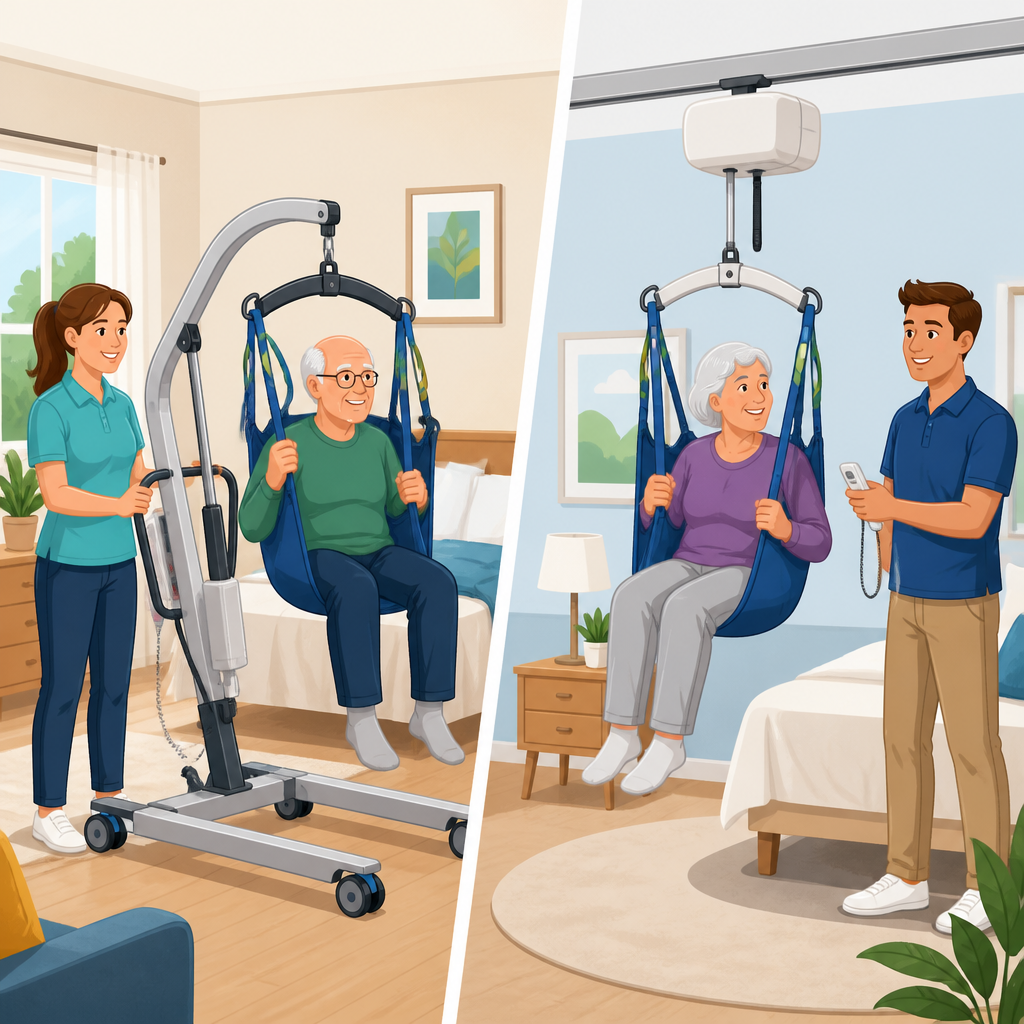
A portable patient lift is a mobile floor-based device, usually with a wheeled base, mast, boom, spreader bar, and sling, that rolls under or around furniture to complete a transfer. A ceiling lift is an overhead system mounted to a track on the ceiling or a freestanding gantry, allowing the person to be lifted and moved along a predefined path. Both systems use slings, safe working load ratings, and positioning methods, but they differ sharply in space demands, installation requirements, and day-to-day usability. Understanding those differences is essential because bathroom and bedroom accessibility is not just about grab bars and wider doorways. It is about creating an integrated transfer environment where surfaces, clearances, flooring, storage, and caregiver workflow all support safe movement.
This topic matters because manual lifting is one of the leading causes of caregiver back injury, and poor transfer methods increase fall risk for people with limited mobility. Clinical guidance from organizations such as OSHA and rehabilitation specialists consistently supports reducing manual lifting whenever possible. At home, the consequences are immediate: a spouse strains a shoulder during a bed-to-commode transfer, a cramped bathroom prevents proper lift positioning, or a poorly chosen sling causes discomfort and fear. The best home transfer system improves safety, conserves caregiver energy, and makes core activities of daily living practical. For anyone building a complete bathroom and bedroom accessibility plan, portable patient lifts and ceiling lifts are foundational decisions that influence equipment selection, remodeling scope, and the sustainability of care.
What portable patient lifts do well in bedrooms and bathrooms
Portable patient lifts are often the starting point for home transfers because they can be introduced quickly and usually cost less upfront than a ceiling track system. In real homes, that flexibility matters. A family can rent or buy a mobile lift after hospital discharge, test sling types, and refine transfer routines before committing to structural changes. Most portable lifts are hydraulic or powered, and common categories include standard passive sling lifts and sit-to-stand models for people who retain some leg strength and trunk control. In bedrooms, a portable lift can move someone from bed to wheelchair or bedside commode. In bathrooms, it can support transfers to a toilet or shower chair if the doorway width, turning radius, and fixture spacing allow enough maneuvering room.
The main advantage of a portable patient lift is versatility across multiple rooms and changing needs. If the bedroom arrangement changes, the lift moves with it. If the person relocates to another home, the equipment can often travel too. For temporary recovery or uncertain prognoses, that matters more than many buyers expect. Portable lifts also work well when a caregiver needs occasional transfers rather than repeated room-to-room movement all day. In a guest room turned bedroom, for example, a mobile floor lift may be more practical than opening ceilings, reinforcing joists, and installing track. These systems are also useful in homes where structural conditions complicate overhead installation, such as older buildings with inaccessible ceiling cavities or rental properties where permanent modifications are restricted.
That said, portable lifts demand floor space and careful setup. The lift base must fit around bed frames, under furniture, and through doorways. Bathrooms are often the limiting factor. I frequently see situations where the bedroom transfer works but the toilet transfer does not, because the base legs cannot clear a pedestal sink, vanity toe-kick, or narrow turn. Thick rugs, thresholds, and uneven flooring can also make rolling harder and less safe. Caregivers need room to spread the base, position the sling, operate the mast, and rotate toward the destination surface without clipping walls or fixtures. In practice, successful use depends on the entire accessibility environment: bed height, wheelchair dimensions, commode style, doorway clear width, and floor plan geometry all affect whether a portable lift feels workable or frustrating.
Where ceiling lifts excel for home transfer systems
Ceiling lifts excel when transfers are frequent, caregiver strain is a major concern, or the bedroom and bathroom need a predictable, low-effort transfer path. An overhead lift removes the problem of rolling a heavy frame over flooring and around tight corners. Instead, the motorized or manual unit travels along a track, and the sling supports the user directly below. In a bedroom, that can mean smooth bed-to-wheelchair transfers with less repositioning. In a bathroom, a track can run from bedroom to toilet and shower area if the layout allows continuous movement. For users with high support needs, this consistency often translates into faster routines, fewer awkward maneuvers, and lower risk of caregiver injury.
Another strength is access in tighter rooms. Because the lifting mechanism is overhead, there is no large base competing with toilet clearances or bed legs. This is especially valuable in accessible bathroom design, where every inch matters. A well-planned ceiling lift can service a standard bed, power wheelchair, rolling shower chair, and toilet station with less floor obstruction than a mobile lift. Families often notice a secondary benefit: the room feels more open. There is no bulky device parked beside the bed, and transfers can be completed with fewer starts and stops. For a person who is anxious about movement, the smoother travel path can improve comfort and confidence, especially when using a properly fitted divided-leg or full-body sling.
The tradeoff is complexity. Ceiling lifts require professional assessment of track routes, structural support, charging arrangements, turning points, and emergency lowering features. Installation cost is higher, and the system is less flexible if the care setup changes. Straight tracks are simpler than room-covering XY systems, and a single-room bedroom track costs less than a multiroom route connecting bed, toilet, and bathing area. Some homes solve structural constraints with freestanding gantry systems, which provide overhead lifting without ceiling reinforcement, but these still require footprint planning and may not feel as seamless as true ceiling-mounted tracks. Ceiling lifts are best viewed as part of a long-term bathroom and bedroom accessibility strategy rather than a quick equipment purchase.
Comparing cost, space, installation, and caregiver effort
When families ask which option is better, the answer usually comes from four variables: total cost, usable space, installation complexity, and caregiver effort over time. Portable lifts often have the lower entry price, commonly ranging from roughly $1,000 to $6,000 depending on capacity, power, and sling package. Ceiling lifts can start several thousand dollars higher and rise significantly with track length, structural work, and room-to-room routing. Yet purchase price alone is incomplete. If a portable lift requires bathroom remodeling to create turning space, the economics change. If a ceiling lift prevents the need for two caregivers during transfers, long-term labor and injury risk change as well.
| Factor | Portable Patient Lift | Ceiling Lift |
|---|---|---|
| Upfront cost | Usually lower | Usually higher |
| Installation | Minimal setup | Professional design and mounting |
| Best for | Flexible, occasional, multiroom use | Frequent, repeatable transfer paths |
| Bathroom performance | Limited by floor space and turning radius | Strong in tighter layouts |
| Caregiver effort | More pushing, steering, positioning | Less physical strain during movement |
| Portability | Can move between homes | Mostly fixed in place |
Caregiver effort is where many comparisons become clear. Rolling a portable lift over vinyl plank may be manageable; rolling it over thresholds into a narrow bathroom while keeping the user centered is harder. Ceiling lifts reduce those demands, which is why they are often preferred for progressive conditions, bariatric support, or solo caregiving. Still, installation realities matter. Some homes have low ceilings, complicated joist patterns, or mechanical systems that limit track routing. Others simply do not justify the expense because transfers are infrequent. The best decision comes from matching the equipment to actual transfer volume, room dimensions, and the expected care horizon, not from assuming newer or more expensive always means better.
How lift choice shapes bathroom and bedroom accessibility design
Bathroom and bedroom accessibility should be planned around the transfer method, not added afterward. In bedrooms, bed clearance on both sides, under-bed access, mattress height, and the location of dressers or recliners can determine whether a portable lift can approach correctly or whether a ceiling track should extend to a seating area. Hospital beds often improve compatibility because height adjustment helps align with wheelchairs and commodes, reducing shear and awkward lowering angles. Storage also matters. Slings need a clean, reachable place near the transfer zone, and charging access for powered lifts should not create trip hazards or force inconvenient parking patterns.
In bathrooms, fixture placement becomes even more important. For portable lifts, the clear floor area in front of the toilet and shower entrance must support approach, pivot, and exit. Curbless showers, wall-hung sinks, and outward-swinging or pocket doors can improve maneuverability. For ceiling lifts, planners should define exact destinations: toilet centerline, shower chair position, and dry transfer staging area. A track that stops short of the true target creates awkward last-inch handling, defeating the benefit of overhead movement. I advise families to map transfers using tape on the floor and actual equipment dimensions before remodeling. This exposes conflicts with vanity corners, door trim, or wheelchair footrests while changes are still inexpensive.
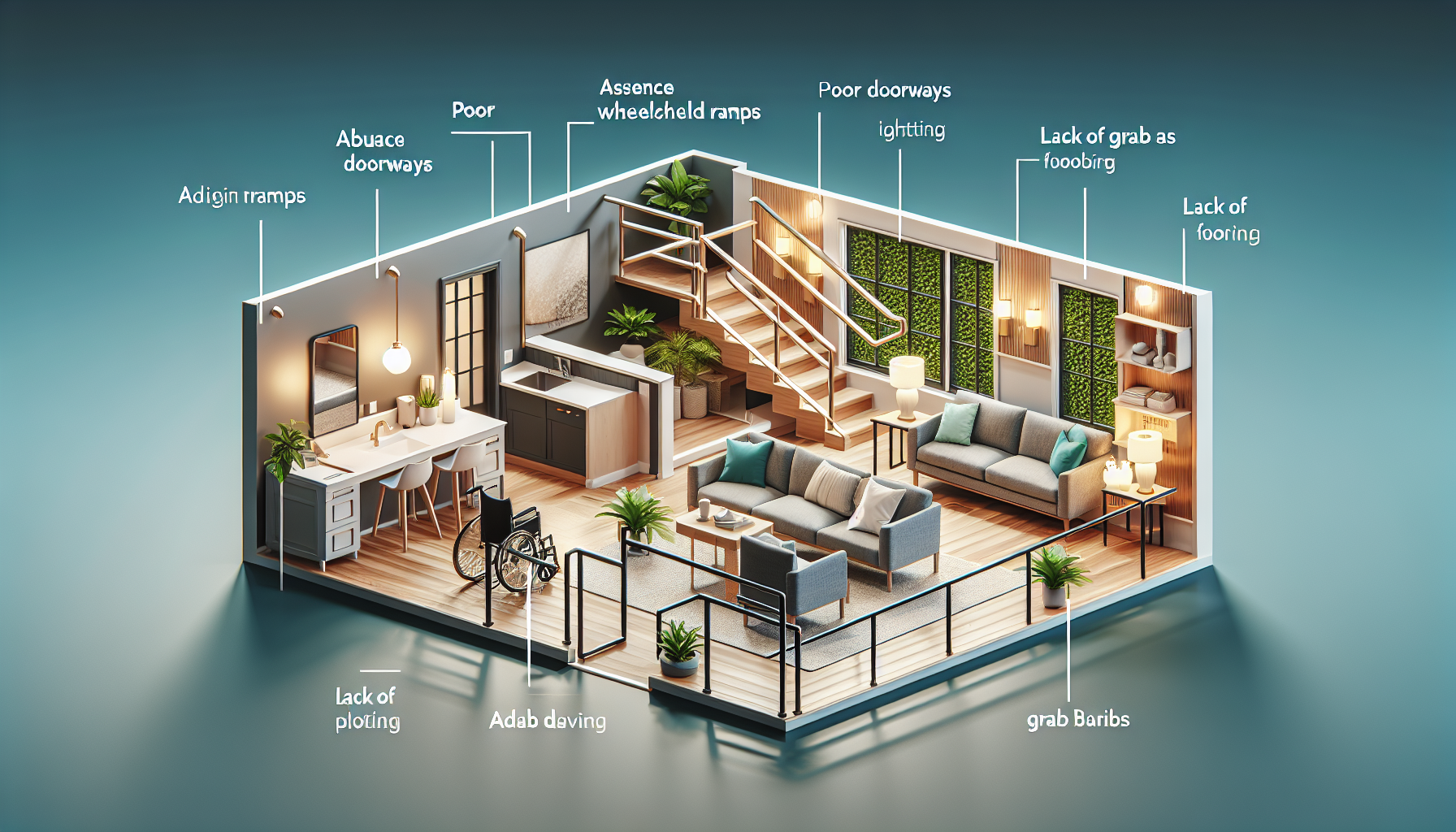
This hub topic also connects to related accessibility elements. Toilet height, shower seat selection, non-slip flooring, doorway widening, and wheelchair turning radius all interact with lift performance. A poorly chosen bed frame can block portable base legs. An inaccessible shower threshold can force dangerous manual repositioning after an otherwise safe lift transfer. Good design treats the bedroom and bathroom as one transfer ecosystem, especially when nighttime toileting, bathing, dressing, and pressure relief all happen within the same care routine. Whether the final solution is portable or overhead, the most successful homes coordinate lift choice with circulation paths, fixture layout, lighting, and caregiver workspace from the beginning.
Choosing the right system for specific home care scenarios
The most reliable way to choose between portable patient lifts and ceiling lifts is to start with the person’s diagnosis, functional ability, and daily transfer pattern. For short-term recovery after surgery, a portable lift may be enough, especially if transfers are limited to bed and wheelchair. For a person with advancing multiple sclerosis, ALS, or a spinal cord injury, a ceiling lift often becomes the better long-term investment because needs usually increase, not decrease. If the user can bear weight and follow cues, a sit-to-stand lift may work for bedroom and toilet transfers, but it is not a substitute for a full-body lift when trunk control, endurance, or safety is poor.
Caregiver availability is equally important. A strong daytime aide may manage a portable lift comfortably, while an older spouse handling overnight bathroom transfers may need the reduced effort of an overhead system. Bariatric scenarios also shift the equation. Higher-capacity portable lifts exist, but moving them in confined rooms can be difficult. Ceiling systems with appropriate structural support and rated components may provide safer, smoother handling. For pediatric use, growth planning matters: track coverage, sling sizing, and future wheelchair dimensions should be considered early. In every case, clinical input from an occupational therapist, physical therapist, or ATP can prevent costly mistakes by aligning the lift with body mechanics, seating systems, and environmental demands.
Before buying, request an in-home assessment and a live transfer demonstration whenever possible. Measure doorway clear width, bed height range, wheelchair width, toilet clearance, and shower access. Ask about safe working load, emergency lowering, battery runtime, sling compatibility, and maintenance intervals. If a vendor cannot explain where the caregiver will stand during a toilet transfer or how the user reaches the back of the shower, the plan is not ready. The best bathroom and bedroom accessibility outcomes come from detailed assessment, not guesswork. Compare real transfer routes, not brochure features, then choose the system that makes everyday care safer, simpler, and sustainable for everyone involved.
Portable patient lifts and ceiling lifts both play important roles in home transfers, but they serve different priorities. Portable lifts offer flexibility, lower initial cost, and easier deployment, making them useful for short-term needs, changing rooms, and homes where permanent installation is not practical. Ceiling lifts deliver smoother movement, lower caregiver strain, and better performance in tight bathroom and bedroom layouts, especially when transfers are frequent or complex. Neither system is universally best. The right answer comes from matching the lift to the person’s mobility, the caregiver’s capacity, and the home’s physical constraints.
For bathroom and bedroom accessibility, the bigger lesson is that transfer equipment should guide the rest of the design. Door widths, bed clearances, toilet placement, shower access, flooring, and sling storage all affect whether a lift works safely in real life. Families who treat transfer planning as a central part of remodeling usually avoid the most expensive mistakes, such as buying a lift that cannot reach the toilet or renovating a shower that still requires manual lifting. A well-matched lift supports dignity, protects caregivers, and extends the viability of home-based care.
If you are comparing portable patient lifts versus ceiling lifts for home transfers, start with an in-home assessment and map your actual bedroom and bathroom routines. Measure the space, test the transfer path, and build the accessibility plan around how care happens every day. That practical step will lead you to the safest, most durable solution.
Frequently Asked Questions
What is the main difference between a portable patient lift and a ceiling lift for home transfers?
The biggest difference is how each system moves through the home. A portable patient lift is a mobile floor-based device with a wheeled base, a mast, and a lifting arm that raises and lowers a person in a sling. It can usually be rolled between rooms if there is enough doorway clearance and open floor space, which makes it a flexible option for families who want one lift to serve multiple areas. A ceiling lift, by contrast, is mounted overhead on a fixed track system. Instead of relying on floor space, it moves along the ceiling path, which can be straight, room-to-room, or designed to cover specific transfer zones such as bed to wheelchair or toilet to shower chair.
In practical terms, portable lifts are often easier to purchase and begin using because they do not require structural installation. They are commonly chosen when families rent a home, need a lower upfront cost, or want a solution that can be relocated. Ceiling lifts typically require more planning because the track must be installed securely and designed around the home layout, but they often provide smoother transfers and reduce the physical effort required from the caregiver. Since the lifting motor is overhead, there is less maneuvering around furniture, rugs, and tight turning spaces.
Both options can safely transfer a person between a bed, wheelchair, toilet, shower chair, or recliner when properly matched to the user’s needs. The better choice usually comes down to the home environment, transfer frequency, the user’s size and mobility level, and how much physical strain the caregiver can manage day after day.
Which option is usually better for small bedrooms and bathrooms?
In many tight home layouts, a ceiling lift has a clear advantage because it removes the lift base from the floor. Small bedrooms and bathrooms often have very limited turning radius, especially when you add a wheelchair, bedside furniture, commode equipment, or a shower threshold. A portable patient lift needs enough room for its legs to open, approach the user correctly, and then pivot away safely. In a cramped space, that can become frustrating or even impossible, particularly around toilets, in narrow bathrooms, or next to larger beds and recliners.
A ceiling lift can make those same spaces far more workable. Because the motor travels overhead, the caregiver is not fighting the bulk of a floor lift while trying to maintain safe body mechanics. This can be especially valuable in bathrooms, where wet floors and tight clearances increase the risk of slips and awkward repositioning. For transfers that need to happen multiple times every day, such as bed-to-wheelchair in the morning and wheelchair-to-toilet throughout the day, that easier movement can make a major difference in both safety and consistency.
That said, not every small room automatically calls for a ceiling system. If only one or two transfers are needed and the home has a workable open area, a compact portable lift may still be sufficient. The key is not just square footage, but usable transfer space: doorway width, floor obstructions, furniture placement, and the ability to position the sling and lift without rushing or twisting. A home assessment is often the best way to determine which system will actually function well in daily life.
Are ceiling lifts safer than portable patient lifts?
Both can be very safe when the equipment is appropriate for the user, the sling is correctly selected, and caregivers are properly trained. Safety depends less on the category alone and more on fit, setup, and daily use. A portable patient lift is safe when there is enough room to position it correctly, the wheels and spreader base are used as directed, the sling supports the person’s body type and transfer needs, and the caregiver can move the lift without excessive force. A ceiling lift is safe when it is professionally installed, weight limits are respected, and the transfer path is designed to support the actual routines the person needs every day.
Where ceiling lifts often gain an advantage is consistency. Because they follow a fixed overhead path, there is less chance of poor positioning caused by clutter, difficult flooring, or tight turns. They also tend to reduce caregiver strain, which matters more than many people realize. A transfer becomes less safe when a caregiver is fatigued, rushed, or physically struggling to control a heavy lift and a suspended person. Reducing that strain can lower the chances of skin shear, bumping into furniture, and loss of control during movement.
Portable lifts, however, remain a strong safety solution in the right environment. They are widely used successfully in homes and can be an excellent choice when space is adequate and transfers do not require navigating highly confined areas. The safest system is the one that fits the person, the home, and the caregivers well enough that it will be used correctly every single time rather than avoided because it feels too hard, too bulky, or too complicated.
How do cost and installation compare between portable lifts and ceiling lifts?
Portable patient lifts usually have a lower initial purchase price and a simpler path to use. In most cases, the lift is assembled, adjusted, and put into service without construction work. That makes it appealing for families who need a solution quickly, are working within a tighter budget, or do not want to modify the home. Ongoing costs may include replacement slings, batteries for powered models, and routine maintenance, but the setup itself is relatively straightforward.
Ceiling lifts generally involve a higher upfront investment because you are paying not only for the lift motor and sling system, but also for the track design, hardware, and professional installation. The final cost depends on whether the system covers one transfer point or multiple rooms, whether structural reinforcement is needed, and how complex the track layout is. A straight track over a bed is very different from a room-to-room system that connects the bedroom and bathroom.
Even so, families should look beyond the purchase price alone. A ceiling lift may provide long-term value if it allows one caregiver to manage transfers more safely, reduces the risk of injury, supports continued care at home, or makes difficult bathroom routines manageable. In some cases, a portable lift costs less upfront but proves harder to use in practice, which can lead to workarounds that are not safe or sustainable. The best financial decision is usually the one that supports reliable daily use, protects the caregiver’s body, and helps prevent costly injuries or rushed changes in care setting later.
How do families decide which lift is best for long-term home care?
The best decision usually comes from evaluating the full transfer picture rather than comparing equipment in isolation. Start with the person’s current mobility and likely future needs. Can they bear any weight? Do they need full support for every transfer? Are transfers expected to become more frequent or more difficult over time? A lift that works today but becomes impractical within a year may not be the strongest long-term choice. Also consider body size, medical conditions, skin protection needs, comfort in a sling, and whether toileting or bathing transfers require more specialized support.
Next, look closely at the home itself. Measure not just rooms, but pathways. Pay attention to threshold transitions, carpet, furniture placement, bed height, bathroom turning space, and where the wheelchair or shower chair must end up. A portable lift can look fine on paper but fail in a real bathroom because there is not enough room to open the base or line up under the person safely. A ceiling lift may be the better long-term solution if the home layout is tight and transfers happen several times a day in predictable locations.
Finally, consider the caregivers. This is one of the most important and most overlooked factors. If a spouse, adult child, or home aide is doing the transfers, their strength, confidence, and consistency matter. A system that reduces physical strain and makes transfers smoother can be the difference between care that remains sustainable and care that quickly becomes exhausting. For many families, the right answer comes after an in-home assessment by a knowledgeable professional who can match the equipment to the user, the space, and the daily routine. That kind of planning helps ensure the lift supports dignity, safety, and the realistic demands of long-term home care.