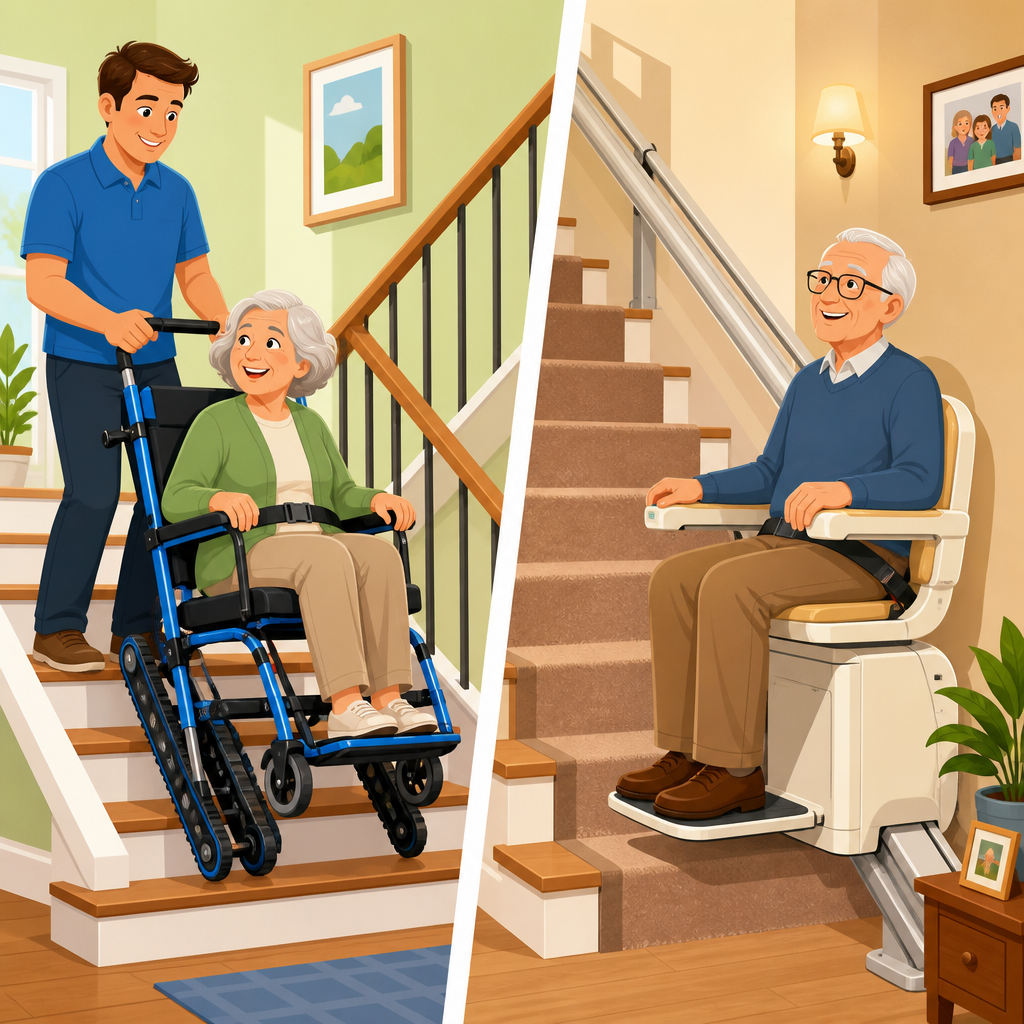
Choosing between portable stair climbing chairs and permanent stair lifts starts with understanding how each device moves a person safely on stairs, where it works best, and what compromises come with convenience, cost, and installation. In mobility planning, the wrong choice creates daily friction, caregiver strain, and avoidable safety risks, while the right one restores access to upper floors, reduces fall exposure, and fits the home or facility without unnecessary expense. A portable stair climbing chair is a battery-powered device, typically operated by a trained caregiver, that rides on tracks, rotating belts, or traction mechanisms to move a seated passenger up or down stairs without a fixed rail. A permanent stair lift is a motorized chair mounted to a rail secured along the staircase, allowing the user to travel independently or with minimal help by pressing onboard or wall-mounted controls.
I have evaluated both options in homes, churches, clinics, and older multifamily buildings, and the practical difference becomes obvious as soon as you watch daily use instead of brochure demonstrations. Portable units are flexible, transportable, and useful when multiple stairways, temporary needs, or building restrictions make installation difficult. Permanent stair lifts are usually better for frequent residential use because they deliver consistent access, lower operator effort, and simpler transfers once installed. The core question is not which product is more advanced; it is which one matches the user’s mobility, the staircase geometry, the number of trips per day, and the availability of assistance. That is why this comparison matters for families, occupational therapists, discharge planners, aging-in-place contractors, and property managers who need a realistic answer rather than marketing claims.
This article serves as a hub for portable lifts within the broader chair lift types and designs category. It explains how portable stair climbing chairs work, how they differ from permanent stair lifts in installation, safety, usability, cost, maintenance, and ideal use cases, and where each option fits in a long-term accessibility plan. It also addresses common questions directly: Are portable stair climbing chairs safe? Can they be used on curved stairs? Do they replace a home stair lift? What training is required? By the end, you should be able to identify the key differences, understand the tradeoffs, and decide which solution deserves a deeper evaluation for your home, facility, or client.
How Portable Stair Climbing Chairs Work
Portable stair climbing chairs are designed to transport one seated passenger over stairs without installing a fixed rail on the staircase. Most models use either tracked treads, powered wheel mechanisms, or friction-based drive systems that grip the stair edges while an attendant stabilizes and guides the unit. Well-known manufacturers in this category include Stryker, Evac+Chair, AAT, and Antano Group, though product designs vary substantially. Some are intended for evacuation only, especially in commercial buildings, while others are built for routine assisted transport in homes, medical transport, and community access settings. The distinction matters because an evacuation chair optimized for descending a stairwell during an emergency is not automatically suitable for daily upward travel in a residence.
In practical use, the passenger is transferred into the chair, secured with a harness or lap belt, and moved to the staircase landing. The operator positions the device at the stair edge, activates the drive system, and maintains balance and directional control throughout the trip. Battery capacity, maximum user weight, stair angle tolerance, landing clearance, and chair dimensions determine whether a unit works on a specific staircase. Many portable models handle straight stairs well but become limited on tight winders, spiral stairs, or landings with little turning space. That is why a site assessment is essential even though the device is called portable. Portable does not mean universally compatible.
The biggest operational characteristic is dependence on an attendant. Even highly stable powered units typically require a trained caregiver or staff member to guide loading, unloading, and travel. For users who cannot safely transfer alone, this may still be acceptable if assistance is always available. In facilities, that staffing assumption may hold. In private homes, it often does not. Families sometimes buy a portable stair climbing chair expecting independence, then realize the device solves stair movement but not the staffing problem surrounding it. When evaluating portable lifts, the right question is not simply, “Will it climb stairs?” but “Who will operate it correctly every single day?”
How Permanent Stair Lifts Work
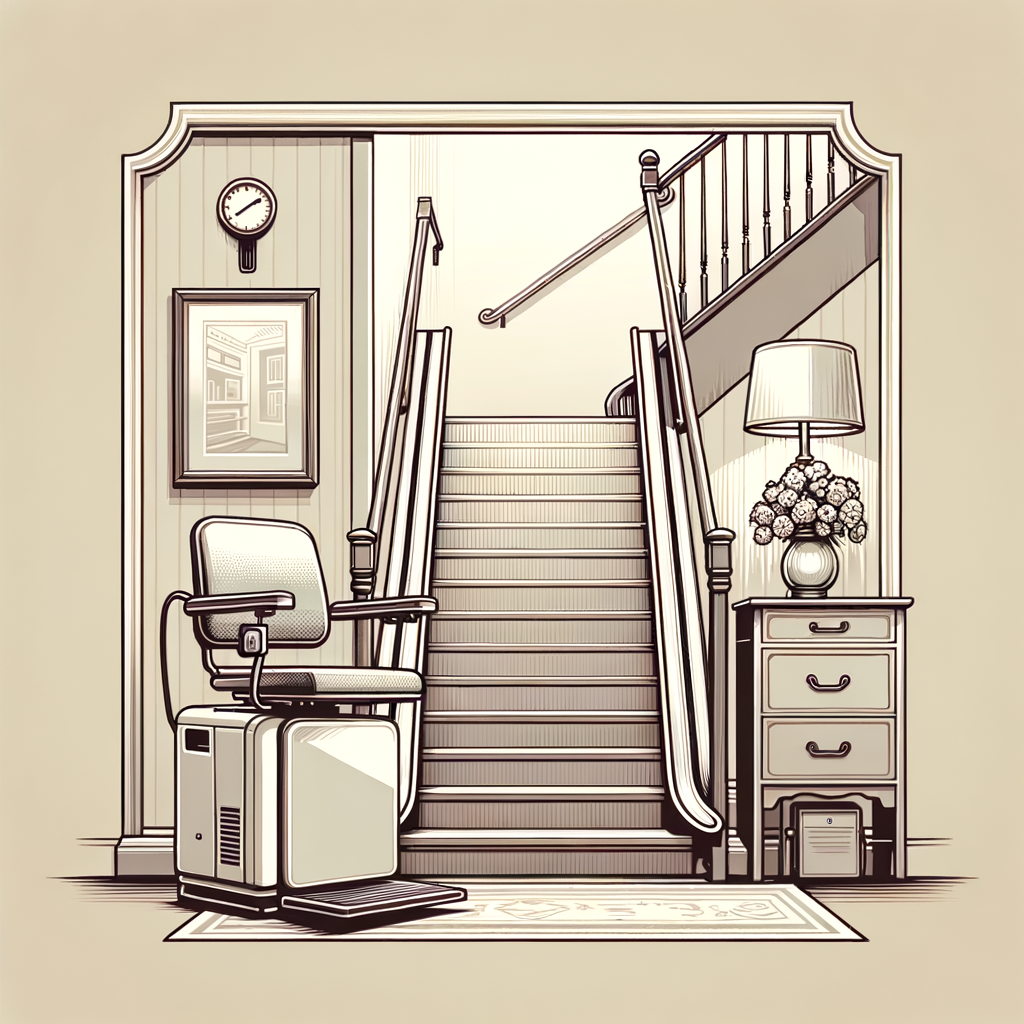
A permanent stair lift consists of a rail fixed to the stair treads or, less commonly, the wall structure, along with a motorized carriage and a folding seat, footrest, and armrests. The user sits on the chair, fastens the seat belt, and presses a constant-pressure control to travel along the rail. Residential systems from brands such as Bruno, Stannah, Harmar, and Handicare are available for straight staircases, curved staircases, and outdoor applications. Unlike portable stair climbing chairs, these lifts are engineered around the dimensions of one staircase and remain in place full time. Their value comes from repeatable, low-effort access rather than portability.
In homes where a user makes several trips per day, a permanent stair lift usually becomes part of the daily routine within days. Call/send controls allow the chair to be summoned to either landing, swivel seats reduce awkward transfers at the top, and folding components preserve some walking width when not in use. Modern units typically include obstruction sensors, overspeed governors, battery backup charging, and lockable controls. Industry-standard good practice also involves confirming staircase width, headroom, landing safety, seat height compatibility, and charging-point location before installation. For curved stairs, manufacturers create custom-bent rails based on detailed measurements or digital scans, which raises price but preserves access on complex layouts.
The essential benefit is user autonomy. A permanent stair lift lets many people travel between floors without a helper, which changes quality of life in a way portable devices often cannot. Independence is especially important for people with arthritis, cardiopulmonary limitations, balance disorders, or progressive neurological conditions who may still be able to transfer onto a seat safely but cannot manage stairs. Permanent lifts do have limits: they require installation, they alter the staircase environment, and they are usually dedicated to one property. Still, for consistent home access, a correctly specified stair lift is often the more durable and less labor-intensive solution.
Key Differences at a Glance
The clearest way to compare portable stair climbing chairs and permanent stair lifts is to evaluate how each performs against the core decisions buyers face: independence, installation, stair compatibility, portability, staffing, and long-term value. In my assessments, people initially focus on price, but usage pattern is usually the deciding factor. A lower-cost option that requires two strong helpers, frequent charging discipline, and careful storage can become less practical than a fixed lift that simply works when needed. The table below summarizes the major differences.
| Factor | Portable Stair Climbing Chair | Permanent Stair Lift |
|---|---|---|
| User operation | Usually attendant-operated | Usually user-operated |
| Installation | No fixed rail installation | Rail installed on staircase |
| Best for | Temporary, multi-site, or assisted transport | Frequent daily home access |
| Stair types | Varies by model; limited on complex stairs | Straight, curved, and outdoor models available |
| Portability | Can be moved between locations | Remains with one staircase |
| Caregiver effort | Higher; requires training and handling | Lower after installation |
| Upfront cost | Often lower than custom curved lifts | Straight lifts moderate; curved lifts higher |
| Long-term convenience | Moderate to low for daily solo living | High for routine use |
These differences explain why portable lifts are common in transport services, emergency preparedness programs, and buildings where installation is impossible, while permanent stair lifts dominate the aging-in-place residential market. One is a mobile accessibility tool; the other is a built environment solution. That distinction should guide every buying decision.
Safety, Training, and Regulatory Considerations
Safety is the first screening issue because both products move a person on stairs, where the consequences of error are severe. Portable stair climbing chairs can be very safe when they are used on compatible stairs by trained operators who follow the manufacturer’s procedures, keep batteries charged, and secure the passenger correctly. However, their safety profile depends heavily on human performance. Operator posture, braking technique, stair approach angle, turning on landings, and transfer management all affect risk. In facilities, I recommend documented competency training and periodic refreshers, not just a brief demonstration on delivery day. If staffing turnover is high, portability becomes less of an advantage because consistency drops.
Permanent stair lifts reduce some of that human variability because the rail guides the travel path and the user remains supported by the seat, footrest, and belt throughout the ride. That does not make them risk free. Safe use still requires proper transfer ability, seated balance, cognitive understanding of the controls, and a clear staircase. Reputable installation should align with applicable codes and recognized stairway lift standards, including ASME A18.1 where relevant, while residential products should be sourced from established manufacturers with service networks and tested safety systems. Outdoor units need weather-resistant components and covers, not improvised protection.
A common mistake is assuming either option can compensate for unsafe transfers. They cannot. If a user cannot sit upright reliably, cannot follow basic directions, or requires total assistance for transfers, the decision may involve a different mobility device altogether, such as a through-floor lift or home elevator, depending on the environment and budget. Good assessment includes the user’s diagnosis, strength, endurance, cognition, home layout, caregiver availability, and emergency egress plan. Accessibility equipment works best when matched to the whole care context, not purchased as an isolated gadget.
Cost, Maintenance, and Long-Term Value
Portable stair climbing chairs often look financially attractive because they avoid rail installation and can serve more than one staircase or location. Depending on the model, they may cost less than a custom curved stair lift and can sometimes be redeployed if the user moves. For short-term recovery after surgery, temporary care situations, or organizations that need transport capability across several sites, that flexibility has real value. Maintenance usually involves battery management, charger integrity, track or wheel inspection, harness condition checks, and periodic servicing according to the manufacturer’s schedule.
Permanent stair lifts involve installation cost, and curved systems are notably more expensive because the rail is custom fabricated. Straight stair lifts are more affordable and often provide the strongest value for homeowners who need several trips per day over multiple years. Maintenance is typically predictable: battery replacement at intervals, rail cleaning, annual service, and troubleshooting of call stations, seat swivels, and safety sensors. Because the lift is always positioned on the staircase, it removes the daily setup burden that portable devices create.
Long-term value comes down to adherence. Equipment only helps if people actually use it. In many homes, portable units are used enthusiastically for two weeks and then stored because transfers are awkward, operation feels intimidating, or the necessary helper is unavailable during morning and evening routines. A permanent stair lift, by contrast, stays visible, charged, and ready. That convenience is not a luxury feature; it is what supports consistent use and safer living over time. When budgeting, include training, servicing, battery replacement, storage, and the cost of caregiver time, not just purchase price.
Best Use Cases for Portable Lifts and When a Permanent Lift Wins
Portable stair climbing chairs are best suited to specific scenarios. They work well for assisted access in homes where installation is prohibited by lease terms or historic building constraints, for medical transport teams moving patients over entrance stairs, for schools and worship spaces needing occasional access support, and for emergency evacuation planning. They can also be a practical bridge solution while a permanent accessibility modification is being designed or funded. In these cases, the device’s mobility and lower infrastructure demands are the reason to buy it.
Permanent stair lifts usually win when the same person needs reliable access to the same upper floor every day. Typical examples include an older adult with knee osteoarthritis who still transfers independently, a homeowner with heart failure who becomes breathless on stairs, or a person with multiple sclerosis whose fatigue varies but who wants to keep using the bedroom and bathroom upstairs. In these settings, independent operation and minimal caregiver effort matter more than portability. The lift becomes part of the home’s accessibility design, similar to grab bars, ramps, or a zero-threshold shower.
If you are building a portable lifts content plan, the most useful next step is to break the category into decision-focused topics: daily-use portable stair climbers, evacuation chairs, bariatric models, narrow-stair options, battery maintenance, training requirements, and comparisons with curved stair lifts and home elevators. Start with an on-site assessment, list the user’s transfer ability and stair dimensions, and choose the solution that will still be practical six months from now, not just impressive on day one.
Frequently Asked Questions
What is the main difference between a portable stair climbing chair and a permanent stair lift?
The biggest difference is how each solution is designed to move someone on the stairs and what it requires to work safely. A portable stair climbing chair is a mobile device operated by a trained caregiver or assistant. It uses powered tracks or a motorized climbing system to help transport a seated person up or down stairs without the chair being permanently attached to the staircase. Because it is portable, it can often be used in multiple locations and stored away when not in use. That makes it especially useful in settings where access needs are occasional, temporary, or spread across more than one building.
A permanent stair lift, by contrast, is installed directly onto the staircase with a rail system. The user sits on the lift seat, secures the safety belt, and rides along the rail from one floor to another. It is intended for repeated daily use in a specific home or facility. Once installed, it becomes part of the property’s accessibility setup. In most cases, a stair lift is best for individuals who regularly need access to another level and can transfer on and off the lift with little or no assistance.
In practical terms, the choice often comes down to independence versus flexibility. A permanent stair lift usually offers more independence because the user can often operate it alone. A portable stair climbing chair offers more flexibility because it can go where the person goes, but it typically depends on a trained operator. That distinction matters when comparing long-term convenience, caregiver involvement, home modifications, and the level of support the rider needs every day.
Which option is better for long-term daily use in a home?
For most people who need reliable stair access every day, a permanent stair lift is usually the better long-term solution. It is built for repeated use on a specific staircase and is designed to make routine movement between floors easier, safer, and less physically demanding. Once properly installed, it offers consistent performance without requiring someone to position and operate a separate transport device each time. That matters in real life, because convenience often determines whether a mobility solution gets used regularly or becomes frustrating over time.
A permanent stair lift can be especially effective for older adults, people with arthritis, individuals recovering from injury, and those with chronic balance or strength limitations who still want to remain in a multistory home. It reduces fall exposure on the stairs and can help a person preserve more independence. Many models include swivel seats, seat belts, footrests, obstruction sensors, and easy-to-use controls. If the user is capable of transferring safely onto the seat, the stair lift can become a dependable part of daily living with minimal caregiver involvement.
A portable stair climbing chair may still be the right fit in certain long-term situations, but usually when a fixed installation is not practical. For example, some homes have structural limitations, rental restrictions, very narrow stairways, or budget constraints that make installation difficult. However, for everyday home use, a portable unit often introduces more steps into the process. It must be brought out, positioned correctly, and operated by someone competent and physically prepared to assist. Over time, that can create caregiver strain and scheduling issues, especially if stair use is frequent. For ongoing daily access in one residence, permanent stair lifts generally win on ease, predictability, and user independence.
How do cost and installation compare between portable stair climbing chairs and permanent stair lifts?
Cost and installation differ significantly because the two products solve stair access in very different ways. A portable stair climbing chair usually has a lower barrier to getting started because it does not require construction or rail installation on the staircase. The device is purchased outright, charged, maintained, and used as needed. That can make it attractive for short-term recovery, infrequent transport, travel between sites, or organizations that need one device for multiple staircases. There is also no need to alter the home, which can be a major advantage in rental properties or buildings where permanent modifications are restricted.
A permanent stair lift generally involves a higher upfront investment because it includes professional assessment, equipment selection, rail customization, and installation. Straight staircases are typically simpler and less expensive to fit than curved staircases, which often require custom rails and more detailed measurements. While the initial cost is usually higher, the long-term value can be strong for households that use the lift every day. In those cases, the convenience and independence may justify the expense far better than repeatedly relying on caregiver-assisted transport.
It is also important to think beyond the sticker price. With a portable stair climbing chair, you may need to account for operator training, battery charging, ongoing maintenance, and the availability of a caregiver whenever stairs are involved. With a stair lift, you should consider service plans, battery backup, installation quality, and whether the staircase design affects pricing. The better financial decision depends on usage frequency, number of users, property type, and whether the need is temporary or permanent. In short, portable devices often reduce installation complexity, while permanent stair lifts often provide better value for regular, long-term use in one location.
Which option is safer for the user and the caregiver?
Safety depends on the user’s physical abilities, the staircase layout, and who will be assisting, but in many routine home situations, a permanent stair lift provides the safest and most controlled experience for ongoing use. Because it is mounted to a rail and follows a fixed path, it removes much of the variability involved in navigating stairs. The seat is designed for stability, and most models include safety belts, footrest sensors, armrests, and stop features that respond to obstructions. For users who can transfer safely into the seat, this setup reduces direct exposure to the risks of climbing steps and lowers the physical burden on family members or caregivers.
A portable stair climbing chair can also be very safe when used correctly, but safety is more dependent on the operator’s training, technique, strength, and judgment. These devices are not simply transport chairs; they require proper handling on the stairs, attention to weight limits, and confidence in maneuvering landings, angles, and tight spaces. If the operator is inexperienced or the environment is poorly suited to the device, the risk of instability, awkward transfers, or user anxiety can increase. For that reason, caregiver training and adherence to manufacturer guidelines are essential.
From the caregiver’s perspective, the difference is especially important. A permanent stair lift can greatly reduce lifting, bracing, and stair negotiation demands. A portable chair, even powered, still requires active involvement and may place more responsibility on the caregiver during every trip. That can contribute to fatigue and strain over time. The safest choice is the one that matches the user’s transfer ability, body size, medical condition, and frequency of stair use, while also fitting the staircase itself. A professional mobility assessment is often the best way to identify not just what works, but what can be used safely and consistently day after day.
How do you decide whether a portable stair climbing chair or a permanent stair lift is the right choice?
The best way to decide is to start with the user’s actual daily needs rather than the equipment features alone. Think about how often the stairs are used, whether the person can transfer independently, how much caregiver help is available, and whether the need is temporary, progressive, or permanent. If someone needs to access another floor several times a day in the same home and can safely get on and off a seat, a permanent stair lift is often the most practical and sustainable solution. It supports routine independence and removes many of the daily barriers that make multilevel living difficult.
If the situation is more flexible or temporary, a portable stair climbing chair may make more sense. It can be valuable for post-surgical recovery, emergency evacuation planning, assisted transport in facilities, or homes where installation is not allowed or not feasible. It may also be the better choice when the same mobility device needs to serve more than one staircase or location. In those cases, portability is not just a convenience feature; it is the core advantage.
You should also evaluate the staircase itself. Width, landing size, stair angle, turns, and obstructions all affect compatibility. A permanent stair lift requires a staircase that can accommodate a rail and leave enough room for safe use. A portable chair requires enough maneuvering space and a staircase suitable for controlled operation by an assistant. Budget matters, but so do hidden costs such as caregiver time, maintenance, training, and future changes in mobility. The right decision usually comes from balancing independence, safety, frequency of use, home layout, and long-term practicality. When possible, involving a qualified mobility specialist or accessibility professional can help ensure the choice fits both the person and the environment rather than solving only part of the problem.