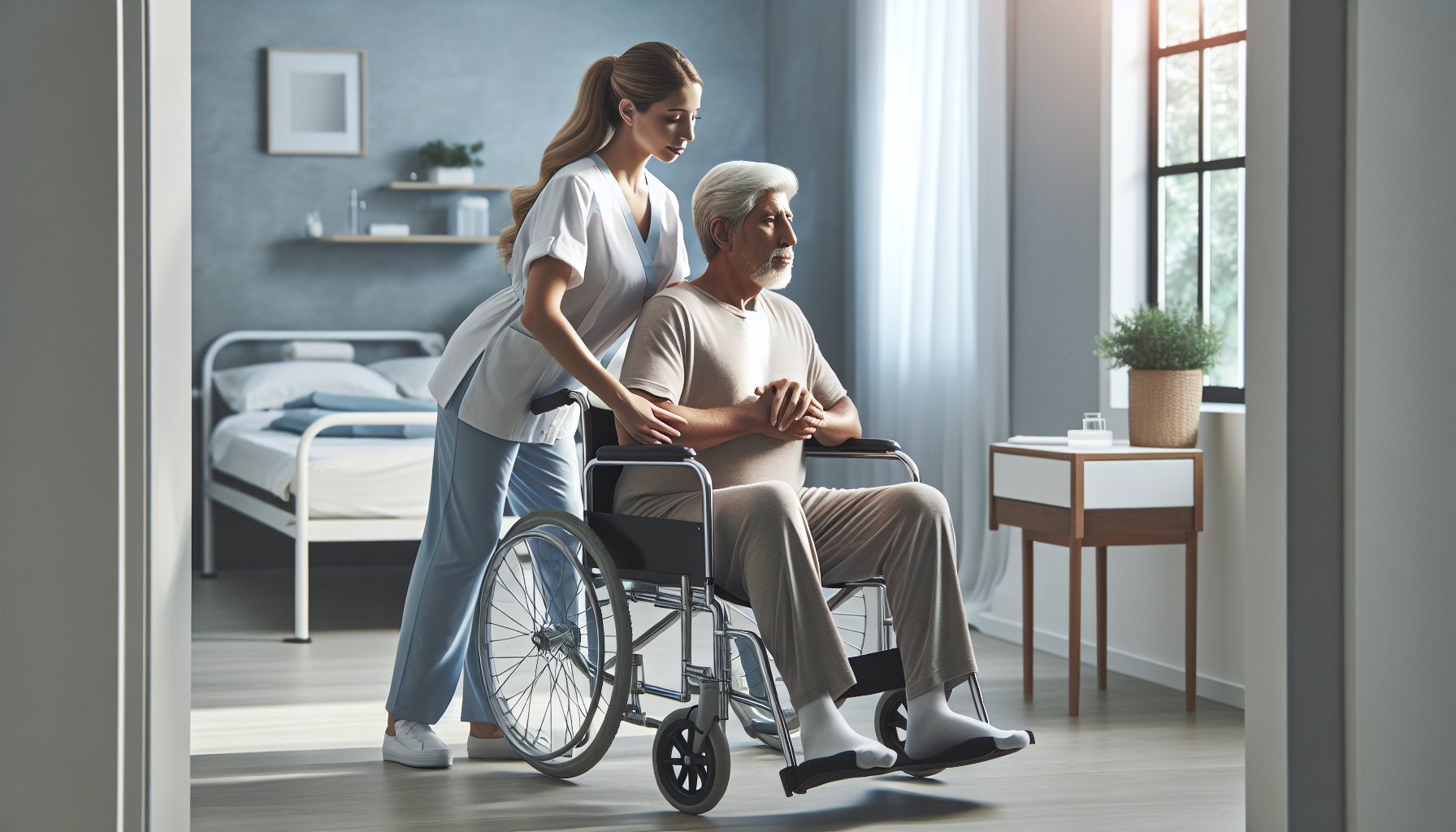
Preventing caregiver injury during lifts and transfers starts with one practical truth: most back, shoulder, and wrist injuries happen during ordinary moments of care, not dramatic accidents. In homes, assisted living communities, rehabilitation settings, and hospitals, caregivers repeatedly help people move from bed to chair, chair to toilet, wheelchair to car, or floor to standing. A lift is any assisted movement that partially or fully supports a person’s body weight. A transfer is the controlled movement from one surface or position to another. These tasks matter because poor technique, rushed decisions, and missing equipment create preventable harm for both the caregiver and the person receiving care. I have trained family caregivers and direct care staff on transfer routines, and the same pattern appears every time: injuries rise when people rely on strength instead of assessment, body mechanics, and the right device. This hub article explains how to reduce risk, choose safer methods, use support resources, and build routines that protect everyone involved while preserving comfort, dignity, and independence.
Why lifts and transfers cause so many caregiver injuries
Caregiver injuries are common because transfers combine force, awkward posture, repetition, and unpredictability. The caregiver may twist while supporting weight, reach across a bed rail, or react suddenly when a person loses balance. According to the U.S. Bureau of Labor Statistics, nursing assistants and similar care roles consistently rank among occupations with high rates of musculoskeletal disorders, especially sprains and strains affecting the back and shoulders. Family caregivers face many of the same risks at home, often with less training and less equipment. A single unsafe pivot can exceed what the lumbar spine, rotator cuff, or thumb joints can tolerate. Risk increases further when the care recipient has weakness after stroke, fluctuating cognition, pain, obesity, or fear of falling.
The most important concept is that manual lifting is not a skill problem alone; it is a systems problem. If the bed is too low, the wheelchair is poorly positioned, the floor is cluttered, and no gait belt is available, even a careful caregiver is pushed into unsafe mechanics. I tell caregivers to stop treating transfers as improvised events. They should be planned tasks with a standard setup, just like medication administration follows a checklist. That shift in mindset reduces injuries immediately because it replaces guesswork with repeatable steps. It also aligns with established safe patient handling principles used in clinical environments, where engineering controls, transfer aids, and team communication are preferred over reliance on body strength.
Assessing the person, task, and environment before every transfer
The safest transfer begins with a brief risk assessment. Ask four direct questions. How much weight can the person bear through one or both legs? Can they follow simple instructions consistently? Do they have sitting balance and trunk control? What equipment is required for this exact move? If the answer to any of these questions is uncertain, the transfer plan should become more conservative, not more ambitious. A person who could stand-pivot yesterday may need a slide board today if fatigue, infection, medication changes, or dizziness are present. Functional status can shift quickly, especially among older adults, people with Parkinson’s disease, multiple sclerosis, or recent surgery.
Environmental checks are just as important. Lock wheelchair brakes, remove footrests, adjust bed height to mid-thigh level, clear cords and rugs, and ensure adequate lighting. Confirm whether shoes are non-slip and whether clothing allows movement. Review attachments such as catheters, oxygen tubing, feeding lines, or wound drains before moving. Many near-falls happen because tubing catches on furniture during a pivot. In practice, this thirty-second scan prevents more problems than any lecture on “lifting with your legs.” Good body mechanics still matter, but mechanics cannot compensate for a bad setup. The environment must be engineered to support the transfer rather than work against it.
Core transfer techniques that lower injury risk
Safer technique is based on stability, leverage, and communication. Keep the person close to your center of gravity, widen your base of support, and avoid twisting under load. Instead of rotating your trunk, pivot your whole body with small steps. Use a neutral spine and hinge at the hips. Count aloud before movement so both people act together: “On three, lean forward, push from the bed, then stand.” The cue matters because coordinated movement reduces surprise and sudden loading. Encourage the care recipient to do the parts they can do independently, even if small. Active participation reduces caregiver strain and maintains function.
Different transfers require different methods. A stand-pivot transfer works best when the person can bear some weight, grasp with at least one hand, and follow commands. A lateral transfer with a slide board is useful for moving between surfaces of similar height when standing is unsafe but upper-body participation is possible. A mechanical lift is the preferred option when weight-bearing is absent, trunk control is poor, or the caregiver would otherwise have to lift substantial body weight. Sit-to-stand lifts are valuable for people with partial strength who need powered assistance to rise. Gait belts improve control during many standing transfers, but they are not lifting devices and should never replace a mechanical lift when one is indicated.
Choosing the right equipment for the task
Equipment selection should match the person’s function, the transfer destination, and the caregiver’s capabilities. In real homes, I often see one device used for every situation, which creates risk. A gait belt, transfer board, friction-reducing sheet, pivot disc, sit-to-stand lift, and full-body sling lift each solve a different problem. Friction-reducing sheets help with repositioning in bed by decreasing shear and effort. Transfer boards bridge small gaps for seated lateral moves. Pivot discs help guided turns for people who can stand briefly but cannot step well. Powered lifts reduce peak spinal load and are strongly recommended for non-weight-bearing transfers.
| Transfer situation | Best-fit equipment | Why it reduces injury risk |
|---|---|---|
| Bed to chair with partial weight-bearing | Gait belt or sit-to-stand lift | Improves control and reduces pulling on arms or shoulders |
| Wheelchair to car with poor standing tolerance | Transfer board | Allows lateral movement without a risky pivot |
| Repositioning up in bed | Friction-reducing sheet | Lowers drag forces and decreases caregiver exertion |
| Non-weight-bearing transfer | Full-body mechanical lift with correct sling | Eliminates manual lifting of body weight |
| Brief assisted turn to seated surface | Pivot disc with gait belt | Reduces twisting and foot entanglement during rotation |
Fit and maintenance are critical. Slings must match body size, head support needs, and toileting access. Wheelchairs should have removable armrests when needed and a stable seat height. Batteries on powered lifts should be charged and inspected routinely. The caregiver also needs room to use the device correctly. In tight bathrooms, the right answer may be environmental modification, not stronger technique. Doorway widening, grab bar placement, raised toilet seats, adjustable beds, and ceiling-mounted track lifts can transform a high-risk routine into a manageable one. Occupational therapists, physical therapists, and assistive technology professionals are useful partners when selecting and fitting equipment.
Training, care plans, and caregiver support resources
Training must be task-specific. Generic advice is not enough. Every caregiver should know the exact method for bed mobility, toileting transfers, shower access, wheelchair positioning, and emergency recovery after a fall. Written transfer plans help maintain consistency across family members, home health aides, and respite staff. A strong plan lists the person’s current abilities, approved devices, number of assistants required, communication cues, contraindications, and what to do if the transfer stalls. This reduces variation, which is a major source of injury. In professional settings, annual competencies are common; at home, reviewing the plan every few weeks is a practical equivalent.
Caregiver support resources are essential because skill alone does not remove fatigue, time pressure, or emotional strain. Home health agencies can provide training visits. Hospitals and rehabilitation centers often offer discharge education on transfers, though families should ask for hands-on practice, not just printed instructions. Local Area Agencies on Aging, Centers for Independent Living, and disease-specific organizations such as the Alzheimer’s Association, the Parkinson’s Foundation, and the National Multiple Sclerosis Society may connect caregivers to training, respite, transportation, and equipment loan programs. Durable medical equipment suppliers sometimes provide setup guidance, but clinical oversight from therapy professionals remains important when the transfer is complex.
Respite services deserve special emphasis. Injury risk increases when one exhausted caregiver performs every transfer, every day, without relief. Scheduled respite reduces cumulative strain and gives time to reassess whether current methods still fit the person’s condition. Support groups also matter. Caregivers often learn practical solutions from others facing the same challenges, such as how to arrange a bedroom for lift access or when to switch from a manual pivot to a powered device. These resources protect the caregiver’s health and improve continuity of care. A support network is not a luxury; it is part of safe mobility management.
Common mistakes, warning signs, and when to change the plan
The most common mistakes are pulling under the arms, lifting from a bent spine, transferring without shoes, rushing to beat incontinence, and attempting a “quick” manual lift after a near-fall. Pulling under the arms can injure the care recipient’s shoulders and destabilize the caregiver. Another frequent error is overestimating what the person can do because they managed the same transfer last week. Watch for warning signs such as increased effort, knee buckling, inability to follow cues, repeated grabbing at furniture, or the caregiver feeling the need to “deadlift” during standing. Those signals mean the transfer method is no longer appropriate.
Plan changes should be made early. If two near-misses occur in a week, if the caregiver develops pain, or if the person begins needing more than minimal assist, reassessment is overdue. Ask a physical therapist for transfer training if gait or balance is changing, and ask an occupational therapist if the environment or equipment is the limiting factor. If a fall occurs, avoid trying to catch the full body weight. Guide the person to a safer surface if possible, protect the head, and use emergency lift assistance or a floor recovery plan. Afterward, document what happened and identify the exact failure point: communication, fatigue, setup, footwear, or inadequate equipment.
Preventing caregiver injury during lifts and transfers depends on replacing strength-based habits with assessment, equipment, training, and support. The safest caregivers are not the strongest; they are the most consistent about checking function, setting up the environment, choosing the right device, and following a written plan. For families and care teams, this hub on caregiver support resources should guide every next step, from learning transfer techniques to arranging respite and home modifications. Start by reviewing your highest-risk transfer today, update the plan, and get hands-on training before the next close call. Small changes made now can prevent serious injury, protect independence, and make daily care safer for everyone involved.
Frequently Asked Questions
What is the difference between a lift and a transfer, and why does that matter for preventing caregiver injury?
A lift and a transfer are closely related, but they are not the same thing, and understanding the difference is one of the first steps in preventing caregiver injury. A lift is any assisted movement in which the caregiver or a device partially or fully supports the other person’s body weight. A transfer is the act of moving a person from one surface or position to another, such as from bed to wheelchair, wheelchair to toilet, or chair to standing. Many care tasks involve both. For example, helping someone rise from bed and pivot into a chair may include a brief lift, weight shifting, repositioning, and a transfer.
This distinction matters because different movements create different risks. When a caregiver bears too much body weight with their arms, back, or shoulders, the chance of strain rises quickly. When the movement involves twisting, reaching, or an awkward pivot in a small bathroom or bedroom, the risk increases even more. Injuries often happen during routine care, not because of a dramatic fall, but because the caregiver repeats unsafe body mechanics over and over. A transfer that looks simple can still overload the lower back, wrists, neck, or knees if the person being helped cannot reliably assist.
Knowing whether a task is primarily a lift, a transfer, or a repositioning activity helps caregivers choose the safest method. It guides decisions about whether one caregiver is enough, whether a gait belt is appropriate, whether a slide sheet or mechanical lift is needed, and whether the environment must be adjusted before moving the person. In practical terms, recognizing the movement correctly prevents guesswork. It encourages caregivers to slow down, assess the level of assistance required, and avoid the common mistake of “just doing a quick move” that places the caregiver’s body in a vulnerable position.
What are the most common causes of caregiver injuries during lifts and transfers?
Most caregiver injuries during lifts and transfers are caused by a combination of overexertion, poor positioning, rushed decisions, and underestimating how much help a person needs. The most frequently affected areas are the lower back, shoulders, wrists, and neck. These injuries rarely come from a single extreme event. More often, they result from repeated stress during ordinary tasks such as moving someone up in bed, assisting with toileting, helping a person stand, or managing a transfer in a cramped room.
One major cause is trying to manually lift too much body weight. If the person cannot bear weight, follow instructions, or maintain balance, the caregiver may instinctively compensate by pulling with the arms or bracing with the back. Another common cause is twisting while lifting. A caregiver may start with their feet planted in one direction and then rotate the torso mid-transfer, which places significant strain on the spine. Reaching across a bed, leaning over wheelchair armrests, or working from an awkward angle also increases the load on the body.
Environmental factors contribute as well. Cluttered floors, poor lighting, wet surfaces, missing grab bars, unlocked wheelchair brakes, improper bed height, and furniture placed too close together all make safe movement harder. In home care especially, caregivers often work in spaces that were never designed for patient handling. That means they may be forced into awkward positions or may not have access to the equipment they need.
Another frequent problem is using the wrong technique or wrong equipment for the person’s current condition. Someone who could assist yesterday may be weaker today due to pain, fatigue, medication changes, confusion, or illness. A transfer plan must match the person’s present abilities, not their usual abilities. Finally, caregivers get hurt when they skip preparation. Failing to explain the move, not counting down, not checking footwear, and not confirming that needed items are in place can turn a routine transfer into a sudden loss of balance or an uncontrolled descent. Prevention depends on recognizing that injuries are usually predictable and preventable when assessment, setup, and proper support are taken seriously every time.
How can caregivers use proper body mechanics to reduce the risk of back, shoulder, and wrist injuries?
Proper body mechanics help reduce injury risk, but they are most effective when combined with realistic assessment and the right equipment. Good technique begins before any movement starts. Caregivers should position themselves close to the person, keep the spine in a neutral alignment, bend at the hips and knees rather than rounding the back, and maintain a wide, stable base of support. The goal is to let the legs do as much of the work as possible while avoiding sudden pulling with the arms or shoulders.
Caregivers should avoid reaching too far forward, especially across a bed or around a wheelchair. Bringing the person closer before moving them is safer than extending the arms and trying to pull. It is also important to pivot with the feet instead of twisting through the waist. Twisting under load is a common source of low back injury. If the direction of movement changes, the caregiver should step and turn the whole body rather than rotate the torso while holding the person.
Hand placement matters too. Pulling under the arms can injure both the caregiver and the person receiving help. It can strain the caregiver’s wrists and shoulders while also risking skin injury or shoulder damage to the care recipient. When appropriate, a properly fitted gait belt offers better control and a safer handhold. Even then, it should be used to guide and support, not to hoist someone whose full weight cannot be managed manually.
Another key principle is to work at the right height whenever possible. Raising the bed before repositioning or lowering a chair height problem before a stand assist can dramatically reduce strain. Caregivers should also communicate clearly and use a countdown so both people move together. Coordinated movement reduces the need for sudden corrections. If the person starts to fall, the safest response is usually not to try to catch all of their weight with the upper body. Instead, caregivers should widen their stance, protect their own posture as much as possible, and guide the person to a safer surface or controlled descent if trained to do so. The most important point is that body mechanics are not a substitute for help. If the task exceeds what one person can safely manage, the safest technique is to stop and get assistance or equipment.
When should a caregiver use assistive devices or ask for additional help during a transfer?
Caregivers should use assistive devices or ask for additional help any time the transfer cannot be completed safely with the person’s level of participation and the caregiver’s current ability. A simple rule is this: if the caregiver is unsure, feels they will need to “muscle through,” or expects to support most of the person’s weight, the task likely requires equipment, another trained helper, or both. Waiting until the person begins to slip or become unstable is too late. The decision should be made before the move begins.
Several signs indicate that more support is needed. These include the person being unable to bear weight, unable to follow directions consistently, having poor trunk control, recent weakness, pain, dizziness, confusion, or a history of unpredictable movements or falls. Additional help is also appropriate when the environment is tight, when the transfer surface heights do not match well, when the person has a higher body weight than one caregiver can safely manage, or when the task involves floor recovery or car transfers, which often create difficult body positions.
Assistive devices may include gait belts, slide sheets, transfer boards, non-powered stand aids, powered sit-to-stand devices, ceiling lifts, or floor-based mechanical lifts. The right choice depends on the person’s strength, weight-bearing ability, cognition, and medical condition. Equipment should never be selected based only on convenience. It must match the transfer goal and be used according to training and manufacturer guidance. A gait belt, for example, is useful for steadying a person who can participate, but it is not a substitute for a mechanical lift when the person cannot safely assist.
Asking for help is a safety decision, not a sign of inexperience. In fact, one of the biggest contributors to caregiver injury is feeling pressure to complete a task alone because it seems routine or urgent. Safe care depends on recognizing limits. If the setup is poor, the person’s condition has changed, or the required movement feels unsafe, pause the task, reassess, and bring in the right support. That approach protects both the caregiver and the person being moved and helps prevent the cumulative injuries that often come from repeated overexertion.
What steps should caregivers take before every lift or transfer to make the movement safer?
The safest lifts and transfers begin with preparation, not force. Before every movement, caregivers should quickly assess the person, the environment, and the plan. Start by asking whether the person is alert enough to follow instructions, whether they can bear weight, whether they are in pain, dizzy, fatigued, or weaker than usual, and whether they have footwear or clothing that supports safe movement. A person’s abilities can change from one transfer to the next, so it is important not to rely on assumptions based on how they did earlier in the day or the previous week.
Next, prepare the environment. Clear clutter, secure loose rugs, improve lighting, and make sure the destination surface is ready. Lock wheelchair brakes, move footrests out of the way, position the chair at the proper angle, and adjust bed height if possible. In bathrooms or bedrooms where space