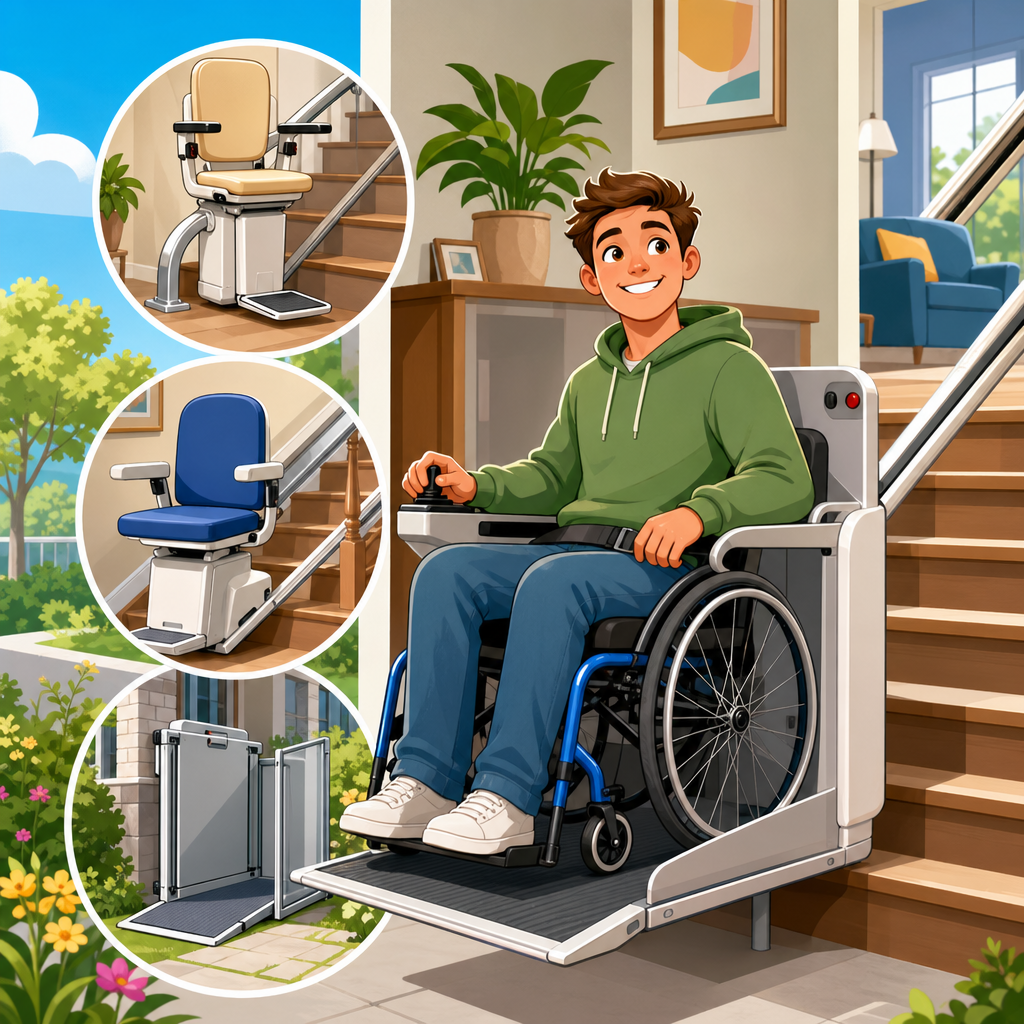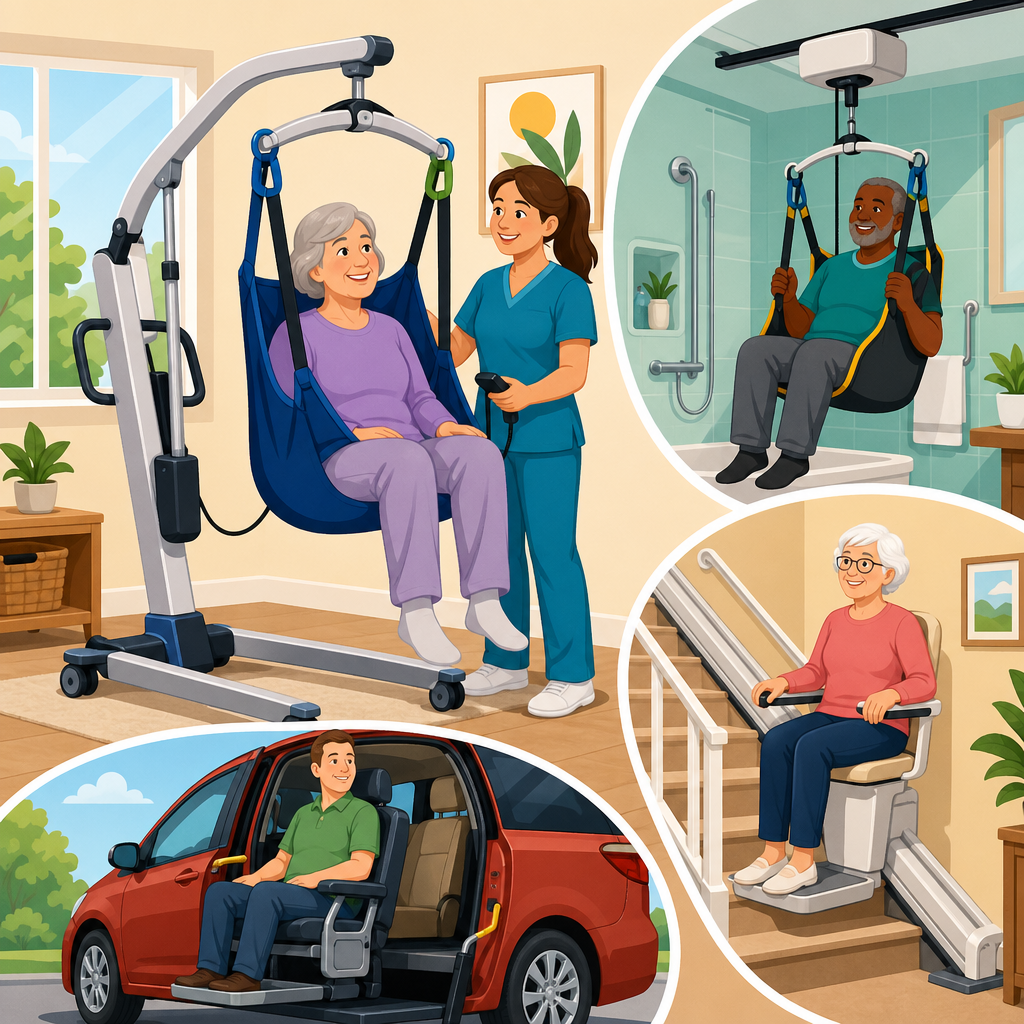
Safety concerns with secondhand stair lifts deserve careful attention because a lower purchase price can hide risks that directly affect mobility, injury prevention, and long-term reliability. In this guide, I use “secondhand stair lifts” to include privately sold used chair lifts, dealer-refurbished models, rental returns, and reconditioned units with replacement parts. The distinction matters. A chair lift is a motorized seat that travels on a rail fixed to the staircase, and safe operation depends on correct rail geometry, secure mounting, battery condition, drive system integrity, and functioning obstruction sensors. When any one of those elements is compromised, the result is not just inconvenience; it can be a fall, entrapment, or emergency evacuation problem. Buyers researching used and refurbished chair lifts are often trying to balance budget limits with immediate accessibility needs, especially after surgery, stroke, or declining balance. I have seen that urgency push families toward marketplace listings and “gently used” promises without checking compatibility, service records, or local code expectations. This hub article explains the major safety issues, the differences between used and professionally refurbished stair lifts, and the practical questions to ask before buying. It also helps readers understand which related topics deserve deeper comparison, from straight versus curved rails to batteries, warranties, installation, and maintenance. If you want a secondhand stair lift that is safe rather than merely affordable, the details below are the details that matter.
Why secondhand stair lifts can be risky
The core safety issue with any used stair lift is that the equipment was originally configured for another user, another staircase, and another service history. Straight stair lifts are sometimes reusable because their rails can fit many standard straight staircases, but even then the mounting points, stair width, seat height, folding clearance, and charging locations must be evaluated again. Curved stair lifts are a bigger concern because the rail is custom manufactured to exact staircase dimensions, including landings, bends, and parking positions. In most cases, a curved rail from one home cannot be safely reused in another home without factory redesign, which usually removes the price advantage of buying secondhand.
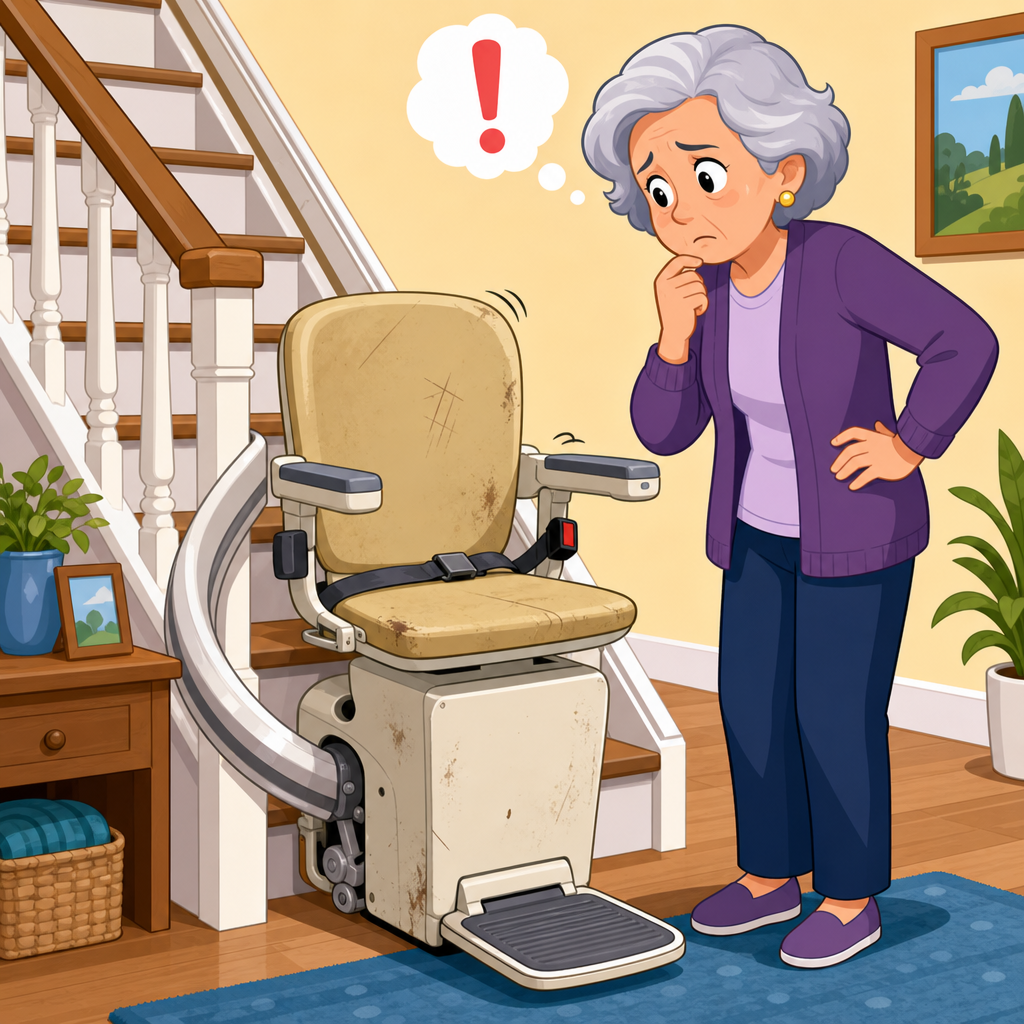
Mechanical wear is not always visible. I have inspected used units that looked clean but had excessive gear rack wear, intermittent swivel seat locks, brittle wiring insulation, and batteries that passed a brief demonstration but failed within days under normal cycling. Safety sensors can also degrade. Footrest edges, carriage pressure sensors, overspeed governors, and final limit switches need to respond consistently, not just once during a showing. A seller may honestly believe the lift “works fine” because it moves up and down, but safe operation means more than movement. It means predictable starts and stops, stable seat rotation, accurate charging, and no drift, hesitation, or fault codes.
Another risk is missing documentation. Without a model number, serial number, install date, and service history, it is hard to verify recalls, discontinued parts, weight capacity, and manufacturer support. Many major brands such as Bruno, Harmar, Handicare, Stannah, and Acorn maintain specific parts ecosystems. Once a model is discontinued, obtaining boards, remotes, batteries, or seat components may become difficult. That parts gap is not just a maintenance issue. If a safety-critical component fails and cannot be replaced quickly, the user may lose access to an essential floor of the home.
Used vs refurbished chair lifts: what the difference means for safety
A used chair lift is typically sold as-is, often by a private party, estate sale, reseller, or online marketplace. A refurbished stair lift has usually been inspected, cleaned, tested, and repaired by a dealer or technician, with worn parts replaced and installation handled by a trained crew. Those are not equivalent products. Refurbishment should include battery testing or replacement, verification of charge contacts, seat belt inspection, rail assessment, diagnostic checks, safety edge testing, limit switch calibration, and confirmation that the unit matches the staircase and user needs. If those tasks are not documented, the word refurbished may be mostly marketing.
In practice, professionally refurbished straight stair lifts can be a reasonable option when sold by an established dealer who offers installation, labor coverage, and ongoing service. I have seen this work well for temporary recovery periods and for buyers in homes where a standard straight rail fits cleanly. By contrast, privately purchased used lifts often create hidden cost. Families save on purchase price, then pay for disassembly, transport, missing brackets, incompatible rails, fresh batteries, and technician time only to discover the unit cannot be safely adapted.
Buyers should ask exactly what was replaced and what was merely cleaned and retested. New batteries are common and valuable, but they do not solve worn transmission components or outdated controls. Ask whether the technician tested the lift under load, whether the rail was measured to the home, and whether the installer checked stair tread integrity before fastening brackets. A dealer willing to answer those questions clearly is usually safer than a seller focused only on speed and low price.
The most important safety checks before buying
Before committing to any secondhand stair lift, verify five fundamentals: staircase fit, user fit, mechanical condition, electrical condition, and service support. Staircase fit includes width, top and bottom clearance, landing space, rail overrun requirements, and whether doorways or walk paths will be obstructed. User fit includes seat width, armrest spacing, seat height, swivel function, footrest size, and weight capacity. Mechanical condition covers rail alignment, gear rack wear, carriage noise, brake function, and all moving joints. Electrical condition includes batteries, charger output, call/send controls, fault indicators, and safety circuits. Service support means there is a local company willing and authorized to maintain the exact model.
Ask for an in-home assessment, not just a phone quote. A qualified stair lift dealer should measure the staircase, observe the user transferring on and off a chair, discuss hand dominance and balance issues, and identify hazards such as narrow treads, loose carpeting, or inadequate lighting. This evaluation is especially important in homes with older adults who also use walkers or wheelchairs. A lift that folds tightly and parks out of the way can reduce trip hazards for other household members.
| Safety check | What to verify | Why it matters |
|---|---|---|
| Model identification | Brand, model, serial number, age, manuals | Confirms parts availability, recalls, and support eligibility |
| Rail compatibility | Straight or curved, length, brackets, overrun needs | Improper fit can cause unsafe boarding or blocked stairs |
| Battery and charger | Battery age, charging points, charger output | Weak charging leads to mid-rail stoppage and reliability problems |
| Safety devices | Seat belt, footrest sensors, swivel lock, limit switches | These components prevent falls, collisions, and misalignment |
| Installer support | Local service, warranty terms, response times | Fast repair access is critical for a mobility-dependent user |
If a seller cannot provide these basics, treat that as a safety warning. A stair lift is mobility equipment, not ordinary furniture. Buying one without verification is closer to buying a used medical device than buying a used recliner.
Installation quality, standards, and home fit
Many stair lift accidents are linked not to dramatic equipment failure but to poor installation or poor transfer conditions. Most residential stair lifts mount to stair treads rather than the wall, so tread condition matters. Split wood, water damage, loose fasteners, or uneven surfaces can compromise bracket security. The rail must be level and the carriage must maintain designed clearances throughout travel. If the top landing requires the user to dismount near a doorway, radiator, or narrow turn, the safest unit on paper can still be unsafe in daily use.
Installation should follow manufacturer instructions precisely. Reputable dealers use factory-trained technicians, torque specifications, approved brackets, and final testing procedures. In my experience, that discipline separates dependable refurbished lifts from risky DIY transfers. Some online sellers imply that “any handyman” can install a stair lift. That is not a standard a mobility-dependent user should accept. Proper installation includes charging verification at each end stop, obstruction test confirmation, seat swivel lock validation, and instruction for the user and caregiver.
Home fit also includes emergency planning. If the lift stops, can the user safely exit? Is there another stairway? Are there smoke alarms on each level? In multistory homes where one bedroom and one full bath are separated by the stairs, lift downtime becomes a serious access problem. This is one reason buyers should compare not only product price but also service response commitments. A cheaper lift with no emergency support may be more expensive in real-life consequences.
Common failure points in older stair lifts
The most common failure point in older battery-powered stair lifts is the battery system itself. Most residential units use sealed batteries, and performance declines with age, charging habits, ambient temperature, and inactivity. A stair lift left parked away from its charge contacts can discharge to the point where capacity permanently drops. Buyers should expect battery replacement in many secondhand units and should confirm whether the charger is matched to the manufacturer’s specifications.
Controls are another weak point. Call/send remotes, armrest toggles, and printed circuit boards can develop intermittent faults that are hard to reproduce during a quick inspection. Wiring in folding footrests or moving arm assemblies may fatigue over time. Seat swivel mechanisms can also loosen, especially on heavily used units. If the seat does not lock firmly at the top landing, the transfer becomes hazardous because the user may put weight on a seat that shifts unexpectedly.
Drive components wear gradually. You may hear clicking, grinding, or whining from the carriage, or notice jerky starts and stops. Those symptoms can indicate transmission wear, rack contamination, roller degradation, or alignment issues. On rack-and-pinion systems, contamination from dust, pet hair, or degraded grease can accelerate wear. Older lifts in coastal or humid areas may show corrosion on fasteners and electrical contacts. None of these conditions should be accepted as normal simply because the unit still moves.
Warranties, service access, and total cost of ownership
One of the clearest differences between a safe secondhand purchase and a risky one is post-sale support. A meaningful warranty should specify coverage for parts, labor, batteries, and the rail, and it should identify who performs service locally. Some dealers offer limited warranties on refurbished straight stair lifts, while private sales usually offer none. Even a short labor warranty has value because many issues appear only after daily use resumes.
Total cost of ownership often changes the buying decision. A used stair lift advertised for a very low price may require professional removal from the previous home, transportation, new mounting hardware, batteries, installation labor, and a service visit for adjustment. If the model is unsupported, future repairs may depend on scavenged parts. By comparison, a dealer-refurbished unit with installation, warranty, and service may cost more up front but far less over two years.
Ask service questions before you buy: What is the average response time for breakdowns? Is after-hours service available? Are technicians employed directly or subcontracted? Can the company still source boards, remotes, and seat parts for this model? These questions are especially important for users who rely on the lift multiple times each day. Mobility equipment should be judged by uptime, not just sticker price.
When secondhand makes sense and when it does not
Secondhand stair lifts make the most sense when the staircase is straight, the dealer is reputable, the model is current enough to support, the user’s needs are straightforward, and the purchase includes professional installation plus service coverage. This can be a smart solution for short-term rehabilitation, rental properties for aging relatives, or budget-conscious households that still want dealer accountability. Refurbished straight lifts from established brands can provide solid value when properly reconditioned.
Secondhand usually does not make sense for curved staircases, very narrow stairs, heavy-duty capacity needs, outdoor installations, or users with complex transfer limitations. Outdoor stair lifts face additional exposure from moisture, temperature swings, and ultraviolet light, so older units may have unseen deterioration in covers, seals, and contacts. Heavy-duty users need precise seat dimensions, reinforced components, and confidence in rated capacity. In these situations, a new stair lift is often the safer choice because it can be specified exactly for the environment and user.
As the hub for used and refurbished chair lifts, this article connects the main decision points buyers should explore next: straight versus curved compatibility, refurbished versus rental-return quality, stair lift battery lifespan, installation checklists, warranty comparisons, and brand-specific serviceability. Use those comparisons to narrow options before you contact sellers. The safest savings come from informed buying, not bargain hunting. Start with an in-home assessment, insist on documentation, and choose a provider who will still answer the phone after installation. That approach protects the user, the household, and the investment.
Frequently Asked Questions
Are secondhand stair lifts safe to use?
Secondhand stair lifts can be safe to use, but only when the unit has been properly matched to the staircase, professionally inspected, correctly installed, and fully tested. The biggest safety concern is that buyers often assume a used stair lift is simply a cheaper version of a new one. In reality, safety depends less on the age of the lift and more on its condition, service history, compatibility with the staircase, and whether critical parts still meet the manufacturer’s standards. A poorly maintained or incorrectly reinstalled chair lift can create serious risks, including sudden stops, seat instability, sensor failure, battery problems, or unsafe rail alignment.
It is also important to understand that not all secondhand stair lifts are the same. A dealer-refurbished unit that has been cleaned, tested, fitted with approved replacement parts, and reinstalled by trained technicians is very different from a privately sold used model removed from another home and sold as-is. Rental returns and reconditioned units may be safe options if they come from reputable companies that inspect motors, batteries, footrest sensors, seat belts, charging systems, and track components before resale. The safest approach is to treat any used stair lift as medical-adjacent mobility equipment rather than ordinary household hardware. If there is no documented inspection, installation plan, or service support, the lower upfront price may not justify the added safety risk.
What are the main safety risks when buying a used or privately sold stair lift?
The main safety risks involve hidden wear, missing maintenance records, improper fit, and lack of manufacturer or dealer support. A stair lift may look functional during a brief demonstration and still have internal issues that affect reliability. Batteries may no longer hold a charge properly, limit switches may be worn, swivel seat locks may not engage consistently, and obstruction sensors may be dirty, damaged, or bypassed. These are not minor details. They are core safety features designed to prevent falls, collisions, and uncontrolled operation.
Another major concern is staircase compatibility. Stair lifts are not universally interchangeable, especially on curved stairs. Even on straight staircases, the rail length, mounting points, seat height, weight capacity, and overrun positions must be correct for the user and the home. A lift taken from another property may not deliver safe boarding and dismounting positions in its new setting. That can increase the chance of losing balance when sitting down or standing up. Privately sold units are especially risky because they are often offered without installation, warranty, parts support, or verification that the lift still complies with the original manufacturer’s requirements.
There is also the issue of outdated equipment. Older models may no longer have available replacement parts, current safety updates, or factory-backed servicing. If something fails later, repair may be difficult or impossible. In practical terms, this means a buyer could end up with a lift that works for a short time but cannot be safely maintained. That is why a lower purchase price should never be the only factor. The true question is whether the stair lift can be operated safely every day by the person who depends on it.
How can I tell whether a refurbished or reconditioned stair lift has been made safe?
A safe refurbished or reconditioned stair lift should come with clear evidence of professional evaluation and documented work, not just verbal assurances that it has been “checked over.” Ask what refurbishment actually included. A trustworthy supplier should be able to explain whether the batteries were replaced, whether the carriage was tested under load, whether the rail was inspected for wear or damage, whether the charging points were verified, and whether all safety sensors, seat swivels, armrests, footrests, and seat belts were examined and tested. If replacement parts were used, ask whether they were manufacturer-approved or equivalent parts suited to the exact model.
You should also ask who performed the installation and what testing occurs after fitting. Safe installation is a major part of stair lift safety, because even a sound used unit can become dangerous if the rail is mounted incorrectly, the clearances are wrong, or the stop positions are poorly set. A reputable dealer should assess the staircase, confirm user needs, install the equipment securely, and test start-stop performance, charging, remote controls, seat locks, and safety cutoffs. Ideally, they should also provide a demonstration to the user and caregiver, showing how to sit safely, fasten the belt, fold the lift away, and respond to basic fault alerts.
Finally, look for ongoing support. A stair lift is safer when service is available after the sale. That includes a warranty, access to repairs, routine maintenance options, and a realistic supply of spare parts. If a seller cannot explain the refurbishment process, cannot provide a service path, or avoids questions about age and parts availability, that is a warning sign. Good refurbishment is not cosmetic. It is a process centered on function, reliability, and user safety.
Does professional installation really matter for a secondhand stair lift?
Yes, professional installation matters enormously. A stair lift is a mobility device that must work predictably on a staircase, which is already one of the highest-risk areas in a home for falls and injuries. The rail has to be measured correctly, fixed securely, aligned properly, and positioned to allow safe access at the top and bottom landings. The seat must stop where the user can get on and off without twisting awkwardly or stepping into an unsafe position. If the lift is even slightly mismatched or improperly installed, it can increase the risk of falls rather than reduce it.
Professional installers also know how to evaluate details that many private sellers and general handymen may overlook. These include stair width, hinge or folding rail clearance, charging point placement, power supply condition, user transfer safety, and whether the lift’s weight capacity and seat configuration suit the intended user. They can identify when a used lift should not be reused at all, either because of wear, incompatibility, or lack of available parts. This is particularly important for people with limited mobility, balance issues, or progressive conditions, because a stair lift must be dependable under daily use, not just operational on installation day.
Just as important, professional installation is usually tied to post-installation testing and user instruction. That means the person using the lift can learn the safest way to board, secure the seat belt, operate controls, and handle simple troubleshooting. In short, installation is not a minor add-on. It is one of the most important parts of making a secondhand stair lift safe.
What should I check before buying a secondhand stair lift to reduce safety risks?
Start by identifying exactly what kind of secondhand stair lift is being offered: private sale, dealer-refurbished unit, rental return, or reconditioned model. Then ask for the make, model, age, service history, weight capacity, and reason it was removed from the previous home. You should also ask whether the lift is intended for a straight or curved staircase, whether parts are still available, and whether the manufacturer or a qualified dealer still supports that model. If the seller cannot answer basic technical and service questions, that should be taken seriously.
Next, focus on safety features and condition. Confirm that the seat belt is present and functional, the swivel seat locks securely, the footrest and carriage sensors work, the controls respond properly, and the batteries and charging system have been tested. Ask whether the rail and carriage have been inspected for wear, corrosion, cracks, or damage from removal. If possible, request documentation of testing and refurbishment rather than relying on a live demonstration alone. A brief ride up and down a staircase does not prove long-term safety.
Finally, make sure there is a full plan for assessment, installation, and aftercare. The best purchase is usually one that includes an in-home survey, professional fitting, user training, warranty coverage, and access to maintenance. For a mobility device, safe ownership depends on more than the initial sale. If a stair lift cannot be properly fitted to the staircase, maintained with available parts, and supported if a fault develops, it may not be a safe investment no matter how affordable it seems. A careful buying process helps reduce the most common risks and protects the person who will rely on the lift every day.