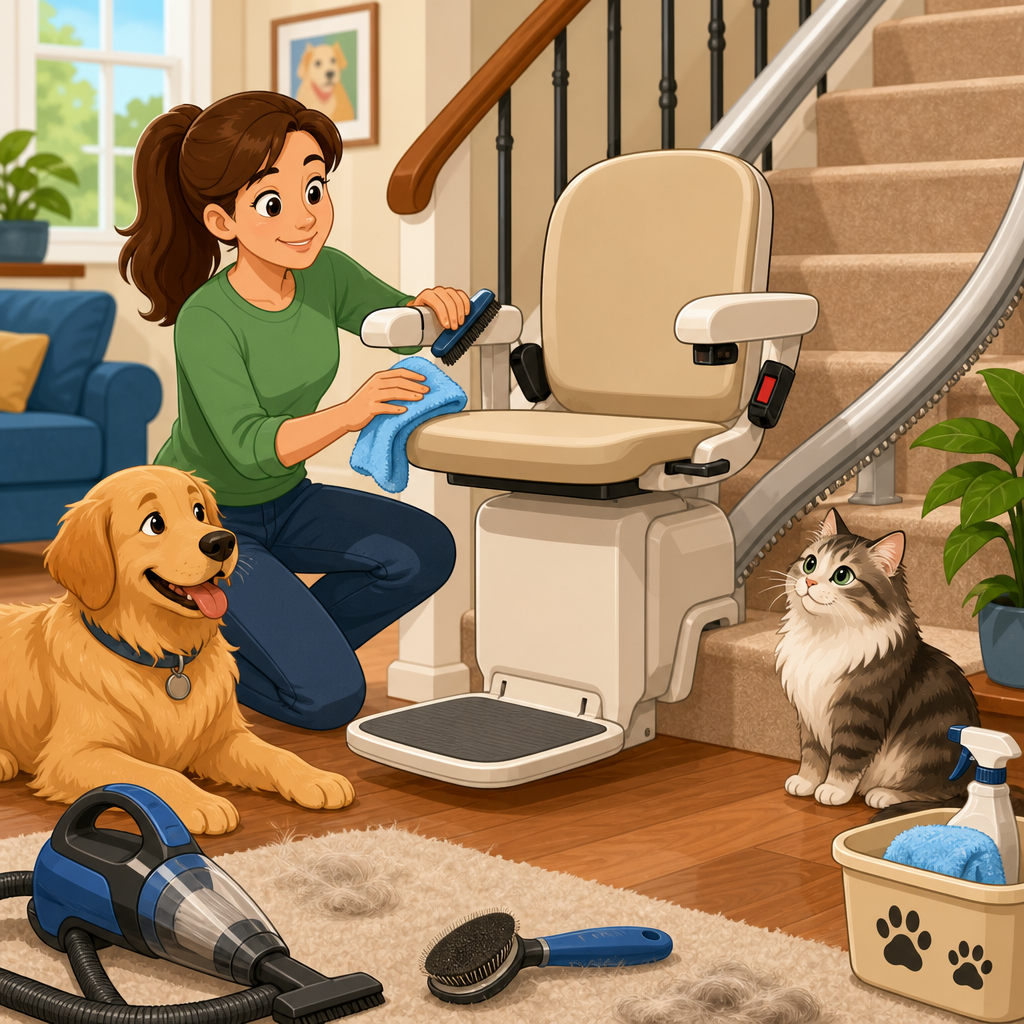
A stair lift that works with the remote but not the armrest control usually points to a localized input problem rather than a dead motor, empty batteries, or a failed charging system. In practical terms, the lift can still receive a command through one control path, but the joystick, rocker switch, or directional paddle on the chair is not sending a usable signal. That distinction matters because it immediately narrows the troubleshooting process and helps owners avoid unnecessary service calls, unsafe bypass attempts, or the mistaken assumption that the entire unit has failed. In homes where a stair lift is essential for daily mobility, understanding this symptom can turn a stressful breakdown into a manageable maintenance check.
Stair lift controls vary by brand, but most modern units share the same architecture. The armrest control is the onboard operating switch mounted on the chair, while the remote is a separate call-send transmitter used to move the lift when nobody is seated or to summon it from another floor. If the remote operates the lift and the armrest does not, the drive system, track, main batteries, and basic safety circuit may still be functional. The fault is more likely in the armrest switch assembly, seat-swivel interlock, wiring harness, controller input, or a safety edge linked to chair operation. I have diagnosed this pattern many times, and the fastest repairs usually come from treating it as a signal-path problem first, not a motor problem.
This article is the main troubleshooting hub for lift not working step-by-step help within maintenance, troubleshooting, and safety. It explains what the symptom means, what checks to perform safely, when to stop troubleshooting, and which related issues commonly branch off into more specific repairs. The goal is simple: help you identify whether the problem is user-correctable, maintenance-related, or a service issue requiring a trained stair lift technician.
What This Symptom Usually Means
When a stair lift responds to the remote but not the armrest control, the most important conclusion is that the machine is not completely nonfunctional. The carriage can move, the transmission and motor are capable of operating, and the batteries likely have enough charge to run the unit. That rules out some of the most expensive failure scenarios immediately. It also suggests the track is not fully blocked and the lift’s major overspeed and final-limit systems are not actively preventing motion in every mode.
The remaining suspects are more focused. On many Bruno, Harmar, Stannah, Acorn, and Handicare models, the armrest control feeds a low-voltage command into the main board through a dedicated harness inside the chair. If that switch is worn, contaminated, loose, or electrically open, the lift will ignore chair commands even while the remote still works. A second common cause is a seat position interlock. Many lifts require the seat to be locked in the travel position, the armrests to be down on some models, and the footrest or carriage safety edges to be clear before onboard travel is allowed. A remote may still move the lift in certain conditions because it uses a slightly different command path or because the user is not sitting in a way that triggers a safety edge.
Another clue is whether the lift behaves the same in both directions. If the armrest control fails for up and down travel, think switch, wiring, seat lock, or controller input. If it fails only in one direction, the problem may involve a directional contact, a limit, or a damaged conductor flexing when the chair moves. Those differences matter because they guide the next inspection steps.
Safe First Checks Before You Assume a Fault
Start with the basics because stair lifts are full of safety interlocks, and a simple position issue is responsible for many no-run calls. Turn the key switch on if your model has one. Confirm the seat is fully rotated back into the riding position and locked; a seat that feels straight but is not latched by the swivel mechanism can disable the armrest control. Fold the footrest down completely. Check that no object, rug edge, pet toy, or dropped clothing is touching the footrest safety edge or carriage side panels. Most lifts stop if any pressure-sensitive edge is engaged.
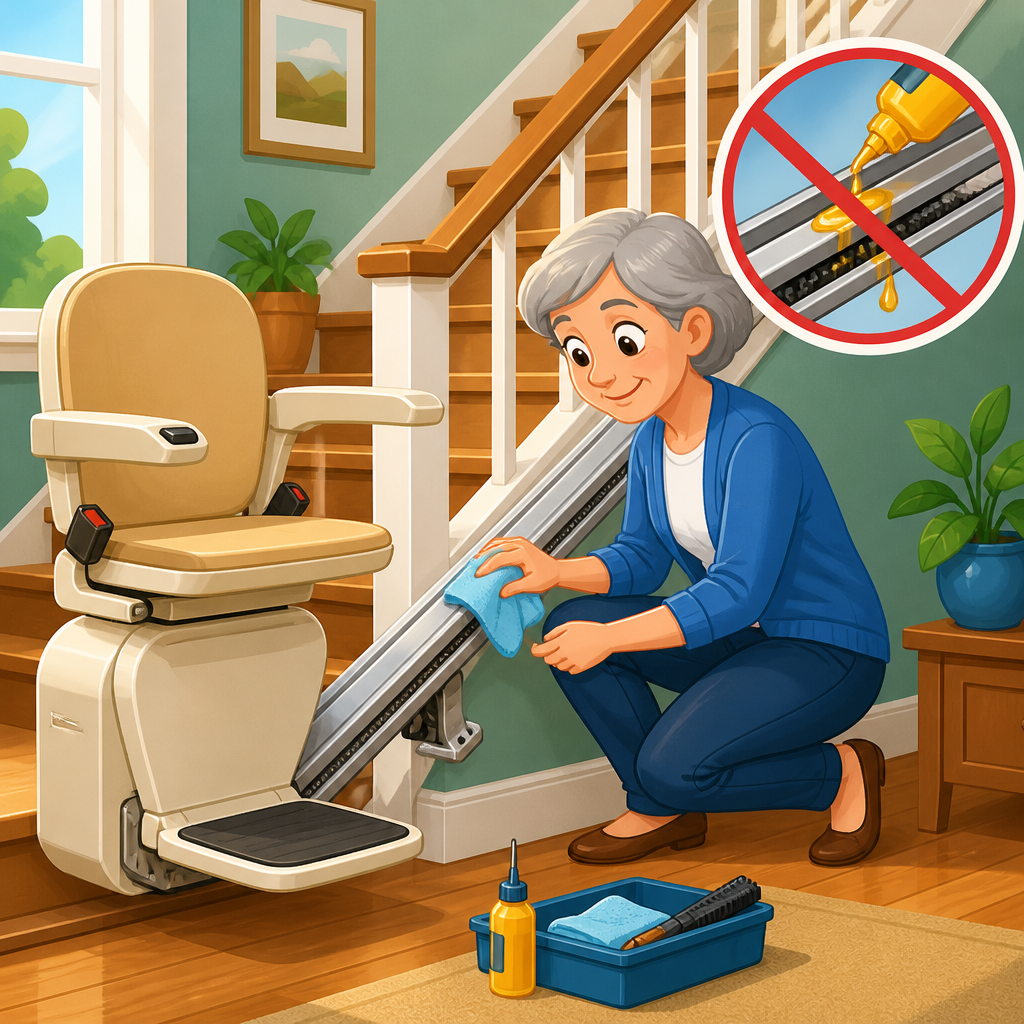
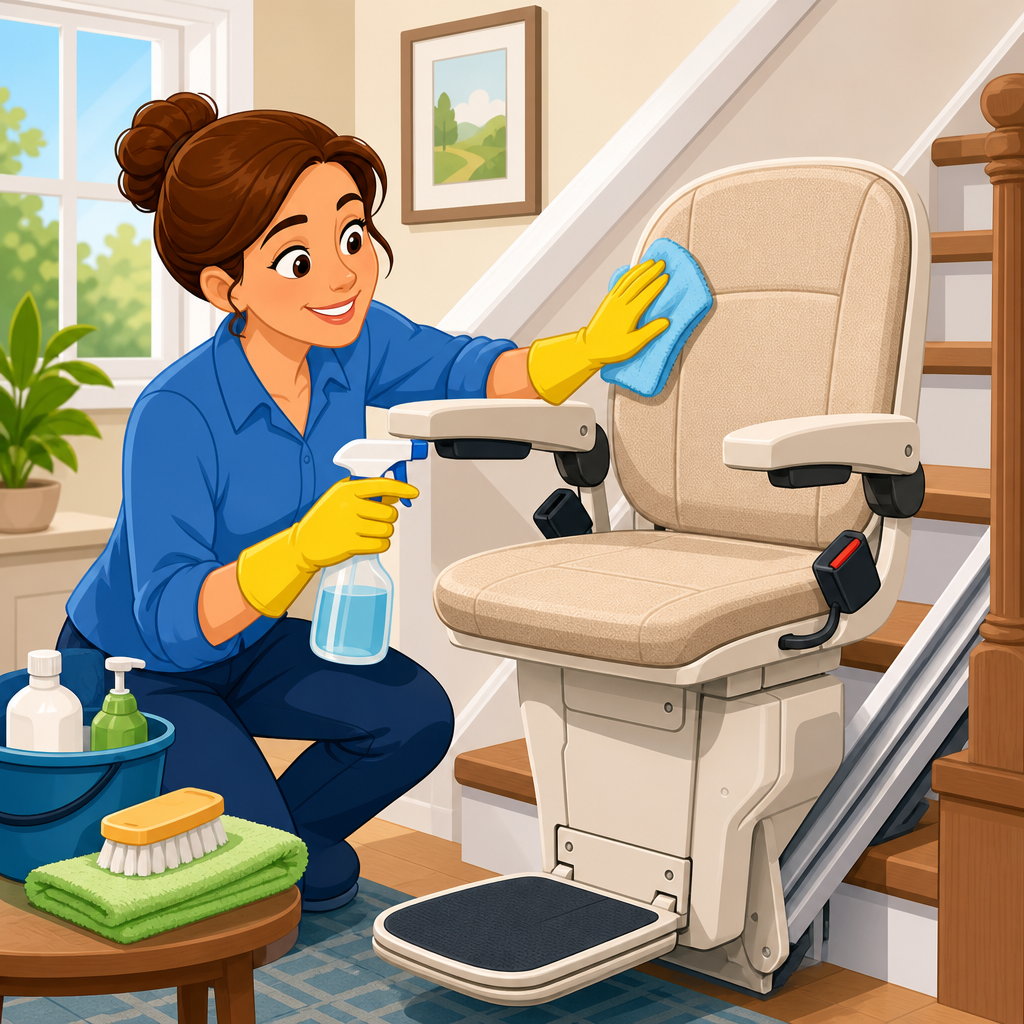
Next, stand up from the chair and try the armrest control again only if the manufacturer allows it and the user manual does not prohibit it. A shift in body weight can sometimes press a safety edge or slightly twist the armrest housing on older units. Then inspect the armrest itself. If the joystick cap is loose, the rocker feels stuck, or the control does not spring back to center, that is a strong sign of mechanical wear. On several older lifts I have serviced, dust, kitchen grease, and hand lotion buildup around the switch caused sticky movement and intermittent contact.
Now compare behaviors carefully. Does the remote move the lift smoothly the full length of the rail? Does the chair beep, flash an error, or click when you use the armrest control? A click without movement can indicate the command is reaching the board but a safety circuit is blocking travel. No sound at all often points to the armrest switch or its wiring. If your unit has a status display, record the code before cycling power. Error codes on modern models are often more informative than the user expects.
Step-by-Step Troubleshooting for Armrest Control Problems
Use a structured process so you do not miss an easy fix. I recommend checking the chair in this order because it matches how technicians isolate faults in the field:
| Step | What to Check | Why It Matters | What the Result Suggests |
|---|---|---|---|
| 1 | Key switch and power indicator | Some lifts disable onboard controls when keyed off | No indicator may mean local power or switch issue |
| 2 | Seat fully locked in travel position | Swivel interlocks commonly block armrest operation | Remote works, chair control does not: seat lock is likely |
| 3 | Footrest and carriage safety edges | Pressure switches stop motion for obstruction protection | Object contact can disable travel from the chair |
| 4 | Armrest switch feel and return-to-center action | Worn or jammed switches fail mechanically | Sticky or loose control often needs replacement |
| 5 | Error beeps or display codes | Manufacturers map codes to interlocks and faults | Code identifies seat, overspeed, charge, or edge issue |
| 6 | Wiring at armrest hinge or under seat cover | Repeated folding and vibration fatigue conductors | Intermittent or broken wire is common on older lifts |
| 7 | Remote versus chair in both directions | Direction-specific failure narrows diagnosis | One-way failure suggests directional switch contact |
If those checks do not restore operation, turn the lift off before touching any accessible panels. Do not remove covers that expose drive components unless the manual specifically permits owner access. On many units, the simplest owner-level inspection is under the seat near the swivel area, where a visible cable may plug into the armrest or chair harness. A partially backed-out connector can interrupt the onboard control while leaving the rest of the lift operational. Reseat only obvious low-voltage plug connections that are designed for service access; do not disturb sealed boards or force connectors.
If the problem appeared after cleaning, upholstery work, moving the unit, or battery replacement, mention that during diagnosis. I have seen armrest harnesses pinched during seat reassembly and small control plugs left one click short of fully seated. Context often solves the puzzle faster than meter testing.
Common Causes by Component
The armrest control switch is the leading suspect. Rocker switches wear internally, joystick microswitches lose crisp contact, and membrane-style controls can crack with age. Heavy daily use accelerates wear, especially in homes where the lift is used multiple times per day by more than one person. Electrical contact cleaner is not a universal fix and should never be sprayed into electronics unless the manufacturer approves it. On many sealed switch modules, replacement is the correct repair.
The seat swivel interlock is nearly as common. This mechanism prevents travel unless the chair faces forward along the rail. If the latch is misaligned, dirty, or stretched, the onboard control may stay disabled even though the seat looks properly positioned. Some users can temporarily restore function by rotating the seat slightly away and back until it clicks firmly, but repeated recurrence means adjustment or replacement is needed.
Wiring failures usually occur where cables flex. The armrest folds, the seat swivels, and the carriage vibrates slightly during travel. Over years, fine conductors can break inside intact-looking insulation. The symptom is often intermittent: the armrest works only when the chair is in a certain position or only after the armrest is raised and lowered. Technicians confirm this with continuity testing while moving the harness gently.
Control board input faults are less common but real. If the switch and wiring test good, the board may not be recognizing the armrest signal. This is more likely after a power surge, moisture exposure, or corrosion from battery off-gassing in neglected systems. Board diagnosis should be left to trained service personnel because incorrect replacement can affect safety calibration and fault logic.
How This Fits Into Broader Stair Lift Maintenance and Safety
This symptom sits at the center of a larger stair lift troubleshooting strategy because it helps separate control issues from charging, battery, and obstruction problems. If neither the remote nor the armrest works, owners should investigate power supply, charging contacts, battery condition, main fuse status, and hard safety faults. If the lift beeps at the charge points or dies midway on the rail, that suggests battery or charging problems rather than an armrest-specific fault. If the chair stops abruptly in one location, rail obstructions, dirty charge strips, limit switches, or gearbox issues become more likely.
That is why this page functions as a hub for lift not working step-by-step help. From here, the next branch depends on what you observe. Remote works but armrest fails points to local controls. Remote and armrest both fail points to system-wide issues. Works only downhill or uphill suggests directional contacts, battery weakness under load, or rail-specific faults. Runs but stops with beeping suggests an active safety input or diagnostic lockout. Thinking in branches prevents random part replacement and reduces downtime.
Safety has to stay ahead of convenience. Never tape down a safety edge, jump a seat switch, or operate a lift with open covers so someone can “get by for now.” Stair lifts are medical-adjacent mobility devices with pinch points, moving gears, and braking systems designed around intact interlocks. Bypassing one component can create a fall risk for the rider and anyone using the staircase.
When to Call a Technician and What to Tell Them
Call for service if the armrest control remains inoperative after basic checks, if you see frayed wiring, if the seat does not lock positively, or if the lift displays persistent fault codes. Also stop immediately if the chair moves unexpectedly, hesitates sharply, or responds inconsistently to the remote. Intermittent faults are not harmless; they often indicate a wiring or switch problem that can fail completely without warning.
When booking the visit, provide the brand, model, approximate age, battery age if known, and the exact symptom: “The stair lift works with the remote but not the armrest control.” Add whether it fails in one direction or both, whether the seat swivels and locks normally, and whether any beeps or codes appear. This information lets the technician bring the right switch module, seat interlock parts, or harness. On older lifts, parts availability varies, so precision saves time.
If the unit is under warranty or covered by a service contract, avoid nonapproved disassembly. Many manufacturers and dealers require authorized service for electrical repairs. Keep the user manual accessible; its troubleshooting section and code chart often shorten the visit significantly.
The key takeaway is straightforward: if your stair lift works with the remote but not the armrest control, the machine is telling you the core drive system probably still functions and the fault is likely concentrated in the chair’s control path. That is good news because localized problems are often easier and less expensive to diagnose than full system failures. Start with seat position, key switch status, safety edges, and visible switch behavior. Then compare how the lift responds to the remote versus the armrest, note any error codes, and stop before opening components beyond owner-approved access.
As the central guide within maintenance, troubleshooting, and safety, this article gives you the first branch in solving a lift not working problem step by step. From here, use your observations to decide whether the issue points to armrest switches, seat interlocks, harness damage, battery and charging faults, or another safety input. Careful troubleshooting protects both uptime and rider safety.
If you are dealing with this symptom now, document what the lift does, check the simple items in order, and schedule qualified service if the problem remains. A precise description leads to a faster repair and a safer return to daily use.
Frequently Asked Questions
Why does my stair lift move with the remote but not with the armrest control?
When a stair lift responds normally to the remote but not to the control on the armrest, it usually means the main drive system is still working and the problem is isolated to the chair-mounted control path. In other words, the motor, power supply, charging system, and rail are often not the root cause, because the lift is still capable of receiving and acting on a travel command. The more likely issue is that the joystick, rocker switch, directional paddle, or the wiring connected to that control is not sending a clean signal to the lift’s control board.
This distinction is important because it changes the way the issue should be diagnosed. Instead of assuming the unit has completely failed, it points to a localized fault such as a worn switch, a loose connector inside the armrest, contamination from dust or spilled liquids, physical damage, or a broken wire where the armrest pivots or folds. On many models, the armrest control is a relatively small component that sees repeated daily use, so it can wear out before more major parts of the stair lift do. If the remote continues to operate the lift consistently, that is actually a useful clue that helps narrow the problem quickly.
Does this mean the batteries, charger, or motor are fine?
Not automatically in every case, but it does strongly suggest that the core movement system is functioning well enough to operate the lift. If the remote can send the chair up and down the rail, then the batteries are likely providing enough power, the charger is likely maintaining the charge at least adequately, and the motor and drive components are capable of moving the unit. That is why this symptom usually does not point first to dead batteries or a failed charging system.
However, “fine” should be understood in a practical rather than absolute sense. A stair lift may still have aging batteries or a charger that is beginning to weaken, but those issues would more commonly affect all control methods, not just the armrest control. The key takeaway is that a remote-operated lift proves the machine can still complete the basic command chain: receive input, process it, and move. That makes a local problem at the chair control much more likely than a system-wide power failure. For most owners, this means troubleshooting should begin at the armrest switch, its wiring, and related safety interlocks before moving on to larger and more expensive components.
What are the most common reasons the armrest control stops working?
The most common cause is simple wear in the armrest switch itself. Whether the lift uses a joystick, rocker switch, or directional paddle, that control is handled constantly and can eventually become unreliable. Internal contacts may wear down, fail to connect consistently, or stick in place. In many homes, years of daily use make this one of the first input parts to show signs of failure.
Another common reason is a wiring problem inside the armrest or seat assembly. Stair lifts are designed with folding arms and moving seat components, which means wires may flex repeatedly over time. That constant movement can loosen a connector, fatigue a wire, or create an intermittent connection. Dirt, moisture, cleaning products, or residue from hands can also affect the switch area. In some cases, a safety circuit issue can appear to be an armrest-control problem if the lift is not fully locked into operating position. For example, if the seat is not fully swiveled and locked, or if a footrest or armrest position sensor is not satisfied, the chair control may not respond as expected. A technician will usually check the switch itself, continuity through the wiring, and the status of all related safety inputs before replacing larger parts.
Is it safe to keep using the stair lift with the remote until it is repaired?
In many cases, owners can still use the lift carefully if the remote is operating it normally, but that depends on the exact model, the consistency of the problem, and whether there are any other warning signs. If the only symptom is that the armrest control does not respond, and the remote moves the lift smoothly without hesitation, unusual noises, error codes, or stopping issues, the unit may remain partially usable in the short term. Even so, it should be treated as a sign that service is needed rather than as a permanent workaround.
The main concern is convenience and control during normal seated operation. The armrest control is the primary onboard input and is intended to be the most direct way for the rider to command travel. If it fails, using only the remote may be awkward or impractical depending on how the lift is boarded and operated. More importantly, if the underlying cause is damaged wiring or a failing control component, the problem can worsen over time. The safest approach is to use the lift only if it behaves consistently and all other functions appear normal, then schedule inspection or repair promptly. If the lift shows intermittent behavior, stops unexpectedly, displays fault indicators, or behaves differently from normal, discontinue use until it has been checked by a qualified stair lift professional.
Can I troubleshoot the armrest control myself, or should I call for service?
You can usually perform a few basic checks yourself before arranging service, and doing so may save time and help you describe the problem more clearly. First, confirm that the seat is fully locked in its travel position and that all folding components such as the armrests and footrest are positioned correctly. Then test the remote several times in both directions to confirm the lift moves reliably. If it does, closely inspect the armrest control for obvious signs of damage, stiffness, looseness, or residue around the switch. Sometimes a switch feels physically different when it has failed. If your model has a display or status lights, note whether any faults appear when you attempt to use the armrest control.
Beyond those simple checks, it is usually best to call for professional service. Accessing the switch assembly or internal wiring may require opening panels and testing electrical continuity, which is not ideal for most owners. A technician can determine whether the issue is a failed control, a wiring break, a loose connector, or a related safety circuit problem. Because the remote still works, this is often a focused repair rather than a major one, and that can help avoid unnecessary replacement of batteries, chargers, or drive components. In short, a little owner troubleshooting is reasonable, but persistent loss of armrest control should be professionally diagnosed so the lift remains safe and dependable.